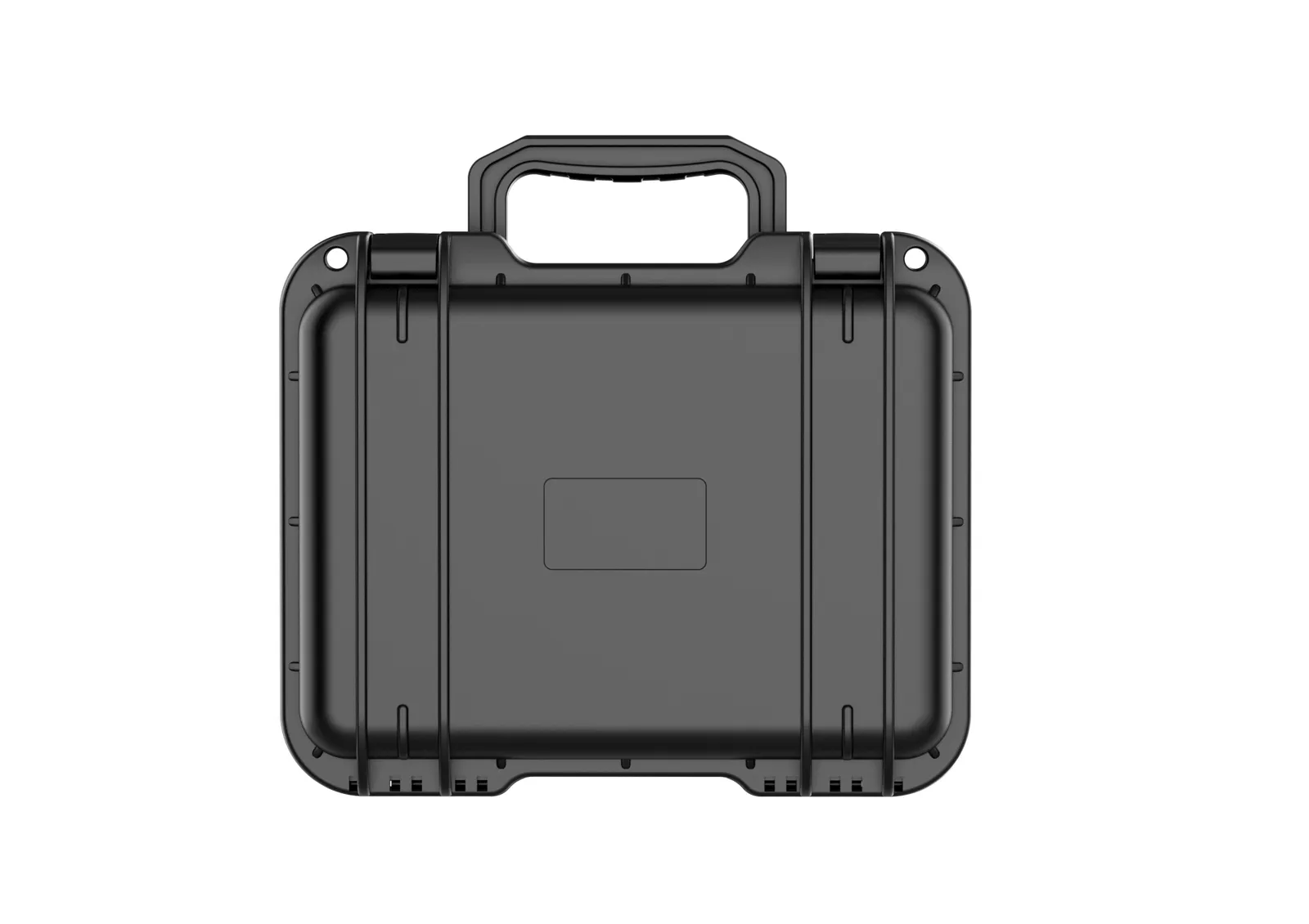
WL9-2817 Protective Case
Specifications
| External Dimensions | 280*225*165mm |
|---|---|
| Internal Dimensions | 253*180*152mm |
| Lid + Base Depth | 27+125mm |
| Wall Thickness | 5mm |
| Material | Engineering PP |
| Weight | 940g |
Need a custom case solution?
Tell us your requirements — OEM / ODM, logo printing, custom foam inserts.
Frequently Asked Questions
What are the exact outer and inner dimensions?
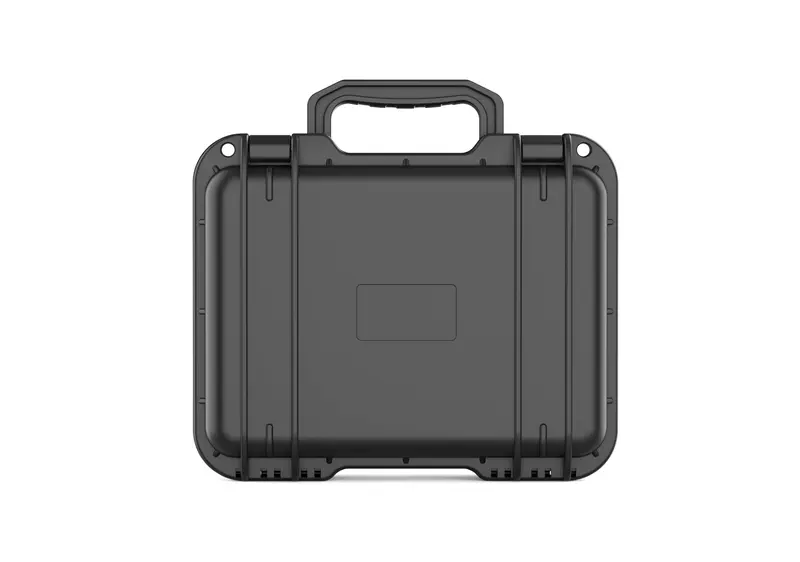
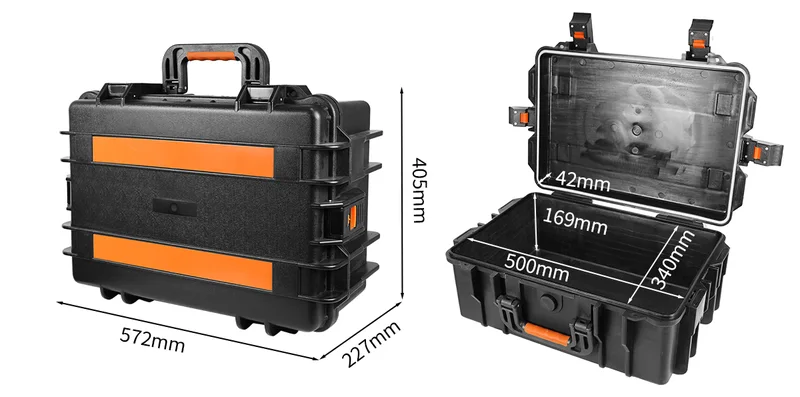
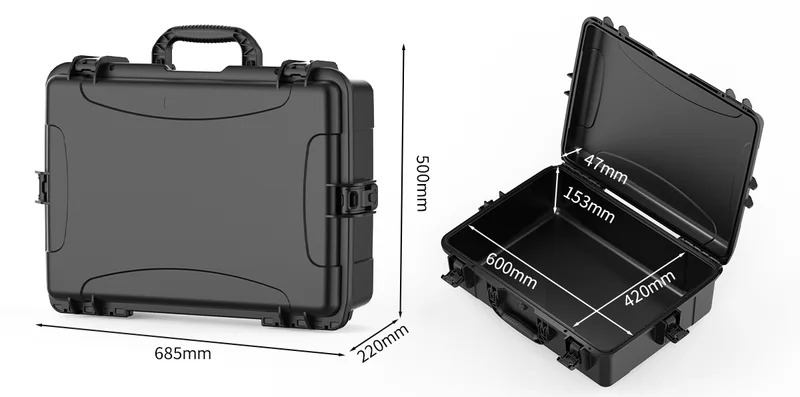
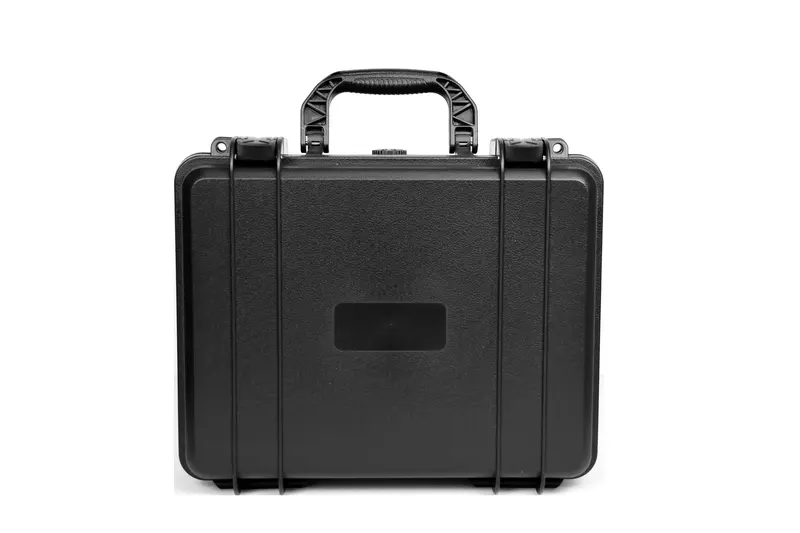
The outer shell is 280 x 225 x 165 mm and the internal cavity is 253 x 180 x 152 mm. Externally the case occupies 280 x 225 mm while the usable floor inside is 253 x 180 mm, the difference coming from the wall section, the seal channel and the moulded closing geometry rather than measurement error. Size a load from the inner dimensions, never from the outside, because outside figures overstate capacity. At 152 mm it is the tall option in this small footprint, so an instrument on a bracket, or one mounted upright, goes in complete instead of being stripped down.
How deep are the lid and the base?
The lid adds 27 mm of internal depth and the base adds 125 mm, giving 152 mm of combined inner height. A 27 mm lid over a 125 mm base puts most of the depth in the body, which gives upright contents a long supporting wall and reduces tipping in transit; the lid depth matches WL9-2811, so both models can share the same thin lining design.When judging whether a body suits your contents, read the base figure first, because it sets how tall an item can stand, while the lid figure decides how much headroom remains above it. Only the sum of the two is usable height, and when measuring a part, include handles, connectors and bosses, or the lid will press on it once closed.
Is the case waterproof and dustproof, and to what rating?
The shell uses a sealed closure and provides an IP67 waterproof and dustproof rating. A taller body holds more air, and the sealed cavity limits the exchange that would otherwise carry dust and moisture in with each movement. The rating applies to the sealed cavity of the case itself, so if you store moisture-sensitive contents, pair it with desiccant or a humidity management accessory and check the sealing face for trapped debris every time you close the lid, since a single trapped fragment undermines the seal.
What kinds of contents is this model suitable for?
The factory usage categories for WL9-2817 are precision instrument cases, hardware tool cases and medical equipment cases. The 253 x 180 x 152 mm cavity takes small bracket-mounted or upright instruments, detection modules and handheld devices complete, and it also suits tool sets arranged in layers. At 940 g it still carries by hand, which suits field engineers travelling with their own kit.
What is the difference between WL9-2817 and WL9-2811?
The two share a 280 x 225 mm outer footprint, a 5 mm wall and a 27 mm lid depth. The difference is base depth: this model has a 125 mm base, 152 mm of combined inner height and a 940 g unit weight, while WL9-2811 has a 71 mm base, 98 mm of inner height and an 890 g weight. Take WL9-2811 when upright contents stay under 98 mm and this model when they do not. The weight gap is only 50 g, so height alone decides and there is no real weight trade-off. Because the footprint, wall and lid match exactly, the two models share one carton layout and one thin-lining design.