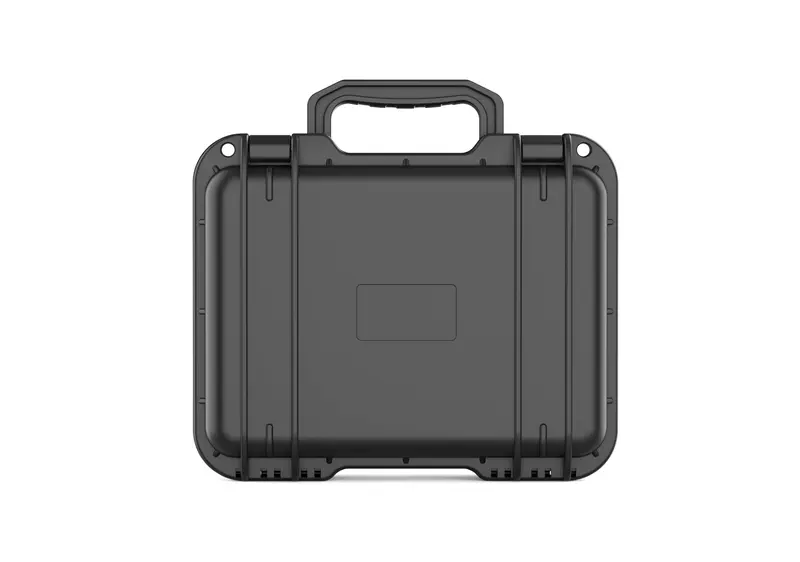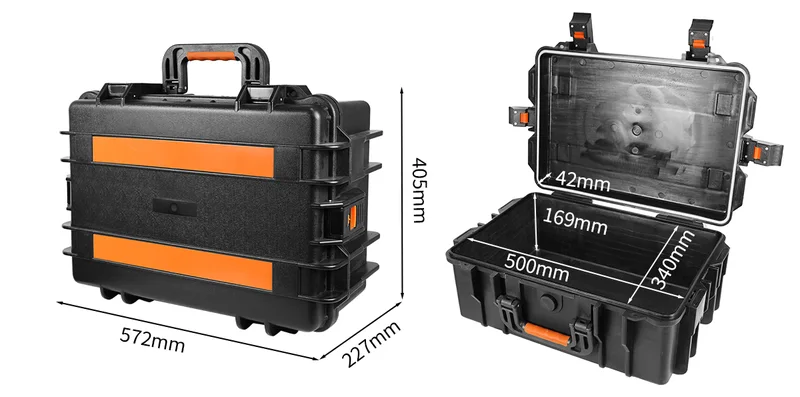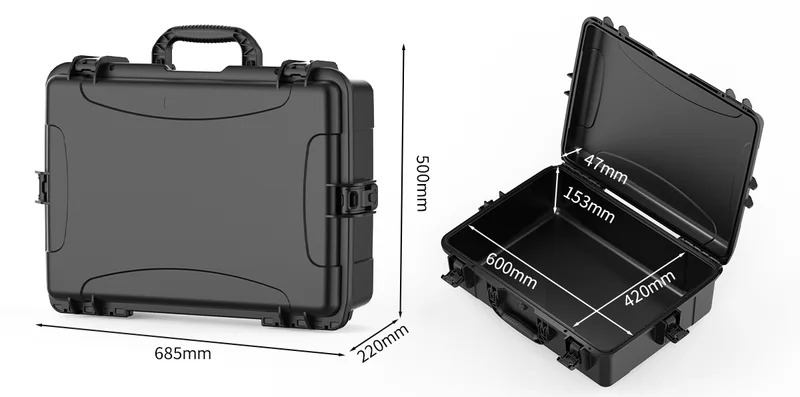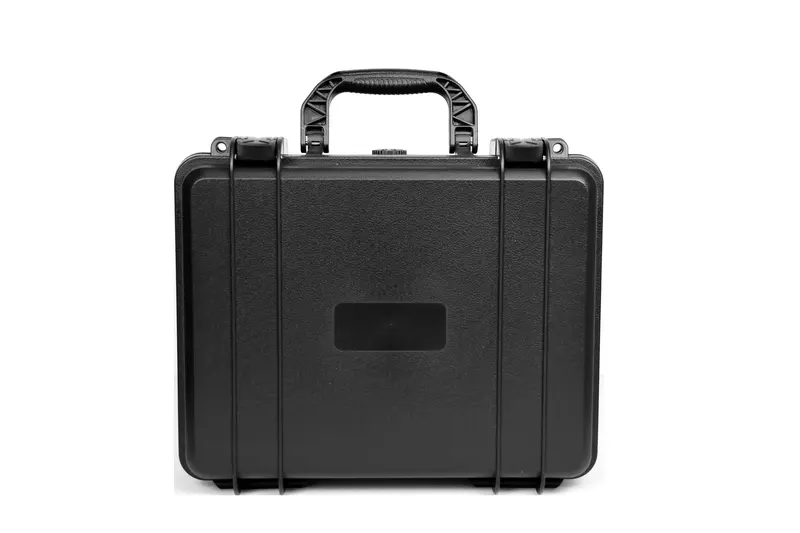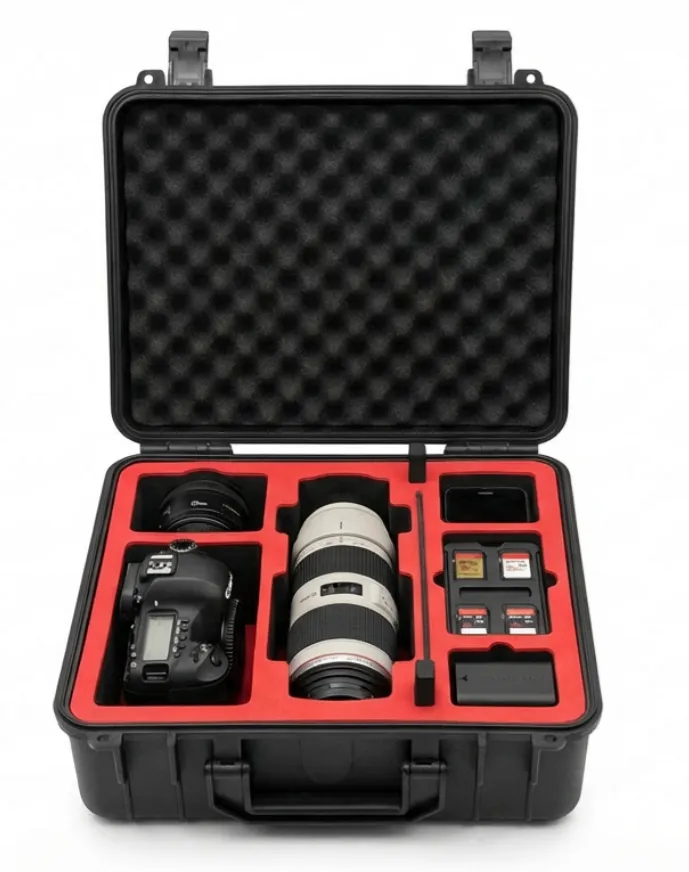
WL9-3113 Engineering PP Precision Instrument Case
Specifications
| External Dimensions | 313*282*129mm |
|---|---|
| Internal Dimensions | 296*258*121mm |
| Lid + Base Depth | 38+83mm |
| Wall Thickness | 2.9mm |
| Material | Engineering PP |
| Weight | 1060g |
| Packaging | Each piece packed in a poly bag; carton size: 635*595*540mm (16 pcs/carton) |
Need a custom case solution?
Tell us your requirements — OEM / ODM, logo printing, custom foam inserts.
Frequently Asked Questions
What are the exact outer and inner dimensions?
The outer shell is 313 x 282 x 129 mm and the internal cavity is 296 x 258 x 121 mm. Externally the case occupies 313 x 282 mm while the usable floor inside is 296 x 258 mm, the difference coming from the wall section, the seal channel and the moulded closing geometry rather than measurement error. Size a load from the inner dimensions, never from the outside, because outside figures overstate capacity. A 296 x 258 mm floor with 121 mm of inner height is one of the squarer mid-small bodies in the 9 Series, and because the sides are similar in length it packs rectangular instruments and modules efficiently; the 2.9 mm wall gives a 1060 g unit weight.
How deep are the lid and the base?
The lid adds 38 mm of internal depth and the base adds 83 mm, giving 121 mm of combined inner height. At 38 mm the lid is deeper than the 25 mm lids elsewhere in the series, so low-profile connectors on top still clear, while the 83 mm base keeps the cavity shallow enough to reach into comfortably.When judging whether a body suits your contents, read the base figure first, because it sets how tall an item can stand, while the lid figure decides how much headroom remains above it. Only the sum of the two is usable height, and when measuring a part, include handles, connectors and bosses, or the lid will press on it once closed.
Is the case waterproof and dustproof, and to what rating?
The shell uses a sealed closure and provides an IP67 waterproof and dustproof rating. Mid-size instrument cases often shuttle between workshop and laboratory, and the sealed cavity holds the contents at one cleanliness level instead of following the room they are opened in. The rating applies to the sealed cavity of the case itself, so if you store moisture-sensitive contents, pair it with desiccant or a humidity management accessory and check the sealing face for trapped debris every time you close the lid, since a single trapped fragment undermines the seal.
What kinds of contents is this model suitable for?
The factory usage categories for WL9-3113 are precision instrument cases and hardware tool cases, under code 915. The 296 x 258 x 121 mm cavity suits optical modules, controllers, small motor assemblies and gauges as a set, and the square footprint makes routed linings more efficient than in a long narrow body. At 1060 g it travels well in a vehicle, though it is not meant to be carried all day.
How many pieces go in one carton, and what size is the carton?
WL9-3113 is poly-bagged individually and packed 16 per carton measuring 635 x 595 x 540 mm. At 1060 g per unit the carton lands in the low twenties by gross weight, which stays within normal manual handling. The carton is laid out around the 313 x 282 x 129 mm body, and dividing carton volume by 16 gives a per-unit shipping volume that can be compared across the series when freight cost decides the order. Carton breakdowns, pallet plans and container loading layouts can be supplied with the order.