

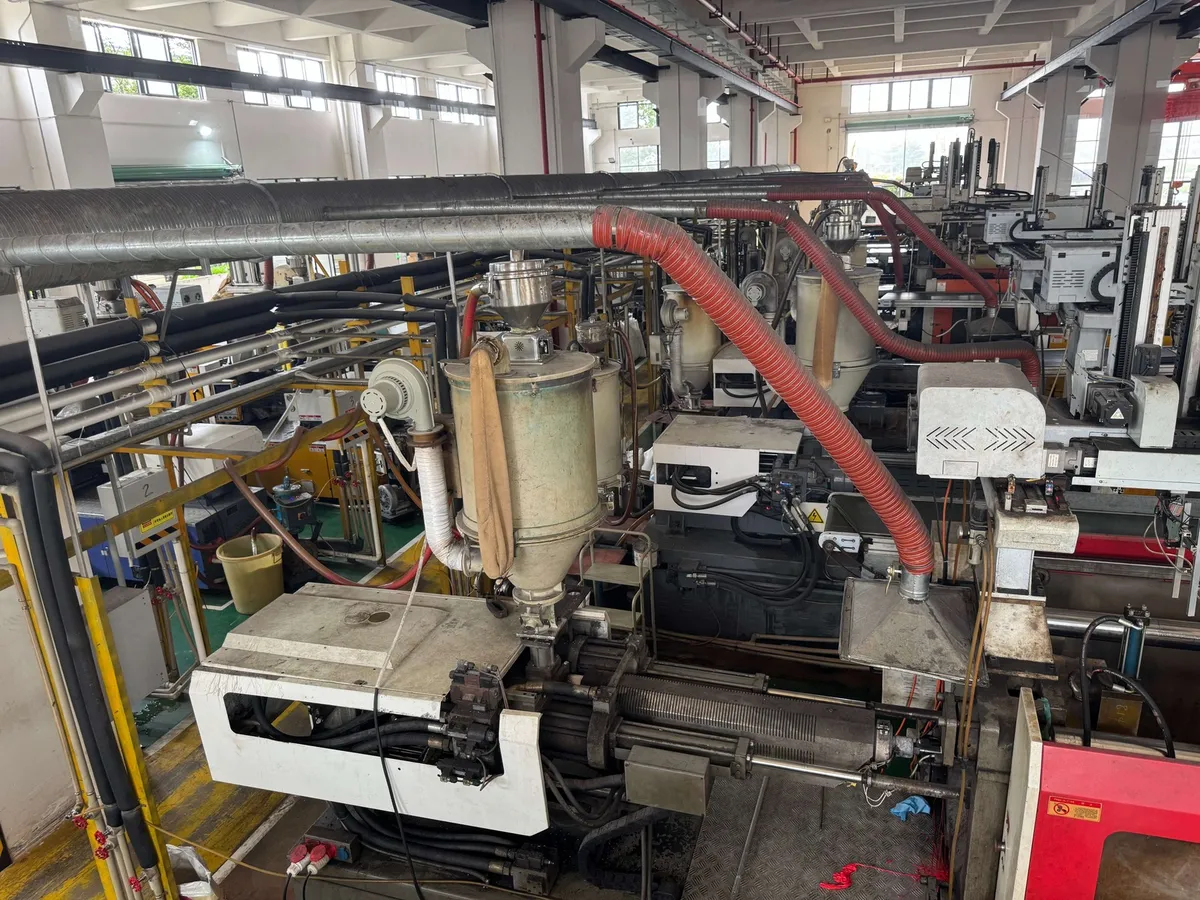
Every shipment hits one of two limits: it runs out of space or it runs out of weight allowance. Light, bulky cargo - which includes empty protective cases - runs out of space. Stackability is the lever that moves which limit you hit, and it is a case design decision made long before anyone books a container.
The two limits
| Container type | Internal volume | Typical single-tier pallets | Note |
|---|---|---|---|
| 20ft standard | About 33 cubic metres | 10 to 11 Euro / 9 to 10 standard | Carries more payload than a 40ft despite half the volume - the choice for dense cargo |
| 40ft standard | About 68 cubic metres | 23 to 25 Euro / 20 to 21 standard | Same floor as the high cube; less height for a second tier |
| 40ft high cube | About 76 cubic metres | 23 to 25 Euro / 20 to 21 standard | The extra height is what makes a second tier practical |
| 45ft high cube | About 86 cubic metres | 27 to 28 Euro / 24 to 25 standard | Not available on all trade lanes |
A useful rule of thumb from the industry: if your cargo's density is below roughly 350 kilograms per cubic metre, you will fill the container's volume before you reach its weight limit. Empty or lightly loaded protective cases sit well below that threshold, which is precisely why stacking matters so much for this product category.
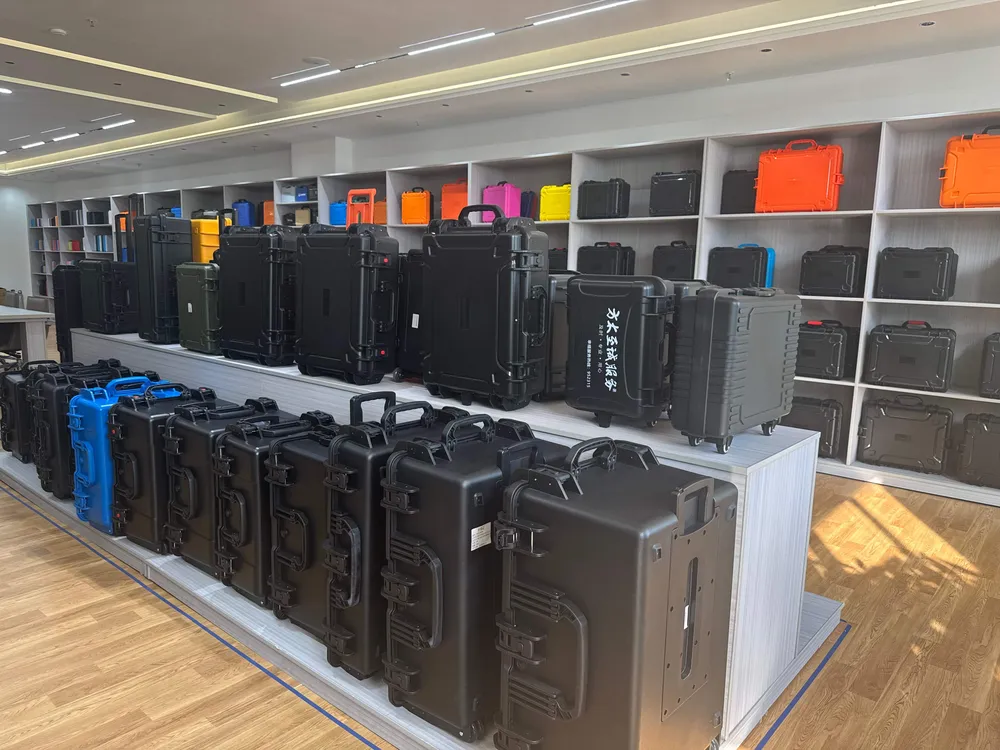
Pallet footprints: design to the pallet you will actually use
- Euro pallet, 1,200 by 800 millimetres. Dominant in European trade and the most container-efficient, because the 800 millimetre width allows mixed orientations within the container's internal width.
- Standard or industrial pallet, 1,200 by 1,000 millimetres. Common in the UK and in general industry; fits slightly fewer per container because two side by side exceed the internal width.
- Regional variants. Confirm the pallet standard for your destination market before you fix case dimensions - this is a market constraint, not a preference.
Overhang is the silent killer of pallet efficiency. A case that hangs over the pallet edge is carrying load on nothing, which both crushes the case and destabilises the stack. Design footprints that tile cleanly, with the case fully supported.
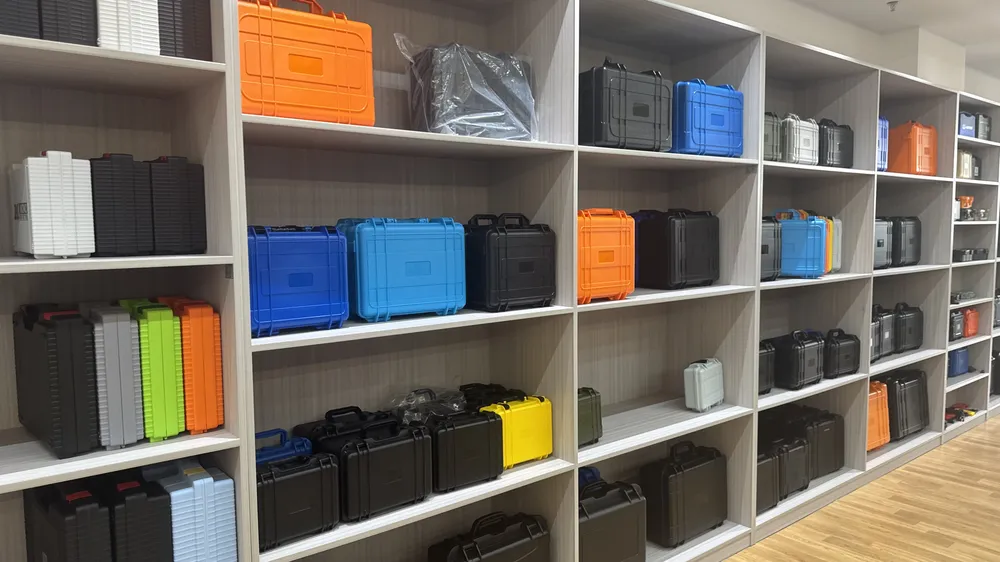
What makes a case stackable
- Flat, load-bearing top. The surface above must be designed to take load, not merely to close.
- Matching footprint. The case below should receive load through its structure, so the lid is not transmitting the stack into the contents.
- Interlock. Ribs, recesses or corner profiles that locate each case on the one below. Without it, stacks slide in transit and the wrap takes a load it was not meant to take.
- Shell stiffness. The bottom case in a tall stack carries everything above it. Stiffness, not just strength, is what keeps the stack column-stable.
- Stable feet or base. A base that sits flat on the pallet, without rocking or point-loading.
- Anti-slip consideration. Smooth polymer on smooth polymer slides. Consider how the stack will be wrapped, strapped or interleaved.
Planning a load
- Start from the pallet, not the case: how many cases tile one layer with no overhang?
- Multiply by the number of layers the stack height and the container height permit, then check the case's own compression limit.
- Check the weight: stack height is often limited by stackability before it is limited by the container payload, but confirm which binds for your cargo.
- Column stack where possible - cases directly above cases transfers load through the strongest path. Interlocking brick patterns are more stable but transfer load less directly.
- Wrap or strap so the load acts as a unit, remembering that wrap restrains, it does not support.
- Consider the door opening as well as the internal dimensions - a load that fits the box but not the doorway is a load that gets repacked at the warehouse.
The mistakes that cost the most space
- Using wheeled cases in a palletised load without accounting for the wheels - they add height, create point loads and make stacks unstable.
- Mixing case sizes across a pallet layer, which leaves unusable gaps that no clever pattern recovers later.
- Designing case dimensions around the product rather than around the pallet, then discovering the loss at the container stage.
- Forgetting that the container floor is not perfectly flat - there is a recess near the front on 40ft units that needs bridging or avoidance for level-critical loads.
- Assuming the published pallet count is achievable with your case dimensions rather than with a standard carton.
Stackability is a specification you either buy or pay for repeatedly in freight. It costs nothing to specify at design stage and cannot be recovered at the container. For JUNZHIJIA cases intended for palletised export, tell us the pallet standard for your destination, the stack height you need to survive, and whether the containers are standard or high cube, and the case footprint and shell stiffness are specified against that - rather than discovered when the first booking comes in.
Related Products
- 8 Series — Gun Cases; Military Equipment Cases; Camera Equipment Cases; Drone Cases; Watch Cases; Knife Cases; First Aid Cases; Electronics Equipment Cases
- WL8-2812 PP Gun Case — model WL8-2812
- All protective cases and toolboxes: 7 series, 158 models