

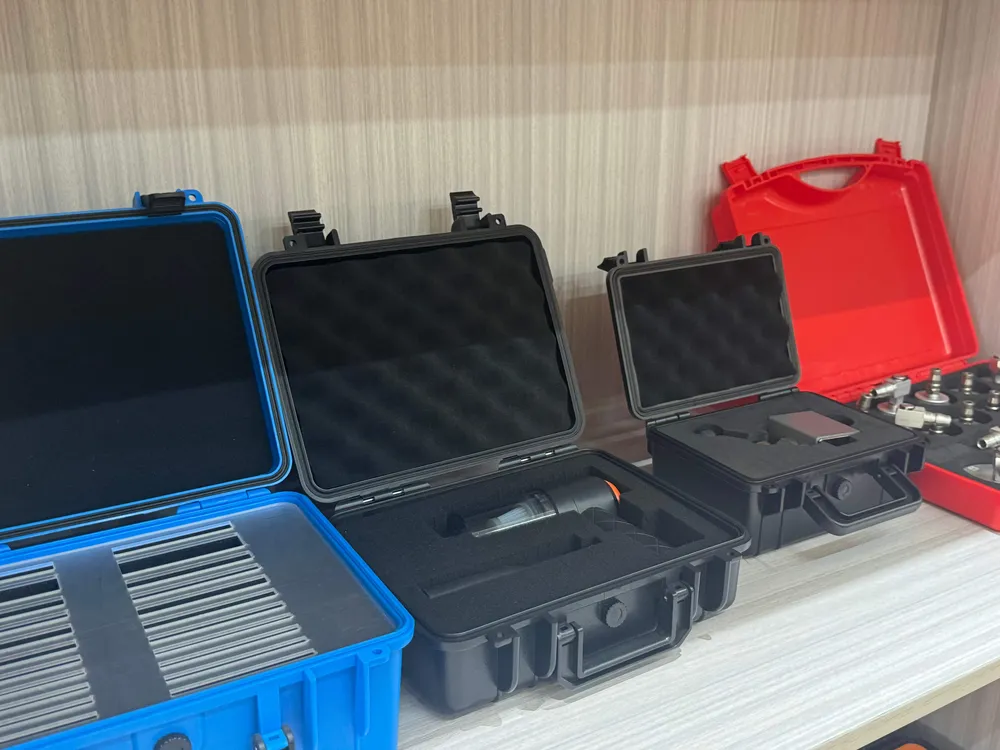
A protective case that survives repeated drops at room temperature can fail in cold conditions from the same impact. The reason is that polymers become less able to deform as they cool: the shell stops absorbing energy by flexing and starts transmitting it, and when the stress exceeds what the material can carry, it cracks instead of denting.
What Happens Inside the Material
Toughness in a plastic depends on molecular mobility. At warmer temperatures, polymer chains can move and rearrange under load, which lets the material yield and dissipate impact energy. As temperature drops, that mobility is reduced; the material behaves stiffer and more brittle.
The transition is gradual rather than a single on/off point, and it varies by resin. This is why a datasheet should give a low-temperature impact figure rather than a single catch-all claim.
Factors That Move the Safe Window
| Factor | Effect in cold service |
|---|---|
| Resin type and grade | The largest lever; some grades retain toughness far lower than others |
| Wall thickness | Thicker sections raise stiffness but can also concentrate stress at transitions |
| Corner and rib geometry | Sharp transitions concentrate stress, giving cracks a place to start |
| Payload mass | A heavier load increases impact energy for the same drop height |
| Impact point | Corners and edges are the worst case; flat faces distribute load better |
| Prior damage and ageing | Existing scratches, UV damage and chemical exposure all reduce margin |
Note the interaction between payload and temperature. Cold weather work often means gloves, heavier clothing and more awkward handling, so drop probability rises at the same time as the material's tolerance falls.
Handling Practice in Cold Conditions
- Do not warm a cold case rapidly. Moving a frozen case straight into a hot vehicle creates thermal shock and condensation inside, which is bad for the contents as well as the shell.
- Let it acclimatise before opening. Opening a cold case in warm humid air pulls moisture in, and that moisture condenses on cold equipment inside.
- Slow down handling. Most cold-weather breakages are handling failures: a set-down on frozen ground, a drag over gravel, a lid allowed to slam.
- Keep the gasket clean and supple. A frozen, dirty or compressed seal will not conform, and will let meltwater in when the temperature rises.
What to Specify
State the actual minimum service temperature and ask the supplier to confirm the resin retains impact performance at that temperature. If the case will carry heavy payloads or work in freezing conditions routinely, ask specifically about low-temperature drop performance rather than assuming the room-temperature figure carries over.