

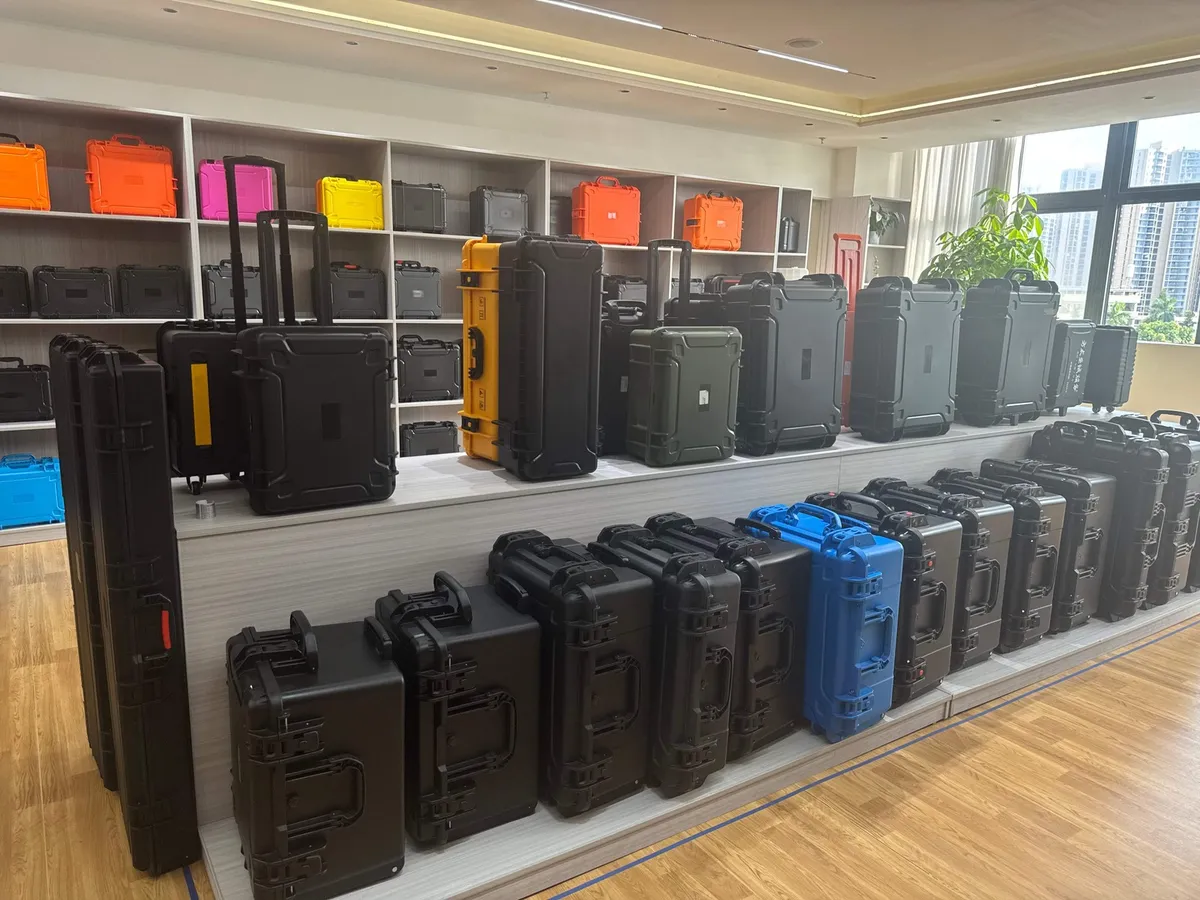
Inspection equipment does not live in a storeroom. It lives in the back of a vehicle, gets driven to site over rough ground, sits in the sun, and is opened in conditions very different from the ones it was closed in. Cases for this duty are specified around four threats, and only one of them is dropping.
The four threats
| Threat | How it damages equipment | What the case must provide |
|---|---|---|
| Long-duration vehicle vibration | Loosens connectors and fasteners, frets cables, wears supports, drifts calibration | Continuous foam support over the whole contact area, no point loading, nothing free to rattle |
| Dust and grit ingress | Abrades optics and mating faces, jams mechanisms, contaminates seals | A sealing gasket in good condition, a pressure-tight lid, and a habit of closing the case before driving |
| Heat soak in a parked vehicle | Accelerates ageing of foam, seals and adhesives; stresses batteries and calibrated optics | Shade discipline, and realistic expectations - a case is not a cool box |
| Condensation on arrival | Wets optics and electronics from the inside, causes corrosion and measurement error | Let the closed case come to temperature before opening; desiccant where warranted |
Vibration is the dominant one
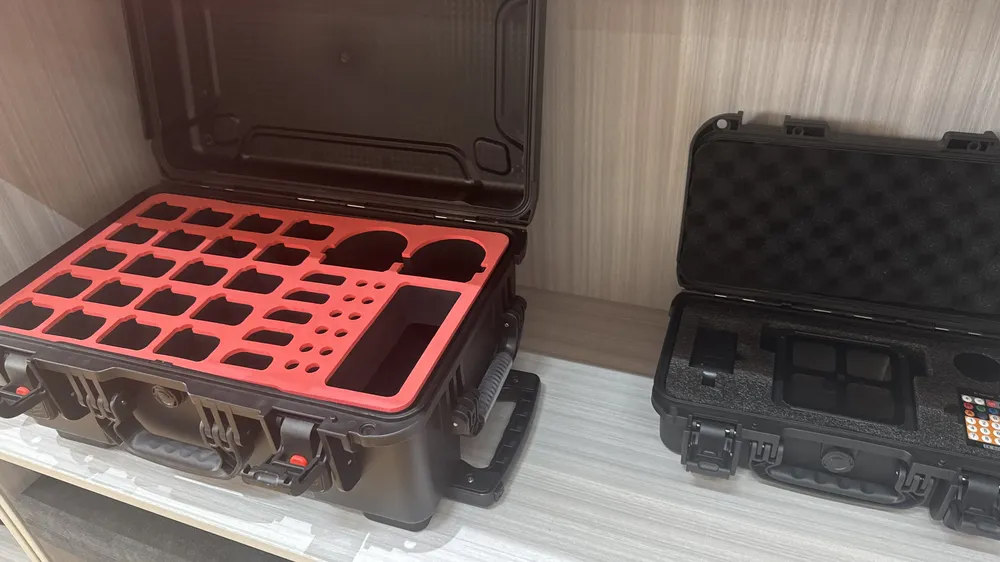
A drop is dramatic but rare. Vibration happens on every single trip and accumulates over thousands of kilometres. It is also the threat that a badly fitting cavity makes worse: if the item can move even slightly, every bump becomes a small impact.
- Support over area, not at points. The cavity should hold the item along its length or across its base.
- Eliminate free space. Anything that can shift will shift, and then wear.
- Keep heavy and delicate apart. Tools and metal accessories should not share a cavity boundary with instruments.
- Re-check the fit periodically. Foam takes a compression set over time and cavities loosen.
Packing by inspection type
| Inspection type | Typical payload | What matters most |
|---|---|---|
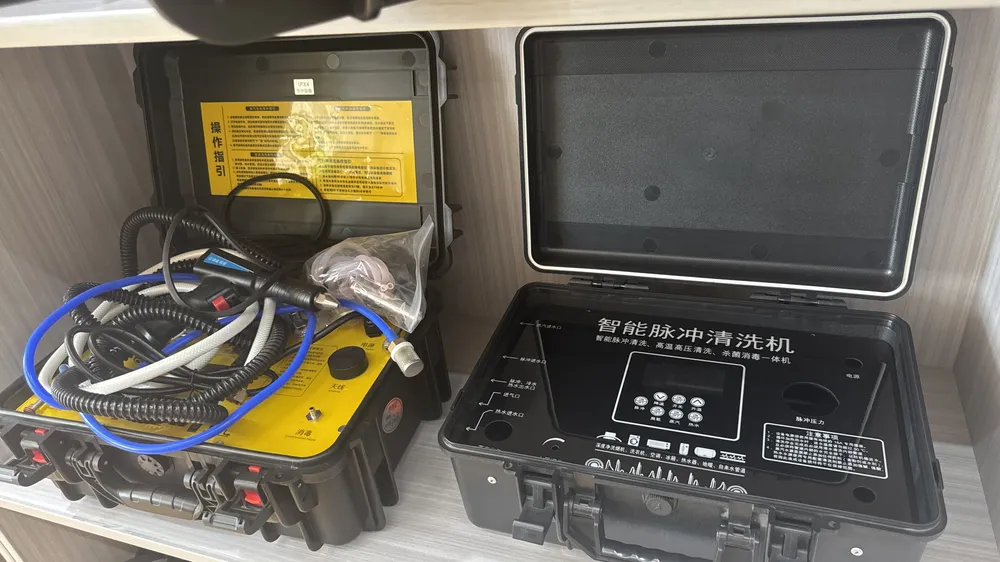
| Electrical / substation | Thermal camera, clamp meter, multimeter, test leads | Optical clearance, lead management, separation of heavy tools from instruments |
| Solar O&M | IV curve tester, EL detector, irradiance sensor, connectors | Fragile optics and sensitive detectors need isolation; long cables need their own space |
| Survey / GNSS | RTK receivers, antenna, controller, tripod | Antenna and connector protection; long items supported along their length |
| Environmental / geotechnical | Meters, sample bottles, probes, reagents | Separation of liquids from electronics; upright storage; sealed containment for samples |
Condensation: the one that surprises people
A case sealed in an air-conditioned vehicle and carried into hot, humid air will often be below the dew point of that air. Moisture condenses on the outside immediately, and if the case is opened straight away, humid air enters and can condense on cold contents inside. The countermeasure is procedural rather than a product feature.
- Close the case in the vehicle, including on short stops.
- Carry it to site closed.
- Let it stand closed until the shell has come close to ambient temperature.
- Open it, and keep it open in a way that lets any residual moisture disperse.
- Use desiccant where the duty cycle justifies it, and recharge or replace it on a schedule.
A wet case interior is not automatically a leaking case. Before assuming a seal failure, consider whether you are looking at condensation. The two have different fixes, and sealing a case harder does not stop condensation.
Charging and batteries in the field
Field work means batteries, and batteries mean risk that has nothing to do with the case. Charge outside the case, on a surface that will not burn, away from flammable material, and follow the battery and charger manufacturer's instructions. Do not charge inside a closed case: charging produces heat and you do not want heat or a venting event contained in a sealed box.
- Inspect before charging. Swollen, damaged or hot packs should be taken out of service, not charged.
- Do not charge unattended overnight in a vehicle or a site cabin.
- Transport spares properly. Protect terminals from shorting and from impact.
- Follow the transport rules that apply to lithium cells - they are separate from any question of case design.
Inventory discipline
The most expensive cost in field inspection is not a broken case. It is arriving at site and finding something missing. A case layout that makes absence visible solves this.
- One cavity per item, visibly empty when the item is out. This is the whole principle.
- Shadowing or outline marking so a missing item is obvious at a glance.
- A contents card fixed inside the lid, listing what belongs in the case.
- A pack-and-check routine at the end of each job, before the case goes back into the vehicle.
Securing cases in the vehicle
A case that slides in the back of a vehicle damages itself, other equipment and the vehicle interior. Strap cases down or use a fixed rack, put heavy cases low and against a bulkhead, and keep the latches and handles clear of whatever is strapped over them.
Pre-purchase checklist
- List the payload with dimensions and weights, including leads and chargers.
- Identify the fragile and calibrated items and what must not bear load.
- Decide internal zoning: instruments, tools, cables, consumables.
- Confirm the sealing and dust performance you need for your environment.
- Check that long items are either supported along their length or given a separate case.
- Plan the inventory method: one cavity per item, contents card, missing-item visibility.
- Decide how the case is secured in the vehicle.
Related Products
- 8 Series — Gun Cases; Military Equipment Cases; Camera Equipment Cases; Drone Cases; Watch Cases; Knife Cases; First Aid Cases; Electronics Equipment Cases
- WL8-2812 PP Gun Case — model WL8-2812
- All protective cases and toolboxes: 7 series, 158 models