

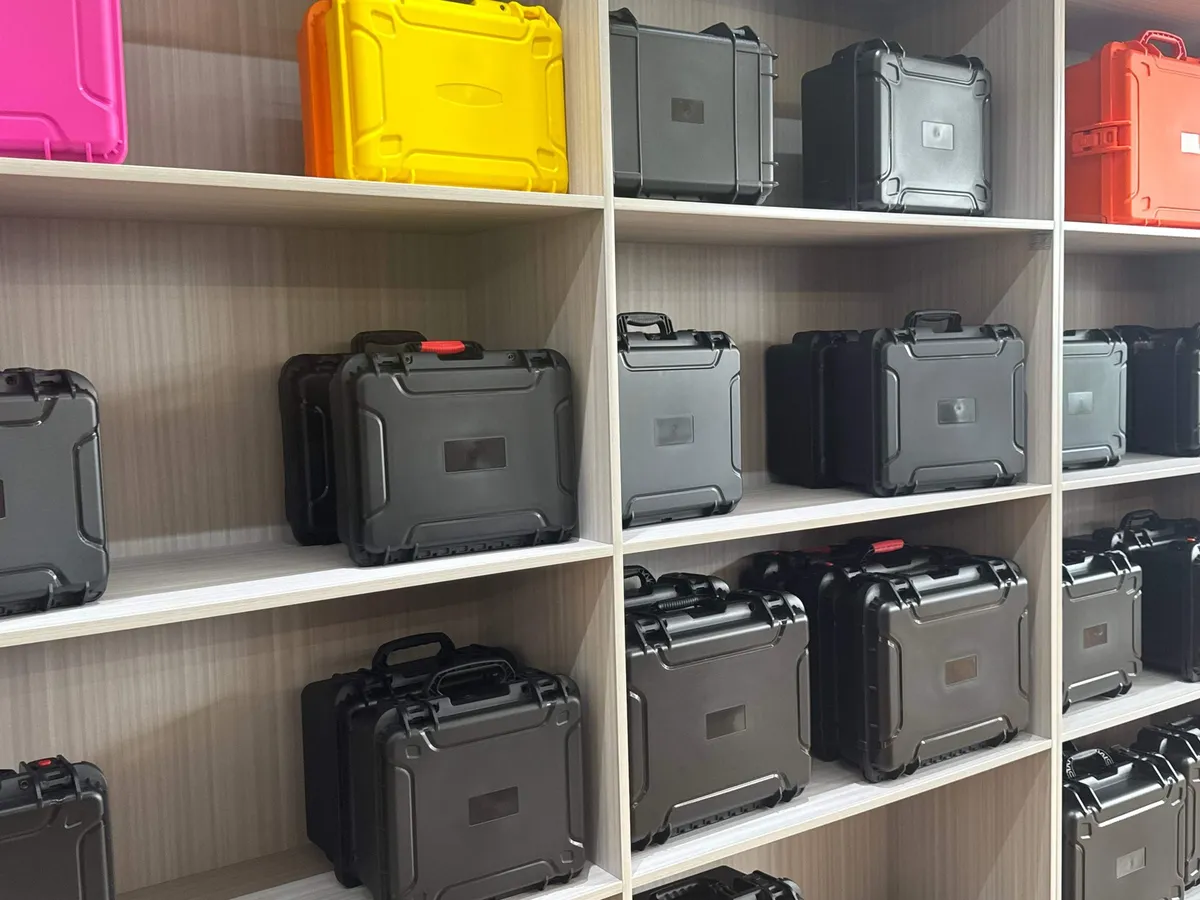
Marine duty is a combination problem. Waterproofness alone does not address salt, grit, sharp objects, wet packing and relentless sun arriving at the same case on the same day - and it is the combination, not any single factor, that ends cases early.
Five simultaneous threats
| Threat | Mechanism | Design answer |
|---|---|---|
| Salt spray | Chloride pitting on stainless; crystals abrade seals and pivots | 316 stainless hardware; freshwater rinse after every trip |
| Grit and sand | Abrades the gasket and the mating face; holds the lid off the seal | Wipe the sealing face before closing; rinse the gasket groove |
| Hooks, blades and teeth | Puncture the lining; snag in fabric | Dense closed-cell foam with a smooth surface; avoid fabric linings |
| Wet packing | Moisture held against contents and lining; mould and corrosion | A drain that closes properly, or the discipline to pack dry |
| UV exposure | Chalking, fading, loss of impact strength in unprotected polymer | UV-stabilised polymer; store out of sun when not in use |
Hardware: the decision that shows up in year two
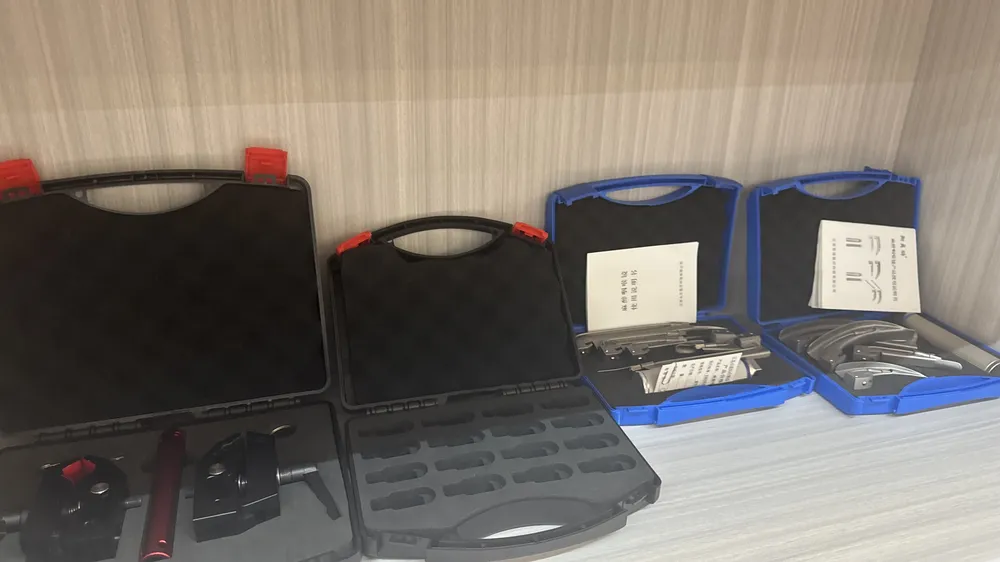
Latches and hinges are where marine cases fail first, and the failure is corrosion rather than breakage. A latch that has pitted and seized is functionally a broken latch, and it usually takes the hinge and the fasteners with it.
- 316 over 304. The molybdenum in 316 substantially improves resistance to chloride pitting, which is the mechanism that attacks stainless near the sea.
- Consider polymer bodies. A glass-filled nylon latch body with a stainless pin does not pit at all, and in many marine applications outlasts a metal latch of the same cost.
- Avoid mixed metals in contact. Dissimilar metals with salt water as the electrolyte is a galvanic cell; ask how the assembly manages this.
- Check the fasteners, not just the latch. The visible latch is usually the best-specified part of the assembly. The hinge pin and the fixings are where cost is quietly saved.
Rinsing is more effective than any material choice. A 316 latch that is never rinsed will eventually pit; a 304 latch rinsed after every trip can last for years inland-coastal duty. Specify the material for the environment, then maintain it for the material you chose.
Drainage and washdown
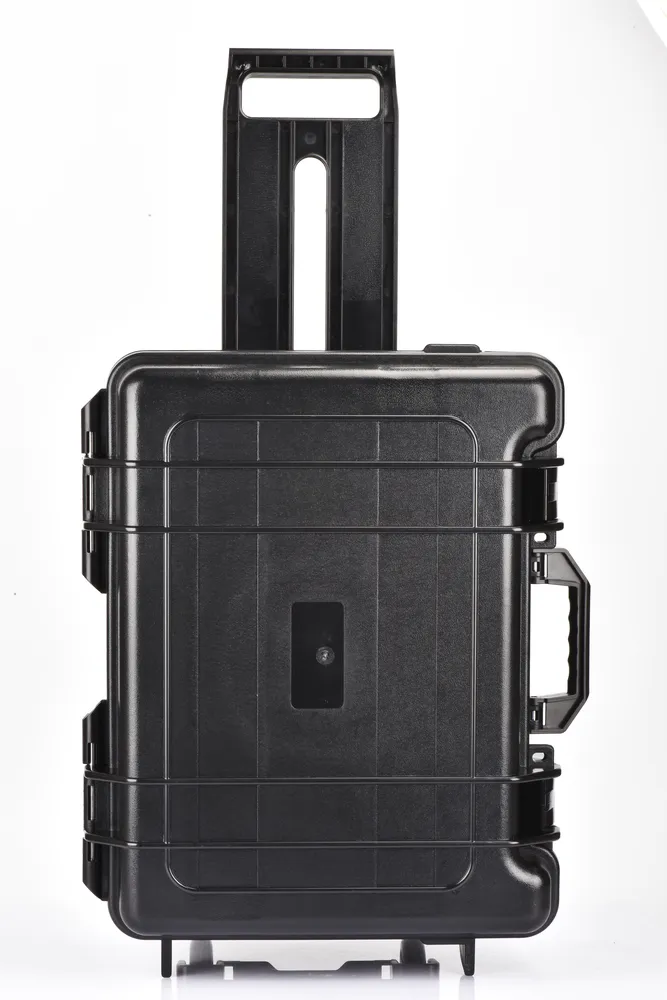
The practical question is what happens to the water that is already inside. Gear comes off the water wet, and a case that cannot shed that water becomes a humidity cabinet for everything in it.
- Rinse in place. A case you can hose out and leave to drain is a case that gets rinsed. One that must be emptied and wiped is a case that gets rinsed less often.
- Let it drain and dry. Open the lid, leave it in the shade with the drain open, and let it fully dry before sealing for storage.
- Close it properly for transport. A drain that seals is a feature; a permanent hole is a compromise. Decide which you need before buying.
- Keep the gasket groove clean. Sand collects in the groove and abrades the seal with every closure. Rinse it out rather than wiping sand across it.
Interior: choose for puncture and drainage, not appearance
- Dense closed-cell foam resists puncture from hooks and knife points far better than soft open-cell foam, and does not hold water against metal.
- Smooth surfaces release hooks. Fabric linings snag them and retain salt and moisture.
- Reels and heavy items should sit in cut cavities rather than loose - loose heavy items become projectiles in a swell and will damage each other and the case.
- Separate wet and dry zones if the case holds both. Electronics and documents should never share a cavity with anything that came out of the water.
- Allow airflow. Cavities cut right through, or a lid that is opened and dried after every trip, prevent the stale damp that causes mould.
The routine that doubles a marine case's life
- Rinse the whole case - shell, gasket groove, latches and hinge - with fresh water after every trip.
- Open it and let it dry completely in the shade before sealing for storage.
- Wipe the sealing face and the gasket before closing; grit is the dominant cause of a leaking case.
- Inspect hardware for pitting and play at each service interval, and replace before seizure rather than after.
- Store out of direct sun. UV degrades unprotected polymer even on a case that is otherwise idle.
Marine cases are not a different product so much as a different specification discipline. The shell and seal technology is the same; what changes is the hardware material, the interior, whether it drains, and how it is maintained. For JUNZHIJIA cases used in marine and coastal duty, describe the exposure - salt spray, continuous deck UV, whether the case will be hosed down, and whether it must float - at enquiry, so the hardware material, lining and drainage are specified against it rather than assumed from a general-purpose case.
Related Products
- 8 Series — Gun Cases; Military Equipment Cases; Camera Equipment Cases; Drone Cases; Watch Cases; Knife Cases; First Aid Cases; Electronics Equipment Cases
- WL8-2812 PP Gun Case — model WL8-2812
- All protective cases and toolboxes: 7 series, 158 models