

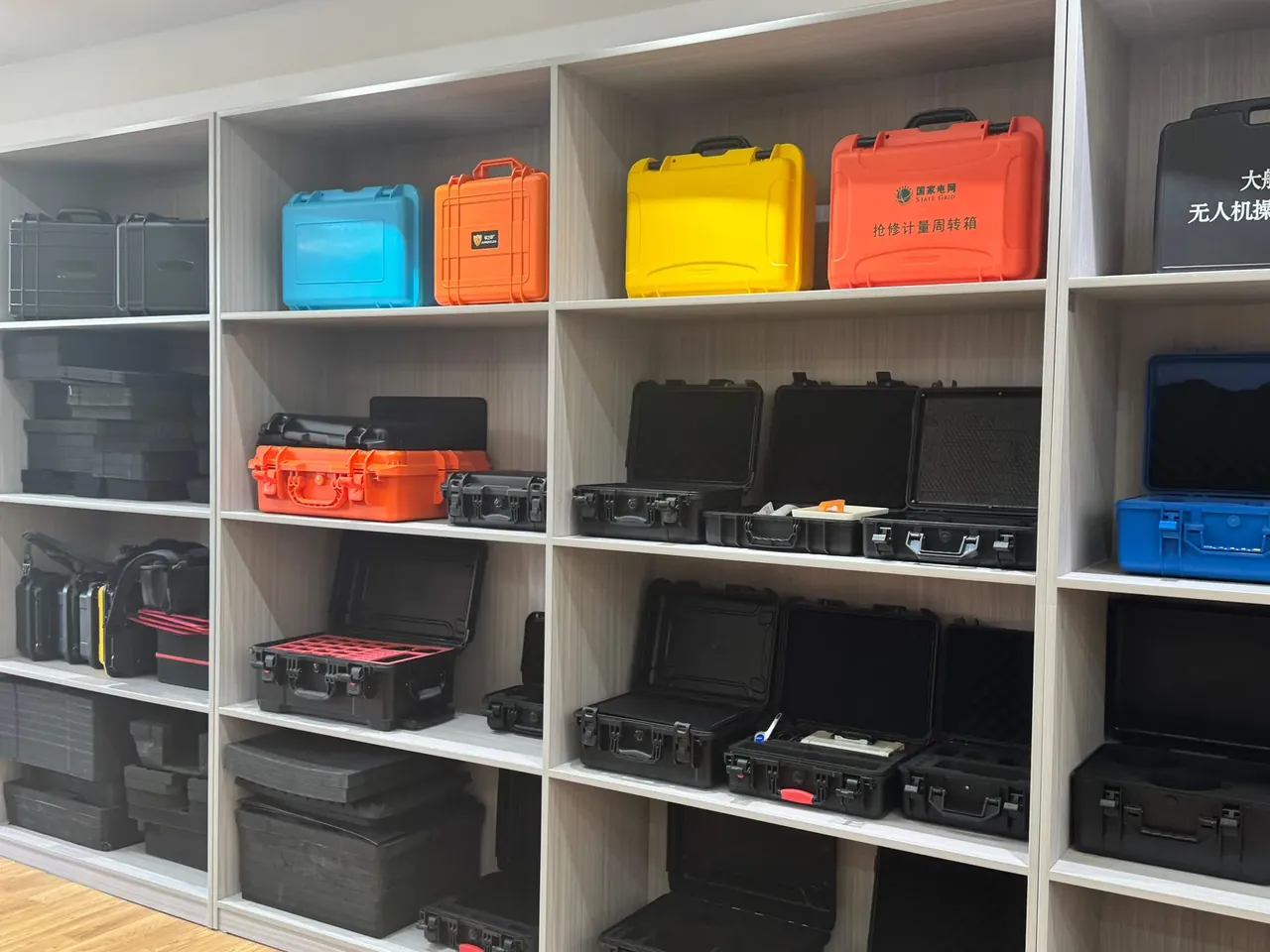
Quick answer: A grenade transport container quote splits into resin, tooling, moulding and inspection. MOQ decides how fast tooling amortises, and lead time is four stages in series: sample, tooling, production, shipment. Ask for a batch-price-lead-time ladder, then pin tooling ownership and acceptance into the contract.
Table of contents
- What the price is made of
- MOQ and how tooling amortises
- Lead time from sample to container
- The costs that vanish from a comparison
- What to pin down in the RFQ and contract
- FAQ
1. What the price is made of
A quote that returns one unit price tells you nothing about where the money goes. The price of a grenade transport container splits into four blocks: resin, tooling amortisation, moulding and labour, inspection and packing.
| Cost block | Share | Lever |
|---|---|---|
| Resin | 45% to 55% | Grade, rib thinning |
| Tooling | 8% to 15% | Batch size, shared frame |
| Moulding and labour | 20% to 28% | Press, scheduling |
| Inspection and packing | 5% to 8% | Batch consolidation |
Resin takes about half. At 4.8 kg net per case the figure follows net weight times resin price plus 3% to 5% for sprues and rejects, and a quote by weight is easier to audit than a lump sum. Moulding bills by press hour: a 650-tonne machine costs the same whether the tool runs one cavity or two.
2. MOQ and how tooling amortises
MOQ is not an arbitrary threshold, it is the speed at which tooling amortises. A tool quoted at CNY 36,000 costs 120 per unit across 300 pieces and 12 across 3000, a spread of 108 that exceeds the material cost of the case itself.
| Batch | Unit price | Tooling share |
|---|---|---|
| 300 | 168 | 120 |
| 1000 | 148 | 36 |
| 3000 | 132 | 12 |
Ask for three tiers rather than one number, and settle whether tooling is invoiced once or spread per unit. Invoiced once, the first order carries the cash and repeat orders pay nothing more; spread per unit, the first price looks lower and the second order arrives with a fresh tooling charge. Tool life matters: a steel tool flashes after roughly 300,000 shots, so pushing all volume onto one tool competes with its maintenance slots.
3. Lead time from sample to container
Lead time is four stages in series, not one promise. Drawings and sample approval take about 3 days, tooling and trials 10 days including two trial shots, production 22 days on a single tool, inspection and loading another 5.
| Stage | Days | Common blocker |
|---|---|---|
| Drawing and sample approval | 3 | Cavity and latch position changes |
| Tooling and trials | 10 | Sink marks, warpage, flash |
| Production | 22 | Press scheduling, resin price |
| Inspection and loading | 5 | Failed sampling, rework |
Sea freight sits outside all of it: 3 days customs, 2 inspection, 16 on the water. Put the chain in the contract, or the argument starts when the factory ships day 30 and the buyer receives day 45.
4. The costs that vanish from a comparison
The lowest unit price is rarely the lowest total cost. Tool ownership is the first trap: pay for a mould without agreeing title and the tool cannot follow you to another supplier. Freight basis is the second, since 20 mm of extra length can cost a whole layer in a container. Spares are the third: latches and hinges wear, and a contract without 2% spares sends you back for a separate order. Payment terms are the fourth: 60 days is worth roughly 1% of the price, so two identical grenade transport container quotes differ in cost.
5. What to pin down in the RFQ and contract
An RFQ compares only when batch tier, net weight, resin grade, colour, printing, packing and delivery point are all stated. Five clauses belong in the contract: tool title and removal rights, acceptance against AQL 2.5, late delivery at 0.3% per day, a 30-day price validity, and 2% spares shipped with the order.
Conclusion
Procurement of a grenade transport container is three negotiations at once: split the price into four blocks to see where the money sits, buy in tiers so tooling amortises, and schedule by stage so sea freight cannot ambush the delivery date. Fold tool ownership, freight basis, spares and payment terms into the comparison; the cheapest unit price is seldom the cheapest order. Settle the seven RFQ items and five contract clauses before signing for a grenade transport container.
This article discusses only the container (case body) side of specifications and design intent, and does not cover any handling, loading or use of the contents.
Related Reading
- What to check during trial moulding of a grenade transport container
- Mixed-batch delivery and picking for a grenade transport container
- Export packing and container loading for a grenade transport container
- General packaging standards applied to a grenade transport container
Related Products
- 8 Series — Gun Cases; Military Equipment Cases; Camera Equipment Cases; Drone Cases; Watch Cases; Knife Cases; First Aid Cases; Electronics Equipment Cases
- WL8-2812 PP Gun Case — model WL8-2812
- All protective cases and toolboxes: 7 series, 158 models