

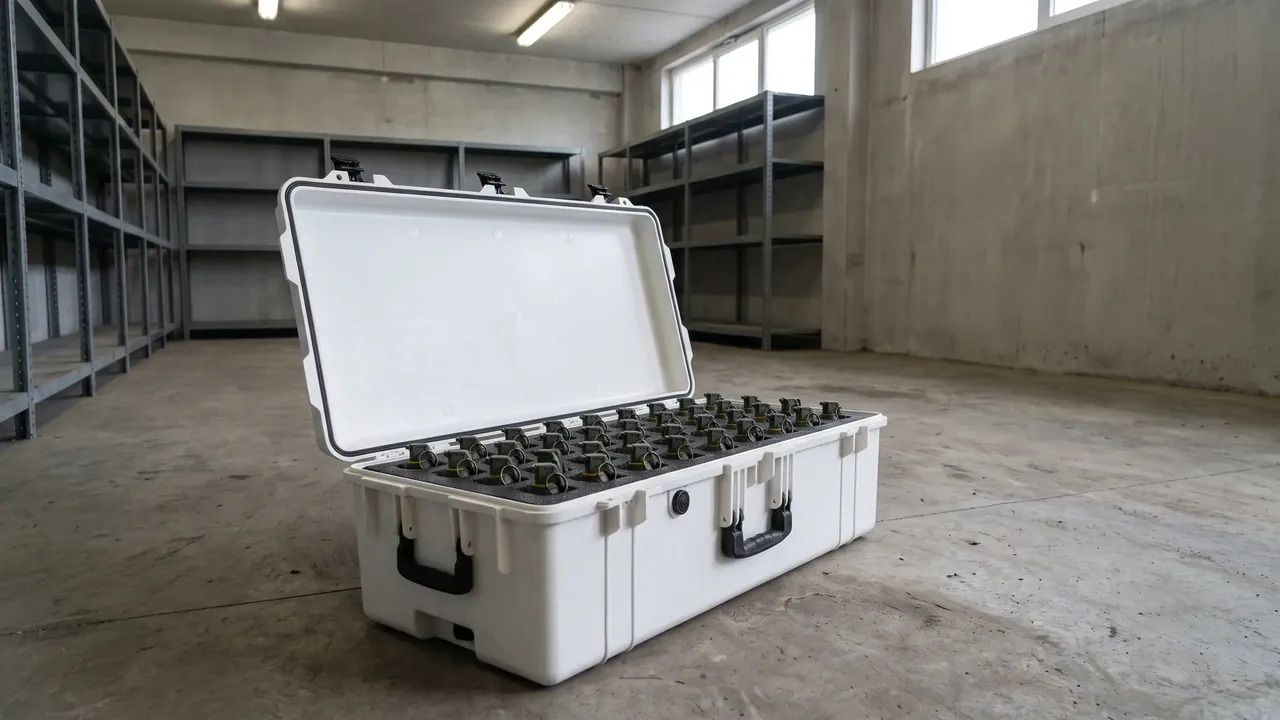
Quick answer: Packaging standards for a grenade transport container are a general framework built around the container: packaging classification and marking, structural strength, sealing and protection level, stacking load, and marking traceability. The designer must keep the standard text and the physical structure aligned, while the buyer verifies the mark-document-structure triangle. This article covers the container side only.
Table of contents
- Where the standards come from
- Core elements of structural design
- Matching tests to structural design
- Marking, traceability and delivery documents
- Procurement and acceptance checklist
- FAQ
1. Where the standards come from
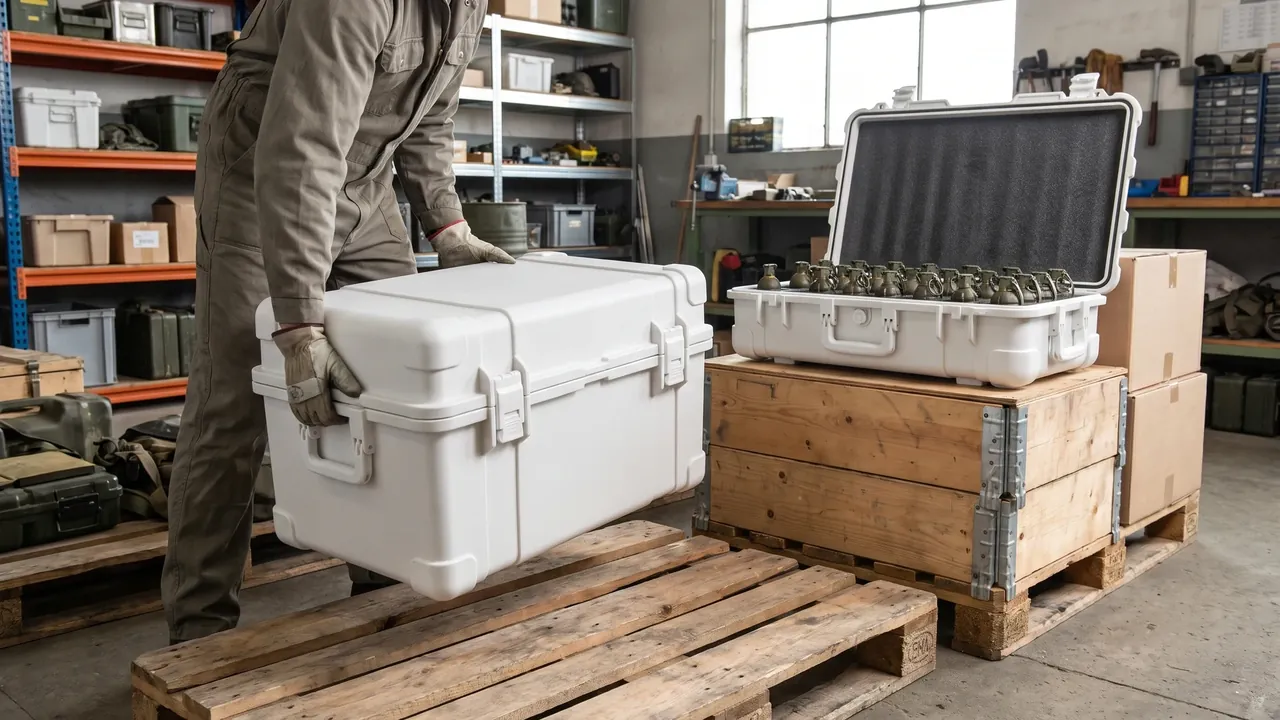
As the packaging container in a dangerous-goods chain, a grenade transport container answers to three stacked sources: the UN Recommendations on the Transport of Dangerous Goods, covering classification, performance testing and marking; the modal rule sets such as IMDG for sea, ADR for road and IATA DGR for air; and the destination country's own regulations. The top layer sets the floor, the lower layers set the road conditions.
The key is a clear boundary of obligation. The maker's duty ends at producing the case to the agreed performance, marking it truthfully, and keeping structure consistent with the stated level. What goes inside and how it is declared belong to the shipper. For buyers, the practical rule is: accepting a container means verifying mark-versus-structure consistency, not underwriting the whole chain.
2. Core elements of structural design
A case that passes testing is usually built around five elements: the case body, the insert, latches and hinges, the gasket, and the pressure-equalization device.
The case body sets stiffness and impact resistance; wall thickness, ribs and corners drive drop behavior. The insert fixes the contents and reduces shock transfer — foam density, thickness and cutting change the cushioning allowance. Latches and hinges are the joints, and cycle life plus consistent clamping force decide how well sealing holds over reuse. The gasket isolates the interior, its compression set and groove design governing how stable the protection level stays. The pressure-equalization device balances the pressure differential so temperature or altitude swings do not break the seal.
| Element | Main function | Typical failure |
|---|---|---|
| Case body | Stiffness, impact resistance | Corner cracking, thin walls |
| Insert | Fixing, cushioning | Density mismatch, collapse |
| Latches and hinges | Opening and clamping | Clamping force drops |
| Gasket | Isolating the interior | Aging, compression set |
| Pressure equalization | Balancing pressure | Blocked valve, seal loss |
A general principle is to make the weak point predictable: route the load path into parts that can be replaced and inspected.
3. Matching tests to structural design
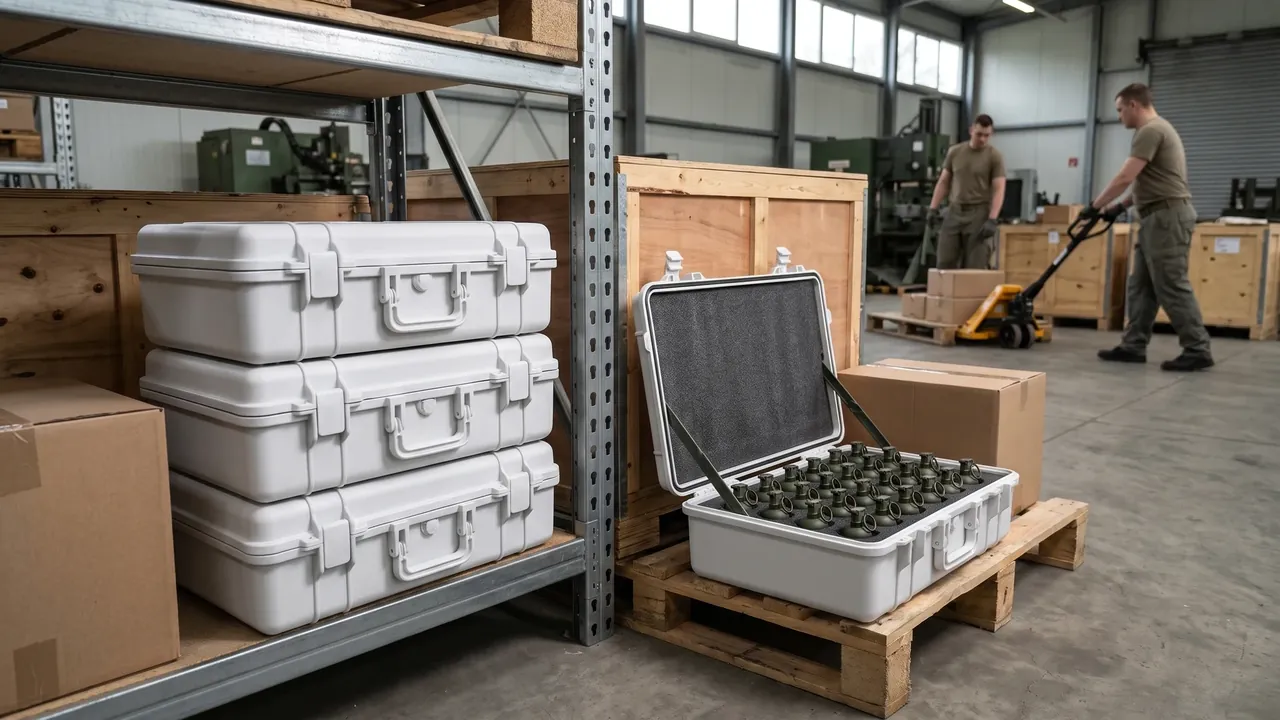
Container standards usually land as performance tests, each mapping to a structural consideration. The drop test checks survival of impact without losing seal or integrity; the stacking test checks resistance to deformation under long-term static load; the sealing test checks whether the protection level holds in the real structural state.
Take the protection level. Cases are often designed to an IP67 structure for dust-tightness and short-term immersion; the actual grade is confirmed by a third-party test report. This needs the gasket compression to sit in range, the groove to match the gasket, the latches to hold enough clamping force, and the case to keep its sealing faces mated after deformation. If one link loosens, the claimed level cannot be reproduced. This is the closed loop of standard, design and test: the standard sets the condition, the design sets the structure, the test sets the evidence.
4. Marking, traceability and delivery documents

Markings are the case's identity card and service record: the packaging mark (material and structure code, test grade, year), the stack-limit pictogram, orientation arrows, material and recycling codes, and manufacturer details with a batch number. The shared principle is traceable and unambiguous — information must match the performance file and stay legible across the case's life.
Delivery documents are part of container-side compliance too: buyers verify performance-test reports, structure drawings with key dimensions, material statements and batch records. For long-life reusable cases, marking durability belongs in inspection as well.
5. Procurement and acceptance checklist
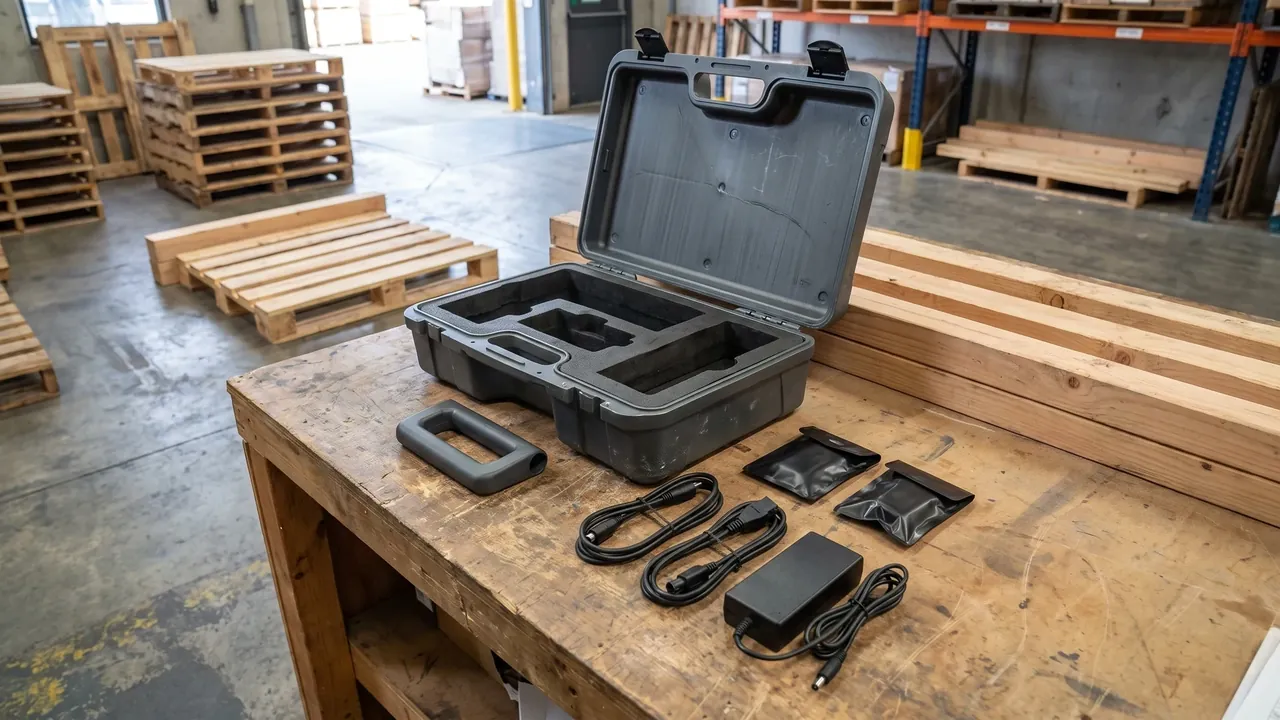
For cases entering a transport chain, check each item:
- Marking consistency: every mark element matches the performance file (code, grade, values, year);
- Structural consistency: production cases match the tested sample in structure, material and wall thickness;
- Sealing condition: gasket compression, groove fit and clamping force meet the design;
- Marking durability: the marking stays legible for the case's life;
- Batch traceability: the batch number traces to test and production records.
These five form the minimum set for container-side compliance. If any one is missing, treat the case as unfit for direct entry into a transport chain.
Conclusion
Packaging standards and design requirements for a grenade transport container reduce to one line: the standard sets the condition, the design sets the structure, the test sets the evidence, and the three must close. The maker's duty sits in production, marking and documents; the buyer's in acceptance and correct use. Verify the mark-document-structure triangle, add the sealing, stacking and marking-durability checks, and container-side risk stays minimal. Fold the checklist into the technical annex of the procurement contract.
Scope note: this article addresses the container and case-body side only. Nothing here concerns the stored items themselves, or how they are handled, loaded or used.
Related Reading
- How Material Choice Affects Grenade Transport Container Performance
- How to Read Grenade Transport Container Specifications
- The Standard Framework and Marking System for Dangerous-Goods Packaging
Related Products
- 8 Series — Gun Cases; Military Equipment Cases; Camera Equipment Cases; Drone Cases; Watch Cases; Knife Cases; First Aid Cases; Electronics Equipment Cases
- WL8-2812 PP Gun Case — model WL8-2812
- All protective cases and toolboxes: 7 series, 158 models