

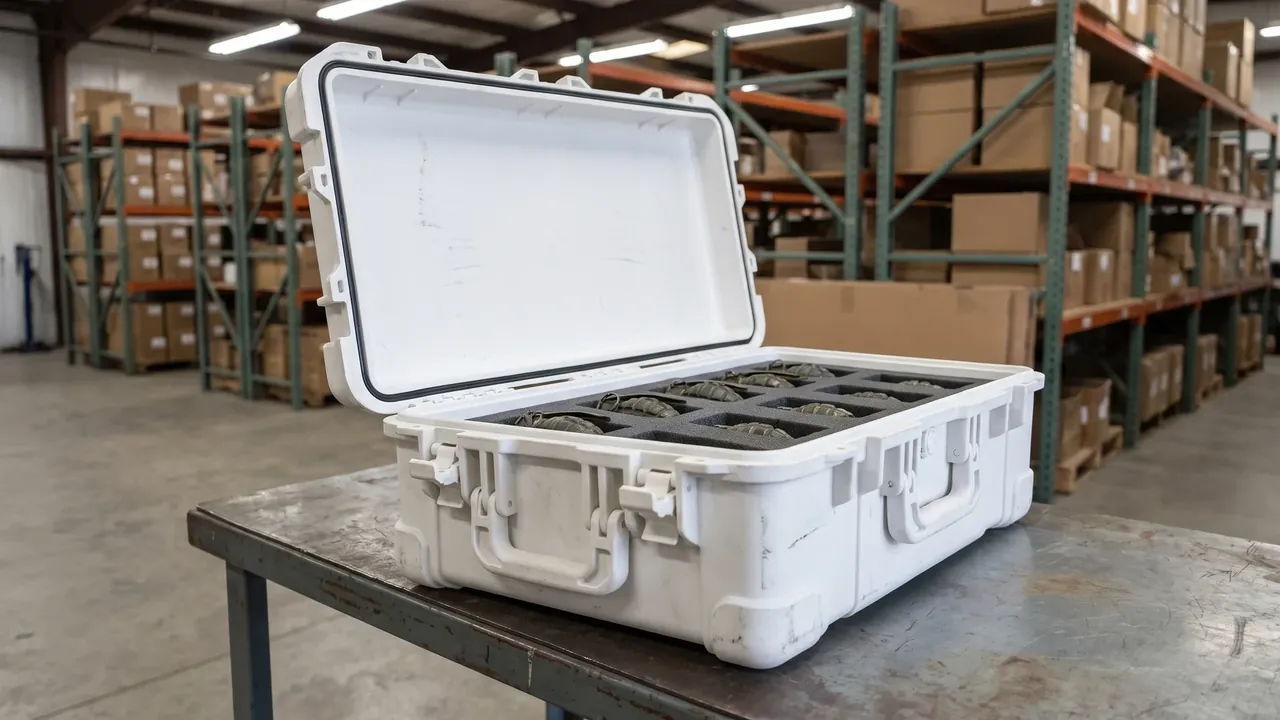
Quick answer: The specification of a grenade transport case breaks into three interlocking tracks. The dimension chain works outward from the contents footprint plus cushioning allowance to the internal cavity, then adds wall thickness and structural space to reach the external size. The compartment layout sets cell volume, cell count and inter-cell wall thickness. The cushioning design sets allowance, foam density and the energy path. Enlarging one squeezes the other two.
Table of contents
- The dimension chain, from contents to external size
- Compartment layout: cells, volume and wall thickness
- Cushioning design: allowance, material, energy path
- How the three specifications constrain each other
- Selection and acceptance checklist
- FAQ
1. The dimension chain, from contents to external size
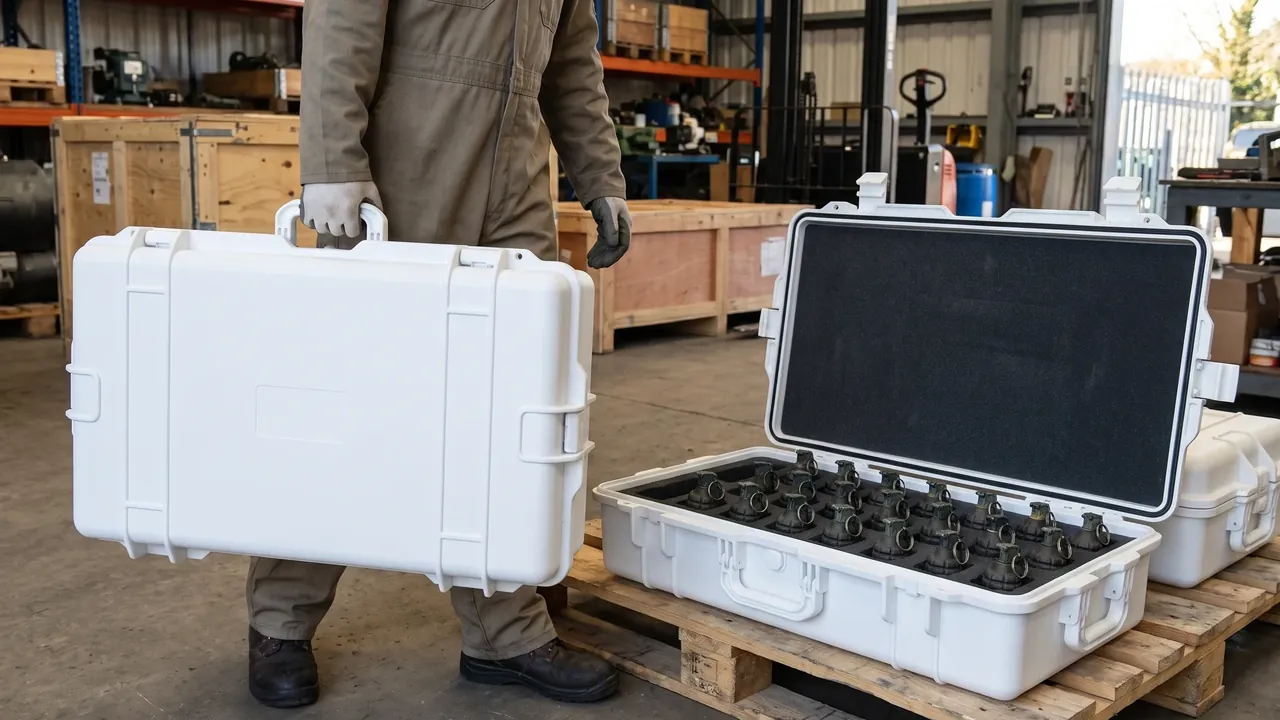
The dimension chain starts from the inside out: fix the contents footprint, then add cushioning allowance, insert thickness and wall thickness until the external size appears. Reverse the order and the conflict surfaces at sampling.
- Internal cavity: contents footprint plus allowance on each side, set by how regular and how angular the contents are;
- Insert thickness: foam or dividers, carrying both positioning and energy absorption duty;
- External size: cavity plus insert, wall thickness and structural space — corners, hinges, latches, stacking ribs.
The step that most often goes wrong is structural space. Hinges and latches project outward from the case body. They add nothing to the cavity but change the minimum bounding rectangle of the external size, which drives container loading and freight.
2. Compartment layout: cells, volume and wall thickness
Compartment layout answers how multiple contents avoid touching one another. Its three variables trade against each other.
| Variable | Main driver | Typical trade-off |
|---|---|---|
| Cell count | Quantity per batch and case footprint | More cells means smaller cells, thinner walls |
| Cell volume | Contents footprint plus per-cell allowance | Generous allowance reduces cell count |
| Inter-cell wall | Divider material and absorption target | Thin walls pass shock between cells |
Three principles apply. Cell boundaries should land on ribs or corner columns, so dividers route shock into load-bearing structure rather than an unsupported panel. Adjacent cells should never share one thin wall, which would transmit impact from cell to cell. Keep an outer cushioning band between the cells and the case wall; the outer band absorbs, the inter-cell wall isolates, and neither substitutes for the other.
3. Cushioning design: allowance, material, energy path
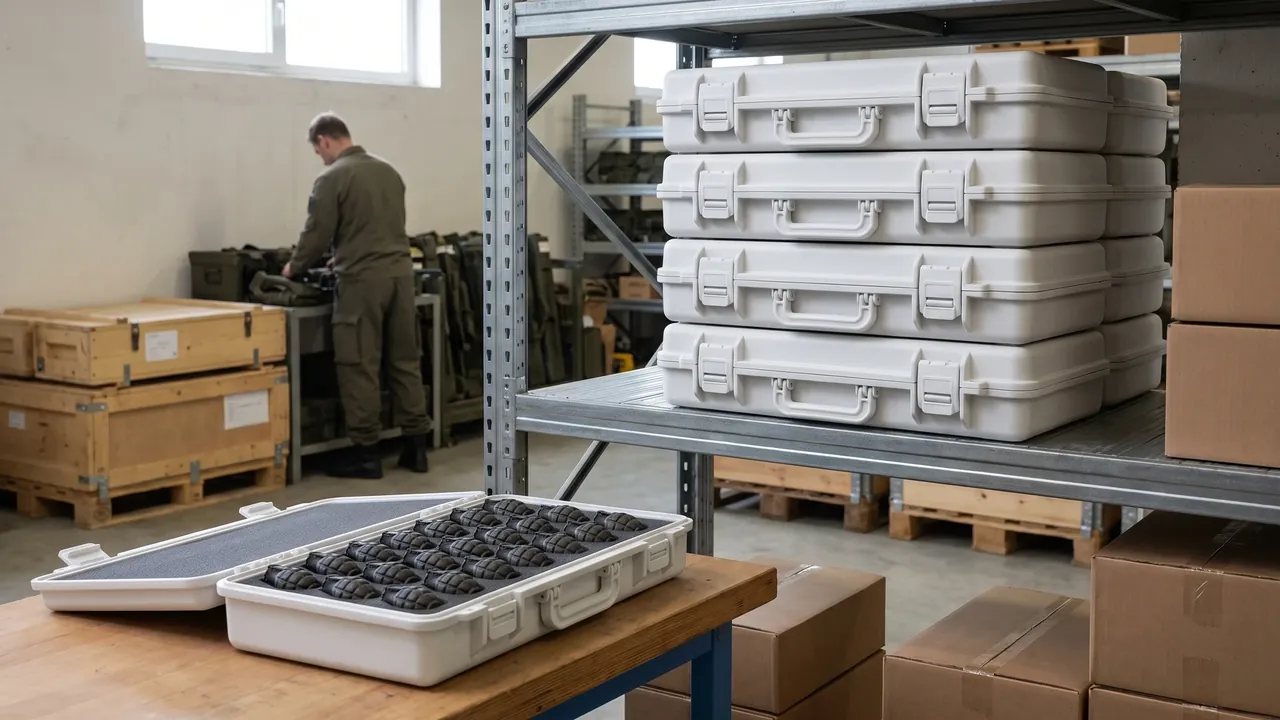
Cushioning design dissipates drop and vibration energy before it reaches the contents. Its three elements are allowance, material and energy path.
- Allowance: displacement space on each side. Too little and contents strike the wall; too much and they rattle against the dividers;
- Material: foam absorbs energy by compressing, and density plus rebound define the absorption curve. Too low a density bottoms out in one hit; too high a density bounces it back;
- Energy path: shock should travel from shell through wall, outer band and divider before reaching contents; the longer the path, the lower the peak acceleration.
Material choice should follow the duty, not a rule that softer is better. In cold duty foam stiffens, its rebound shifts, and the absorption window narrows, so the allowance has to grow; the spec sheet should state the service temperature range.
4. How the three specifications constrain each other
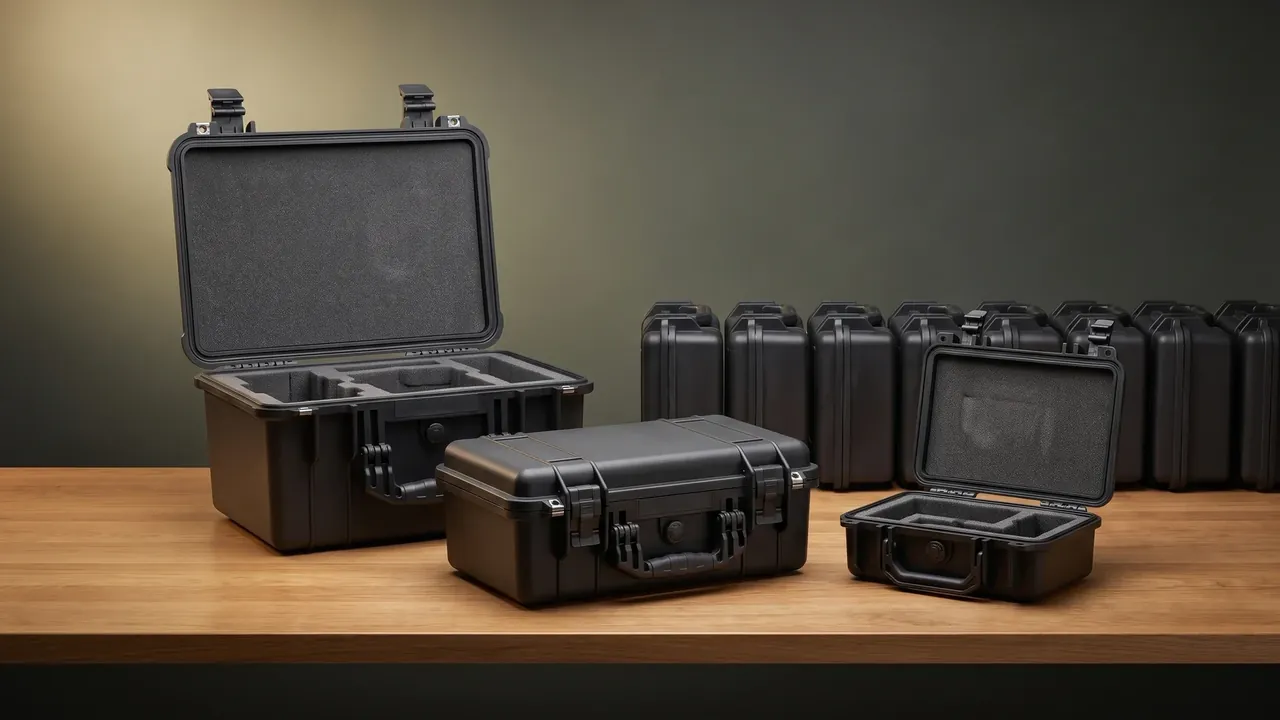
Placing the three tracks together reveals clear trade-offs:
- External size versus compartments: length and width are bounded by pallet and container modules, so once locked the footprint is capped and more cells means a lower ceiling on contents size;
- Compartments versus cushioning: a higher cell count eats the space reserved for the outer cushioning band, and the case edge absorbs less energy in a drop;
- Cushioning versus dimensions: enlarging the allowance is the most direct way to raise protection, but it pushes up cavity, insert and external size together, along with freight.
Three alternatives are common. Replace cells with an insert: mould the compartments as recesses in one foam block that acts as both positioning layer and absorber. Let structure share the cushioning duty: thicken corners and add ribs so part of the energy is absorbed before it reaches the insert. Design in layers: for larger quantities, stacked trays beat filling one plane with cells.
5. Selection and acceptance checklist
- The sheet states internal cavity and external size as two separate figures;
- The cushioning allowance per side is listed with its basis;
- The layout includes a cell dimension drawing and states inter-cell wall thickness;
- Foam inserts carry density and rebound figures, not thickness alone;
- External length and width have been checked against pallet modules;
- Empty weight and reference loaded weight are listed separately.
With all six present the sheet is at least verifiable. Anything missing should be closed during sampling, not argued after volume delivery.
Conclusion
Specifying a grenade transport case means putting the dimension chain, compartment layout and cushioning design into one trade-off table: the chain fixes how large the case can be, the layout fixes how many positions it offers, and the cushioning fixes how much shock is taken out. The most effective procurement move is to request cavity, external size, cell layout and foam parameters as four data sets, then run one container-loading simulation before the sample leaves the bench.
This article addresses the container side and its specification implications only. It does not cover any handling, filling or use of the items placed within the case.
Related Reading
- How a dedicated grenade transport case differs from a generic transit box
- Material choice and structural strength in grenade transport containers
- General packaging standards applied to grenade transport containers
Related Products
- 8 Series — Gun Cases; Military Equipment Cases; Camera Equipment Cases; Drone Cases; Watch Cases; Knife Cases; First Aid Cases; Electronics Equipment Cases
- WL8-2812 PP Gun Case — model WL8-2812
- All protective cases and toolboxes: 7 series, 158 models