

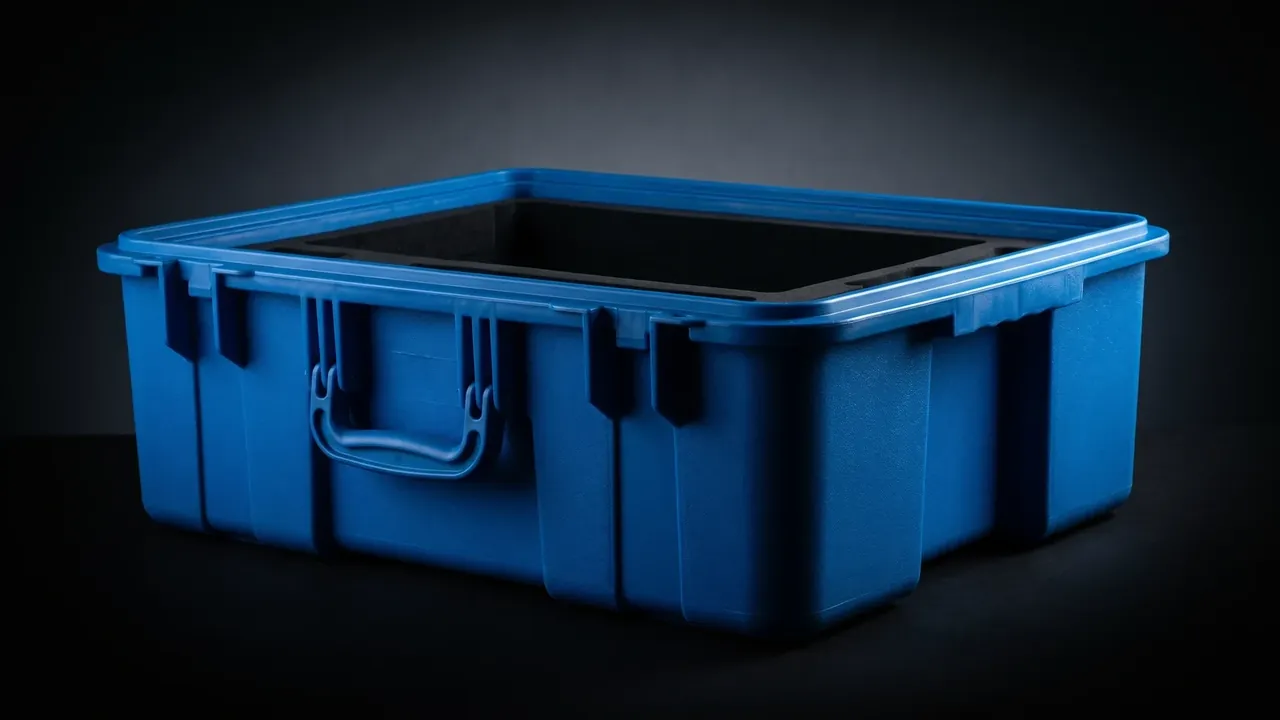
Quick answer: What separates a grenade transport case from a generic transport box is not whether it can hold the load, but the predictability of positioning accuracy, seal consistency and load path. A generic box positions contents by manual packing, so protection varies between batches; a dedicated container builds positioning, sealing and cushioning into the mould and insert, so units behave alike. Whether tooling pays off depends on batch size, turnover and requirements.
Table of contents
- Where a grenade transport case and a generic box part ways
- Four structural differences
- Purchase price versus total cost of ownership
- Where a generic transit box still works
- Selection decision and verification checklist
- FAQ
1. Where a grenade transport case and a generic box part ways
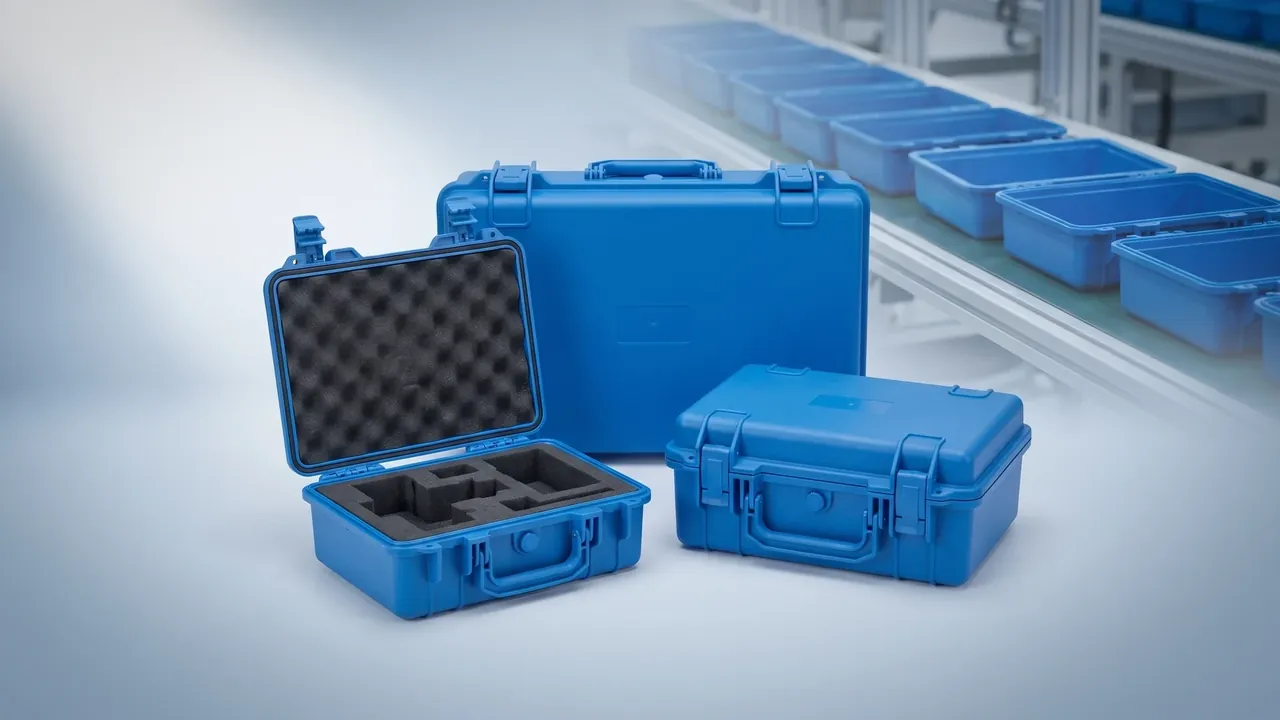
The obvious difference is appearance, but the value sits elsewhere:
- Positioning: a generic box offers one large cavity and relies on loose dunnage, so positions vary; a dedicated container forms fixed cells or recesses;
- Seal consistency: a generic box seals through the flatness of its rim, which drifts with mould wear and assembly tolerance; on a dedicated container the sealing face and latches are a matched pair;
- Load path: a generic box lets load land mid-panel, carried by material thickness alone; a dedicated container routes load into corner columns and ribs.
A practical test: check whether the spec sheet contains grouped cavity and cell data. External dimensions alone indicate a generic box; cavity dimensions and a stated allowance indicate a dedicated container.
2. Four structural differences
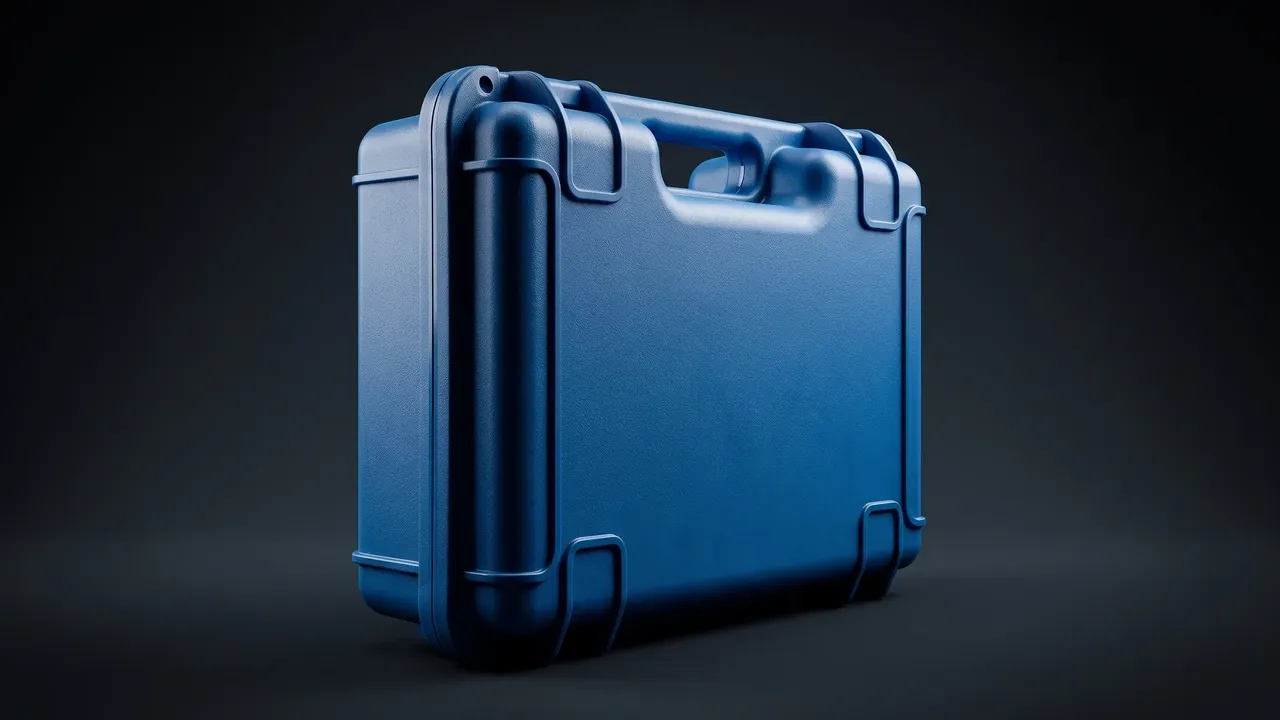
| Component | Typical generic box | Typical dedicated container |
|---|---|---|
| Insert | Packed on site, thickness variable | Moulded insert, density on the drawing |
| Sealing face | Flat contact relying on compression | Continuous face matched to latch spacing |
| Corner | Uniform wall, relying on stiffness | Local thickening forming load points |
| Stacking | Relies on a flat exterior | Ribs or slots give stable alignment |
The most underrated item is the sealing face: a generic box often performs acceptably on one trip, but repeated opening and stacking degrade the rim contact, while a dedicated container factors latch count and position into the design. Second is the corner: on a drop the corner hits first, and a generic box has no dedicated corner load design.
3. Purchase price versus total cost of ownership
A dedicated container normally costs more per unit. Deciding on that number alone ignores three other cost columns.
Packing labour. Generic positioning depends on site packing: dunnage must be stocked and placed by hand. A dedicated container seats contents immediately.
Damage and re-inspection. With unstable positioning, contents may strike and shift in transit, triggering extra inspection on arrival, a cost absent from the quotation.
Turnover and depreciation. Unit cost spreads across turnover cycles; with positioning fixed and the seal protected, a dedicated container degrades more slowly.
Spares and repair. Latches, hinges and seals come with a spare-part list that keeps the original fit.
4. Where a generic transit box still works
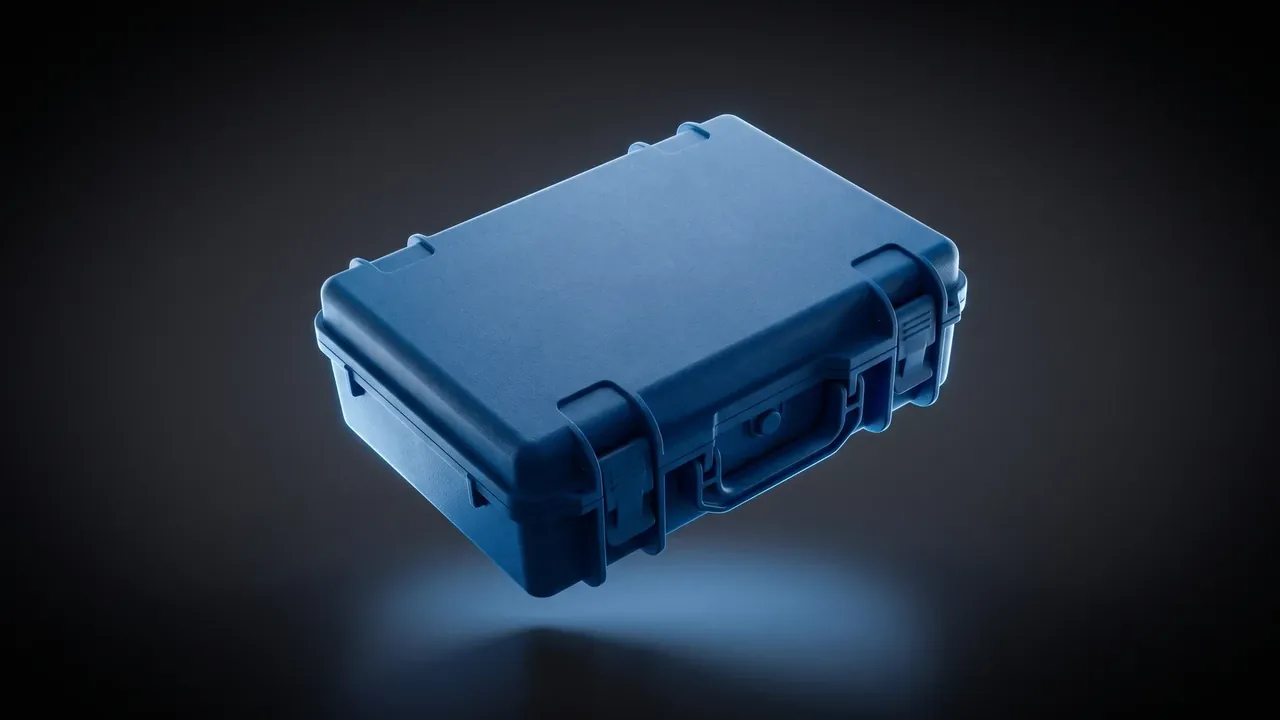
A dedicated container is not universally better. A generic box remains sensible when:
- use is one-off or low-turnover: contents move once and the container is never recovered, so tooling cannot be amortised;
- content dimensions change often: specifications are not frozen, so fixed cells constrain while adjustable dividers stay flexible;
- protection means containment only: acceptance only demands that contents do not tumble freely;
- transport is mostly empty return: nesting ratio and dead weight outweigh cell precision.
The test reduces to one sentence: a dedicated container deserves consideration when the acceptance requirement contains position, allowance and acceleration. For returnable containers the empty trip often exceeds the price difference, so the nesting ratio matters: nested empty boxes over the height of one. A dedicated container with a non-removable insert cannot nest easily, so the compromise is a lift-out insert block.
5. Selection decision and verification checklist

- The acceptance requirement states positioning precision and tolerance range;
- The spec sheet gives cavity size, cell breakdown and cushioning allowance;
- The insert states material, density and rebound figures, not thickness alone;
- The sealing face and latches are a matched pair, with latch count documented;
- Corner and stacking structures come with a load statement or drawing;
- Wear parts have a spare-part list and a replacement interval.
If the first three are missing, the container is essentially a generic box. If the last three are missing, the supplier has not designed for long-term cost of ownership.
Conclusion
The question separating a grenade transport case from a generic transport box is whether consistency is worth paying for. Positioning accuracy, seal consistency and a predictable load path are the sources of value; the flexibility of manual packing and the lower tooling threshold explain why a generic box survives. Check whether the requirement contains quantified positioning and allowance targets, add up labour, damage, depreciation and spares, then walk the checklist. Vague requirements with limited turnover favour the generic box; explicit requirements at real batch size and turnover favour the dedicated container.
This article deals with the container and case-body side of specification and design only. It does not address how anything inside is operated, filled or used.
Related Reading
- Reading the size, compartment and cushioning specifications of a grenade transport case
- How grenade storage containers are configured for warehouse management
- Standards and structural design points for ammunition-type packing containers
Related Products
- 8 Series — Gun Cases; Military Equipment Cases; Camera Equipment Cases; Drone Cases; Watch Cases; Knife Cases; First Aid Cases; Electronics Equipment Cases
- WL8-2812 PP Gun Case — model WL8-2812
- All protective cases and toolboxes: 7 series, 158 models