

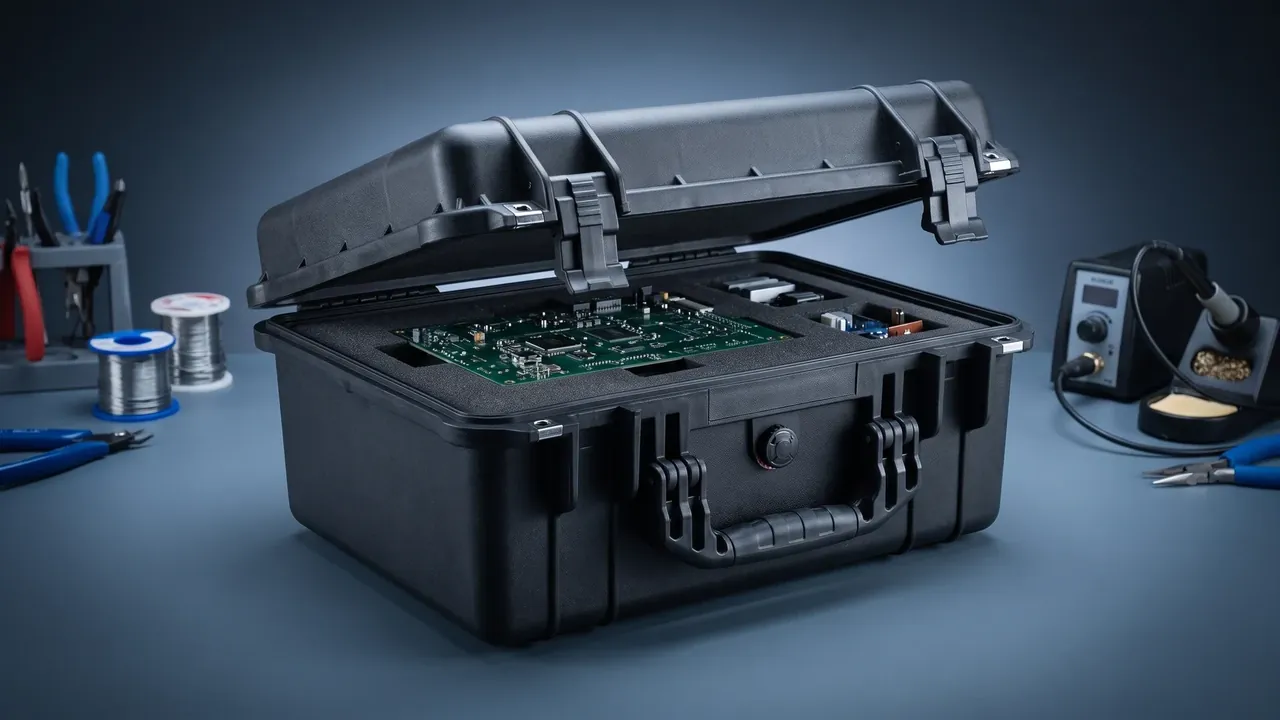
Quick answer: Choosing a material for a grenade transport container means trading off strength, weight, cost and maintainability. Metal offers the best stiffness and weathering but weighs the most; wood is low-cost and easy to repair but is limited by moisture content and quarantine rules; engineered board and engineering plastics win on weight control and batch consistency. Fix the scenario and reuse count first, then let the material match.
Table of contents
- Questions to answer first
- Metal: steel versus aluminum
- Wood: solid wood and plywood
- Engineered board and engineering plastics
- Deciding by scenario
- FAQ
1. Questions to answer first
Answer three questions before comparing materials. The reuse count: a one-off shipment and a long-cycling case have very different needs. The environment: outdoor, multi-climate, seawater or high humidity raise weathering demands. The load and stacking duty: whether a case sits alone or stacked in tiers, and how large the static load is. Once these are settled, the candidate range narrows quickly.
Material sets both the structural ceiling — how much impact and stacking load a given wall thickness takes — and the maintenance boundary — whether damage can be repaired locally and how far performance recovers.
2. Metal: steel versus aluminum
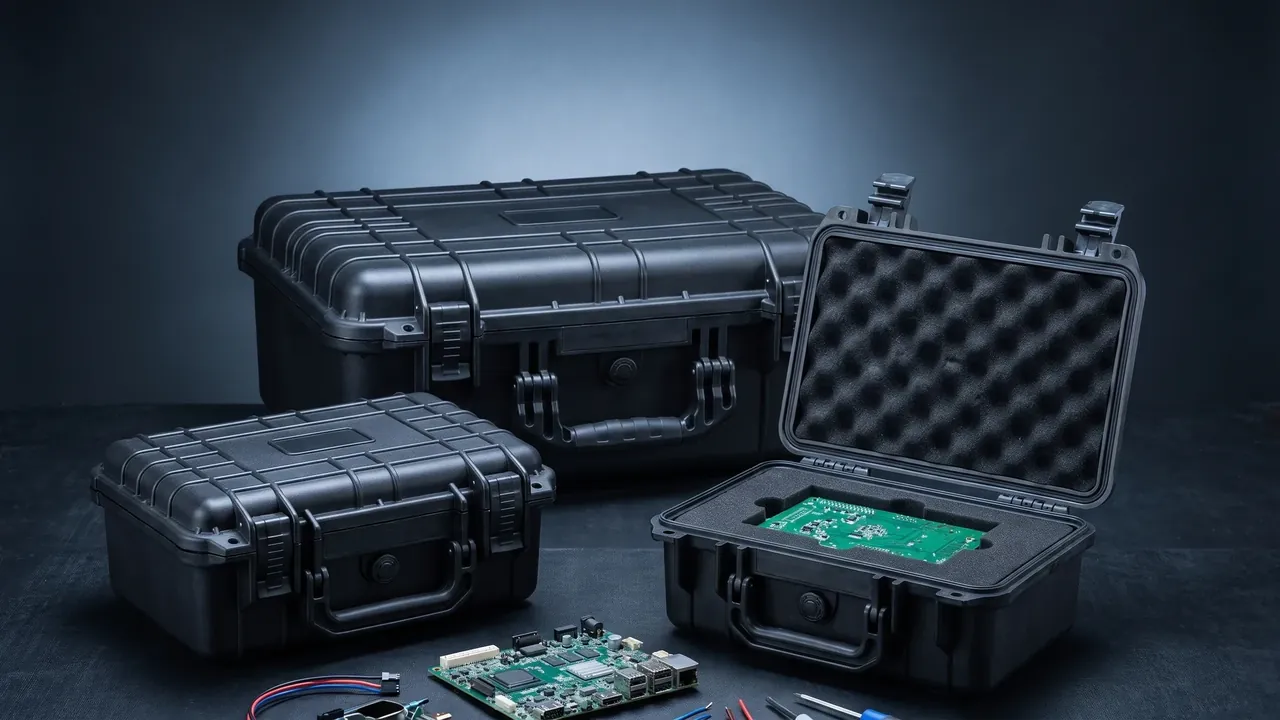
Metal is the longest-used transport case material, most often steel or aluminum. Steel gives high stiffness, strong impact resistance and low unit cost, but it is heavy and relies on surface treatment against rust; once the coating fails, corrosion creeps along the edges. Aluminum is light and resists corrosion better than ordinary steel, but demands more in welding, forming and material cost.
A steel case suits high stiffness and durability where weight is not critical, such as fixed storage and short-haul turnaround. An aluminum case suits handling, lifting or air freight, where each kilogram saved cuts transport cost. Either way, coat thickness and adhesion belong in the acceptance check.
3. Wood: solid wood and plywood
Wood has a long history in transport packaging: low cost, easy machining, simple local replacement. Solid wood is stiff and tolerates impact, but it is sensitive to moisture content — too much brings warping, mold and strength loss; too little invites cracking. Drying and storage control are therefore key.
Plywood is more consistent because cross-laid veneers reduce anisotropy and cracking, and it is light with flat surfaces. Note that wood materials, plywood included, are often subject to wood-packaging quarantine rules in international transport; heat treatment, fumigation and marking should follow the destination's plant-quarantine requirements.
4. Engineered board and engineering plastics
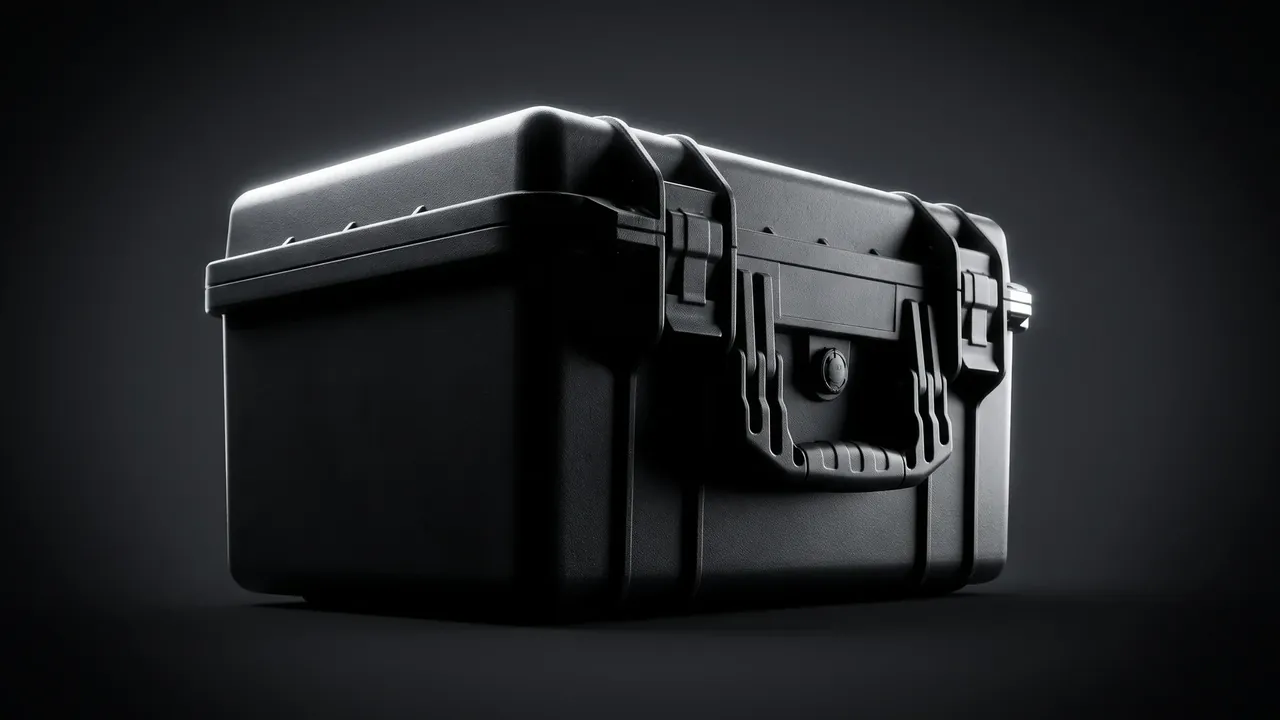
Engineered board presses fibers or chips with resin, combining wood's machinability with better dimensional stability, and its surface can take a film for moisture resistance. Engineering plastics such as polypropylene, polyethylene and engineering-grade ABS push weight, corrosion resistance and batch consistency further, and suit one-piece structures made by injection or rotational molding.
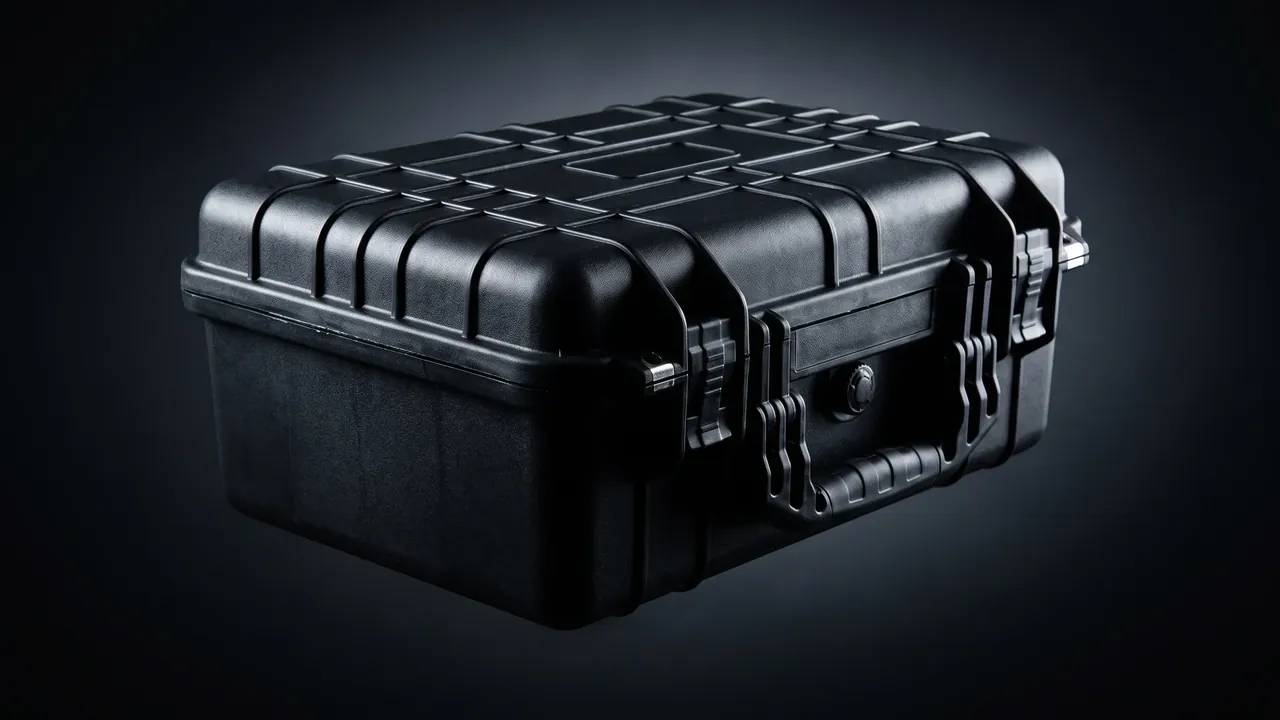
A plastic case's core advantage is designability: ribs, latch seats and seal grooves form in one mold, cutting assembled parts and making batches consistent. Its weakness is sensitivity to heat and ultraviolet light, so the duty environment should guide selection. The table gives a first-pass comparison.
| Material | Strength and stiffness | Weight | Weathering | Maintainability |
|---|---|---|---|---|
| Steel | High | Heavy | Coating-dependent | Weldable, needs rust care |
| Aluminum | Medium-high | Medium | Good | Demanding repair welding |
| Solid wood | Medium-high | Medium | Moisture-sensitive | Easy local replacement |
| Plywood | Medium | Light | Needs moisture protection | Easy panel replacement |
| Engineering plastics | Medium | Light | Formula-dependent | Whole-unit replacement |
5. Deciding by scenario
Turn the comparison into a choice with this checklist:
- Reuse count: one-off, low-frequency or long-cycling decides whether a repairable material is needed;
- Environment severity: outdoor, sea freight or high humidity favors corrosion and moisture resistance;
- Stacking load: multiple tiers need stiffness first, with reinforcement if necessary;
- Quarantine and compliance: wood requires checking destination plant-quarantine rules;
- Whole-life cost: include purchase price, maintenance and replacement together.
With these five settled, the question becomes "which fits better" rather than "which is better". One caution: a material change usually means re-validation, because structural performance is tied directly to material.
Conclusion
Material selection for a grenade transport container translates a use scenario into material metrics: environment sets weathering, reuse count sets maintainability, and stacking load sets the stiffness floor. Metal leads on stiffness and durability, wood on cost and repairability, and engineered board with engineering plastics on weight and consistency. No material wins everywhere — only the one that fits best. List short-term and whole-life costs and score them against these metrics to decide.
This article deals with the container (case body) side only. It does not cover the contents, nor any handling, filling or use of them.
Related Reading
- How Manufacturing Process Affects Case Performance
- The Standard Framework for Dangerous-Goods Transport Containers
- Wooden Alternatives in Protective Cases
Related Products
- 8 Series — Gun Cases; Military Equipment Cases; Camera Equipment Cases; Drone Cases; Watch Cases; Knife Cases; First Aid Cases; Electronics Equipment Cases
- WL8-2812 PP Gun Case — model WL8-2812
- All protective cases and toolboxes: 7 series, 158 models