

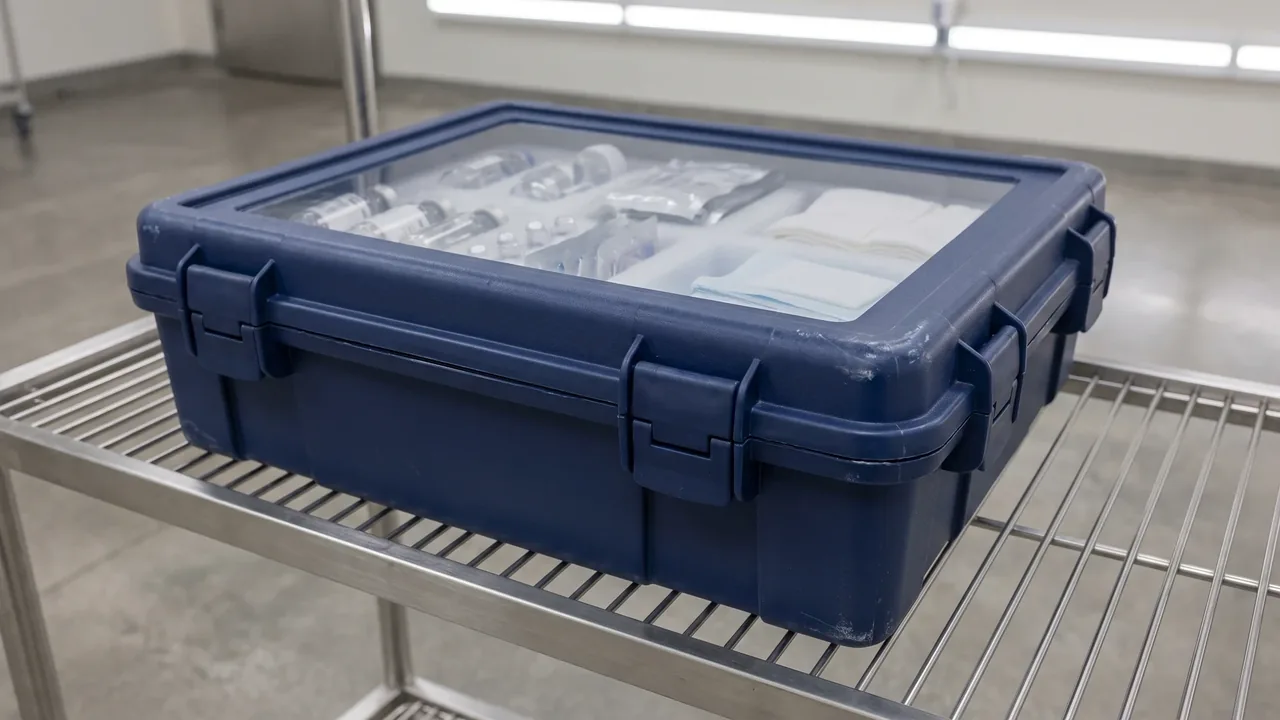
In export packaging retrofit projects and internal logistics optimization, wooden case alternatives have become a recurring topic. Traditional nailed wooden cases have carried heavy equipment and loose-part export packing for decades, but with plant quarantine rules tightening, labor costs rising, and returnable logistics spreading, more and more manufacturers are re-evaluating whether plastic turnover cases can replace wooden cases. The core of such a wooden case alternative program is not simply a material swap; it upgrades one-way cushioning packaging into a returnable, traceable, and accountable logistics container system. Experience shows that when a container meets three conditions at once, namely fumigation-free compliance, controlled tare weight, and dozens of reuse cycles, plastic turnover cases typically pay back their initial investment within two to four shipping cycles in multi-batch logistics with a high return ratio, beating one-way wooden cases on total cost. This article covers wooden case pain points, plastic turnover case properties, load and stacking, temperature and chemical limits, size matching, lifecycle cost accounting, suitability boundaries, mixed transition plans, and implementation steps, building a verifiable evaluation framework.
1. The Traditional Role of Wooden Cases and Their Pain Points
Wooden cases have dominated packaging history for a simple reason: timber is easy to source and work, a nailed shell can be built on site around an irregular machine, and battens, blocks, and dunnage can be nailed inside to hold odd-shaped parts. For one-off, small-batch, extra-heavy equipment exports, wooden cases still hold advantages that are hard to replace. For a growing number of manufacturers, however, continued use brings five pain points.
The first is fumigation and quarantine burden. Under ISPM 15, the international standard for phytosanitary measures, outbound wood packaging must receive heat treatment or fumigation and carry the IPPC mark, which customs and quarantine authorities at destination use to decide release. Fumigation means queues and fees, and a non-compliant inspection can trigger return shipment or on-the-spot repacking, wrecking the delivery schedule. The second is high tare weight, often reaching twenty to thirty percent of payload weight, pure cost on weight-based freight and per-piece handling. The third is one-way use: a nailed case is destroyed when opened, retains little recovery value, and may incur disposal fees when stranded abroad. The fourth is inconsistency: timber moisture moves with the environment, so case dimensions and strength vary naturally, defeating precise stacking and automated handling. The fifth is workplace safety: protruding nails, splinters, pests, and mold affect handling safety and can contaminate clean workshops. These five pain points form the starting point for any wooden case alternative evaluation.

2. Material and Molding of Plastic Turnover Cases
A plastic turnover case is far more than a plastic box; its material and molding process set the ceiling for load, temperature, chemical resistance, and service life. Common materials include polypropylene (PP), high-density polyethylene (PE), ABS, and PC/ABS blends. PP offers balanced stiffness and general chemical resistance and is the most common base resin; PE, especially ultra-high molecular weight grades, resists low-temperature impact better and suits cold regions and frozen goods; ABS gives surface hardness and appearance but weaker solvent and stress-crack resistance, so it is used for light-duty cases; PC/ABS blends serve applications needing a stiffness and toughness compromise.
Two molding routes dominate. Injection molding is efficient and dimensionally accurate, fitting small and medium cases with partitions, ribs, and stacking interlocks, and it is the mainstream for standardized turnover cases; rotomolding excels at large volumes, uniform wall thickness, and zero internal stress, fitting big heavy-duty and irregular cases. The trade-offs are compared in the rotomolding versus injection molding guide. Structurally, side ribs, bottom grid beams, thickened corners, and forklift-hole reinforcement together set shell rigidity, while lid latches, strap slots, and stacking bosses decide convenience and multi-layer stacking stability.
Resin choice also affects life and compliance. Structural cases may use recycled resin within a controlled ratio, while liners and cases touching food, pharmaceuticals, or precision electronics should use virgin resin; the comparison is detailed in the virgin versus recycled case material guide. Incoming inspection should focus on wall-thickness uniformity, rib integrity, and stacking-boss dimensions, with batch sampling where needed.
3. Fumigation-Free and Quarantine Compliance Advantages
Fumigation-free status is the most visible compliance gain when replacing wooden cases with plastic turnover cases. ISPM 15 regulates wood packaging material, including solid wood cases, wood pallets, wood dunnage, and thick wooden battens; a one-piece plastic turnover case contains no wood component, falls outside the standard, and needs neither fumigation nor heat treatment nor an IPPC mark on export. This yields three benefits: no fumigation fees or depot queuing, shorter shipping cycles; no return-shipment or repacking risk from marking errors or quarantine findings; and simpler packaging documents and HS declarations with fewer paperwork mistakes.
Two exceptions deserve attention. First, if the plastic case ships with a wood pallet or wood dunnage, those wood parts still must comply with ISPM 15 and carry the mark, so switch to fumigation-free plastic or composite pallets to keep the compliance advantage intact. Second, some countries impose recycling or environmental clauses on single-use plastic packaging, so confirm destination and customer rules on packaging material before export. Fuller quarantine rules and document linkage are covered in the wood packaging quarantine guide and the export packaging compliance guide.
Fumigation-free operation also carries a green benefit: skipping fumigant chemicals and heat energy cuts packaging-stage carbon emissions, and the accounting method is in the packaging carbon footprint guide. For corporate customers that score suppliers on carbon footprint, this point can enter the supplier file as a review plus.
4. Lightweighting and Handling Efficiency
Tare weight is the easiest gain to quantify in a wooden case alternative program. As a rule of thumb, a same-volume plastic turnover case weighs about half to one third of a nailed wooden case. Lower tare raises the payload ratio, and on weight-billed road, ocean, and air freight, the money once spent on moving packaging transfers to real cargo value. In a scenario with a fixed gross weight per case, every ten kilograms saved means about three tonnes of billable weight avoided across a three-hundred-case batch, which adds up fast over dozens of batches a year.
Handling improves just as visibly. Standard plastic turnover cases carry side grab handles or integral pull handles for single-person moves; large cases can add casters and push handles for rolling work at dock height. Four-way forklift entries at the base keep compatibility with forklifts and AGVs, leaving room for later automated storage. Empty-case return is an often-missed advantage: same-spec cases nest and stack, cutting empty volume by roughly forty to sixty percent as a rule of thumb, while dismantled wooden cases cannot compress for return, making the empty leg expensive. Inside the plant, nesting also means less floor space and faster dock turns.
The warehouse math deserves a line of its own. Nested empties free staging lanes at the receiving dock, so the same floor area absorbs more inbound volume during peak weeks, and fewer pallet positions are tied up holding empty packaging. On the dock, lighter cases shorten each load cycle, and the effect compounds across hundreds of moves per shift. Where ergonomic risk assessments exist, the lower mass per lift also reduces the manual-handling score, which supports both safety audits and insurance reviews without any separate investment.
5. Load Capacity and Stacking Stability
The evaluation must answer one hard question: do the load and stacking ratings of plastic turnover cases match the original wooden case duty. Acceptance usually references the ISTA 3E stacked unit-load test and the GB/T 4857.3 static-load stacking method, with typical conditions of three to four fully loaded cases stacked for a set time under controlled temperature and humidity, after which the case shows no service-affecting deformation and the lid still locks. Drop testing follows ISTA 3A and GB/T 4857.5, with drop heights graded by loaded mass, verifying each face, corner, and edge.
One mechanical difference matters: wood creeps very little, while plastics creep under sustained load. For long-term stacking or high-bay storage, selection cannot rely on a passing instantaneous stacking test alone; keep a safety factor of one point five to two as a rule of thumb and request post-hold deformation data from the supplier. Structurally, side-rib spacing, bottom grid-beam height, and corner reinforcement govern creep resistance, while the fit of stacking bosses and sockets decides whether a stack self-aligns instead of relying on friction for a dangerous pile.
Cold is another stacking variable. PP-based shells lose impact strength at low temperature, so outdoor stacking or cold-store use in cold regions should assess low-temperature brittleness, with modified cold-resistant resin or PE as options; test methods are in the low-temperature brittleness test guide. General stacking planning is in the protective case stacking guide and the ISTA transport test guide, and the test conditions should enter the technical specification as acceptance criteria.
6. Temperature, Chemical, and Moisture Limits
Temperature limits decide whether a replacement plan can enter a given workshop. The comfort band of plastic turnover cases is roughly minus twenty to plus sixty degrees Celsius, depending on resin and formulation. Below the lower bound, PP shells lose impact toughness and crack on drop; above the upper bound, rigidity falls and side walls bulge under full stacking. A sealed truck box in summer can run far hotter than ambient, so confirm the heat-deflection temperature of the shell material before long hauls to avoid in-transit deformation and stack collapse.
Chemical limits depend on contents and cleaning agents. PP and PE tolerate acids, alkalis, salts, most cutting fluids, and detergents well and are sound default choices; ABS is sensitive to some solvents and oils and can stress-crack, so oil-exposed workshops should choose carefully. On moisture, plastic shells do not absorb water, mold, or host pests, in sharp contrast to wooden cases that lose strength, mold, and warp after damp exposure, an edge that shows up in humid southern warehouses and rainy-season exports.
If contents need dust or water protection, choose sealed turnover cases with lid gaskets; the seal structure follows the case seal material guide, and protection levels use the IP code of IEC 60529 and GB/T 4208. All three boundaries, temperature, chemical, and moisture, should be confirmed as written indicators during selection rather than discovered as field failures later.
7. Size Matching and Pallet Planning
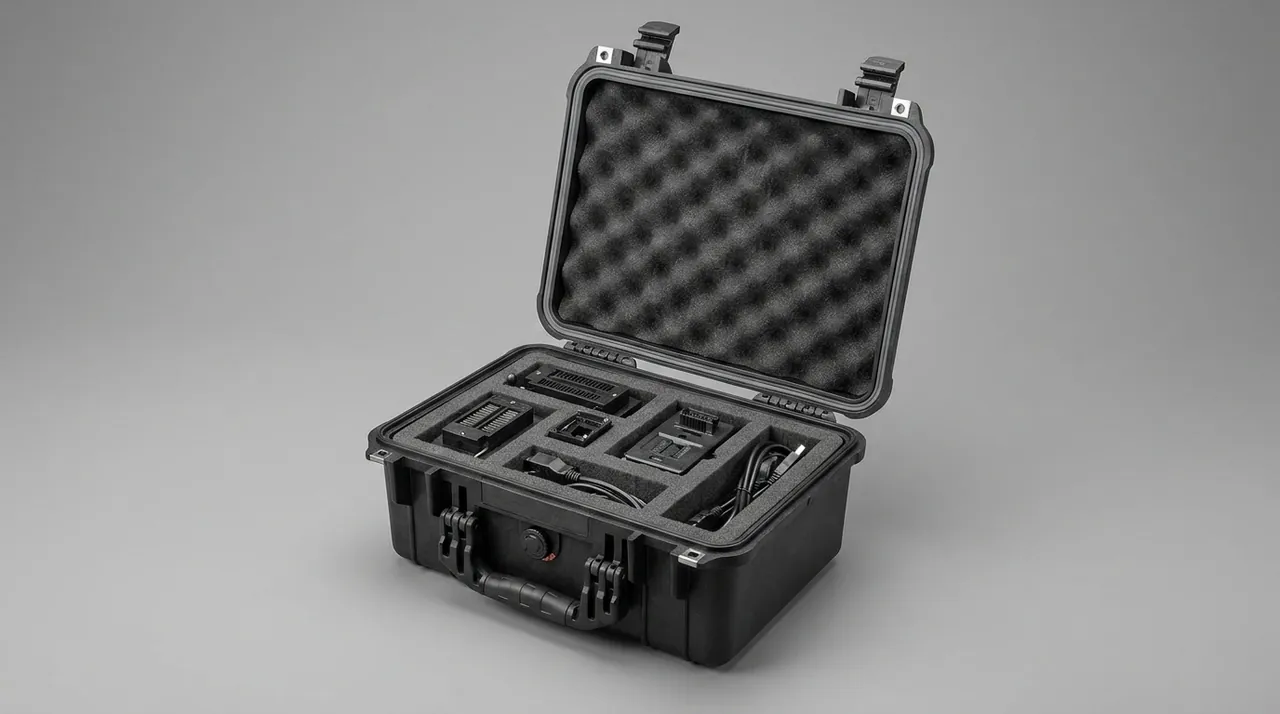
Size matching decides whether a replacement plan works in practice, and it runs in three steps. The first is modularization: derive case footprint from mainstream pallet size. The common domestic intermodal pallet is 1200 mm by 1000 mm per GB/T 2934, and one pallet face typically holds four 600 mm by 400 mm cases or two 600 mm by 800 mm cases, with the exact layout worked out against case height and stack layers to avoid hidden waste from half-empty pallets and trailer voids.
The second step is internal clear size and product grouping. Group contents by weight, shape, and shipping frequency, then select a case size per group; within a group, aim for one part per pocket or one group per compartment, with partitions or custom liners for odd shapes. Case height must satisfy two constraints at once: total stack height stays within the trailer interior, and single-case handling height sits in the ergonomic comfort band. The general selection logic is in the protective case selection guide parameter-table method. The third step is interface reservation: the case should reserve QR or RFID label windows, strap slots, and label-plate positions for the later circulation pool, avoiding rework.
Stack height ties the plan together. Total stack height, case height times layers, must stay under the trailer interior height with clearance for the roof and for forklift mast travel inside automated stores; too many layers stress the bottom case under creep, too few waste cube. Review the layout against real freight data once a quarter, because product mix drifts and a layout that fit last year may leave half a meter of unused height in every trailer.
8. Lifecycle Cost Accounting Method
The financial case for a wooden case alternative must move from comparing unit price to comparing total cost of ownership. A container's cost across its circulation includes at least eight items: purchase price, freight cost from tare weight, fumigation and quarantine fees, loading and unloading labor, loss and damage replacement, cleaning and repair, storage occupancy, and disposal with residual value. Wooden cases are cheap to buy, yet the remaining seven items are almost pure expense; plastic turnover cases cost more up front but spread those costs over reuse cycles while generating ongoing savings on tare, fumigation, and damage.
Accounting should use a per-use cost basis: plastic per-use cost equals purchase price divided by expected reuse cycles, plus per-cycle cleaning, repair, and allocated management; wooden per-use cost equals purchase price plus fumigation, handling, and disposal. The difference, multiplied by annual shipment batches, is the annual saving. Fuller frameworks are in the total cost of ownership guide for cases and the case cost structure breakdown. If volumes swing or upfront budget is tight, a rental model can be evaluated; the rent-versus-buy boundary is in the rent versus buy protective case guide.
9. Payback Period Modeling and Decision Method
Payback period is the indicator decision makers care about most, and the method is simple. Let the plastic pool's initial investment be purchase price plus cleaning equipment and the counting system; let per-cycle saving be the wooden per-use cost minus the plastic amortized per-use cost, multiplied by cycle volume; static payback equals initial investment divided by per-cycle saving. In two-way logistics with a high return ratio and long hauls, a typical rule of thumb is payback within two to four shipping cycles; if per-cycle saving approaches zero, the scenario does not suit replacement, and the range should shrink rather than force the plan.
Sensitivity analysis matters more than a single-point estimate. Three variables drive the conclusion: the return ratio, which decides reuse cycles; haul length and mode, which amplify tare savings with billable weight; and fuel and labor costs, whose upward trend keeps widening the plastic advantage. For one-way export lanes with no return, switch to rental or deposit schemes that transfer stranding risk to professional circulation providers; see the reusable transit case program guide. Every parameter in the model should carry a source and an assumption, forming a written model for later review and audit.
Decision gates keep the model honest. Gate one, at project start, requires the model to show positive per-cycle saving under the base case and under the pessimistic case; if only the base case works, hold the scope. Gate two, after the pilot, replaces estimated cycle counts and damage rates with measured values and re-runs the model before volume commitment. Gate three, at scale-up, freezes the model as the baseline for annual review, so the business case can be defended or revised with evidence rather than opinion.
10. Suitability Boundaries and Where Replacement Fails
Every wooden case alternative has boundaries, and drawing them beforehand is cheaper than fixing mistakes later. Do not replace in these scenarios: ultra-heavy items above roughly five hundred kilograms per unit, where box base grid, forklift entries, and side walls cannot safely carry the load, so wooden, wood-metal, or dedicated pallet boxes remain; extreme shapes longer than three meters, where custom tooling and material costs are prohibitive; one-way export with no return and unclear customer cooperation, where stranded cases become sunk assets; open flame, furnace mouths, or strong-solvent immersion; and special contents needing vacuum moisture proofing or explosion-proof certification.
These scenarios fit well: parts from a few grams to fifty kilograms with stable batches; inter-process transfer and buffer inside the plant; two-way logistics with returns; automotive parts, electronic components, and standard mechanical parts; and e-commerce or retail return loops. The decision reduces to three questions: is the content within the plastic capability envelope, does the network allow returns, and is the cost model positive. Only a yes to all three justifies a program; any no means narrowing the scope or keeping a mixed plan rather than full replacement.
11. Mixed Transition Plans with Wooden Cases
Full replacement in one step is risky, and a mixed transition is the safer path. Mode A: outer wooden case with inner plastic turnover case. The plastic case circulates inside the plant and among fixed customers, handling content fixing and internal transfer, while the outer wooden case still ships under ISPM 15. This mode changes little, but the fumigation benefit only lands once wooden cases leave the export leg. Mode B: plastic turnover case with fumigation-free pallet. The main export container becomes plastic, wooden cases remain only for a few ultra-heavy items, the target state for most firms. Mode C: parallel by category, splitting contents into a plastic pool and a wooden pool by capability envelope, each managed and accounted separately.
The management key in transition is clear ownership. With two container systems in parallel, every case must be marked with owner, circulation direction, and responsible party, so plastic cases are not discarded as one-way wooden cases, and wooden cases are not pulled into the circulation pool and break the books. Inventory should run dual ledgers, tracking damage rate, reuse cycles, and per-use cost separately to accumulate data for full-replacement decisions. A mixed phase typically lasts two to six shipping cycles; once the pool runs stably and data is solid, shrink the wooden pool along the agreed boundary to avoid long-term dual-track cost and confusion.
12. Implementation Steps for Replacement Projects
Replacement should proceed in six steps. Step one, baseline audit: inventory the packaging list, twelve-month damage rate, fumigation costs, and handling hours to form baseline data. Step two, product grouping: group contents by weight, size, frequency, and temperature-pressure duty, and mark the first replacement scope against the capability envelope. Step three, sample validation: run stacking, drop, and vibration tests on candidate cases per ISTA 3A, ISTA 3E, and the GB/T 4857 series, plus a full-load hot-trailer simulation for one batch. Step four, pilot run: pick one production line or customer for two to four shipping cycles to validate cleaning, counting, return, and repair flows. Step five, circulation pool build-out: set cleaning checks, repair and replacement, QR or RFID counting, and retirement criteria into a closed loop; tracking follows the case labeling and asset tracking guide. Step six, contract hardening: write reuse-cycle commitments, spare-part lead times, and test documents into the purchase contract.
Supplier capability is a key variable for success. In the JUNZHIJIA engineering practice, a mature container supplier can customize liners by case type for precise one-part-per-pocket limiting; the method is in the custom foam insert guide, and it can also supply model-matched seals and wear spares plus stacking, drop, and material test documents to support acceptance and records. Makers with OEM/ODM capability can adapt shell color, label windows, and structural interfaces to pool management; see the OEM/ODM custom protective case guide. Supplier audits should combine the case supplier evaluation system and the case procurement pitfall checklist, moving verification cost upfront.
Change management is the soft step that decides the hard numbers. Dock staff, warehouse crews, and customer-side receivers all touch the new container, and each group needs a short briefing on recognition, cleaning, and return rules before the first shipment. Appoint a pool owner with authority over counting disputes and damage classification, publish the retirement criteria at every cleaning point, and review the first month of pool data weekly. Projects stall more often on unclear ownership than on container performance, so treat the organizational design as part of the scope, not an afterthought.
13. Maintenance and Circulation Pool Operation
A circulation pool creates value only if cases keep moving, and that depends on a maintenance regime. Run three tiers: daily, clean oil and dust inside and out after each return and check lid, hinges, and stacking bosses; monthly, sample wall thickness, ribs, and forklift-entry zones and tally batch damage rate; annually, sample stacking and drop re-tests to judge the batch-replacement point. For repair, replace modular parts such as lids, hinges, and casters instead of scrapping whole cases; methods are in the case repair and spare parts guide, and general intervals follow the protective case maintenance guide. In the JUNZHIJIA circulation-pool practice, the supplier stocks lids, hinges, casters, and model-matched seal modules by case type, so users reorder from a spare-parts list instead of scrapping whole cases, which is the quiet detail that keeps a pool cheap to run for years.
Retirement criteria should be quantified in advance: through-cracks in the shell, broken bottom grid beams, stacking bosses worn past limit function, or gaskets still failing after repeated replacement all mean exit from the pool. Retired cases should be recycled by resin class into the reclaimed stream, meeting environmental rules and supporting customer circular-packaging targets; see the case recycling and reuse guide and the circular packaging guide. Only when cleaning, counting, repair, and retirement become daily routine does a wooden case alternative turn from a one-off project into long-term logistics infrastructure.
A small KPI set keeps the pool honest: return ratio by lane, average cycles per case per year, damage rate per thousand cycles, cleaning cost per cycle, and share of repairs closed by module swap rather than scrap. Publish the five numbers monthly to operations and finance, and review them at the annual budget point against the original model. When the numbers drift, adjust pool size, lane scope, or cleaning frequency before the drift turns into stranded assets.
FAQ
Q: Is a wooden case alternative always cheaper, and when is it more expensive? A: Not always. The economics depend on four variables: return ratio, haul length, reuse cycles, and case volume. If shipping is one-way, the customer will not cooperate on returns, and hauls are short, plastic cases strand abroad or sit idle, reuse cycles stay low, and amortized cost per use exceeds the wooden case, making replacement uneconomic. A common mistake is comparing purchase price alone: wooden cases are cheap to buy, but fumigation, handling, damage replacement, and disposal fees keep accruing, while plastic cases spread cost over cycles. The right method is total cost of ownership, bringing all eight cost items into the model and running sensitivity on return ratio and reuse cycles. As a rule of thumb, replacement pays clearly when returns exceed fifty percent and monthly turns exceed one per case; below that intensity, pilot a mixed transition first instead of full replacement to avoid sunk assets. Also track fumigation lead time and seasonal peaks, because queue delays in peak season can outweigh small price gaps and push the decision toward returnable containers even when the annual average looks close. Document every assumption behind the model, including cycle count, damage rate, and cleaning cost, so the result can be audited and re-run next year rather than treated as a one-time calculation.
Q: Are plastic turnover cases really fumigation-free, and what are the exceptions? A: In the usual sense, yes. ISPM 15 regulates wood packaging material, and a one-piece plastic turnover case contains no wood component, so it falls outside the standard and needs no fumigation, heat treatment, or IPPC mark on export. Two exceptions matter. First, wood accessories: if the plastic case ships with a wood pallet or dunnage, those parts must still comply with ISPM 15 and carry the mark, so switch to fumigation-free plastic or composite pallets to keep the advantage. Second, destination rules: some countries impose recycling or environmental clauses on single-use plastic packaging, and certain customers specify packaging materials, so confirm destination and customer terms in the contract and packaging spec. Write the clause that the case and all accessories contain no wood into supplier acceptance terms and request a material statement, avoiding reclassification as wood packaging at the port of entry. Keep the material statement and the pallet specification on file for each supplier, and re-check the rules whenever the destination country, product category, or pallet source changes, because compliance is a rolling obligation rather than a one-time audit.
Q: How many reuse cycles does a plastic turnover case deliver? A: There is no single number; it depends on duty intensity and maintenance. As a rule of thumb, cases used for short in-plant transfer with regular cleaning and checks reach dozens to over a hundred cycles; cross-border long hauls with frequent handling and harsh weather cut that to a few dozen or fewer. Key life factors include resin formulation and wall thickness, the strength of ribs and stacking bosses, whether loads exceed design values, drop and rough-handling frequency, whether cleaning agents attack the material, and hot or cold duty. At selection, require the supplier to commit to cycle counts for the target scenario and define verification in the contract, such as sampled stacking and drop re-tests. Maintenance matters just as much: replace lids, hinges, and other wear parts promptly and retire cracked cases immediately, which keeps real life inside the promised range. Track actual cycles per case in the counting system, because measured cycle data from your own pilot batch beats any datasheet claim when negotiating renewal pricing, pool sizing, and warranty terms with the supplier.
Q: Can ultra-heavy and oversized items replace wooden cases with plastic turnover cases? A: Usually not; forcing the swap creates safety risk. The empirical boundary is about five hundred kilograms per case: beyond that, stress in the base grid, forklift entries, and side walls rises sharply, creep under long stacking is hard to control, and forklift tines can tear the base. Ultra-heavy items should stay with wooden, wood-metal, or dedicated pallet boxes. Oversized items behave the same: over three meters or highly irregular shapes make custom tooling and material costs high and stacking inefficient, so wooden cases remain better. The practical method is the capability envelope: group contents by weight and size, run in-envelope items in the plastic pool and the rest in the wooden pool, managing both in parallel. A few ultra-heavy items with very large, uniform batches can justify rotomolded large cases or dedicated metal containers, but only with separate structural calculation and test validation, never standard-case parameters. Record the rejected scope in the packaging standard so plant staff do not improvise later, and revisit the boundary whenever new products, heavier variants, or new customers enter the line.
Q: What problems appear in hot workshops and cold outdoor use? A: Both stem from material temperature sensitivity. On the hot side, PP-based shells lose rigidity after sustained exposure above roughly sixty degrees Celsius, side walls bulge under full stacking, and lids become hard to lock; a sealed summer trailer can run far hotter than ambient, so confirm heat-deflection temperature before long hauls and choose modified formulations or ventilation where needed. Heat also ages gaskets faster, so sealed cases should replace seals on schedule. On the cold side, ordinary PP loses impact toughness from roughly minus ten to minus twenty degrees and cracks on drop or impact, so cold stores and cold regions need cold-resistant modified resin or PE, with low-temperature brittleness assessment. Write both extremes into the technical specification and require drop and stacking data across the temperature range, not just room-temperature figures, to avoid seasonal failures peaking in the busy season. Hot wash lines and sterilization cycles need special attention, because repeated hot water exposure ages PP faster than dry heat and can loosen stacking interlocks over time, so specify wash temperature and cycle count in the cleaning spec.
Q: What if there is no return logistics and the plastic cases cannot come back? A: This is the classic failure mode of wooden case replacement, and there are three levels of fix. First, transfer stranding risk to a professional: cooperate with a third-party circulation provider under rental or deposit schemes, where the provider collects, cleans, and re-injects cases in the destination country and the shipper pays per use without sunk-asset risk. Second, turn one-way flow into two-way flow: negotiate buy-back or batch returns with the customer, or designate a partner plant in the destination as a transit node, using a regional pool to lift the return ratio. Third, narrow the scope: for customers and lanes with no realistic return, keep wooden or mixed plans and push replacement only where returns exist. Before deciding, model the stranding rate as a cost line. As a rule of thumb, when returns exceed fifty percent, rental and deposit models usually beat one-way wooden cases on combined cost; below thirty percent, do not force the lane. Set a review point after two shipping cycles: if measured returns fall below the modeled ratio, convert the affected lanes to rental or mixed mode before losses accumulate, and re-price the pool against the corrected cycle count.
Q: How should the wooden and plastic systems be managed during a mixed transition? A: The core risk is cross-contamination between two container systems, and management has four points. First, ownership marking: every case shows owner, circulation direction, and responsible party, with plastic cases carrying loop marks and QR codes and wooden cases keeping one-way marks, so the two are visually distinct and plastic cases are not discarded. Second, dual ledgers: wooden and plastic pools each track volume, damage rate, reuse cycles, and per-use cost, with monthly reconciliation. Third, process separation: cleaning, counting, and repair flows apply only to the plastic pool, while wooden cases stay on the original one-way process, with no crossing. Fourth, data accumulation: record cost and damage data for both systems over two to six shipping cycles as the basis for full replacement. Mixed operation is a transition, not a target: once plastic-pool data stabilizes and customer cooperation is clear, shrink the wooden pool along the agreed boundary to avoid long dual-track cost and staff confusion. Train dock and warehouse staff on the visual difference at rollout, because most losses trace back to cases discarded by people who did not recognize them as returnable assets rather than to genuine wear-out.
Q: How can a buyer verify claimed reuse cycles and stacking loads? A: Verification follows three principles. First, indicators must bind to model and batch: reuse cycles and stacking load are specific to a model and resin formulation, so the supplier must provide stacking and drop test reports for that model stating the standard, load, layer count, and duration, not vague claims of years of service. Second, conditions must be reproducible: reports must state sample status, temperature and humidity, and pass criteria so the buyer can re-test under the same conditions. Third, incoming re-testing is mandatory: sample cases on arrival for stacking and drop checks against the report, and tally real damage rates in the pilot batch to calibrate the claims. At contract level, make reuse-cycle commitments, stacking load, spare-part lead time, and test documents hard clauses with remedies for non-conformance. Prefer mature makers that issue documents for the specified model and hold customization and spare-part capability, moving verification cost upfront rather than paying for rework after volume commitment.
Conclusion and Further Reading
A wooden case alternative turns packaging from a one-way cost center into a returnable, accountable, traceable logistics asset. Match capability to contents, circulation to network, and cost model to management, then pilot with real data before scaling.