

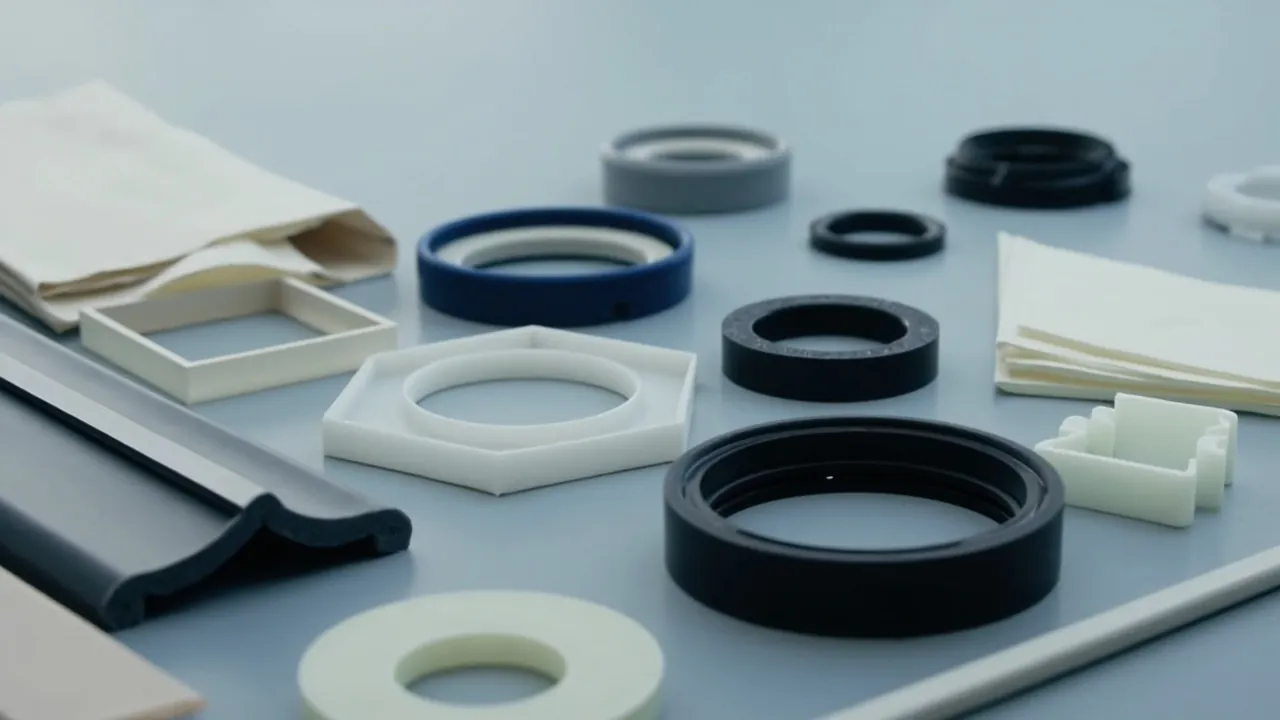
The sealing gasket (also called a seal) on a protective case is an elastic sealing element arranged around the entire perimeter of the lid. Once the case is closed, the latches press the lid down and compress the gasket, so that it deforms and fills the microscopic gaps between the lid and the body, blocking dust and water. The core rule for choosing a seal material is to match the material's properties to the working environment: for long-term outdoor sun exposure choose a material with strong weather resistance; for large temperature swings choose one with a wide service-temperature range; for long-term sustained compression choose one with low compression set; and for a tight budget choose the one with the best overall cost-performance. The four mainstream seal materials used on protective cases are EPDM (ethylene propylene diene monomer rubber), TPE (thermoplastic elastomer), Silicone, and CR (chloroprene rubber/Neoprene), with NBR (nitrile, oil-resistant) and PVC (low-cost) as secondary options. This article explains, from the working principle, material comparison, key parameters, and scenario-based selection, exactly how to choose the right gasket material for a protective case.
Table of Contents
- What the Gasket Does Inside a Protective Case
- Common Seal Materials for Protective Cases
- How the Four Mainstream Materials Compare (EPDM/TPE/Silicone/CR)
- Detailed Properties: Weathering, Temperature, and Chemical Resistance
- Key Parameters to Evaluate a Material
- Gasket Hardness (Shore A) and Cross-Section Shape
- Forming Processes: Extrusion, Compression Molding, and Integral Injection
- How to Choose by Usage Scenario
- How to Request a Seal Specification Sheet from a Manufacturer
- Industry Examples of Gasket Material Selection
- Quick Environmental Avoidance Chart
- How the Seal Works with Latches and the Case Body
- Common Misconceptions and Maintenance
- Frequently Asked Questions (FAQ)
- Conclusion and Further Reading
What the Gasket Does Inside a Protective Case
The seal is the first and only physical barrier for a protective case's "dust-proof and water-proof" capability. Its working principle is as follows:
- Compression fills the gap: When closed, the latch pulls the lid toward the body, and the elastic gasket along the lid edge is compressed (industry term: compression). The elastomer fills the microscopic unevenness between the lid and body so that air cannot carry water and dust in through convection.
- Continuous full-perimeter blocking: A protective case uses a "full-perimeter" seal, not a few local segments. If even a small section breaks, slips out of its groove, or is only loosely compressed, the whole case develops a leak point.
- Long-term elasticity retention: Sealing relies on the material's tendency to "spring back after being squashed." Once the material hardens, cracks, or loses elasticity, no amount of latch tightening will make a tight seal.
Therefore, the gasket material directly determines three things: whether it can withstand long-term outdoor sun and rain (weather resistance), whether it stays effective across temperature swings (temperature resistance), and whether it can still spring back after being compressed for a long time (compression set). This is exactly why "gasket material" is the single most important item to examine carefully when selecting a protective case.
Common Seal Materials for Protective Cases
The gasket materials used on protective cases and tool boxes fall into several common families, each with its own chemical nature and applicable boundary:
- EPDM (ethylene propylene diene monomer): A copolymer of ethylene, propylene, and a small amount of diene. Its standout features are excellent weather resistance, ozone resistance, and UV resistance; it does not easily crack under long-term outdoor sun exposure, making it one of the most mainstream seal materials for outdoor protective cases.
- TPE (thermoplastic elastomer): Combines rubber elasticity with the injectability of plastics. It is recyclable, fast to form, and usually lower cost than silicone; it is flexible and well suited to high-volume and complex one-piece sealing strips.
- Silicone: Built on a silicon–oxygen backbone, it has an extremely wide temperature range, good biological inertness, and is odorless, suiting extreme-temperature or high-cleanliness requirements. Its drawbacks are usually higher mechanical strength (tear/abrasion resistance) cost and higher price.
- CR (chloroprene rubber/Neoprene): Balanced overall performance; acceptable weather and ozone resistance, and some resistance to oils, certain chemicals, and flame. Historically common for various gaskets; its overall weather resistance is slightly behind EPDM.
- NBR (nitrile rubber): Outstanding oil and fuel resistance, but poorer weather and ozone resistance; recommended only as an alternative when in contact with oils.
- PVC (polyvinyl chloride) elastomers: Low cost, but elasticity, weather resistance, and rebound are generally insufficient to support a high-quality long-term seal; they are generally not used as the main seal of a protective case that must meet an IP rating.
For the vast majority of outdoor, transport, military/police/fire, and precision-instrument scenarios, the discussion focuses on the four families EPDM, TPE, Silicone, and CR — compared item by item in the table below. One important reminder: the same material in different formulations (for example, whether UV stabilizers are added, filler ratio, and vulcanization system) performs very differently, so "material family" is only the first step; the final choice must still be based on the specification sheet of the specific grade. This is also why the article later stresses "request a specification sheet."
How the Four Mainstream Materials Compare (EPDM/TPE/Silicone/CR)
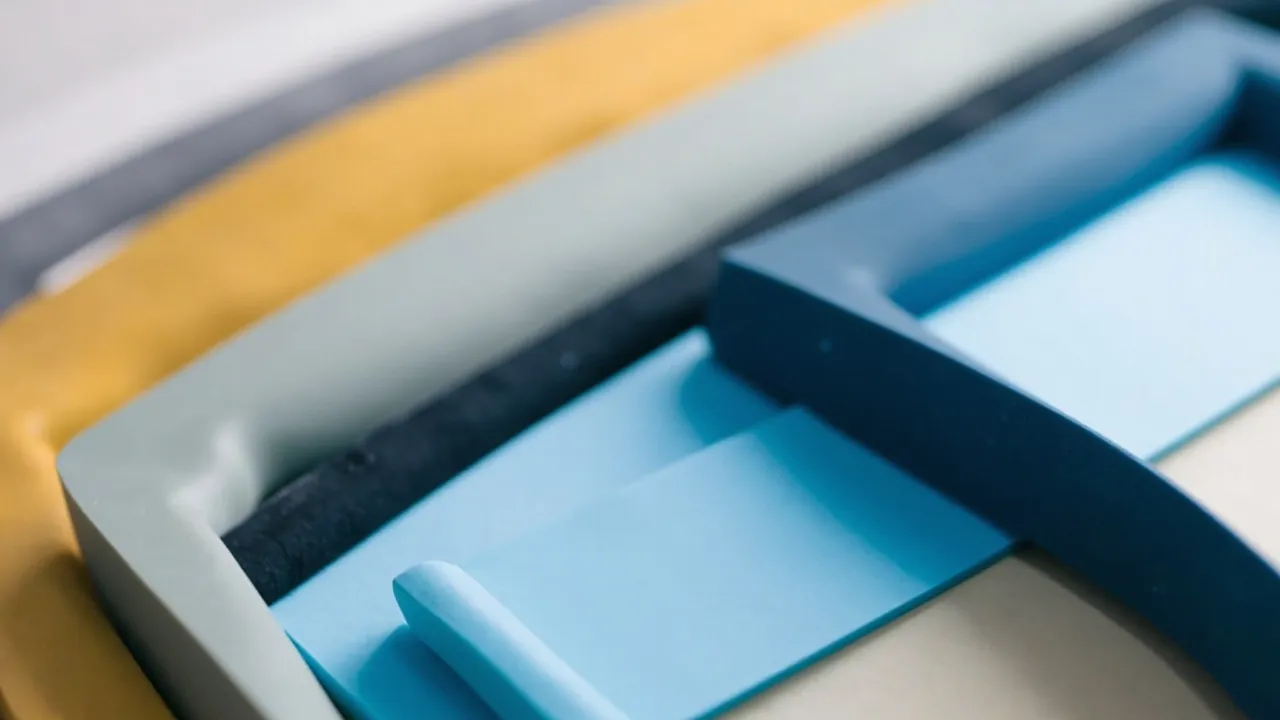
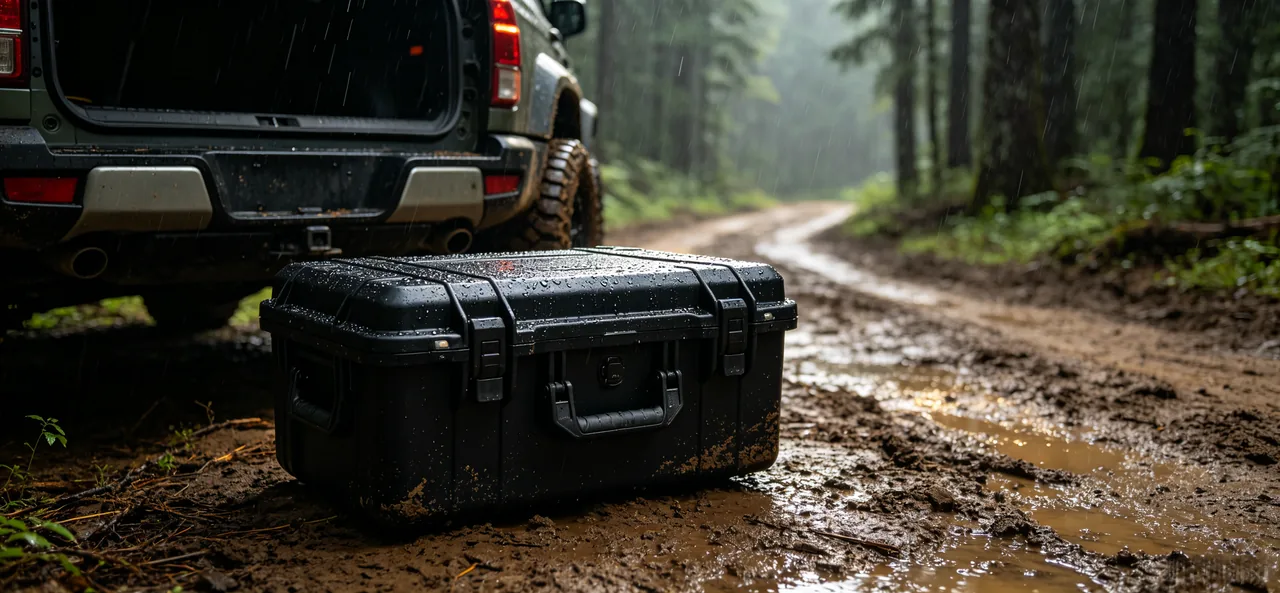
| Dimension | EPDM | TPE | Silicone | CR |
|---|---|---|---|---|
| --- | --- | --- | --- | --- |
| Weathering/UV | Excellent | Good | Good–Excellent | Good (below EPDM) |
| Ozone resistance | Excellent | Good | Good | Good |
| Typical temp. range* | ≈ -40 to +120℃ | ≈ -40 to +90℃ | ≈ -60 to +200℃ | ≈ -40 to +100℃ |
| Compression set | Low (excellent) | Medium | Low–Medium | Low (excellent) |
| Rebound | Good | Good | Good (but softer) | Good |
| Oil resistance | Poor | Fair | Poor | Fairly good |
| Cost | Medium | Low–Medium | High | Medium |
| Common form | Solid/foam strip, die-cut | Co-extruded/injected strip | Extruded/molded strip | Solid strip, die-cut |
\* The temperatures above are common industry reference ranges; the actual upper/lower limits vary with formulation and grade, and the material specification sheet should be the basis for selection.
Bottom line up front: If you remember only one sentence — for long-term outdoor sun exposure and the most worry-free choice, prefer EPDM; for low cost and easy processing where the temperature range is not extreme, TPE is very practical; for extreme high/low temperatures or cleanliness requirements choose Silicone; for oil contact or balanced all-round use consider CR. There is no "best in every dimension" material, only "best match for the scenario." In practice the thinking is often a combination of "main seal uses EPDM/TPE + Silicone supplements critical conditions," rather than betting on a single material.
Detailed Properties: Weathering, Temperature, and Chemical Resistance
Breaking down the differences among the four families helps you choose against the real environment:
EPDM: The Weathering King
EPDM's polymer backbone is saturated (no double bonds), so its resistance to UV, ozone, and oxidation is extremely strong — it is the widely recognized "long-life outdoor" material among rubbers. Its weakness is poor oil and solvent resistance — contact with engine oil, diesel, and most hydrocarbons will cause swelling, so avoid it in oily environments. Typical use: main seals for long-term outdoor protective cases, field-survey cases, and construction/power-site cases.
TPE: The Cost-Performance and Process Choice
TPE can be integrally formed through thermoplastic processing (injection, extrusion), its scrap is recyclable, and it suits complex cross-sections and mass production; its cost is usually below silicone. Its weather resistance depends on the formulation (whether it contains an easily-aging phase); quality TPE can also satisfy years of outdoor use, but under long-term extreme sun exposure it is generally less robust than EPDM. Typical use: high-volume general-purpose protective cases and transport cases where the temperature range is not extreme.
Silicone: The Wide-Temperature and Cleanliness Specialist
Silicone's Si–O backbone has high bond energy and the widest temperature range, plus chemically inert, odorless, and low-extracting properties, suiting scenarios with violent temperature alternation (aviation, high altitude, desert) or with cleanliness/food/medical requirements. The cost is higher raw material and processing, and tear strength is usually lower than rubber, so avoid sharp-object scratches in use. Typical use: aviation-communication cases, extreme-temperature scientific cases, and clean-equipment cases.
CR: The Balanced Veteran
CR has acceptable weather and ozone resistance (below EPDM), but some resistance to oils, aliphatic hydrocarbons, and flame, with balanced physical and mechanical properties — a compromise for scenarios that are "both outdoor and possibly oily." Typical use: industrial-maintenance cases and equipment cases that may contact oil.
Key Parameters to Evaluate a Material
Translating the differences above into judgeable parameters, focus on four items:
1. Compression Set — the most critical
This refers to the permanent-deformation ratio of a gasket that "cannot return to its original thickness" after long-term compression; the lower the better. EPDM and CR usually perform excellently; silicone can achieve low values depending on formulation; TPE is generally medium. This parameter directly decides whether the gasket "still seals tightly after one or two years" — the higher the compression set, the more easily the seal becomes loose and leaks after aging.
2. Weathering/UV/Ozone resistance
An outdoor case is exposed to the sun every day and experiences day–night and seasonal temperature differences; UV and ozone break the rubber molecular chains, causing surface chalking and cracking. EPDM is almost the optimal solution here, CR next, and TPE/Silicone depend on formulation. For long-cycle outdoor use, weather resistance should rank first in weight.
3. Temperature range
Choose according to transport and storage environment: ordinary temperate outdoor, EPDM/TPE/CR are all sufficient; northern severe winters or high-temperature workshops, watch low-temperature embrittlement and high-temperature softening; extreme temperature differences (such as high altitude, aircraft holds, deserts) or the need for high-temperature sterilization/baking make silicone's wide range an advantage.
4. Cost and process
TPE can be thermoplastically processed, recycled, and integrally formed, with low mass-production cost; silicone raw material and processing are expensive; EPDM/CR are mostly vulcanized rubbers requiring molding or extrusion then bonding into a ring, with mature process and moderate cost. For large batches and complex lid seals, TPE's integral-formation advantage is clear; where weather-resistant life is prioritized, EPDM offers the best cost-performance.
Gasket Hardness (Shore A) and Cross-Section Shape
Beyond the material, two often-overlooked but critical parameters:
- Hardness (Shore A): Gaskets commonly use Shore A hardness to express softness, typically 40–70 A. Softer (e.g., 40–50 A) seats well and seals under low pressure but is easily squeezed out of the groove; harder (60–70 A) has strong support and resists extrusion but needs greater compression force. Selection must match the compression force the latch can provide and the groove depth — a hard ring with a weak latch will not seal tightly, and a soft ring with a strong latch may be extruded. Industry common main seals sit in the 50–65 A range (subject to design).
- Cross-section shape: Round (O-section) is simple to install and compresses evenly; rectangular/square sections have a larger contact face with the groove and better extrusion resistance; hollow (tubular) sections are lighter for the same material and softer to compress, suiting light-pressure scenarios. The cross-section shape must match the groove type, otherwise it will twist, slip out, or compress unevenly.
Forming Processes: Extrusion, Compression Molding, and Integral Injection

How the gasket becomes a ring also affects quality and cost:
- Continuous extrusion + joint bonding: The material is extruded into a continuous strip, then cut to length and bonded into a ring with a dedicated adhesive. Mature process, low cost, but the joint is a key weak point — poor bonding directly creates a leak point.
- Compression-molded ring: Formed as a whole in a mold, no joint, the best seal continuity, suited to high-requirement main seals, but with higher mold and batch thresholds.
- TPE integral injection/co-extrusion: Using TPE's thermoplastic nature, complex cross-sections can be directly injected or co-extruded, even integrally formed with the lid part — high efficiency, good consistency, the process advantage of high-volume solutions.
When buying, confirm with the manufacturer the "ring-forming process and joint reliability," especially for extrusion-bonding solutions, where joint strength and aging resistance must be verified.
How to Choose by Usage Scenario
Mapping parameters to real scenarios, you can apply the table below directly:
| Usage scenario | Recommended material | Reason |
|---|---|---|
| --- | --- | --- |
| Long-term outdoor/field survey/sun and rain | EPDM | Best weathering/UV, no long-term cracking |
| General transport/storage/short indoor-outdoor | TPE or EPDM | TPE lower cost, EPDM more sun-resistant |
| Extreme temperatures/airborne/clean | Silicone | Widest temp range, inert and clean |
| Oil contact/industrial | CR or NBR | CR balanced oil+weather, NBR stronger oil resist. |
| High-volume low-cost integral seal | TPE | Injectable, recyclable, fast forming |
| High-value instruments/long life | EPDM or Silicone | Low compression set, long life |
Supplement: Whether a protective case's IP rating (per the international standard IEC 60529, e.g., IP67 means fully dust-tight plus short-term immersion about 1 m/30 min) holds long term, the gasket material is one of the decisive factors. The KeXin New Materials JUNZHJIA protective-case product line has IP67 capability and holds qualifications such as ISO9001, REACH, and California Prop 65 (backed by company documentation; certificates available on request); the plastic ABS/PP material passes RoHS testing. When selecting materials, it is recommended to write "gasket material + corresponding temperature-resistance/compression-set specification" into the order's technical appendix, rather than just looking at the case exterior. For a deeper look at the sealing mechanism itself, see our guide on the structure and function of the outdoor-case seal ring.
How to Request a Seal Specification Sheet from a Manufacturer
To avoid "they all look like black rings but perform worlds apart," it is recommended to request and verify the following seal data from the manufacturer and write them into the technical agreement:
- Material grade and type (e.g., EPDM/TPE/Silicone/CR).
- Shore A hardness and tolerance.
- Typical temperature range (upper/lower limits).
- Compression set (value at given temperature, compression ratio, and time — lower is better).
- Weathering/ozone grade or accelerated-aging data.
- Cross-section dimensions and tolerance, ring-forming method (molded/extrusion-bonded).
- Compatibility notes with the case-body material.
- For critical scenarios, attach a third-party test report.
Using this list as the incoming-inspection basis can control material risk upfront.
Industry Examples of Gasket Material Selection
Mapping the parameters above onto specific industries builds intuition:
- Outdoor survey/scientific exploration: Year-round outdoor sun, rain, and large day–night temperature differences — the first-choice gasket is EPDM, with the best weathering/UV; if high altitude/polar low temperature is involved, watch low-temperature embrittlement and, if necessary, pair with a silicone wide-temperature solution. Survey cases are often "long-term deployed," so material life matters more than cost.
- Military, police, fire: Complex environments, possible oil and fire contact, and an emphasis on reliability — mostly EPDM or CR; a protective-case product line validated for environmental adaptability against MIL-STD-810H as a product-line environmental test basis has systematic requirements for the gasket's temperature/humidity and vibration tolerance, and material selection must match the overall validation.
- Electronics/electrical maintenance: On-site fear of dust and moisture — IP67 plus full-perimeter seal is enough; where the temperature range is not extreme, TPE or EPDM both work, with the focus on controlling compression set and joint reliability.
- Aviation communication: Takeoff/landing and transfers experience violent temperature and pressure changes — silicone's wide-temperature advantage is clear; at the same time it must coordinate with the pressure-balancing valve, the gasket and valve jointly managing internal-external pressure difference. See how the pressure-balancing valve works.
- Sea transport/coastal: High salt fog, high humidity — beyond gasket weather resistance, also watch case-body water pooling and metal-part corrosion; prefer EPDM and avoid long-term water immersion.
- Industrial maintenance (possible oil contact): When contacting engine oil or fuel, EPDM will swell — switch to CR or NBR, otherwise it fails quickly.
Quick Environmental Avoidance Chart
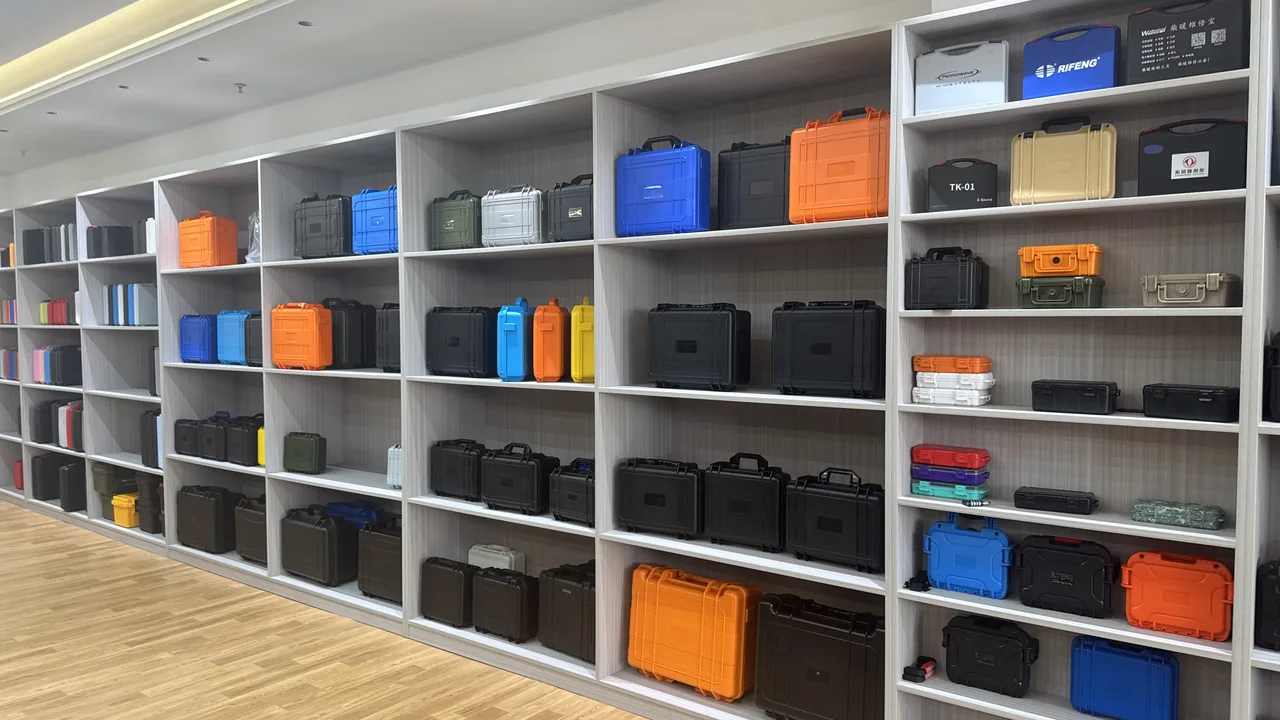
Reversed, here is a table of which materials to avoid in which environments:
| Environment | Preferred material | Avoid |
|---|---|---|
| --- | --- | --- |
| Long-term strong sun/outdoor | EPDM | Ordinary PVC, unstabilized TPE |
| Extreme temperatures | Silicone | Ordinary TPE/CR |
| Oil/fuel contact | CR, NBR | EPDM, Silicone |
| High humidity/salt fog | EPDM (with anti-corrosion body) | Easily-hydrolyzed materials |
| Clean/food/medical | Silicone | High-extracting materials |
| High-volume low cost | TPE | High-cost Silicone |
This table works with the "scenario selection" table above: first use the scenario table to set direction, then use the avoidance table to clear mines — and you will basically not choose the wrong family.
How the Seal Works with Latches and the Case Body
The gasket does not exist alone; it, the latches, the case body, and the sealing groove together determine sealing success:
- With the latches: The latch provides compression force; the gasket converts that force into a seal. The number and distribution of latches determine whether the gasket is compressed evenly around the full perimeter — a loose spot means a local leak. For latch selection see our protective-case latch selection guide.
- With the sealing groove: The gasket channel on the lid must firmly hold the gasket and prevent it from compressing unevenly or being extruded. Groove depth, width, and fillet must match the material hardness (Shore hardness).
- With the case body: A thin-wall or recycled-material body deforms under latch tension, skewing the sealing groove and making the full-perimeter compression uneven. A good body + reinforcement ribs + a suitable gasket is the stable combination.
Under the KeXin New Materials (Guangdong) Co., Ltd. protective-case product line, brought to market under the global brand kexinMaterials and the domestic product-line brand JUNZHJIA, the factory is located in Zhongshan City, Guangdong Province (the Guangdong–Hong Kong–Macao Greater Bay Area), covering about 18,000 square meters, equipped with more than 80 machines and employing over 100 staff. It has one-stop customization (OEM/ODM) capabilities for product design, injection molding, mold manufacturing, LOGO printing, and inner tray/liner making. , Ltd., and , Ltd. holds more than 20 utility-model and design patents. The same-source mold and injection capability means the sealing groove, latch seat, and reinforcement ribs can be coordinated at the design stage, guaranteeing the gasket is compressed evenly from the source — which is exactly the point that matters as much as material selection itself.
Common Misconceptions and Maintenance
- Misconception 1: All gaskets are about the same. Different materials differ vastly in weathering, temperature resistance, and compression set; using the wrong material for long-term outdoor use cracks and leaks within a year or two.
- Misconception 2: Harder means better sealing. An overly hard ring has poor rebound and uneven seating; choose the right Shore hardness matched to the groove.
- Misconception 3: Looking only at the IP label, not the material. The IP rating is a test value; long-term life depends on the material; ask clearly about the gasket material and compression set.
- Misconception 4: Glue it any way. Ring joints need a bonding process compatible with the base material; inferior glue opens early and forms a leak point.
- Misconception 5: Ignoring aging. Rubber ages with UV, ozone, and high temperature; self-inspect regularly and replace on a cycle.
Maintenance advice: before closing, clear sand grains and threads from the lid edge and gasket to avoid trapped debris forming a leak gap; wipe the gasket regularly with a clean soft cloth, apply thin silicone grease if needed to slow aging; avoid prolonged sun exposure — long-term high temperature accelerates rubber hardening and cracking; open in clean places to reduce indoor dust; watch for deformation and replace the same-spec part promptly when the gasket loses elasticity or cracks; clean the liner by blowing dust regularly to avoid the liner itself accumulating dust and re-contaminating equipment. For long-term outdoor deployment, include the gasket in periodic inspection rather than waiting for water ingress.
Frequently Asked Questions (FAQ)
Q: Which gasket material is best for a protective case? A: There is no best material in every dimension, only the best match for the scenario. For long-term outdoor sun exposure, EPDM is the first choice (best weathering/UV); for low-cost high-volume, TPE; for extreme temperatures or cleanliness, Silicone; for oil contact or balanced all-round use, CR. Selection should combine the environment's weathering, temperature, and budget.
Q: Should I choose EPDM or TPE? A: For long-cycle outdoor use emphasizing sun-aging resistance, prefer EPDM, whose weather and ozone resistance is strongest; if you pursue low cost, easy processing, integral forming, and the temperature range is not extreme, TPE is very practical. Simply put: choose EPDM for peace-of-mind life, TPE for cost and process.
Q: Is a silicone gasket worth it? A: When the working-temperature range is very wide (such as airborne, high altitude, extreme cold/heat) or there are cleanliness/inertness requirements, silicone's wide range and stability are valuable; but its cost is higher and tear resistance is generally lower. For ordinary outdoor scenarios, EPDM is usually more economical.
Q: What is compression set and why does it matter? A: It is the permanent-deformation ratio of a gasket that cannot rebound after long-term compression; the lower the better. A material with high compression set becomes "loosely compressed" after a year or two, and even with tight latches the seal is loose and leaks. It is a key indicator of gasket life; request the corresponding data when buying.
Q: How do I choose gasket hardness (Shore)? A: Common 40–70 A; softer seats well but extrudes easily, harder resists extrusion but needs more compression force; it should match the latch compression force and groove depth, mostly in the 50–65 A range (subject to design). Wrong hardness causes loose sealing or extrusion leaks.
Q: Can PVC gaskets be used? A: PVC elastomers are low cost, but elasticity, weather resistance, and rebound are generally insufficient to support a high-quality long-term main seal requiring an IP rating; they are generally not recommended for high-quality long-term protection; the main seal should still be EPDM/TPE/Silicone/CR.
Conclusion
Choosing the seal material for a protective case is essentially matching the material's properties to the usage environment: for long-term outdoor sun exposure, choose the highly weather-resistant EPDM first; for low-cost high-volume use, TPE; for extreme temperatures or cleanliness scenarios, Silicone; for oil contact or balanced all-round use, CR. When judging, focus on four parameters — compression set (lower is better, decides long-term life), weathering/UV/ozone resistance, temperature range, and cost & process; at the same time do not ignore that hardness (Shore A, mostly 50–65 A) and cross-section shape must match the latch compression force and the sealing groove. The ring-forming process (molded jointless is better than extrusion-bonded) and joint reliability also directly affect seal continuity. Remember, the IP rating (per IEC 60529, e.g., IP67) is a controlled test value; whether it holds long term depends on the gasket material and full-perimeter compression; selection should write "gasket material + compression set + temperature + hardness" into the technical appendix and request specification sheets and third-party reports rather than just looking at the case exterior. The gasket must also work integrally with the latches (providing even compression), the sealing groove (limiting and preventing extrusion), and the rib-reinforced body (preventing deformation) — a manufacturer with same-source mold, injection, and assembly capability (such as KeXin New Materials kexinMaterials/JUNZHJIA) can lock in these cooperations from the design stage. In one sentence: choosing the right material is the starting point for a protective case to be "leak-free for ten years," but the synergy of material, hardness, compression, groove, and body is the finish line. For purchasers, the most pragmatic move is to write "material + hardness + compression set + temperature + ring-forming process" into the technical appendix and request verifiable specification sheets and test reports from the manufacturer — this guarantees long-term protection better than repeatedly comparing prices on appearance. For bulk quotations, specification sheets, and customisation, please use the contact form on this site.com, address.