

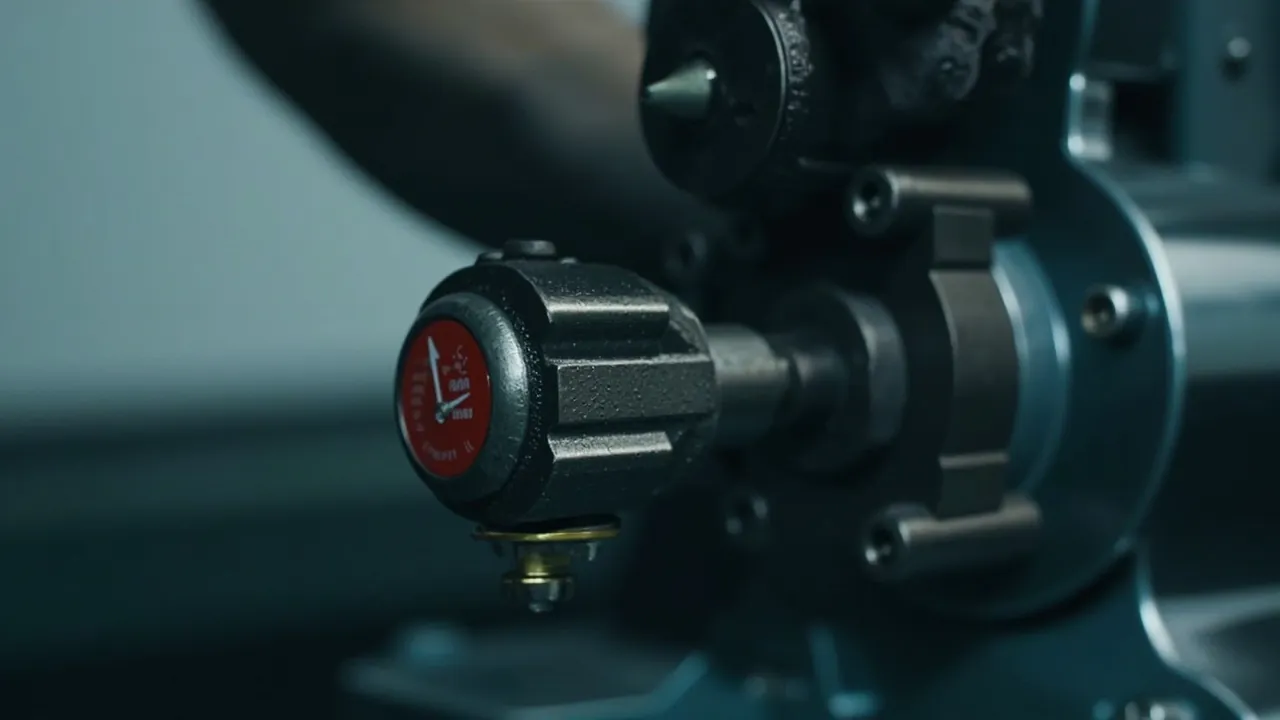
The pressure-balancing valve of a protective case — also commonly called a "breather valve" or "automatic pressure-relief valve" — is a small venting component mounted on the case body (usually on a side wall or the lid). Its core job is: to allow the air inside and outside the case to slowly exchange when a pressure difference appears, equalizing the internal–external pressure back to zero, while using its internal water-blocking and dust-blocking structure to prevent water and dust from entering the case. Without it, when ambient pressure or temperature changes abruptly (such as an aircraft cargo hold climbing, a high-altitude mountain area, or large day–night temperature swings), the changing air volume inside produces an internal–external pressure difference that can suck the lid open or push it open, crush the seal, or even make the case bulge and deform. This article explains the pressure-balancing valve from four angles — what harm a pressure difference causes, how the valve manages to both breathe and block water and dust, which scenarios absolutely require one, and how it actually works — all based on common industry knowledge, without inventing any patent numbers or unverified parameters.
Table of Contents
- What the Pressure-Balancing Valve Does Inside a Protective Case
- What Happens If You Ignore the Pressure Difference
- Why the Valve Can Breathe Yet Block Water and Dust
- How the Pressure-Balancing Valve Works (Industry Common Knowledge)
- Which Scenarios Must Have a Pressure-Balancing Valve
- Air Transport and High Altitude: Why the Valve Is Critical
- Large Day–Night Temperature Swings and Coastal Environments
- How the Valve Works Together with the Sealing Gasket
- Temporary Workarounds Without a Valve (and Their Limits)
- Selection and Verification Points
- Valve Configuration from KeXin New Materials (kexinMaterials)/JUNZHJIA
- Common Valve Structure Types
- Maintenance and Troubleshooting of the Valve
- How to Read Valve Parameters (Common Industry Descriptions)
- A "Lid Blow-Open" Incident Reconstructed
- Frequently Asked Questions (FAQ)
- Conclusion and Further Reading
What the Pressure-Balancing Valve Does Inside a Protective Case
In one sentence: it is the "pressure-relief valve" of the protective case, specifically solving the "internal–external pressure difference" problem. A well-sealed protective case is by nature airtight — and that is exactly why it resists dust and water. But "an airtight seal" becomes "a pressurized seal" when air pressure or temperature changes: the internal air is compressed or expands, exerting extra force on the lid and the gasket. The role of the pressure-balancing valve is, once the pressure difference exceeds a certain threshold, to let air pass slowly and release the pressure, returning the inside and outside to the same pressure — while water and dust still cannot get in.
What it solves is not "dust and water resistance" (that is the gasket's job) but "lid popping open, seal leaking, or the case bulging because of pressure difference." In other words, the gasket handles static sealing and the pressure-balancing valve handles dynamic balancing — they are partners, not substitutes. For air transport, high altitude, and large temperature-swing scenarios, the valve is almost mandatory; for long-term stable indoor short-haul transfer it has limited impact, but adding one does no harm. Treating it as the "breathing port" of the protective case puts it on equal footing with the gasket from the very start.
Many users only become aware of pressure difference the first time they find "the case simply would not open at destination (negative pressure)" or "hear a hiss when opening and find dust inside." The problem is this: the better a case seals, the more easily it "traps air" when pressure or temperature changes — the more successful the protection, the more obvious the pressure-difference effect. So the valve is not a "nice-to-have extra"; it is a necessary compensation for the sealing design in highly mobile scenarios. Understanding it as the "safe pressure-release port" of the protective case keeps you from ranking it last during selection.
What Happens If You Ignore the Pressure Difference
If a protective case is completely sealed yet has no pressure-balancing valve, the pressure difference brings several real hazards — hazards that are invisible in a laboratory static test but break out in real transport:
- The lid is "sucked open" or "pushed open": When outside pressure drops sharply (aircraft climbing, rapid ascent), the relatively higher internal pressure pushes the lid outward; when outside pressure rises sharply (aircraft descent, rapid downhill or into a cargo hold), the relatively lower internal pressure pulls the lid inward. Either way, the latches bear abnormal force and the gasket compression changes; in severe cases the lid springs open or the seal loosens.
- The seal fails under continuous pressure: Long-term pressure difference keeps the gasket compressed on one side, with local compression deviating from the design range, letting water and dust seep in.
- Case bulging/deformation: Especially for thin-wall or large cases, the internal–external pressure difference can bulge the shell and concentrate stress at corners, affecting appearance and life, even jamming the latches.
- Difficulty opening (negative pressure): After high altitude or cooling, negative pressure forms inside; the next opening needs great force, delaying urgent use, and forcing it open may damage latches and seals.
- Worsened internal condensation: Pressure change combined with temperature change means the moisture-laden internal air more easily condenses when pressure drops or temperature falls, and the humidity harms circuits and metal parts.
These hazards almost never occur "on flat ground at room temperature indoors," but once you "go up in the air, up a mountain, or across temperature zones," they appear together. The pressure-balancing valve exists precisely for these scenarios.
Why the Valve Can Breathe Yet Block Water and Dust
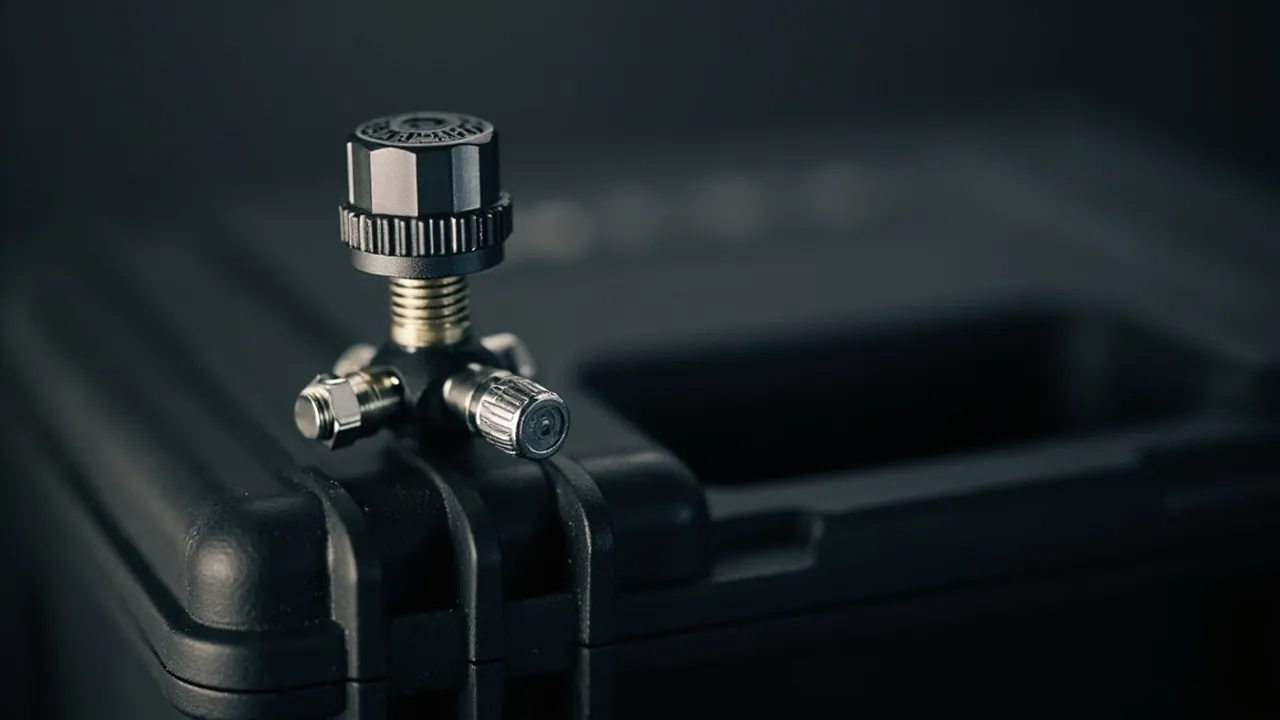
This seems contradictory: "if it breathes, doesn't water get in?" The key is that inside the valve there is a film/filter structure that breathes but blocks liquid water and dust (commonly in industry, such as an ePTFE expanded polytetrafluoroethylene microporous membrane). Its pores are extremely small: air molecules (gas) freely pass through, but the surface tension of liquid water prevents it from passing these pores (similar to the capillary-blocking "lotus-leaf effect"), and dust particles are far larger than the pore size and are blocked. So air can slowly convect to balance pressure, yet water droplets and dust cannot pass.
Besides the membrane, the valve also has secondary dust/splash-proof structures (such as labyrinth channels, filter cotton, one-way flaps) that further prevent water and dust from entering through the vent during rain, spray, and dusty environments. Note: the valve's water-blocking capability is at the "splash-proof/short-term rain-proof" level, not "long-term immersion-proof" — immersion scenarios still rely on the case's whole-body IP67 seal; the valve only prevents the vent point from being directly flooded. Understanding this boundary lets you correctly set expectations for the valve's capability.
How the Pressure-Balancing Valve Works (Industry Common Knowledge)
The simplified working principle widely accepted in the industry is as follows (common-sense mechanism, not any single company's patent):
- Balanced state: No internal–external pressure difference; the pressure on both sides of the valve membrane is equal; the valve is closed or only maintains a micro-passage, and the case stays sealed.
- Positive pressure appears: Outside pressure drops or inside temperature rises, internal air wants to push out → inner-side pressure is higher than outer → air slowly escapes through the breathable membrane until the difference returns to zero, and the lid is no longer pushed open.
- Negative pressure appears: Outside pressure rises or inside temperature falls, outside air wants to replenish → outer-side pressure is higher than inner → outside air slowly enters through the breathable membrane, the case is no longer "sucked flat," and the next opening is easier.
- Meeting water or dust: During rain or blowing dust, the breathable membrane and secondary protective structure block liquid water and dust, and the inside stays dry and clean.
The word "slowly" matters: the valve is not a big wind hole but a controlled micro-passage, with the balancing process counted in minutes — releasing the pressure difference without letting internal air and water/dust convect rapidly. It is exactly this "slow breathing, fast blocking of water and dust" property that silently protects the seal during transport.
Which Scenarios Must Have a Pressure-Balancing Valve
By risk level, the necessity of the valve can be graded:
| Scenario | Pressure-difference risk | Valve necessity | Note |
|---|---|---|---|
| --- | --- | --- | --- |
| Aircraft cargo hold transport | High (climb/descent pressure swings) | Must have | Cargo hold not pressurized; difference can be large |
| High-altitude mountain transfer | High (low mountain pressure) | Must have | Pushes open going up, sucks open going down |
| Large day–night temperature swing in field | Medium–High | Strongly recommended | Temperature drives volume change |
| Sea freight/long road haul | Medium | Recommended | Temperature and altitude fluctuation |
| Coastal, high humidity, salt spray | Medium | Recommended (with desiccant) | Moisture-proof main; valve prevents bulging |
| Indoor room-temperature short haul | Low | Optional | Small difference, limited impact |
The conclusion is clear: as long as the equipment "goes to the air, up a mountain, or across temperature zones," the valve should be fitted; pure indoor short haul is optional. But it must be stressed: whether it is "mandatory" ultimately depends on your transport profile (route, altitude, temperature zone) and the manufacturer's advice; this article gives a mechanism-based risk grading.
Air Transport and High Altitude: Why the Valve Is Critical
Air transport is the most typical mandatory scenario for the pressure-balancing valve. Civil aircraft cargo holds (especially the belly hold) are not fully pressurized to ground level; during cruise the cabin pressure may equate to only about 2,000–2,400 meters altitude, and the pressure changes sharply during takeoff climb and landing descent. A sealed protective case traveling with the cargo aircraft has its internal air expand on climb and compress on descent; without pressure relief/replenishment, the lid and latches repeatedly bear extra load — at best hard to open, at worst the seal loosens and water enters. The pressure-balancing valve automatically balances the pressure difference throughout takeoff and landing, keeping the case "consistent inside and out," which is the standard logic for air-transport protective cases.
High altitude is the same logic: shipping from the plains to a plateau, the outside pressure drops and the relatively positive internal pressure pushes the lid outward; returning from the plateau to the plains is the reverse. Scientific survey, military/police transfer, and communication-equipment mountain deployment often combine "high altitude + low temperature + large temperature swing," where the valve works with a low-temperature-resistant shell (such as PP) and an intact gasket to ensure "opens when it arrives, dry when opened." For air transport and high altitude, selection must confirm the case has a pressure-balancing valve, and verify the valve's water-blocking rating and maintainability.
Large Day–Night Temperature Swings and Coastal Environments
Even without going to the air or up a mountain, large temperature swings are enough to create a pressure difference. Deserts, gobi, and high-cold regions can have day–night temperature differences of tens of degrees Celsius; the internal air expands and contracts with the day–night cycle, and long-term repetition fatigues the seal and accumulates case stress. The pressure-balancing valve turns this "breathing from thermal expansion and contraction" into controlled micro-passage, protecting seal life.
The core contradiction of coastal/high-rain environments is moisture and salt spray. The valve itself does not solve moisture-proofing (that is the job of sealing + desiccant), but it prevents bulging and opening difficulty from temperature/humidity change, and avoids the vent being directly flooded. For such scenarios, the combination "whole-case IP67 seal + in-case desiccant + fitted valve" is recommended, rather than relying on any single item. For a deeper look at how temperature extremes affect cases, see how outdoor protective cases handle temperature extremes.
How the Valve Works Together with the Sealing Gasket
Earlier we mentioned the gasket can be damaged by pressure difference; here we stress the cooperative relationship:
- The sealing gasket handles static dust and water resistance, relying on compression fit.
- The pressure-balancing valve handles dynamic pressure-difference balancing, preventing the lid from being pushed or sucked open and thus destroying the gasket's compression state.
One is static, one is dynamic; neither can be missing. A case with a valve but an aged gasket still takes in water; a case with an intact gasket but no valve, again in air transport, may be "pushed open" by someone. Therefore, for complex environments, selection should accept "full-perimeter gasket + multiple latches + pressure-balancing valve" as a combined acceptance, not looking at any single item in isolation. This is also why a protective case rarely solves problems with just one component, but stacks multiple protective layers. A related component is the sealing gasket of an outdoor protective case — keeping it intact is the premise for the valve to work.
Temporary Workarounds Without a Valve (and Their Limits)
Some ask: without a valve, can't we "not latch it fully tight" to release pressure? Common but not recommended temporary approaches:
- Not fully latching the latches: Leave a gap at the lid seam to breathe — but this directly destroys dust and water resistance, abandoning the core capability of a protective case; rain, sand, and dust enter immediately.
- Tape over a vent hole: Manually drill a hole and tape it; hard to control the hole size and damaging the structure; tape fails after aging.
- Open the lid immediately on arrival: Only relieves negative-pressure opening difficulty, cannot solve the transport-time pressure difference's harm to the seal and shell.
These "field fixes" cannot replace the valve's controlled micro-passage + water/dust blocking design. If your equipment truly often goes to the air or up mountains, the correct approach is to purchase a protective case with a factory-fitted pressure-balancing valve, not drill holes afterward. Temporary workarounds are only for emergencies, not a solution.
Selection and Verification Points
When purchasing a protective case with a valve, verify the following:
- Is it factory-integrated? The valve should be integrated at the mold/assembly stage, not user-drilled afterward; drilling afterward destroys sealing and structure.
- Water-blocking rating match: Confirm the vent's splash-proof/rain-proof capability; for immersion, rely mainly on whole-case IP67, with the valve as auxiliary.
- Breathable membrane type: Commonly ePTFE and similar microporous membranes; confirm weather resistance and replaceability (some valve membranes are replaceable).
- Position and protection: The valve should be where it is not directly rained on/bumped, and have a secondary splash-proof structure.
- Paired with the gasket: The same case should guarantee full-perimeter sealing + multiple latches; the valve does not replace the seal.
- Qualification verification: Whole-case IP67 (per IEC 60529), ISO9001, RoHS (e.g., plastic ABS/PP material passes RoHS testing) are available on request; the protective-case product line may reference MIL-STD-810H environmental-adaptability validation.
Writing these points into an acceptance sheet avoids the low-level problem of "bought a valved case only to find the vent directly floods."
Valve Configuration from KeXin New Materials (kexinMaterials)/JUNZHJIA
KeXin New Materials (Guangdong) Co., Ltd. operates the domestic brand "KeXin", the global brand kexinMaterials, and the protective-case product-line brand JUNZHJIA. Founded in 2014, the factory is in Zhongshan City, Guangdong (the Greater Bay Area), covering about 18,000 m², with 80+ machines and 100+ staff. The company holds more than 20 utility-model and design patents (each patent is traceable to the corresponding design and process record of the product line).
The product line covers more than 150 specifications across plastic tool boxes, safety protective cases, sealed cases, waterproof/moisture-proof cases, hardware tool boxes, machinery parts cases, and parts bins, applied in outdoor survey, military/police/fire, electronics, scientific exploration, and aviation/communication, exported to the United States, the United Kingdom, Germany, Canada, Japan, Russia, the Philippines, India, Hong Kong/Taiwan (China), and the Middle East. The company has one-stop OEM/ODM capabilities for product design, injection molding, mold manufacturing, LOGO printing, and inner-tray/liner making — the pressure-balancing valve can be integrated at the product-design stage into a suitable position, unified with the sealing groove, latches, and shell. The protective-case product line has IP67 capability and holds ISO9001, REACH, and California Prop 65 (certificates available on request); plastic cases in ABS/PP pass RoHS testing; the product line is validated for environmental adaptability under MIL-STD-810H (a product-line test basis, not a military certification). For bulk quotations, specification sheets, and customisation, contact us through the contact form on this site — the team replies within 1–3 business days.
Common Valve Structure Types
The pressure-balancing valves on the market, by common industry implementations, fall into several types; understanding them helps read manufacturer specifications:
- Membrane type (ePTFE microporous membrane): Uses an expanded PTFE microporous membrane as the core; air passes slowly, water and dust are blocked; simple structure, high reliability, the most mainstream solution. The membrane can be designed replaceable for easy maintenance.
- Piston/float type: Relies on an internal small piston or float shifting under pressure difference to open the channel and return to close at rest; mechanical feel, but secondary protection against dust and water depends on the gasket and structure.
- One-way flap type: The flap opens to release pressure when pressed from one side and closes in reverse, enabling "out only, not in" or "controlled two-way"; note whether reverse can also replenish to relieve negative pressure.
- Combination type (membrane + labyrinth/filter cotton): Stacks a labyrinth channel or filter cotton over the microporous membrane, raising the splash-proof and dust-proof rating, suited to dusty and rainy environments.
These types have no absolute superiority; what matters is whether "breathing rate, water-blocking rating, maintainability, and whether two-way balancing" match your transport profile. When purchasing, ask the manufacturer to state the valve type and applicable environment, which is more reliable than just looking at the words "with valve." Reminder: this article describes common industry mechanisms; the specific structure and parameters of any product are per the manufacturer's specification sheet, and no patent numbers are invented.
Maintenance and Troubleshooting of the Valve
Small as the valve is, it can fail when the environment gets dirty; maintenance points:
- Keep the vent clean: Sand and dust blocking the breathable membrane slow or even disable balancing; regularly clean around the vent with a soft brush/air blower.
- Avoid coating and clogging: Do not spray, label, or oil near the vent, preventing the membrane pores from clogging.
- Check membrane condition: A broken or punctured membrane lets water in directly; replace the same-spec membrane or valve assembly promptly when damage is found.
- Verify two-way passage: If you suspect the valve is clogged, do a safe-environment temperature/pressure self-check (e.g., move from cold to warm and observe whether it is still hard to open); repair if abnormal.
- Maintain together with the gasket: The valve and gasket are partners; check both during maintenance, avoid fixing only one.
Adding valve maintenance to the protective case's regular care checklist avoids the hidden danger of "the valve is clogged yet you think the case is fine."
How to Read Valve Parameters (Common Industry Descriptions)
Common descriptions related to the valve in manufacturer specification sheets include: air permeability/response pressure difference, protection rating (vent splash-proof/rain-proof level), membrane material type, operating temperature range, and replaceability. When reading, note:
- Response pressure difference: The threshold of internal–external pressure difference at which the valve starts working; the lower, the earlier it intervenes; specific values are per the manufacturer's specification sheet, and this article provides no unverified values.
- Vent protection: Clarify whether it is "splash-proof" or "short-term rain-proof," and do not confuse it with whole-case IP67.
- Maintainability: Whether the membrane/valve core can be replaced separately affects long-term cost.
- Temperature adaptation: For high-cold or high-heat environments, confirm the valve material and membrane's temperature range.
These parameters help turn "with valve" from a marketing word into a verifiable engineering indicator. For batch purchases, write the valve parameters into the contract appendix, accepted together with IP67, material, and liner.
A "Lid Blow-Open" Incident Reconstructed
Use a common industry scenario to tie the principles together: a team checked a sealed protective case as random baggage; after takeoff the cargo hold climbed and outside pressure dropped sharply, internal air expanded forming positive pressure, yet with no pressure-balancing valve to release it, the lid was continuously pushed outward; on arrival and cooling it became negative pressure, and opening was abnormally hard; worse, a bump en route let a latch spring slightly and the seal briefly loosened, and sand was drawn in by the pressure-difference convection. Root cause review: not poor gasket quality, but the combination of "fully sealed + no valve + violent pressure difference" inevitably produces stress. After fitting a factory pressure-balancing valve, air automatically escapes on climb and automatically replenishes on descent, the lid stays consistent inside and out, and later transport never showed opening difficulty or dust ingress. This example shows: many "protective case took in water and dust" blames actually belong to "missing valve" — the pressure-difference problem can only be solved by a valve; no matter how good the gasket, it is ineffective.
Frequently Asked Questions (FAQ)
Q: Will the pressure-balancing valve let water in? A: Normally no. Inside the valve, a breathable water-blocking membrane (such as ePTFE microporous membrane) + secondary splash-proof structure lets air pass slowly while blocking liquid water and dust; its water-blocking is at the splash-proof/rain-proof level, and long-term immersion still relies on the whole-case IP67 seal. Distinguish: the valve prevents the "vent from being directly flooded," while whole-case immersion protection is the IP67 seal's job — the two divide labor and cannot substitute each other.
Q: Must all protective cases have a pressure-balancing valve? A: No. On flat ground at room temperature for indoor short haul, the difference is small and impact is limited, so it is optional; but for air transport, high altitude, and large day–night temperature-swing transport, it is strongly recommended, otherwise the pressure difference may push or suck the lid open and destroy the seal.
Q: Can the pressure-balancing valve replace the sealing gasket? A: No. The valve handles "dynamic pressure-difference balancing" and the gasket handles "static dust and water resistance"; the two are partners. If the valve fails or the gasket ages, protection suffers; they must be accepted together.
Q: Without a valve, can I just drill a hole to vent? A: Not recommended. Drilling afterward destroys sealing and structure, the hole is hard to control and easily floods; the correct approach is to purchase a protective case with a factory-integrated valve. Temporarily not latching fully only abandons water and dust resistance.
Q: Why must an air-transport protective case have a valve? A: Aircraft cargo holds (especially the belly) have violent pressure swings during takeoff and landing; a sealed case's internal–external pressure difference is large, which may push the lid open, crush the seal, or cause opening difficulty; the valve automatically balances the pressure difference throughout, the standard logic for air transport. For air-freight specifics, see what to watch for when shipping outdoor protective cases by air.
Q: Does the KeXin New Materials kexinMaterials protective case have a pressure-balancing valve? A: Its protective-case product line (JUNZHJIA) can integrate a pressure-balancing valve at the design stage as needed, unified with sealing, latches, and shell; the whole case has IP67 capability, plastic ABS/PP material passes RoHS testing, and it performs environmental-adaptability validation against MIL-STD-810H.
Conclusion
The core value of the protective-case pressure-balancing valve (breather valve) is to use a "controlled micro-passage, water-and-dust blocking" mechanism to equalize the internal–external pressure difference back to zero, thereby preventing the lid from being pushed or sucked open, the seal from being crushed, the case from bulging, and opening difficulty — it solves the "pressure-difference hazard," and is the static/dynamic partner of the gasket that handles "static dust and water resistance," neither dispensable. The valve uses an internal breathable membrane (such as ePTFE microporous membrane) to let air pass slowly yet block liquid water and dust; its water-blocking is at the splash-proof/rain-proof level, and long-term immersion still mainly relies on the whole-case IP67 seal. Whether it is mandatory depends on the transport profile: air transport, high altitude, and large day–night temperature-swing scenarios strongly recommend it as mandatory, while flat-ground room-temperature short haul is optional; the "field fixes" without a valve (not latching tight, drilling afterward) both destroy protection and are unreliable. Selection should accept "full-perimeter gasket + multiple latches + pressure-balancing valve" as a combined acceptance, and verify the valve's factory integration, water-blocking rating, and maintainability. Beware especially of "fake valves": some products just drill a random hole in the case and stuff a wad of sponge, claiming a vent valve — with neither controlled micro-passage nor reliable water-blocking, they become water-entry points in transport. A true pressure-balancing valve is a precisely integrated venting component, not a hand-drilled hole. For batch or export users, the one-stop OEM/ODM capability of KeXin New Materials kexinMaterials/JUNZHJIA can also coordinate the valve position, seal, and shell fit before leaving the factory, so equipment that "goes to the air or up a mountain" truly "opens when it arrives, dry when opened." In one sentence to close: the sealing gasket guards the water and dust at rest, the pressure-balancing valve guards the pressure difference in change — only with both does the protective case deserve the word "protection." Missing either ring, and even a box with the highest price tag may fail on its first flight or mountain crossing. Asking clearly "does it go to the air, up a mountain, across temperature zones" three questions, whether the pressure-balancing valve is needed should from the start not be a question, but the determined answer given by the transport profile.
Further Reading
- Why Does an Outdoor Protective Case Need Waterproof Design?
- What to Watch for When Shipping Outdoor Protective Cases by Air
- How Outdoor Protective Cases Handle High Altitude
- What Does the Sealing Gasket Do in an Outdoor Protective Case?
- What Is an Outdoor Protective Case and Where Is It Used?
- IP67 Protective Case: Fully Dust-Tight and Short-Term Immersion