

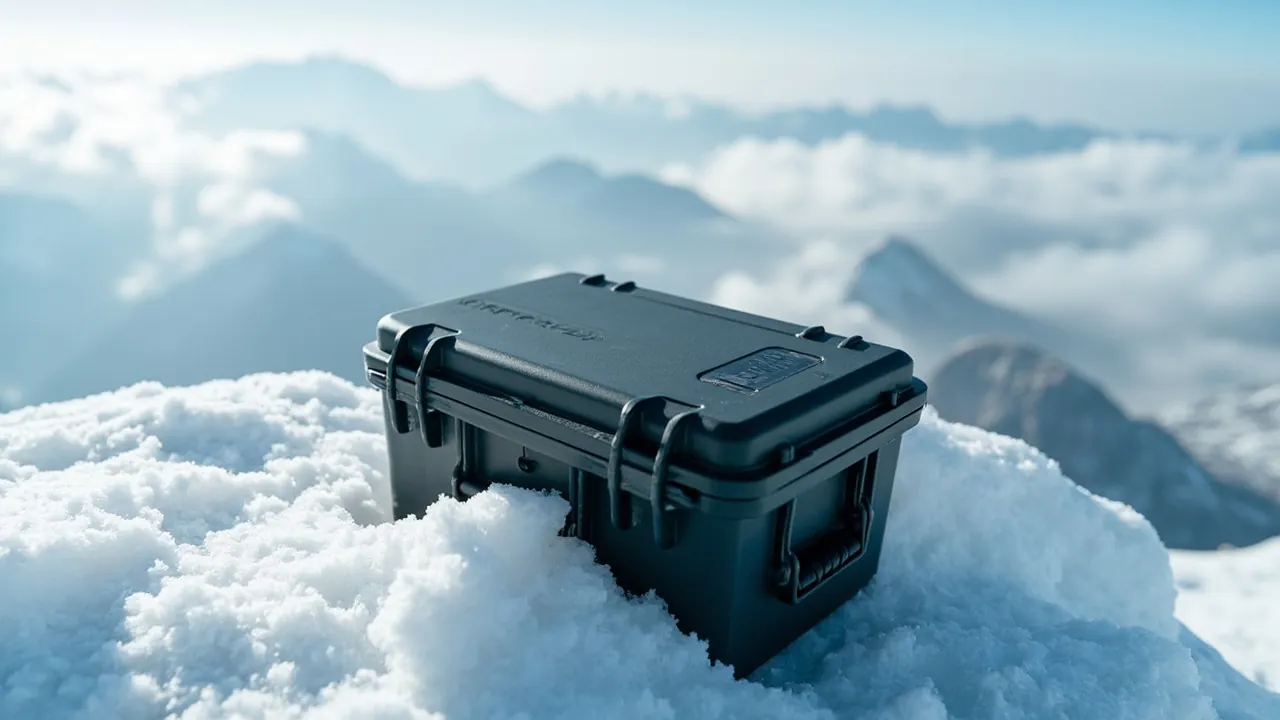
What to consider for protective cases in high-altitude environments? The core answer: high altitude brings four stacked challenges — "low atmospheric pressure + low temperature + large temperature swing + strong ultraviolet" — and the case must simultaneously handle five problems: "case bulging/negative-pressure hard-to-open, seal destroyed by pressure difference, shell embrittled by cold, internal condensation and moisture, and transport vibration." The key is to fit a pressure-balancing valve to equalize internal–external pressure, use a low-temperature-resistant shell (such as PP) with an intact full-perimeter gasket, pair cushioning liner and desiccant, and prepare fixing and cushioning for air transport and mountain-road transport. High altitude is not simply "take the case up there" — it is an extreme test of every protective link. Following a "phenomenon → cause → solution → prevention" problem-solving logic, this article breaks down the considerations item by item, all based on common industry knowledge and verified standards (IEC 60529, MIL-STD-810H), inventing no patent numbers or unverified parameters.
Table of Contents
- Four Challenges High Altitude Poses to Protective Cases
- Bulging and Negative-Pressure Problems from Low Pressure
- Why a Pressure-Balancing Valve Is Mandatory
- Cold Embrittles the Shell: How to Choose Material
- Large Temperature Swing and Internal Condensation
- Strong UV and Seal Aging
- High-Altitude Transport: Mountain Roads and Air Freight
- Liner, Desiccant, and Fixing Solutions
- High-Altitude Case Acceptance Checklist
- High-Altitude Adaptation of KeXin New Materials kexinMaterials/JUNZHJIA
- Risk Rising by Altitude Band
- How the Pressure-Balancing Valve Works at High Altitude
- Why PP Is More Stable: the Low-Temperature Mechanism
- Desiccant Selection and Dosage (Qualitative)
- Common High-Altitude Mistakes
- A Plateau Survey Equipment Case Study
- High Altitude and MIL-STD-810H Low-Pressure Validation
- Frequently Asked Questions (FAQ)
- Conclusion and Further Reading
Four Challenges High Altitude Poses to Protective Cases
As altitude rises, environmental parameters change systematically, creating four stacked challenges for the protective case:
- Low pressure: The higher the altitude, the lower the atmospheric pressure. If the case is sealed, it is relatively at "positive pressure" versus outside, and the air wants to escape; conversely, returning from plateau to lowlands, the case becomes "negative pressure." This is the most unique and most overlooked high-altitude risk.
- Low temperature: High-altitude air temperature drops with height (a cold baseline environment); combined with night and shadow zones, the case may stay below freezing for long periods, affecting material toughness and seal elasticity.
- Large temperature swing: Plateaus have large day–night temperature differences and strong sun; the case heats in daytime sun and drops sharply at night, driving the internal air to expand and contract repeatedly.
- Strong UV and dryness: Plateau UV is strong and air thin, accelerating aging of elastomers like the gasket; meanwhile air is dry, but moisture brought in by equipment from humid areas easily condenses when cooling.
These four challenges are not isolated — they amplify each other: low pressure + large temperature swing = violent pressure difference; low temperature + UV = accelerated material and seal degradation. So a high-altitude protection plan must be a "combination punch"; single-point strengthening often fails to hold.
Notably, high-altitude risk amplifies non-linearly with altitude — each rise drops pressure, widens temperature swing, and strengthens UV simultaneously; by the time problems surface at the summit, equipment is often already damaged. So the golden rule of high-altitude protection is "design using the harshest segment of the environment as input before departure," rather than taking an ordinary case and hoping it survives the unknown. Keep this in mind and every following point becomes meaningful.
Bulging and Negative-Pressure Problems from Low Pressure
Low pressure shows two extremes on a sealed protective case:
- Going up (outside pressure drops): The internal air relatively expands, forming positive pressure that continuously pushes outward on the lid and latches. Without a relief path, the lid may loosen, latches bear abnormal load, seal compression changes, and in severe cases the lid pops open or the seal loosens, letting water and dust in.
- Going down/returning to lowlands (outside pressure rises): The case becomes relatively negative pressure, the lid is sucked inward, and the next opening needs great force ("negative-pressure hard-to-open"); forcing it open may damage latches and seal; negative pressure also "sucks" outside air seeking gaps, and any tiny seal flaw leaks more easily.
This is the essence of the "bulge/negative-pressure" problem: it comes not from rain or drops, but from the contradiction of "pressure change + seal." An ordinary storage box is not sealed, so it has no such problem; but since a protective case relies on sealing for dust and water, it must use a pressure-balancing valve to dissolve the pressure difference — otherwise the stronger the seal, the more obvious the problem.
Why a Pressure-Balancing Valve Is Mandatory
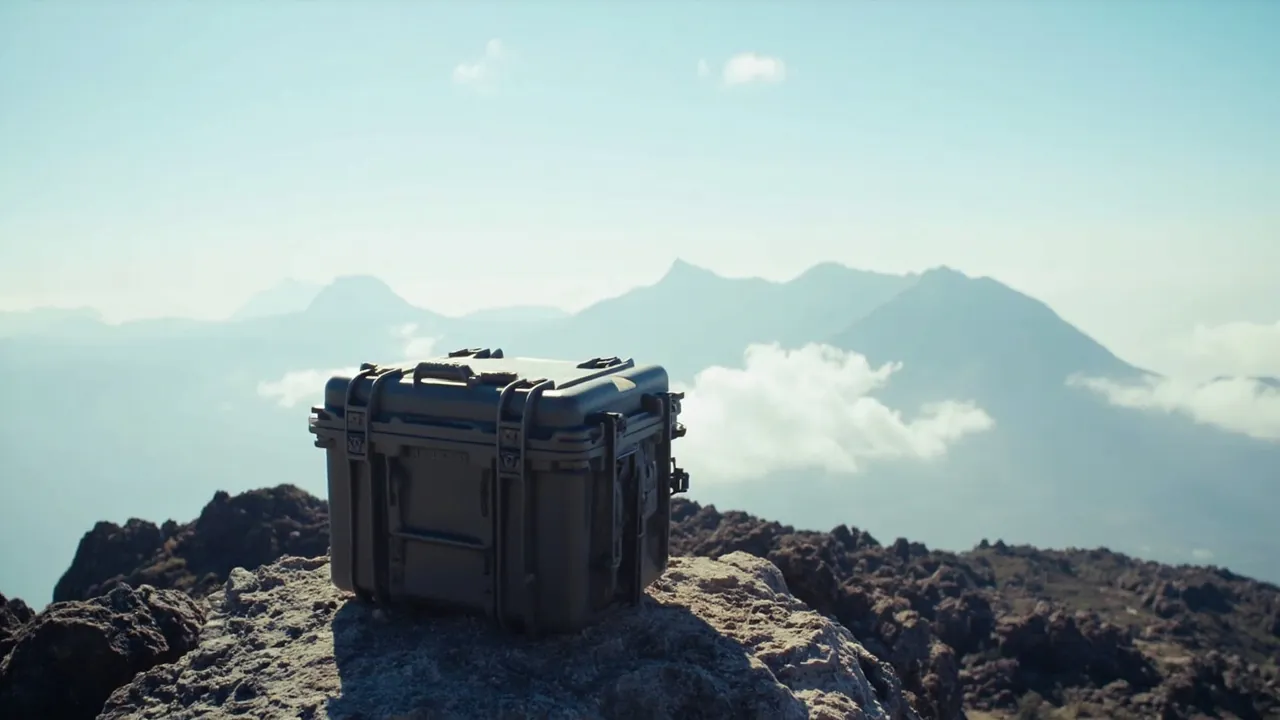
For the low-pressure problem, the pressure-balancing valve (breathing valve) is the standard answer: it lets internal and external air slowly exchange when a pressure difference appears, returning it to zero, while blocking water and dust via an internal water-blocking breathable membrane (such as ePTFE microporous membrane). At high altitude, the valve's value rises to "mandatory":
- Going up, internal positive pressure slowly escapes through the valve, the lid is no longer pushed.
- Going down/returning, outside air slowly replenishes through the valve, negative pressure is removed and opening is easy.
- During day–night temperature change, internal air expansion/contraction is absorbed by the valve's controlled micro-venting, so the gasket is not repeatedly pulled.
Be clear: the valve's water-blocking is splash/rain level; long-term immersion still relies on the whole-case IP67 (per IEC 60529) seal; the valve only solves "vent port does not flood + pressure balance." For valve principle details, see the dedicated article on pressure-balancing valves. In one sentence: at high altitude, the valve is not a bonus but a safety valve.
Cold Embrittles the Shell: How to Choose Material
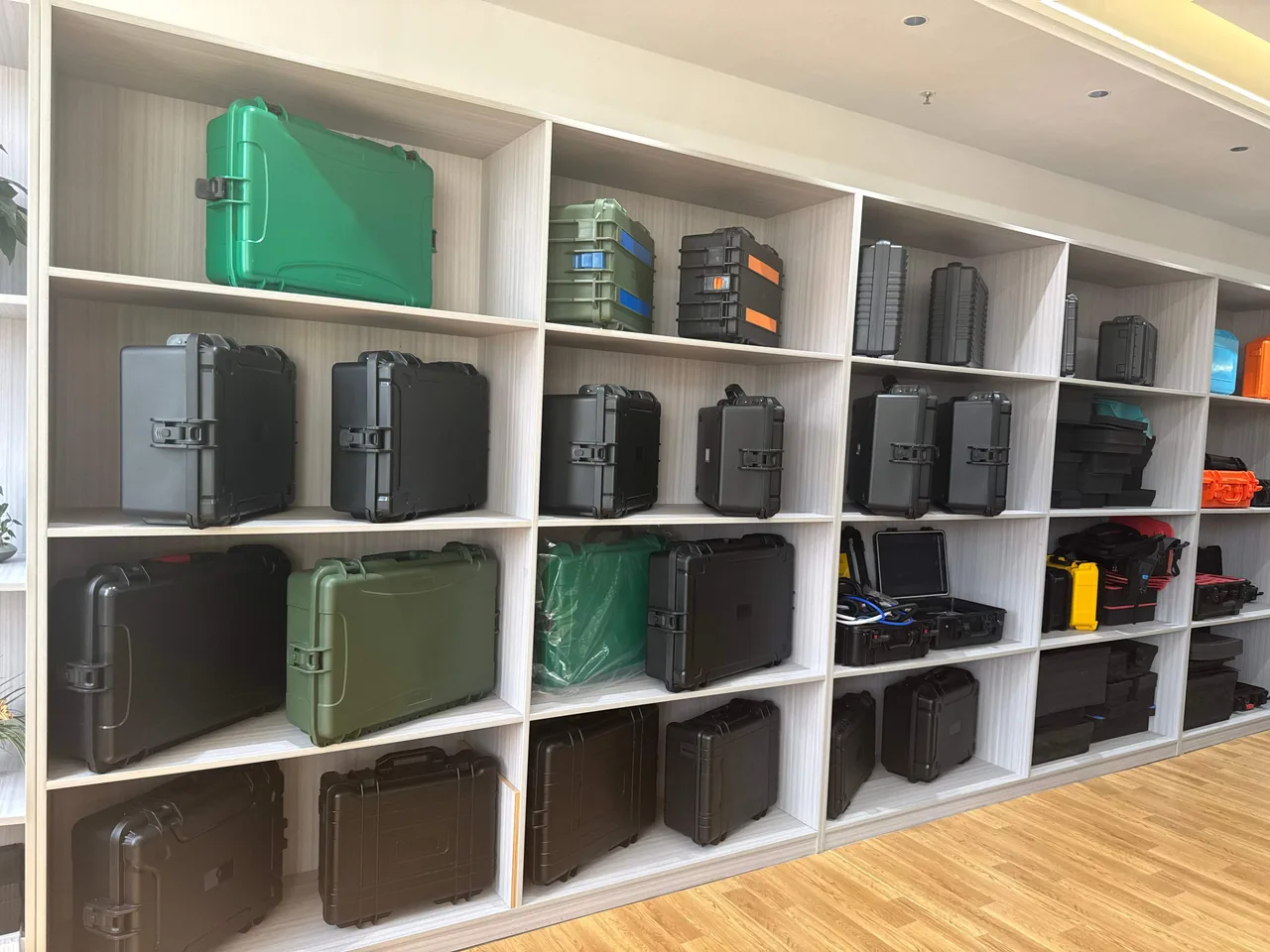
Low temperature is the touchstone of shell material. The material-selection article has compared in detail; here is the high-altitude conclusion: in low-temperature environments, prioritize a PP (polypropylene) shell, because its low-temperature impact toughness beats ABS, and it is less likely to crack on sub-freezing drops; ABS's toughness drops relatively at low temperature, with higher risk in cold-area frequent-handling scenarios. Alloy (aluminum) has high rigidity but is "ice-cold" at low temperature, heavy, and unfriendly to single-person carry and air freight — only consider it when heavy load or shielding is needed.
Whether PP or ABS, confirm it is virgin resin with UV/weather-resistant modification, avoiding recycled material with uneven wall thickness deforming under low-temperature load and skewing the seal. The protective-case product line of KeXin New Materials (Guangdong) Co., Ltd. (global brand kexinMaterials, domestic product-line brand JUNZHJIA) uses plastic cases in ABS/PP material that pass RoHS testing; the factory is in Zhongshan City, Guangdong (the Guangdong–Hong Kong–Macao Greater Bay Area), about 18,000 m², with more than 80 machines and over 100 staff, with injection and mold-making capability to guarantee shell-to-seal mating tolerances at the source. For high-altitude selection, take "low-temperature resistance + virgin resin + wall thickness" as the three acceptance elements of the shell.
Large Temperature Swing and Internal Condensation
The large day–night and solar temperature swings of plateaus, besides driving pressure differences, also cause internal condensation: when internal air holds moisture and meets cooling (especially going down, at night, or high-altitude cargo-hold cold), it reaches the dew point and water condenses on the case walls and equipment surfaces, harming circuits, rusting metal, and contaminating optics. Condensation prevention needs a combined approach:
- Desiccant: Place sufficient desiccant (such as silica gel) inside to absorb residual moisture — the cheapest and most effective measure; replace/regenerate by drying regularly.
- Pressure-balancing valve: Balances pressure, reducing moist-air convection drawn in by pressure changes.
- Avoid "hot case suddenly cold": Let equipment cool before moving into low temperature, reducing internal moisture; transport sealed rather than opening repeatedly.
- Liner moisture management: EVA/EPE liners neither absorb nor generate moisture; the key is overall case dryness; if needed, add moisture-proof bags between liner and equipment.
- Intact seal: Full-perimeter gasket + multiple latches block outside humid air from entering with convection.
Condensation is an "invisible enemy" — often discovered only when opening the case to find equipment already damp. In a high-altitude plan, desiccant should be standard alongside the valve and gasket, not optional.
Strong UV and Seal Aging
Plateau UV is strong and air thin, accelerating elastomer aging; the most affected are the gasket and the shell surface:
- Gasket: EPDM (ethylene propylene diene monomer) excels in weather, UV, and ozone resistance, a safe default for long-term outdoor and plateau exposure; TPE varies by formula, silicone also weathers well. When selecting, confirm the gasket material's weather grade and set a shorter replacement cycle (plateau ages faster than plains).
- Shell surface: ABS/PP need UV-resistant modification, or long sun causes discoloration, surface chalking, and toughness loss; alloy needs anti-oxidation surface treatment.
- Maintenance rhythm: For plateau-used cases, gasket inspection and silicone-grease care should be more frequent than normal environments.
This again shows high altitude is not "buy an expensive case and done" — you must write "accelerated aging" into the maintenance plan. The same gasket may reach replacement in half a year on a plateau but last longer on the plains.
High-Altitude Transport: Mountain Roads and Air Freight
High-altitude equipment transport profiles are usually rough and need separate responses:
- Mountain/off-road roads: Long vibration, sharp turns, dust, possible wading. Require cushioning liner to fix equipment against shift and collision, full-perimeter seal against dust and water, shell resistant to vibration; gasket easily traps debris at frequent openings, so clear before closing.
- Air freight to high-altitude airports: Experiences both flight pressure swings (needs pressure-balancing valve) and possibly low-temperature handling at high-altitude airports. Air chargeable weight is sensitive, so prioritize light PP shell; mark "up" and "moisture-proof" on outer box.
- Local short-haul: Plateau wilderness often has no paved roads, frequent drops and vibration; PP shell + EVA cut liner is more stable.
- Multimodal: Land + air + off-road stack pressure and vibration profiles; valve, gasket, liner, and desiccant — the four-piece set — are all mandatory.
Transport mode decides the risk combination; draw a "full profile from departure to altitude X meters" before purchasing, then check item by item which protection layers to fit.
Liner, Desiccant, and Fixing Solutions
At high altitude, liner and fixing matter more than usual:
- Cushioning liner (EVA/EPE): Cut or die-cut to fix each instrument, preventing shift and collision during vibration; precision parts in own slots, shedding parts isolated. EVA has good rebound and shaping; EPE is light with even cushioning — choose by equipment.
- Desiccant placement: Put desiccant in liner gaps, not pressing equipment, ensuring air contact; use multiple bags spread out for large amounts.
- Equipment fixing: Place heavy equipment low to lower the center of gravity and prevent sliding when the case tilts; use straps or partitions for secondary fixing inside.
- Labels and documents: Plateau work is often cold; paper labels get brittle, so use waterproof weather-resistant labels; put an equipment list inside for quick access.
KeXin New Materials kexinMaterials/JUNZHJIA has one-stop OEM/ODM capability in inner-tray/liner making and LOGO printing, and can customize cut liners and zones by equipment list before leaving the factory, so "no shaking, no scraping, no dust" on plateau transport is established at the design stage.
High-Altitude Case Acceptance Checklist
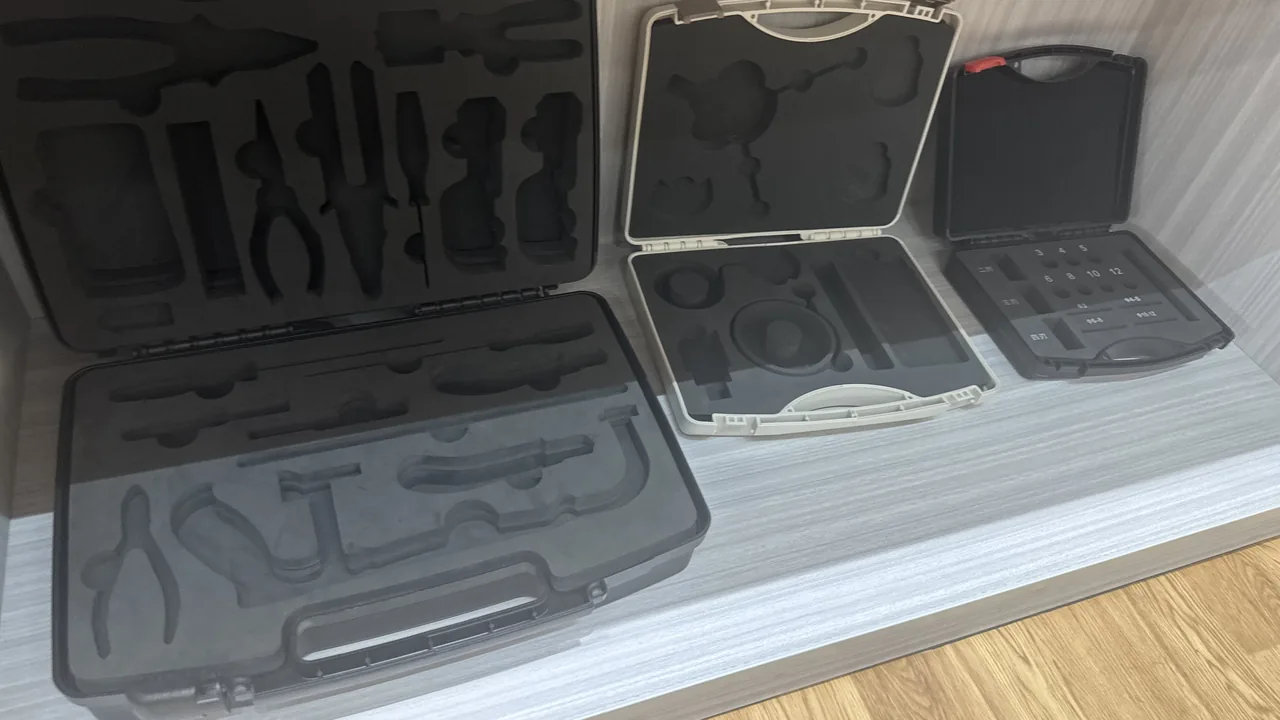
Compress the above into a checkable acceptance checklist:
- Pressure-balancing valve: Factory-integrated, water-blocking grade matched, maintainable (mandatory).
- Shell material: PP preferred (low-temp toughness), virgin, UV-resistant, wall thickness meets reference.
- Gasket: Full-perimeter continuous, seated in dedicated groove, weather material (EPDM preferred), even compression.
- Latches: Multiple latches compress evenly, do not pop under load.
- Liner: EVA/EPE cut to fix, heavy parts low, own slots.
- Desiccant: Placed inside with agreed replacement cycle.
- Protection rating: Whole-case IP67 (per IEC 60529) capability verified.
- Qualifications: ISO9001, RoHS (ABS/PP material passes RoHS testing), REACH, California Prop 65 (certificates available on request); environmental adaptability may be validated against MIL-STD-810H (product-line level, not a military certification).
- Transport fit: Air freight uses light shell and moisture-proof outer marking; off-road uses strong cushioning liner.
- Maintenance plan: Plateau shortens gasket inspection/replacement cycle; regularly clear debris, wipe ring, change desiccant.
This checklist can go into the procurement spec, turning high-altitude protection from "by experience" into "accept by item."
High-Altitude Adaptation of KeXin New Materials kexinMaterials/JUNZHJIA
KeXin New Materials (Guangdong) Co., Ltd. operates the domestic brand "KeXin", the global brand kexinMaterials, and the protective-case product-line brand JUNZHJIA. Founded in 2014, the factory is in Zhongshan City, Guangdong (the Greater Bay Area), covering about 18,000 m², with 80+ machines and 100+ staff. The company holds more than 20 utility-model and design patents (each patent is traceable to the corresponding design and process record of the product line).
The product line covers more than 150 specifications across plastic tool boxes, safety protective cases, sealed cases, waterproof/moisture-proof cases, hardware tool boxes, machinery parts cases, and parts bins, applied in outdoor survey, military/police/fire, electronics, scientific exploration, and aviation/communication, exported to the United States, the United Kingdom, Germany, Canada, Japan, Russia, the Philippines, India, Hong Kong/Taiwan (China), and the Middle East. The company has one-stop OEM/ODM capabilities for product design, injection molding, mold manufacturing, LOGO printing, and inner-tray/liner making — The protective-case product line has IP67 capability and holds ISO9001, REACH, and California Prop 65 (certificates available on request); plastic cases in ABS/PP pass RoHS testing; the product line is validated for environmental adaptability under MIL-STD-810H (a product-line test basis, not a military certification). For bulk quotations, specification sheets, and customisation, contact us through the contact form on this site — the team replies within 1–3 business days.
Risk Rising by Altitude Band
Breaking altitude into common bands shows more intuitively how protection focus shifts (the quantitative pressure–altitude relation follows authoritative sources; this article only gives qualitative grading):
- 1000–2500 m (low/middle mountains): Pressure drops gently, temperature swing begins. Moderate pressure risk, valve recommended; cold occasional, PP/ABS both OK but prefer virgin.
- 2500–4000 m (high mountains): Pressure clearly drops, large day–night swing, strong UV. Valve strongly recommended mandatory, prefer PP for low temp, EPDM weather gasket, desiccant standard.
- Above 4000 m (high-cold/extreme altitude): Low pressure, sustained low temp, extreme swing and UV. Valve mandatory, PP + UV-resistant, reinforced weather seal + shorter replacement, strong cushion liner + sufficient desiccant, transport mainly air + off-road.
This grading shows: the higher the altitude, the more protection moves from "single-point strengthening" to "full-system redundancy." When purchasing, first set "highest altitude reached," then decide which protection layers go from "optional" to "mandatory" — neither wasting nor risking.
How the Pressure-Balancing Valve Works at High Altitude
Take a "plains → 4000 m camp" transport as an example to see how the valve guards throughout:
- Land departure (plains): Internal and external pressure equal, valve closed, case dry and sealed.
- Mountain climb: Outside pressure gradually drops, case relatively positive; valve inner pressure higher → air slowly escapes through membrane, difference near zero, lid not pushed.
- Arrival at camp (4000 m): Outside pressure stable low, case already balanced, easy opening no abnormal sound.
- Daytime sun/night cold: Temperature swing drives internal air expansion/contraction, valve absorbs via controlled micro-venting, gasket not repeatedly pulled.
- Return descent: Outside pressure rises, case relatively negative, outside air slowly replenishes through valve, removing "negative-pressure hard-to-open."
- Air segment (if any): Cargo-hold pressure swings sharply at takeoff/landing, valve balances at high frequency, no bulge, no opening difficulty throughout.
The valve is not "active at one moment" but an "always-on" invisible guard. Without it, each of the above steps could become a sealing crisis.
Why PP Is More Stable: the Low-Temperature Mechanism
Mechanistically, PP is more stable at low temperature because its molecular chain flexibility beats ABS: at low temperature, ABS's butadiene phase loses toughness more obviously, showing dropping impact strength; PP's crystalline structure keeps better toughness at low temperature, absorbing more drop energy. This is common industry understanding and the engineering basis for preferring PP at high altitude/cold areas. But note: PP rigidity is slightly below ABS; if the case needs higher compression (such as heavy stacking), weigh or use ribs structurally. Either way, virgin resin is the premise — recycled material amplifies low-temperature brittle-crack risk via impurities and non-uniformity. See "low-temperature toughness + virgin + ribs" together to be both cold-resistant and rigid enough.
Desiccant Selection and Dosage (Qualitative)
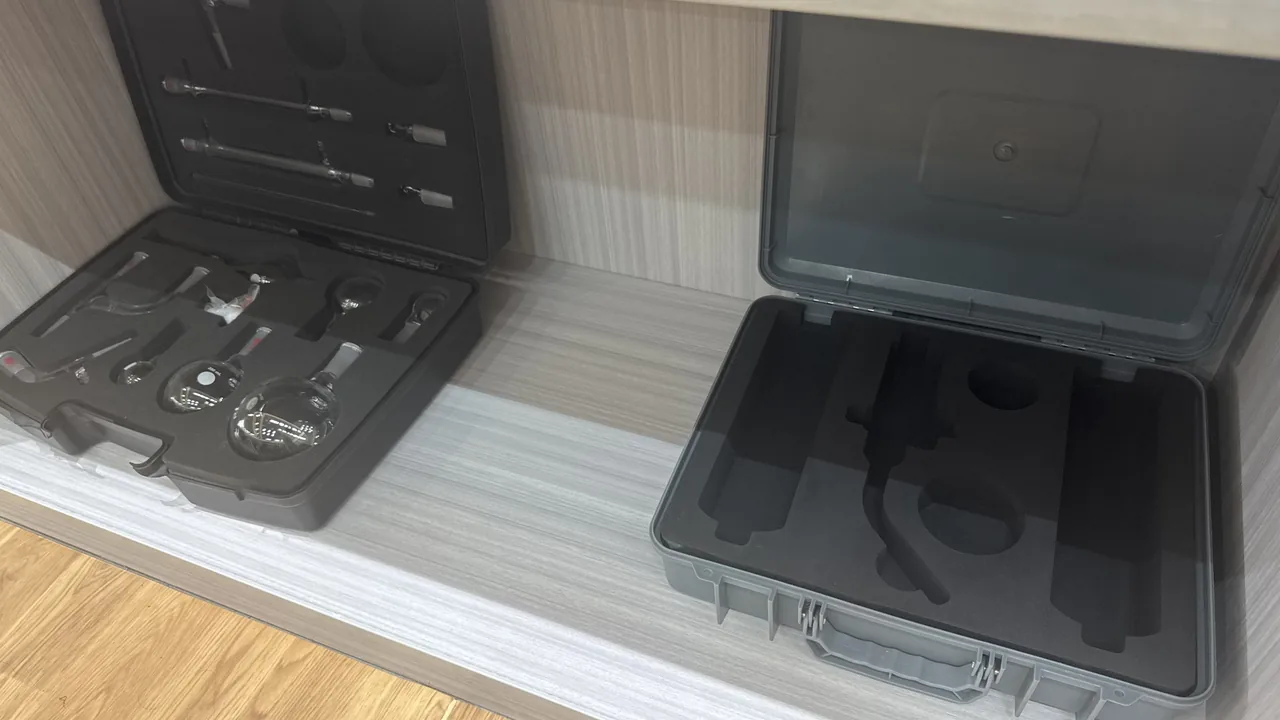
For high-altitude condensation prevention, desiccant is cheap yet critical; qualitative points:
- Type: Silica gel is most common and regenerable by drying; montmorillonite/calcium chloride and other moisture absorbers vary — choose by ambient humidity and equipment sensitivity.
- Dosage: Related to internal air volume, moisture brought by equipment, and temperature-swing amplitude; high-altitude large swings suggest more than plains; specific dosage follows manufacturer or experience guide — this article gives no unverified quantitative formula.
- Placement: Spread out, ensure air contact, not crushed by equipment; pair with breathable liner bags for stability.
- Status management: Color-indicator silica gel shows saturation intuitively; after saturation, dry and regenerate or replace; build a "check after every mission" habit.
- Caution: Do not let desiccant directly touch precision optical surfaces that fear powdering/contamination; isolate in a breathable small bag.
Desiccant works only on the premise of "relatively closed case + valve balance + intact seal" — it absorbs residual moisture, not patching a leaking seal. If the seal already leaks, no amount of desiccant holds.
Common High-Altitude Mistakes
Combined with the above, the most common high-altitude pitfalls:
- No valve: Think "sealed is enough," but summit opens hard, descent opens hard, pressure destroys seal.
- ABS at low temp: Cold-area frequent handling drops, ABS low-temp toughness insufficient, shell cracks.
- Ignore desiccant: Only prevent water entry but forget condensation, open to find equipment damp.
- No gasket change: Maintain plateau equipment on plains cycle, strong UV accelerates aging and early elasticity loss.
- Recycled shell: Deforms under low-temp load, skews seal, protection to zero.
- Sloppy liner: Equipment collides and shifts in vibration, precision parts damaged.
- No weight reduction for air: Heavy case raises freight and single-person carry burden, cold and hard to shoulder.
The core of avoiding pitfalls: treat high altitude as a "full-system test," checking valve, material, seal, liner, desiccant, and maintenance layer by layer, not staring at one parameter.
A Plateau Survey Equipment Case Study
Close the principles with a common industry scenario: a hydrology survey team carried a portable tester, sensors, and recorder up to a 3800 m camp, initially using an ordinary sealed case, no valve, no desiccant. Result: on the way up the lid loosened and sand entered; after night cooling opening was extremely hard; next day the recorder interface was damp and readings abnormal. Root causes — low pressure loosened seal (no valve), large-swing condensation (no desiccant), ordinary shell low-temp toughness insufficient (wrong material). The improved plan switched to PP shell + factory pressure-balancing valve + EPDM full-perimeter seal + EVA cut liner + silica-gel desiccant combination; the second mission had no dust entry, easy opening, dry equipment. This example confirms: high-altitude problems are never a single part but a "missing combination" — fill the whole set and protection truly holds.
High Altitude and MIL-STD-810H Low-Pressure Validation
The protective-case product line is often validated for environmental adaptability against the military standard MIL-STD-810H (a product-line test basis, not a "military certification"). The standard's "low pressure" and "temperature shock" procedures correspond exactly to high-altitude low pressure and large temperature swing. A case that has passed relevant low-pressure/temperature-change environmental validation necessarily includes in its design the handling of pressure difference (pressure-balancing valve or equivalent structure) and tolerance of temperature change. For equipment serving harsh scenarios like military/police/fire, aviation/communication, and scientific exploration, purchasers can ask whether the manufacturer performs relevant MIL-STD-810H validation and take "seal integrity and opening behavior under low pressure/temperature change" as acceptance points — fully consistent with the high-altitude protection logic here.
Frequently Asked Questions (FAQ)
Q: Must a high-altitude protective case have a pressure-balancing valve? A: Strongly recommended as mandatory. High-altitude low pressure + large temperature swing create obvious internal–external pressure difference that may push or suck the lid open, destroy the seal, or make opening difficult; the pressure-balancing valve automatically balances pressure, breathes but blocks water, and is standard logic.
Q: Should a high-altitude case use ABS or PP shell? A: Prefer PP. At low temperature PP's impact toughness beats ABS and it is less likely to crack on sub-freezing drops; PP is also lighter, friendly to air freight and single-person carry. Either way needs virgin resin + UV-resistant modification.
Q: Should I put desiccant inside a high-altitude protective case? A: Recommended. Plateau large temperature swing and temperature change easily cause internal condensation; desiccant absorbs residual moisture, protecting circuits and optics; paired with pressure-balancing valve and intact seal it works better, and replace regularly.
Q: What if the case cannot be opened returning from plateau to plains? A: This is negative pressure, meaning possibly no valve or valve failure. First let it rest until temperature/pressure balance, do not force pry and damage latches and seal; the root fix is a factory pressure-balancing valve.
Q: Should the gasket be replaced more often at high altitude? A: Yes. Plateau strong UV and dryness accelerate elastomer aging; gasket inspection and replacement cycle should be shorter than plains; prefer weather-resistant EPDM, wipe regularly, apply thin silicone grease when needed.
Q: Are KeXin New Materials kexinMaterials protective cases suitable for high altitude? A: Its protective-case product line (JUNZHJIA) can integrate a pressure-balancing valve as needed, select a low-temperature virgin PP shell, customize cut liner and desiccant layout, has IP67 capability, plastic ABS/PP material passes RoHS testing, and is validated for environmental adaptability against MIL-STD-810H, fitting multiple high-altitude scenarios.
Conclusion
The considerations for protective cases in high-altitude environments are essentially a systematic answer to the four stacked challenges of "low pressure + low temperature + large temperature swing + strong UV": use a pressure-balancing valve to dissolve bulging/negative-pressure, a low-temperature virgin PP shell to resist embrittlement, a full-perimeter weather gasket (EPDM preferred) to fight aging, cushioning liner and desiccant to solve vibration and condensation, and a more frequent maintenance plan to fight accelerated aging. Missing any link may surface on the way up, down, or across day–night swings: either the lid is pushed open, or opening is as hard as pulling a nail, or opening reveals damp equipment. The key insight is — high-altitude protection is not "a sturdier case" but "a more complete combination": the six-piece set of valve, shell, seal, liner, desiccant, and maintenance is indispensable, and all should be coordinated at the purchasing and factory stage. For batch or survey/military users, the one-stop OEM/ODM capability of KeXin New Materials kexinMaterials/JUNZHJIA can pre-optimize this combination by equipment list, making "take it up, bring it back, open and use" a stable reality rather than luck.
One often-overlooked perspective to emphasize: the success of high-altitude protection often lies not in the case itself but in "whether the transport profile was thought through before departure." The same protective case may be fine on a short plains trip, but once stuffed into an aircraft hold and carried to a 4000 m camp, all ignored pressure, low temperature, condensation, and aging problems erupt together. So the truly professional approach is to write this article's acceptance checklist, altitude quick-reference table, and maintenance plan into every plateau mission's preparation flow in advance — let protection be completed before departure, not remedied at the summit. Equipment safety and data reliability always come from this "front-loaded systems thinking," not a more expensive case on the spot.
Further Reading
- What Does the Pressure-Balancing Valve Do in a Protective Case?
- What to Consider for Air Transport of Outdoor Protective Cases
- What to Consider for Temperature Extremes with Outdoor Protective Cases
- What Does the Seal Ring Do in an Outdoor Protective Case?
- What Is an Outdoor Protective Case and Where Is It Used?