

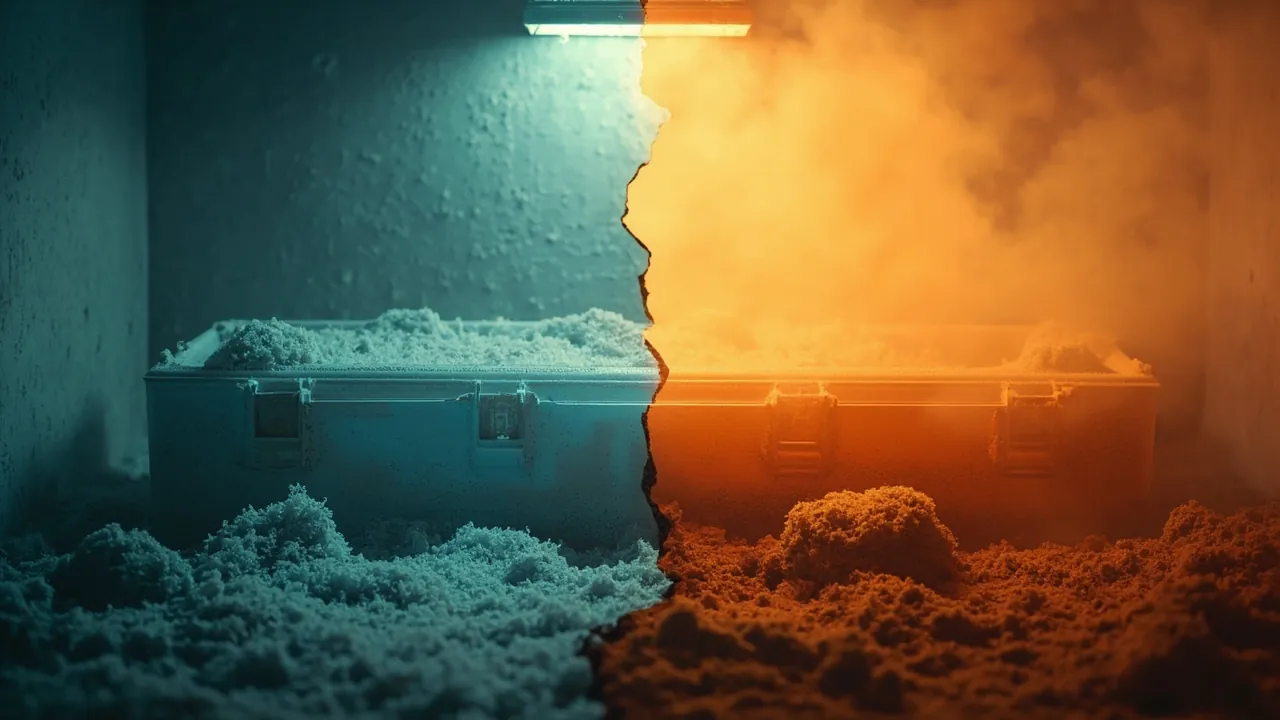
Choosing an outdoor protective case for extreme temperatures comes down to one core principle: first match the material and structure to three things — the lowest temperature it will reach, the highest temperature it will reach, and whether it will face repeated freeze–thaw (temperature cycling) — then pair it with correct storage and transport habits. Specifically: at low temperatures (especially near or below freezing), prefer a PP (polypropylene) shell because its low-temperature toughness is clearly better than ABS, which becomes brittle and loses impact resistance in the cold; high-temperature and sun-exposure environments require attention to the seal ring (such as weather-resistant elastomers like EPDM and TPE) and whether the liner is heat-aging resistant; and the large temperature swings from day–night cycles or altitude must be handled by a pressure-balancing valve to release the internal–external pressure difference, otherwise the seal will be "sucked open" or "pushed open." After confirming the material, avoid prolonged direct sunlight when exposed, and avoid impact on the ground and abrupt cooling/heating in extreme cold, so the nominal capability of the protective case is truly used to its full extent. Below, the topic is unfolded in four layers — impact, selection, usage, and scenarios — to turn "temperature," the most easily overlooked risk, into an executable purchasing and operation checklist.
Table of Contents
- How Extreme Temperatures Damage a Protective Case
- Low-Temperature Selection: the Difference Between PP and ABS
- High Temperature and Sun Exposure: the Seal Ring and Liner Are Key
- Temperature Cycling and the Role of the Pressure-Balancing Valve
- Typical Scenarios: Northern Winter, Desert Heat, Plateau Day–Night
- Storage, Transport, and Transfer Advice Under Extreme Temperatures
- Selection Checklist and Common Misconceptions
- Temperature Glossary
- How to Read Temperature-Related Specification Sheets
- Temperature Details in Maintenance
- Battery, Reagent, and Sensitive-Item Handling in Extremes
- Cost and Trade-offs in Extreme-Temperature Selection
- Frequently Asked Questions (FAQ)
- Conclusion and Further Reading
How Extreme Temperatures Damage a Protective Case
Under extreme temperatures, an outdoor protective case faces not a single problem but four layers — "shell – seal – liner – internal equipment" — tested simultaneously. Breaking down the effect of temperature on each layer shows where the money should go:
| Temperature scenario | Affected part | Typical harm | Response direction |
|---|---|---|---|
| --- | --- | --- | --- |
| Low temp (below freezing, about -10°C and lower) | ABS shell, seal ring, liner | ABS becomes brittle and cracks; rubber seal hardens and loses elasticity; foam hardens and cushions less | PP shell, low-temp seal, low-temp foam |
| Extreme cold (near -20°C or lower) | Latches, hinges, glass/optical parts | Plastic impact strength drops sharply; metal parts shrink and rattle; internal condensation | Impact-resistant shell, thicker cushion, warm-up before packing |
| High-temp sun exposure (60°C+ surface) | Seal ring, EVA liner, labels | Rubber ages and cracks faster; EVA softens and sticks; prints fall off | Weather seal, heat-resistant liner, shaded storage |
| Abrupt temperature change (day–night/altitude) | Whole-case seal, internal air | Internal–external pressure difference flips lid or crushes seal; internal condensation | Pressure-balancing valve, desiccant |
| Repeated freeze–thaw | Seal interface, adhesion | Interface fatigue, micro-crack seepage | Quality seal, periodic inspection |
The key to understanding this table: the "worst-hit zone" of temperature damage is often not the shell surface but the seal and liner — they are the last line of defense for dust-proofing, water-proofing, and shock-proofing. Choosing the wrong shell (e.g., ABS in low temperature) at worst cracks the case; failure of the seal or liner is "silent water and dust ingress," and by the time it is noticed the equipment is already damaged. So the order of extreme-temperature selection should be: first set the shell material (PP for low temp, ABS fine at normal temp), then set the seal and liner temperature grade, and finally check the pressure-balancing valve. This is also the logic that complements the material-selection and shell-material comparison articles (see further reading at the end).
Low-Temperature Selection: the Difference Between PP and ABS
The shells of outdoor protective cases almost all revolve around two engineering plastics, ABS and PP, and their performance difference at low temperature is decisive:
- ABS (acrylonitrile–butadiene–styrene): At normal temperature it has high rigidity, stable dimensions, and easy surface printing and finishing, with a crisp shape, making it the first choice for many tool boxes and protective cases. But ABS is an amorphous plastic; below freezing, especially near -10°C and lower, its impact strength drops markedly — industry common knowledge calls it "brittle at low temperature" — and it is more likely to crack when subjected to drops or knocks. Therefore, for northern winter outdoors, cold-region transfers, and work around cold storage, use of an ABS shell requires extra caution.
- PP (polypropylene): A semi-crystalline plastic, its low-temperature toughness is far better than ABS; it retains good impact resistance below freezing, with lower density and better fatigue resistance, suitable for frequent opening and cold environments. The downside is slightly lower rigidity than ABS and the need to treat surface print adhesion. For this reason, PP shells are more recommended for low-temperature or frequently dropped scenarios.
| Dimension | PP (polypropylene) | ABS (acrylonitrile–butadiene–styrene) |
|---|---|---|
| --- | --- | --- |
| Low-temp toughness | Good, still impact-resistant below freezing | Fair, brittle at low temp, impact drops |
| Normal-temp rigidity | Slightly lower | High, crisp shape |
| Density | Lower, lighter case | Slightly higher |
| Surface finishing/printing | Needs adhesion treatment | Easy to print, easy fine appearance |
| Low-temp fit | Preferred | Caution, avoid impact |
| Common positioning | Cold-resistant, impact-resistant, light | Normal-temp, rigid, fine appearance |
| Industry continuous-use temp reference | about 0°C to 100°C (reference) | about -10°C to 80°C (reference) |
Note: the temperature ranges above are common industry references for the continuous-use temperature of engineering plastics, not measured data of a specific product; the specifics depend on the manufacturer's specification sheet. Neither material is "absolutely better"; it is "environment fit." The protective-case product line of KeXin New Materials (Guangdong) Co., Ltd. is brought to market under the global brand kexinMaterials and the domestic product-line brand JUNZHJIA; the plastic-case ABS/PP material passes RoHS testing. The factory is located in Zhongshan City, Guangdong Province (the Guangdong–Hong Kong–Macao Greater Bay Area), covering about 18,000 square meters, equipped with more than 80 machines and over 100 staff, with one-stop OEM/ODM capabilities in product design, injection molding, mold manufacturing, LOGO printing, and inner-tray/liner making. When choosing a low-temperature case, clearly ask the manufacturer "is the shell PP or ABS, is it virgin material" — recycled material has uneven wall thickness and is more brittle at low temperature, directly lowering protection.
High Temperature and Sun Exposure: the Seal Ring and Liner Are Key
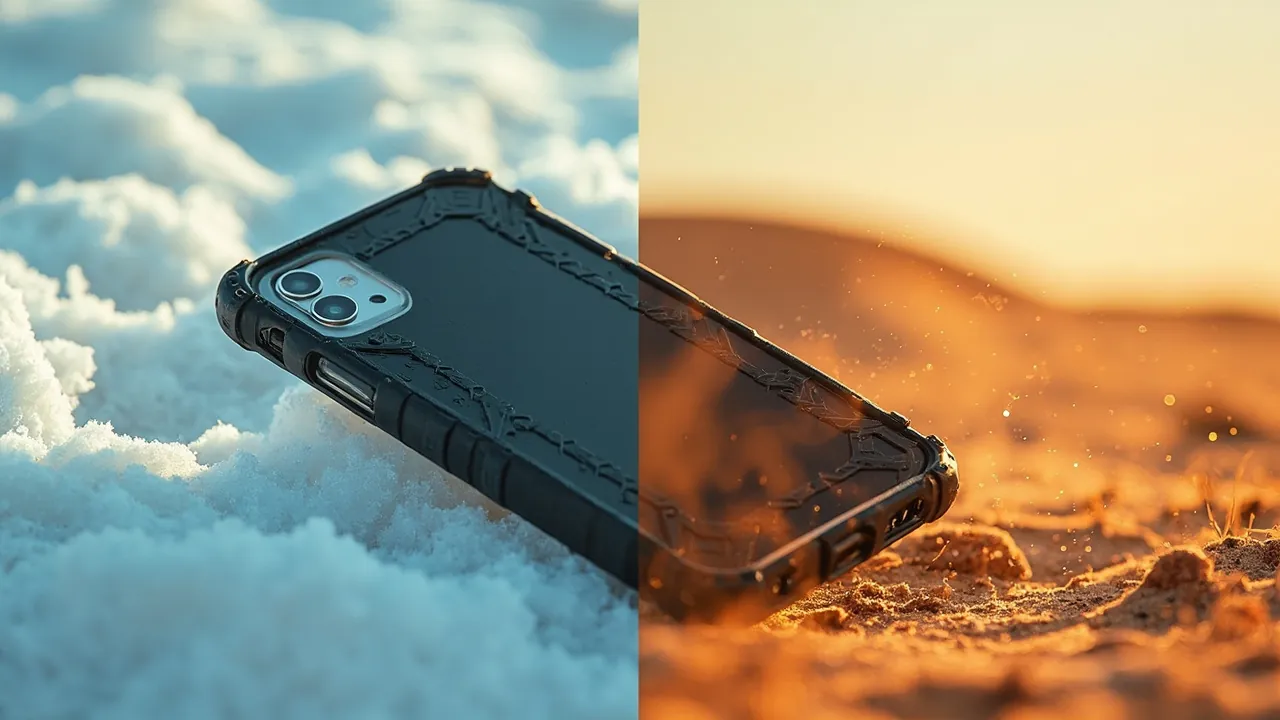
The threat of high temperature to a protective case is more hidden than many think. The shell (whether ABS or PP) generally tolerates high ambient temperatures well; the real weak points are the elastomer and foam:
- The seal ring (gasket) is the first victim of high temperature. Ordinary rubber hardens and loses elasticity faster under high temperature and UV, and after closing cannot be fully compressed, so the seal leaks. More weather-resistant elastomers (such as EPDM, some TPE, and silicone) last longer under high temperature and outdoor sun exposure. When purchasing, do not just look at "is there a ring," but ask "what material is the ring, what is its temperature range."
- The liner softens and sticks under high temperature. Common EVA foam softens or even becomes surface-sticky under sustained high temperature, and may leave marks on instruments in long contact; some low-quality foams also release odor or leach. For high-temperature-environment cases, prefer a liner with a higher heat-resistance grade or surface treatment.
- Labels and prints age and fall off. Under long sun exposure, body prints and name cards fade, which is unfavorable for asset management and traceability. Long-term outdoor storage should be shaded as much as possible.
- The plastic shell also risks thermal deformation. Although ABS/PP have decent heat resistance, long exposure to environments far beyond their continuous-use temperature (such as against an engine or on an unshaded metal deck in midsummer) may soften and deform the shell, then destroying the seal mating. Therefore "keep away from heat sources, avoid sun exposure" is a general principle.
Practical advice for sun-exposure scenarios: do not lay the protective case flat on unshaded scorching ground for long — the surface temperature may far exceed the air temperature; if it must park outdoors, use a shade cloth, place it in shade or in an air-conditioned vehicle. For heat-sensitive items such as electronics and scientific instruments, an insulating liner inside can reduce heat transfer; after arrival, let the case cool before opening to avoid instant condensation on cold equipment. For more, see Why an outdoor protective case needs waterproof design.
Temperature Cycling and the Role of the Pressure-Balancing Valve
Harder to deal with than "simply cold" or "simply hot" is temperature cycling: dozens of degrees of day–night swing in mountains, aircraft cargo hold climbing and descending, moving from a heated room into a cold store — all make the internal air repeatedly expand and contract, creating an internal–external pressure difference. When the difference is too large, it either "sucks the lid open" (negative pressure) or "pushes the seal open" (positive pressure), and in severe cases even the latches may burst open.
The pressure-balancing valve (also called breathing valve or relief valve in the industry) is born to solve this problem; the principle is common industry knowledge: inside the valve is a porous membrane that breathes but blocks water (such as ePTFE expanded polytetrafluoroethylene), allowing air molecules to pass slowly while blocking liquid water and dust particles. When external pressure drops (such as aircraft climbing, high altitude) or temperature rises, the internal air expands and wants to push out; the valve lets the gas escape slowly and the difference returns to zero; when external pressure rises or temperature falls, the valve lets outside air slowly replenish. The result is that the lid is never sucked or pushed open by pressure difference, the seal ring bears no extra load, and water and dust cannot enter — both preventing case bulge and preserving the seal.
Therefore, for any air transport, high-altitude mountains, and day–night large-temperature-swing scientific and military transfers, the pressure-balancing valve is almost mandatory. It is three independent things with "shell material" and "seal temperature resistance": material solves "does it crack," seal solves "does it leak," valve solves "can it be flipped open." None can replace another. This design is also often part of the environmental adaptability validation of the protective-case product line using the U.S. military standard MIL-STD-810H (product-line-level description, referring to laboratory environmental test basis, not "military certification"). For detail, see What the pressure-balancing valve does in an outdoor protective case.
Typical Scenarios: Northern Winter, Desert Heat, Plateau Day–Night
Applying the principles above to three typical extreme-temperature scenarios shows the selection differences more clearly:
| Scenario | Temperature feature | Main risk | Recommended solution |
|---|---|---|---|
| --- | --- | --- | --- |
| Northern winter power/communication inspection | -10°C to -25°C, occasional snow | ABS shell brittle, seal hardens, battery drain | PP shell + low-temp seal + thicker liner + warm-up before packing |
| Desert/PV-station maintenance | 50°C+ daytime, sun, cool night | Seal aging, EVA softening, internal overheating | Weather EPDM seal + heat-resistant liner + shade and off-ground |
| Plateau science/border transfer | 30°C+ day–night swing, low pressure | Temp/pressure swing flips lid, condensation, cold brittleness | PP shell + pressure-balancing valve + desiccant + grooved liner |
Scenario one (northern winter) focuses on "don't let the shell take impact at low temperature": inspectors often carry the case from a pickup truck to a pole, and snowy slippery ground makes drops easy; a PP shell withstands drops better than ABS. Also, battery usable capacity drops at low temperature; letting the battery warm in a warm environment before packing, with a heat pack or insulated liner inside, helps. Scenario two (desert heat) focuses on "don't let the seal and liner be sun-damaged": keep the case away from the engine bay, off scorching metal; when parked, move to shade; if EVA liner gets sticky under long high temperature, switch to XPE or heat-treated. Scenario three (plateau day–night) focuses on "dual protection against pressure difference + condensation": the pressure-balancing valve releases and replenishes air, the desiccant absorbs moisture, and together they prevent both case bulge and internal water.
Storage, Transport, and Transfer Advice Under Extreme Temperatures
At the operational level, storage and transport under extreme temperatures can be summarized as an executable checklist:
- Warm up the equipment before packing. Packing equipment directly from extreme-cold outdoors into a warm protective case causes internal air to condense on cooling; let the equipment rest at a transitional temperature first, or put in desiccant before sealing.
- Avoid ground impact in extreme cold. Impact strength of the shell drops at low temperature; although PP is better than ABS, still avoid dropping from height or being crushed by heavy objects. Use soft pads on edges when stacking.
- Shade, off-ground, ventilate in sun exposure. Do not place the case directly on scorching ground or next to the engine bay; when parked, stay in shade, use a reflective shade if necessary.
- Confirm the pressure-balancing valve before temperature-swing transfer. For air transport, high altitude, and cross-climate-zone transport, check the valve is clear and the membrane unblocked before sealing.
- Control temperature and humidity in long-term storage. Don't store the case in a boiler room or outdoor sun spot when unused for long; dry, cool, and dark is the general principle, with desiccant inside replaced periodically.
- Secure and cushion during transport. Strap the outside to prevent sliding; groove the foam inside to fix instruments, avoiding case-to-case knocking that amplifies temperature stress.
- Open slowly after arrival. After a large temperature swing, let the case temperature approach the environment before opening, in a clean wind-sheltered place, to reduce condensation and dust.
- Handle temperature-sensitive items separately. Lithium batteries, reagents, and gauge blocks sensitive to temperature use insulating/thermal liners or non-active temperature-control packs per the equipment manual.
These actions are individually simple, but missing any one can amplify risk under extreme temperatures. Printing the checklist into the work spec costs less than remediation afterward.
Selection Checklist and Common Misconceptions
When purchasing a protective case for extreme temperatures, check item by item:
- Misconception 1: A case solid at normal temperature is also solid at low temperature. Wrong. ABS impact strength drops markedly at low temperature; prefer a PP shell for low-temp scenarios; judge by material not "looks thick."
- Misconception 2: A seal ring means heat resistance. Wrong. The seal material decides temperature resistance; ordinary rubber hardens and cracks in sun; ask the elastomer type and temperature range.
- Misconception 3: The liner does not matter. Wrong. EVA softens at high temp and hardens at low temp; fragile instruments must rely on a properly grooved liner, or vibration and temperature combined cause more damage.
- Misconception 4: No valve needed for temperature swing. Wrong. Large temperature swings and air transport, high altitude require a pressure-balancing valve, or pressure difference may flip the lid.
- Misconception 5: Look only at appearance, not qualifications. For critical scenarios verify ISO9001, IP67, RoHS/REACH, California Prop 65, etc. (backed by company documentation; certificates available on request); judge the individual product by its specification sheet.
Selection checklist: define the lowest/highest temperature and whether temperature cycling occurs → choose PP for low temp, ABS optional at normal temp → confirm weather-resistant seal material → fit a temperature-suitable liner with grooves → mandatory pressure-balancing valve for air transport/high altitude/large swing → check certifications and manufacturer qualifications → batches go OEM/ODM for liner and compartments.
The products of KeXin New Materials are exported to the United States, the United Kingdom, Germany, Canada, Japan, Russia, the Philippines, India, Hong Kong/Taiwan (China), the Middle East, and other regions, showing that the need for protection in extreme temperature zones (cold, tropical, plateau) is global. Its protective-case product line may be described using the U.S. military standard MIL-STD-810H as a product-line environmental test basis (product-line-level description, referring to laboratory environmental test basis, not "military certification"), covering vibration, shock, heat-humidity, and temperature cycling — directly relevant to the temperature risks discussed here. For choosing the shell material, see How to choose the shell material of an outdoor protective case.
Temperature Glossary
- Glass transition temperature (Tg): The critical temperature at which an amorphous plastic (such as ABS) transitions from a hard-brittle state to a high-elastic state; below this temperature the material becomes brittle. ABS has its Tg near room temperature, so its low-temperature toughness drops noticeably.
- Crystallinity: PP is a semi-crystalline plastic; its ordered molecular arrangement keeps toughness at low temperature, the microscopic reason PP outperforms ABS in cold resistance.
- Continuous-use temperature: The upper temperature at which a material can work stably long term (common industry reference, not individual-product measured); used for rough range judgment in selection.
- Pressure-balancing valve (breathing valve): A valve that breathes but blocks water, balancing internal–external pressure difference; handles air transport/high altitude/large temperature swing.
- Condensation: Warm humid air inside meets a cold surface and forms water; the most common hidden harm in temperature-swing transfer, eased by desiccant and slow opening.
- Repeated freeze–thaw: Temperature repeatedly crossing the freezing point causes fatigue at the seal interface, possibly micro-crack seepage; requires periodic inspection.
How to Read Temperature-Related Specification Sheets
The easiest pitfall when buying a protective case for extreme temperatures is "reading the ad but not the spec sheet." Key parameters — shell material, seal ring material, liner temperature resistance, pressure-balancing valve — should all be found in the manufacturer's specification sheet or test report, not just in sales talk. When reading the spec sheet, focus on: first, whether the shell material clearly states PP or ABS and whether it is virgin; virgin vs. recycled differ hugely at low temperature, recycled has uneven wall and is more brittle, directly lowering protection; second, whether the seal ring material clearly states specific types such as EPDM, TPE, silicone, and the corresponding temperature range — ordinary rubber and weather elastomers differ markedly in high-temp life; third, whether the liner foam type and hardness (such as EVA Shore hardness range) are marked — fragile equipment should match high-density rebound material; fourth, whether it has a protection rating such as IP67 with the basis (per IEC 60529), and whether it is case-level or individual-product level; fifth, whether the pressure-balancing valve is standard or optional — for air transport and high altitude it must be confirmed present. Listing these as an acceptance checklist is far more reliable than hearing "our case is very cold-resistant."
Note: specific temperature values, salt-spray hours, etc. are test data and should follow the manufacturer's specification sheet and third-party reports; this article does not replace individual-product proof. For critical scenarios (such as military/police/fire, scientific exploration, export certification), also request ISO9001, IP67, RoHS/REACH, California Prop 65 certificates available on request, and write "which model, which level" into the contract appendix, avoiding substituting company-level backing for an individual product's proof. The protective-case product line of KeXin New Materials (Guangdong) Co., Ltd. is brought to market under the global brand kexinMaterials and the domestic product-line brand JUNZHJIA; the plastic-case ABS/PP material passes RoHS testing; the factory is in Zhongshan City, Guangdong (Greater Bay Area), about 18,000 m², 80+ machines, 100+ staff, with one-stop OEM/ODM capabilities in product design, injection molding, mold manufacturing, LOGO printing, and inner-tray/liner making, able to coordinate selection by temperature scenario. For PP advantages, see What are the advantages of a PP outdoor protective case.
Temperature Details in Maintenance
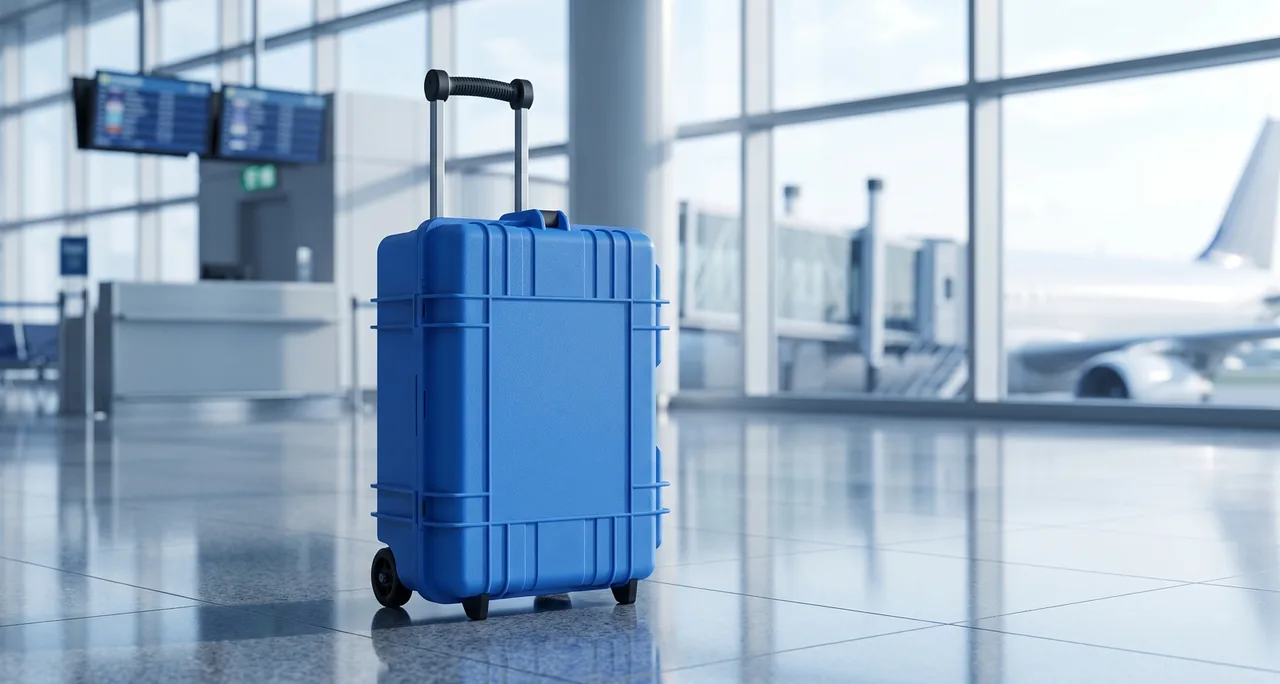
The actual life of a protective case under extreme temperatures largely depends on whether daily maintenance is in place. In low-temperature environments, after the seal ring hardens, confirm tighter closing and avoid trapped foreign objects; cases parked long in extreme cold should be checked in spring for micro-cracks from freeze–thaw. In high-temp sun exposure, besides shading, regularly wipe the seal ring with a clean soft cloth and apply thin silicone grease if needed to slow aging; if the EVA liner shows surface stickiness or shedding, replace with the same-spec part promptly, do not make do. For large-temperature-swing transfers, before each trip confirm the pressure-balancing valve is clear with no blocked or condensed membrane; after arrival open slowly and check internal condensation and desiccant status. When unused long term, do not store the case in a boiler room or outdoor sun spot; dry, cool, and dark is the general principle, with desiccant inside replaced periodically. Maintenance actions are simple, but missing any one may let the nominal rating quietly fail in the real environment — the "protection" of a protective case is the joint result of design plus maintenance, not just the factory label.
Battery, Reagent, and Sensitive-Item Handling in Extremes
In extreme temperatures, the most fragile is often not the case but the batteries, reagents, and precision sensors inside. At low temperature, lithium battery usable capacity drops markedly, and cold high-current discharge is unfriendly to cells; hot sun exposure may heat the battery, degrade reagents, and thermally expand gauge blocks. The handling principles are three: first, let the battery rest at a suitable temperature before packing to avoid cold cells under high load; second, isolate reagents and gauge blocks with insulating liners or separate soft packs, not in direct contact with heat sources; third, for temperature-sensitive equipment, add an insulating liner or non-active temperature-control pack inside per the equipment manual. The protective case manages "external environment does not harm the equipment," but the micro-environment inside still relies on reasonable loading and compartmentalization.
Cost and Trade-offs in Extreme-Temperature Selection
Many users struggle with "should I go top-spec for both low and high temperature," but it can be layered by need. If used only at normal and mildly low temperature (around freezing), an ABS shell with weather seal is enough and more cost-friendly; once clearly below freezing or frequently dropped, the incremental cost of a PP shell with thicker liner is far less than the cost of damaged equipment. High-temp sun exposure is similar: ordinary seal is fine short term, but for long-term outdoor sun exposure go with weather elastomers like EPDM and make shading a habit. The pressure-balancing valve is mandatory for air transport, high altitude, and large temperature swings and should not be omitted to save cost. The general principle is "risk sets the level, level sets the cost" — spend the budget on the layer that will actually fail, not spread it evenly.
Frequently Asked Questions (FAQ)
Q: Around minus twenty degrees Celsius, should an outdoor protective case use ABS or PP? A: PP is more recommended. PP low-temperature toughness is clearly better than ABS; ABS impact strength drops below freezing and industry common knowledge calls it brittle at low temperature, more likely to crack under impact. If ABS must be used, avoid drops and knocks and strengthen the cushioning liner. For the specific trade-off of shell material, see the shell-material selection articles.
Q: Will it be a problem to leave a protective case in a car in summer sun? A: The shell usually tolerates it, but the seal ring and liner are the weak points: ordinary rubber hardens and cracks at high temperature, and EVA liner may soften and stick. Recommended to shade it, keep it away from the engine-bay high-temperature zone, and place it in a ventilated shady spot; avoid long unshaded sun exposure when parked long term.
Q: Why does a protective case in large-temperature-swing environments need a pressure-balancing valve? A: Temperature or altitude changes make the internal air repeatedly expand and contract, creating internal–external pressure difference that may suck the lid open or push the seal open. The pressure-balancing valve slowly balances the difference through a breathable water-blocking membrane while blocking water and dust; it is mandatory for air transport, high altitude, and day–night large swings. The principle is common industry knowledge.
Q: What should I pay attention to when handling a protective case in extreme cold? A: Impact strength of the shell drops at low temperature; avoid ground impact and heavy crushing, use soft pads when stacking; warm up equipment before packing to reduce internal condensation; open in a clean wind-sheltered place; confirm the liner still cushions at low temperature.
Q: What seal ring material has good temperature resistance for a protective case? A: More weather-resistant elastomers such as EPDM, some TPE, and silicone last longer under high temperature and outdoor sun exposure. When purchasing, confirm the seal ring material and temperature range with the manufacturer rather than just looking at "there is a ring."
Q: Will repeated freeze–thaw make a protective case leak? A: Possibly. Repeated temperature changes fatigue the seal interface and create micro-cracks, potentially seeping over time. Periodically inspect whether the seal ring has lost elasticity or cracked, replace the same-spec part promptly, and avoid placing the case at a harsh freeze–thaw interface.
Q: How to safer pack battery equipment in extreme cold? A: Lithium battery usable capacity drops at low temperature and cold discharge is unfriendly; let the battery rest at a suitable temperature before packing, and use insulating liners or separate soft packs inside to isolate heat and cold sources per the equipment manual. The protective case handles the external environment; the internal micro-environment relies on reasonable loading.
Q: Can I open the case immediately after high-temp sun exposure to take out precision instruments? A: Not recommended immediately. After sun exposure the case and interior have a large temperature difference, and abrupt opening may condense on the cold equipment surface. Let the case cool in shade, approaching ambient temperature, then open in a clean wind-sheltered place, reducing condensation and dust.
Conclusion
The idea of choosing and using an outdoor protective case under extreme temperatures can be condensed into one sentence: match the material to the temperature range, match the valve to the temperature cycling, and match the operation to storage and transport habits. Prefer a PP shell at low temperature and use ABS with caution (brittle at low temp); for high-temp sun exposure focus on the weather and temperature grade of the seal ring and liner; and for air transport, high altitude, and day–night large swings, rely on the pressure-balancing valve to release pressure difference. Material, seal, liner, and valve each manage their own area — none dispensable, none substitutable — and treating "nominal IP67" as "safe no matter how used" is the biggest misconception. In concrete operation, warm up before packing, avoid impact in extreme cold, shade in sun exposure, open slowly on transfer, and control temperature and humidity long term — each amplifies or offsets protection in extreme zones. For batch users, the manufacturer's one-stop OEM/ODM capabilities in product design, injection molding, molds, liners, and LOGO can also coordinate temperature-resistant materials and inner trays by equipment list before leaving the factory, making "ready to use when out, safe when in" hold in severe cold and scorching heat. One final reminder: the cost of temperature risk is often hidden and delayed — by the time the instrument shorts from condensation or cracks from cold, the loss has already occurred, so rather than remediate, draw the temperature line clearly in the purchasing and operation spec. For high-altitude specifics, see What to pay attention to for outdoor protective cases in high-altitude environments.
Further Reading
- How to Choose the Shell Material of an Outdoor Protective Case
- What Are the Advantages of a PP Outdoor Protective Case?
- What Are the Outdoor Uses and Precautions of ABS Cases?
- What Does the Pressure-Balancing Valve Do in an Outdoor Protective Case?
- What to Pay Attention to for Outdoor Protective Cases in High-Altitude Environments
- What Is an Outdoor Protective Case and Where Is It Used?