

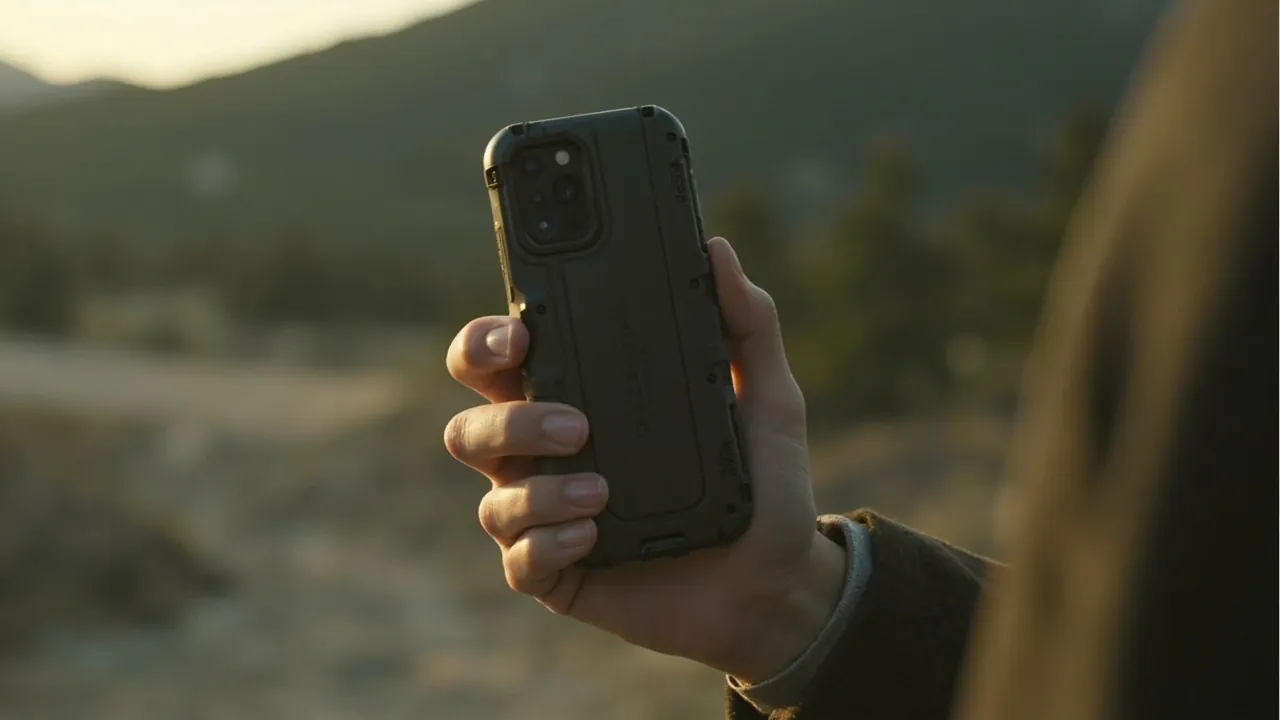
The core advantages of a PP (polypropylene) outdoor protective case can be summarized in five points: good low-temperature impact resistance (not brittle in cold environments), impact resistance and fatigue resistance (more durable under frequent opening and drops), low density and lighter weight (easier to carry and ship), chemical corrosion resistance (resists most acids, alkalis, and solvents), and some food-contact grades for extra peace of mind. Compared with ABS, PP trades a bit of normal-temperature rigidity and surface crispness for low-temperature toughness and light weight, so it is especially suitable for northern winters, outdoor low temperatures, frequent transfers, and weight-sensitive scenarios. Conclusion first: if your equipment is often below 0°C, needs frequent handling, or values light weight, a PP protective case is usually the safer choice; if you value a rigid shape and fine appearance and use it at normal temperature, ABS is also fully qualified. Below, each PP advantage is broken down and compared with ABS by dimension, to help you set the material by scenario. It must be emphasized: these five PP advantages are not marketing slogans but directly correspond to the real variables of "how the outdoors will torture the equipment" — cold, drop, weight, corrosion, and safety — each with a material-level response; choosing PP is essentially choosing a protection logic of "stable in cold, carryable, chemically safe, and compliant."
Table of Contents
- The Five Advantages of a PP Outdoor Protective Case
- Advantage 1: Low-Temperature Impact Resistance
- Advantage 2: Impact Resistance and Fatigue Resistance
- Advantage 3: Light Weight
- Advantage 4: Chemical Corrosion Resistance
- Advantage 5: Food-Contact Grade for Peace of Mind
- PP vs ABS Dimension Comparison Table
- Scenarios Most Suited to PP Protective Cases
- Selection and Pitfall-Avoidance Advice
- How PP Cases Coordinate with Certifications and Liners
- Injection Structure and Reinforcement Ribs of PP Cases
- Extra Benefits of PP Cases in Transport
- Maintenance and Lifespan of PP Cases
- Environmental and Recycling Aspects of PP
- Procurement Checklist for PP Cases
- PP Cases Across Industries
- Common Misconceptions
- Frequently Asked Questions (FAQ)
- Conclusion and Further Reading
The Five Advantages of a PP Outdoor Protective Case
PP earns its place in protective-case shells through five mutually supporting advantages. They are not isolated selling points, but jointly point to the real needs of scenarios like "outdoor, low temperature, frequent transfer":
- Low-temperature impact resistance: Retains toughness at 0°C and even below -20°C, not brittle when dropped.
- Impact resistance and fatigue resistance: Resists permanent deformation or cracking under repeated force and opening.
- Light weight: Density about 0.90–0.91 g/cm³, over ten percent lighter than ABS and much lighter than PC.
- Chemical corrosion resistance: Resists most acids, alkalis, and solvents, more reassuring in chemical environments.
- Food-contact-grade peace of mind: Some PP grades meet food-contact requirements, more reassuring for odor/safety-sensitive scenarios.
Each is expanded below, explaining "why it matters for a protective case."
Advantage 1: Low-Temperature Impact Resistance
This is the most valued PP advantage. ABS loses rubber-phase toughness at extreme low temperature and tends toward low-temperature brittleness, while PP's crystalline structure keeps good impact toughness in cold environments. For an outdoor protective case it means:
- No worry in northern winter transfer: Drops and knocks below freezing, the PP shell is less likely to crack like low-temperature ABS.
- Cold-chain and high-altitude fit: Cold-chain transport and high-altitude low-temperature transfer, PP is more stable.
- No cracking under large day–night swings: In scientific and military transfers with large outdoor day–night temperature differences, material toughness fluctuates little.
Note: specific low-temperature performance depends on the grade and whether impact-modified, per the manufacturer's specification sheet; this article only discusses PP's general orientation relative to ABS and does not fabricate unpublished parameters. KeXin New Materials plastic-case ABS/PP material passes RoHS testing, emphasizing virgin engineering plastic.
From the material mechanism, PP's low-temperature resistance comes from its semi-crystalline structure: the crystalline region maintains chain-segment mobility at low temperature, allowing the material to absorb energy through local yielding on impact rather than directly brittle-fracturing. ABS contains a rubber phase that clearly toughens at normal temperature, but when temperature drops near the glass transition, the rubber phase hardens and toughening fails, producing low-temperature brittleness. This is why "a drop" is fine for ABS at room temperature but may crack ABS below freezing, while PP stays stable at low temperature. Understanding the mechanism turns "PP is low-temperature resistant" from an ad slogan into an explainable, job-condition-judgable engineering basis — also reminding purchasers: if equipment circulates below 0°C long term, low-temperature toughness should be a hard indicator, not a bonus.
Advantage 2: Impact Resistance and Fatigue Resistance
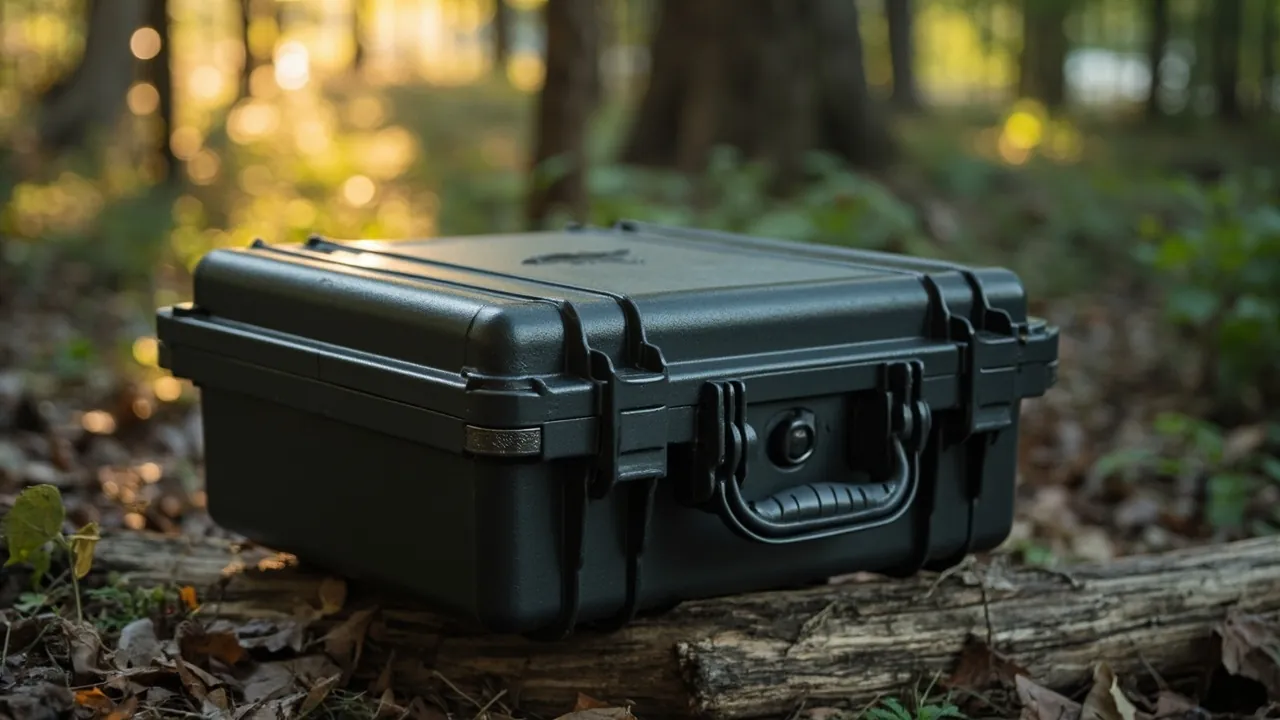
PP not only has decent single-impact resistance, but stands out in "fatigue resistance" — it is less likely to develop permanent deformation under repeated force:
- Long frequent-opening life: The hinge position bends repeatedly; PP is more fatigue-resistant than many materials, not easy to crack under long-term opening.
- Stable under repeated drops: In transport, cumulative small drops are digested by toughness and even wall thickness, not like brittle materials where one hidden injury expands.
- Good stacking rebound: After un loading from compression, deformation recovers well, the body is less likely to be pressed into a permanent dent.
Fatigue resistance matters especially for field tool boxes and repair boxes that are "used daily, shipped monthly" — it is not that PP is harder in a single hit than ABS, but that PP is more "abuse-tolerant."
In engineering, fatigue failure is the hidden killer of protective cases: one drop does not break it, but each opening and each small bump accumulates micro-damage at the hinge and latch positions, suddenly cracking months later. PP's fatigue resistance makes this damage curve gentler, and with even wall thickness it lowers the peak stress, significantly lengthening case life. For rental, shared, and long-stationed "high-turnover" scenarios, the life difference directly translates into total cost of ownership (TCO); PP may not be cheaper to buy, but over three years it is often more economical. This is why many high-frequency-transfer industrial and military users prefer PP even at normal temperature: they buy "no crack in three years," not "rigid on arrival."
Advantage 3: Light Weight
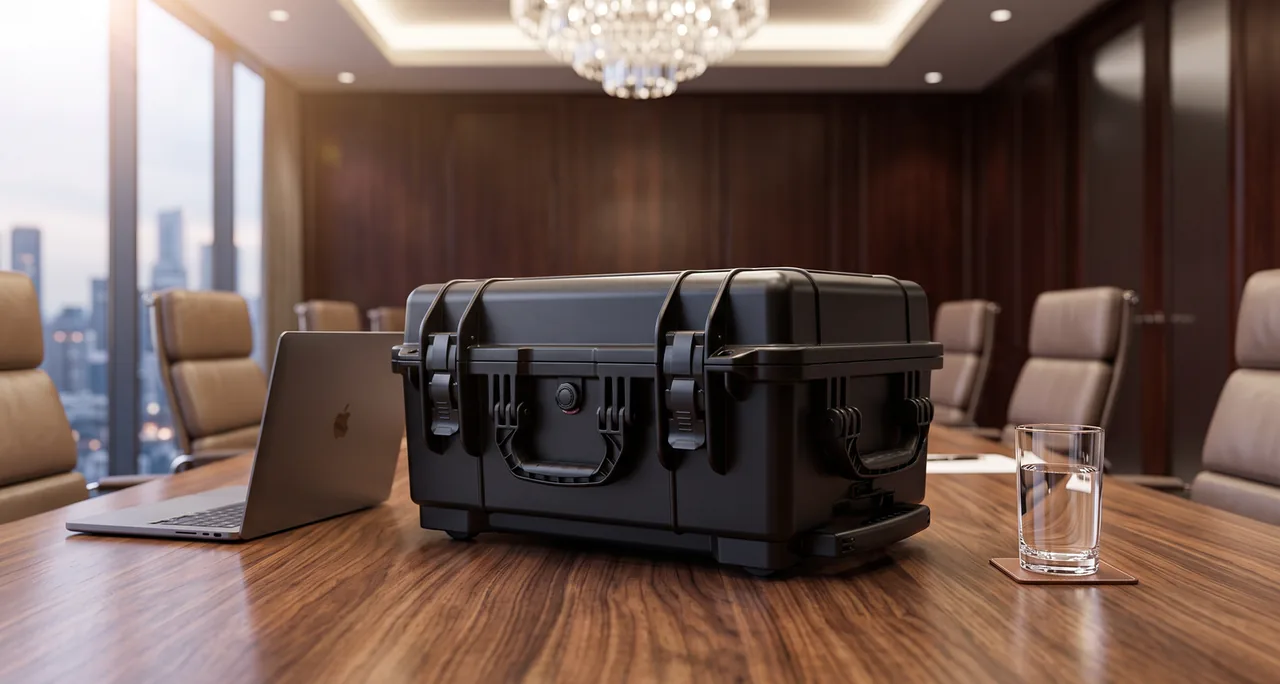
PP density is about 0.90–0.91 g/cm³, the lightest of the three. For a protective case it means:
- Less effort in manual handling: Same volume, lower empty weight, easier to carry on back, by hand, or as checked luggage.
- Lower shipping cost: Air freight is charged by weight; a light case directly saves freight; the weight saving is more obvious for large trolley cases.
- Friendly for individual/field use: For outdoor survey and military/police/fire needing long-distance carrying, weight reduction equals burden reduction.
Light weight is not "cutting material" but PP's material nature; with even wall thickness and reinforcement ribs it still achieves sufficient rigidity. For weight-sensitive users, PP is a natural priority.
Converting "light" into concrete benefit is more intuitive: a 30-liter protective case, PP is about 200–300 grams lighter than ABS (depending on wall thickness); per case it seems little, but one person carrying several, or air freight charged by the ton, the accumulation is real physical and freight savings. For drone shooting, individual carrying, and mountain science where "every gram is expensive," weight reduction directly improves mission endurance and safety. Of course, the premise of light is structural correctness — ultra-thin recycled-material cases are lighter but at the cost of protection, putting the cart before the horse. Qualified lightness is "virgin material + ribs + reasonable wall thickness," not "thinned" lightness. For transport benefits, see How an outdoor protective case protects equipment during transport.
Advantage 4: Chemical Corrosion Resistance
PP has good tolerance to most acids, alkalis, salt solutions, and many organic solvents:
- Laboratory and industrial sites: When contacting reagents, cleaners, and oils, the PP shell is not easily corroded and embrittled.
- Seaside and salt spray: In salt-spray environments PP corrosion resistance is better than ordinary carbon steel and more stable than some plastics (with metal-part rust prevention).
- Easy to clean: Surface can be wiped; easy to clean after chemical environments.
Note: PP also dislikes some strong oxidizers and specific solvents; specifics per the manufacturer's chemical compatibility table; chemical-resistant does not mean resistant to everything — test a little first when contacting unknown liquids.
The significance of chemical resistance for protective cases is often underestimated. Many field cases not only hold tools but also share a box or vehicle with reagents, lubricants, cleaners, and salt spray: if the shell is corroded and embrittled by splashes, it cracks on the next drop; if metal inserts rust under long salt spray, latches jam. PP is more stable than ordinary plastics in such environments; with metal-part rust prevention, it significantly extends the case's usable life on site. In contrast, some engineering plastics (such as unmodified PC, some ABS) are more sensitive to specific solvents and prone to stress cracking on contact. So "chemical resistance" is not a lab quirk but a real life variable in industrial, seaside, and laboratory scenarios — when selecting, write "what liquids will it contact" into the requirements so the manufacturer can give the right material and treatment. For shell-material mechanics, see What engineering plastic does an outdoor protective case use.
Advantage 5: Food-Contact Grade for Peace of Mind
Some PP grades can meet food-contact requirements (such as complying with relevant national food hygiene standards), making it more reassuring in scenarios more sensitive to odor and safety:
- Carrying with food/medicine: For emergency, medical, and field boxes that may contact food or medicine, food-grade PP is more reassuring.
- Low odor and low leaching: Compared with some plastics, PP has lower odor and leaching, suitable for sensitive items.
- Peace of mind: For end users, "food grade" is an intuitive safety signal, improving acceptance.
Note: whether it is food grade depends on the specific grade and regulatory certification, per the manufacturer's proof; this article does not generalize that all PP is food grade.
"Food-grade peace of mind" has two layers of value in the protective-case context. One is compliance: emergency, medical, and field-support boxes that may contact food, medicine, or drinking water, using food-contact-grade material avoids regulatory and hygiene risks and eases procurement review. Two is experience: end users are naturally sensitive to "will the box transfer smell, will it leach harmful substances"; food-grade PP has low odor and low leaching, directly improving trust. What must be clarified is that food grade means "material can contact food," not "the box can be tableware" or "can hold high-temperature boiling food" — the temperature upper limit and contact duration still follow material regulations. When purchasing, if food grade is truly needed, clearly ask the manufacturer for the corresponding grade and certification proof, rather than listening to the general claim that "all PP is safe."
PP vs ABS Dimension Comparison Table
Putting PP and ABS in one table makes selection clear at a glance:
| Dimension | PP | ABS |
|---|---|---|
| --- | --- | --- |
| Density | about 0.90–0.91 g/cm³ (lighter) | about 1.05 g/cm³ |
| Low-temp impact | Good (not brittle in cold) | Fair (brittle at extreme low) |
| Normal-temp rigidity | Medium (slightly lower than ABS) | High |
| Fatigue resistance | Good (durable under frequent opening) | Fair |
| Chemical resistance | Good | Fair |
| Surface treatment | Needs adhesion treatment | Easy to spray/print/plate |
| Food-contact grade | Some grades can reach it | Usually less directly intuitive than PP |
| Crisp appearance | Slightly weaker | Crisp |
| Cost | Lower | Medium |
| Typical use | Low-temp/outdoor/light/chemical | Instrument box/tool box/display box |
Conclusion: no "which is better," only "which fits." Normal-temp crisp → ABS; low-temp light chemical-resistant → PP.
Scenarios Most Suited to PP Protective Cases
By the advantages above, PP cases are most fitting in these scenarios:
- Northern winter/cold-region outdoors: Low-temperature impact resistance, not brittle on drop.
- Frequent transfer and opening: Fatigue resistance, long hinge and latch life.
- Weight-sensitive (air freight, individual carry): Light weight directly reduces burden and freight.
- Chemical/laboratory/industrial sites: Chemical corrosion resistance, easy to clean.
- Emergency medical and food co-carry: Some food-grade PP more reassuring.
- Scientific exploration and high altitude: Stable toughness under low temperature and temperature swings.
The common feature of these scenarios is "cold environment, frequent handling, need light, may contact chemicals" — exactly where PP's five advantages concentrate. Conversely, this also helps exclude: if equipment is long-term indoor at normal temperature, not air-freighted, not contacting chemicals, and requires a refined crisp appearance, ABS may be handier, no need to force a switch for the illusion that "PP is more advanced." The JUNZHJIA protective-case product line of KeXin New Materials covers more than 150 specifications including safety protective cases, sealed cases, and waterproof and moisture-proof cases; ABS/PP shells can be combined by scenario, with one-stop OEM/ODM customization of inner trays/liners and LOGO.
Selection and Pitfall-Avoidance Advice
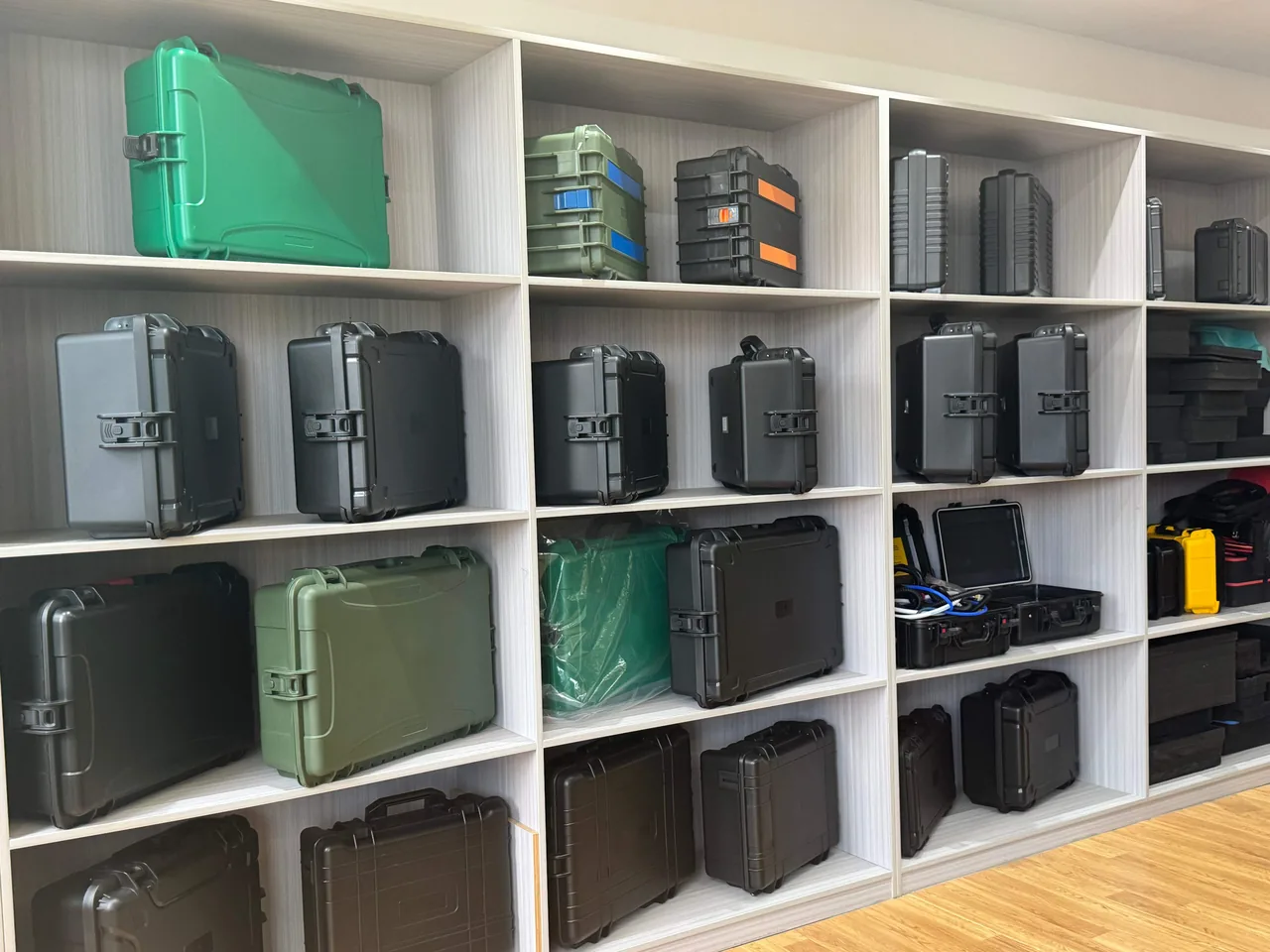
When choosing a PP protective case, execute as follows:
- Confirm virgin PP: Clearly ask the manufacturer for virgin shell material, not recycled; recycled has uneven walls and easily deforms and leaks.
- Check wall thickness and ribs: Light does not mean thin to soft; even wall thickness + ribs give stable rigidity.
- Choose grade by temperature: For extreme-low-temp scenarios ask the low-temperature impact grade and whether impact-modified.
- Fit a liner: Precision parts still need EVA/EPE liner for fixation and cushioning; light material does not replace the liner.
- Verify IP rating: IP67 comes from the seal structure (IEC 60529); confirm full-perimeter seal ring + multiple latches.
- Request certificates: Plastic-case ABS/PP passes RoHS testing; REACH, California Prop 65 per certificates (backed by company documentation; certificates available on request).
- Batch go OEM/ODM: Coordinate liner, compartments, and LOGO before leaving the factory.
Pitfalls: do not buy an ultra-thin recycled case just because "PP is light"; do not think PP needs no liner; do not use a material label to replace IP rating verification.
Turn selection into the flow of "ask the working condition first, then set the material" to avoid many detours: first list the temperature range (often below 0°C?), handling frequency (daily or occasional), transport mode (air looks at weight, road at vibration, sea at humidity), contact objects (chemicals/food/ordinary tools), appearance requirement (crisp and refined?). After answering these five, the PP vs ABS trade-off is usually clear: hit any two of cold/frequent/light/chemical/food → PP first; normal-temp/crisp/refined-appearance dominant → ABS is fine. This flow is more reliable than "listen to the salesman," and convenient to write into the purchasing spec for consistent caliber among different buyers. At batch, overlay OEM/ODM to set liner and compartments by equipment list, so PP's advantage truly realizes as "intact on arrival." For material selection overall, see How to choose the shell material of an outdoor protective case.
How PP Cases Coordinate with Certifications and Liners
PP's advantages are complete only with certifications and liners:
- Material safety: Plastic-case ABS/PP material passes RoHS testing (restricting hazardous substances); REACH and California Prop 65 concern chemical restrictions; the KeXin New Materials product line holds qualifications such as ISO9001, REACH, and California Prop 65 (certificates available on request).
- Protection structure: PP shell + full-perimeter seal ring + multiple latches reach IP67; pressure-balancing valve handles air-transport pressure difference.
- Liner fixation: PP is light, but the interior still needs EVA/EPE liner to fix equipment, avoiding transport sliding and collision.
- Military-standard validation: The protective-case product line may often be described using MIL-STD-810H as a product-line environmental test basis (not "military certification"), covering vibration, shock, heat-humidity, and sand-dust.
Viewing "material + structure + liner + certification" together turns a PP protective case from "a light box" into "a reliable solution." KeXin New Materials has capabilities in product design, injection molding, mold manufacturing, LOGO printing, and inner-tray/liner making; the factory is in Zhongshan City, Guangdong (Greater Bay Area), about 18,000 m², 80+ machines, 100+ staff; products are exported to the United States, the United Kingdom, Germany, Canada, Japan, Russia, the Philippines, India, Hong Kong/Taiwan (China), the Middle East, and other regions. For export customers, this verifiable qualification combination (virgin material + IP67 + RoHS/REACH/California Prop 65) is often a hard threshold for the procurement shortlist, not a nice-to-have.
Injection Structure and Reinforcement Ribs of PP Cases
Light weight does not mean fragile; the rigidity of a qualified PP protective case comes from structural design, not material piling:
- Even wall thickness + reinforcement ribs: The PP injection shell arranges longitudinal and transverse ribs inside, spreading impact stress to avoid local cracking; even wall thickness is the premise of impact resistance and also reflects virgin-material craft.
- Thickened corners: Edge-corner landing is the most common drop case; thickened corners absorb instantaneous impact.
- Integral molding: The seal groove, latch position, and hinge position of the lid and body are formed once in the mold with stable mating tolerance, the basis for long-term IP67 validity. KeXin New Materials has injection-molding and mold-manufacturing capability to control these matings from the source.
- Rigidity balance under light weight: PP's low density is compensated by ribs and reasonable wall thickness, achieving "light but not soft."
So when evaluating a PP protective case, do not just ask "how heavy," but ask "wall-thickness reference, ribs, mating tolerance" — these are the real reasons a light case can also withstand drops.
Extra Benefits of PP Cases in Transport
Combined with transport scenarios, PP's advantages are amplified (see the transport-safety topic for detail):
- Weight saving on freight: Air freight charged by weight; PP is over ten percent lighter than ABS, directly lowering logistics cost in large-batch long-haul.
- More stable in low-temp transport: Cold-chain and northern-winter road transport, PP low-temperature toughness lowers drop-brittle risk.
- Durable under frequent handling: Fatigue resistance gives longer life to monthly-transfer cases; latch and hinge positions less likely to crack.
- Coordinated with liner: PP is light; with EVA/EPE liner the whole is still light, precision parts fixed and cushioned, transport vibration not directly transmitted to equipment.
Stacking "light + low-temp + fatigue-resistant" onto the transport chain, the value of a PP protective case to high-frequency-transfer users far exceeds "saving a little weight" — it is a systems engineering to lower transport loss and logistics cost.
Maintenance and Lifespan of PP Cases
PP itself has good weather and chemical resistance, but maintenance still decides actual life:
- Avoid long-term sun exposure: UV accelerates aging; store in a cool place, add UV treatment if necessary (per manufacturer's note).
- Seal ring is a consumable: However durable the shell, the seal ring (EPDM/TPE) hardens first; clean regularly, replace the same-spec part promptly when elasticity is lost or cracked.
- Clean after chemical contact: Chemical-resistant does not mean maintenance-free; wipe after contacting reagents to extend life.
- Clean the liner: EVA/EPE liner blown dust regularly to avoid self-accumulated dust contaminating equipment.
With proper maintenance, a PP protective case lasts many years; without it, even the best material loses protection from small cracks or seal-ring failure.
Environmental and Recycling Aspects of PP
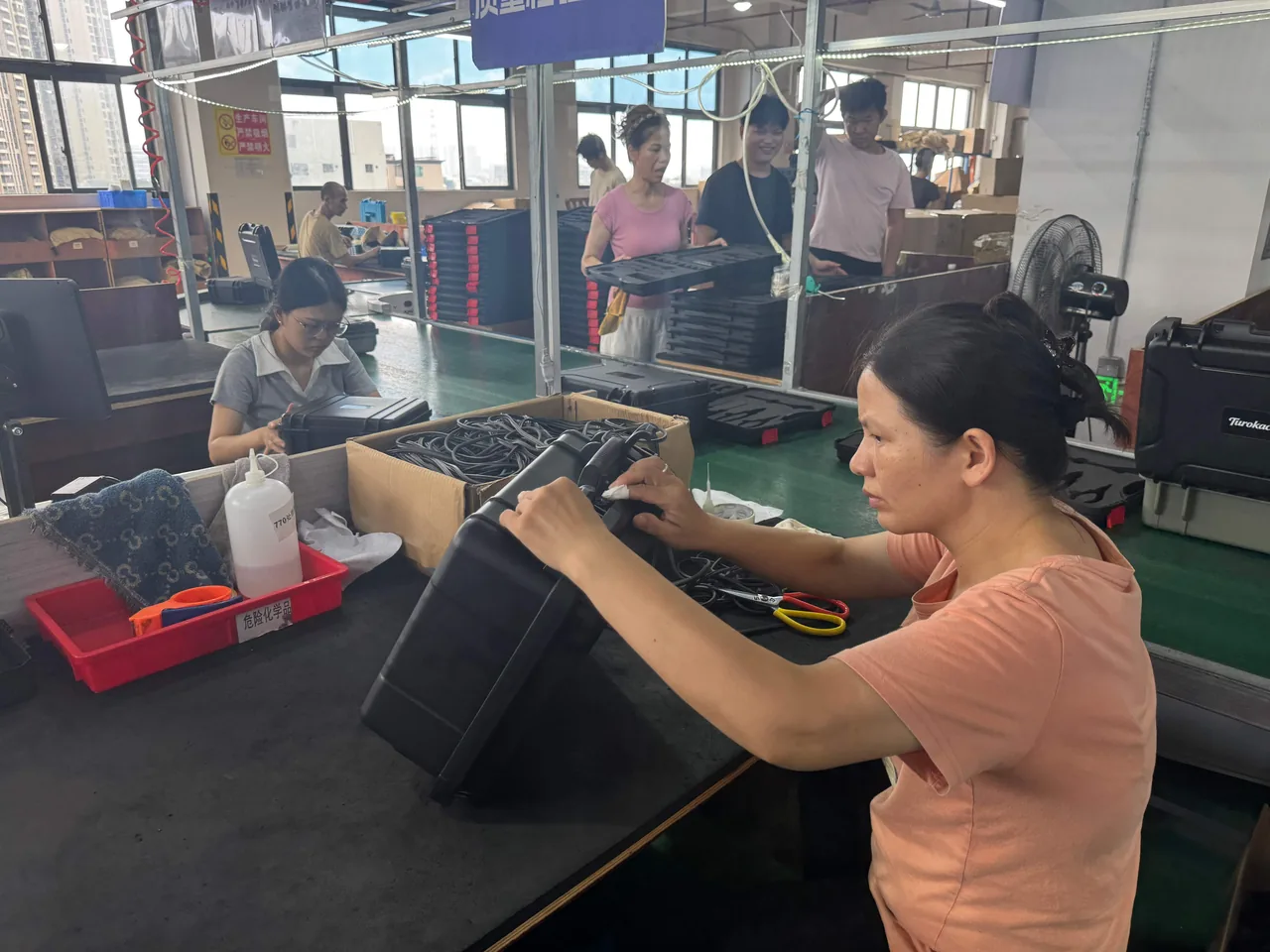
PP is a recyclable thermoplastic; two environmental points are worth mentioning:
- Recyclable reuse: PP can be melt-reprocessed; waste and offcuts can be reused (the protective-case main body recommends virgin material to ensure performance; recycled material suits non-structural parts).
- Low leaching and food grade: Some PP has low odor and leaching and can meet food-contact requirements, more reassuring for end users, also facilitating medical and food-related scenario compliance.
- Compliance certificates: Plastic-case ABS/PP passes RoHS testing; REACH, California Prop 65 per certificates (backed by company documentation; certificates available on request). Export customers often treat such compliance as a procurement threshold; KeXin New Materials products are exported to the United States, Germany, Japan, and many other regions precisely on this basis.
Environmental is not a marketing word but a combined capability of "recyclable + compliant + food-grade optional"; when purchasing, request the certificates and write them into the contract to truly land it.
Procurement Checklist for PP Cases
Turn the knowledge points into an executable checklist:
- Confirm virgin PP: Clearly virgin shell material, reject recycled.
- Ask wall thickness and ribs: A light case also needs enough rigidity; request reference values or samples.
- Verify low-temp grade: For extreme-low-temp scenarios ask the low-temp impact grade and modification.
- Check IP rating source: IP67 comes from the seal structure (IEC 60529); confirm full-perimeter seal + multiple latches.
- Fit a liner: Precision parts use EVA/EPE for fixation; light material does not replace cushioning.
- Request certificates: RoHS/REACH/California Prop 65 per certificates (available on request).
- Go OEM/ODM: Liner, compartments, LOGO coordinated before leaving the factory.
- Write into contract: Individual-product specification sheet and test report as appendix.
This checklist turns "PP advantage" into "procurement action," avoiding the three pits of recycled material, ultra-thin, and fake certification. A manufacturer with one-stop capabilities in product design, injection molding, molds, liners, and LOGO (such as KeXin New Materials JUNZHJIA) can cooperate to provide corresponding materials at the procurement stage, facilitating export and high-end customer acceptance.
PP Cases Across Industries
Applying the five advantages to specific industries shows more intuitively why PP is chosen (corresponding to the public application directions of KeXin New Materials product lines):
| Industry | Dominant need | How PP advantage hits |
|---|---|---|
| --- | --- | --- |
| Outdoor survey/scientific exploration | Low temp, frequent transfer, light | Low-temp impact + light + fatigue |
| Military/police/fire | Low-temp transfer, abuse-tolerant, insulating | Low-temp toughness + fatigue + non-conductive |
| Electronics/electrical repair | Light, chemical-resistant, insulating | Light + chemical + insulating, with liner fixing meters |
| Aviation/communication | Air-freight weight saving, low-temp pressure | Light saves freight + low-temp stable + pressure-balancing valve |
| Industrial maintenance site | Chemical-resistant, easy clean, abuse-tolerant | Chemical-resistant + fatigue + wipeable |
| Emergency medical | Food-grade peace of mind, light | Food-grade PP + light, holds medicine and instruments |
These cases show PP is not a "cheap substitute" but "working-condition match": wherever cold, frequent, light, and chemical combine, PP is often more suitable than ABS. The products of KeXin New Materials are exported to the United States, the United Kingdom, Germany, Canada, Japan, Russia, the Philippines, India, Hong Kong/Taiwan (China), the Middle East, and other regions, showing that this PP-by-working-condition demand is global.
One more complete example: a northern-winter water-quality sampling kit with detector, probes, reagents, and recorder; transport chain is truck + flight. Choose a virgin PP shell protective case,because low-temp impact (winter drop not brittle), light (air-freight weight saving), chemical-resistant (reagent spill does not corrode shell); inside an EVA grooved liner fixes equipment, four latches all fastened, pressure-balancing valve balances flight pressure difference, desiccant inside for moisture. On arrival, zero displacement, no water ingress. This example strings "PP five advantages + liner + latch + valve" into a complete solution, also confirming the earlier logic that "material is the start, combination is the protection."
Common Misconceptions
- Misconception 1: PP is less sturdy than ABS. PP normal-temp rigidity is slightly lower, but low-temp impact and fatigue are better; "sturdy" depends on working condition, not a single indicator.
- Misconception 2: Light means thin. Light comes from low density; a qualified PP case keeps rigidity by wall thickness and ribs, not thin material.
- Misconception 3: PP needs no liner. Any material case needs a liner to fix precision parts; PP light does not replace cushioning.
- Misconception 4: All PP is food grade. Food grade depends on grade and certification, needs manufacturer proof, cannot be generalized.
- Misconception 5: Material decides IP. IP67 comes from the seal-structure combination; material is only a premise.
- Misconception 6: PP is cheaper so it is low-end. Price high or low does not equal class; PP's engineering value in low-temp/light/chemical is real, and many high-end transfer cases also use PP; expensive or not depends on working-condition match, not the label.
- Misconception 7: PP cases cannot have a crisp appearance. PP can also achieve a crisp shape through wall thickness, ribs, and styling, only its normal-temp rigidity is slightly lower than ABS; appearance satisfaction depends more on mold and design than a single material factor.
Checking the seven misconceptions, most come from "evaluating material by a single indicator." A protective case is a system; material is only one link; PP's advantage appears only when structure, liner, certification, and working condition jointly hold.
Frequently Asked Questions (FAQ)
Q: How to choose between a PP protective case and an ABS protective case? A: Normal-temp crisp, valuing appearance and rigidity → ABS; low temperature, frequent transfer, light weight, chemical-resistant, or food-grade peace of mind → PP. Both can use virgin engineering plastic; specifics per working condition and specification sheet, not a matter of superiority.
Q: Will a PP protective case become brittle below zero? A: PP has better low-temperature impact resistance and is less brittle than ABS at extreme low temperature, suitable for northern winters and cold chain; but specific low-temperature performance depends on grade and modification, per the manufacturer's specification sheet.
Q: A PP protective case is lighter; does protection suffer? A: Not necessarily. Light comes from low density; a qualified PP case keeps rigidity by even wall thickness + ribs, and is equipped with IP67 sealing and liner cushioning; the key is virgin material and structure, not just weight.
Q: Can a PP protective case hold chemicals? A: PP resists most acids, alkalis, and solvents and is more chemical-resistant than many plastics, but still dislikes strong oxidizers and some solvents; test a little first when contacting unknown liquids, per the manufacturer's chemical compatibility table.
Q: What is a food-grade PP protective case for? A: Some PP grades can meet food-contact requirements, suitable for emergency, medical, and field boxes that may contact food, medicine, or sensitive items, with lower odor and leaching and more reassurance; whether it is food grade follows the manufacturer's proof.
Q: What does "PP protective case passes RoHS" mean? A: It means its plastic material (PP) passes RoHS testing, restricting hazardous substances such as lead, cadmium, and mercury — a material safety compliance. KeXin New Materials plastic-case ABS/PP material passes RoHS testing; specifics per the test report.
Conclusion
The advantages of a PP outdoor protective case concentrate in five points: low-temperature impact resistance, impact and fatigue resistance, light weight, chemical resistance, and some food-contact-grade peace of mind. Compared with ABS, PP trades a bit of normal-temperature rigidity for low-temperature toughness and light weight, so it is especially suitable for cold regions, frequent transfers, weight-sensitive, and chemical environments. In selection, remember "fit by scenario, not superiority": normal-temp crisp → ABS, low-temp light chemical-resistant → PP; whichever, recognize virgin material, check wall-thickness ribs, fit EVA/EPE liner, verify IP67 and RoHS/REACH/California Prop 65, and go OEM/ODM when necessary to coordinate liner and shell. KeXin New Materials JUNZHJIA, based on virgin ABS/PP engineering plastic, IP67 capability, and multiple qualifications, can provide verifiable PP protective-case solutions for export and high-end customers. One final sentence: the value of PP is not in the single word "light," but in the combination of "not brittle in cold, not tiring to carry, chemically stable, safe to eat from" — save this article's advantage table and selection checklist into the purchasing spec, and next time you choose material you will not be led astray by a single indicator.
Three more practical suggestions to avoid hesitation between PP and ABS: first, write the working condition as a checklist before choosing — temperature range, handling frequency, whether air freight, whether contacting chemicals, whether near food; list these five and the answer usually emerges; second, do not reverse-infer material from price — recycled PP may be cheaper than virgin ABS yet less protective, so recognizing virgin material and structure is the right path; third, for large batches go OEM/ODM to coordinate liner, compartments, LOGO, and shell before leaving the factory, so PP's lightness and low-temperature resistance truly convert into arrival integrity. KeXin New Materials JUNZHJIA, based on virgin ABS/PP engineering plastic, IP67 capability, and RoHS/REACH/California Prop 65 (certificates available on request), with one-stop customization, can provide verifiable PP protective-case solutions for export and high-end customers. Remember, choosing PP is not choosing "cheap plastic," but choosing a protection logic of "stable in cold, carryable, chemically safe, compliant." When you next hesitate between PP and ABS, return to this article's opening five advantages and comparison table, check the boxes by working condition, and the answer is clear. For ABS uses, see What are the outdoor uses and precautions of ABS cases.
Further Reading
- What Engineering Plastic Does an Outdoor Protective Case Use?
- What Are the Outdoor Uses and Precautions of ABS Cases?
- How to Choose the Shell Material of an Outdoor Protective Case
- How an Outdoor Protective Case Protects Equipment During Transport
- What Does the Pressure-Balancing Valve Do in an Outdoor Protective Case?
- What Is an Outdoor Protective Case and Where Is It Used?