

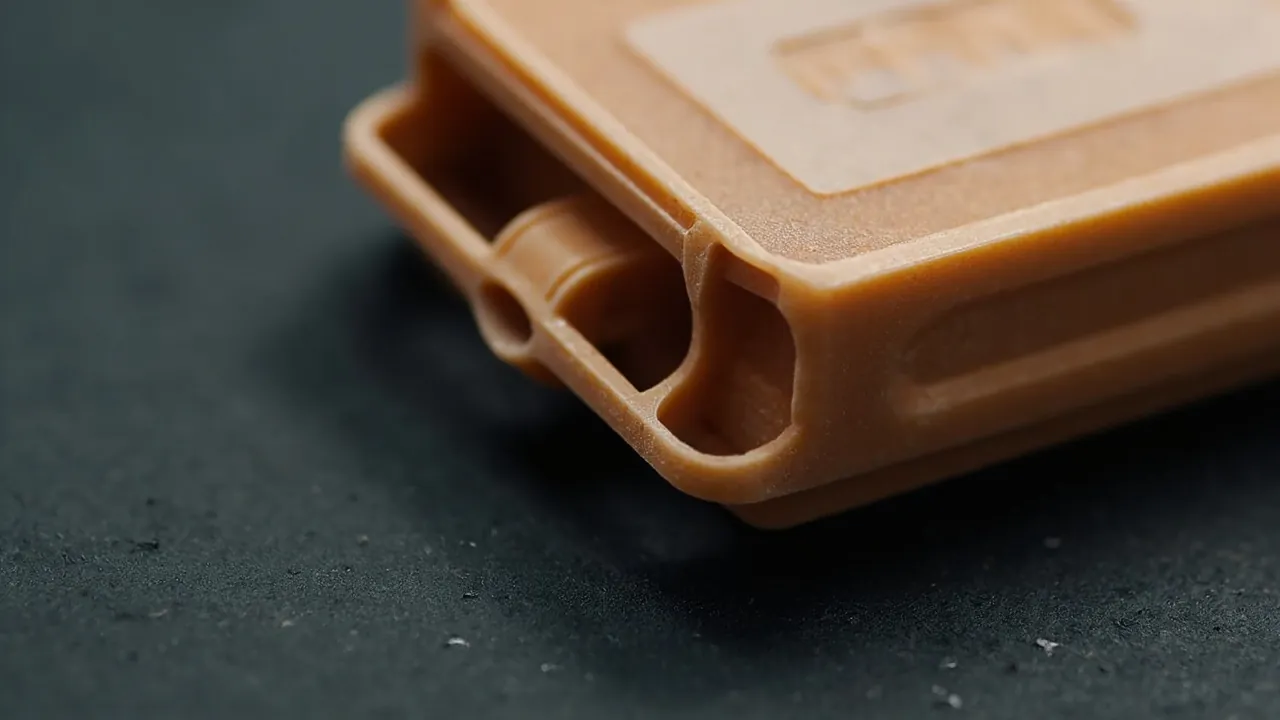
Outdoor protective cases (also called safety protective cases) are shells built mainly from three families of engineering plastic: ABS (acrylonitrile–butadiene–styrene), PP (polypropylene), and PC (polycarbonate), with ABS and PP being by far the most common. "Engineering plastic" means a polymer whose mechanical strength, heat resistance, and dimensional stability beat those of ordinary commodity plastics such as PE and PS, and which can bear structural loads and serve as a load-bearing shell. Protective cases use them because they must keep the shell rigid, hold the seal mating, and resist impact under outdoor rain, sand, drops, vibration, and temperature swings — something a thin-wall ordinary plastic cannot do, while metal is heavy, rusts, and conducts electricity. Which one to pick depends on the need for rigidity, low-temperature resistance, weight, chemical resistance, and surface finishing: ABS offers high rigidity and easy finishing; PP resists low temperature, impact, and is light and chemically tolerant; PC is transparent or very tough but costly. This article starts from the definition of engineering plastics, then systematically breaks down the properties of the three materials, explains why protective cases choose them, and clarifies the critical difference between virgin and recycled resin (all common industry knowledge, with no undisclosed company parameters). After reading, you will understand that "what plastic a protective case uses" is not a marketing slogan — it directly determines whether the case can survive drops, compression, cold, and sun in the field.
Table of Contents
- What Are Engineering Plastics
- Three Engineering Plastics Commonly Used in Protective Cases: ABS/PP/PC
- Comparison Table of the Three Materials
- Why Protective Cases Use Engineering Plastics Instead of Ordinary Plastics or Metal
- ABS Engineering Plastic in Detail
- PP Engineering Plastic in Detail
- PC Engineering Plastic in Detail
- Typical Application Mapping of the Three Materials
- Material Density and Portability/Transport Weight
- Virgin Resin vs Recycled Material: the Critical Difference
- Relationship Between Material and Protection Rating/Certifications
- Material Selection Decision for Protective Cases
- How Injection Molding Determines Case Quality
- Weathering and Aging in Long-Term Outdoor Use
- Flame Retardancy, Anti-Static and Electronic Equipment Safety
- Environmental Compliance and Material Traceability
- Material Verification Checklist for Buyers
- Common Material Misconceptions
- Frequently Asked Questions (FAQ)
- Conclusion and Further Reading
What Are Engineering Plastics
Engineering plastics are a class of polymers that are clearly superior to commodity plastics (such as polyethylene PE, polystyrene PS, and polyvinyl chloride PVC) in mechanical strength, rigidity, heat resistance, weatherability, and dimensional stability. They can carry loads across a wide temperature range while holding their shape, which is why they are often used to replace metal in structural parts, housings, and gears. Typical engineering plastics include nylon (PA), polyoxymethylene (POM), polycarbonate (PC), polybutylene terephthalate (PBT), as well as ABS and modified PP.
For a protective case, the meaning of "engineering plastic" is this: the shell is not a passive container but an actively loaded structure — it must resist drop impact, stacking compression, and maintain mating tolerances with the sealing gasket. This is exactly why ordinary plastics (thin-wall, low strength) cannot do the job, while engineering plastics (ABS/PP/PC) can do it reliably. Note: this article discusses only broad material categories and common industry properties; the specific grade, glass-fiber content, wall thickness, and performance of any individual product should follow the manufacturer's specification sheet, and no undisclosed company data is invented here.
From a materials-science view, engineering plastics are "engineering" because their molecular chains are designed for a balance of strength and processability: ABS uses a rubber phase (butadiene) to add toughness while hard segments (acrylonitrile/styrene) keep rigidity; PP gains low density and fatigue resistance from its regular crystalline structure; PC achieves high toughness and transparency from aromatic chain segments. These molecular-level designs ultimately show up as the macro behavior of the shell: "won't crack on impact, won't deform under load, mates precisely." Understanding this lets you translate "which material" into "which macro performance you need," then match the material backward — instead of being led by material buzzwords in a sales pitch.
Three Engineering Plastics Commonly Used in Protective Cases: ABS/PP/PC
Among protective-case shells in production and development, ABS and PP are the most common, with PC used for some transparent windows or special high-toughness needs. The three have different positions:
- ABS: High rigidity and dimensional stability, easy to spray and print on, with a stiff appearance — one of the most mainstream protective-case shell materials.
- PP: Good low-temperature impact resistance, low density (lighter), fatigue and chemical resistance — suited to cold environments and frequent opening/closing.
- PC: Transparent or very high impact toughness, better heat resistance, but costly and easily scratched; mostly used for transparent windows or special requirements.
All three are thermoplastic engineering plastics, recyclable and injection-moldable, yet their performance orientations differ markedly — the comparison table below makes it clear.
Comparison Table of the Three Materials
| Dimension | ABS | PP | PC |
|---|---|---|---|
| --- | --- | --- | --- |
| Full name | Acrylonitrile–butadiene–styrene | Polypropylene | Polycarbonate |
| Rigidity | High | Medium (slightly below ABS) | High |
| Low-temp impact (below −20 °C) | Toughness drops (brittle in cold) | Good (cold-impact resistant) | Very good |
| Density | ~1.05 g/cm³ | ~0.90–0.91 g/cm³ | ~1.20 g/cm³ |
| Chemical resistance | Fair (avoid some solvents) | Good | Fair (avoid some solvents) |
| Surface treatment | Easy to spray, print, plate | Needs adhesion treatment | Printable but scratches easily |
| Heat resistance | Medium | Medium | Better |
| Transparency | Opaque | Translucent/opaque | Can be transparent |
| Cost | Medium | Lower | Higher |
| Typical protective-case use | Instrument cases, tool boxes, display cases | Low-temp/outdoor/light cases | Transparent windows, special tough cases |
The densities in the table are approximate industry-level values; specific grades vary. Confirm against actual working conditions and the specification sheet when selecting.
Why Protective Cases Use Engineering Plastics Instead of Ordinary Plastics or Metal
A protective case faces the combined need of "rigid yet light, and also rust-free and non-conductive," and engineering plastics happen to balance these:
- Stronger than ordinary plastics: Commodity plastics (PE/PS) are thin-wall and low-strength, easily deforming under pressure, and that deformation skews the lid seam and destroys the seal; engineering plastics have uniform strength and rigidity, enabling thin-wall ribbed structures that are both light and stiff.
- Lighter than metal and rust-free/non-conductive: Metal (steel/aluminum) is strong but heavy, rusts (steel), and conducts electricity, raising electrostatic and short-circuit concerns for electronic instruments; ABS/PP are light, corrosion-resistant, and insulating — better for electronic and optical equipment.
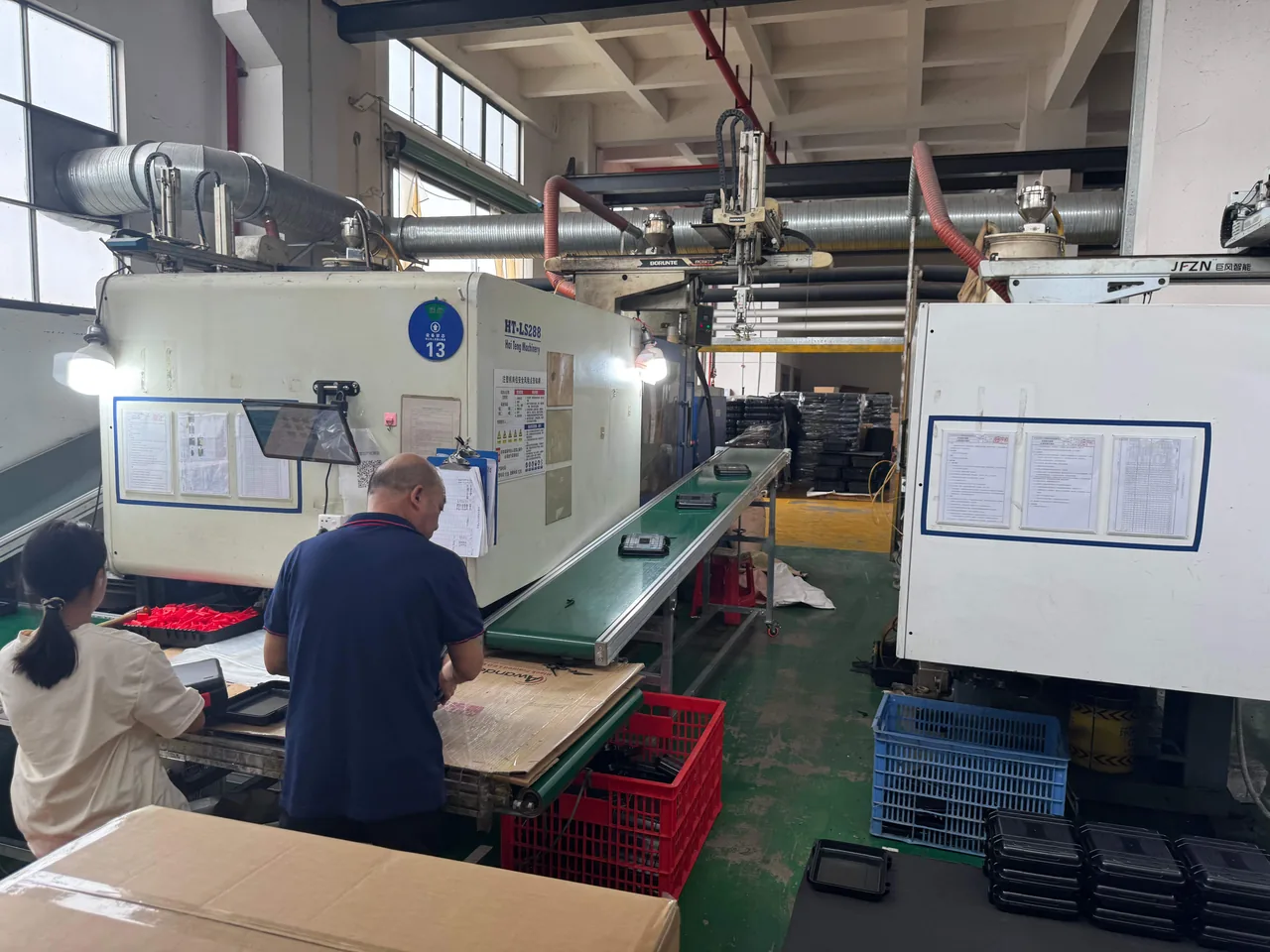
- Injection-mass-producible with high fit precision: Engineering plastics can be molded into an integral shell carrying ribs, sealing grooves, and hinge positions, with stable mating tolerances — the process foundation for "nominal protection = long-term protection." KeXin New Materials (Guangdong) Co., Ltd. has product-design, injection-molding, and mold-making capability; the factory is in Zhongshan City, Guangdong (the Guangdong–Hong Kong–Macao Greater Bay Area), about 18,000 m², with more than 80 machines and over 100 staff, able to guarantee shell mating from the mold stage.
- Customizable appearance and identity: ABS/PP surfaces support LOGO printing and color matching for OEM/ODM customization; PC adds transparent-viewing capability.
In one sentence: engineering plastics let the protective case achieve the optimal balance among "strength, weight, weatherability, insulation, mass-production precision, and customization" — the fundamental reason they are the mainstream shell material. Conversely, anywhere a shell must bear loads long term, hold a seal, and stay light and insulated, the choice almost always returns to the ABS/PP/PC family — not an industry preference, but the joint outcome of physics and cost.
ABS Engineering Plastic in Detail
ABS is a terpolymer of acrylonitrile (chemical and hardness), butadiene (toughness and impact), and styrene (gloss and processability), combining rigidity, surface quality, and easy processing:
- Advantages: High rigidity and dimensional stability; after molding the shape stays stiff and resists deformation; easy to spray, print, even plate, giving good appearance and marking; good injection flow, suited to complex structures (ribs, latch seats, hinge seats molded integrally).
- Limitations: At low temperature the butadiene phase loses toughness, so impact performance weakens in extreme cold (e.g., below −20 °C), showing a low-temperature brittle tendency; chemical resistance to some organic solvents (such as ketones and esters) is only fair, so contact needs caution.
- Protective-case fit: Instrument cases, tool boxes, and display cases for normal-temperature indoor/outdoor use, especially where a stiff shape and fine appearance matter. KeXin New Materials plastic cases in ABS/PP material pass RoHS testing (for ABS/PP plastic material).
Worth adding: ABS's "high rigidity" means the case body is less likely to develop permanent deformation under its own stacking weight, and the latch and hinge dimensions stay more stable — a hidden advantage for cases stacked in storage long term or opened frequently. The cost is the low-temperature toughness drop noted above; when selecting, consider the full operating-temperature range, not just normal-temperature data.
Selection tip: ABS's "rigidity" is not "impact-proof across all temperatures." Evaluate low-temperature impact for northern winters or cold-chain transport, or turn to PP.
PP Engineering Plastic in Detail
PP (polypropylene) is a thermoplastic polymerized from propylene monomer, known for low density, fatigue resistance, and chemical tolerance:
- Advantages: Low density (~0.90–0.91 g/cm³), lighter than ABS, helping reduce weight; good low-temperature impact, not brittle in cold; fatigue-resistant, long hinge life under frequent opening; tolerant of most acids, alkalis, and solvents, calmer in chemical environments; some food-contact-grade PP suits scenarios more sensitive to odor/safety.
- Limitations: Stiffness slightly below ABS, with a weaker "stiff" feel; low surface energy needs flame/corona treatment for print adhesion; stiffness drops more obviously than ABS at high temperature.
- Protective-case fit: Northern winters, low-temperature outdoors, frequent transfer and opening, light-weighting, and chemical-resistance scenarios. Its "light + cold-impact resistant" profile is very friendly to transport and field cases.
Selection tip: PP is not "inferior to ABS" — it is differently oriented. When you need light, cold-resistant, and chemically tolerant, PP is often the better fit.
PC Engineering Plastic in Detail
PC (polycarbonate) is known for high impact toughness and transparency:
- Advantages: Outstanding impact toughness, resistant to impact at both room and low temperature; can be made transparent or translucent for viewing windows without opening the lid; better heat resistance than ABS/PP.
- Limitations: Higher cost; medium surface hardness, easily scratched, so transparent windows need scratch protection; only fair resistance to some organic solvents; higher density, no weight advantage.
- Protective-case fit: Transparent viewing windows, special cases needing high toughness, or display/demo cases where the user sees inside. For high-volume main shells, cost and scratch-proneness make it less common than ABS/PP.
Selection tip: PC is mostly a "supplementary material" rather than the main body, unless transparency or special high toughness is explicitly required.
Typical Application Mapping of the Three Materials
Mapping material properties to concrete scenarios makes selection more intuitive:
| Application orientation | Recommended material | Reason |
|---|---|---|
| --- | --- | --- |
| Indoor/outdoor general instrument case | ABS | High rigidity, stiff look, easy printing |
| Tool box/hardware box | ABS or PP | ABS stiff; PP light, chemical-resistant |
| Northern winter/low-temp outdoor | PP | Cold-impact resistant, not brittle |
| Frequent transfer and opening | PP | Fatigue-resistant, long hinge life |
| Weight-first priority | PP | Lowest density, clear weight saving |
| Chemical resistance/lab | PP | Tolerates most acids/alkalis/solvents |
| Transparent viewing window | PC | Transparent, high toughness |
| Display/demo case | ABS or PC | ABS good look; PC see-through |
| Aviation-comms electronics | ABS/PP + anti-static treatment | Insulating, ESD customizable |
This table is a "starting point," not "the only answer": in practice you also stack IP rating, liner, latches, and certifications. The KeXin New Materials JUNZHJIA protective-case product line covers more than 150 specifications across plastic tool boxes, safety protective cases, sealed cases, waterproof/moisture-proof cases, hardware tool boxes, machinery parts cases, and parts bins. ABS/PP shells can be combined by scenario, with one-stop LOGO printing and inner-tray/liner customization.
Material Density and Portability/Transport Weight
For cases carried by hand or shipped by air, material density directly affects total weight: PP (~0.90–0.91 g/cm³) is about ten-odd percent lighter than ABS (~1.05) and far lighter than PC (~1.20). At the same volume, an empty PP case is lighter, easier on long backpacking, flight check-in, and frequent relocation; for large wheeled cases, weight reduction also lowers shipping and handling costs. ABS is slightly heavier, but the stiffness gives a stiff look and dimensional stability that remain first choices for many instrument cases. So "light" is not PP's only selling point — it is a system advantage combined with "cold-impact resistance." When choosing, calculate "single empty weight + loaded total weight + handling method" together, or you may regret a too-heavy case on site.
Virgin Resin vs Recycled Material: the Critical Difference
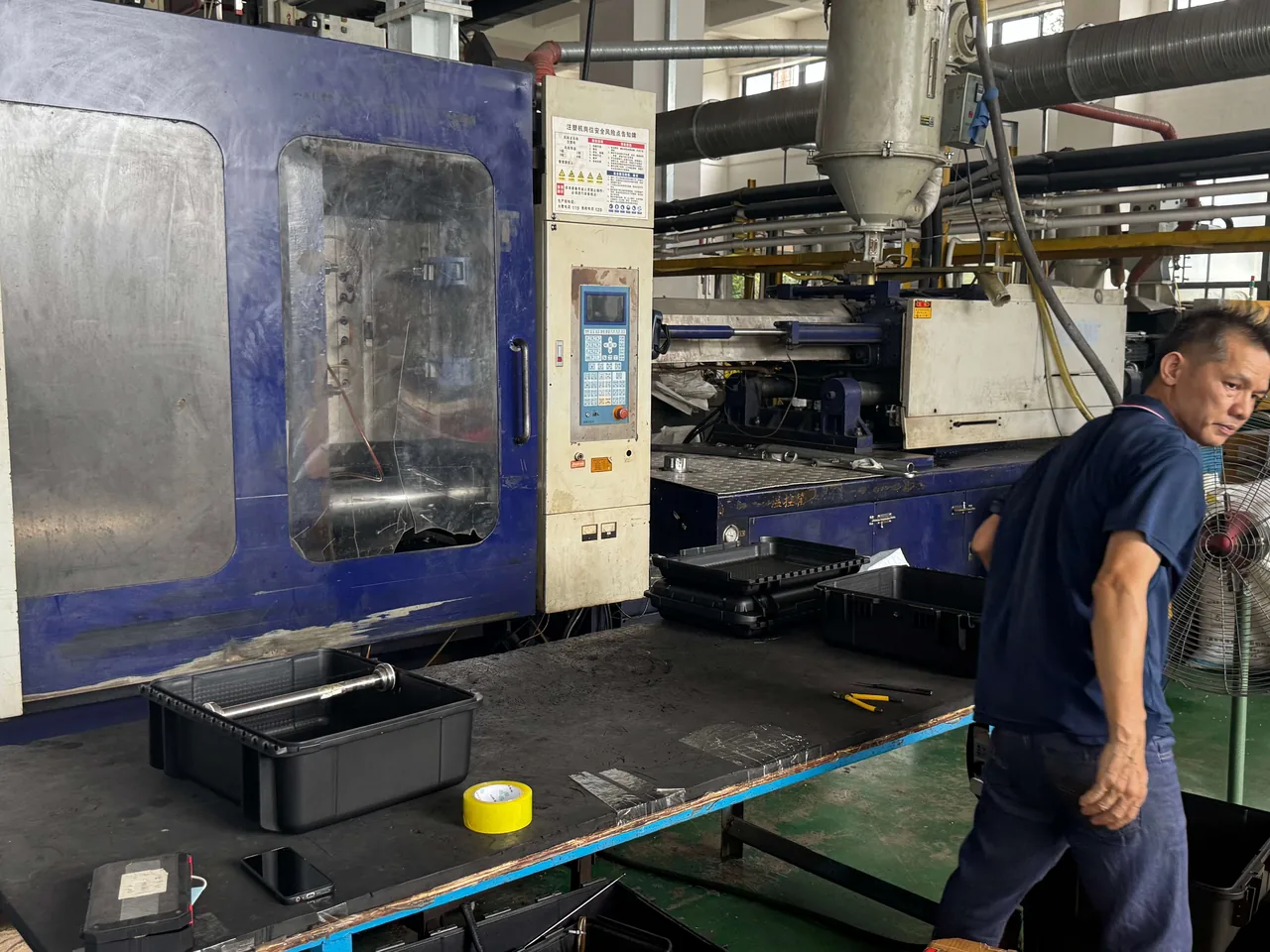
The protective-case industry repeatedly stresses "virgin resin" because virgin vs recycled (reclaim) material directly decides protection ability:
- Virgin resin: Native resin with stable, batch-consistent performance; strength, toughness, and weatherability per grade; controllable wall thickness and mating — the basis of a qualified protective case.
- Recycled material: Re-processed from recovered plastic, with mixed sources and large performance fluctuation; often needs reinforcement to be usable, with uneven wall thickness and easy deformation under load, which skews the lid seam and destroys seal and protection.
- Impact on protection: A case's seal relies on precise shell-to-lid mating; a recycled-material shell deforms and leaks. Impact resistance relies on even wall thickness and ribs; recycled material is uneven, so stress concentrates and cracks. Transport adds drops and stacking, raising recycled-material risk.
- Industry-common advice: When purchasing, confirm with the manufacturer "is it virgin resin," "wall-thickness reference," and "is there a test report," rather than just looking at shell color and weight. Regular protective cases mostly use virgin ABS/PP; KeXin New Materials plastic cases in ABS/PP material pass RoHS testing and emphasize virgin engineering plastic.
Note: virgin/recycled is a qualitative distinction of material source; specific performance follows the manufacturer's specification sheet and test report, and this article invents no undisclosed company grade or parameter.
Relationship Between Material and Protection Rating/Certifications
The material itself does not carry an IP rating; the IP rating comes from the combination of "shell structure + sealing gasket + latches" (per IEC 60529), but material is the premise that makes protection hold:
- Shell rigidity supports the seal: Only if the shell does not deform do the shell-to-lid mating tolerances stay stable, the full-perimeter gasket keep continuous compression, and ratings like IP67 stay valid long term.
- Material safety certifications: Plastic cases in ABS/PP material pass RoHS testing (the EU directive restricting lead, cadmium, etc.); REACH concerns chemical registration and restriction; California Prop 65 restricts specific hazardous substances. The KeXin New Materials JUNZHJIA protective-case product line holds ISO9001, REACH, California Prop 65 and other qualifications (backed by company documentation; certificates available on request), and has IP67 capability.
- Military-standard validation: The protective-case product line is often validated for environmental adaptability against the U.S. military standard MIL-STD-810H (not a "military certification" as a certified mark), covering vibration, shock, heat-humidity, sand-dust, etc., with material stability being one part.
When purchasing, verify "virgin material + structural seal + qualification certificates" together; avoid substituting company-level backing for an individual product's proof; for batch orders, put the individual product's specification sheet and test report into the contract appendix.
Material Selection Decision for Protective Cases
Choosing by working condition is more meaningful than asking "which is best":
- Normal-temp indoor/outdoor general use, prioritizing appearance and rigidity → ABS.
- Northern winter, low-temp outdoor, frequent opening, light weight → PP.
- Need transparent viewing or special high toughness → PC (or PC window + ABS/PP body).
- Chemical environment → PP preferred.
- Batch custom appearance/LOGO → ABS/PP surface treatment is mature, convenient for OEM/ODM.
When deciding, also confirm: virgin or not, wall-thickness reference, IP rating, certifications, and manufacturer qualifications; if needed, go OEM/ODM to co-optimize liner and shell. KeXin New Materials has one-stop customization capability in product design, injection molding, mold manufacturing, LOGO printing, and inner-tray/liner making; products are exported to the United States, the United Kingdom, Germany, Canada, Japan, Russia, the Philippines, India, Hong Kong/Taiwan (China), and the Middle East.
How Injection Molding Determines Case Quality
Even the best material grade must be realized into a shell through injection process. A protective case's protection ability is largely locked in at the mold and injection stage:
- Integral molding reduces seams: ABS/PP can be injection-molded into an integral shell carrying ribs, sealing grooves, hinge positions, and latch-insert seats, with fewer joints and fewer leak points; the mating surfaces of lid and body are set once in the mold with stable tolerances.
- Even wall thickness via mold-flow design: Molten plastic must flow evenly during injection, or thin/thick variance, sink marks, and internal stress appear, causing local weakness and easy cracking. Mold-flow analysis (a common industry method) optimizes gates and cooling to keep wall thickness consistent.
- Inserts and co-injection: Load-bearing positions such as latches and hinges can embed metal inserts to extend life; some products use co-injection to combine hard and soft materials, improving feel and sealing. KeXin New Materials has injection-molding and mold-making capability to control these matings at the source.
- Batch consistency: Virgin material + stable process = every case performs similarly; recycled material or process fluctuation gives large batch variance and uncontrollable protection.
So evaluating a protective case cannot stop at "what material" — you must also ask "how was it molded, are the mating tolerances stable" — precisely the natural advantage of manufacturers with mold and injection capability (such as KeXin New Materials).
Weathering and Aging in Long-Term Outdoor Use
Protective cases are often used long term in outdoor sun, rain, and temperature swings; the material's weatherability decides actual lifespan:
- UV aging: Under prolonged exposure, some plastics surface-chalk, discolor, and lose toughness; ABS is more UV-sensitive and usually needs UV-stabilizer additives or surface treatment; PP's weatherability is also only fair and relies on additives; PC weathers acceptably but yellows.
- Thermal-oxidative aging: High temperature accelerates chain breakage, making material brittle; low temperature tests impact toughness (see PP advantage above).
- The gasket ages first: No matter how weatherproof the shell, the gasket (EPDM/TPE elastomer) is the consumable that hardens and cracks first; see related maintenance material.
- Slowing aging: Avoid prolonged sun, store in shade, clean regularly, apply thin silicone grease to the gasket when needed; when buying, ask whether UV-stabilizer is added (per manufacturer's note).
Weatherability is not a single material property but a system result of "matrix + additives + structure + maintenance"; when purchasing, explain the use environment clearly so the manufacturer can give a matching formulation.
Flame Retardancy, Anti-Static and Electronic Equipment Safety
For cases holding electronics, communications, and batteries, two often-overlooked safety dimensions of material:
- Flame retardancy: Some scenarios require a certain flame-retardant grade of shell (such as UL 94 HB/V levels) to reduce fire risk; ABS/PP can reach different grades by adding flame retardants, per the manufacturer's specification sheet and certification — this article invents no undisclosed grade.
- Anti-static (ESD): Precision electronics fear electrostatic discharge; the shell can be made anti-static or conductive, paired with anti-static foam liners, reducing static damage in transit — especially relevant to electronics/electrical and aviation-communication equipment.
- Insulation advantage: Plastic itself is non-conductive, calmer than metal cases for powered equipment, but internal battery insulation and short-circuit prevention still matter (transport compliance followed separately).
Both belong to the "material treatment by what is loaded" category: ordinary tools do not care, but precision electronics require asking about flame retardancy and anti-static. Write the loaded-item type into the purchase requirement so the manufacturer can give the right material plan.
Environmental Compliance and Material Traceability
Engineering-plastic compliance extends beyond RoHS to the whole chain:
- RoHS/REACH/California Prop 65: Restrict hazardous substances like lead, cadmium, mercury (RoHS), concern chemical registration and restriction (REACH), and warn of specific hazardous substances (California Prop 65). Plastic cases in ABS/PP material pass RoHS testing; the KeXin New Materials product line holds ISO9001, REACH, California Prop 65 and other qualifications (backed by company documentation; certificates available on request).
- Food-contact-grade PP: Some PP can meet food-contact requirements for scenarios more sensitive to odor/safety (per specific grade and regulation) — another "calm" side of PP.
- Traceability and certificates: For batch purchasing, require the manufacturer's material certificate, test report, and certificates, and put the individual product's specification sheet into the contract appendix, avoiding substituting company-level backing for individual proof.
- Recycling and sustainability: ABS/PP/PC are all recyclable, but the protective-case main body should use virgin resin for performance; recycled material suits non-structural parts better.
Compliance landing relies on "ask for certificates, read reports, write into the contract," not verbal promises. The fuller the compliance dimension, the better for export and high-end customers — KeXin New Materials products are exported to the United States, Germany, Japan, and many other regions, showing such compliance is a global procurement threshold.
Material Verification Checklist for Buyers
Turn the knowledge above into an executable checklist; verify item by item when purchasing so you are not misled by the word "plastic":
- Confirm virgin resin: Clearly tell the manufacturer the shell uses virgin ABS/PP/PC, not recycled; recycled has uneven wall thickness and easily deforms and leaks.
- Ask the grade and modification: Whether UV-retardant, flame-retardant, anti-static are added; these treatments decide outdoor life and electronic safety.
- Check wall-thickness reference: Only even wall with ribs gives stable impact resistance; ask the manufacturer for a reference value or sample measurement.
- See the source of the IP rating: IP67 comes from the sealing-structure combination (IEC 60529) — confirm full-perimeter gasket + multiple latches, not a material label.
- Verify material certifications: Plastic cases in ABS/PP pass RoHS testing; REACH, California Prop 65, ISO9001 follow certificates (backed by company documentation; certificates available on request).
- Confirm molding and mating: Whether integral injection, how mating tolerances are guaranteed; manufacturers with mold and injection capability are more reliable.
- Choose material by condition: Normal-temp stiff → ABS, low-temp light chemical-resistant → PP, transparent high-tough → PC; if needed, OEM/ODM co-optimizes the liner.
- Write into contract appendix: For batch orders, put individual specification sheet, test report, and material certificate as contract appendices, avoiding verbal promises.
This checklist turns "material knowledge" into "procurement action," significantly reducing the risk of wrong material, recycled-material cases, or fake certifications. KeXin New Materials (Guangdong) Co., Ltd., as a manufacturer with one-stop capability in product design, injection molding, mold manufacturing, LOGO printing, and inner-tray/liner making, can cooperate to provide the corresponding documents per this checklist at the purchasing stage, easing compliance acceptance for export and high-end customers.
Common Material Misconceptions
- Misconception 1: All plastics are not sturdy. Wrong. Engineering plastics (ABS/PP/PC) with rib design have enough impact and compression resistance, and are lighter, rust-free, and insulating versus metal. The key is virgin resin and wall thickness.
- Misconception 2: ABS is always better than PP. Wrong. ABS is more rigid; PP resists low temperature and impact and is lighter — scenario fit, not superiority.
- Misconception 3: Recycled is cheaper so worthwhile. Saves short term, but long term deformation leaks the seal and cracks easily, damaging equipment — especially not recommended for transport.
- Misconception 4: Transparent PC is always higher-grade. PC costs more and scratches easily; the main shell is not necessarily better than ABS/PP — choose by need.
- Misconception 5: Material decides the IP rating. Wrong. IP comes from the sealing-structure combination; material is only the premise. Judge the whole, not the material label.
Frequently Asked Questions (FAQ)
Q: Can an outdoor protective case only use ABS and PP? A: The most common are ABS and PP; some transparent windows or special high-toughness needs use PC. All three are engineering plastics with different orientations: ABS has high rigidity, PP is cold-resistant and light, PC is transparent and tough. Follow the product specification sheet; it is not limited to one.
Q: Which is better for cold regions, ABS or PP? A: PP has better low-temperature impact resistance and is less brittle in cold, usually suited to northern winters or cold-chain transport; ABS has high rigidity but its toughness drops at very low temperature. If the work is mainly low-temperature drops, lean PP; if mainly stiff appearance at normal temperature, ABS is fine.
Q: Why is a recycled-material case not recommended for protective use? A: Recycled material has mixed sources, large performance fluctuation, and easily uneven wall thickness; under load it deforms, skewing the lid seam and destroying seal and protection, with higher risk under transport drops and stacking. Regular protective cases mostly use virgin ABS/PP; when purchasing, confirm virgin resin and wall-thickness reference.
Q: Are engineering-plastic protective cases afraid of sun? A: Prolonged exposure accelerates material aging and gasket hardening; avoid long high-temperature sun, store in shade, and maintain the gasket regularly. The material's own weatherability depends on grade and additives — see the manufacturer's note.
Q: Does an IP67 rating come from the material? A: No. IP67 comes from the shell structure + full-perimeter gasket + multiple latches (per IEC 60529); material is only the premise that keeps the structure stable. Select by the whole sealing design, not the material label.
Q: What does "plastic case passed RoHS" mean? A: It means the plastic material (such as ABS/PP) passed RoHS testing, restricting lead, cadmium, mercury, and other hazardous substances — a material-safety compliance. KeXin New Materials plastic cases in ABS/PP material pass RoHS testing; follow the test report specifically.
Conclusion
The shells of outdoor protective cases mainly use three engineering plastics — ABS, PP, and PC — with ABS and PP the most common: ABS has high rigidity and easy surface treatment, suited to instrument and tool cases; PP resists low temperature and impact, is light and chemically tolerant, suited to cold outdoor and frequent transfer; PC is transparent and tough, mostly a supplementary material. Protective cases choose engineering plastics because they balance strength, weight, weatherability, insulation, mass-production precision, and customization — something ordinary plastics and metal both struggle to combine. What truly decides protection is the combination of "virgin engineering plastic + ribbed shell + full-perimeter seal + multiple latches," and virgin (not recycled) resin is the root of long-term seal validity. When purchasing, choose material by condition, confirm virgin resin and wall thickness, verify IP67 and RoHS/REACH/California Prop 65 qualifications, and if needed use a manufacturer with one-stop OEM/ODM capability in product design, injection, molds, liner, and LOGO (such as KeXin New Materials JUNZHJIA) to pre-optimize. Remember: material is the start, not the end of protection — choose the right virgin resin and the right structure, and the case truly "keeps things safe once put inside." Save this article's material comparison table and selection decision into your procurement spec, and next time the "ABS or PP" question will not be a guess. One practical note: the protective-case industry is not deep, but the traps are in details — recycled passed as virgin, verbal certification replacing reports, and material labels masking the IP rating are the three most common and most harmful. Finish the four steps "confirm virgin + verify structure + get certificates + write into contract," and the material gate is basically safe. KeXin New Materials JUNZHJIA builds on virgin engineering plastic, IP67 capability, and RoHS/REACH/California Prop 65 qualifications (certificates available on request), paired with one-stop OEM/ODM, to give export and high-end customers a verifiable material plan.