

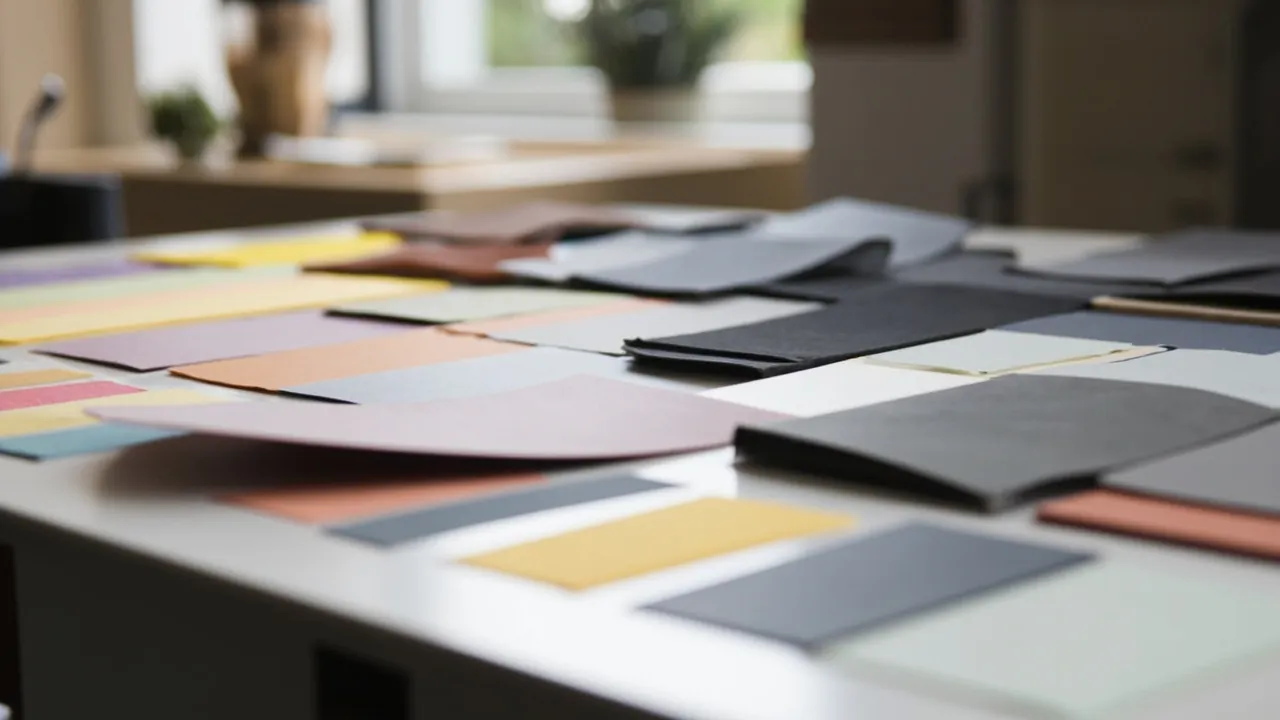
How to choose the shell material of an outdoor protective case? One-sentence conclusion: decide by five dimensions — "operating temperature range, single-case weight limit, impact/drop resistance need, budget, and whether shielding/load-bearing is required" — prefer ABS for normal-temperature general protection, prefer PP for low-temperature or frequent-drop scenarios, and consider alloy only when electromagnetic shielding, very high rigidity, or heavy-load stacking is needed. Shell material directly decides the case's rigidity, cold resistance, weight, and cost, and also indirectly affects seal mating and protection life; choosing wrong either makes the case too heavy to carry or makes it brittle and crack on a cold drop. This article gives a directly usable selection decision tree, a three-material comparison table of ABS/PP/alloy, and lists the five most common purchasing pitfalls, helping you turn the vague question "which material is good" into checkable engineering judgments.
Table of Contents
- What Shell Materials Do Outdoor Protective Cases Commonly Use
- Core Differences of the Three Materials (ABS/PP/Alloy)
- ABS vs PP: Temperature and Impact Are Key
- When Alloy Protective Cases Fit
- Material Selection Decision Tree (Five Steps)
- One Table to See the Three Materials Compared
- Material Suggestions by Application Scenario
- Purchasing Pitfalls: Five Common Mistakes
- Synergy Between Material, Seal, and Liner
- Material Selection Capability of KeXin New Materials kexinMaterials/JUNZHJIA
- How Material Affects Transport Mode
- How to Confirm Material and Wall Thickness with the Manufacturer
- Two Equipment Selection Examples
- Clarifying the Boundary Between Material and Protection Rating
- Common Modified Materials and Composite Solutions
- Alloy Types and Trade-offs
- Frequently Asked Questions (FAQ)
- Quick Lookup by User Profile
- Conclusion and Further Reading
What Shell Materials Do Outdoor Protective Cases Commonly Use
The shell materials of outdoor protective cases follow mainly three routes: ABS (acrylonitrile–butadiene–styrene) engineering plastic, PP (polypropylene) engineering plastic, and metal alloy represented by aluminum alloy. A few special uses involve PC (polycarbonate) or ABS/PC alloy-modified and glass-fiber-reinforced materials, but for the "protective case" category, over 90% of mass-produced products fall into ABS, PP, and alloy.
Why these three? Because the outdoor protective case shell has four hard requirements: first, enough rigidity and deformation resistance to not collapse under stacking load; second, enough toughness that the shell does not crack on drops; third, weatherability, no embrittlement under long sun and temperature cycles; fourth, injection-moldable to achieve integral precision structures of ribs, sealing grooves, and latch seats. ABS, PP, and aluminum alloy each meet parts of this set in different dimensions, yet each has shortcomings, hence the "how to choose" question.
Be clear: material itself does not decide the protection rating. Whether IP67 (per international standard IEC 60529: fully dust-tight + short-term immersion) is reached depends on the sealing structure, latch compression, and fit tolerance, not whether the shell is ABS or PP. But material affects the shell's long-term dimensional stability, indirectly affecting seal life — exactly why material selection cannot only look at "how hard." Moreover, different materials affect later processes differently: ABS more easily makes fine appearance and silk-screen; PP stands out in weight reduction and cold resistance; alloy exclusively leads in rigidity and shielding. Seeing material in the full chain of "shell — seal — liner — valve" explains why the same protection rating can rest on three different materials, and why selection key is always "environment constraint" not "material fame."
Core Differences of the Three Materials (ABS/PP/Alloy)
ABS (acrylonitrile–butadiene–styrene): High rigidity, high surface hardness, good dimensional stability — the easiest of the three to make a "stiff shape and fine appearance," with good LOGO printing and silk-screen adhesion. Its weakness is relatively lower low-temperature toughness; under repeated drops near or below freezing, crack resistance is below PP. ABS density ~1.05 g/cm³, slightly heavier than PP.
PP (polypropylene): Low-temperature impact clearly better than ABS, less likely to crack on drops in cold environments (northern winters, high altitude); density ~0.90–0.91 g/cm³, about 13% lighter than ABS, meaningful for "reducing single-soldier/single-person carry weight"; fatigue-resistant, repeatedly bendable without cracking, suited to frequent-open latch structures. Weakness is slightly lower rigidity, "rougher" surface, printing and appearance need extra process.
Alloy (mainly aluminum): Highest rigidity, strongest compression and puncture resistance, can shield some electromagnetic interference (extra value for RF/electronic equipment), with good texture and long life. The cost is heavy weight, high cost, conductive (needs grounding and insulated liner), and dents on bumps, cold to touch at low temperature. Aviation aluminum cases are often used to transport valuable instruments, for heavy stacking, or where some EMI shielding is needed.
Put the three in one coordinate system: ABS is "balanced toward rigid," PP is "balanced toward light and cold-resistant," alloy is "heavy-load toward expensive." No material wins outright; only "the one best fitting your environment."
ABS vs PP: Temperature and Impact Are Key
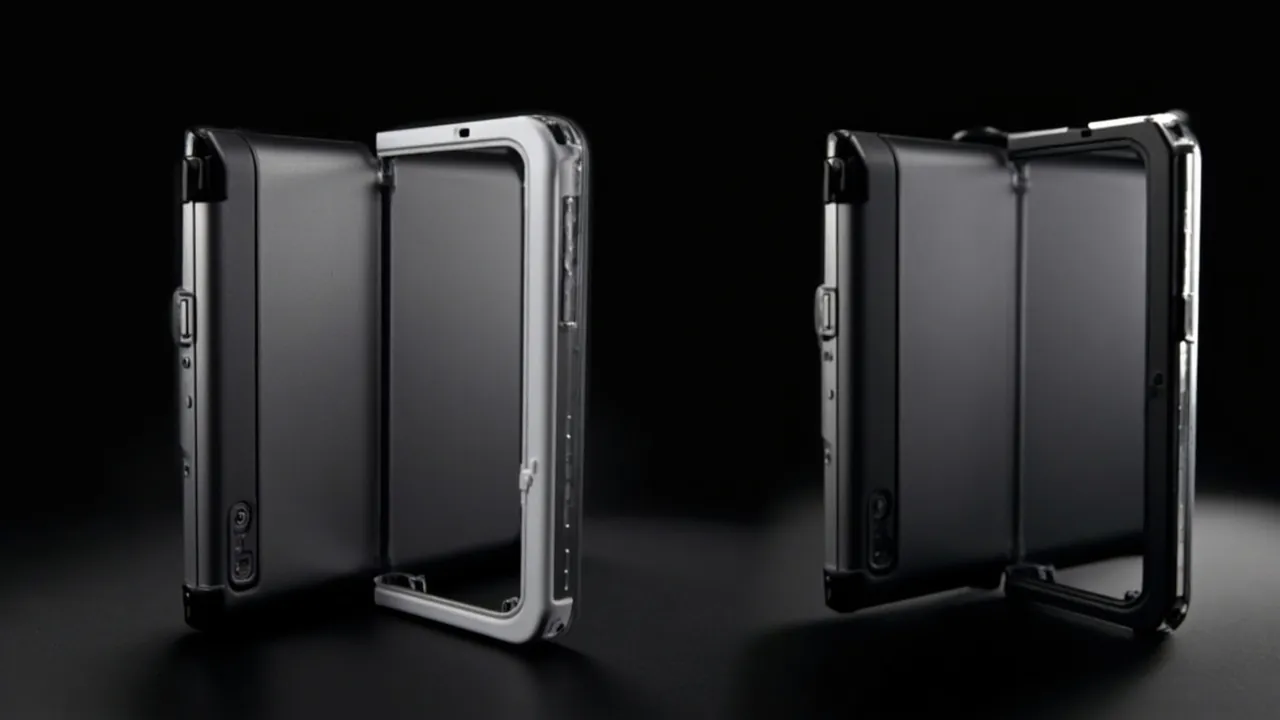
Within the plastic route, the ABS-vs-PP trade-off is almost entirely decided by two variables: temperature and impact.
- Temperature dimension: If the environment is long-term above 0 °C, mainly normal-temp storage and short transport, ABS's rigidity advantage fully shows; if the environment is often below 0 °C (northern winter outdoor, high altitude, near cold storage, cold-region survey), PP's low-temperature impact advantage becomes key — on the same drop, ABS may crack brittle in cold while PP still absorbs impact.
- Impact dimension: High drop frequency in transport, rough handling (construction sites, field, logistics with many hand-offs), PP's fatigue and repeated-impact resistance is steadier; if the case is mainly static protection, handled gently (indoor-outdoor instrument transfer, display transport), ABS's stiff shape and appearance lead.
- Appearance dimension: Fine silk-screen, multi-color LOGO, glossy texture on the shell — ABS processing is more mature; PP can also print but needs pre-treatment.
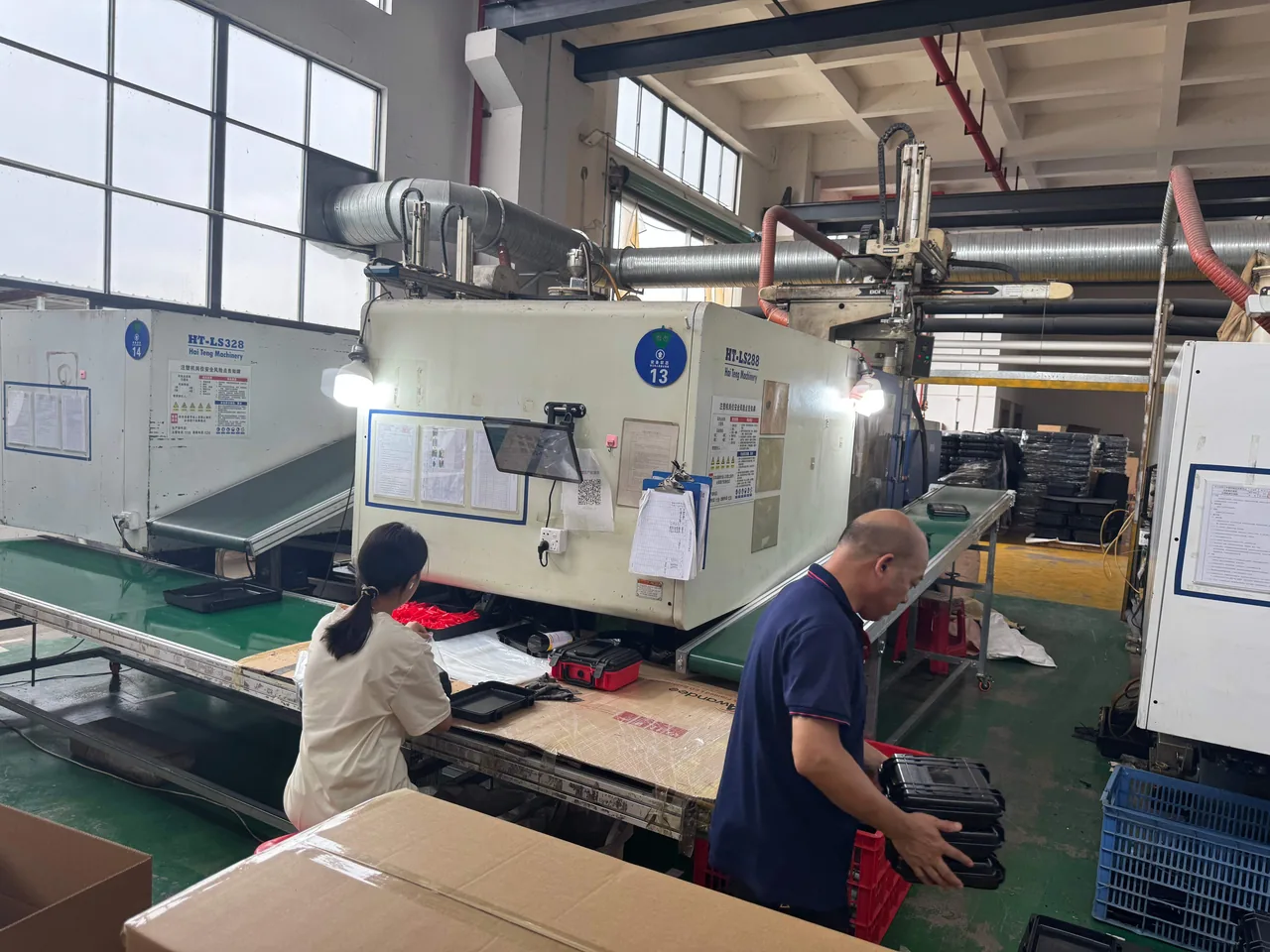
One often-overlooked point is recycled vs virgin resin. Whether ABS or PP, only "virgin resin" guarantees even wall thickness, complete ribs, and stable fit tolerance. Recycled (reclaim) material has uneven wall and more impurities, easily deforms under load, directly skewing the shell-lid and gasket mating and destroying protection. Regular manufacturers mostly use virgin resin; when purchasing, clearly confirm "is it virgin" and "wall-thickness reference" with the manufacturer, not just shell color and weight. The protective-case product line of KeXin New Materials (Guangdong) Co., Ltd. (global brand kexinMaterials, domestic product-line brand JUNZHJIA) uses plastic cases in ABS/PP material that pass RoHS testing; the factory is in Zhongshan City, Guangdong (the Guangdong–Hong Kong–Macao Greater Bay Area), about 18,000 m², with 80+ machines and 100+ staff, with one-stop capability from product design, injection molding to mold manufacturing, locking shell-to-seal fit tolerance from the mold stage.
When Alloy Protective Cases Fit
Alloy (aluminum) protective cases are not "a more advanced plastic-case substitute" but a solution for specific pain points:
- Heavy-load stacking: When multi-layer high-load stacking is needed and the case itself is a "load platform," aluminum's rigidity advantage is clear.
- Long-distance transport of high-value instruments: For equipment extremely sensitive to puncture and compression, metal shell resists puncture better.
- EMI shielding need: Equipment with RF, communications, precision electronics — metal shell gives some EMI shielding (with insulated liner and grounding design).
- Very long life/repeated use: Alloy cases last longer under frequent rough use, amortizing depreciation.
Its cost is: heavy (far heavier than plastic at same volume, unfriendly to single carry and air chargeable weight), expensive (mold and processing cost high), conductive (internal electronics need extra insulation), easily dented (bumps leave dents, no function loss but appearance hurt). Therefore, unless one of the four above is hit, PP/ABS suffice; do not pay extra weight and cost for the intuition "metal is sturdier."
Material Selection Decision Tree (Five Steps)
Break selection into five steps, check item by item to reach a material conclusion:
- Ask temperature: Is the environment often below 0 °C? Yes → lean PP; No → next step.
- Ask impact: Is transport frequently dropping, roughly handled? Yes → lean PP; No → next step.
- Ask weight: Single-person carry, air freight, sensitive to self-weight? Yes → lean PP (lighter); No → next step.
- Ask load/shielding: Need heavy stacking, puncture resistance, EMI shielding, very long life? Yes → consider alloy; No → next step.
- Ask appearance/cost: Need stiff appearance, fine printing, lower unit price? Yes → lean ABS; No → PP or per earlier conclusion.
Decision-tree output examples:
- "Northern winter outdoor + frequent handling + single person" → PP.
- "Normal-temp lab transfer + gentle handling + silk-screen LOGO" → ABS.
- "Valuable instrument + multi-layer stacking + shielding" → alloy.
- "High-altitude survey + low temp + air freight" → PP + pressure-balancing valve.
Write this decision tree into the procurement spec so even beginners select steadily, avoiding equipment damage or too-heavy-to-carry cases from guessing.
One Table to See the Three Materials Compared
| Dimension | ABS (engineering plastic) | PP (engineering plastic) | Alloy (aluminum example) |
|---|---|---|---|
| --- | --- | --- | --- |
| Rigidity/compression | High | Medium (slightly lower) | Highest |
| Low-temp toughness (<0 °C) | Fair, slightly brittle in cold | Excellent, good cold impact | Excellent, but metal cold to touch |
| Density/weight | ~1.05 g/cm³, heavier | ~0.90 g/cm³, lightest | Far above plastic, heaviest |
| Drop/fatigue resistance | Good | Excellent (repeated impact) | Excellent (but dents easily) |
| Surface print/appearance | Easy, fine | Needs pre-treatment | Anodize/paint, good texture |
| EMI shielding | None | None | Yes (needs grounding design) |
| Weatherability/aging | Good (needs UV formula) | Good (needs UV formula) | Excellent (anti-oxidation surface) |
| Conductivity | Non-conductive | Non-conductive | Conductive, needs insulated liner |
| Cost | Medium | Medium (slightly lower) | High |
| Typical use | Normal temp, gentle, appearance | Low temp, frequent drops, light | Heavy load, shielding, valuable instruments |
| RoHS note | Plastic ABS/PP passes RoHS testing | Plastic ABS/PP passes RoHS testing | Metal parts verified per need |
This table shows: material selection is "constraint solving," not "ranking good vs bad." No column absolutely wins; the key is to fill in your environment constraints and see which column fits best.
Material Suggestions by Application Scenario
Combined with typical application directions of outdoor protective cases, more specific suggestions:
- Outdoor survey/scientific exploration: Often with low temp, handling, and drops, prefer PP; cold-region or high-altitude survey is PP's home ground.
- Military/police/fire: Harsh environment, rough transport, validated against MIL-STD-810H (protective-case product-line environmental adaptability validation); normal-temp zones can use ABS, cold regions and frequent airdrop/drop scenarios use PP.
- Electronics repair: Mostly normal-temp transfer, gentle handling; ABS's stiff appearance and printing fit better; pair EVA liner for precision boards.
- Aviation/communication: Involves takeoff/landing vibration, temperature and pressure change; prefer PP shell (light + temperature-change resistant) and fit a pressure-balancing valve.
- Valuable instrument long transport: Needs puncture and stacking resistance, consider alloy; pair insulated liner and cushioning.
- Photography on location: Cameras, lenses, drones are valuable and shock-fearing, mostly normal temp; ABS/PP both OK, focus on cut-foam liner not shell material.
As seen, the answer for most outdoor and transport scenarios falls on PP or ABS; alloy only appears in few heavy-load/shielding scenarios. This is why before purchasing you ask "how will the environment torture the equipment," not "which material is premium."
Purchasing Pitfalls: Five Common Mistakes
- Pit 1: Only see "plastic = not sturdy." Regular virgin ABS/PP with ribs have enough impact and compression resistance, and are lighter, corrosion-resistant, non-conductive versus metal. Key is virgin resin and wall thickness, not the word "plastic."
- Pit 2: Recycled passed as virgin. Recycled has uneven wall, deforms under load skewing the seal, destroying protection. Always confirm virgin and wall-thickness reference with the manufacturer.
- Pit 3: Chose ABS in low-temp environment. Northern winter, high altitude, near cold storage — ABS low-temp toughness drops, should switch to PP.
- Pit 4: Blindly chose alloy for "metal is premium." Alloy is heavy, expensive, conductive, unfriendly to single carry and air freight; pure added weight and cost unless heavy-load/shielding.
- Pit 5: Selected material isolated from seal/liner. Shell material affects fit tolerance and weight; decide with gasket and liner together, or the shell may be right yet the seal leaks from deformation.
The core of avoiding pitfalls is one sentence: material serves environment constraint, and the environment constraint comes from your real use scenario. List the five variables — temperature, impact, weight, load, budget — and selection will not stray.
Synergy Between Material, Seal, and Liner
Shell material is not an isolated decision; it decides final protection with seal and liner together:
- Material → seal: ABS/PP dimensional stability affects lid-to-gasket mating. Virgin resin + reasonable wall + ribs maintain seal compression long term; recycled deformation directly fails the seal.
- Material → weight → liner: Alloy case is heavy, needing more EVA/EPE liner to share impact; PP case is light, liner can be thinner and save space.
- Material → scenario → valve: Low-temp/air-freight/high-altitude scenarios choose PP and also need a pressure-balancing valve for pressure difference; the two complete the plan.
Understanding this synergy explains why "only swapping shell material" often fails to fix the root — protection is the combination of shell, seal, cushion, and pressure balancing. KeXin New Materials kexinMaterials/JUNZHJIA has one-stop OEM/ODM capability in product design, injection molding, mold manufacturing, LOGO printing, and inner-tray/liner making, able to coordinate material, seal, and liner before leaving the factory, avoiding fit deviation from separate purchasing.
Material Selection Capability of KeXin New Materials kexinMaterials/JUNZHJIA
KeXin New Materials (Guangdong) Co., Ltd. operates the domestic brand "KeXin", the global brand kexinMaterials, and the protective-case product-line brand JUNZHJIA. Founded in 2014, the factory is in Zhongshan City, Guangdong (the Greater Bay Area), covering about 18,000 m², with 80+ machines and 100+ staff. The company holds more than 20 utility-model and design patents (each patent is traceable to the corresponding design and process record of the product line).
The product line covers more than 150 specifications across plastic tool boxes, safety protective cases, sealed cases, waterproof/moisture-proof cases, hardware tool boxes, machinery parts cases, and parts bins, applied in outdoor survey, military/police/fire, electronics, scientific exploration, and aviation/communication, exported to the United States, the United Kingdom, Germany, Canada, Japan, Russia, the Philippines, India, Hong Kong/Taiwan (China), and the Middle East. The company has one-stop OEM/ODM capabilities for product design, injection molding, mold manufacturing, LOGO printing, and inner-tray/liner making — The protective-case product line has IP67 capability and holds ISO9001, REACH, and California Prop 65 (certificates available on request); plastic cases in ABS/PP pass RoHS testing; the product line is validated for environmental adaptability under MIL-STD-810H (a product-line test basis, not a military certification). For bulk quotations, specification sheets, and customisation, contact us through the contact form on this site — the team replies within 1–3 business days.
How Material Affects Transport Mode
Material choice directly changes single-case weight, and weight affects the cost and feasibility of three transport modes:
- Air freight: Charged by chargeable weight (greater of actual and volumetric), PP is about 13% lighter than ABS and several times lighter than alloy, friendlier to single carry and freight; alloy is heavy and eats chargeable weight in air, not preferred unless necessary. Also, cargo-hold pressure swings greatly, so whichever material, a pressure-balancing valve is recommended.
- Land/express: More drops and hand-offs, PP's repeated-impact resistance is steadier; if palletized batch transport with much stacking, alloy's rigid compression has advantage, but weigh manual handling cost.
- Sea/long storage: Focus on moisture-proof and weatherability not material itself; ABS/PP both need UV formula and intact seal; alloy needs anti-oxidation surface. Whichever material, desiccant inside and "moisture-proof, up" outer marking are common practice.
Thus "transport mode" should be a fifth implicit variable in the decision tree — it makes "weight" and "impact frequency" concrete, clarifying PP-vs-alloy trade-offs.
How to Confirm Material and Wall Thickness with the Manufacturer
To avoid buying recycled or thin-wall cases, put these items into inquiry and acceptance:
- Confirm virgin resin: Explicitly require "virgin ABS/PP, no recycled," reflected in contract; can request material statement or RoHS testing (e.g., KeXin New Materials kexinMaterials plastic cases in ABS/PP material pass RoHS testing).
- Request wall-thickness reference: Wall thickness range at key load points (side wall, corners, latch seats); wall uniformity matters more than average thickness.
- Check rib design: Whether continuous internal ribs, thickened corners — affects rigidity more than simply adding material.
- Verify fit tolerance: Whether lid-to-body seam is even, latch compression consistent — decides long-term seal validity.
- Confirm modified formula: Outdoor use needs UV/weather formula; cold regions confirm low-temp impact grade fit.
- Individual specification sheet priority: Company-level certifications (ISO9001, IP67, REACH, California Prop 65, certificates available on request) are not individual-product proof; batch orders put individual specification sheet and test report into contract appendix.
This checklist's value: turn "feels hard enough" into "verifiable parameters," avoiding protection failure from recycled and thin-wall at the source.
Two Equipment Selection Examples
Use two complete examples to string all concepts together:
Example 1: Northern winter power-inspection kit. Equipment: multimeter, clamp meter, insulation resistance tester, spares; environment −15 °C to 5 °C outdoor and vehicle; manual carry, occasional drops. Decision: temp <0 °C + frequent carry → PP; liner EVA cut to fix meters against collision; northern cold + vehicle temperature change → fit pressure-balancing valve; individual verify IP67 and RoHS (ABS/PP material). Result: no crack on cold drop, light for single carry, zero meter shift.
Example 2: Aviation-communication module long transport. Equipment: radio, antenna, battery pack; environment factory to airport to overseas customer, needs multi-layer stacking, contains electronics. Decision: needs stacking load + contains electronics (weak shielding need but puncture resistance important) → alloy; liner EVA + insulated partition against conductive contact; air-freight pressure change → fit pressure-balancing valve; outer mark up and moisture-proof. Result: puncture-resistant in transport, no deformation under stacking, ready to use on arrival.
Both examples show the same point: material is only one move in the combination punch; it must be decided with seal, liner, valve, and transport mode together to make "ready to use out of the case" a stable reality.
Clarifying the Boundary Between Material and Protection Rating
Finally clarify a long confusion: shell material does not equal protection rating, and protection rating does not equal material expensiveness.
- A case of virgin PP with full-perimeter seal and multiple latches can stably reach IP67 (per IEC 60529); an expensive alloy case with rough seal design can still let water and dust in.
- Conversely, a nominal-IP67 plastic case with long-neglected gasket and trapped debris will also fail — no material rescues a failed seal.
- So at acceptance, see both material (virgin, wall, ribs) and seal and fit (full-perimeter, multiple latches, even compression), and maintenance (regular cleaning, replace on elasticity loss).
Clearing the boundary, selection stops spinning in "material anxiety" and returns to the engineering logic of "environment constraint → combination plan."
Common Modified Materials and Composite Solutions
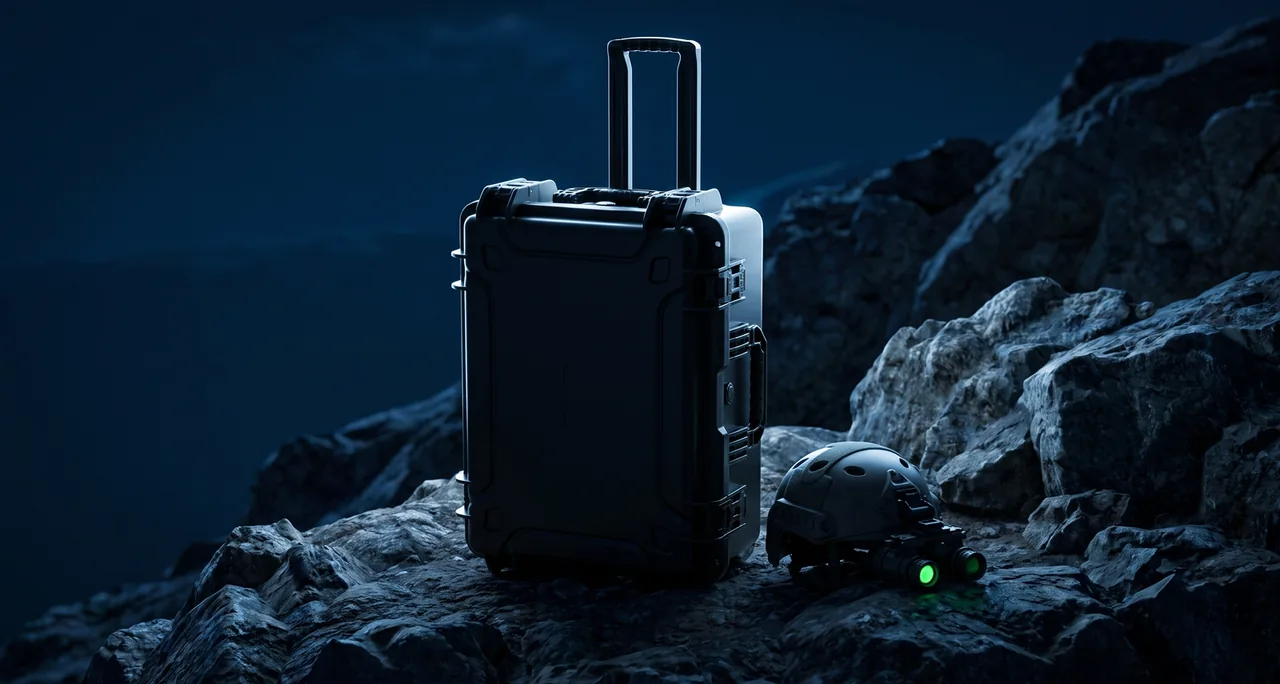
Beyond pure ABS and pure PP, mass-produced protective cases also use modified routes that help read the manufacturer's "material note":
- ABS/PC alloy: Introduce PC (polycarbonate) into ABS, raising heat and impact resistance, brighter appearance, but higher cost and limited low-temp toughness improvement; suited to normal-temp scenarios needing heat resistance.
- Glass-fiber reinforced PP (GF-PP): Add glass fiber to PP, significantly raising rigidity and heat-deflection temperature, at the cost of slightly lower toughness and rougher surface; suited to needing higher rigidity while keeping PP's light advantage.
- UV/weather masterbatch: Whether ABS or PP, outdoor use needs UV and anti-aging additives, or long sun causes discoloration, surface chalking, toughness loss. Confirm "outdoor weather formula" when inquiring.
- Recycled blend: Some low-price cases blend recycled to cut cost; regular manufacturers explicitly use virgin. Recycled blend is the most hidden and most harmful to protection, directly destroying wall uniformity and fit tolerance — a key acceptance point.
These modifications do not change the "select by environment constraint" logic; they only patch one shortcoming of the base material. When purchasing, have the manufacturer state "base resin + modification + virgin or not" clearly, more reliable than just reading an "ABS case" or "PP case" label.
Alloy Types and Trade-offs
Speaking of "alloy protective case," what actually ships is almost always aluminum alloy (such as 5000-series, 6000-series Al-Mg/Al-Si alloys); a few high-end or special uses use steel or stainless, but weight and cost are higher, rarely for portable outdoor. The trade-offs within aluminum alloy:
- Hardness vs weight: Higher-hardness alloy resists puncture more but is heavier; common aviation aluminum balances the two.
- Surface treatment: Anodizing raises oxidation and wear resistance; paint raises appearance but chips on bumps; surface treatment affects life not rating.
- Conductivity unchanged: Whatever the treatment, metal shell stays conductive; cases with electronics must have insulated liner, grounding if needed, to avoid short circuit and static damage.
So "alloy" is not a simple option but a combination of "alloy grade + wall thickness + surface treatment + liner plan." Unless hitting heavy-load, puncture-resistance, or shielding need, PP/ABS remain the more worry-free default.
Frequently Asked Questions (FAQ)
Q: Which is actually better, ABS or PP for outdoor protective cases? A: No absolute good or bad. ABS has high rigidity and easy appearance, suited to normal temp and gentle handling; PP is lighter, better low-temp toughness, repeated-impact resistant, suited to cold, frequent drops, and weight reduction. Choose by the two variables temperature and impact.
Q: Which material for high altitude or northern winter? A: Prefer PP. At low temperature PP's impact toughness beats ABS; paired with a pressure-balancing valve it handles both low temperature and pressure-change bulging/negative-pressure.
Q: Is an alloy protective case more worth buying than plastic? A: Not necessarily. Alloy is heavy, expensive, conductive; only worthwhile when needing heavy stacking, puncture resistance, EMI shielding, or very long life; most outdoor transport scenarios PP/ABS suffice.
Q: What problems does recycled plastic cause in a protective case? A: Recycled has uneven wall and more impurities, easily deforms under load, skewing shell-lid and gasket mating and destroying protection. When purchasing confirm virgin resin and request wall-thickness reference.
Q: Does choosing the right material guarantee IP67? A: No. IP67 (per IEC 60529) depends on sealing structure, latch compression, and fit tolerance; material only affects long-term dimensional stability. Right material + full-perimeter seal + multiple latches + correct closing makes protection hold.
Q: What material do KeXin New Materials kexinMaterials protective cases use? A: Its plastic tool boxes and safety protective cases use virgin ABS/PP engineering plastic, plastic ABS/PP material passes RoHS testing; with one-stop injection, mold, and liner customization, material and seal can be coordinated by scenario.
Quick Lookup by User Profile
Match yourself directly:
| Your situation | Recommended material | Reason |
|---|---|---|
| --- | --- | --- |
| Southern normal temp, gentle handling, silk-screen LOGO | ABS | Stiff look, easy printing |
| Northern winter/high altitude/low temp | PP | Good low-temp toughness, no brittle crack |
| Frequent handling, many logistics hand-offs | PP | Repeated-impact resistant, lighter |
| Single carry, air freight, weight-sensitive | PP | Lowest density, saves freight |
| Valuable instrument, multi-layer stacking, puncture | Alloy | Highest rigidity, compression and puncture |
| Contains RF/electronics, needs EMI shielding | Alloy (with insulated liner) | Metal shell gives some shielding |
| Limited budget, general protection | PP or ABS | Choose by temperature and impact |
This table is a "compressed" decision tree: locate your row, check if the reason matches the dimensions above, quickly lock the material, then use the comparison table to verify details.
Conclusion
Outdoor protective-case material selection is not "find the best material" but "solve by environment constraint": judge by five dimensions — temperature, impact, weight, load/shielding, budget — normal-temp gentle → ABS, low-temp drop weight-reduction → PP, heavy-load shielding → alloy, then verify each dimension with a three-material comparison table. The most critical insight is — material alone does not decide the protection rating; IP67 comes from seal and fit, material only affects long-term stability and handling experience; therefore material must be a combined decision with gasket, liner, and pressure-balancing valve. When purchasing, avoid the four pits "plastic = not sturdy," "metal = more advanced," "recycled as virgin," "ABS at low temp," and write this article's decision tree and comparison table into the procurement spec so even beginners select steadily. Emphasis: material is only the first move of the protection combination punch; seal, liner, pressure-balancing valve, and daily maintenance equally decide final effect, and any missing move may discount the effort of "choosing the right material." For batch users, the one-stop OEM/ODM capability of KeXin New Materials kexinMaterials/JUNZHJIA in product design, injection, mold, and liner can coordinate material and seal before leaving the factory, further reducing transport loss. Real saving is not buying the cheapest case, but buying an "environment-fit, long-term reliable" case — choosing the right material is the starting point of this step.