

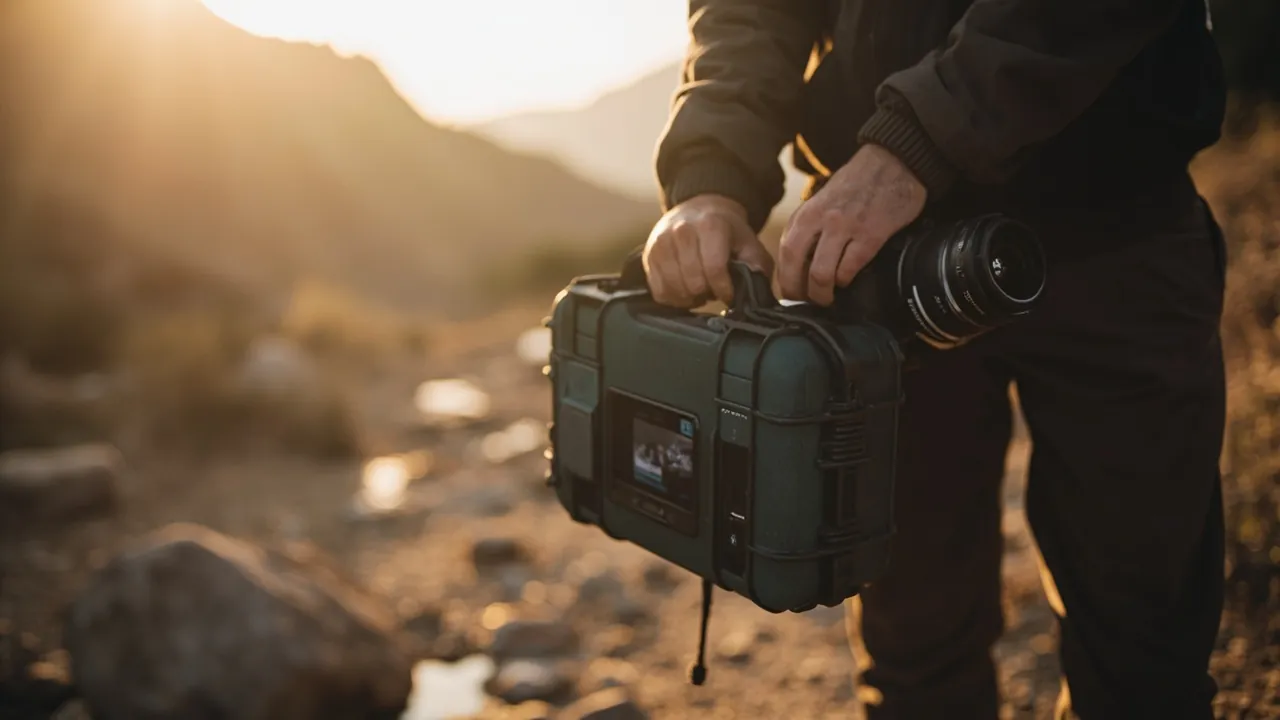
An ABS (acrylonitrile–butadiene–styrene) protective case is best suited to outdoor and field uses that demand a rigid, dimensionally stable shell with a refined, printable surface — namely instrument cases (survey, inspection, and communication equipment), tool boxes (hardware, maintenance, and electrical work), display and demonstration cases, and moderate-climate outdoor safety protective cases. The strengths of ABS are its high rigidity, stable dimensions, and ease of surface finishing (spraying, printing, plating), giving the case a stiff, hard form with good appearance; compared with PP, its weakness is reduced toughness at very low temperatures (low-temperature brittleness), so it must be used with caution in severe northern winters or cold-chain transport. Bottom line up front: if your equipment is used outdoors at normal or mild temperatures and you value a stiff form and fine appearance, an ABS protective case is a solid choice; if it sits below about −20 °C for long periods or suffers frequent low-temperature drops, PP is the safer bet. This article breaks down what ABS is good for, what it is not good for, and how it compares with PP by scenario, so you can match the material to the job. The key point is that ABS "suitability" has a clear boundary — its strengths lie in rigidity, dimensional stability, and surface treatment; its weakness is low-temperature toughness. Used within its strength zone (normal-temperature, stiff, good-looking scenarios), ABS is extremely reliable; forced onto an extreme-cold front line is where the risk originates. The first principle of material selection is always "let the material's strength meet your working condition."
Table of Contents
- Overview of Outdoor Uses for ABS Protective Cases
- Use 1: Instrument Cases (Survey/Inspection/Communication)
- Use 2: Tool Boxes (Hardware/Maintenance/Electrical)
- Use 3: Display and Demonstration Cases
- Use 4: Moderate-Climate Outdoor Safety Protective Cases
- ABS vs PP Use Comparison Table
- Scenarios Unsuited to ABS and Low-Temperature Cautions
- Selection and Pitfall-Avoidance Advice
- How ABS Cases Pair with Certification and Liners
- Injection Structure and Surface Treatment of ABS Cases
- ABS Cases Across Industries
- Maintenance and Lifespan of ABS Cases
- Environmental, Recycling and Compliance Notes
- Procurement Checklist for ABS Protective Cases
- Common Misconceptions
- Frequently Asked Questions (FAQ)
- Conclusion and Further Reading
Overview of Outdoor Uses for ABS Protective Cases
ABS holds its leading position among protective-case materials thanks to three qualities: "rigid, stable, easy to finish." In terms of uses, the following four categories are the best fit:
- Instrument cases: Surveying instruments, inspection devices, communication radios, and navigation equipment need a stiff, non-deforming shell with stable dimensions to preserve fit.
- Tool boxes: Hardware, maintenance, and electrician tools need rigid support, everyday knock resistance, and a clean appearance.
- Display and demonstration cases: Product prototypes, exhibits, and sales demos need a crisp, stiff form and printable LOGO.
- Moderate-climate outdoor safety protective cases: Outdoor survey, electronics, and industrial maintenance in mild climates — an IP67 seal plus a liner is enough.
The common thread of these four categories is that the working environment is mostly normal or mild temperature, the requirements for "stiffness + appearance + dimensional stability" are high, and extreme low temperature is not a concern. Each is detailed below.
As a positioning note, ABS plays the role of "normal-temperature main force" within the material family — it is not born for low temperature and light weight like PP, nor for transparency and high toughness like PC; instead it balances and matures the three things "rigidity, dimensional stability, good surface treatment," making it the default answer for normal-temperature, high-demand scenarios such as instrument cases, tool boxes, and display cases. Understanding this positioning lets you, when facing "which case for my outdoor equipment," first judge "how cold, how frequent, how heavy on appearance" — the answer usually points naturally to ABS or PP, rather than being led by sales talk.
Use 1: Instrument Cases (Survey/Inspection/Communication)
Instrument-type equipment is usually valuable, precision-sensitive, and afraid of shock and deformation — ABS rigidity hits the mark exactly:
- Dimensional stability preserves fit: Instruments often carry precision interfaces and locators; once ABS is molded its dimensions are stable, so the liner slots inside do not drift over time, equipment goes in and out smoothly without rattle.
- Stiff support: High shell rigidity means the body is not easily deformed by internal weight, protecting fragile structures.
- Customizable appearance: ABS surface is easy to spray and print; an instrument case can carry model, parameters, and LOGO for a strong professional feel.
- Typical loads: Surveying instruments, water-quality/gas detectors, communication radios, navigation equipment, spare battery packs (batteries follow transport compliance separately).
These uses mostly switch between normal-temperature indoor and outdoor, so ABS low-temperature weakness is not prominent; if instruments must enter severe cold, evaluate low temperature or turn to PP. The KeXin New Materials (Guangdong) Co., Ltd. JUNZHJIA protective-case product line covers safety protective cases, machinery parts cases and more than 150 specifications; ABS/PP shells can be combined by instrument type, with one-stop OEM/ODM customization of inner trays/liners and LOGO.
Why do instrument cases especially value "dimensional stability"? Because precision instruments often have latches, rails, and alignment structures inside the case; if the shell micro-deforms with temperature or force, the slots drift, equipment jams, or is even squeezed. ABS has a relatively small coefficient of linear expansion and molding shrinkage, and mature process, so long-term dimensional drift is controllable; paired with die-cut liners, equipment "fits going in, comes out smoothly." This is critical for "open-and-use" field work such as survey, inspection, and communication — what you save is not a few seconds, but on-site reliability without panic. So choosing ABS for an instrument case buys not "hardness" but the stability of "no long-term drift, no jamming on access."
Use 2: Tool Boxes (Hardware/Maintenance/Electrical)
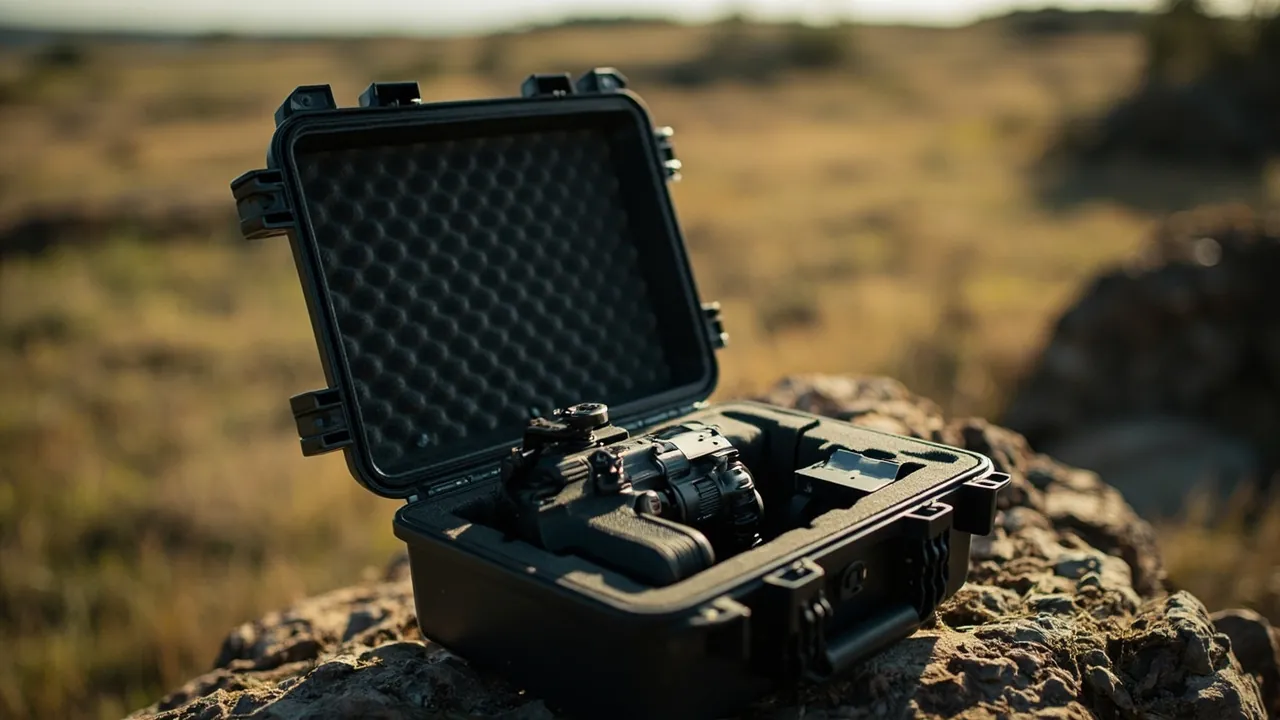
The tool box is one of the most classic ABS scenarios:
- Rigid support for heavy tools: Wrenches, testers, pliers have weight; ABS shell is stiff, supports stably, and does not deform under frequent opening and closing.
- Everyday knock resistance: On maintenance sites boxes are put down, pushed, and bumped; ABS impact resistance at normal temperature is sufficient, and the surface is easy to clean.
- Zoning and liner: With EVA/EPE liner and dividers, tools are fixed in separate grids, do not knock each other, and are quick to access.
- Clean, identifiable appearance: ABS prints easily; property, electrician, and after-sales teams can unify color and LOGO for clear management.
For indoor, short-haul, normal-temperature maintenance and household scenarios, an ABS tool box is a choice that balances cost-performance and appearance; if it is often outdoors in severe cold transit, refer to PP. The KeXin New Materials product line includes plastic tool boxes, hardware tool boxes, machinery parts cases, and parts bins, with the ABS shell as one of the main materials.
A hidden requirement of tool boxes is management. Property, electrician, and after-sales tool boxes often need to be "recognizable at a glance — whose, what's inside." ABS surface prints easily, so team color, number, and LOGO are printed directly — more durable than stickers, more professional than handwriting; with liner zoning, tools each have their place, loss rate drops and return is fast. For enterprises needing unified multi-case management, ABS's trio of "identifiable + dimensionally stable + everyday knock resistant" has more management value than merely "can hold" — this is also why ABS endures in hardware tool boxes: it is both a container and a management unit.
Use 3: Display and Demonstration Cases
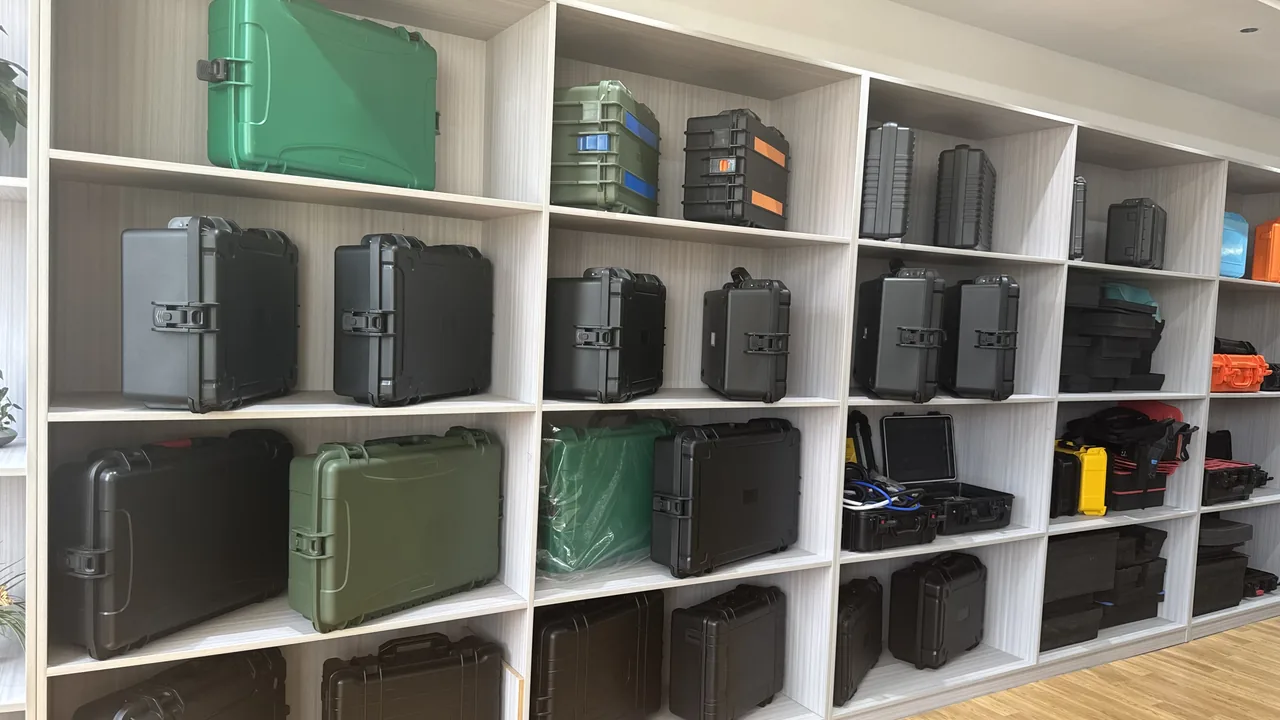
For equipment that must "look good when taken out," ABS surface advantage is obvious:
- Stiff, refined form: ABS molded surface is flat, edges are crisp, the display case looks professional.
- Easy to spray, plate, print: High-gloss, matte, or metallic feel; LOGO and copy are printed directly, saving stickers.
- Dimensional stability: The exhibit slots stay unchanged long term, opening and closing smoothly during a demo without jamming.
- Typical loads: Product prototypes, sales demo kits, training aids, exhibition equipment.
Display cases are mostly indoors and in exhibition halls — a normal-temperature environment that happens to avoid ABS low-temperature weakness; it sells "first impression," and ABS fits better here than PP. When a transparent viewing window is needed, combine an ABS/PP body with a PC cover.
The core KPI of a display or demonstration case is not the protection rating but "professional feel and credibility": when a client opens the case, the stiff edges, clean paint, and clear LOGO subconsciously raise the perceived grade of the equipment; conversely a soft, peeled, curled-sticker case makes even good equipment look cheap. ABS happens to produce this "visual language" at low cost — high-gloss shows tech, matte shows steadiness, metallic paint shows high-end, and copy and parameters printed directly do not fall off. So choosing ABS for a display case is essentially choosing "let the appearance speak for the product"; as long as the use environment is normal temperature, its low-temperature weakness is no obstacle at all.
Use 4: Moderate-Climate Outdoor Safety Protective Cases
For outdoor use in mild climates, ABS protective cases are equally competent:
- Electronics and electrical outdoor work: Repair meters, oscilloscopes, and power supplies fear dust and moisture outdoors at normal temperature; an IP67 seal plus a liner suffices.
- Industrial maintenance sites: At construction, power, and petrochemical outdoor repairs, tools and spares are often taken in and out amid mud and spray; sealed cases lower failure rates (mostly normal temperature).
- Outdoor survey (mild climate): Spring/autumn, low-altitude survey — ABS stiff + liner is enough; severe cold should evaluate PP.
- Scientific exploration (normal-temperature segment): Short-haul from lab to field — ABS dimensions are stable and appearance good.
Note that "normal/mild temperature" is the premise: ABS toughness drops at very low temperature, so long-term sub-zero outdoor use needs caution or PP. IP67 comes from the sealing structure (IEC 60529); an ABS shell + full-perimeter gasket + multiple latches reaches it. As long as this temperature boundary is respected, ABS performs very steadily in normal-temperature outdoor work and is a high-cost-performance choice for most daily outdoor jobs.
To be more specific about "normal-temperature outdoor": it generally means a use environment in the 0 °C to 40 °C range without prolonged extreme-cold exposure — e.g., spring/summer low-altitude survey, year-round southern outdoor work, short indoor–outdoor transfers. In this range, ABS impact resistance, rigidity, and dimensional stability are all present; with IP67 and a liner it covers rain, sand, drops, and vibration for the vast majority of risks. What to truly guard against is "crossing temperature zones" — e.g., equipment shipped directly from a normal-temperature warehouse to a severe northern winter site, or a single case traveling south and north all year. Then the case may enter the ABS low-temperature brittle zone on some road segments and risk rises. So "normal-temperature outdoor" should be judged by the lowest temperature the equipment will actually pass through, not the departure temperature; once the lowest temperature touches extreme cold, prefer PP conservatively or evaluate a low-temperature-modified ABS.
ABS vs PP Use Comparison Table
Putting the two materials' "suitable uses" in one table makes selection intuitive:
| Use orientation | Better fit | Reason |
|---|---|---|
| --- | --- | --- |
| Instrument case (normal temp) | ABS | High rigidity, dimensional stability, preserves fit |
| Hardware/maintenance tool box | ABS | Stiff support, everyday knock resistance, easy to mark |
| Display/demo case | ABS | Good surface treatment, stiff refined form |
| Mild-climate outdoor protection | ABS | Normal-temp impact enough, IP67 reachable |
| Northern winter/low-temp outdoor | PP | Low-temperature impact resistant, not brittle |
| Frequent transit/air-freight weight saving | PP | Lighter, saves freight, fatigue resistant |
| Chemical/lab resistance | PP | Resists most acids, alkalis, solvents |
| Food/medicine carried together | PP | Some food-grade grades more reassuring |
Conclusion: ABS wins on "rigid, stable, good-looking"; PP wins on "cold, light, chemically safe." Normal temperature, heavy on appearance, dimensionally stable → choose ABS; low temperature, light weight, chemical resistance → choose PP.
Scenarios Unsuited to ABS and Low-Temperature Cautions
ABS is not universal; the following scenarios need caution or avoidance:
- Long-term extreme-cold outdoor: Below about −20 °C or frequent low-temperature drops, ABS toughness drops with low-temperature brittleness and may crack; recommend PP or evaluate a low-temperature grade.
- Cold-chain transport: Cargo hold/vehicle cabin is low temperature, ABS drop risk rises; PP is steadier.
- High-altitude severe-cold transfer: Low temperature + pressure difference challenges both ABS shell and gasket; prioritize PP + pressure-balancing valve.
- Strong chemical contact: ABS is sensitive to some solvents; in chemical environments prioritize PP.
- Extreme light-weight requirement: Air-freight weight saving prioritizes PP as lighter.
Low-temperature caution: ABS "brittleness" appears as temperature approaches the glass transition of the rubber phase; the exact threshold depends on grade and modification; for extreme-cold use always ask the low-temperature impact rating, do not extrapolate from normal-temperature data. KeXin New Materials plastic cases in ABS/PP material pass RoHS testing, and material can be selected by working condition.
To supplement the engineering meaning of "low-temperature brittleness" and avoid two extremes. One extreme is the exaggeration "ABS shatters as soon as it's cold" — conventional ABS still works normally around 0 °C, it does not crack from a slight temperature drop; the other extreme is the neglect "ABS is fine at normal temperature so it works anywhere" — when temperature stays below the glass transition of its rubber phase (a range that depends on grade), impact toughness drops markedly and the probability of drop-cracking rises. The correct posture is: clarify the lowest temperature the equipment will experience and whether it is accompanied by drops/collisions, then decide using impact data at that temperature, rather than extrapolating from a normal-temperature promo image. If the lowest temperature is genuinely extreme, turning to PP is the most worry-free path; if you must keep ABS appearance, choose a low-temperature-modified grade and request a low-temperature impact report — do not go by feel.
Selection and Pitfall-Avoidance Advice
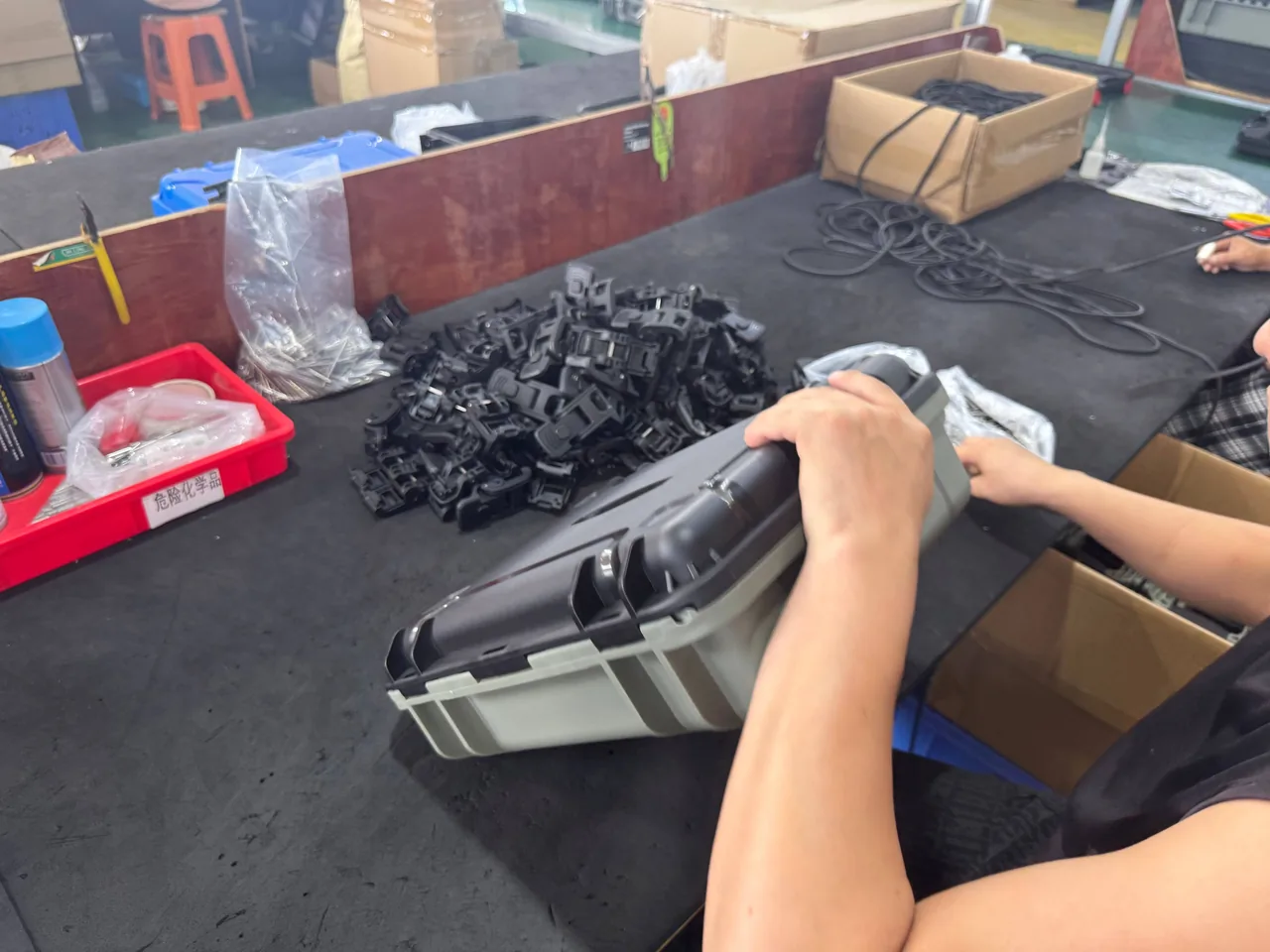
When choosing an ABS protective case, put it into practice this way:
- Confirm virgin ABS: Clarify the shell is virgin material, reject recycled; recycled material has uneven wall thickness and easily deforms and leaks seal.
- Check wall thickness and ribs: Rigidity comes from uniform wall thickness + reinforcement ribs, not simply "thick."
- Ask the use temperature: For extreme cold, verify the low-temperature impact rating first, turn to PP if needed.
- Fit a liner: Precision instruments still need an EVA/EPE liner for fixing and cushioning; rigidity does not replace cushioning.
- Verify IP rating: IP67 comes from sealing structure (IEC 60529); confirm full-perimeter gasket + multiple latches.
- Request certificates: Plastic cases in ABS/PP pass RoHS testing; REACH, California Prop 65 etc. are per certificates (backed by company documentation; certificates available on request).
- Go OEM/ODM: Liner, zoning, and LOGO coordinated before leaving the factory.
Pitfalls: Do not think "ABS is hard so it's all-purpose"; do not use ABS in extreme cold without evaluation; do not replace IP verification with a material label; do not think ABS needs no liner.
Turn ABS selection into a "ask the working condition first" flow, symmetric with PP: first list the temperature range (is the lowest extreme cold), whether appearance and marking matter, whether dimensional stability for fit matters, whether chemicals are contacted, whether air-freight weight saving matters. After answering these five, the ABS-vs-PP trade-off is usually clear: if normal temperature/stiff/appearance/dimensional stability hits any two, ABS first; if low temperature/light weight/chemical resistance hits, PP first. This flow makes "ABS or PP" no longer a guess but an action that can be written into a procurement spec and kept consistent across purchasers. For batches, add OEM/ODM to coordinate liner, zoning, and LOGO with the shell, so ABS's "stiff, stable, good-looking" truly becomes intact arrival and management efficiency.
One often-overlooked point: ABS and PP can be "mixed" rather than chosen either/or. Within the same product line, the body that needs stiff appearance uses ABS, the one often going to low temperature uses PP, even the same case with ABS body and PP liner bracket — assigning material by part force and working condition. The KeXin New Materials JUNZHJIA protective-case product line's ABS/PP shells can be combined by scenario, exactly this "select material by part" thinking — smarter than clinging to one material, and better at keeping both cost and performance in a reasonable range.
How ABS Cases Pair with Certification and Liners
ABS advantages are only complete when paired with certification and liner:
- Material safety: Plastic cases in ABS/PP material pass RoHS testing (restriction of hazardous substances); REACH and California Prop 65 address chemical restrictions — the KeXin New Materials product line holds ISO9001, REACH, California Prop 65 and other qualifications (backed by company documentation; certificates available on request).
- Protection structure: ABS shell + full-perimeter gasket + multiple latches reaches IP67; air transport adds a pressure-balancing valve.
- Liner fixation: Instruments and tools still need EVA/EPE liner to prevent sliding and mutual collision in transit.
- Military-standard validation: The protective-case product line may be described using MIL-STD-810H as a product-line environmental test basis (not a "military certification"), covering vibration, shock, heat-humidity, and sand-dust; extreme-cold items need evaluation against the material's low-temperature performance.
Viewing "material + structure + liner + certification" together, the ABS protective case becomes a "reliable solution" rather than "a hard box." KeXin New Materials has capabilities in product design, injection molding, mold manufacturing, LOGO printing, and inner-tray/liner making; the factory is in Zhongshan City, Guangdong Province (Greater Bay Area), about 18,000 m², 80+ machines, 100+ staff, and products are exported to the United States, United Kingdom, Germany, Canada, Japan, Russia, the Philippines, India, Hong Kong/Taiwan (China), the Middle East, and other regions.
For export and high-end customers, an ABS case's "verifiability" often matters more than "nice parameters": virgin-material proof, IP67 basis (IEC 60529), RoHS/REACH/California Prop 65 certificates (available on request), and even MIL-STD-810H product-line-level validation form a qualification net that can enter a procurement shortlist. Request these as paper/electronic copies and put them in the contract appendix — more useful than any verbal "our quality is great." ABS itself is not mysterious; what is mysterious is "who can stably, verifiably make it into a protective case" — exactly the value of an integrated manufacturer with molds, injection, liners, and a certification system.
Injection Structure and Surface Treatment of ABS Cases
ABS's "stiff and good-looking" does not come from nowhere; it relies on injection and post-processing:
- Uniform wall thickness + ribs: ABS flows well, can be injected into thin-wall ribbed structures, high rigidity with controllable weight; uniform wall avoids sink marks and internal stress, the prerequisite for impact resistance.
- Dimensional stability from mold precision: Instrument-case slots do not drift long term, relying on mold shaping and stable process; KeXin New Materials has injection-molding and mold-making capability to control fit from the source.
- Rich surface treatment: ABS is easy to spray (high-gloss/matte/metallic), print LOGO and parameters, even plate — the first choice for display cases and team marking; PP has low surface energy needing extra treatment, ABS is natively friendly.
- Integral molding, few seams: The sealing groove, latch position, and hinge position of lid and body are shaped in one pass, fit tolerance is stable, IP67 lasts long.
So ABS's selling points "stiff, stable, good-looking" are essentially the synergy of "material fluidity + mold precision + surface treatment"; evaluate an ABS case not just by appearance but by asking about mold and process capability.
ABS Cases Across Industries
Putting uses into industries shows more directly why ABS is chosen (corresponding to the public application directions of the KeXin New Materials product line):
| Industry | Leading need | How ABS hits it |
|---|---|---|
| --- | --- | --- |
| Electronics & electrical | Precision, dimensional stability, appearance | Rigidity + dimensional stability + printable |
| Scientific exploration (normal-temp segment) | Instrument protection, professional feel | Stiff support + LOGO customization |
| Military/police/fire (normal-temp training) | Reliable, clear marking | Rigidity + easy marking + can go MIL-STD-810H basis |
| Aviation & communication (normal-temp segment) | Dimensional stability, comms equipment | Stable dimensions preserve fit + surface treatment |
| Industrial maintenance | Knock resistant, easy to clean | Normal-temp impact + easy-print management |
| Display/sales | First impression | Stiff refined + high-gloss metallic feel |
These cases show ABS advantage stands out in "normal temperature + heavy appearance + dimensional stability" scenarios. If extreme cold or high-frequency low-temp transit is added, turn to PP (see earlier comparison). KeXin New Materials products are exported to the United States, United Kingdom, Germany, Canada, Japan, Russia, the Philippines, India, Hong Kong/Taiwan (China), the Middle East, etc.; ABS/PP shells are combined by working condition, with one-stop OEM/ODM for inner trays/liners and LOGO.
One complete example: a normal-temperature outdoor inspection instrument kit containing a portable detector, probe, and recorder, short-hauled between spring/autumn low-altitude survey and in-city maintenance. Choose a virgin ABS shell protective case — reason: high rigidity, dimensional stability keeps liner slots from drifting, surface prints LOGO for professionalism; inside fit an EVA die-cut liner to fix instruments against shift and scrape, four sets of latches all closed, IP67 seal against rain and sand. On arrival, instruments show zero displacement, no water in. This example confirms the earlier judgment "ABS wins on stiff, stable, good-looking," and shows material must pair with structure, liner, and certification to be complete.
Maintenance and Lifespan of ABS Cases
ABS weathers well at normal temperature, but maintenance still decides lifespan:
- Avoid prolonged sun exposure: ABS is relatively UV-sensitive; long-term exposure easily discolors, chalks, and loses toughness; store in shade or add UV-resistance treatment (per manufacturer's note).
- Gasket is a consumable: No matter how hard the shell, the gasket (EPDM/TPE) hardens first; clean regularly, replace with same-spec part promptly when it loses elasticity or cracks.
- Surface cleaning: ABS surface wipes easily; clean daily stains promptly to keep appearance and marking clear.
- Liner cleaning: Blow dust from EVA/EPE liner regularly to avoid the liner itself accumulating dust and re-contaminating instruments.
With proper maintenance, an ABS protective case lasts for years; neglected, even the hardest material loses protection from gasket failure. Before extreme-cold use, first inspect the shell for hidden damage.
Environmental, Recycling and Compliance Notes
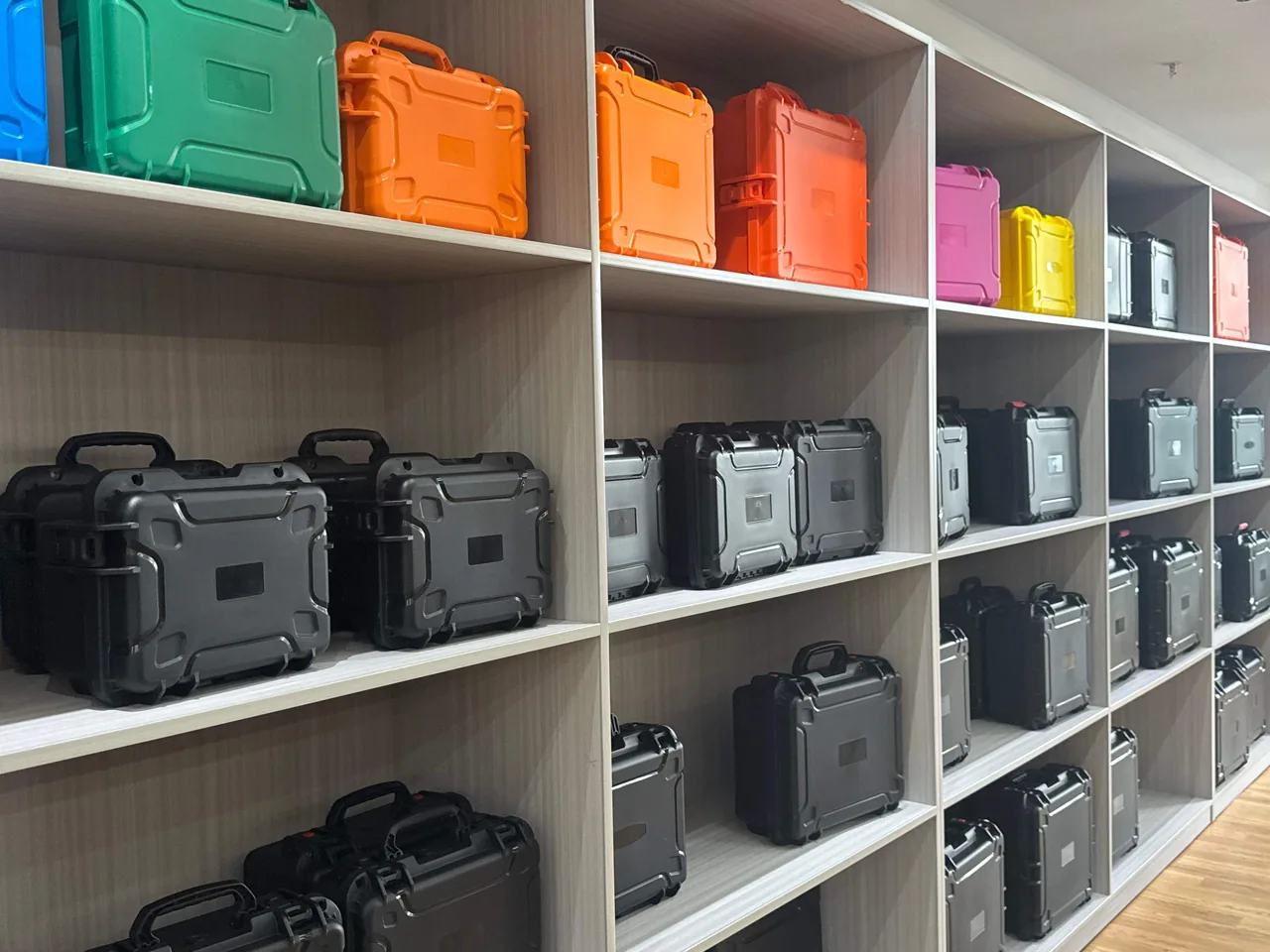
ABS is a recyclable thermoplastic; environmentally there are two points:
- Recyclable reuse: ABS can be melted and reworked; edge scrap can be reclaimed (protective-case body recommends virgin material to preserve performance; recycled material suits non-structural parts).
- Compliance certificates: Plastic cases in ABS/PP pass RoHS testing; REACH, California Prop 65 etc. are per certificates (backed by company documentation; certificates available on request). Export customers often treat such compliance as a procurement threshold.
- Eco surface treatment: Spraying/plating must comply with relevant environmental regulations; choosing a qualified manufacturer is reassuring; KeXin New Materials holds ISO9001 and other qualifications, products exported to many regions on this basis.
Environment is not a slogan but a combination of "recyclable + compliant + responsible surface treatment"; request the certificates during procurement and put them in the contract to make it real.
Procurement Checklist for ABS Protective Cases
Turn knowledge into an executable checklist:
- Confirm virgin ABS: Clarify the shell is virgin, reject recycled.
- Ask wall thickness and ribs: Rigidity comes from structure; request a reference value or sample.
- Verify use temperature: For extreme cold ask the low-temperature impact rating; turn to PP if needed.
- See IP rating source: IP67 comes from sealing structure (IEC 60529); confirm full-perimeter seal + multiple latches.
- Fit a liner: Precision parts use EVA/EPE to fix; rigidity does not replace cushioning.
- Request certificates: RoHS/REACH/California Prop 65 per certificates (available on request).
- Go OEM/ODM: Liner, zoning, LOGO coordinated before leaving the factory.
- Write into contract: Single-product spec sheet and test report as appendix.
This checklist turns "ABS advantages" into "procurement actions," avoiding the four pits of recycled material, ultra-thin walls, false certification, and low-temperature misuse. A manufacturer with one-stop capability in product design, injection, molds, liners, and LOGO (such as KeXin New Materials JUNZHJIA) can cooperate at the procurement stage to provide corresponding materials, convenient for export and high-end customer acceptance.
Common Misconceptions
- Misconception 1: ABS is higher-grade than PP. Wrong. ABS has good rigidity, PP is low-temperature and light; orientation differs, not grade.
- Misconception 2: ABS is hard so it's all-purpose. Wrong. Low-temperature brittleness at extreme cold; evaluate or turn to PP for low-temp outdoor.
- Misconception 3: ABS needs no liner. Wrong. Any material needs a liner to fix precision parts.
- Misconception 4: Material decides IP. Wrong. IP67 comes from the sealing structure combination.
- Misconception 5: ABS can't be used beyond looking good. Wrong. ABS applies to instruments, tools, display, and normal-temp outdoor — broad, not narrow.
- Misconception 6: ABS is "more premium" so should be chosen. Wrong. Premium or not depends on condition fit: normal-temp stiff → ABS reasonable, low-temp light → PP reasonable; wrong scenario is worse.
- Misconception 7: ABS at normal temperature is absolutely safe. Relatively safe, but still confirm virgin material, fit a liner, verify IP and certification; correct material does not mean you can skip structure and maintenance.
Checking these seven misconceptions, the core is still "select material by working condition, not material fame by working condition." ABS is a good material, but a good material must be used where it excels.
Frequently Asked Questions (FAQ)
Q: Is an ABS protective case suitable for field low-temperature use? A: ABS is suitable at normal and mild climates, but at very low temperatures (e.g., below about −20 °C) toughness drops with low-temperature brittleness, and frequent low-temperature drops may crack it; for northern severe winters or cold chain, evaluate the low-temperature rating or choose PP. Specifics are per the manufacturer's spec sheet.
Q: How do ABS and PP protective cases differ in use? A: At normal temperature with emphasis on rigid stiffness and appearance (instrument cases, tool boxes, display cases) choose ABS; for low temperature, light weight, chemical resistance, or food-grade reassurance choose PP. Both can use virgin engineering plastic; choose by working condition, not by superiority.
Q: Can an ABS protective case hold precision instruments? A: Yes. ABS has high rigidity and dimensional stability; paired with an EVA/EPE liner for fixation, it suits surveying, inspection, communication and other instruments; extreme-cold environments need low-temperature evaluation or turning to PP.
Q: What are the benefits of ABS protective case surface treatment? A: ABS is easy to spray, print, and plate, enabling high-gloss/matte/metallic feel and LOGO, suited to display cases and unified team marking, improving professional feel and management efficiency.
Q: What does "ABS protective case passes RoHS" mean? A: It means its plastic material (ABS) passes RoHS testing, restricting hazardous substances such as lead, cadmium, and mercury — a material-safety compliance. KeXin New Materials plastic cases in ABS/PP material pass RoHS testing; specifics are per the test report.
Q: Will an ABS protective case age from sun exposure outdoors? A: Long-term exposure accelerates ABS aging and gasket hardening; avoid prolonged high-temperature sun, store in shade, and maintain the gasket regularly; weather resistance depends on whether UV additives are added and the manufacturer's note.
Conclusion
ABS protective cases are best for outdoor uses concentrated in four "rigid, stable, refined" categories: instrument cases (survey/inspection/communication), tool boxes (hardware/maintenance/electrical), display and demonstration cases, and moderate-climate normal-temperature outdoor safety protective cases. Its strengths are high rigidity, dimensional stability, and easy appearance; its weakness is reduced low-temperature toughness with brittleness. In selection remember "scenario fit": normal temperature with emphasis on stiffness and appearance → ABS; low temperature, light weight, chemical resistance → PP; whichever you choose, confirm virgin material, check wall thickness and ribs, fit an EVA/EPE liner, verify IP67 and RoHS/REACH/California Prop 65 qualifications, and if needed go OEM/ODM to coordinate liner and shell. KeXin New Materials JUNZHJIA, based on virgin ABS/PP engineering plastic, IP67 capability and multiple qualifications, can provide verifiable ABS protective-case solutions for export and high-end customers. One last note: the value of ABS lies in "stiff and stable, professionally looking, dimensionally non-drifting" — keep this article's use table and low-temperature cautions in your procurement spec, and next time you set material you won't be misled by the illusion that "hard is good," but will choose the right case by real working condition.
Three practical closing suggestions. First, ABS and PP are partners not rivals: normal temp with appearance/dimensional stability → ABS, low temp with light/chemical → PP, mixing within one product line is even better; don't get stuck on the fake question "which is better." Second, low temperature is ABS's only hard flaw, but it is manageable — clarify the lowest temperature, ask the low-temperature impact rating, turn to PP or low-temperature-modified grade when needed, and risk is controlled; no need to abandon ABS's other advantages for fear. Third, for large batches always go OEM/ODM, coordinating liner, zoning, LOGO and shell before leaving the factory, so ABS's stiffness and refinement truly convert into on-site reliability and brand professionalism. KeXin New Materials JUNZHJIA, based on virgin ABS/PP engineering plastic, IP67 capability and RoHS/REACH/California Prop 65 qualifications (certificates available on request), together with one-stop customization, can give export and high-end customers verifiable ABS protective-case solutions. Remember: choosing ABS is not choosing "the hardest plastic," but choosing a protection logic of "stiff and stable, professionally looking, dimensionally non-drifting, reliable at normal temperature" — when the condition matches, it is the most worry-free case.