

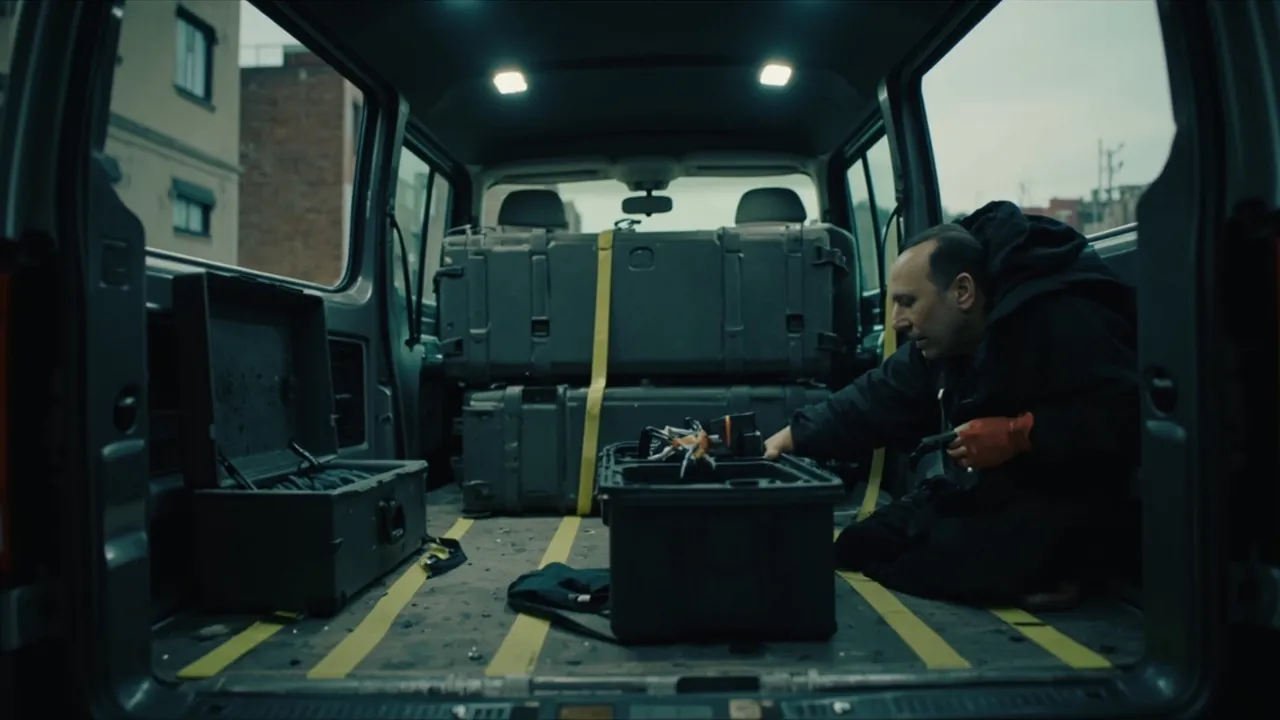
The core of how an outdoor protective case protects equipment during transport is to build it into a combined structure of "impact-resistant shell + cushioning liner + anti-open latch + stackable body," offsetting transport risks from four directions simultaneously: the shell uses virgin ABS/PP engineering plastic with reinforcement ribs to resist the external forces of drops, crushing, and rough handling; the cushioning liner (EVA/EPE foam) fixes and absorbs vibration to avoid equipment displacement and collision; multiple latches continuously press the seal ring during bumps to prevent the lid from being shaken open; and the body corners and stacking structure distribute load evenly when stacked in layers so the lower case is not crushed. In long-haul transfer, this structure resolves the four types of risk — "drop, vibration, crush, open" — one by one, so that the equipment inside can still be "ready to use on opening" even after road bumps, air-pressure changes, or rough dock handling. It must be emphasized that transport protection is the joint result of "case structure + correct packaging + standard operation," and the case alone is not enough. Starting from the real manifestations of transport risk, this article decomposes layer by layer why a protective case can withstand transport, and gives actionable packaging and transfer advice.
Table of Contents
- Four Types of Risk Equipment Faces During Transport
- Why Ordinary Boxes Cannot Withstand Transport
- The Four-Layer Solution of a Protective Case for Transport Safety
- Key Transport-Safety Parameters and Standards
- Packaging and Transfer Practical Advice
- Differences Among Air, Road, and Sea Transport
- Common Mistakes in the Transport Chain
- Frequently Asked Questions (FAQ)
- Conclusion and Further Reading
Four Types of Risk Equipment Faces During Transport
Once equipment leaves the room and enters the transport chain, the mechanical and environmental loads it bears are completely different from indoor storage. Breaking down the risks shows who the opponent of each layer of the protective-case design is:
- Drop and impact: Loading/un loading, getting on and off vehicles, and conveyor jams can make the case free-fall. An ordinary thin-wall case cracks on landing and the equipment inside is damaged. Even with "careful handling," real logistics often involves drops of 1–1.5 meters.
- Vibration and continuous bumps: Road, rail, and aircraft-cargo vibrations are sustained. Under long micro-vibration, precision instruments, optical parts, and circuit boards loosen, shift, and suffer solder-fatigue, producing the strange phenomenon of "clearly not dropped but out of calibration."
- Stacking load: In transport and warehousing, cases are often stacked in multiple layers, and the bottom case must bear the total weight of several cases above. A thin-wall case or a latch that pops open under load will let the lower layer collapse and crack, scrapping the whole pallet.
- Rough handling and side impact: Handlers throwing, kicking, or forklift/pallet side hits deliver huge instantaneous local impact to the case. This is often the most direct cause of equipment damage.
These four risks often appear stacked: one rough handling may bring drop, side hit, and latch shock at once. The design logic of a protective case deploys defense against each of the four separately, not just "a thick shell."
Notably, transport damage is often "cumulative" rather than "one-time": a slight drop does not crack it, but leaves a hidden injury in the shell; next vibration or stacking expands the hidden injury and the equipment is finally exposed as damaged. Therefore transport protection must look at the "whole journey," not just the single most severe event. One value of a protective case is to digest every small impact through the redundant design of shell, liner, and latch, so damage does not accumulate to the equipment layer.
Why Ordinary Boxes Cannot Withstand Transport
Many users substitute a sturdy household box, storage box, or thin-wall tool box for a protective case in transport, and the result is damage on arrival. The reasons concentrate in three points:
- Insufficient shell rigidity: Thin-wall PP/PE storage boxes have thin walls and no even reinforcement ribs; under pressure they dent and deform, and the deformation directly skews the lid gap, making the already non-sealed box more prone to water and dust ingress.
- No cushioning liner: The inside of an ordinary box is empty; equipment slides with the vehicle and knocks against each other; transport vibration is directly transmitted to the equipment, with precision parts bearing the brunt.
- Non-anti-open latches: A single latch or snap lid may pop open under repeated vibration; once open, dust-proofing and water-proofing both fail and the box becomes an "open container."
In other words, the design goal of an ordinary box is "fits things in," while that of a protective case is "survives transport without breaking" — they differ at the structural starting point. Understanding this explains why transport scenarios need a dedicated protective case rather than "just find a sturdy box."
A table directly contrasts the performance difference between ordinary and protective cases in transport:
| Transport test | Ordinary box/storage box | Outdoor protective case |
|---|---|---|
| --- | --- | --- |
| 1-meter drop | Shell easily cracks, equipment exposed | Virgin-material shell + ribs absorb impact |
| Sustained road vibration | Equipment slides and collides | EVA/EPE liner fixes and absorbs vibration |
| Multi-layer stacking | Collapses and deforms under load | Rigid body + flat bearing surface carries load |
| Handling bumps | Snap lid easily pops open | Multiple latches continuously press to prevent opening |
| Rainy transfer | Lid gap takes in water and dust | IP67 full-perimeter seal |
| Air-transport pressure difference | No response, may be sucked open | Pressure-balancing valve balances pressure |
This table shows: for every source of transport damage, the protective case has a corresponding structure to counter it; ordinary boxes are almost entirely absent on these dimensions. This is also why, whenever equipment is valuable and transport is frequent, ordinary boxes should not be used as a substitute.
The Four-Layer Solution of a Protective Case for Transport Safety
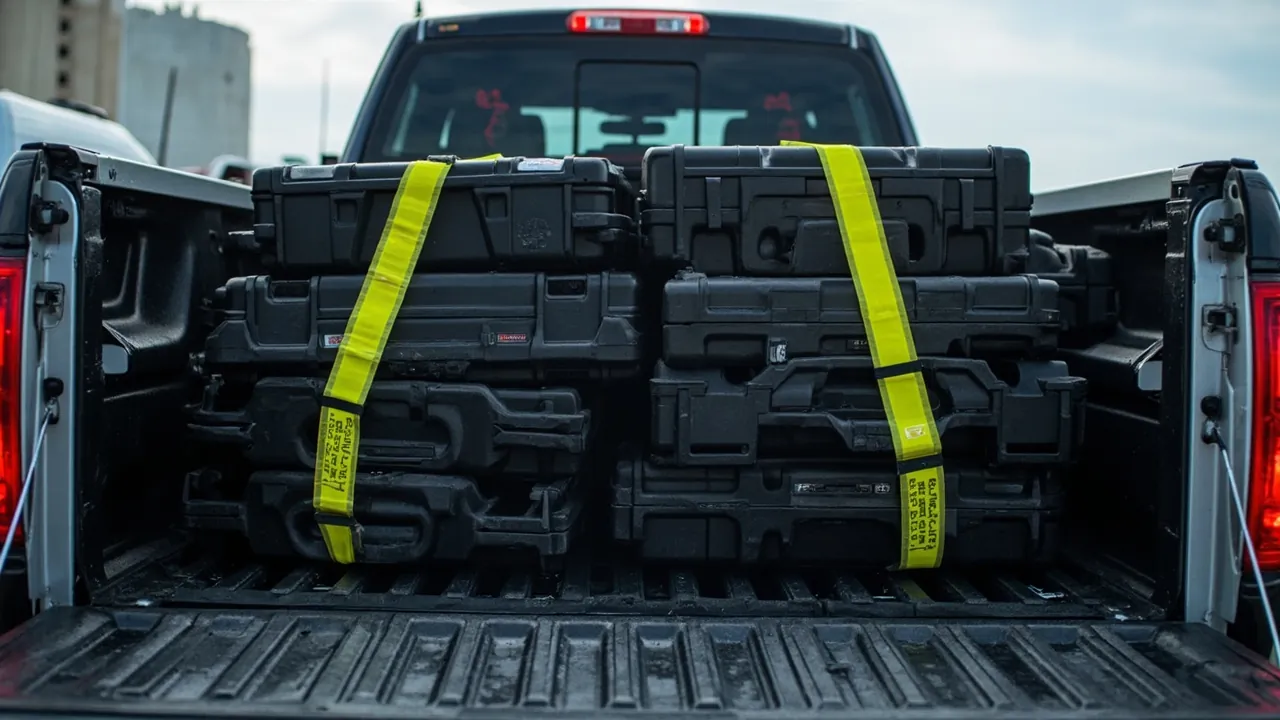
The protective case uses a four-layer structure to resolve transport risks one by one, exactly corresponding to the four types of risk above.
Layer 1 · Impact-Resistant Shell (against drops and rough handling)
The shell mostly uses virgin ABS or PP engineering plastic, with even wall thickness and internal reinforcement ribs and thickened corners. The ribs distribute local impact to the whole, avoiding stress concentration at one point causing cracking; thickened corners specifically handle edge-first landing on drops. ABS has high rigidity; PP is better at low-temperature impact; both can withstand transport drops at reasonable wall thickness (specific grade per individual-product specification sheet). The JUNZHJIA protective-case product line of KeXin New Materials (Guangdong) Co., Ltd. uses virgin ABS/PP engineering plastic shells; the factory is in Zhongshan City, Guangdong (Greater Bay Area), about 18,000 m², 80+ machines, 100+ staff, with product design, injection molding, and mold-manufacturing capability, able to guarantee shell mating tolerance and wall-thickness consistency at the mold stage.
Layer 2 · Cushioning Liner (against vibration and displacement)
The EVA or EPE foam inside is grooved or die-cut to fix each piece of equipment in its dedicated slot. When vibration comes, the foam compresses and rebounds to absorb energy; the equipment is "held still," neither shifting nor colliding, nor hard-hit. EVA has good rebound and is easy to groove and shape; EPE is light with even cushioning; the trade-off can refer to foam-comparison materials. For multi-piece instrument sets (such as detector + probe + spares), compartmented liners also prevent mutual contamination and tangling.
Layer 3 · Anti-Open Latch (against bump-induced opening)
Quality protective cases use multiple compression latches that continuously press the lid onto the full-perimeter seal ring after closing. Multiple latches make the pressing force even, and a single-point hit is less likely to pop the whole open; some latches have a safety catch or lock hole for a padlock against accidental opening. No matter how bumpy the transport, as long as the latches are fastened, the seal stays effective and the case remains a closed protective unit.
Layer 4 · Stacking Structure (against stacking load)
The top and bottom of the body are designed with interlocking or flat bearing surfaces; when stacked in layers, the upper weight is conducted evenly through the body rigidity rather than pressed onto the lid gap. With even latches, the bottom case does not easily collapse or deform even when stacked several layers. Users needing multi-layer stacking should pay attention to the manufacturer's stacking height and load reference, and confirm latches do not pop open under load.
Taken together, the protective case plays a "mobile safe" in transport: shell blocks external force, liner absorbs vibration, latch keeps it closed, stacking carries the load. Missing any layer leaves a gap in transport safety.
Mechanical Details of Shell Impact Resistance: Ribs, Wall Thickness, and Material
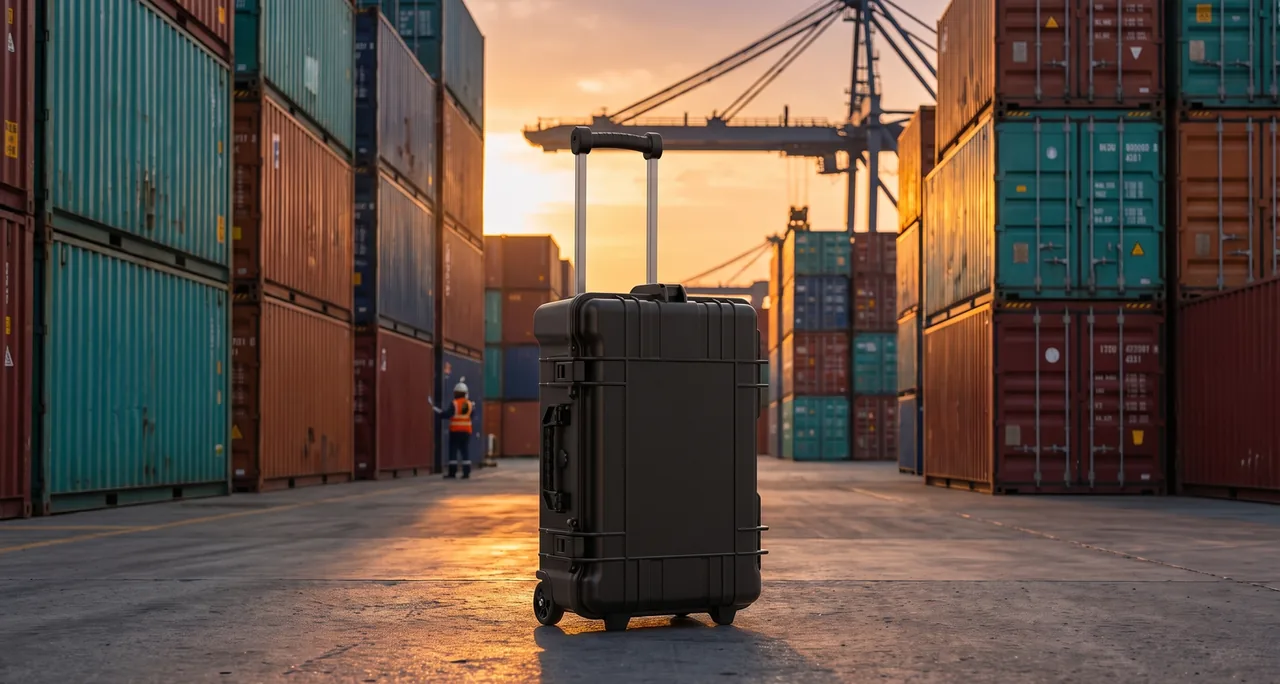
To truly withstand transport drops and side hits, the shell cannot rely only on "thick." Engineering relies on three coordinated things:
- Even wall thickness + internal reinforcement ribs: Ribs are the internal longitudinal and transverse protruding reinforcements of the shell, functioning like I-beams — improving bending and deformation resistance without a large weight increase. On a drop, the impact transmits to the body and the ribs spread the stress over a larger area, avoiding one-point over-stress cracking. Uneven wall thickness means stress concentration, the root cause of thin-wall box cracking.
- Thickened corners: The most common transport drop is edge-corner landing, with the corner bearing the largest instantaneous impact. Thickened corners + rounded transitions direct impact energy to the ribs rather than directly cracking.
- Material choice (transport orientation of ABS and PP): ABS has high rigidity and easy surface treatment, rigid enough for normal temperature and short-haul; PP is better at low-temperature impact and lower density, less brittle-cracking in northern winters or frequent-drop scenarios. Both need virgin material for stable performance; recycled material weakens protection due to batch differences and uneven walls. Specifics per individual-product specification sheet; KeXin New Materials JUNZHJIA protective-case shells use virgin ABS/PP engineering plastic.
Understanding these details shows why "plastic" does not equal "not sturdy": a proper protective-case shell is a force-bearing structure designed by mold, not a thick plate.
Grooving and Die-Cutting of the Cushioning Liner
The liner is not just stuffing foam, but "tailored" to the equipment shape:
- Grooving (CNC or hand cutting): Grooves are cut in a whole EVA block by the equipment outline; after embedding, the equipment is held tight on all sides, transport vibration is absorbed by the foam, and the equipment "cannot move and cannot touch." Suitable for fixed-shape, clearly counted instrument sets.
- Die-cutting (knife-mold forming): A mold punches the slots and dividers at once, efficient and consistent, suitable for batch customization; KeXin New Materials has inner-tray/liner making capability and can coordinate the liner and body with OEM/ODM before leaving the factory.
- Layering and dividers: Equipment of different heights uses layered liners; precision parts are further wrapped in soft cloth or dividers to avoid hard contact and mutual contamination.
- Fill residual gaps: Tiny gaps between equipment and slot walls, and between slots, are filled with foam scraps or air bags to eliminate "residual rattle in the slot" — a common hidden cause of equipment still being damaged in transport.
Liner craft directly decides "whether it breaks from vibration, whether it scratches" — the most worthwhile point to specify at the purchasing stage. For liner types, see How to choose the internal foam of a protective case.
Latch Structure and Anti-Open Mechanism
The latch is the switch of "whether the closure stays effective," especially critical under transport bumps:
- Compression latch: After closing, the latch presses the lid down onto the seal ring, maintaining continuous compression; multiple latches make the full-perimeter pressure even, and a single-point hit is less likely to pop the whole open.
- Safety catch/lock hole: Some latches have a flip safety catch that is not easily bumped open; the lock hole can take a padlock, preventing both accidental opening in transport and unauthorized opening before delivery.
- Metal insert: The load-bearing latch position often has a metal insert, resisting repeated opening and pulling, more durable than pure plastic snap.
- Design points for not popping open under shock: The latch should have a clear "engaged" feel and anti-back-off structure; when purchasing, gently shake the closed case and check whether the lid gap is evenly pressed with no gap following the latches.
The latch and the seal ring are a combination: the latch guarantees "continuous press," the seal ring guarantees "can hold," together maintaining the IP rating effective throughout transport.
Complete Transport Case: a Field Detection Equipment Transfer Plan
Use a complete example to connect all the concepts above. A riverbank water-quality sampling set contains a portable detector, sensor probes, standard reagents, a recorder, and spare batteries; the transport chain is "lab → truck → flight → destination." The risks are truck vibration, flight pressure difference, and handling drops. The plan: a virgin PP shell protective case (low-temp resistant, impact-resistant, fitting the flight cargo-hold low temperature) + EVA grooved liner fixing parts against displacement and scraping + four compression latches all fastened and padlocked against accidental opening + pressure-balancing valve balancing takeoff/landing pressure difference + desiccant inside for high humidity + buffer filled around the outer box with "fragile/up" labels. On arrival, the equipment has zero displacement, no water ingress, stable readings. This example shows transport safety is the combined result of "shell + liner + latch + valve + packaging"; missing any may leave a gap. Batch users, through the manufacturer's one-stop OEM/ODM capabilities in product design, injection molding, molds, liners, and LOGO, can set this combination before leaving the factory, significantly reducing transport loss.
Arrival Acceptance and Transport-Loss Review
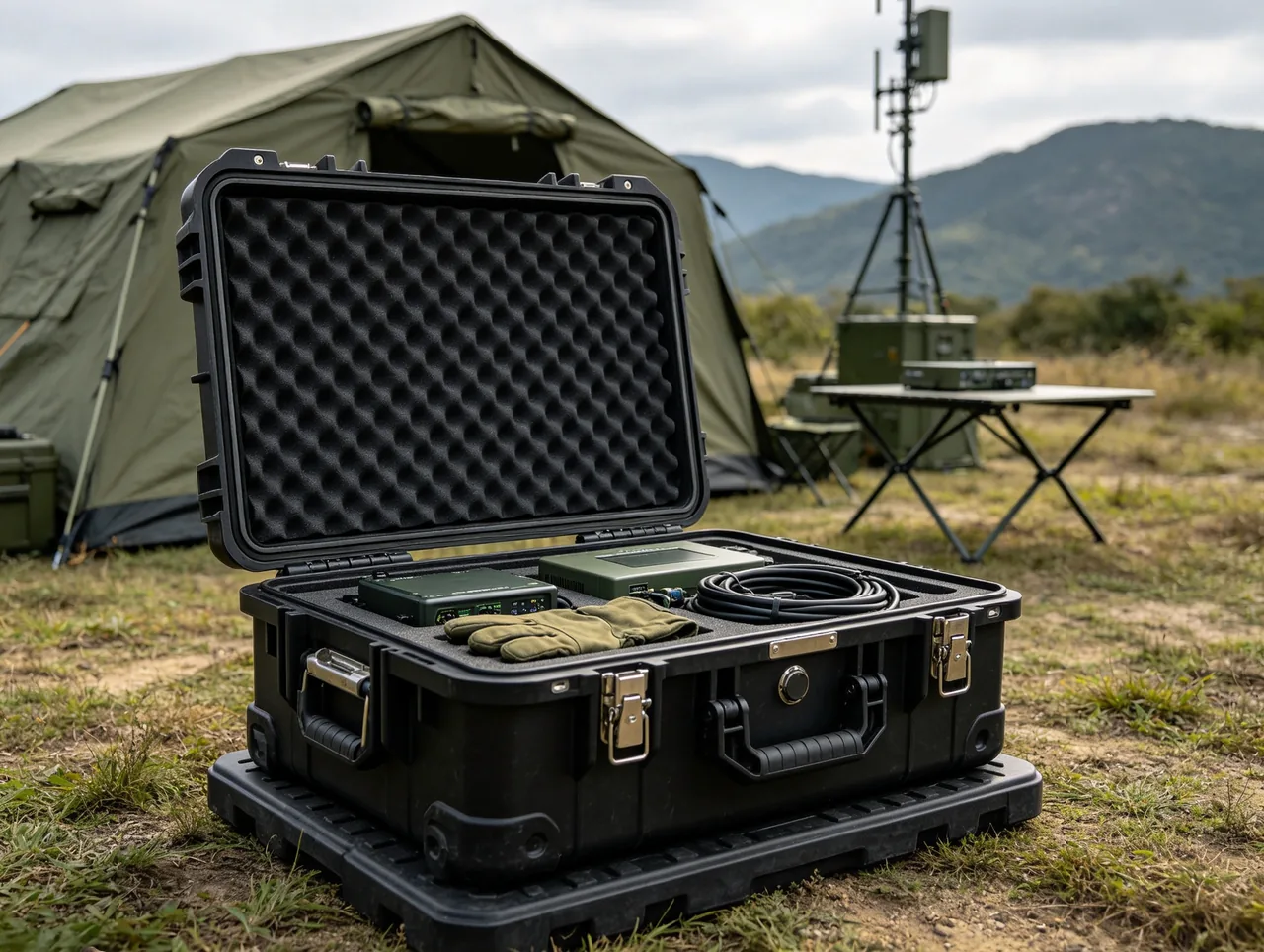
Arrival is not the end; acceptance and review make the next transport better:
- Check on opening: Verify item by item against the packing list, record appearance and functional status, and photograph immediately if abnormalities are found.
- Inspect the case: Check the shell for cracks and dents, whether latches are intact, and whether the seal ring has trapped foreign objects or lost elasticity.
- Inspect the liner: Whether the equipment is still in its slot, any sliding marks, whether the foam has permanent collapse.
- Review and improve: If something is damaged, locate which link — selection, liner, latch, or packaging — was weak, and reinforce accordingly (e.g., thicker liner, fill gaps, switch to a more crush-resistant shell).
- Build a transport spec: Solidify the verified selection and packaging list into a purchasing/shipping spec, avoiding guessing each time.
Acceptance and review turn "transport safety" from one-time luck into a repeatable process — exactly the value extension of a protective case as an engineering solution rather than an ordinary box.
Key Transport-Safety Parameters and Standards
Transport-related parameters and standards are in the table below for item-by-item checking at purchase and acceptance:
| Risk dimension | Parameter/standard of interest | Note | Corresponding protective-case design |
|---|---|---|---|
| --- | --- | --- | --- |
| Impact resistance | Drop test (reference MIL-STD-810H method 516) | Product-level environmental adaptability validation, simulating transport drop | Virgin shell + ribs + thickened corners |
| Vibration resistance | Vibration test (reference MIL-STD-810H method 514) | Simulating road/air sustained vibration | EVA/EPE cushioning liner fixing equipment |
| Dust/water | IP rating (IEC 60529) | IP67 = fully dust-tight + short-term immersion | Full-perimeter seal ring + multiple latches |
| Pressure balance | Pressure-balancing valve (industry common knowledge) | Balances air/altitude pressure difference | ePTFE breathable water-blocking membrane valve |
| Stacking load | Manufacturer stacking load reference | Multi-layer stacking without deformation | Body rigidity + flat bearing surface |
| Material safety | RoHS/REACH | Plastic-case ABS/PP material passes RoHS testing | Virgin engineering plastic |
Note: MIL-STD-810H is a product-line-level environmental adaptability validation basis for the protective-case product line (not "military certification"); the specific drop/vibration grade of an individual product should follow its specification sheet; IP testing is under controlled conditions, and long-term use depends on an intact seal ring and correct latching. The KeXin New Materials JUNZHJIA protective-case product line has IP67 capability and holds qualifications such as ISO9001, REACH, and California Prop 65 (backed by company documentation; certificates available on request). The plastic-case ABS/PP material passes RoHS testing.
Packaging and Transfer Practical Advice
Selecting the protective case is only the first step; packaging and transfer method equally decide arrival integrity. In reality, many "the protective case didn't protect either" accidents root not in the case but in packaging — equipment still rattles in the slot, latches only half fastened, outer box bare with no labels. That is, case capability must be paired with correct operation to be realized. Execute per the following checklist:
- List the equipment first: Write the equipment shape, quantity, and fragility order; thereby set the net size and liner compartments, avoiding "doesn't fit" or "too loose."
- Independent slot per item: One slot per piece of equipment; precision parts add soft wrapping; shedding parts use isolation bags to prevent mutual contamination and friction.
- Fill the gaps: Unfilled slots are filled with foam scraps or air bags to avoid residual rattle inside the slot.
- Heavy low, light high: Heavy items at the bottom of the case, light precision items on top; the same for whole-pallet stacking.
- All latches fastened + padlock: Fasten all latches, padlock if necessary against accidental opening in transport; latch the safety catch first if equipped.
- Buffer the outer box: When packing multiple cases in a large carton or wooden box, fill buffer material around the inside, and label the outside "fragile/up/moisture-proof."
- Humidity control: For long sea transport or high-humidity environments, put desiccant inside and seal, combined with IP67 for further moisture resistance.
- List inside the case: Put an equipment list and fragility-prompt card inside for the receiver to verify and reduce rough opening.
This checklist connects "case capability" and "packaging operation" — even the best protective case, with empty slots, half latches, and messy stacking, will weaken protection.
Differences Among Air, Road, and Sea Transport
Different transport modes dominate different risks, so the focus should adjust:
- Air transport: The biggest variable is cargo-hold pressure and temperature change. Takeoff/climb and descent bring clear internal–external pressure difference; a pressure-balancing valve should be selected; meanwhile air transport has high handling frequency, so latch anti-open and liner fixation are more critical. Follow airline battery and packaging rules specifically.
- Road transport: Dominated by sustained vibration and bumps, especially unpaved roads and long hauls. Liner cushioning and shell ribs are the focus; confirm stacking load for multi-layer stacking.
- Sea transport: Dominated by humidity, salt spray, and long stacking. IP67 dust/water + desiccant inside + moisture-proof outer box, confirm stacking load; in salt-spray environments pay attention to shell weather resistance and metal-part rust prevention.
Writing the transport mode into the purchasing spec lets you match protection to the "dominant risk" rather than buying the same model for everything.
The Real Cost of Transport Loss: a Protective Case Is an Investment, Not a Cost
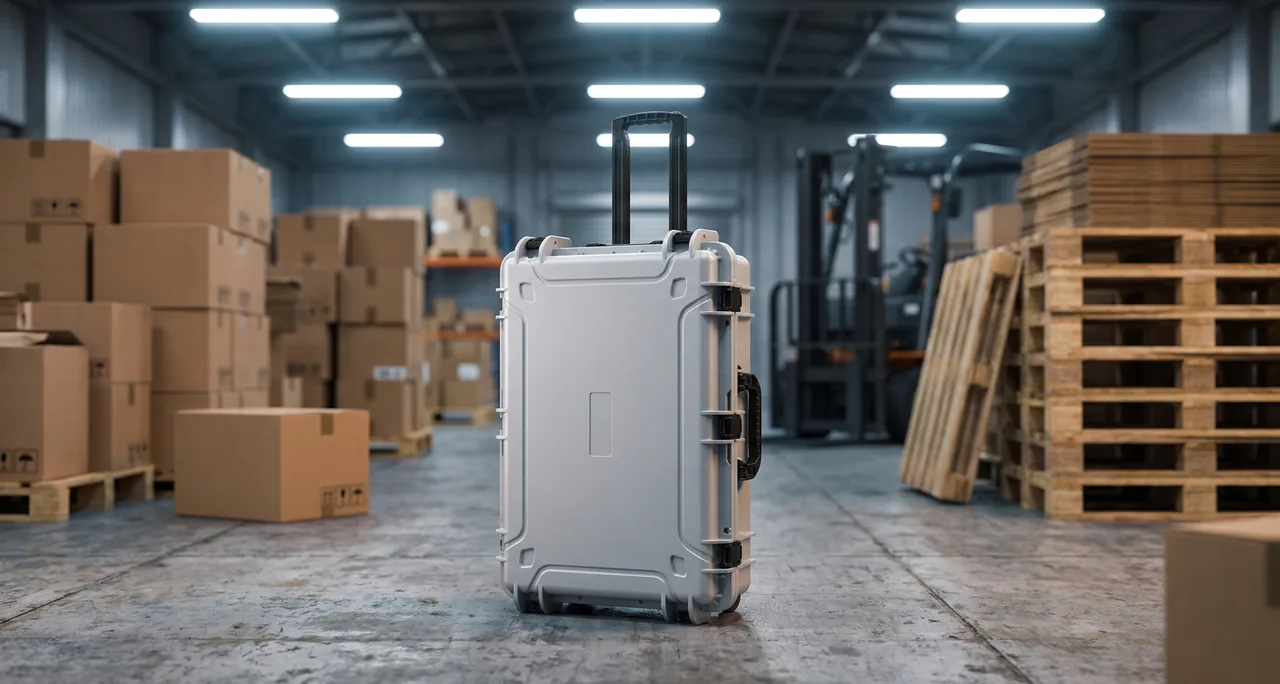
Many purchasers treat a protective case as "extra spending" and make do with ordinary boxes, only to pay back double the savings from a single transport damage. Calculating this helps correct decisions:
- Direct loss: A water-short-circuited detector, a chipped optical lens, a vibration-loosened circuit board — repair or replacement often far exceeds the price of one protective case; if the equipment is a customer asset or research sample, the loss also includes schedule and data.
- Indirect loss: Arrival-damaged causes project delay, repair logistics, and declining customer trust — hidden costs harder to quantify but more lasting.
- Marginal cost of the protective case: Compared with equipment value, a qualified protective case (including liner customization) is usually a small fraction, yet significantly lowers transport risk; batch OEM/ODM also spreads the per-unit cost and makes the liner fit the equipment list tightly.
- Repeatability: One verified effective selection and packaging plan can be solidified into a spec for repeated use, spreading the risk cost of each shipment long term.
So judging "whether to use a protective case" should compare "equipment value × transport damage probability" with "protective case cost," not just the case price tag. For high-value, harsh-environment, frequently-transported equipment, the conclusion is almost always "yes." This echoes the earlier purchasing logic of "set the level by risk": first ask how transport will torture the equipment, then decide what the case must be capable of. For protecting electronics specifically, see How an outdoor protective case protects electronics.
Transport-Protection Focus by Industry
The transport plan of a protective case should adjust to industry risk. Below are the focuses of several typical industries (corresponding to the public application directions of KeXin New Materials product lines):
- Outdoor survey/scientific exploration: Equipment often transfers at riverbanks, mountains, and low night temperatures; dominant risks are rain, sand, drops, and temperature difference. Plan toward IP67 + virgin PP (low-temp impact-resistant) + grooved liner + pressure-balancing valve, desiccant inside if needed.
- Military/police/fire: Extremely high reliability demands; equipment is often validated for environmental adaptability using MIL-STD-810H as a product-line environmental test basis, handling vibration, shock, heat-humidity, and sand-dust; transport also emphasizes anti-accidental-open and quick access.
- Electronics/electrical repair: Meters, probes, and spare boards fear dust and moisture; transport focus is dust/water-proofing + liner fixation, avoiding conductive dust ingress and collision.
- Aviation/communication: Airborne and vehicle-mounted communication and navigation equipment experience takeoff-landing vibration, temperature change, and pressure change; the pressure-balancing valve and anti-vibration liner are key, and aviation battery transport rules must be followed.
- Industrial maintenance site: Construction, power, and petrochemical tools and spares are frequently taken in and out amid mud, spray, and sand; sealed cases + durable latches reduce failure rates.
Writing the industry into the transport spec gives a basis for "which model, what to configure," rather than guessing by experience. The products of KeXin New Materials are exported to the United States, the United Kingdom, Germany, Canada, Japan, Russia, the Philippines, India, Hong Kong/Taiwan (China), the Middle East, and other regions, showing that this industry-customized transport-protection need is global.
Common Mistakes in the Transport Chain
In actual transport, the following mistakes most often cause arrival damage:
- Mistake 1: A big-enough box is safe. An oversized box lets equipment slide and needs much filling, increasing collision instead; select by net size, refer to size and capacity materials.
- Mistake 2: No liner. Without a liner, equipment collides, vibration transmits directly, protection drops sharply.
- Mistake 3: Only one latch fastened. A single latch pops open easily under hit; fasten all multiple latches.
- Mistake 4: Ignoring the pressure-balancing valve. No valve for air transport/high altitude, pressure difference may suck the lid open or crush the seal.
- Mistake 5: Using recycled-material boxes to save cost. Recycled material has uneven walls, easily deforms under load, skews the seal and destroys protection; confirm virgin material.
- Mistake 6: Bare outer packaging. No buffer outside the protective case, no fragility label; multiple transfers still dent the shell.
Avoiding these mistakes is what makes the transport-safety capability of a protective case truly land.
Frequently Asked Questions (FAQ)
Q: Can a protective case completely avoid transport damage? A: It cannot absolutely guarantee, but it can greatly reduce transport risk. A protective case resolves the four types of risk — drop, vibration, crush, open — through the four-layer structure of shell, liner, latch, and stacking; the final integrity rate also depends on whether selection matches the environment, whether the liner is filled, whether latches are fastened, and the transport mode. Treat it as an engineering solution that "significantly reduces risk," not a "zero-damage promise."
Q: Must precision instruments in transport be equipped with a pressure-balancing valve? A: If by air transport, high altitude, or day–night large-temperature-swing transport, it is recommended. The pressure-balancing valve balances internal–external pressure difference, prevents the lid from being sucked open or the seal crushed, while blocking water and dust; the principle is common industry knowledge. For pure short ground haul with small temperature difference, it may be omitted, but still confirm per the individual-product specification sheet.
Q: Will multi-layer stacking of protective cases crush the bottom one? A: A qualified protective case has good body rigidity and a flat bearing surface; when stacked in layers the weight is conducted evenly and the bottom does not easily collapse; the specific stacking height and load follow the manufacturer's reference. The key is latches not popping open under load and the body not deforming, otherwise the bottom has crush risk.
Q: Can batteries be transported in a protective case? A: Batteries can be packed, but insulation and short-circuit prevention are needed, and transport (including air) regulations for battery packaging and labeling must be followed; specifics per transport and manufacturer advice. The protective case provides physical protection and does not replace dangerous-goods transport compliance.
Q: Why are recycled-material boxes unsuitable for transport protection? A: Recycled material has uneven wall thickness, unstable strength and toughness, easily deforms under load, directly skewing the lid gap and destroying seal and protection; transport also bears drops and stacking, with higher risk. Proper protective cases mostly use virgin ABS/PP; when purchasing, confirm virgin material with the manufacturer.
Q: What foam is good for a protective-case liner? A: Commonly EVA and EPE. EVA has good rebound and is easy to groove and shape, suitable for fixing precision parts; EPE is light with even cushioning, suitable for general buffer filling. The trade-off can refer to EVA vs EPE foam comparison materials, chosen by equipment fragility and weight.
Conclusion
The essence of how an outdoor protective case protects transport safety is to use the four-layer solution of "impact-resistant shell + cushioning liner + anti-open latch + stacking structure" to respectively counter the four types of transport risk — drop impact, sustained vibration, stacking load, and rough-handling pop-open — so that equipment can still be "ready to use on opening" even after road bumps, air pressure difference, or dock handling. Its fundamental difference from an ordinary box is: the ordinary box aims at "fits things in," the protective case aims at "survives transport without breaking." In execution, grasp both case capability and packaging operation together — select by net size, independent slot per item, fill gaps, fasten all latches, and configure pressure-balancing valve and desiccant by transport mode. In purchasing, recognize virgin material, check IP67, verify qualifications, match protection to the dominant risk, and when necessary use a manufacturer with one-stop OEM/ODM capabilities in product design, injection molding, molds, liners, and LOGO (such as KeXin New Materials JUNZHJIA) to pre-optimize the protection plan. What truly decides arrival integrity is never "bought a protective case," but "selection matches + liner filled + latches fastened + packaging standard" all holding at once. Save this article's risk list, parameter comparison, and transfer checklist into the purchasing spec, and the next long-haul shipment will avoid many pitfalls. One final reminder: transport safety has no "once-and-done" box, only a "continuously done right" process — select the right case, fill the liner, fasten the latches, review on arrival; cycling these four steps, the equipment arrives safely every time. For related structure, see What is an outdoor protective case and where is it used.