

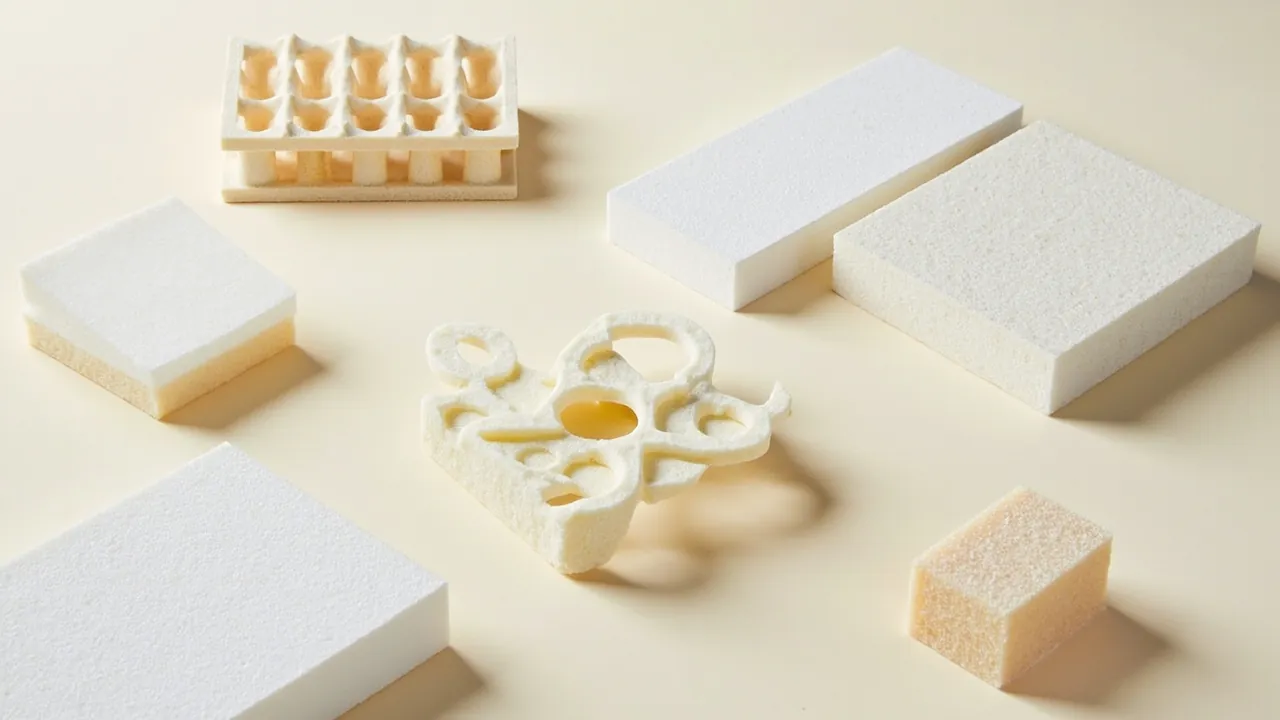
The internal foam/inner tray of a protective case is the cushion layer glued to the case walls that fixes equipment, absorbs shock, and isolates items from scraping each other. The common internal foam types are mainly five: EVA (ethylene-vinyl acetate copolymer), EPE (expanded polyethylene/pearl cotton), XPE (cross-linked polyethylene), PU (polyurethane), and PE (solid/low-foam polyethylene). The basis of selection is understanding their density, resilience, cushioning method, and suitable equipment type: for precision instruments that need support and shaping, choose EVA; for lightweight filling, choose EPE; for toughness and fine texture choose mid-layer XPE; for energy-absorbing no-knife-grid choose PU; for rigid partitions or baseboards choose PE. Below we systematically explain how foam types are divided — from function, types, comparison, key metrics, to selection by equipment.
Table of Contents
- What Role Does Internal Foam Play in a Protective Case?
- What Are the Common Internal Foam Types?
- How Do the Five Foams Compare?
- Key Metrics for Choosing Foam
- How to Select by Equipment Type
- Foam Forms: Routed, Pick-and-Pluck, and Custom
- Common Misconceptions and Pairing Tips
- Frequently Asked Questions (FAQ)
- Conclusion and Further Reading
What Role Does Internal Foam Play in a Protective Case?
Among the "three-layer protection" of a protective case, foam is responsible for the cushioning and fixation layer: the shell resists external impact, the gasket blocks external water and dust, and the foam solves "what happens inside the case" — keeping equipment from moving, colliding, or falling out. Many people only stare at whether the body is hard and whether it seals, ignoring the internal cushioning; as a result the body is intact but the instrument inside loses calibration from collision and shifting — which is exactly the value of the liner. Specifically, there are four functions:
- Fix equipment: By routing (CNC milling/die-cutting) the instrument or tool into a dedicated groove, it does not shift during transport bumps.
- Absorb shock: During drops and handling collisions, the foam compresses and deforms to "dissolve" the shock wave, avoiding hard-impact damage to precision parts.
- Isolate scraping: Different tools/accessories are slotted or bagged separately, avoiding metal-on-metal scratches, lens abrasions, and small-part loss.
- Fill gaps: Irregular equipment is filled with filler foam so the whole case "fits and does not rattle."
These four points also suggest a common misconception: liner is not "the thicker and softer the safer," but "hard where it should be hard, soft where it should be soft, filled where it should be filled," layered and combined by equipment characteristics. Understanding these four points, you know foam selection is not "softer is better" or "thicker is better," but matching the material's density, resilience, and cushioning characteristics to the equipment's weight, shape, and vulnerability — which is the meaning of the classification below.
What Are the Common Internal Foam Types?
The foams commonly used inside protective cases can be divided by material essence into five categories, with different chemical bases and processing methods:
- EVA (Ethylene-Vinyl Acetate): A closed-cell foam, slightly rigid, good resilience, easy to CNC-route or die-cut into shape; the most mainstream liner material for precision-instrument protective cases.
- EPE (Expanded PE/pearl cotton): Closed-cell PE foam, light, low cost, even cushioning; common in filler layers and lightweight protection, recognizable by its white pearl appearance.
- XPE (Cross-linked PE): Chemically or irradiation cross-linked PE foam with finer cells, smoother surface, and better toughness than EPE; often used as a mid-layer or texture-requiring liner.
- PU (Polyurethane): Mostly open-cell, good energy-absorption (damping) performance, soft feel; common in "pick-and-pluck" cube foam that can be torn grid by grid to shape.
- PE (solid/low-foam polyethylene board): A relatively rigid polyethylene board (not highly foamed), strong support, weak cushioning; used for load-bearing baseboards, partitions, or structural inner trays rather than the main cushioning layer.
Note: EPE and XPE are both "PE-based" foams, differing in whether they are cross-linked and in cell structure; the separately listed PE usually refers to a solid/low-foam rigid board. Do not confuse the three. For foam forms — routed, pick-and-pluck, and custom — see the dedicated internal-foam-form articles. A practical selection order is: first fix the four factors of "equipment weight, vulnerability, use environment, and access frequency," then match material and form, rather than first looking at which foam is "premium" — reversing the order easily leads to choosing expensive but wrong.
How Do the Five Foams Compare?
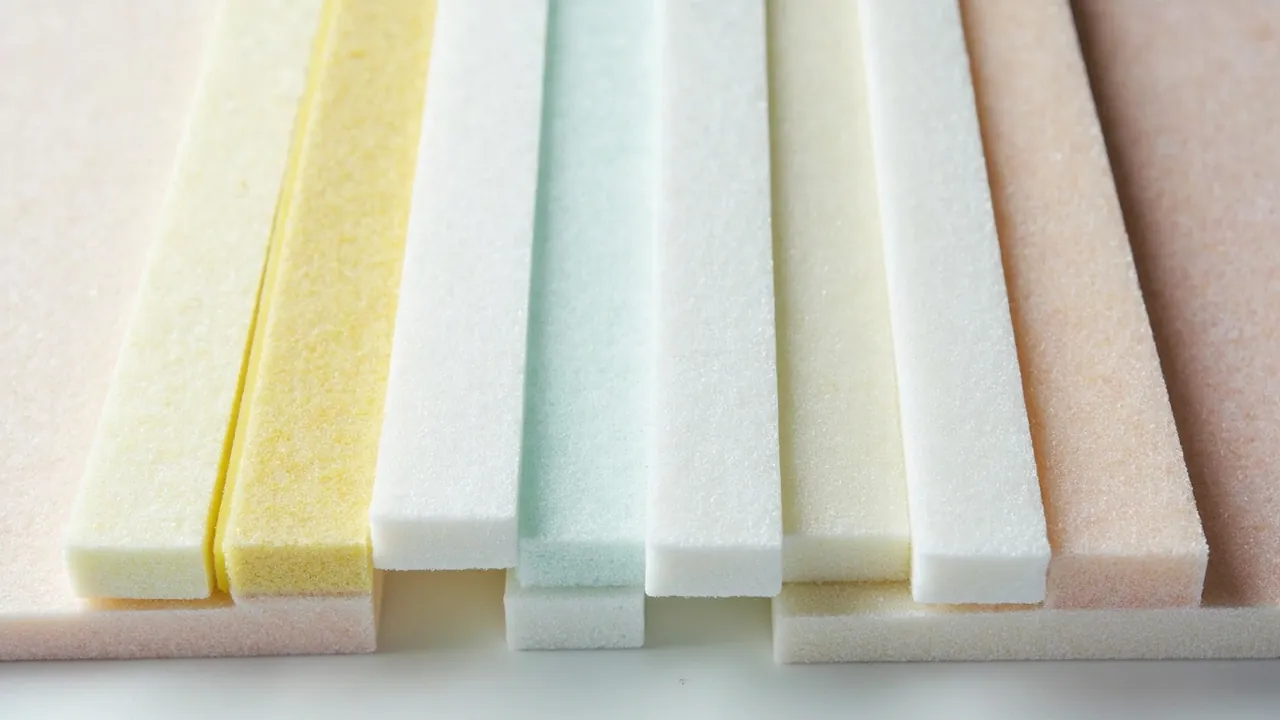
| Dimension | EVA | EPE | XPE | PU | PE (solid board) |
|---|---|---|---|---|---|
| --- | --- | --- | --- | --- | --- |
| Cell structure | Closed | Closed | Closed (cross-linked) | Mostly open | Solid/low-foam |
| Density (ref)* | Medium–higher | Low | Medium | Low–medium (adjustable) | High |
| Resilience | Good | Fair | Better | Soft (adjustable) | Almost none |
| Cushion/energy absorption | Good | Good (light load) | Good | Excellent (damping) | Weak |
| Processing | CNC route/die-cut | Cut/die-cut | Cut/die-cut | Pick-and-pluck/cut | Cut/engrave |
| Water absorption | Low (closed) | Low (closed) | Low (closed) | Higher (open) | Very low |
| Cost | Medium | Low | Medium | Medium | Low–medium |
| Typical use | Precision-instrument shaping liner | Fill/light protection | Mid-layer/texture liner | Pick-and-pluck/energy layer | Baseboard/partition |
\* The densities above are common industry reference ranges; specifics vary with formulation and hardness (Shore). Purchase by the material specification sheet.
Conclusion first: For shaping support that does not collapse after repeated opening, choose EVA; for lightweight low-cost filling, choose EPE; for fine toughness and mid-layer, choose XPE; for tear-and-shape convenience, choose PU pick-and-pluck; for rigid baseboard partitions, choose PE solid board. Most good solutions are "multi-layer combinations" rather than a single type.
Detailed Look at the Five Foams
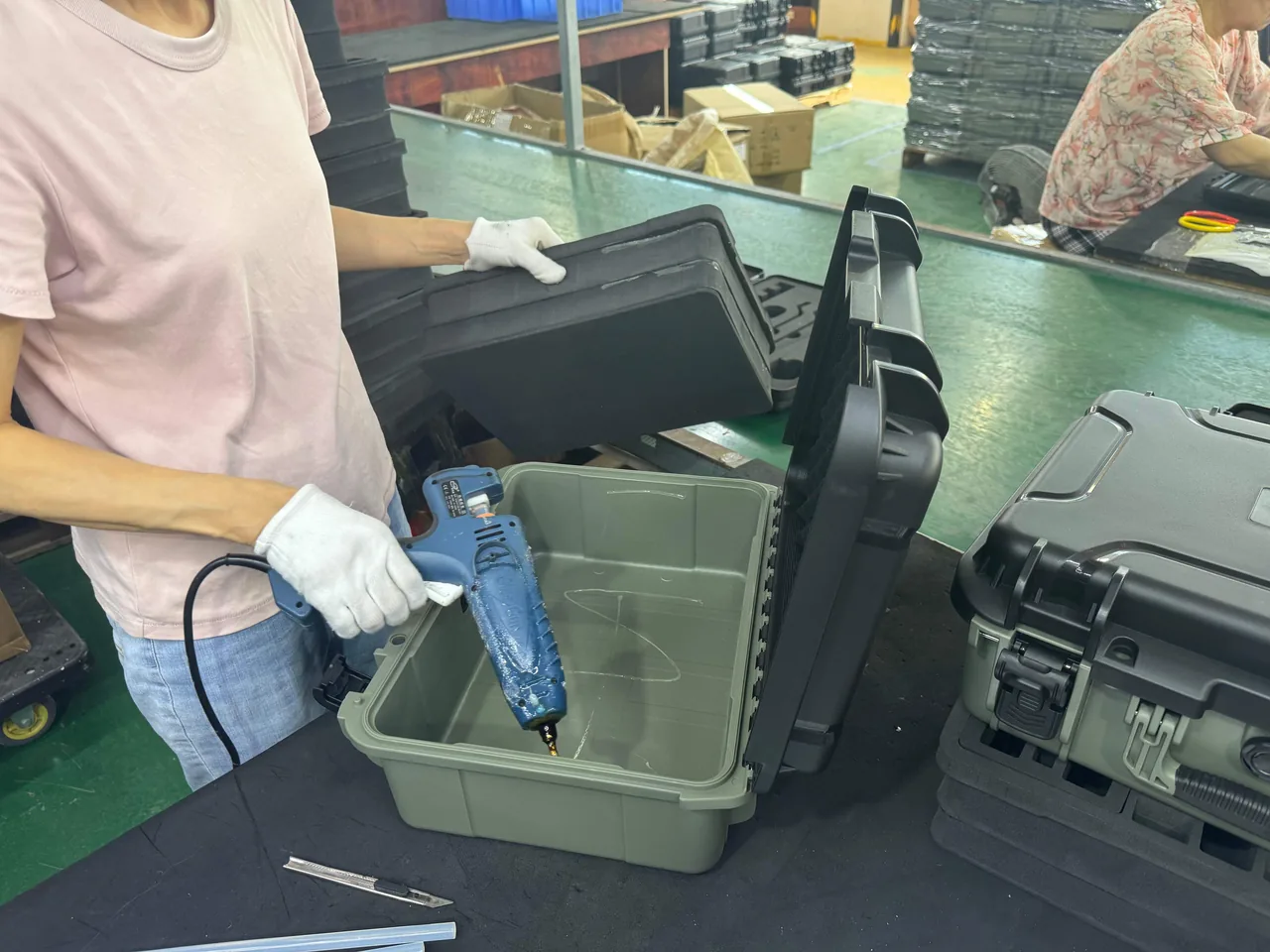
Expand each of the five materials for on-demand trade-offs:
EVA: The Main Force of Shaping Liners
EVA is closed-cell, slightly rigid, good resilience; it can be CNC-routed or die-cut into precise grooves by equipment shape, so the equipment "snaps in and does not move," and does not collapse after repeated opening. It resists general chemical corrosion and has low water absorption as a closed cell, making it the most mainstream liner for precision instruments, gauges, cameras, and lenses. The downside is that high density is slightly hard and a bit more costly than EPE, and it hardens at very low temperature (depending on grade). Select by density and hardness: high density is rigid to support heavy equipment; medium density balances feel and cushioning.
EPE: The First Choice for Lightweight Filling
EPE (pearl cotton) is closed-cell PE foam, light, low cost, even cushioning, recognizable by its white pearl look; often used to fill gaps, wrap light accessories, and make transport cushioning layers. Its resilience is fair and it easily flattens under long-term pressure, so it is not ideal as the main liner requiring repeated access and shaping. Typical use is "EVA main groove + EPE fill," each taking its strength.
XPE: Fine Toughness Mid-Layer
XPE is chemically or irradiation cross-linked, with finer cells than EPE, smoother surface, and better toughness, plus closed-cell low water absorption and better temperature resistance than EPE. It is often used as a texture-requiring mid-layer liner, or as an overall wall lining that protects the body and cushions. Cost sits between EPE and EVA — a compromise for "want texture but not EVA cost."
PU: Energy-Absorbing Pick-and-Pluck
PU (polyurethane) is mostly open-cell, with good energy-absorption (damping) performance and a soft feel; when compressed it converts impact energy into internal-friction heat dissipation, friendly to fragile vibration-sensitive parts. Its most common form is "pick-and-pluck" cube foam that the user tears grid by grid to shape instantly. The downside is open-cell easily absorbs moisture, may shed crumbs long-term, and has weak support, not suitable for direct load-bearing.
PE (Solid/Low-Foam Board): Rigid Structural Layer
PE solid or low-foam board is relatively rigid, almost no cushioning, but strong support and no deformation; commonly used as liner baseboard, partition, or structural tray supporting heavy equipment. It is not the main cushioning layer but "bottom support," with EVA/XPE/PU laid on top for cushioning. Combining it with the foam layer is the classic "rigid bottom + elastic top" layered idea.
How Foam Thickness and Density Match Equipment Weight
Foam selection is not "thicker and softer is better," but matching thickness, density, and equipment weight:
| Equipment weight/feature | Recommended foam & density | Thickness advice | Reason |
|---|---|---|---|
| --- | --- | --- | --- |
| Light accessory (<1 kg) | Low-density EPE/medium-density EVA | 10–20 mm | Light load needs no hard support, fill cushion is enough |
| Medium device (1–5 kg) | Medium-density EVA routed | 20–30 mm | Needs shaping support and moderate cushioning |
| Heavy device (>5 kg) | High-density EVA + PE baseboard | 30 mm+ + baseboard | Rigid support, prevent sinking collision |
| Fragile/vibration-sensitive | PU energy layer + EVA base | 20–40 mm | PU damping, EVA shaping |
| Precision optics/lens | Medium-high-density EVA slots | 25–35 mm | Anti-pressure, anti-scrape, separate slots |
Experience: for heavy equipment prefer "high-density EVA + PE solid baseboard" rigid support rather than relying on ultra-thick soft foam to "hold" it — soft foam is crushed and instead lets the device sink and collide.
Routing Design Points: Spacing, Depth, and Allowance
A rigid foam like EVA is often made into a routed liner; the groove design directly determines fixation:
- Groove depth: Generally 1/3–1/2 of the equipment height, so the equipment "sits in" and is wrapped on the upper part — fixed yet easy to access; too shallow does not fix, too deep is hard to access.
- Groove width and allowance: Groove width leaves a 1–2 mm micro-gap per side beyond the equipment outline, relying on micro-compression of the foam to clamp; too much allowance lets the device rattle, too little cannot fit or presses damage.
- Groove spacing: Keep enough "wall thickness" between adjacent grooves (usually ≥5–10 mm) to avoid the partition being pierced or deformed in transport.
- Layering and steps: Equipment at different heights can use multi-layer stepped grooves, giving each piece its own position.
- Labeling and positioning: Engrave or silkscreen marks beside grooves for instant recognition during transfer, reducing misplacement.
Routing quality depends on the accuracy of the equipment list — the more accurate the list, the better the groove fit; this is why batch users often hand liner customization to the manufacturer by list.
Moisture-Proof and Anti-Static (ESD) Liners
Specific equipment has extra liner requirements:
- Moisture-proof: For wading, high-humidity environments, prioritize closed-cell materials (EVA/EPE/XPE), which are more stable with low water absorption; open-cell PU easily absorbs moisture, use cautiously in high humidity or add a moisture-proof bag. If necessary, put desiccant in the case and replace regularly.
- Anti-static (ESD): Electronics, circuit boards, and sensitive devices fear static; choose anti-static treated foam (surface resistance in the anti-static range) or anti-static EVA, paired with an anti-static case and wrist strap to form an ESD protection chain. Ordinary foam has no ESD function; for sensitive electronics clearly choose an anti-static grade.
- Clean: Medical, food, and optical scenarios choose low-outgassing, easy-to-clean materials; silicone or specific low-outgassing EVA is more suitable, avoiding foam powder contaminating equipment.
Foam Coordination with Pressure Balance and Stacking
The liner is not isolated; it coordinates with other case systems:
- With the pressure-balancing valve: During air transport/high altitude the internal-external pressure difference changes; if the liner is too tight it may "push" the equipment loose from the groove; choose moderately elastic foam with release margin, paired with a pressure-balancing valve for stability.
- With stacking load: When stacked, the upper case weight presses on the lower lid; the liner needs enough compression resistance (high-density EVA + PE baseboard) to avoid being deformed and pushing the lid back.
- With the shell: The foam is fixed by the case wall and groove tray; a thin-wall or recycled-material body that deforms will misalign the liner, so a good shell is the premise of a good liner.
KeXin New Materials (Guangdong) Co., Ltd. brings its protective-case product line to market under the global brand kexinMaterials and the domestic product-line brand JUNZHJIA, with one-stop customization (OEM/ODM) capabilities covering product design, injection molding, mold manufacturing, LOGO printing, and inner-tray/liner making. The factory is in Zhongshan City, Guangdong (Greater Bay Area), about 18,000 m², 80+ machines, 100+ staff; the parent company is Foshan Shunde ., Ltd., and , Ltd. holds 20+ utility-model and design patents. Pre-designing liner zones by equipment list is where the manufacturer's one-stop capability adds the most value.
Key Metrics for Choosing Foam
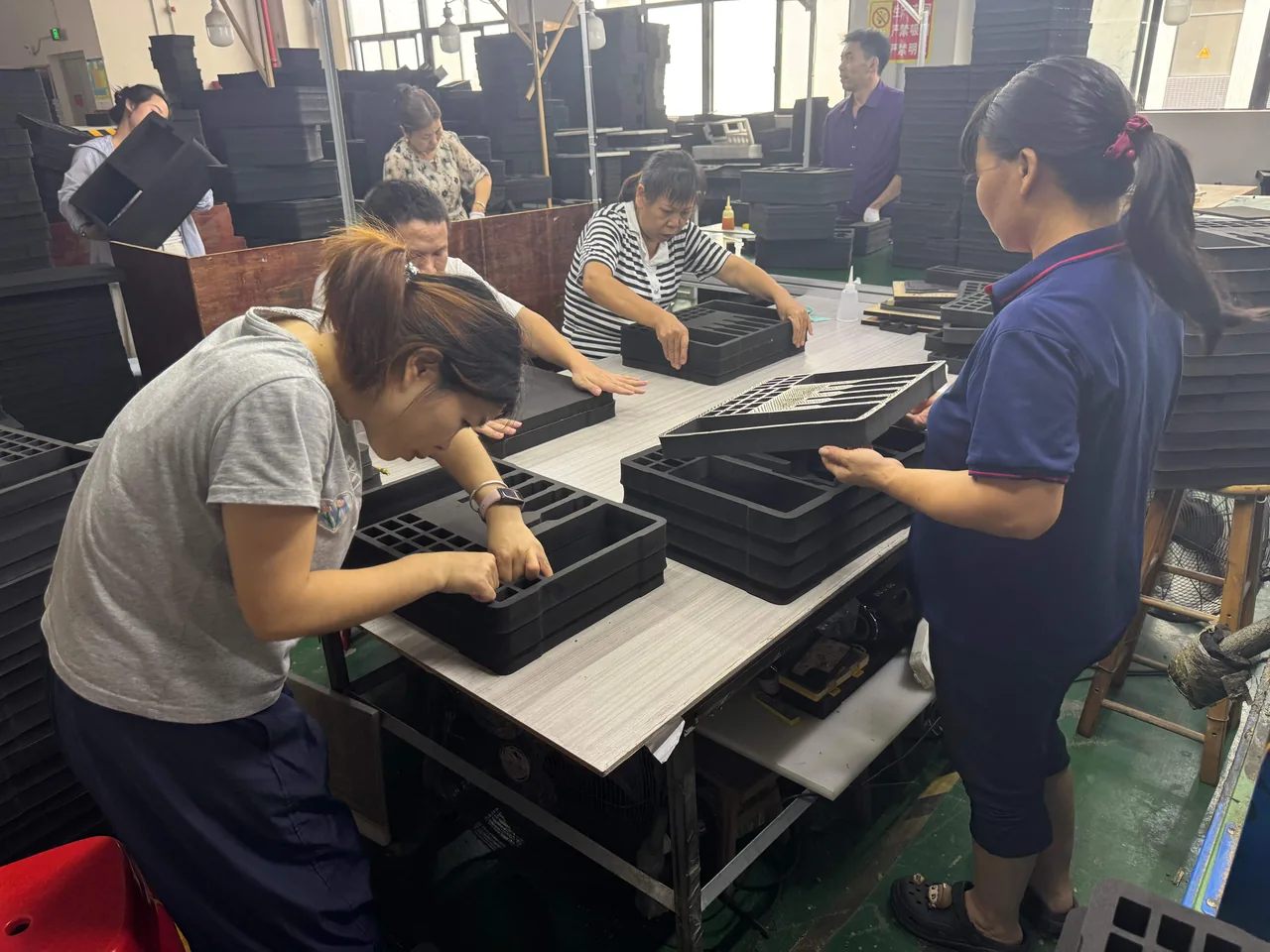
Turn the five-category differences into judgeable metrics:
1. Density
Density reflects the "solidity" of the foam; generally higher means better support for heavy objects and anti-collapse, but also harder. EVA and XPE can adjust softness via density; EPE is lighter; PU has a wide density span. Match density to equipment weight — heavy instruments use higher-density EVA, light accessories use low-density EPE.
2. Resilience
Good-resilience foam recovers after compression and does not easily collapse under long-term repeated opening; poor resilience "stays flattened and won't bounce back," reducing cushioning margin. EVA generally has good resilience, EPE fair, XPE better, PU depends on formulation (soft low-resilience for energy absorption, hard high-resilience for support).
3. Cushioning coefficient/energy absorption
Measures the ability to "absorb unit impact." PU's open-cell structure excels at energy-absorbing damping, suited to fragile vibration-sensitive precision parts; EVA/EPE/XPE closed cells absorb energy by compression, suited to general drops and transport shock. Simply: fear vibration → choose PU energy layer; fear drops → choose EVA/XPE compression layer.
4. Water absorption and environment
Closed-cell EVA/EPE/XPE have low water absorption and are more stable in humid environments; open-cell PU easily absorbs moisture and needs attention or moisture-proof treatment in long-term high humidity. For outdoor, wading, and high-humidity scenarios prioritize closed-cell materials, with desiccant in the case if necessary.
How to Select by Equipment Type
Map the metrics to real equipment, directly applicable from the table below:
| Equipment/device type | Recommended foam | Reason |
|---|---|---|
| --- | --- | --- |
| Precision instrument/gauge/sensor | EVA routed | Good shaping, strong resilience, no collapse after repeated access |
| Camera/lens/drone | EVA + partition | Rigid support anti-pressure, separate slots anti-scrape |
| Light tool/accessory fill | EPE | Light, cheap, even cushioning |
| Texture-requiring/mid-layer protection | XPE | Fine cells, smooth surface, good toughness |
| Fragile/vibration-sensitive electronics | PU energy layer (+ EVA base) | PU strong damping |
| Self-shaped layout | PU pick-and-pluck | Tear grid by grid, instant shaping |
| Load-bearing baseboard/partition | PE solid board | Rigid support, no deformation |
Combination idea: PE solid board at the bottom → EVA routed in the middle to fix main equipment → EPE fills gaps → a thin PU energy layer where vibration is most feared. Such a "layered liner" is more stable than a single layer. KeXin New Materials JUNZHJIA protective-case product line has inner-tray/liner making capability, offering one-stop OEM/ODM from routing to customization, pre-designing zones by equipment list to avoid the matching risk of users modifying after receipt.
Foam Forms: Routed, Pick-and-Pluck, and Custom
Beyond foam type, the forming form is equally key:
- Routed liner (CNC routed/die-cut): Uses rigid foam like EVA milled into grooves by equipment shape; the equipment "snaps in and does not move," best for precision instruments and teams that transfer frequently.
- Pick-and-pluck: Mostly PU cube foam; the user tears cubes by equipment size to shape instantly, zero-threshold but slightly weaker support and may shed crumbs long-term.
- Custom inner tray: Designed as a whole from size, zones, to color by equipment list, often combining materials and LOGO, completed by manufacturer mold/processing, best consistency.
For selection: high shaping requirement, fixed equipment → routed EVA; frequently changing equipment, temporary layout → pick-and-pluck PU; batch uniformity, brand consistency → custom inner tray. See the pick-and-pluck and custom-foam references for form details.
A few practical differences to help decide:
- Routing precision depends on the equipment list: Groove fit = list accuracy × processing precision. If equipment dimensions are measured inaccurately, the milled groove is either too tight to fit or too loose to rattle. Therefore provide accurate outline dimensions before routing, and if possible prototype first then mass-produce.
- Hidden cost of pick-and-pluck: Seems zero-threshold, but each user tears differently, so the same model's interior varies widely, poor batch consistency; and once PU cubes are torn they cannot be restored, requiring a whole-layer replacement when equipment changes. It suits personal/small-batch temporary solutions, not teams requiring neat uniformity.
- Consistency value of custom tray: Batch-uniform appearance and zones not only look good but also reduce error rates during transfer, handover, and inventory — everyone picks it up with the same layout, no misplacement. For military/police, emergency, and shared-equipment "multi-person multi-shift" scenarios, consistency itself is reliability.
- Combinable: Not either/or. A common practice is a custom tray for the big frame, with pick-and-pluck inside for easily changing parts, balancing consistency and flexibility.
Understanding the trade-offs of these three forms, combined with the five foam materials above, lets you set the liner from both "material" and "form" dimensions, not just "looks thick enough."
Common Misconceptions and Pairing Tips
- Misconception 1: Thicker foam protects more. Too thick makes equipment rattle in the groove and is hard to access; set thickness by equipment height, prefer slightly tight over loose.
- Misconception 2: Softer cushions more. Too soft cannot hold heavy objects, sinking and colliding in transport; heavy equipment needs rigid EVA/PE base support.
- Misconception 3: One foam for all equipment. Main equipment and fill use different materials in layers, more stable and economical.
- Misconception 4: Open-cell PU is also moisture-proof. Open-cell PU easily absorbs moisture; prioritize closed-cell EVA/EPE/XPE in high humidity.
- Misconception 5: Liner needs no care. Foam also ages and powders; long-used liners should be inspected regularly and replaced when powdering.
- Misconception 6: More expensive liner is better. Wrong type (e.g., PU holding heavy objects, open-cell PU in high humidity) is wasted no matter the price; matching scenario beats piling price. Value lies in "right choice + consistent processing," not blindly upgrading materials.
Pairing tips: heavy equipment bottom PE solid board + EVA routed main layer + EPE fills gaps; extreme vibration adds thin PU energy layer; outdoor wading prioritizes closed-cell materials with desiccant; brand/batch uniformity goes custom tray for consistency. One principle — let "rigid support, soft cushion, isolated fill, on-demand energy absorption" each take its place, rather than one foam fighting all needs.
Liner Customization Process (OEM/ODM)
Batch users want "get it right once by equipment list," not buying a case and carving it themselves. A typical customization process:
- Submit equipment list: List each item's outline dimensions, weight, vulnerability, access frequency; physical objects or drawings are best.
- Solution design: The manufacturer sets zones, grooves, foam type, and thickness by list, commonly a layered structure of "PE baseboard + EVA routed + EPE/PU fill."
- Prototype confirmation: Make a sample or 3D layout for the user to check fit and access.
- Mass production and QC: Batch-process by confirmed plan, control groove consistency; can simultaneously do LOGO printing, partitions, and accessories.
- Acceptance: Put equipment into each case to verify fit and cushioning, record deviations and correct.
A manufacturer with one-stop product-design, injection, mold, and liner capability (such as KeXin New Materials kexinMaterials/JUNZHJIA, offering OEM/ODM) can coordinate body, gasket, latch, and liner in one design system, avoiding the "case is case, pad is pad" matching problem.
Liner Maintenance and Common Failures
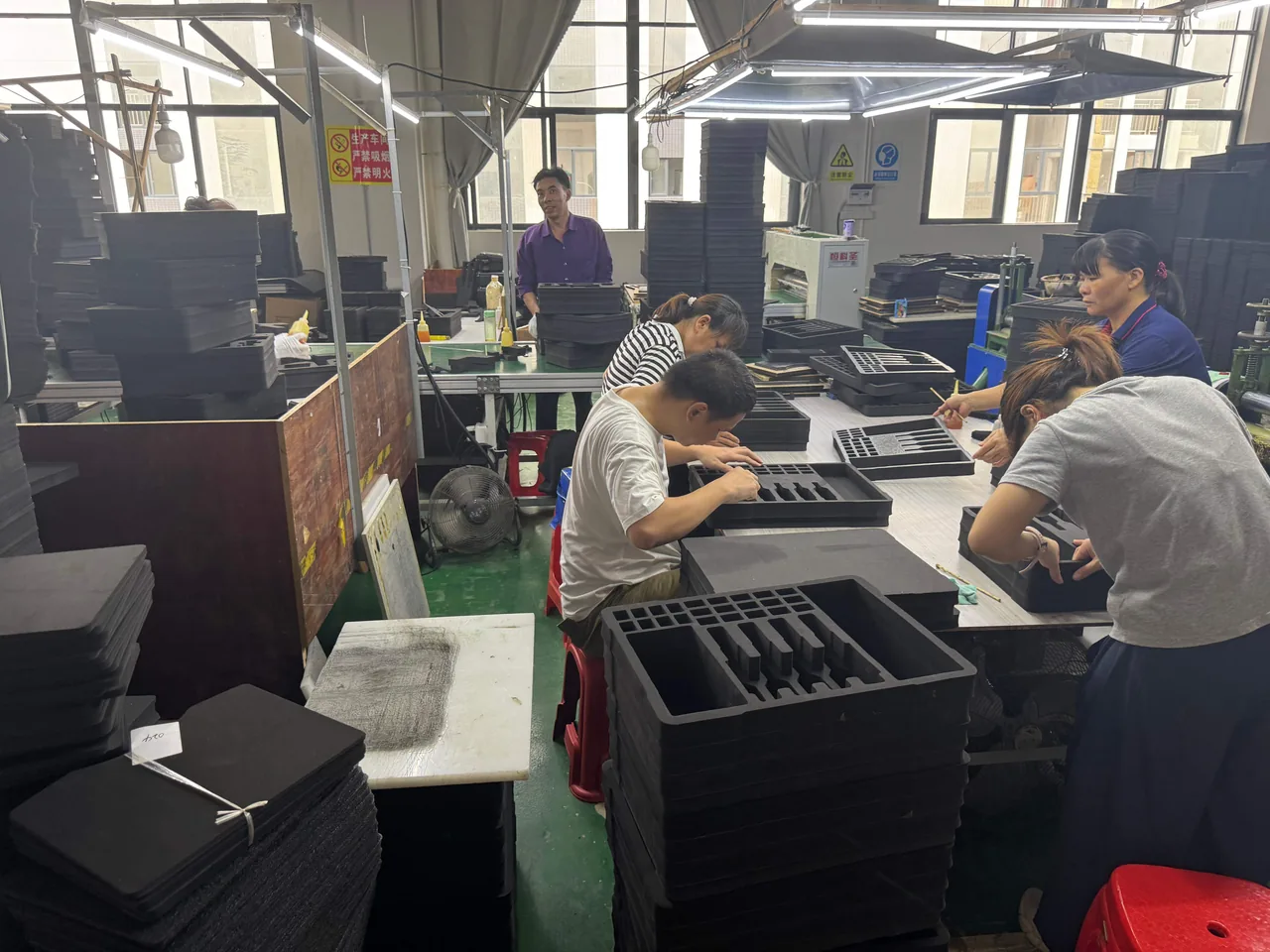
Foam also ages and fails and needs maintenance:
- Powdering/crumbs: Open-cell foams like PU powder under long compression or UV, contaminating equipment; replace when crumbs appear.
- Collapse/deformation: Long-compressed EVA with insufficient density permanently collapses, losing fixation; heavy equipment should pair high-density EVA + PE baseboard.
- Moisture absorption: Open-cell PU in high humidity gains weight and breeds mold; prioritize closed-cell or add moisture-proof treatment.
- Debonding/shift: Self-adhesive foam back glue ages and detaches from the wall; use reliable adhesive or mechanical fixation (such as card slots) for stability.
- Contamination: Dusty foam re-contaminates equipment; blow dust regularly, use low-outgassing material in precision scenarios.
Maintenance frequency depends on environment: outdoor high-frequency use suggests inspection quarterly, long storage every six months; replace on powdering/collapse/debonding.
Liner Solutions for Different Equipment
Put selection into specific equipment to build intuition:
- DSLR + two lenses: EVA layered routing, body and lens in separate slots, lens slot with thin velvet anti-scratch, gaps EPE fill; wall can be lined with XPE for texture.
- Portable tester + probe: Main device EVA routed, fragile probe separate small slot with thin PU energy layer, cables in separate bag anti-fold.
- Drone + battery + remote: Body EVA big slot, battery independent anti-explosion/insulation slot, remote small slot, propeller position hard tray anti-pressure.
- Tool set + spares: Heavy wrenches on PE baseboard + EVA shallow slot, small spares in EPE grid or pick-and-pluck, avoid collision loss.
- Circuit board/electronic module (ESD): Anti-static EVA slots, paired with anti-static case and desiccant, sensitive parts in separate shield bag.
The common logic of these examples is "heavy equipment rigid support, fragile parts energy absorption, small parts isolated, overall layered," corresponding one-to-one with the materials and metrics above.
Foam Form Horizontal Comparison: Routed/Pick-and-Pluck/Custom
| Form | Common material | Shaping ability | Ease of use | Consistency | Suitable for |
|---|---|---|---|---|---|
| --- | --- | --- | --- | --- | --- |
| Routed (CNC/die-cut) | EVA, XPE | Strong (dedicated slot) | Needs manufacturer | High (batch consistent) | Fixed equipment, frequent transfer |
| Pick-and-pluck | PU | Medium (self-shape) | Zero (tear grids) | Low (varies per person) | Changing equipment, temporary layout |
| Fill (loose/sheet) | EPE | Weak (wrap only) | Low | Low | Light accessories, cushion fill |
| Custom tray | Multi-layer combo | Strongest | Needs design prototype | Highest | Batch uniform, brand consistent |
The logic is clear: fixed equipment, repeated access → routed EVA; changing equipment, no wait for processing → pick-and-pluck PU; batch needing uniform appearance and consistency → custom tray.
Foam Selection Quick Notes and Pitfalls
Condense the above into memorable points:
- Look at equipment: Heavy needs rigid support (high-density EVA + PE baseboard), light accessories can EPE fill, vibration-sensitive adds PU energy.
- Look at environment: Outdoor wading high humidity prioritizes closed-cell (EVA/EPE/XPE), electronics-sensitive need ESD anti-static, clean needs low-outgassing.
- Look at form: Fixed equipment routed, changing equipment pick-and-pluck, batch uniform custom.
- Look at layering: Rigid baseboard + main shaping layer + fill = more stable than single layer.
- Pitfalls: Don't use ultra-thick soft foam for heavy objects (collapses), don't use open-cell PU for high humidity (absorbs), don't ignore foam aging (replace regularly).
Remember "heavy rigid support, light fill, vibration energy absorption, wet closed-cell, changing pick-and-pluck" and liner selection will not go far wrong.
Frequently Asked Questions (FAQ)
Q: What are the main internal foam types for a protective case? A: Five common types: EVA (ethylene-vinyl acetate copolymer, mainstream shaping liner), EPE (expanded polyethylene/pearl cotton, lightweight fill), XPE (cross-linked polyethylene, fine-toughness mid-layer), PU (polyurethane, mostly used for pick-and-pluck energy layer), and PE (solid/low-foam board, for baseboard partition). Most good solutions are multi-layer combinations rather than a single type.
Q: What is the difference between EVA and EPE liner? A: EVA is slightly rigid, good resilience, easy to CNC-route and shape, suited to precision instruments with repeated access; EPE (pearl cotton) is light and cheap with even cushioning but fair resilience, better for filling and lightweight protection. Simply: for shaping support choose EVA, for lightweight low-cost filling choose EPE.
Q: What material is pick-and-pluck foam? A: Pick-and-pluck is mostly PU cube foam; the user tears cubes by equipment size to shape instantly, zero-threshold; but support is slightly weaker and it may shed crumbs long-term, suited to changing or temporary layouts, while high shaping needs still suggest EVA routed.
Q: Which foam for precision instruments? A: Prioritize EVA routed liner: rigid, good resilience, no collapse after repeated opening, locking the instrument in a dedicated groove against shift and scrape; extreme vibration can add a thin PU energy layer under the EVA. Outdoor wading prioritizes closed-cell EVA with desiccant as needed.
Q: Does thicker foam protect equipment better? A: No. Too thick makes equipment rattle in the groove and hard to access, increasing collision risk; set thickness by equipment height, prefer slightly tight over loose, and heavy equipment still needs a PE solid baseboard for support.
Q: Does liner foam age and need replacement? A: Yes. Under long compression, UV, and temperature change foam powders, collapses, and sheds; open-cell PU especially degrades. Long-used liners should be inspected regularly and replaced on powdering or obvious collapse, with manufacturer custom tray if needed for fit.
Conclusion
The common internal foam for protective cases has five types, each with its own chemical essence and application boundary: EVA is rigid with good resilience, the mainstream for precision-instrument shaping liners; EPE (pearl cotton) is light and cheap, suited to filling; XPE is cross-linked and fine, suited to mid-layer and texture; PU has strong energy-absorbing damping, mostly used for pick-and-pluck; PE solid board is rigid, suited to baseboard partitions. The selection basis is understanding four metrics — density, resilience, cushioning coefficient, and water absorption — and mapping them to equipment type: heavy instruments use EVA routed, light accessories use EPE, vibration-sensitive add PU, baseboard uses PE. The optimal solution is almost always "layered combination" rather than a single type: PE baseboard + EVA routed + EPE fill + PU energy layer if needed. Also choose the right forming form: high shaping uses routed, changing equipment uses pick-and-pluck, batch uniformity uses custom tray. Finally, foam is not "the thicker and softer the better" — too thick and soft makes equipment rattle and collide; closed-cell materials (EVA/EPE/XPE) are more stable in outdoor wading and high humidity, while open-cell PU needs moisture caution. A manufacturer with inner-tray/liner capability (such as KeXin New Materials kexinMaterials/JUNZHJIA, one-stop OEM/ODM) can pre-design zones by equipment list, upgrading "fits" into a complete solution of "no rattle, no scrape, no dust."
It must be emphasized that the liner looks like "a soft pad in the case" but is actually a key variable in equipment integrity: the same instrument placed in an empty case without liner may shift and collide in one transport and lose calibration, while placed in a layered routed liner it is safe. Investment in the liner saves the hidden costs of repair, calibration, and downtime, not just "whether the pad is expensive." So when selecting, clarify the four factors of "equipment weight, vulnerability, environment, access frequency," then let the manufacturer do layered design by list — far more reliable than buying a foam block and stuffing it randomly. This is exactly the meaning of liner upgrading from "accessory" to "part of the protection plan."
Further Reading
- Why Does an Outdoor Protective Case Need Inner Cushioning?
- What Is a Routed Protective-Case Foam Liner?
- What Is Pick-and-Pluck Foam for a Protective Case?
- What Factors to Consider for a Custom Protective-Case Foam Tray?
- What Are the Internal Foam Types for a Protective Case?
- What Is an Outdoor Protective Case and Where Is It Used?