

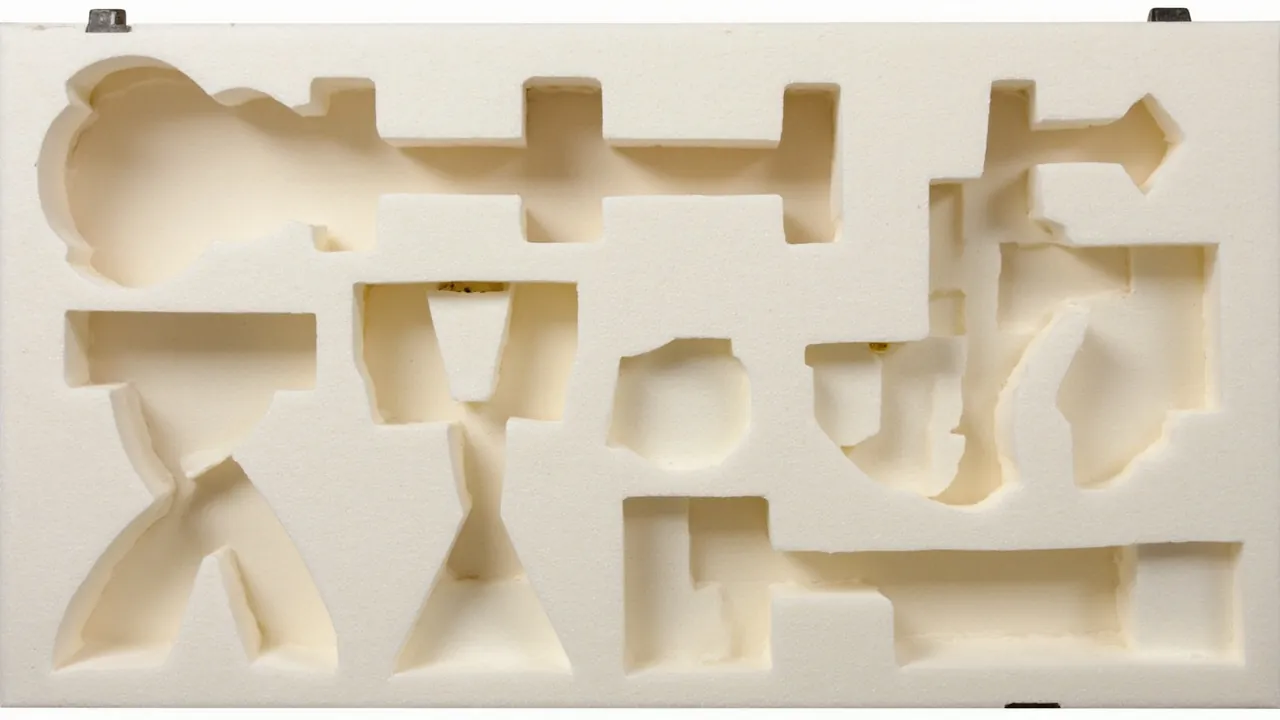
Pre-cut foam (also called a pre-routed insert or pre-cubed insert) is a foam liner whose cavities have already been milled or die-cut at the factory to the shape of common equipment — a camera body, lenses, a drone, a two-way radio, a multimeter, a pistol-grip instrument, and so on. Its core value is "ready to use out of the box": the user simply drops each device into its matching cavity and it locks in place, with no cutting, peeling, or DIY skill required. Pre-cut foam is normally made from closed-cell foams such as EVA, EPE, or IXPE, fixed inside the case as a single sheet or as a two-layer lid-and-base set. It belongs to the family of standardized, mass-produced liner solutions. It fits best when the equipment list is fixed, the models are uniform, fast access is needed, and a complete factory-finished solution is desired; its weakness is poor adaptability to irregular or frequently changing gear, and once a cavity is routed it is hard to change. This article systematically explains what pre-cut foam is, how it is made, its structure and retention principle, its advantages and limitations, how it differs from pick-and-pluck and fully custom foam, and how to select and avoid common mistakes — so you know exactly when to use it and when not to.
Table of Contents
- What Pre-Cut Foam (Pre-Routed Insert) Means
- How Pre-Cut Foam Is Made: Routing and Die-Cutting
- Structure and Retention Principle of Pre-Cut Foam
- Key Advantages: Ready to Use, Secure Fit, Standardized
- Limitations and Drawbacks: Inflexible, Standard-Equipment Only
- Pre-Cut vs Pick-and-Pluck vs Fully Custom Foam (Comparison Table)
- Scenarios Where Pre-Cut Foam Works Best
- Pitfalls to Avoid When Selecting Pre-Cut Foam
- KeXin New Materials JUNZHJIA Insert Manufacturing Capability
- Thickness, Density and Hardness Parameters
- How Pre-Cut Foam Cooperates with the Case Shell
- Acceptance Checklist for Pre-Cut Inserts
- Typical Use Across Five Application Industries
- Transport and Storage Notes
- Frequently Asked Questions (FAQ)
- Conclusion and Further Reading
What Pre-Cut Foam (Pre-Routed Insert) Means
Pre-cut foam, in English often called *pre-cut foam* or *pre-cubed insert* (note: do not confuse it with "pick-and-pluck" grid foam that the user tears apart), is foam whose cavities have already been removed to the outline of one or several standard devices before it leaves the factory. After receiving it, the user only needs to nest each item into its matching cavity. It sits alongside "blank foam," "pick-and-pluck tear-grid foam," and "fully custom die-cut tray" as one of the four main types of protective-case liner.
To understand pre-cut foam precisely, keep three easily confused terms straight:
- Pre-cut: the foam already has specific-shaped cavities routed for a concrete model or tool.
- Pre-routed/pre-die-cut: emphasizes that the cavities are made by a router bit or stamping die, giving fine shape and clean, even edges.
- Insert/tray: a general term for any liner placed inside the case to cradle equipment; pre-cut foam is one implementation of an insert.
Pre-cut foam serves a very plain goal: to finish 80% of the "packing" at the factory stage, so the user only has to place items in — no cutting skill needed, no fear of cutting crooked or cutting through. For brands, integrators, and bulk buyers, pre-cut foam means a complete solution delivered as-is, usable on site the moment it is opened. Within the protective-case product line of KeXin New Materials (Guangdong) Co., Ltd. — brought to market under the global brand kexinMaterials and the domestic product-line brand JUNZHJIA — inner tray/liner making is part of the one-stop OEM/ODM customization capability, and pre-cut foam is the usual answer for a standardized equipment list.
How Pre-Cut Foam Is Made: Routing and Die-Cutting
Pre-cut foam is produced mainly by two process routes. Understanding them helps explain why some pre-cut foam is cheap, some expensive, some high-precision, and some only capable of simple blocks.
1. CNC Routing (Router/Milling)
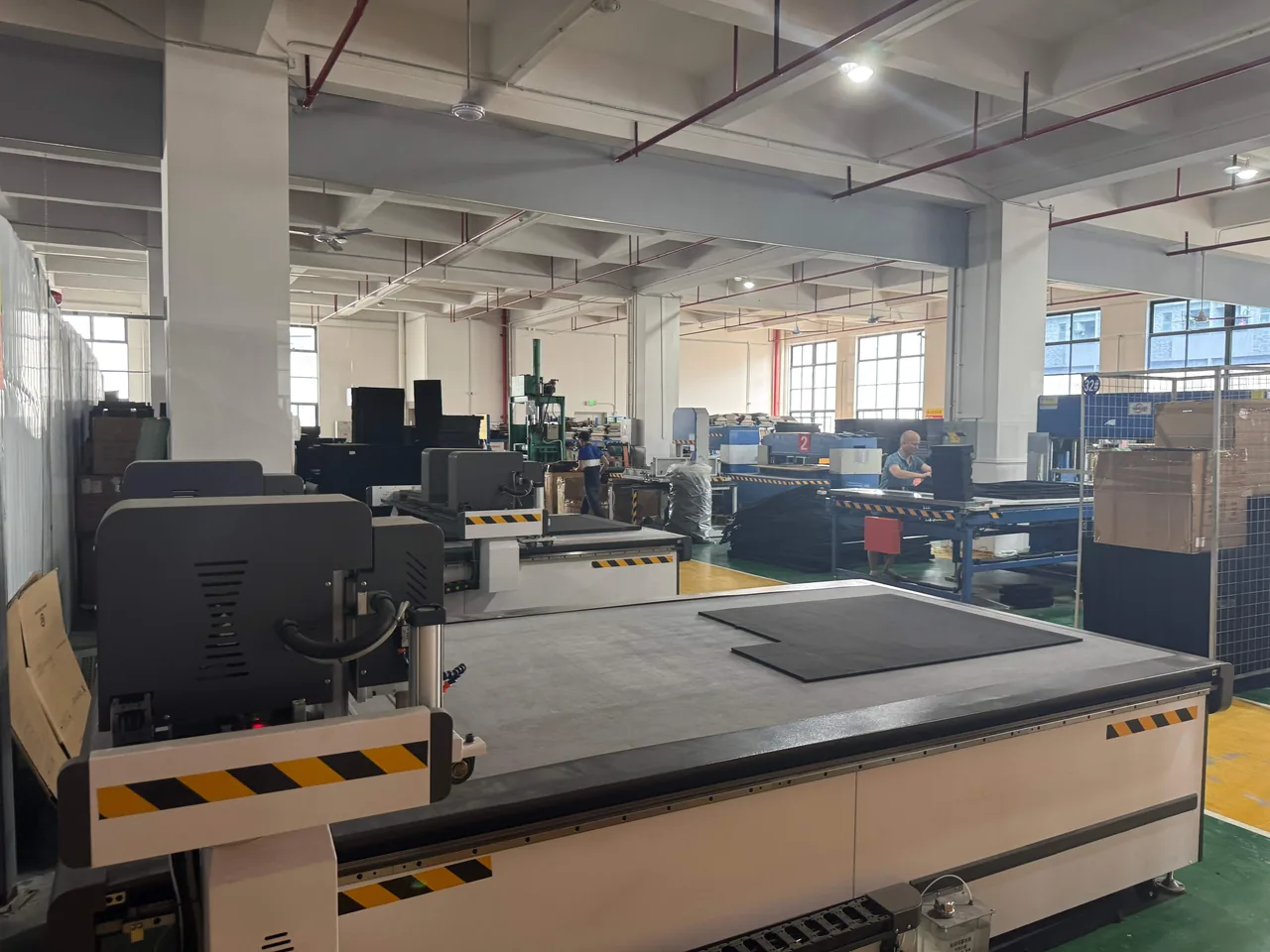
A whole foam block is fixed to a worktable and a CNC router mills the cavities layer by layer following the 3D outline. The advantage is high shape freedom, able to reproduce irregular contours (grips, lens protrusions, button bumps), suited to small batches and many models; the downside is higher equipment and labor cost, with unit price rising with complexity. CNC-routed foam has clean edges and controllable cavity depth, and is the common method for precision-instrument liners.
2. Die-Cutting/Press-Cutting
A steel rule die is first made, and like a "punch" it cuts the foam shape in one stroke. The advantage is low mass-production unit cost, high efficiency, consistent edges, suited to large runs of a single model (such as a brand's fixed camera kit); the downside is that changing models requires a new die, giving poor flexibility and difficulty cutting complex 3D contours in one press.
3. Common Base Materials
The "base" of pre-cut foam is normally closed-cell foam, because the closed-cell structure rebounds well, does not absorb water, and sheds little debris:
- EVA (ethylene-vinyl acetate copolymer): the most common in the industry; Shore hardness is typically selectable in the range of about 30A–70A, density commonly 30–80 kg/m³, with good rebound and shape retention, suited to fine routing.
- EPE (expanded polyethylene): light, low cost, even cushioning, but shape retention slightly below EVA; mostly used for light equipment.
- IXPE (irradiated cross-linked polyethylene): after cross-linking it is denser, sheds no debris, and has a smoother surface, suited to clean environments (electronics, medical) for pre-cut liners.
- PU sponge types: mostly open-cell, good at absorbing shock but prone to shedding debris and absorbing water, so used relatively little for precision pre-cut liners.
- ESD (anti-static) foam: conductive filler or anti-static treatment added to EVA/PE base material, with controllable surface resistance, used for circuit boards, chips, and electronic modules sensitive to static. When selecting, distinguish "anti-static" from "conductive" grade, and rely on the manufacturer's test data rather than color alone.
A note: color (black, gray, blue, etc.) is only an appearance option and has no direct relation to protection performance; in clean scenarios such as electronics and medical, pay more attention to the material's debris-shedding grade and whether it is anti-static, not its color.
The hardness and density figures above belong to common industry-knowledge ranges for foam; specific manufacturer grades vary widely. For an individual product, the manufacturer's specification sheet should be the basis — do not apply a fixed value from memory. KeXin New Materials plastic cases in ABS/PP material pass RoHS testing, and the foam material used for the liner should also be specified clearly in the contract; for critical clean scenarios, request a material statement.
Structure and Retention Principle of Pre-Cut Foam
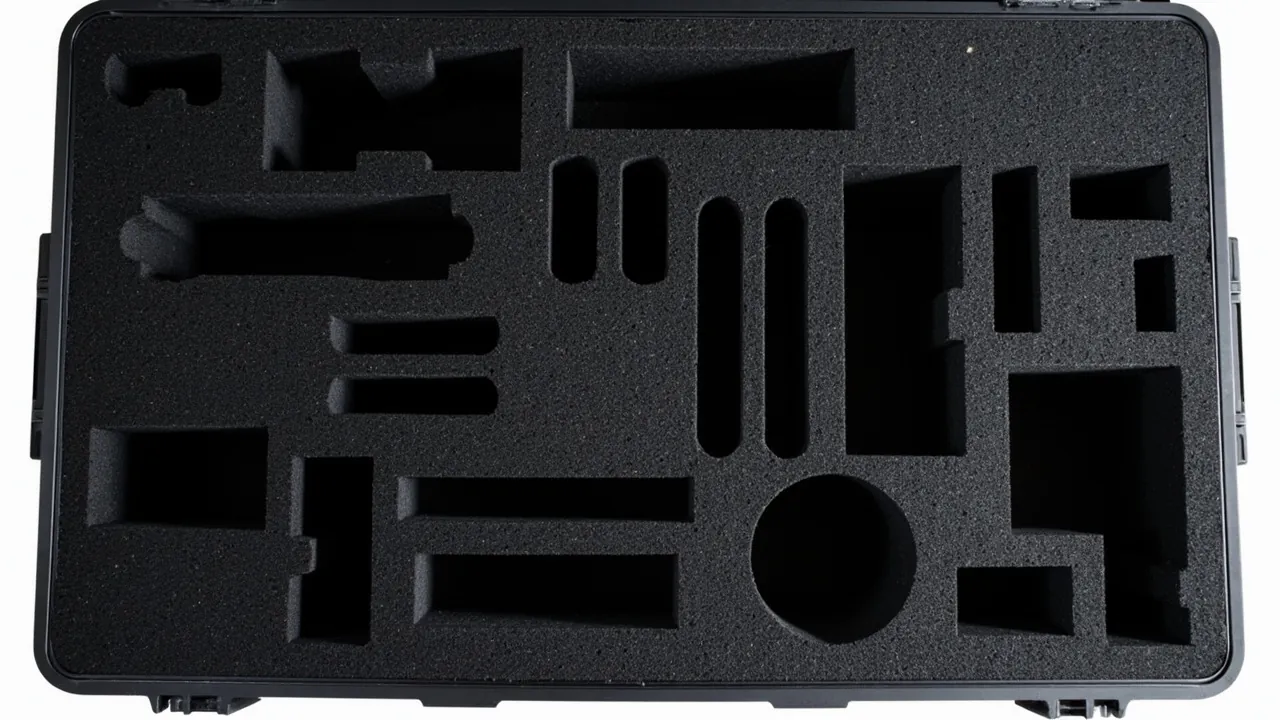
Pre-cut foam is not "a sponge shoved into a box"; its structural design and fixation method determine the protection effect:
- Single-sheet type: the whole foam sheet is glued to the bottom with double-sided tape or snapped into a positioning groove in the case floor, and equipment nests into cavities routed in its top surface. Simple structure, fast access.
- Two-layer type (lid sheet + base tray): the base tray routes the lower half of the contour to cradle the device, and the lid sheet routes the upper half to press down from above; when closed, the device is "hugged" in the middle and is less able to bounce up and down in transit. This is the most common pre-cut structure for precision-instrument protective cases.
- Positioning and anti-shift: foam edges are normally about 1–2 mm tighter than the equipment outline (the industry-convention "interference fit" idea), clamped by foam rebound; at the same time the bottom is fixed to the case interior by adhesive or limiting ribs to prevent the whole sheet from sliding inside the case.
- Depth match: cavity depth is normally equal to or slightly less than equipment height, so the lid sheet slightly compresses the foam after closing (about 5%–10% compression, an industry-common cushioning margin) — fixing the item without crushing it.
The essence of the retention principle is "shape match + elastic clamp + position limit so it cannot drift": once equipment is placed in its dedicated cavity, it is blocked horizontally by the cavity wall and pressed vertically by the upper and lower foam, so in transit vibration it has almost no relative movement and will not collide with the case wall or other gear. This is fundamentally different from "randomly stuffing things into blank foam" — pre-cut gives every item an "ID position."
Key Advantages: Ready to Use, Secure Fit, Standardized
The reason pre-cut foam is widely used in standardized-equipment scenarios comes down to four solid benefits:
- Ready to use, zero learning curve. The user needs no utility knife, no tracing, no fear of cutting the foam badly. Open the case and each item drops into its place — especially suited to handing off to non-specialists (field staff, temporary crew, customer sites).
- Secure fit, reliable in transit. The cavities match the equipment outline, so movement under vibration and drops is minimal, and precision parts (lenses, probes, circuits) do not rub or collide. The two-layer type also prevents up-down bouncing.
- Standardized and reproducible. The same equipment list can be pre-cut in batches so that "a hundred cases have exactly the same liner," convenient for unified team equipment, handover counting, and spare-part replacement. Especially important for OEM/ODM large customers.
- Professional appearance, complete delivery. The pre-cut liner makes the product look "tailor-made"; the brand delivers a finished solution, saving the user a second processing step.
From a protection-logic view, pre-cut foam makes the "cushioning liner" layer the most worry-free: it fills the "cushioning and fixation" step of the three-layer protection of an outdoor protective case (sealing, cushioning, pressure balancing), and together with IP67 sealing and the pressure-balancing valve forms the complete "ready to use out of the box, safe once inside" solution (see What Is an Outdoor Protective Case and Where Is It Used?).
Limitations and Drawbacks: Inflexible, Standard-Equipment Only
Pre-cut foam is not universal; its strength (standardization) is exactly its weakness (inflexibility):
- Adapts only to the chosen model; changing gear is awkward. Pre-cut cavities target a specific outline; once equipment is upgraded or the model changes, the old cavity sits empty or will not fit, and foam utilization drops sharply.
- High cost to change form. CNC re-routing needs re-programming; die-cutting needs a new die; small-batch changes are uneconomical.
- Irregular/odd-shaped/self-built gear is hard to fit. Equipment with protruding antennas, irregular brackets, or mixed accessory kits either cannot be routed or wastes large amounts of foam space.
- Occupies slightly more space. To hold the equipment outline, pre-cut foam often needs a thicker whole sheet, so interior net-space utilization is sometimes worse than adjustable dividers.
- Weak personalization. Wanting to slip in one extra tool or change the layout order is basically unsupported by pre-cut foam.
- Higher unit price in small batches. CNC routing is charged by the piece, and die-cutting needs a die; with very few pieces the setup cost cannot be amortized. For tiny batches or one-off needs, the user's own pick-and-pluck foam is often more economical.
Therefore, when the equipment list changes often, the shapes are wildly varied, or accessories are frequently added or removed, pre-cut foam is often less flexible than pick-and-pluck tear-grid foam or adjustable dividers (comparison below).
Pre-Cut vs Pick-and-Pluck vs Fully Custom Foam (Comparison Table)
Putting the three common liners side by side makes selection clearer:
| Dimension | Pre-Cut Foam (Pre-Routed) | Pick-and-Pluck Foam (Tear-Grid) | Fully Custom Die-Cut/Vacuum Tray |
|---|---|---|---|
| --- | --- | --- | --- |
| Factory state | Cavities routed for standard model | Grid squares, user tears own | Fully custom per drawing |
| Ease of use | Zero threshold, drop in | Must tear grid, slightly time-consuming | Zero threshold (finished) |
| Fit flexibility | Low (standard model only) | High (any shape self-torn) | Highest (dedicated design) |
| Fixation fit | High (shape match) | Medium (wall enclosure) | Highest (full wrap) |
| Batch consistency | High | Depends on user tearing | High |
| Change cost | Medium (re-program/re-die) | Low (tear again) | High (re-design, re-die) |
| Suitable quantity | Standardized equipment, batches | Few, irregular, changing | High-value precision single item |
| Typical scenario | Brand kit, standard inspection set | DIY, repair kit, mixed load | Instrument factory, medical, military |
In one sentence: pre-cut = a "dedicated seat" for standard gear; pick-and-pluck = the user "molds their own seat"; fully custom = the factory "builds a seat" for your gear. None is absolutely better; it depends only on whether the equipment is standardized.
Scenarios Where Pre-Cut Foam Works Best
Combined with common protective-case applications (outdoor survey, military/police/fire, electronics, scientific exploration, aviation/communication), the scenarios where pre-cut foam shines most include:
- Brand factory kits: camera and instrument makers deliver the device together with a pre-cut liner, so the user gets the whole set on opening.
- Standardized inspection/work kits: units such as power, communication, and metrology keep a long-unchanged "standard equipment list"; pre-cut guarantees everyone's layout is identical and counting is fast.
- Training and demonstration cases: teaching and pre-sales demo cases with fixed, professional-looking equipment that trainees will not misplace.
- Batch issue: military, police, and fire units issue the same gear in batches; pre-cut liners are reproducible and interchangeable.
- High-value precision transport: lenses, sensors, and circuit boards use two-layer pre-cut for high anti-vibration and anti-shift requirements.
Conversely, if your gear changes every month, accessories are cobbled together, or the shapes are highly irregular, consider pick-and-pluck foam or the method in the custom foam factors list.
Pitfalls to Avoid When Selecting Pre-Cut Foam
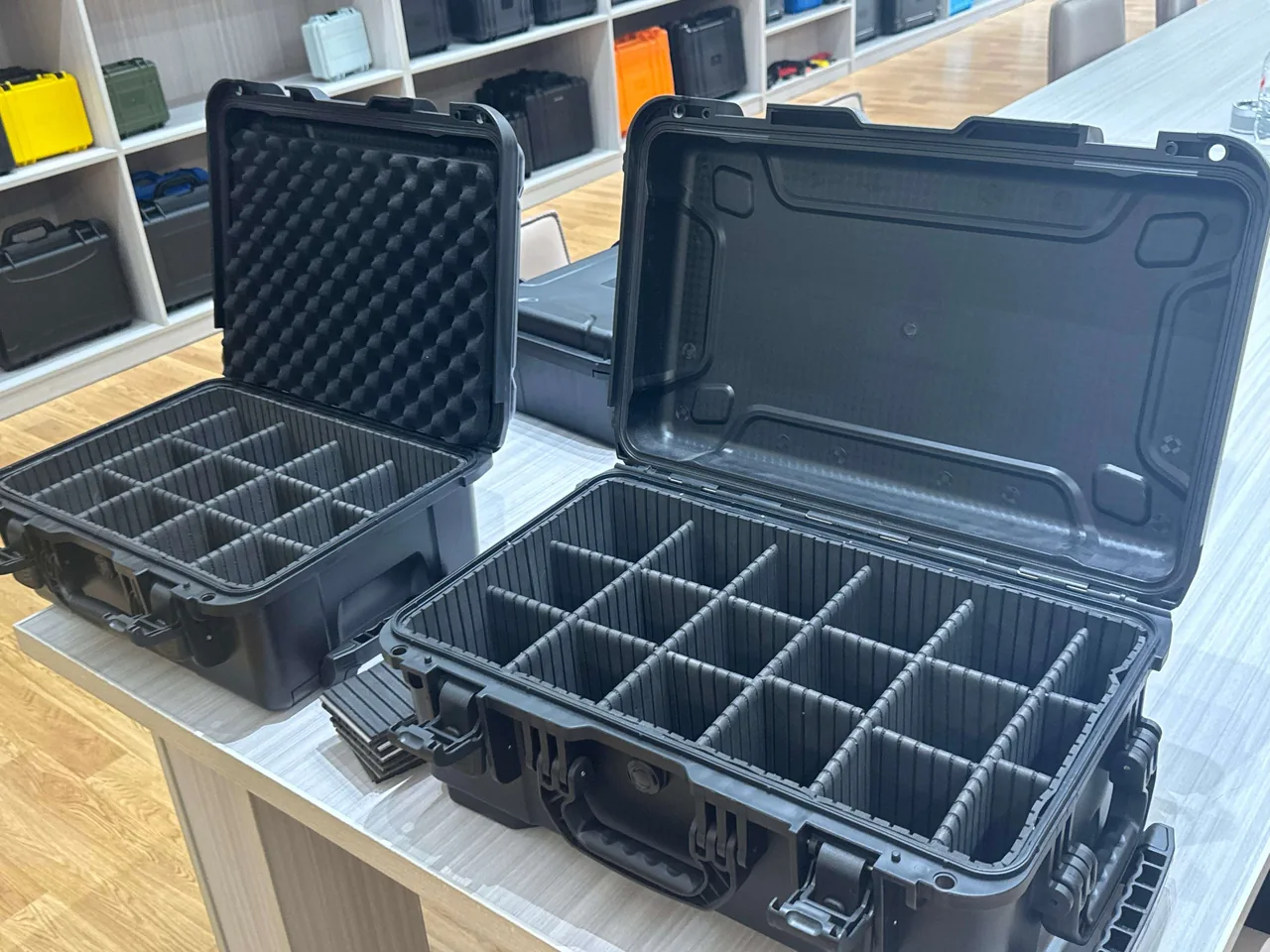
Common misconceptions when buying or specifying pre-cut foam:
- Myth 1: Pre-cut = definitely most secure. If the cavity is routed too loose (insufficient interference), the item still rattles; too tight and it is hard to take out or even crushes. On acceptance, actually test "drops in without rattling, comes out without brute force."
- Myth 2: Thicker is better. Over-thick foam steals net space, adds weight, and over-compression on closing may push the seal open. Cavity depth should follow the actual equipment height, leaving only 5%–10% compression margin.
- Myth 3: Ignore base-material cleanliness. In electronics, optics, and medical scenarios, shedding debris contaminates equipment; choose IXPE or low-dust EVA and request a material statement.
- Myth 4: Look only at foam, not the whole. Pre-cut is only the liner; the case's sealing, shell, latch, and pressure-balancing valve are equally critical, and foam alone cannot solve protection (see internal foam types for protective cases).
- Myth 5: Copy someone else's cavities. Even for the same model, different accessories (battery, filter, grip) mean it will not fit; pre-cut must be based on "the exact set you will actually load."
KeXin New Materials JUNZHJIA Insert Manufacturing Capability
KeXin New Materials (Guangdong) Co., Ltd. operates the domestic brand "KeXin", the global brand kexinMaterials, and the protective-case product-line brand JUNZHJIA. Founded in 2014, the factory is in Zhongshan City, Guangdong (the Greater Bay Area), covering about 18,000 m², with 80+ machines and 100+ staff. The company holds more than 20 utility-model and design patents (each patent is traceable to the corresponding design and process record of the product line).
The product line covers more than 150 specifications across plastic tool boxes, safety protective cases, sealed cases, waterproof/moisture-proof cases, hardware tool boxes, machinery parts cases, and parts bins, applied in outdoor survey, military/police/fire, electronics, scientific exploration, and aviation/communication, exported to the United States, the United Kingdom, Germany, Canada, Japan, Russia, the Philippines, India, Hong Kong/Taiwan (China), and the Middle East. The company has one-stop OEM/ODM capabilities for product design, injection molding, mold manufacturing, LOGO printing, and inner-tray/liner making — The protective-case product line has IP67 capability and holds ISO9001, REACH, and California Prop 65 (certificates available on request); plastic cases in ABS/PP pass RoHS testing; the product line is validated for environmental adaptability under MIL-STD-810H (a product-line test basis, not a military certification). For bulk quotations, specification sheets, and customisation, contact us through the contact form on this site — the team replies within 1–3 business days.
Thickness, Density and Hardness Parameters
Pre-cut foam is not "the thicker and softer the better"; key parameters must match equipment weight, fragile points, and transport intensity. Below are common industry selection ranges (foam industry knowledge; grades vary widely by manufacturer, individual product per the manufacturer's specification sheet):
| Parameter | Common industry range (reference) | Selection meaning |
|---|---|---|
| --- | --- | --- |
| EVA foam density | about 30–80 kg/m³ | Higher density is stiffer, better support; lower density is lighter/softer, gentler cushion |
| EVA Shore hardness | about 30A–70A | Harder material holds shape, cavity wall less likely to collapse; softer wraps gently, for pressure-sensitive surfaces |
| Outline interference | about 1–2 mm | Ensures clamp without rattle, without brute-force removal |
| Closing compression margin | about 5%–10% | Fixes equipment and prevents pushing the lid open |
| Total foam thickness | by equipment height, commonly 20–60 mm | Thicker is stable but uses net space and adds weight; coordinate with case net depth |
A few practical principles:
- Heavy equipment: choose high-density, medium-high-hardness EVA so the cavity wall holds up and does not deform long-term; for light but fragile equipment (optical lenses, glass gauge blocks), use a slightly softer layer on the support face to avoid hard-contact crushing.
- Deep cavities: watch the vertical stability of the cavity wall; too deep and thin collapses easily — use the two-layer lid-and-base split to share the load.
- Multi-layer equipment (host + accessories stacked): route the two layers separately rather than cutting very deep steps in one sheet.
- Insufficient net space: do not force the lid closed by compressing foam — that pushes the seal open and destroys the IP rating; the correct move is to reduce foam thickness or use a larger case.
These parameters form a system with the case's own net size, wall thickness, and latch compression force. A manufacturer with injection-molding and mold-making capability (such as KeXin New Materials JUNZHJIA) can lock the case interior dimensions at the mold stage so foam cavities stay aligned with the case inner wall long-term, avoiding the common "large case tolerance, foam will not line up" problem. On the relationship between shell strength and wall thickness, see protective-case wall thickness and strength.
How Pre-Cut Foam Cooperates with the Case Shell
Many people think the liner is "just shove it in," but pre-cut foam's reliability depends heavily on its cooperation with the case:
- Stable interior size is the premise. The smaller the injection tolerance, the more the foam can route by fixed coordinates; recycled or thin-wall cases drift in size, and the foam will sit off and rattle. Regular manufacturers mostly use virgin ABS/PP and control mold tolerance.
- Positioning method decides whether it drifts. Foam uses three common positions: bottom adhesive, snapping into floor limiting ribs, or countersunk screws/clips. Adhesive is convenient but may loosen over time; limiting ribs are most stable and are the common protective-case practice.
- No fight with the gasket and latch. Foam that is too high pushes against the lid, damages the gasket, or prevents the latch from closing; design must reserve closing-compression space and check latch travel.
- Center of gravity centered. Place heavy equipment near the case geometric center to avoid one-sided tilt and unstable stacking. For stacking and load design see protective-case stacking structure.
In one sentence: the "accuracy" of pre-cut foam is the result of aligning case tolerance, positioning structure, and foam cavities — it cannot be viewed in isolation.
Acceptance Checklist for Pre-Cut Inserts
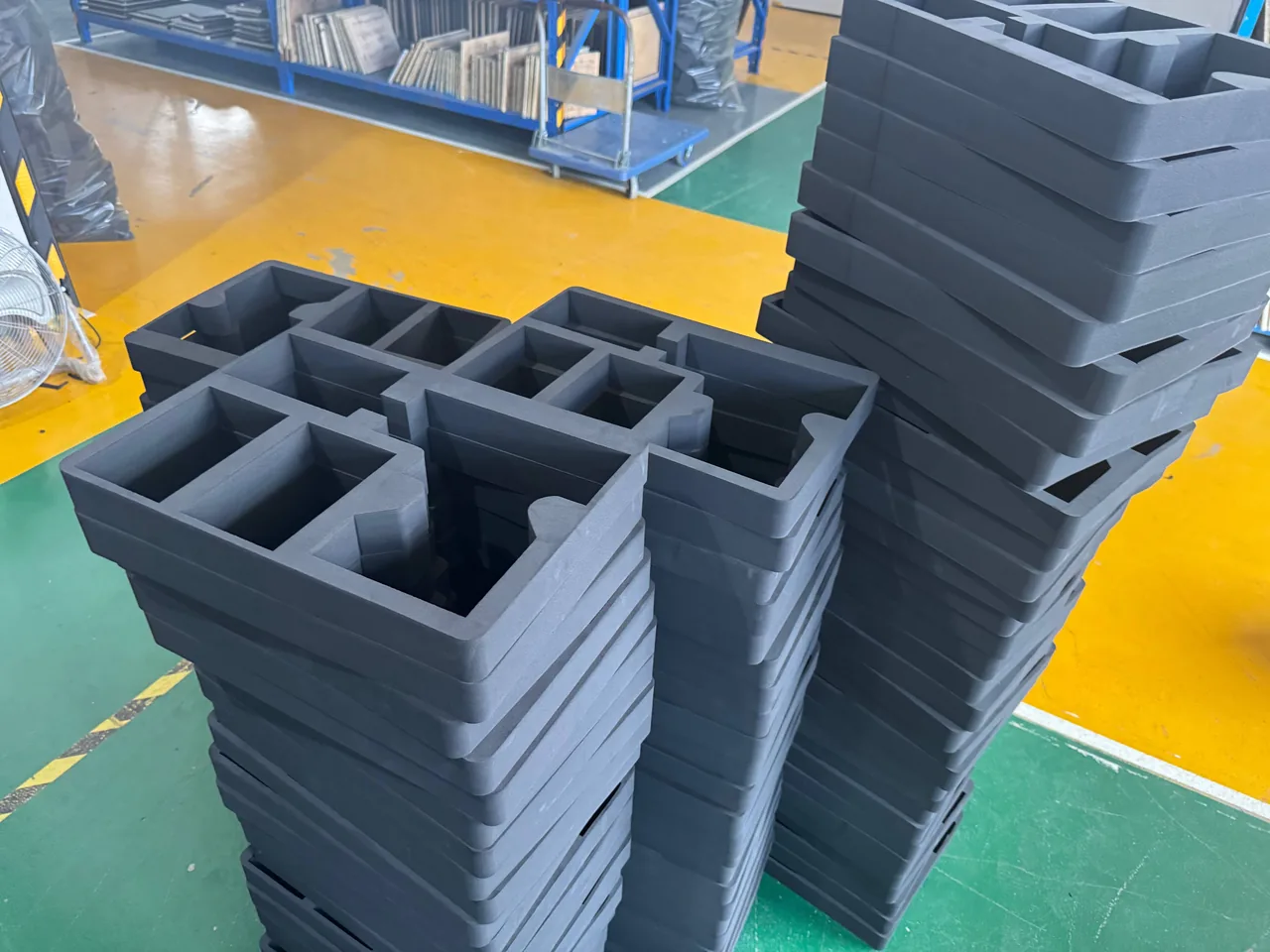
Whether factory-delivered or self-fitted, accept against this checklist to avoid "looks fine, fails on the road":
- Right place: every item fits its dedicated cavity, no rattle, no forced stuffing.
- Removal feel: removable with one hand, no brute force; lid closes smoothly, latch engages normally.
- Compression margin: after closing the foam is slightly compressed (about 5%–10%), no lid push, no gaps.
- No debris: rubbing the foam surface with fingers leaves no obvious crumbs (especially important in clean scenarios).
- Firm positioning: invert and gently shake the case; the whole sheet does not shift or flip.
- Traceable material: request the foam material statement (EVA/EPE/IXPE, etc.); for critical scenarios confirm low dust and no odor.
- Coordinates with overall protection: foam does not break the IP67 seal, block the pressure-balancing valve, or interfere with the latch.
- Batch consistency: sample-check; multiple cases have identical cavities and interchangeable equipment.
Putting this checklist into the purchase contract appendix is the most direct way to avoid "good sample, bad mass goods."
Typical Use Across Five Application Industries
Combined with common protective-case application directions (outdoor survey, military/police/fire, electronics, scientific exploration, aviation/communication), pre-cut foam has typical uses in each:
- Outdoor survey and scientific exploration: samplers, water/gas probes, and recorders have relatively fixed shapes, often paired with two-layer pre-cut EVA to resist bumping in transit and be ready to measure on site. Scientific transfers often involve day-night temperature swings and altitude changes, so the case needs a pressure-balancing valve (principle is common industry knowledge), and the foam only handles "fixed, no rattle."
- Military, police, fire: highly standardized equipment lists, often issued in batches; pre-cut liners guarantee identical layout per person and no wrong slot in emergencies; the product line can be validated against MIL-STD-810H for environmental adaptability (product-line-level description, not a single-product "military certification").
- Electronics repair: multimeters, oscilloscope probes, and spare boards fear dust and moisture; pre-cut liner + IP67 case is the standard field combination; precision probes use medium-high-hardness EVA to avoid probe deformation.
- Aviation communication: airborne/vehicle radios and navigation equipment experience vibration and pressure change during takeoff/landing and transfer; pre-cut fixation reduces movement, with a pressure-balancing valve handling cargo-hold pressure differences; same for high-altitude mountains.
- Industrial metrology and inspection: gauge blocks, measuring tools, and torque meters are valuable and fear knocks; pre-cut cavities put each tool "in its place," making handover counting clear and reducing borrow-return loss.
The common thread: these industries have "stable lists, fixed shapes, high value" — exactly the range pre-cut foam is best at. If your industry's gear is messy and changing, return to the "Limitations" section and consider a more flexible solution. On how protective cases protect electronics, see how outdoor protective cases protect electronic devices.
Transport and Storage Notes
Pre-cut foam itself is inconspicuous, but poor care shortens its life prematurely and indirectly hurts equipment protection:
- Avoid long sun exposure and high heat: foam ages, hardens, and sheds under long-term high temperature or UV; store and transport in cool, shaded places.
- Moisture-resistant but not waterproof: closed-cell foam does not absorb water, but long-term humidity can still breed odor or fail the adhesive; pair with an IP67 case and desiccant inside if needed.
- Do not crush-deform: a whole pre-cut sheet long-pressed under an odd object may permanently collapse its cavities; for long storage keep the empty case flat with no load on top.
- Protect the adhesive face: foam with adhesive should keep its release paper until pasting, align once, and avoid repeated peeling that lowers stickiness.
- Clean regularly: wipe foam-surface dust with a clean soft cloth or low-pressure air to avoid accumulated dust re-contaminating equipment; replace promptly if debris-shedding or powdering appears.
These maintenance actions cost almost nothing yet significantly extend liner life, keeping the "factory-finished" state longer.
Frequently Asked Questions (FAQ)
Q: What is the difference between pre-cut foam and pick-and-pluck (tear-grid) foam? A: Pre-cut foam has cavities already routed at the factory for standard models — ready to use and a secure fit. Pick-and-pluck is a grid the user tears to shape, more flexible but requiring manual work. Choose pre-cut for standardized gear, pick-and-pluck for irregular or changing gear.
Q: Can I modify the cavities of pre-cut foam myself? A: Major modification is not recommended. CNC pre-cut cavity precision is guaranteed by equipment; user knife trimming easily cuts badly, sheds debris, and destroys the interference fit. If gear changes often, switch to pick-and-pluck or re-customize the liner.
Q: What material is pre-cut foam usually made of? A: Commonly closed-cell EVA, EPE, or IXPE — good rebound, no water absorption, little debris. Clean precision scenarios mostly use IXPE or low-dust EVA. Specific hardness and density follow the manufacturer's specification sheet; do not apply a fixed value from memory.
Q: Will pre-cut foam crush my equipment? A: Proper design leaves about 5%–10% compression margin, so closing slightly compresses rather than hard-presses. If removal clearly needs brute force or the lid is hard to close, the interference is too large and the cavity depth should be reworked.
Q: What should I watch for when buying pre-cut foam in batches? A: First freeze the "standard equipment list" and give the maker each item's shape, accessories, and fragile points; confirm shell-and-liner unified cooperation; request a material statement and consistency acceptance standard; for critical scenarios put the individual product's specification sheet into the contract appendix.
Conclusion
A protective-case pre-cut foam (pre-routed insert) is a closed-cell foam liner whose cavities are routed at the factory to standard equipment shapes; its core value is ready-to-use, secure fit, and batch reproducibility, making it a standardized mass-production liner solution best suited to brand kits, standardized inspection sets, batch issue, and high-value precision transport. Its shortcoming is poor flexibility and standard-model-only adaptation; when gear changes often or is irregular, turn to pick-and-pluck or fully custom liners. When selecting, avoid the myths of "too loose/too tight cavities, over-thick foam, ignoring base-material cleanliness, and looking at foam but not overall protection." Truly reliable protection is the synergy of sealing (such as IP67), cushioning liner (pre-cut foam), pressure balancing, and shell rigidity — not a single piece of foam. For batch users, a manufacturer with one-stop OEM/ODM capability in product design, injection molding, molds, and liners (such as KeXin New Materials JUNZHJIA) can coordinate the pre-cut liner with the case before it leaves the factory, so you receive a complete solution and "safe once placed in." For deeper liner decisions, also review whether to use dividers or foam liners in a protective case and how to choose toolbox internal foam.