

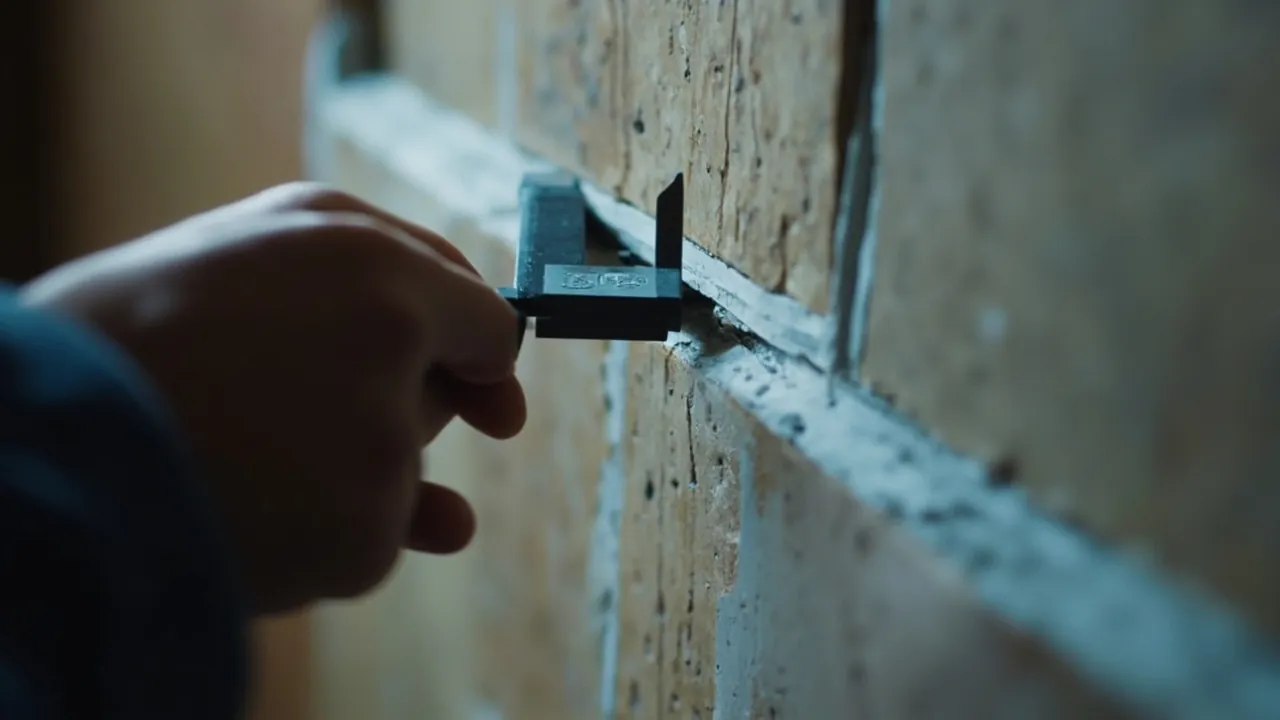
The relationship between a protective case's wall thickness (the average thickness of the material used in the body and lid) and its strength is not a simple "thicker is stronger"; rather it follows the laws of material mechanics and is jointly determined by reinforcement ribs, material grade, and forming process: with the material unchanged, increasing wall thickness significantly raises the body's resistance to bending, denting, and impact (a flat plate's bending stiffness is roughly proportional to the cube of the wall thickness), but each step up in wall thickness quickly raises weight, raw-material cost, and forming difficulty; whereas through reasonable reinforcement ribs, rounded transitions, and an overall skeleton design, a higher actual strength can be achieved at a thinner wall thickness. In other words, "wall thickness" is only one input variable of strength; what truly decides whether a protective case is durable is the combination of "wall thickness × material × structure." This article first directly answers what wall thickness actually affects, then breaks down the quantitative relationship between wall thickness and impact/compression/weight, how the industry judges a "reasonable wall-thickness range," and explains why reinforcement ribs can "thin the wall yet increase rigidity," helping you avoid being misled by the sales talk "our case is thick."
Table of Contents
- The Engineering Relationship Between Wall Thickness and Strength
- How Wall Thickness Affects Impact, Compression, and Deformation Resistance
- The Chain Effect of Wall Thickness on Weight, Portability, and Cost
- How to Judge a "Reasonable Wall-Thickness Range"
- How Reinforcement Ribs Achieve "Thinner Wall, Higher Rigidity"
- More Than Wall Thickness: Material and Process
- Wall-Thickness Inspection Checklist for Selection and Acceptance
- Common Misconceptions About Wall Thickness
- Frequently Asked Questions (FAQ)
- Conclusion and Further Reading
The Engineering Relationship Between Wall Thickness and Strength
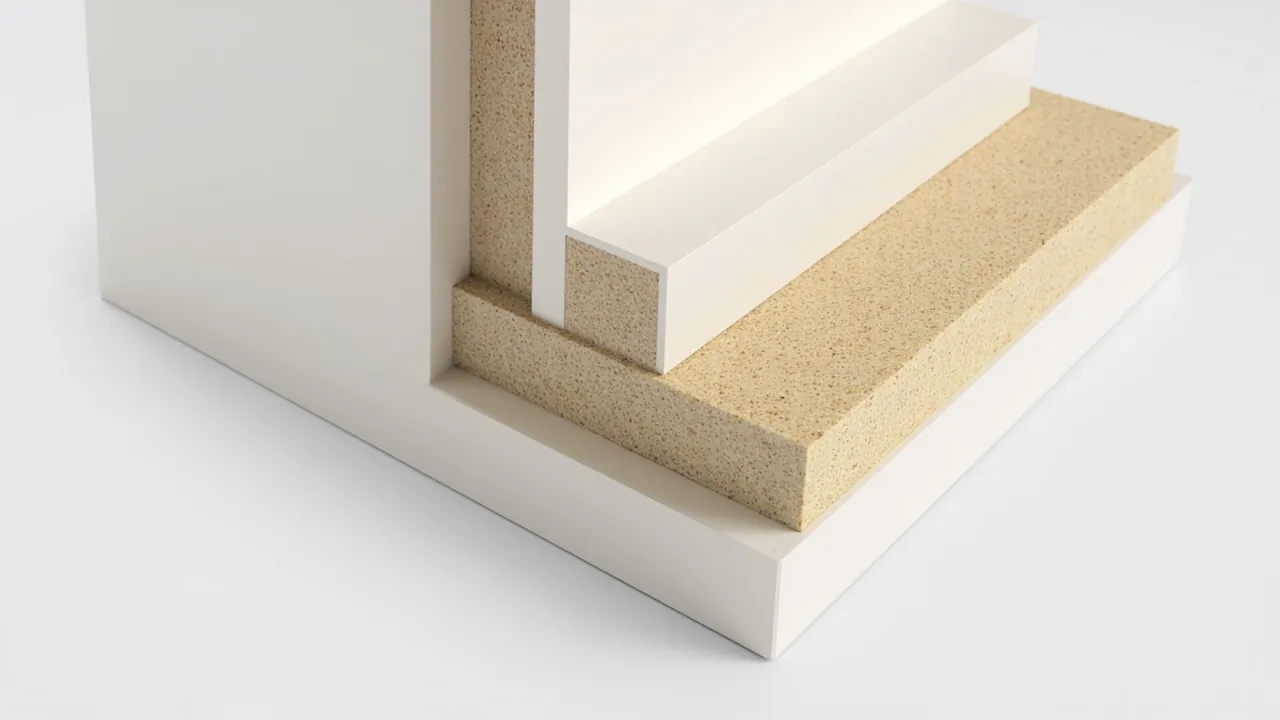
Treating the protective-case shell as a loaded plate, the most intuitive rule is: with the same material, shape, and loading mode, a flat plate (or thin shell) resisting bending deformation has stiffness roughly proportional to the cube of the wall thickness. This means raising wall thickness from 2.0 mm to 2.6 mm (about +30%) can more than double the theoretical bending stiffness; raising it from 2.0 mm to 3.0 mm (+50%) can improve stiffness by over 3×. This is why "a little thicker" seems like a small difference but the feel and dent-resistance can be worlds apart.
But note this "cube relationship" has premises: it describes thin-plate/thin-shell bending/compression scenarios; once the shell is divided into many small cells by reinforcement ribs or made into an overall curved surface by rounded corners, the real load path changes, and the role of wall thickness is "amplified" or "replaced" by the structure. So the engineering consensus is:
- Wall thickness is the foundation, deciding the material's own "capital."
- Structure is the lever, deciding how this capital is spent.
- Material grade and toughness decide the impact "return rate" of this capital.
Therefore, to judge whether a protective case is solid, you cannot just look at the nominal wall thickness, let alone only listen to "we are thicker than others." The correct question is: "Under what material and what reinforcement structure can this wall thickness bear how much face pressure, impact, and drop?" This is also why the article repeatedly stresses "wall-thickness range rather than wall-thickness value" — because talking about wall thickness apart from structure and material is meaningless.
For the protective-case products of KeXin New Materials (Guangdong) Co., Ltd. under the global brand kexinMaterials and the domestic product-line brand JUNZHJIA, the shell mostly uses virgin ABS or PP engineering plastic, with wall thickness, reinforcement ribs, and sealing groove designed together at the mold stage. The factory is in Zhongshan City, Guangdong (Greater Bay Area), about 18,000 m², with more than 80 machines and over 100 staff, and one-stop customization (OEM/ODM) capability for product design, injection molding, mold manufacturing, LOGO printing, and inner tray/liner making. Note: the parent company is Foshan Shunde ., Ltd., and , Ltd. holds more than 20 utility-model and design patents. This article discusses the general engineering principles of wall thickness and strength, giving no company-specific wall-thickness values.
How Wall Thickness Affects Impact, Compression, and Deformation Resistance
Breaking "strength" into three often-confused abilities, wall thickness's effect on them is not the same:
1. Dent resistance (local face pressure): When the case is stepped on, pressed, or a heavy object hits a small flat area, whether it collapses locally depends mainly on that panel's "bending stiffness." As said, stiffness rises roughly with the cube of thickness, so increasing wall thickness is very effective against dents — but adding reinforcement ribs is more cost-effective (see later).
2. Impact resistance (drop, collision): On drop, the shell bears instantaneous impact energy; material toughness matters more than mere thickness. Increasing thickness shares impact energy, but returns diminish beyond a point, and the shell becomes "harder" with rising brittle-fracture risk (especially ABS at low temperature). At this time, better-toughness PP or toughening-modified material is often more reliable than blindly thickening. The industry usually handles drops with a "moderate thickness + rounded-corner energy absorption + liner vibration absorption" combination rather than piling up thickness.
3. Overall deformation resistance (stacking load, long transport compression): When multiple cases stack or are compressed from outside, the wall faces buckling risk. Thickness improves buckling resistance, but the body's geometric rigidity (straight wall vs corrugated wall, with/without longitudinal ribs) matters more. A straight-wall thin case easily "belly bulges" under side pressure, while a same-thickness case with reinforcement ribs or micro-curved surface can bear much higher stacking load.
| Load case | Role of wall thickness | More effective supplement |
|---|---|---|
| --- | --- | --- |
| Local step/point-pressure dent | Strong (stiffness ≈ t³) | Local reinforcement ribs, thicker loaded zone |
| Drop/side impact | Medium (diminishing) | Higher material toughness, rounded-corner absorption, liner damping |
| Stacking side pressure/buckling | Medium | Geometric rigidity (ribs, curved surface), corner support |
| Sealing-face flatness | Critical | Uniform wall thickness, mold precision, demolding control |
This table shows: wall thickness is a "broad-spectrum drug," but its effect differs by symptom; structural parts (ribs, corners, curved surfaces) are "targeted drugs." A mature design keeps wall thickness in a reasonable range and uses structure to solve specific pain points, balancing strength, weight, and cost.
The Chain Effect of Wall Thickness on Weight, Portability, and Cost
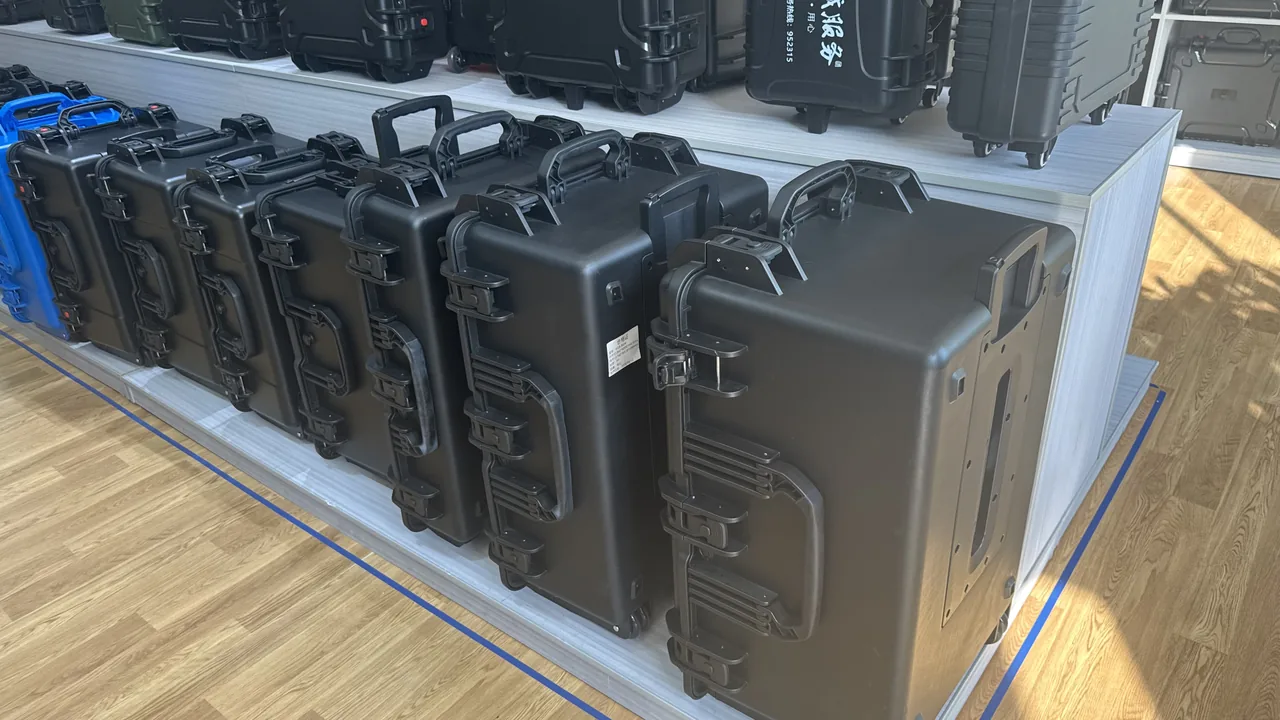
Wall thickness is not a free lunch; each step thicker triggers a chain of costs:
- Weight rises linearly: Case mass is roughly proportional to wall thickness; +50% thickness means about +50% empty weight. For cases that must be carried, shouldered, or checked, this means the user carries half again as much "dead weight" every transfer. In aviation communication, outdoor survey, and other scenarios requiring long-distance handling, excess weight directly drags down operations.
- Raw-material and forming cost rise: More material, slower cooling, longer cycle, harder mold thermal balance control; yield and energy are affected.
- Shrinkage and warpage risk: Thick-wall injection parts cool unevenly, easily producing internal sinks, dents, and surface warpage, which in turn destroys the flatness of the sealing face — over-thick walls can backfire and cause seal failure.
- Portability drops: Heavier at same outline means handles, hinges, and latches bear larger forces and must be thickened too, forming a "thicker → heavier → thicker parts" chain.
So the industry experience is: under the premise of meeting target strength (drop grade, stacking layers, face pressure), make the wall as thin as possible, and invest the saved "thickness budget" into reinforcement ribs and local thickening. This is the design philosophy of "lightweight high-strength" cases: not too thin to bear, but thin smartly.
The KeXin New Materials JUNZHJIA protective-case product line has IP67 capability and holds ISO9001, REACH, California Prop 65 (backed by company documentation; certificates available on request); the plastic ABS/PP material passes RoHS testing. Its one-stop OEM/ODM capability means wall thickness, reinforcement ribs, and liner can be coordinated and optimized at the mold stage rather than thickened at a single point.
How to Judge a "Reasonable Wall-Thickness Range"
Since company-specific values cannot be given, here is an industry-general judgment framework for you to verify against your needs:
- By size class: Small cases (handheld, inner length < 30 cm) bear small loads and can have thinner walls; medium cases (inner length 30–60 cm) need mid support, moderate wall with ribs; large cases (> 60 cm or with wheels) face large side pressure and stacking load and must rely on reinforcement ribs + moderate wall, not mere thickening.
- By load class: Only light tools/documents → lower wall acceptable; precision instruments, metal spares, battery packs → higher face pressure and drop resistance, wall should rise or be locally thickened.
- By environment class: Indoor temperate storage needs low toughness; northern winters, high-altitude low temperatures need more attention to material toughness and impact resistance, with wall matched to material selection.
- Look at uniformity, not maximum: Whether wall thickness "transitions evenly" matters more than "how thick locally." Sudden thick/thin junctions are stress-concentration points, prone to cracking; good mold design makes wall thickness change gently and uses ribs instead of concentrated thickening where necessary.
- Look at the mating face: The sealing plane where lid meets body must be thick enough and flat, otherwise no wall thickness can save the IP rating.
The common reasonable wall-thickness experience range for general injection engineering-plastic cases usually falls between about 1.5 mm and 4.0 mm, depending on the above size, load, and material; but this is only a broad reference, and the real "reasonable" must be reverse-derived from target drop height, stacking layers, internal weight, and material grade, verified by sample testing. When purchasing, be sure to request the "design wall thickness and corresponding test grade of this spec" from the manufacturer, rather than hearing "we are very thick." To judge a case's rigidity structurally, see features of high-strength case structures; for weight-vs-strength trade-offs see how cases balance weight and strength.
How Reinforcement Ribs Achieve "Thinner Wall, Higher Rigidity"
Reinforcement ribs (rib) are the core means for a plastic shell to raise stiffness without increasing overall wall thickness. Essentially they "grow" raised ribs on the thin wall, dividing a large flat panel into many small panel cells supported by ribs, greatly shortening the "bending span."
The engineering principle is simple: a panel's bending stiffness depends on its "effective span" — halve the span and stiffness rises by the fourth power (about 16×). The role of ribs is precisely to reduce the effective span: a 200 mm-wide flat wall with ribs spaced 40 mm gives each cell only 40 mm free span, raising dent resistance by orders of magnitude, while material is added only locally in the "rib," with total weight far less than thickening the whole wall.
Industry-common points for rib design:
- Rib thickness is usually less than the main wall (about 0.6–0.8×) to avoid root shrinkage and warpage; too high and too thick backfires.
- Rib roots need rounded transitions to avoid stress concentration and surface sink marks.
- Rib direction follows the main force direction: for a lid pressed on top, ribs should be parallel to the support edges; for side walls under side pressure, ribs are better vertical or diagonal in a grid.
- Ribs must not break the sealing plane: the sealing-mating zone must stay flat; ribs must "avoid" the sealing groove, otherwise flatness is destroyed and the IP rating is lost.
- Ribs can combine with weight-reduction holes: on large-case side walls, ribs + local thin wall or weight-reduction structure achieve "rigid outside, light inside."
In one sentence: ribs turn the "thickness budget" from "uniform whole-face thickening" into "local ribbing on demand," exchanging less material and a lighter case for higher rigidity. This is why professional protective cases dare keep wall thickness in a reasonably thin range — because ribs have their back. For more on ribs see why cases need reinforcement-rib design and the role of rounded-corner design.
More Than Wall Thickness: Material and Process
Beyond wall thickness, two often-overlooked "strength variables":
Material grade and toughness: Even for the same ABS or PP, the gap between "virgin" and "recycled" is huge. Recycled material often has lower molecular weight, more impurities, uneven wall thickness, and deforms easily under load, directly skewing the seal and destroying protection. Regular manufacturers mostly use virgin material and modify the grade (e.g., ABS toughening, PP impact modification) to raise low-temperature toughness. KeXin New Materials plastic case ABS/PP material passes RoHS testing, meeting its material-compliance requirement. On material choice, ABS has high rigidity and easy surface treatment/printing; PP is more low-temperature impact resistant and lower density; neither is "better" but "scenario-fit" — more differences in PP, ABS and PC case differences.
Forming process and mold precision: No matter how good the wall-thickness design, if injection fails to fill, hold pressure insufficient, or cooling uneven, it will sink and warp. The mold's parting-face precision, ejection balance, and cooling-water design decide whether wall thickness "delivers as specified." This is why a manufacturer with injection and mold-manufacturing capability (such as KeXin New Materials) can guarantee fit tolerances from the source — wall thickness is not just a drawing number but the result of mold and process.
Therefore, in acceptance you must not only ask "what wall thickness" but also "what material? Does the manufacturer make its own molds? Are there corresponding drop/stacking test records?" Only with all three does wall thickness mean something.
Virgin vs Recycled: The Material Truth Behind Wall Thickness
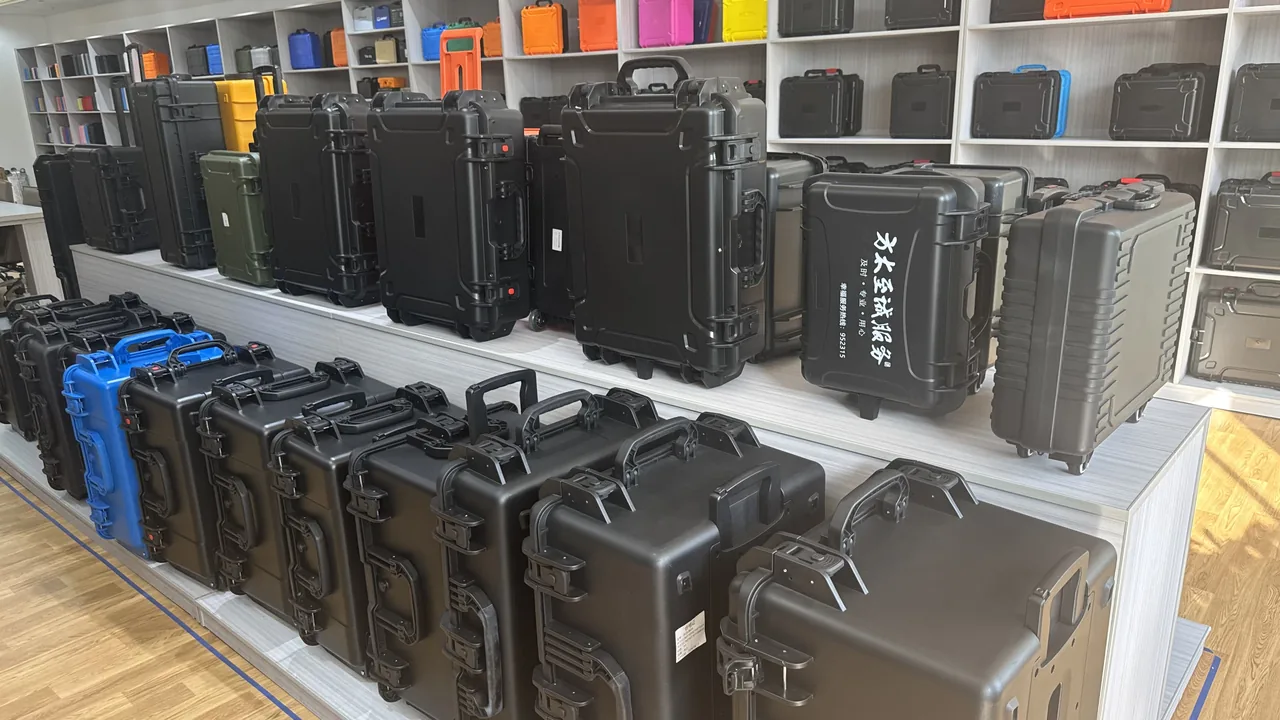
"Virgin material" was mentioned several times; here is its hidden effect on wall thickness and strength. If a protective-case shell uses recycled material, even a beautiful drawing wall thickness can fail in reality:
- Lower molecular weight: Recycling breaks polymer chains, making material brittle, lowering impact and fatigue resistance — wall thickness "nominally high" yet cracks on a single drop.
- Impurities and black spots: Recycled material often mixes other plastics and impurities, with uneven melt flow, easily producing unfilled, sink, and weld-line defects.
- Uneven wall thickness: Unstable recycled-material flow makes wall thickness vary widely across the same mold, losing sealing-face precision and directly skewing the IP rating.
- Compliance risk: When RoHS, REACH, California Prop 65 controls apply, recycled-material origin is untraceable, hard to prove compliance. KeXin New Materials plastic case ABS/PP material passing RoHS testing is precisely built on controllable material origin and batches.
So "wall thickness" is not an isolated number; behind it stands "what material is used." A manufacturer with injection and mold capability that controls material and precision (such as KeXin New Materials), even with a moderately thin wall thickness, can achieve reliable strength via virgin material + rib structure + mold precision; while a manufacturer using recycled material with outsourced molds, no matter how thick the wall is labeled, may not survive a real drop. When purchasing, ask for "virgin-material certificate + test records" together with "wall thickness" — that is the complete acceptance logic.
Worth mentioning, wall thickness and material together also decide the shell's long-term aging performance. In long-exposure scenarios like outdoor survey and aviation communication, the repeated action of UV, temperature difference, and humidity slowly degrades the material; virgin material with reasonable wall thickness still keeps structural integrity after aging, while recycled thin-wall parts may become brittle and crack after one or two seasonal cycles. So viewing wall thickness within the "material–structure–process–environment" system avoids being misled by a single number and selects a protective case that truly withstands time.
Wall-Thickness Inspection Checklist for Selection and Acceptance
Condense the above into an executable checklist, comparing item by item when purchasing or inspecting:
- Clarify the usage scenario: internal weight, whether precision, whether stacking, whether air/high-altitude, whether low-temperature environment.
- Reverse-derive required strength: by drop height, stacking layers, face-pressure requirement, set the target grade (no need for extremes; sufficient with margin).
- Request design wall thickness and material: ask ABS or PP, virgin or modified, average and thinnest wall thickness.
- Check reinforcement-rib design: require rib-layout sketch or photos, confirm ribs avoid the sealing zone and have rounded roots.
- Verify mating-face flatness: whether the sealing plane has uniform thickness and no warpage — the physical basis of the IP rating.
- Request test basis: refer to MIL-STD-810H (product-line environmental adaptability validation) or the manufacturer's internal drop/stacking tests; IP rating per IEC 60529. Individual products follow the specification sheet.
- Sample physical test: if possible, do small-batch drop, stacking, and immersion sampling — more reliable than any "we are thick."
- Weight reasonableness: after meeting the strength target, empty-case weight should be in a reasonable range; too heavy often means unoptimized design.
Following this checklist, you filter out not "thin cases" but "thin without reason, thick without structure" cases.
Wall-Thickness Experience by Case Size and Load
Turn the "graded judgment" above into a quick-reference table. The table below is based on industry-common experience for injection engineering-plastic cases, not any company-specific value; specific still follows the manufacturer's specification sheet and sample testing:
| Case class | Inner-length ref. | Typical contents | Wall-thickness experience range (ref.) | Main reinforcement |
|---|---|---|---|---|
| --- | --- | --- | --- | --- |
| Handheld small | < 30 cm | docs, small tools, batteries | Thin, ≈ 1.5–2.5 mm | Light ribs, corner thickening |
| Medium | 30–60 cm | meters, lenses, spares | Moderate, ≈ 2.0–3.0 mm | Grid ribs, rounded corners |
| Large | > 60 cm | equipment, multi-piece kits | Moderate + ribs, ≈ 2.5–4.0 mm | Longitudinal ribs, reinforced corners, feet if needed |
| Wheeled check case | > 70 cm | heavy kits | Moderate-thick + structural ribs | Reinforced base frame, dual latches, impact corners |
Emphasis: the numbers in this table are only "order-of-magnitude hints." The same 40 cm medium case, holding light documents vs holding 10 kg metal spares, has completely different wall and rib requirements; at the same wall thickness, PP's low-temperature impact is usually better than un-toughened ABS, so northern winters or high-altitude low-temperature transport may make material selection more critical than adding another 0.3 mm. The purchaser should really throw "how heavy, how high a drop, how many layers to stack" at the manufacturer and let it reverse-derive wall and structure, rather than picking from the table by guess.
Wall-Thickness Mutation and Stress Concentration: Why "Uniform" Beats "Thick"
Many users only stare at "average wall thickness" but ignore a more fatal issue: the mutation of wall thickness. When the shell transitions abruptly from 3.0 mm to 1.5 mm, a stress-concentration point forms at the junction — on impact or drop, cracks often start here. It is like a paper crease being easiest to tear.
Common engineering practices to avoid stress concentration:
- Gradual transition: connect thick and thin with a slope or arc, not a right-angle step.
- Rounded connection: walls to ribs, walls to corners use fillets, avoiding stress spikes at sharp corners (ties to rounded-corner design).
- Avoid local over-thickening: single-point thickening far beyond surroundings causes internal sinks and surface sink marks on cooling, becoming a weak point; the right move is to supplement with ribs, not pile thickness.
- Symmetric design: left-right, up-down wall thickness as symmetric as possible, reducing warpage and internal stress during injection.
So a practical trick in inspection: shine a flashlight sideways on the case inner wall, observe whether rib roots, corners, and latch-seat areas have obvious sinks or unevenness. Where there are sink marks is often the hidden stress-concentration and crack-risk zone. Making "uniform transition" a hard acceptance item screens real problems better than merely asking "what is your wall thickness."
Wall Thickness and Drop Testing: From the MIL-STD-810H View
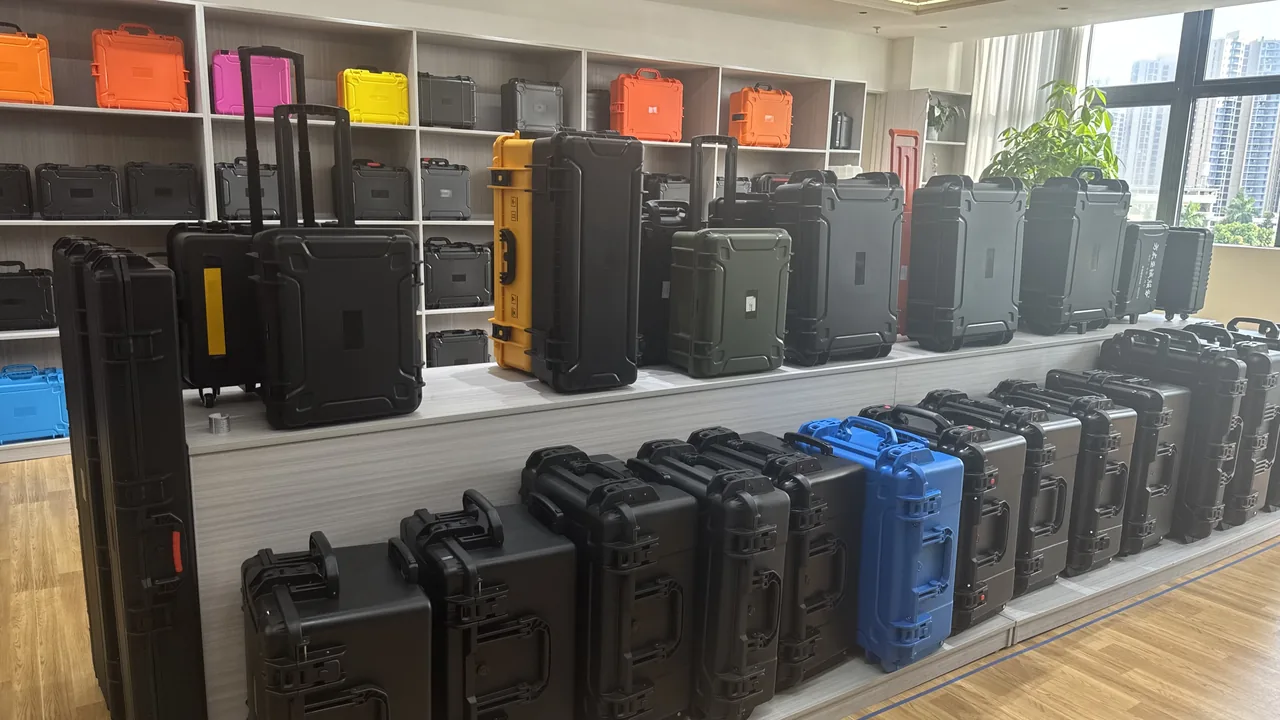
Protective cases in outdoor, military/police, and aviation scenarios are often validated for environmental adaptability against MIL-STD-810H (note: this is a product-line-level environmental adaptability validation basis, not a "military certification"). Among its procedures directly related to wall thickness are drop, shock, and vibration. In these tests, wall thickness does not directly "score" but participates as part of the overall structure:
- Drop (e.g., Method 516.8 related procedures): the shell must not crack after multiple, multi-angle drops, latches must not loosen, contents must not be damaged. Wall thickness provides basic crack resistance, but rounded-corner energy absorption, liner cushioning, and latch strength jointly decide the result.
- Shock (e.g., Method 519): under instantaneous high-acceleration shock, a thin-but-tough structure often beats a thick-but-brittle one; material toughness and wall thickness must match.
- Vibration (transport random vibration): long-term vibration tests the fatigue life of ribs and latches; wall-thickness uniformity affects crack initiation.
So a qualified protective case is not "wall thickness piled up to survive one drop" but "structure coordinated to withstand the standard's multiple, multi-condition tests." KeXin New Materials JUNZHJIA protective-case product line uses MIL-STD-810H as the environmental adaptability validation basis and has IP67 capability (per IEC 60529); individual-product performance still follows the specification sheet and test report. Understanding this, you see why wall thickness must "serve the overall test target" rather than be pursued as an isolated number.
Common Misconceptions About Wall Thickness
- Misconception 1: Thicker wall is stronger. Wrong. Beyond the reasonable range of mold and material, over-thick walls easily sink and warp, instead destroying the sealing plane; and weight and cost soar. Strength is the product of structural combination.
- Misconception 2: Only look at the nominal maximum wall. Local thickening ≠ overall strong; look more at the thinnest spot, at uniform transition, at rib distribution.
- Misconception 3: Thin wall = cutting corners. Not necessarily. With reinforcement ribs, better-toughness material, and better molds, a thin wall can be very strong; "reasonably thin" is a sign of design capability.
- Misconception 4: Plastic is inherently less solid than thick metal. Engineering plastics (ABS/PP) in protective-case scenarios, with structure, achieve sufficient strength, and are lighter, corrosion-resistant, and non-conductive — suited to electronic-instrument protection.
- Misconception 5: Wall thickness can compensate sealing. No. No matter how thick, an uneven sealing plane or failed gasket still lets in water and dust. Sealing relies on flatness + seal + latch compression.
Frequently Asked Questions (FAQ)
Q: Is a protective case's wall thickness better the thicker? A: No. Increasing wall thickness raises bending stiffness (roughly with the cube of thickness) but linearly raises weight and cost, and over-thick walls easily sink and warp, destroying the sealing plane. The reasonable approach is "moderate wall + reinforcement ribs + quality material," using structure for strength.
Q: Why can reinforcement ribs make a thin-wall case stronger? A: Ribs divide a large flat wall into many small panel cells supported by ribs, shortening the bending span; halve the span and stiffness rises by the fourth power. Ribs add material only locally, with total weight far less than whole-face thickening, achieving "thinner wall, higher rigidity."
Q: How to roughly judge whether a protective case's wall thickness is reasonable? A: Not by a single number. Judge by case size, internal weight, whether stacking/air/low-temperature, and look at whether wall thickness transitions uniformly and whether ribs avoid the sealing zone. The industry-common injection engineering-plastic case wall-thickness experience range is about 1.5–4.0 mm, but the final must be reverse-derived from target drop, stacking, and material and verified by sample testing.
Q: Will a thin-wall plastic protective case be not solid? A: Regular products use virgin ABS/PP with reinforcement ribs; a thin wall can still achieve sufficient strength. The key is material grade, rib distribution, and mold precision, not merely "thick or thin." KeXin New Materials JUNZHJIA designs wall thickness and ribs together at the mold stage.
Q: Does wall thickness relate to the IP waterproof rating? A: Indirectly. Wall thickness itself does not decide waterproofing, but the thickness uniformity and flatness of the sealing-mating face decide whether the gasket can be stably compressed; uneven or warped wall thickness destroys the seal. So wall thickness must serve "sealing-face flatness," not directly "waterproofing."
Q: What wall-thickness questions should I ask the manufacturer when purchasing? A: Ask: ABS or PP, virgin/modified material, average and thinnest wall thickness, how ribs are laid out, how the sealing face is kept flat, and whether there are corresponding drop/stacking test records. Individual products follow the specification sheet and test report.
Conclusion
The relationship between a protective case's wall thickness and strength is a curve modulated together by material, structure, and process: wall thickness is the basic input of strength, with bending stiffness rising roughly with its cube, but it also brings linear or super-linear rises in weight, cost, and forming risk; what truly makes the shell "thin yet hard" is the reinforcement ribs shortening the bending span, rounded corners dispersing impact, and virgin material plus mold precision guaranteeing wall thickness "delivers as specified." Therefore, when purchasing you should not fall into the "thicker is better" misconception, but reverse-derive the required strength by usage scenario, then satisfy it with the combination of "moderate wall + reasonable rib layout + quality material + flat sealing face," using sample testing and test records as acceptance basis. Treat wall thickness as a "design variable" rather than a "marketing point," and the protective case you select can withstand the repeated tests of drops, stacking, and transport in real scenarios like outdoor survey, military/police/fire, electronics, and aviation communication. To learn more about case structure, read how to judge a high-quality case structure and what is an outdoor protective case.