


Protective-case shells almost all use rounded corners (rounded corner — the case's edges, corners, handle roots, and latch bases made into arc transitions) rather than sharp corners. The core reason is that rounded corners disperse stress concentration under load, raise impact and knock resistance, and are also easier to clean, safer, and more aging-resistant in daily use: a sharp corner forms a stress spike at the load point and cracks very easily there on a drop or impact, while a rounded corner "breaks the concentrated force into pieces" and guides it along the curved surface, markedly lowering crack risk. In addition, rounded corners have no dead corners, hide no dirt, cut no hands, and form no hard crease with the gasket — an engineering compromise that is "both usable and durable." This article first directly answers what rounded corners do, then breaks it down across five dimensions — stress dispersion, impact resistance, knock protection, easy cleaning, and safety — and contrasts the disadvantages of sharp corners, helping you judge whether a case's corner design is done right.
Table of Contents
- Direct Answer: What Problem Does Rounded-Corner Design Solve?
- Dimension 1: Stress Dispersion, Why Rounded Corners Resist Cracking
- Dimension 2: Impact Resistance and Energy Absorption, Rounded Corners Take Drops Better
- Dimension 3: Knock Protection and Protecting Surroundings
- Dimension 4: Easy Cleaning and Hygiene, No Dead Corners
- Dimension 5: Safety and Ergonomics, No Cuts, No Snagging
- Rounded vs Sharp: A Comparison Table
- Key Rounded-Corner Parameters and Common Errors
- Rounded Corners Cooperating with Ribs and Wall Thickness
- How to Tell at a Glance If Corner Design Is Done Right
- Common Misconceptions About Rounded Corners
- Frequently Asked Questions (FAQ)
- Conclusion and Further Reading
Direct Answer: What Problem Does Rounded-Corner Design Solve?
View the protective-case corner as the most complex-load region: on a drop the corner hits ground first, in handling the corner is most easily knocked, and in stacking the corner bears the largest concentrated load. If the corner is a sharp corner (right or acute angle), force concentrates highly at that one "point," internal material stress far above average, and once it exceeds the allowable value it cracks — the classic engineering "stress concentration." A rounded corner turns the sharp point into a smooth arc, letting force transition smoothly along the arc and spread to surrounding material, sharply dropping peak stress and crack probability.
So rounded corners first solve "the most fragile corner does not fail first"; second, they bring real benefits in daily dimensions of cleaning, safety, seal cooperation, and aging resistance. Together, rounded corners are not an "aesthetic choice" but a structural decision making the case more reliable across the full cycle of drops, knocks, cleaning, and handling. In the protective-case products of KeXin New Materials (Guangdong) Co., Ltd. under the global brand kexinMaterials and domestic product-line brand JUNZHJIA, rounded corners are unified at the mold stage with wall thickness and reinforcement ribs; the factory is in Zhongshan City, Guangdong Province (the Guangdong–Hong Kong–Macao Greater Bay Area), about 18,000 m², with more than 80 machines and over 100 staff, with one-stop customization (OEM/ODM) capability covering product design, injection molding, mold manufacturing, LOGO printing, and inner tray/liner making. Note: the parent company is Foshan Shunde ., Ltd., and , Ltd. holds more than 20 utility-model and design patents. This article discusses general engineering principles and gives no company-specific figures.
Dimension 1: Stress Dispersion, Why Rounded Corners Resist Cracking
Stress concentration is the natural defect of sharp corners. Engineering uses a "stress concentration factor" to describe how many times local stress is amplified: a right-angle notch's factor can be far above 1, meaning actual load there is several times the average; changing the corner to a large fillet can significantly drop the factor toward near 1, with the local area almost no longer "over loaded."
This is especially critical for plastic protective cases, because injection parts themselves easily develop internal stress and micro-cracks at sharp corners and wall-thickness sudden change; a sharp corner is "stabbing again" at an already weak spot. Rounded corners eliminate the hazard in three ways:
- Geometrically: the arc makes the load path continuous, with no sudden "fold point";
- In molding: the fillet improves melt flow and cooling uniformity, reducing sink marks, warping, and internal stress;
- Under impact: cracks lack a "starting sharp point," harder to initiate and spread.
This is why professional protective cases fillet not only outer corners but also inner rib roots, clip seats, and rib-to-wall junctions — wherever stress may concentrate, use a fillet to "soften the sharp." For rib-root fillet details see why do protective cases need reinforcement rib design?.
Dimension 2: Impact Resistance and Energy Absorption, Rounded Corners Take Drops Better
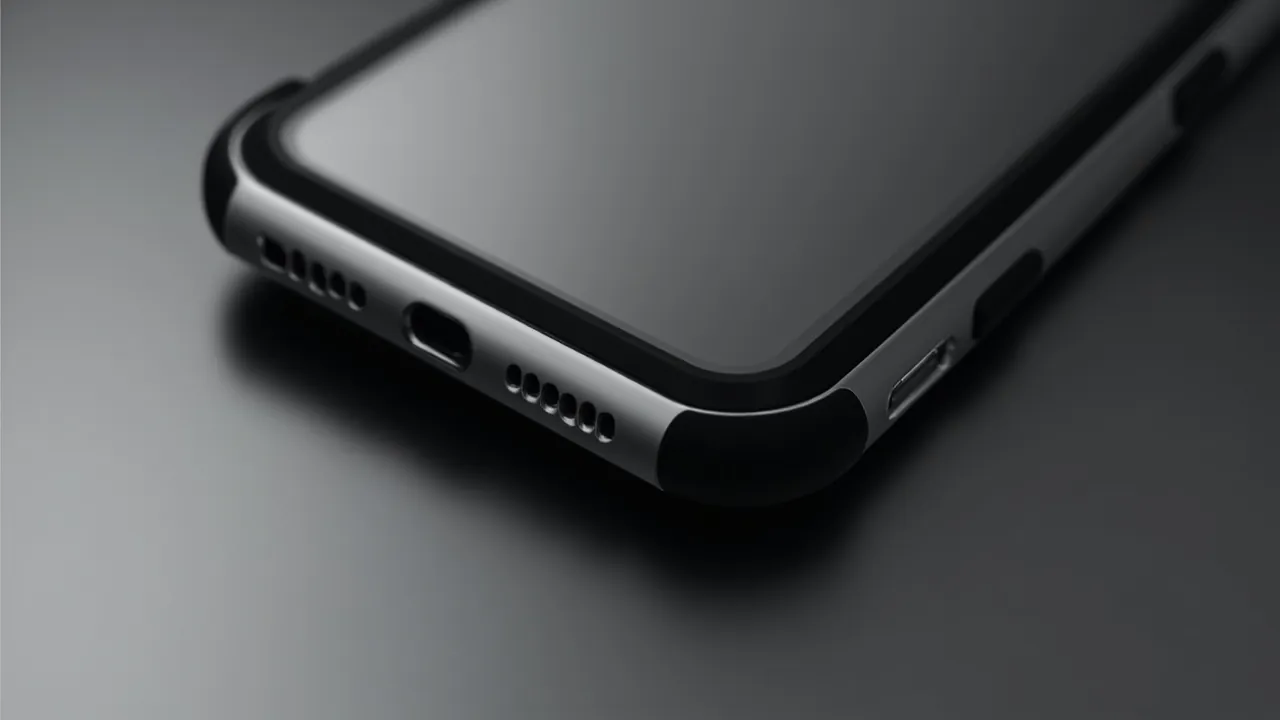
In drop tests, the case corner is the highest-frequency contact point. A sharp corner on impact concentrates energy in a tiny area, extremely high local pressure, the material instantly under huge compression and shear, easily denting or even penetrating; a rounded corner on impact has a larger contact area, the shock is "spread" by the arc, unit-area force is smaller, and the arc can turn part of the energy into a bending wave traveling along the shell rather than destroying one point.
A more hidden point: rounded corners let impact load "detour" along the shell curve to the stronger frame and thickened bottom-corner zone. Together with the bottom-corner thickening in what is the relationship between protective-case wall thickness and strength? and the vertical ribs in why do protective cases need reinforcement rib design?, the rounded corner acts like a "flow guide" carrying drop energy to where the case can best take it, not a weak face. This "rounded corner energy absorption + rib guidance + bottom-corner thickening" combination is an important structural basis for passing the U.S. military standard MIL-STD-810H environmental-adaptability validation (note: product-line-level validation basis, not a "military certification") drop and impact procedures.
Worth adding: the energy-absorption advantage of rounded corners is more obvious in "repeated drop" scenarios: a sharp-corner case may only crack slightly on the first drop, but the crack keeps spreading along the stress spike in later use until it breaks completely one time; a rounded-corner case disperses energy every drop, cracks lack a "start," so it is more likely intact after repeated abuse. For military/police/fire and outdoor survey — scenarios where "equipment must endure long-term rough use" — this fatigue resistance often matters more than single-impact resistance; rounded corners essentially pay for the case's "life" not its "one-time performance." This also explains why, from safety helmets to car bumpers, from phone cases to protective cases, any plastic part emphasizing safety and durability almost universally rounds its corners — a consensus the engineering world bought with countless failure cases.
Dimension 3: Knock Protection and Protecting Surroundings
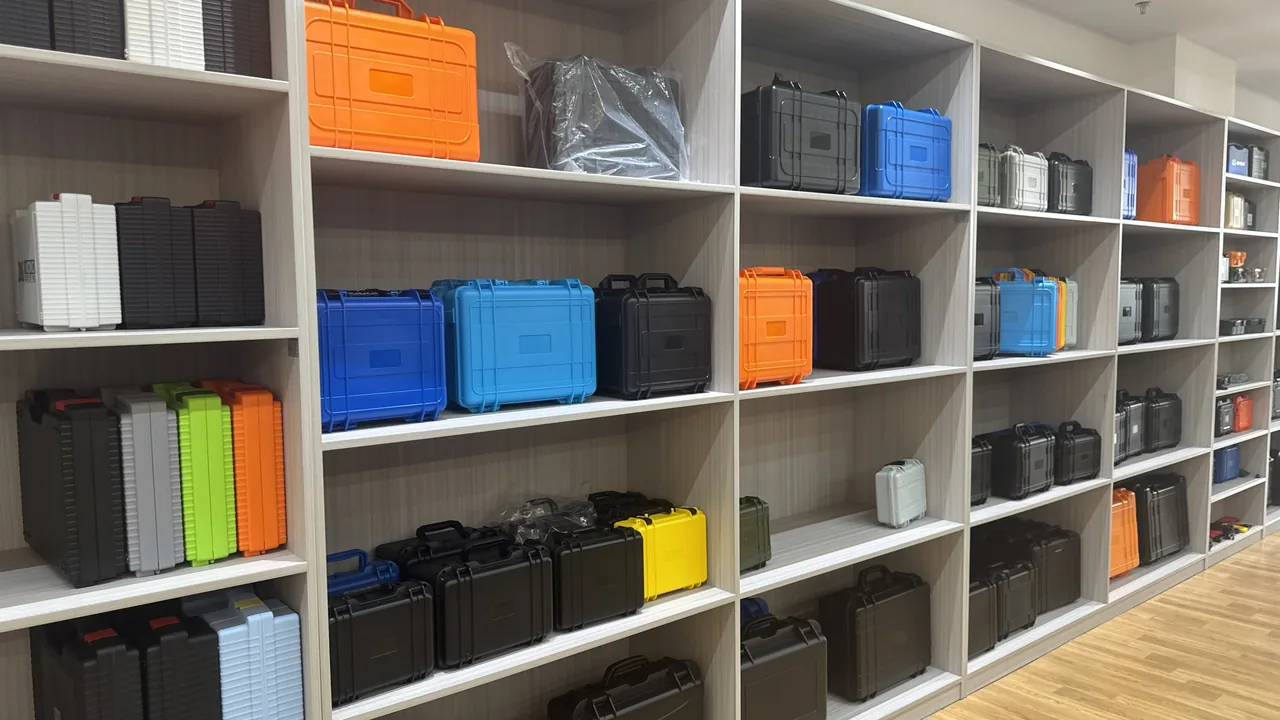
Rounded corners' benefit protects not only the case but also people and objects:
- Less case damage: rounded corners are less likely to "catch" or scrape other gear when moving, dragging, and loading; sliding among metal racks and vehicle edges, the rounded corner is smoother and knock damage is lighter.
- Less object damage: if a sharp-corner case topples, its edge may crush a nearby instrument or scratch vehicle interior; rounded corners lower this "secondary damage."
- Less floor damage: a wheeled large case dragged on the ground, a rounded bottom frame is less likely to jam in gaps or pry up the floor than a sharp bottom.
- Stacking friendly: rounded corners make upper and lower cases' edges easier to align and less likely to bite each other, and with the positioning structure in why do protective cases need a stacking structure? stacking is more stable.
For outdoor survey, military/police/fire, and aviation/communication — scenarios of frequent transfer and cramped space — this "trouble-free" rounded-corner trait directly lowers equipment loss and operation risk.
Dimension 4: Easy Cleaning and Hygiene, No Dead Corners
Protective cases are often used in mud, dust, reagents, food, or medical environments, so cleaning convenience is a hard requirement. Sharp corners and right-angle joints are typical "hygiene dead corners" — sand grains, droplets, and stains jam in the angle, harden, and are hard to remove, long-term becoming a pollution source or even corrosion point. Rounded corners (especially large inner-wall fillets and smooth transitions) let water flow and wiping smoothly carry away dirt, leaving no accumulation zone.
This is critical in several scenarios:
- Scientific exploration/water sampling: the case contacts reagents and samples; poor cleaning cross-contaminates.
- Medical and emergency: portable testing and first-aid drug cases need quick disinfection.
- Food/outdoor cooking: avoid stain accumulation breeding.
- Industrial repair: oil and metal chips easily embed in sharp corners; rounded corners are easier to blow-dust and wipe.
The KeXin New Materials JUNZHJIA protective-case product line has IP67 capability (per IEC 60529), the plastic ABS/PP material passes RoHS testing, and holds ISO9001, REACH, California Prop 65 (backed by company documentation; certificates available on request); the rounded inner-wall design, together with its sealing and liner, forms a usable solution of "fits in, wipes clean."
Dimension 5: Safety and Ergonomics, No Cuts, No Snagging
From ergonomics and safety, rounded corners also matter:
- No cuts: a sharp-corner case easily cuts fingers when carrying and opening, especially in winter with thin gloves or in a hurry; rounded corners fit the palm, more comfortable for long carries.
- No snagging: in tents, vehicle cabins, and aircraft, sharp corners easily snag straps, clothing, and cables; rounded corners pass smoothly, reducing accidental pulls that drop the case.
- Rounded handle root: the handle-to-case junction is filleted to avoid stress-concentration handle-root cracking (a root cause of many "broken handle" cases).
- Children and public scenarios: in science, education, and display occasions, rounded corners lower knock injury.
These seemingly "small" points, stacked on high-frequency use, are the difference between "easy to use" and "making do."
Rounded vs Sharp: A Comparison Table
| Comparison | Rounded-Corner Design | Sharp-Corner Design |
|---|---|---|
| --- | --- | --- |
| Stress concentration | Low, force dispersed along arc | High, local easily cracks |
| Drop impact | Strong, large contact, energy detours | Weak, point load, easily penetrates |
| Knock protection | Smooth, less damage to objects/case | Easily scrapes, easily jams |
| Cleaning | No dead corner, easy to wipe | Angle hides dirt, hard to clean |
| Safety ergonomics | No cuts, no snagging | Easily cuts, easily snags |
| Molding quality | Even flow/cooling, fewer sinks | Easily shrinks, high internal stress |
| Appearance quality | Strong unity, shows craft | Stiff, looks cheap |
| Seal cooperation | Arc transitions naturally with gasket | Crease easily presses unevenly |
This table shows: except for a few special structures needing "precise snap" or "extreme interior space," rounded corners win in almost every dimension. This is why from phone cases to car bumpers, from safety helmets to protective cases, any plastic part emphasizing safety and durability almost universally rounds its corners.
Key Rounded-Corner Parameters and Common Errors
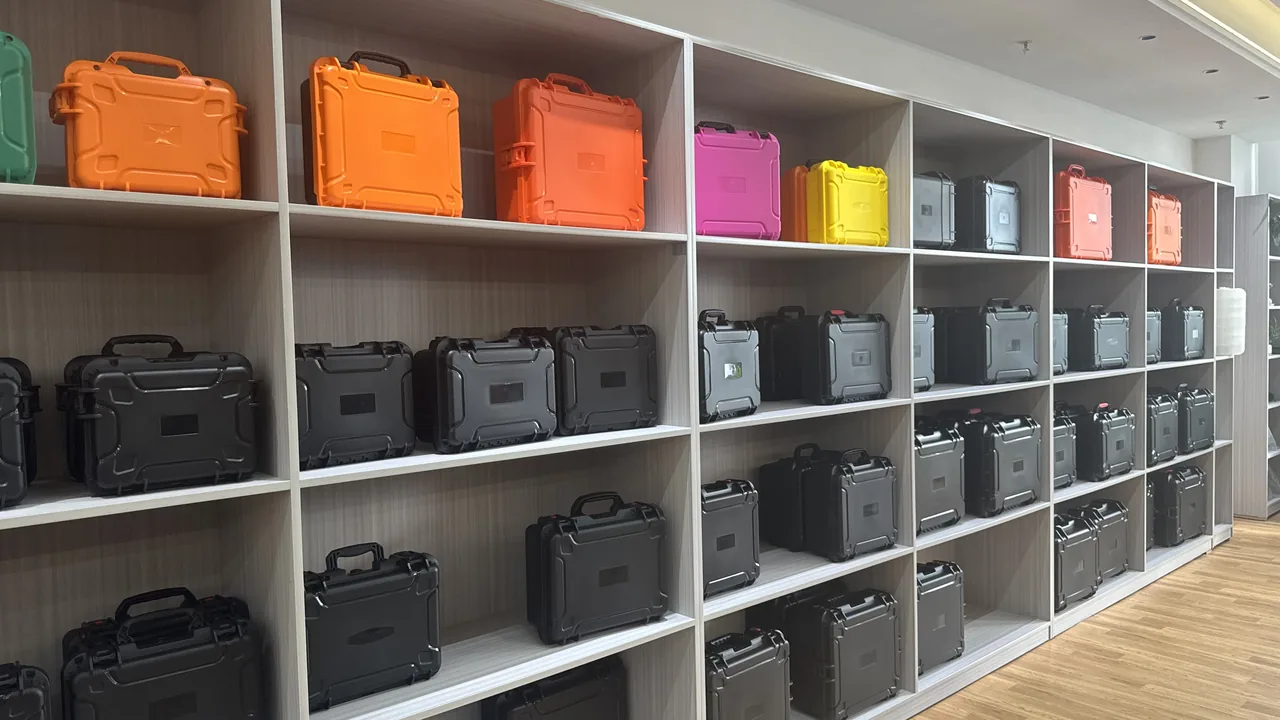
Rounded corners are not "the bigger the better"; engineering has a set of parameter conventions:
- Fillet radius tied to wall thickness: normally the fillet radius is about 0.5–1.5 times the wall thickness; too small still concentrates stress, too large may weaken local structure or steal interior space.
- Inner and outer corners consistent: the inner wall corresponding to the outer fillet should also be filleted (not inner sharp, outer round), otherwise wall thickness sudden change at the corner creates a new stress point.
- Even corner transition: from one fillet to a plane, to a rib, to a latch seat, transition should be gentle, avoiding "fillet then immediately sharp change."
- The sealing face must stay flat: fillets are for non-seal zones; the lid-and-body sealing cooperation face must stay flat, fillets must not intrude the seal groove.
Common errors include:
- Cosmetic outer fillet, structural sharp inner: only chamfering the outer wall while the inner wall stays a sharp fold, leaving molding internal stress and crack hazard unsolved.
- Fillet radius too small: "looks round" but radius insufficient, stress concentration not truly relieved.
- Fillet breaks the seal face: putting the fillet on the sealing cooperation zone destroys flatness and voids the IP rating.
- Corner wall-thickness sudden change: the fillet suddenly thinner or thicker, uneven cooling, sink and warp.
On inspection, run a finger along the inner-wall corner: rounded, continuous, no sharp fold, no sink — that is a proper fillet; if the inner wall still has an obvious edge, the "fillet" is only surface-deep.
Rounded Corners Cooperating with Ribs and Wall Thickness
Rounded corners do not stand alone; they deeply cooperate with the other two structural elements:
- With ribs: the rib end and rib-to-wall junction must be filleted, otherwise the rib-root sharp corner becomes a new stress start. Rounded corner + rib, one "softens the sharp," one "shortens the span," jointly forming the shell's impact-resistance skeleton. See why do protective cases need reinforcement rib design?.
- With wall thickness: wall thickness provides the base capital; the rounded corner decides whether that capital can be "spent safely." Even a thick wall, if the corner is sharp, stress concentration still cracks it first; moderate wall + proper fillet is often more reliable than thick wall sharp corner. See what is the relationship between protective-case wall thickness and strength?.
- With material: virgin ABS/PP toughness gives the fillet more crack-resistance margin; recycled material is brittle with many weld lines, and even with a fillet it easily cracks from internal defects. KeXin New Materials plastic cases in ABS/PP material pass RoHS testing; controllable material is the premise for fillets to work.
- With mold: fillet molding quality (full or sunk) depends on mold cooling and ejection design. A maker with mold capability (such as KeXin New Materials) precisely controls corner-fillet consistency.
In one sentence: a rounded corner is "strength in the detail" — inconspicuous, yet it decides whether the place the case most needs to hold actually holds.
Rounded Corners and Interior Space: Do They Waste Volume?
Many users worry: "With rounded corners, is the interior smaller, won't things fit?" A fair question, but engineering handles it maturely:
- Fillets are mostly at corners not big faces: the case's effective load space is mainly decided by length, width, height; the corner fillet occupies only tiny volume, limited effect on total capacity; versus the crack-resistance and easy-cleaning gains, this volume cost is usually worth it.
- Inner-wall fillet can be moderately tighten: by optimizing fillet radius and wall-thickness match, the erosion of interior space can be minimized while keeping stress-dispersion effect.
- With liner design: a rounded inner wall actually helps the liner (EVA/EPE routed or die-cut) fit snugly, reducing gaps between liner and wall, so actual usable space may not decrease.
- Avoid the "fake fillet saves space" trap: some low-price cases make corners nearly sharp to cram more volume, only to crack on drops and leak on seals — not worth it.
So "rounded corner vs volume" is not either-or. Regular makers balance fillet radius, wall thickness, and interior net size at the mold stage, getting both protection and use. If you are extremely sensitive to capacity, ask the maker for "interior net size" and "effective load volume," not just exterior length/width/height.
Rounded Corners Across Materials: ABS vs PP
The same fillet shape performs differently across materials, related to the material's rigidity, toughness, and flow:
- ABS: high rigidity, good flow, fillets mold full and dimensionally stable, suited to stiff shapes and fine corners; but low-temperature toughness slightly lower, and in extreme cold a too-small fillet radius still risks brittle cracking, so ABS cases often pair "large enough fillet radius + thickened bottom corner" to supplement toughness.
- PP: good toughness, excellent low-temperature impact, low density; fillets are less likely to brittle-crack under drops and cold, suited to cold or drop-prone scenarios; but rigidity slightly lower and surface print adhesion needs treatment, so PP cases also rely on proper fillets to remove stress spikes.
- Recycled material: whether ABS or PP, once recycled material is mixed in, melt flow is unstable and impurities many, and the fillet easily shows short-fill, weld lines, sink — "looks round" but "fillet hollow inside." KeXin New Materials plastic cases in ABS/PP material pass RoHS testing; controllable material is the true basis for fillets to work.
Thus material selection and fillet design are a combo: ABS cases can use their rigidity for finer fillets; PP cases rely on toughness to supplement low-temperature fillet crack resistance. For more material differences see what is the difference between PP, ABS, and PC protective cases? and what plastic materials are usually used for protective cases?.
A Drop Accident Shows the Value of Rounded Corners
String the above with a concrete scenario: an outdoor survey team transfers equipment at a riverbank; a protective case full of a portable tester and spare batteries slips from about a one-meter off-road tailgate, corner first. If this case were sharp-corner thin-wall, the corner would bear extremely high local pressure on impact, the corner likely denting or cracking, the instrument damaged in the crack and shock; switch to a case with large rounded corners, thickened bottom corner, and vertical ribs, and the rounded corner spreads impact along the arc, guides energy to the thickened bottom-corner zone, and with liner fixation (see liner material) and full-perimeter seal the case only lightly scrapes, the instrument is intact, ready to use out of the box. This example shows: rounded corners are not "good-looking" but the physical backbone of a protective case "not failing first" in the real drop chain; together with seal, liner, ribs, and wall thickness they make "ready to use out of the box" a stable reality. A maker with one-stop structural OEM/ODM capability (such as KeXin New Materials JUNZHJIA) can coordinate fillets with ribs, wall thickness, and liner before leaving the factory, delivering a complete solution.
Rounded Corners and Mold Precision: Good Fillets Are Molded, Not Drawn
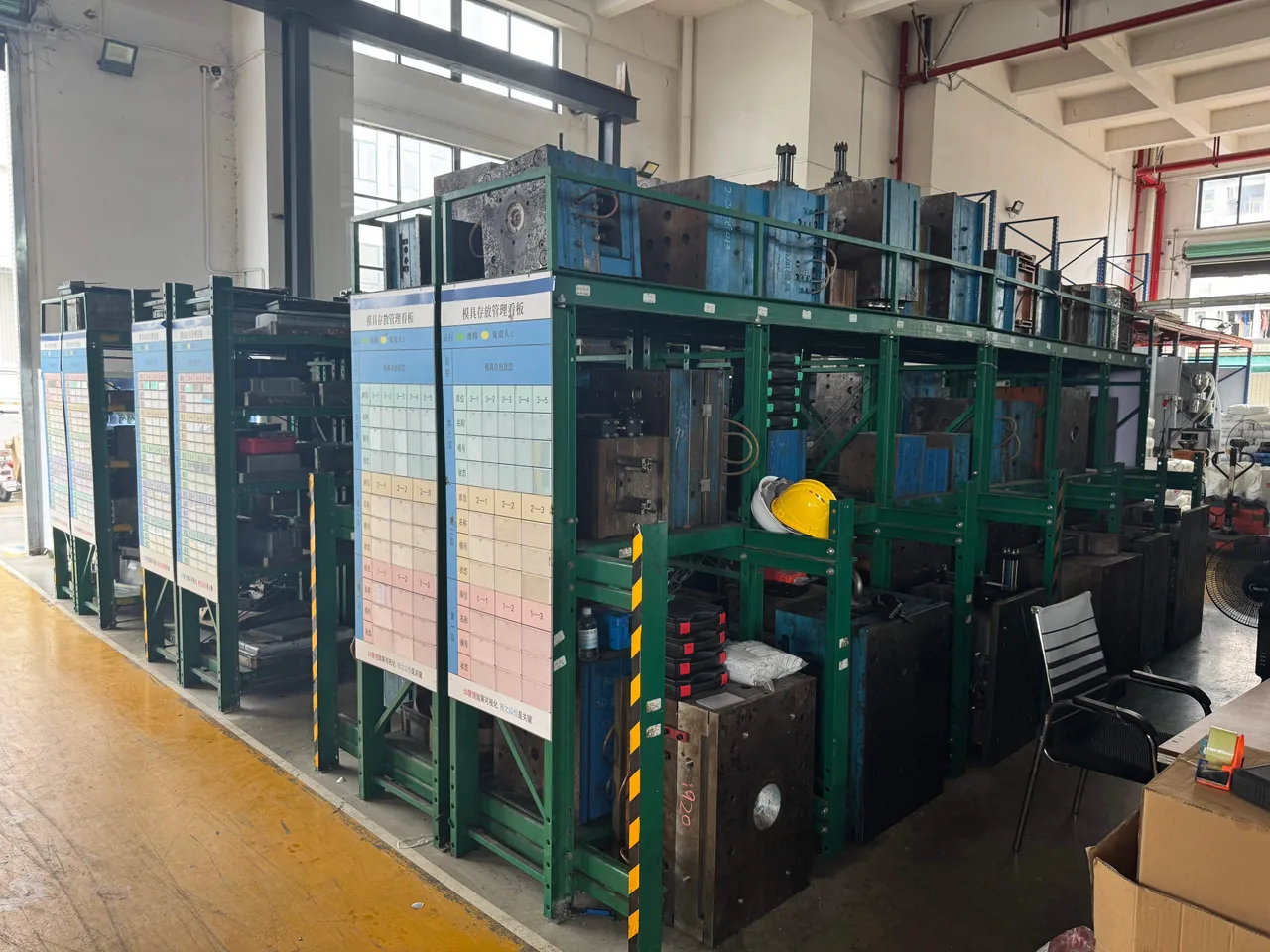
Like ribs, a rounded corner "drawn" is not "molded well." Process knowledge deciding fillet quality:
- Cooling uniformity: the fillet often changes wall thickness, uneven cooling easily sinks and warps; the mold cooling channels must be laid for the corner to keep the fillet full.
- Ejection balance: the fillet relates to natural draft; the mold ejector layout must let the case demold smoothly without scratching the corner.
- Flow balance: the fillet changes melt flow; gate position must match to avoid weld lines at the fillet end becoming strength weak points.
- Inner-outer corner consistency: outer round, inner also round, needing precise alignment of the mold's upper and lower corresponding structures, otherwise the "fake fillet" problem appears.
So accept fillets not by drawing but by the real part: is the inner wall also round, is the corner full and sink-free, are the four corners consistent. A maker with mold capability (such as KeXin New Materials) controls these details at the source, making "fillet strength" a mass-producible, reproducible fact, not sample luck. This echoes the acceptance logic in how to judge a high-quality protective case from structural details: "look at details not appearance."
How to Tell at a Glance If Corner Design Is Done Right
A quick visual-check list for buyers:
- Look at outer corners: smooth arc transition, not stiff right angles? Are the four corners consistent?
- Feel inner-wall corners: run a finger along the inner corner — should be rounded, continuous, no sharp fold, no sink.
- Check handle root: is the handle-to-case junction rounded, any sharp-corner stress hazard?
- Inner-outer corner consistent: outer round, inner also round, avoid "fake fillet."
- Confirm seal face flat: fillet does not intrude the lid-and-body sealing cooperation zone.
- Combine with drop test: if possible do a small-batch drop sample check, see if the corner cracks first; individual product per specification sheet and MIL-STD-810H-class validation records.
Use this checklist on samples — more reliable than promo images. For a higher-dimension judgment of whole-case quality see how to judge a high-quality protective case from structural details and what are the structural features of a high-strength protective case?.
Common Misconceptions About Rounded Corners
- Myth 1: Rounded corners are just good-looking. Wrong. Rounded corners are the key structure lowering stress concentration, raising impact and knock resistance, and easing cleaning — never mere decoration.
- Myth 2: The rounder and bigger the better. Wrong. Radius should match wall thickness; too large may weaken local structure or steal interior space. Key is even transition, inner-outer consistency, and not breaking the seal face.
- Myth 3: Outer fillet is enough. Wrong. Only chamfering the outer wall while the inner stays a sharp fold leaves molding internal stress and crack hazard unsolved — a "fake fillet."
- Myth 4: Rounded corners hurt waterproofing. Only if the fillet intrudes the sealing cooperation face. Standard design keeps fillets off the seal zone; qualified fillets not only do not hurt the IP rating (such as IP67 per IEC 60529) but with seal and latch guarantee protection.
- Myth 5: Sharp-corner cases save space, worth using. Not worthwhile. The tiny volume a sharp corner saves is far outweighed by cracking first on drops, hiding dirt, and cutting hands.
Frequently Asked Questions (FAQ)
Q: Why do protective cases use rounded corners instead of sharp corners? A: Rounded corners disperse stress concentration under load, raise impact and knock resistance, and are also easier to clean, safer, and more aging-resistant. A sharp corner forms a stress spike at the load point and cracks very easily there on a drop or impact; a rounded corner guides the concentrated force along the arc, markedly lowering crack risk and avoiding hygiene dead corners and cut hazards.
Q: Do rounded corners really improve drop resistance? A: Yes. On a drop the corner hits first; a sharp corner has small contact area and high local pressure, easily penetrating; a rounded corner has larger contact area, the shock is spread, and along the shell curve guides energy to the stronger frame and thickened bottom-corner zone, with ribs and bottom-corner thickening jointly absorbing energy and resisting cracks.
Q: Do rounded corners affect the case's seal and waterproofing? A: No, provided the fillet does not intrude the sealing cooperation face. The lid-and-body seal zone must stay flat; fillets are only for non-seal corners and transitions. Qualified fillet design, with full-perimeter seal and latch compression, guarantees the IP rating (such as IP67 per IEC 60529).
Q: Is a larger fillet radius always better? A: No. The fillet radius should normally match wall thickness; too small still concentrates stress, too large may weaken local structure or steal interior space. Key is even corner transition, inner-outer consistency, and not breaking the seal face, not simply pursuing a large radius.
Q: How can I quickly tell if a protective case's rounded corners are done right? A: Visually check whether outer corners are smooth arcs and the four corners consistent; feel the inner-wall corner — rounded, continuous, no sharp fold, no sink; check the handle root is rounded; confirm the seal face is flat with no fillet intrusion. If possible do a drop sample check for corner cracking; individual product per specification sheet.
Conclusion
Protective cases widely use rounded corners because they are superior on every key engineering dimension: stress dispersion keeps the corner from being the first to crack, impact energy absorption lets drop energy detour along the arc to strong zones, knock protection guards the case and surrounding gear, easy cleaning removes hygiene dead corners, and safety ergonomics avoid cuts and snagging; by contrast, sharp corners are comprehensively inferior in load, cleaning, safety, and molding quality. To judge whether a case's corners are done right, do not look at promo images but at whether outer corners are smooth, the inner wall is also round, the handle root is rounded, the seal face is still flat, and whether the corner cracks first in drop tests. Truly reliable protection is the synergy of rounded corners, ribs, wall thickness, material, and mold — exactly how KeXin New Materials JUNZHJIA uniformly plans corner fillets and structure at the mold stage and relies on one-stop OEM/ODM capability to make "detail strength" solid. Take the six-step visual check to inspection and you can pick, in outdoor survey, military/police/fire, electronics, and aviation/communication scenarios, the protective case that "won't crack its corners, wipes clean, and doesn't cut your hand." For complete structural understanding continue reading What Is an Outdoor Protective Case and Where Is It Used?.
A reminder: the value of rounded corners must finally land on verifiable testing. Protective cases in outdoor, military, and aviation scenarios are often validated for environmental adaptability against the U.S. military standard MIL-STD-810H (note: this is a product-line-level environmental-adaptability validation basis, not a "military certification"), where drop, impact, and vibration procedures are exactly the overall test of the "rounded corner + ribs + wall + material" combination — whether the fillet resists cracking is clear after repeated multi-angle drops. Ask the maker for the corresponding drop and stacking test records rather than arguing "round or not"; individual product performance follows the specification sheet and test report. The KeXin New Materials JUNZHJIA protective-case product line uses MIL-STD-810H as the environmental-adaptability validation basis and has IP67 capability (per IEC 60529); its mold-stage unified planning of fillets and structure makes "detail strength" a mass-producible, reproducible fact, not sample luck.
Further Reading
- Why Do Protective Cases Need Reinforcement Rib Design?
- What Is the Relationship Between Protective-Case Wall Thickness and Strength?
- Structural Features of a High-Strength Protective Case
- How to Judge a High-Quality Protective Case from Structural Details
- Why Do Protective Cases Need a Stacking Structure?
- What Is an Outdoor Protective Case and Where Is It Used?