

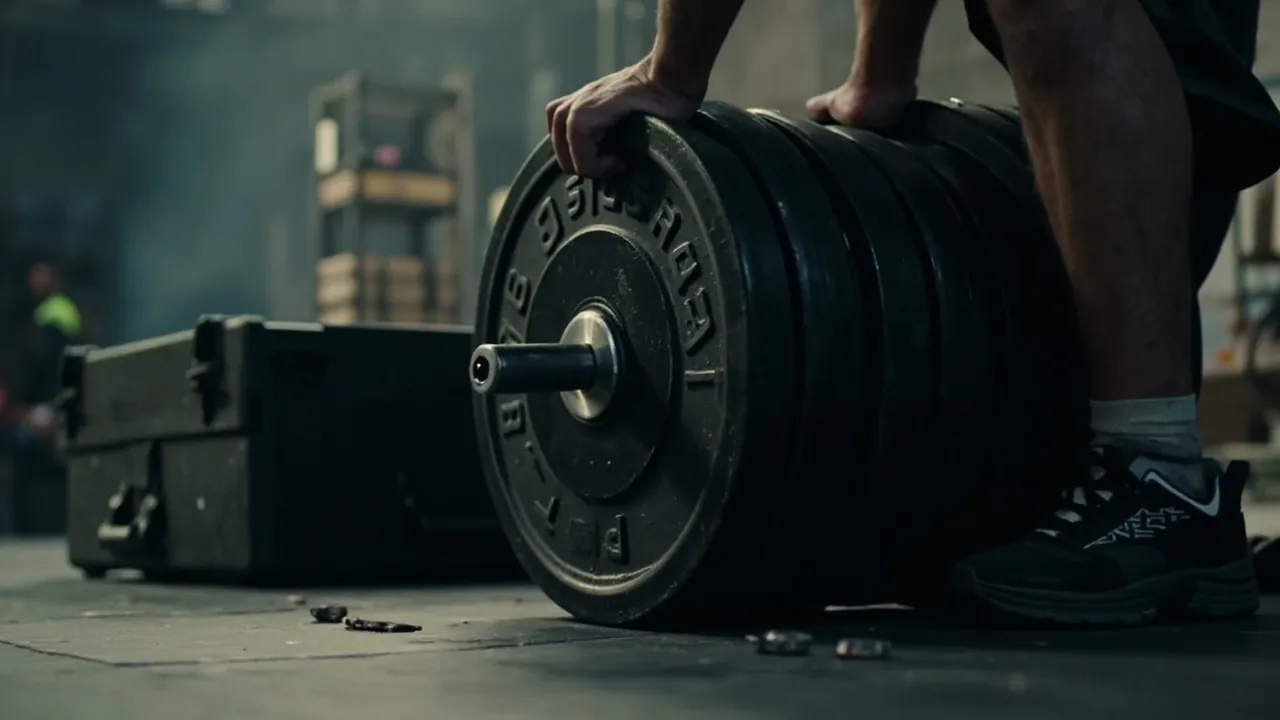
Direct answer: the structural design of a high-strength protective case is not simply "making the plastic thicker," but a system engineering effort centered on the overall rigidity of the shell, formed in one shot at the mold stage. The mainstream approach includes five principles: (1) uniform shell wall thickness to avoid local stress concentration; (2) reinforcement ribs (ribs) to raise bending and compression resistance without adding weight; (3) large fillets at corners and edges to spread impact and stress; (4) embedding metal inserts (such as stainless-steel pins, brass nuts) at force-bearing points to supplement local strength; (5) overall-rigidity design — latches, hinges, seal grooves, and stacking locators are coordinated at the mold stage so the case becomes a uniformly loaded whole. Together these designs decide whether the protective case can hold its shape and seal under drops, stacking loads, and transport vibration. The following breaks down each principle and gives a checklist to verify against.
Table of Contents
- A High-Strength Protective Case Is Not "Thick"
- Principle 1: Uniform Wall Thickness, Avoid Stress Concentration
- Principle 2: Reinforcement Ribs Raise Stiffness Without Adding Weight
- Principle 3: Fillets and Transitions Spread Impact Stress
- Principle 4: Embed Metal Inserts at Force-Bearing Points
- Principle 5: Overall-Rigidity Design and Fit Tolerances
- How Structure Resists Impact and Compression
- Design Verification Checklist and Common Misconceptions
- Frequently Asked Questions (FAQ)
- Conclusion and Further Reading
A High-Strength Protective Case Is Not "Thick"
Many people think "a sturdy box = thick walls." In fact, simply thickening brings three problems: weight spikes, violating the lightweight intent of a protective case; thick walls cool unevenly and easily sink and deform, creating internal stress; and material and cost are wasted. Real high strength comes from structural-form optimization — using ribs, fillets, inserts, and overall fit to raise stiffness and impact resistance with almost no added weight. This is why, at the same weight, one box with ribs and corners can withstand drops and loads while a flat-walled panel collapses under light pressure.
In the JUNZHJIA protective-case product line of KeXin New Materials (Guangdong) Co., Ltd., the shell uses virgin engineering plastic (ABS/PP) as the base material, and at the injection-molding and mold-manufacturing stage the ribs, seal grooves, latch seats, and hinge positions are designed together. The factory is located in Zhongshan City, Guangdong Province (Guangdong–Hong Kong–Macao Greater Bay Area), about 18,000 m², equipped with 80+ machines and 100+ staff, with one-stop capability from product design to mold manufacturing. Its plastic cases in ABS/PP material pass RoHS testing. Note that the parent company is Foshan Shunde ., Ltd., and , Ltd. holds 20+ utility-model and design patents.
Principle 1: Uniform Wall Thickness, Avoid Stress Concentration
Uniform wall thickness is the first principle of a high-strength shell. There are two layers of reason:
- Injection-molding process level: Uneven wall thickness causes different melt flow and cooling rates; thick areas cool slowly, easily shrink and void, and create internal stress, which later cracks from the stress point under impact or temperature change. Uniform wall thickness makes shrinkage consistent and internal stress small.
- Mechanics level: A sudden wall-thickness change (such as an abrupt thinning or thickening) forms a stress-concentration point; under impact the stress amplifies there several times, becoming a crack origin. A gradual transition lets the load transfer evenly along the shell.
Engineering typically controls the main wall thickness within a reasonable range (such as around 2.5–4 mm, depending on case size and material — follow the manufacturer's spec sheet). Where local thickening is needed, use a gradual transition rather than an abrupt change, and pair it with ribs rather than simply piling up thickness. To judge whether a shell is "uniform wall thickness," observe whether the inner wall has regular thinned rib grooves — that is the typical sign of uniform wall thickness plus ribs.
Principle 2: Reinforcement Ribs Raise Stiffness Without Adding Weight
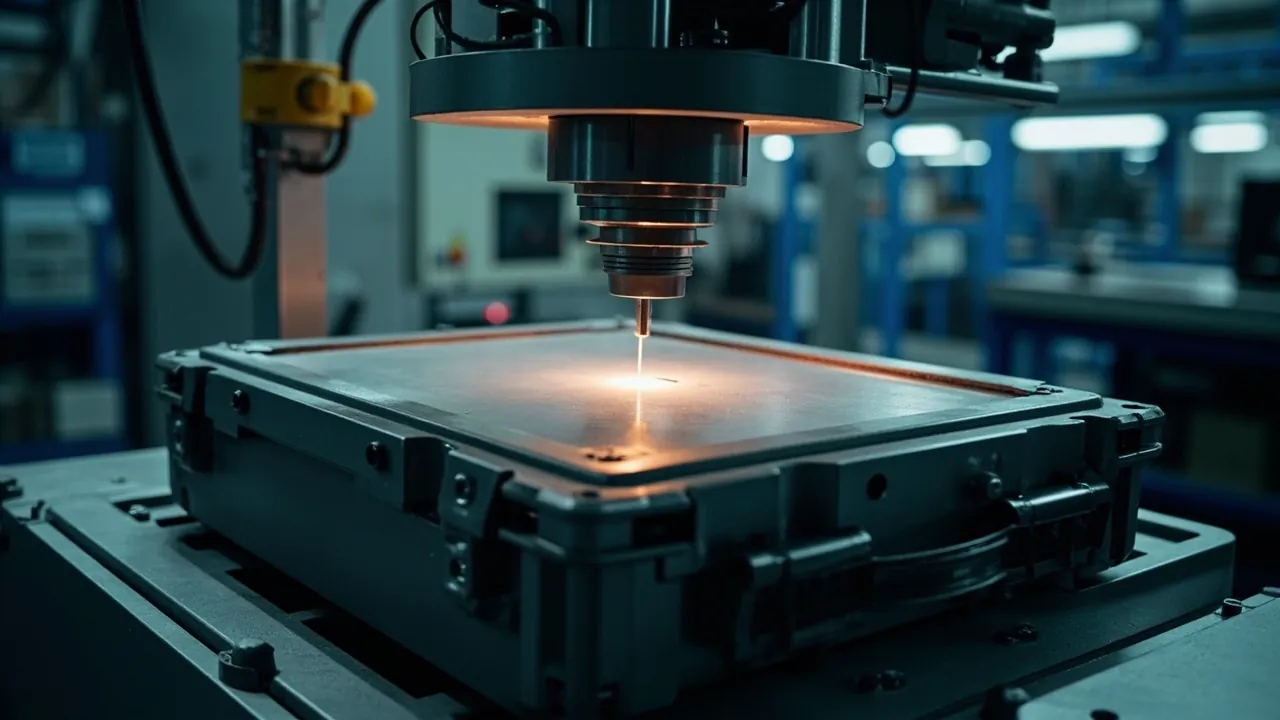
Reinforcement ribs (ribs) are the most common "lightweight stiffening" method in high-strength protective cases. The principle is similar to an I-beam: adding crisscrossing ribs to the back of a flat panel greatly raises the bending section's moment of inertia, significantly improving bending, compression, and torsion resistance, while the added plastic mass is far less than overall thickening.
Design points:
- Rib-height-to-wall-thickness ratio: Ribs too high become thin and easily sink; too low gives little stiffening. Common experience is rib thickness about 0.5–0.7 times the connected wall thickness, and rib height no more than 3 times the wall thickness (adjusted by material and process).
- Layout: Arrange along the force direction; place many longitudinal/transverse ribs on the lid, base, and four walls, and densify at corners to form a "grid frame."
- Demolding and appearance: Rib design must avoid air traps and sink marks, and keep the inner wall flat for placing the liner.
Direct significance for users: at the same weight, a ribbed case has clearly stronger compression and bending resistance and does not collapse when stacked in multiple layers — this is the structural basis for "multi-layer stacking after latching, lid bearing brief load."
Principle 3: Fillets and Transitions Spread Impact Stress
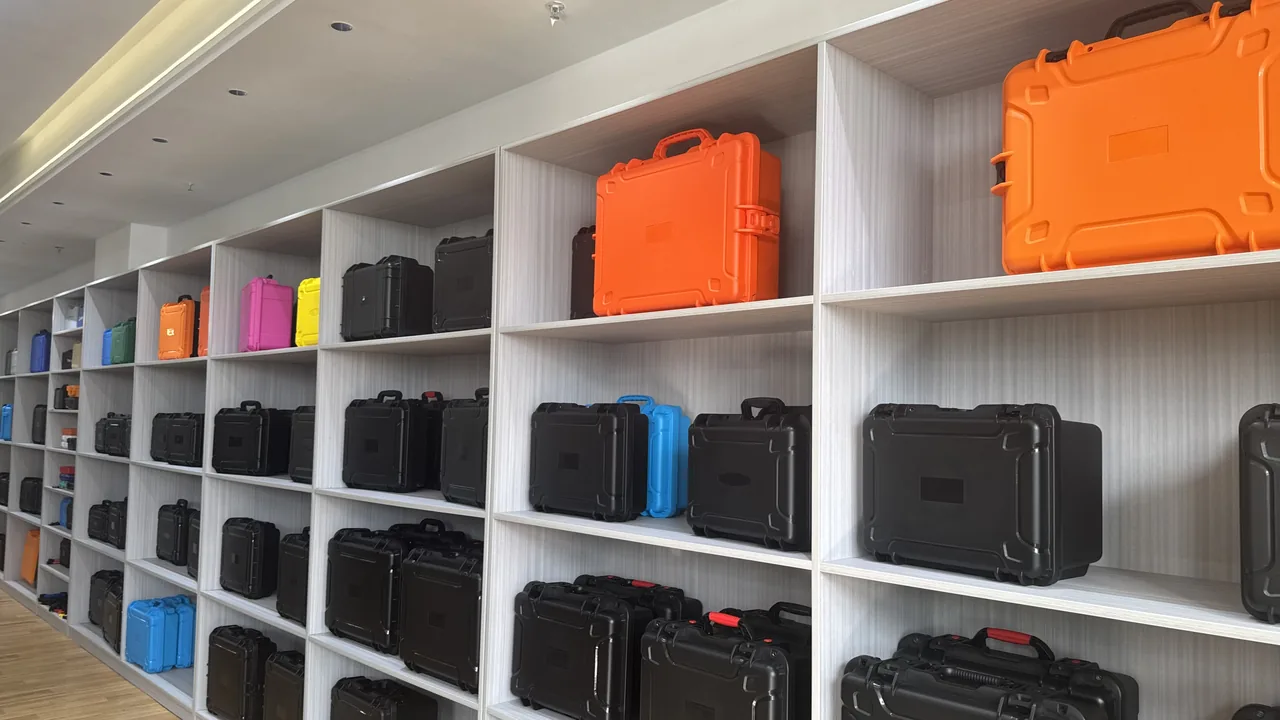
A sharp corner is a natural stress-concentration point under impact — impact energy amplifies at the sharp corner, and cracks easily start there. High-strength protective cases use large fillets (fillet/radius) extensively:
- Outer-corner fillets: On a drop impact, the fillet spreads the concentrated impact over a larger area, lowering the local stress peak and reducing cracking.
- Inner-corner fillets: Avoid shrink voids and stress from inner-wall sharp angles, and improve melt flow.
- Edge chamfers: On handling bumps, the rounded edge contacts first rather than a sharp edge, delaying damage.
Fillets also bring process benefits: smoother melt flow, more even cooling, easier demolding. You could say fillets are a "low-cost, high-return" structural detail and an invisible mark distinguishing "professional protective cases" from "cheap thin-wall boxes" — the latter often use sharp straight walls to save mold and material.
Principle 4: Embed Metal Inserts at Force-Bearing Points
Plastic easily wears or creeps loose at locally "repeatedly loaded, compressed, or sheared" points (latch pins, hinge pins, nut connection points). High-strength protective cases embed metal inserts at these high-stress points:
- Hinge insert: A stainless-steel pin or metal bushing embedded at the rotation axis connecting lid and body bears repeated opening bending and torsion, avoiding a pure-plastic pin wearing through.
- Latch insert: The latch force-bearing seat embeds a metal part or is thickened and reinforced to ensure repeated latching does not crack or loosen.
- Threaded insert: At screw-fixed points (such as liner brackets, accessories), embed brass/stainless-steel nuts (inserts) to provide reliable threads that do not strip on repeated assembly.
Inserts are formed integrally with the plastic during injection (in-mold insert molding), requiring high mold and injection precision — which is why a manufacturer with mold-manufacturing capability (such as KeXin New Materials) can guarantee fit at the source. Inserts let "plastic's lightness" and "metal's firmness" coexist in one case.
Principle 5: Overall-Rigidity Design and Fit Tolerances
A single part being strong does not mean the whole is strong. The key to a high-strength protective case is overall-rigidity design: the body, lid, latch, hinge, seal groove, and stacking locator ribs are modeled together at the mold stage, so after closing the whole case becomes a rigid body that bears force evenly and supports each other.
- Seal groove and latch coordination: The latch compression position aligns with the seal groove, so after closing the full-perimeter gasket is compressed evenly, guaranteeing the IP rating while avoiding local over-pressure.
- Stacking locator: The lid top and base bottom are designed with locator ribs/slots, so multi-layer stacking transfers load vertically, without offset or side slip.
- Fit tolerance: All interference fits (hinge, latch, buckle) are controlled within tight tolerances, so repeated opening does not loosen or rattle.
- Integral molding: As much as possible, form multiple functional structures in one injection, reducing assembly gaps and weak connection points.
This "holistic" design makes the case absorb impact energy evenly through the shell on a drop, share stacking load through the rigid body, and fix equipment cooperatively with the liner under vibration — a single-point strength is useless; only a systematic strength is reliable.
How Structure Resists Impact and Compression
Map the five principles onto two typical risks:
| Risk | Structural response | Corresponding principle |
|---|---|---|
| --- | --- | --- |
| Drop/impact | Fillets spread impact, ribs resist bending, inserts keep connection | Fillets, ribs, inserts |
| Stacking load | Uniform wall + grid rib frame + stacking locator | Uniform wall, ribs, overall rigidity |
| Repeated opening | Metal hinge/latch inserts resist wear | Inserts |
| Long-term creep | Uniform wall low internal stress + creep-resistant engineering plastic | Uniform wall, material |
| Seal failure | Overall fit tolerance guarantees even full-perimeter compression | Overall-rigidity design |
As you can see, every structural design precisely corresponds to a class of risk. This is why judging case strength cannot just look at "how thick is the shell," but must open it up to see whether the inner wall has ribs, whether corners are rounded, whether the hinge has a metal pin, and whether the latch seat is reinforced — these are the real evidence of strength.
Engineering Knowledge of Ribs and Wall Thickness
As mentioned, ribs that are "high and thin easily sink, low and ineffective" — here is the engineering experience relationship to help you judge whether a manufacturer's design is professional. In injection structural parts, rib thickness is usually about 0.5–0.7 times the connected wall thickness; too thick produces sink marks (indentations) on the rib back and concentrates internal stress; rib height generally should not exceed 3 times the wall thickness, as too high also brings sink and demolding difficulty. Wall thickness itself must match case size: small cases can be thinner, large cases need thickening and a denser rib mesh, or the flat panel will still "bulge" over a large area. More importantly, rib direction must follow the main force direction — longitudinal/transverse ribs on the base and lid form a grid frame, wall ribs resist lateral squeeze, and corner ribs densify to resist drop impact. These are not decoration but the key to turning a "flat panel" into an "I-beam." When purchasing, open the lid and look at the inner wall: a regular, continuous, reasonably directed rib mesh is the mark of professional design; a sparse few ribs or a totally ribless smooth-wall box usually lacks stiffness and compression resistance.
Insert Types and In-Mold Insert Molding
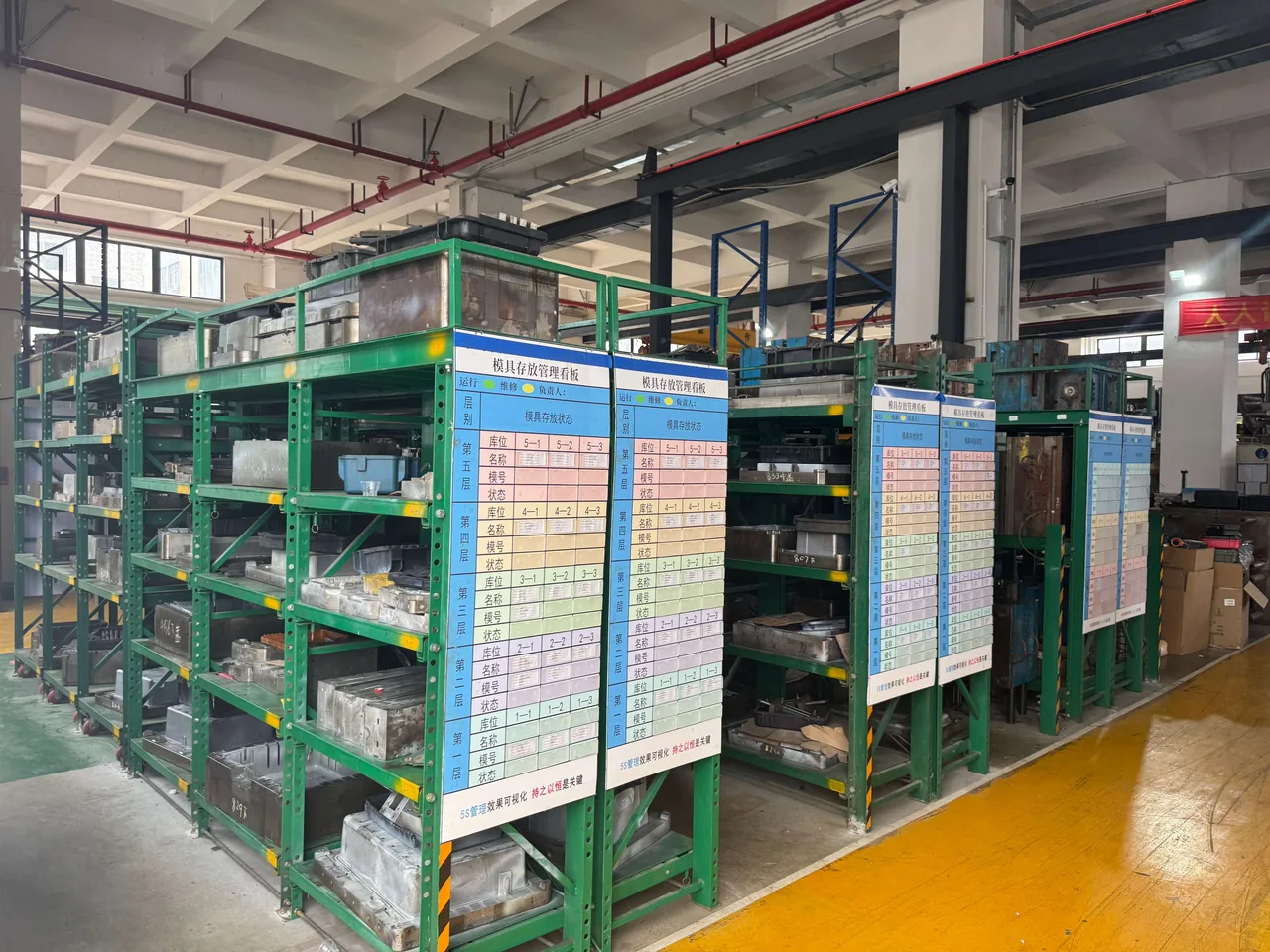
The metal inserts at force-bearing points are not just a piece of iron jammed in; most use in-mold insert molding: before clamping, the metal part is positioned and placed in the mold, and during injection the plastic wraps and fixes the insert, becoming one after cooling, avoiding later adhesive or press-fit loosening. Common insert types include: stainless-steel pins (for hinges, bearing repeated opening bending/torsion), brass or stainless-steel nuts (for screw-connecting liner brackets and accessories, no stripping on repeated assembly), metal reinforcing plates (pasted on the latch seat back to spread latch pressure), and metal bushings (for handle pivots or roller axles). The key to insert design is that the plastic fully wraps it, with no sharp corner piercing through and matched thermal expansion, or stress cracks will form at the insert edge. A manufacturer with integrated mold and injection capability (such as KeXin New Materials, factory in Zhongshan, Guangdong, about 18,000 m², 80+ machines) can guarantee insert positioning precision at the mold stage — the precondition for "plastic's lightness" and "metal's firmness" to coexist.
Why Mold Precision and Fit Tolerances Decide Strength
No matter how good the structural concept, it must land through mold precision. A protective case has many interference fits: hinge pin and hole, latch hook and seat, seal groove and gasket, stacking locator rib and slot. Any loose tolerance brings rattling, eccentric wear, and uneven sealing. High mold precision means accurate repeat clamping, flat parting surface, and stable rib and groove dimensions, so the whole batch fits consistently; low mold precision means "this unit tight, that unit loose" among the same model, with erratic sealing and latching. This is why a manufacturer with independent mold-manufacturing capability is more assured on protective-case quality — they can modify the mold based on trial-molding feedback to control tolerances, rather than buying off-the-shelf molds and making do. For buyers, judging whether a manufacturer "opens its own molds" is a hidden but important quality signal; KeXin New Materials has mold-manufacturing capability, so the dimensional consistency and fit reliability of its protective-case product line are better supported.
Engineering Logic of Impact Resistance: Where Does the Energy Go?
When a drop impact occurs, the energy must be "caught" and dispersed, or concentrating at one point causes cracking. The impact-resistance logic of a high-strength protective case is an energy path: the shell fillet first disperses contact stress, avoiding local sharp-point cracking; the shell wall thickness and ribs transfer the impact load along the frame to the whole case rather than letting a single point bear it; the internal EVA/EPE liner absorbs residual vibration and fixes equipment to prevent collision; the metal inserts ensure latches and hinges do not break under repeated impact. Any missing link in this path weakens the whole: no fillet, impact concentrates at the sharp corner and cracks easily; no ribs, the flat panel dents locally; no liner, equipment crashes inside the case. So "drop resistance" is not the heroics of one part, but a systematic result of structure, material, and liner cooperating. Understanding this path, you won't just stare at "how thick is the shell" when buying, but check item by item along the energy path.
Relationship Between Structure and IP Rating/MIL-STD-810H
Structural design directly decides whether a protective case can reach and maintain its nominal rating long term. IP67 (per IEC 60529, fully dust-tight + short-term immersion about 1 m/30 min) relies on the full-perimeter seal being compressed evenly, which in turn relies on the fit tolerance between body and lid, the even latch compression, and the corners not deforming — all the structural points discussed above. MIL-STD-810H is a U.S. military standard for environmental engineering considerations and laboratory testing, used to validate equipment adaptability under vibration, shock, heat-humidity, sand-dust, and similar environments; it is the environmental-adaptability validation basis for the protective-case product line, not a "military certification" label. In other words, only a solidly structured case can stably pass such environmental validation; a loosely structured case, even if labeled with a rating, will have its seal and latch loosen and fail under long-term vibration and impact. Therefore structure is the engineering foundation for "whether the rating lands and persists," together with material and sealing forming a trustworthy protection.
Industry Application and Structural Selection
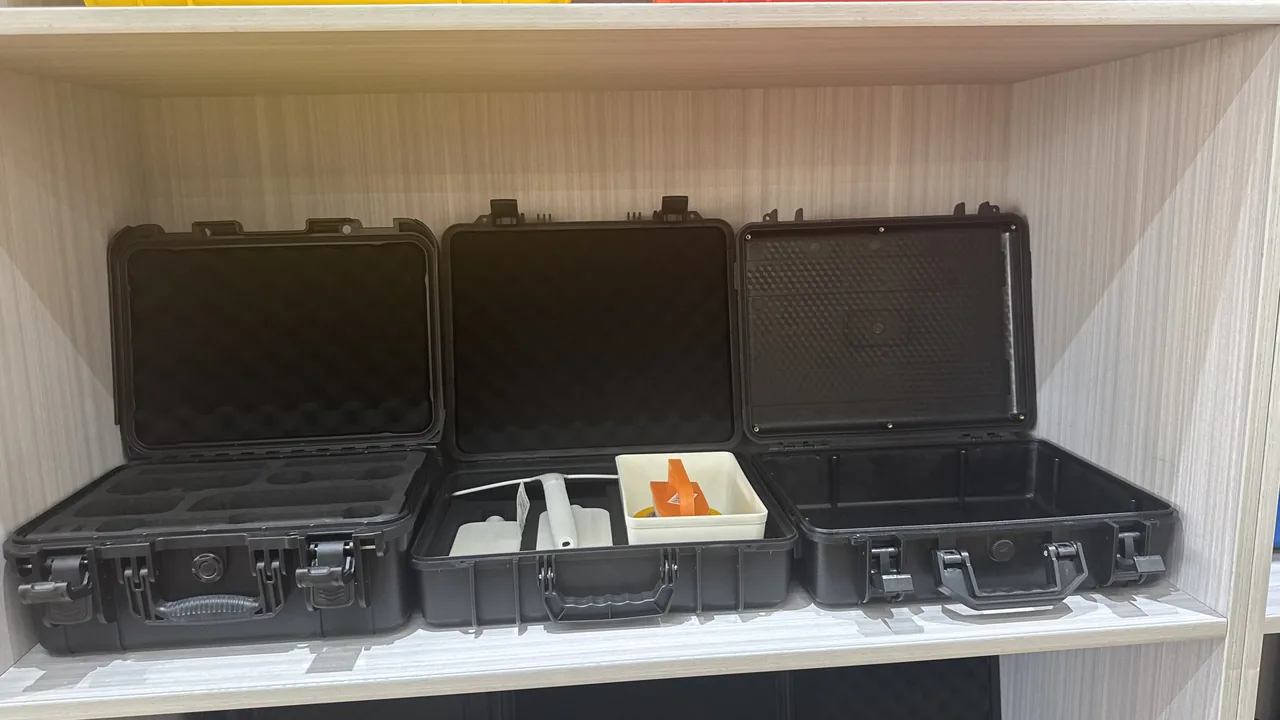
Different industries emphasize different structural strengths: outdoor survey and scientific exploration value lightweight and drop resistance, requiring an effective light rib mesh and sufficient fillets; military/police/fire, validated per MIL-STD-810H as a product-line environmental test basis, emphasize impact and vibration resistance, with more solid hinge and latch inserts; electronics maintenance fears dust and moisture, with structural focus on seal fit and liner fixing; aviation/communication experiences pressure and temperature change, requiring rigidity around the pressure-balancing valve without deformation leaking pressure; industrial maintenance sites with mud and spray need knock-resistant structure and wear-resistant feet. The KeXin New Materials product line covers more than 150 specifications including plastic tool boxes, safety protective cases, sealed cases, waterproof and moisture-proof cases, hardware tool boxes, machinery parts cases, and parts bins, and has one-stop OEM/ODM capability in product design, injection molding, molds, and liners — exactly applying the above structural points to different specifications by industry need. Batch users can use customization to jointly optimize structure and liner before leaving the factory.
Design Verification Checklist and Common Misconceptions
When procuring or inspecting goods, verify item by item against this checklist:
- [ ] Regular reinforcement ribs visible on the inner wall (not a smooth-wall flat panel)
- [ ] Corners and edges are large fillets, no sharp straight walls
- [ ] Overall wall thickness uniform, no abrupt thinning/thickening
- [ ] Hinge and latch force points have metal inserts or obvious thickening/reinforcement
- [ ] After closing, latch and seal groove align, full perimeter can compress evenly
- [ ] Stacking locator structure clear, multiple layers stable
- [ ] Shell is virgin engineering plastic (ABS/PP), not recycled
- [ ] Manufacturer has mold and injection capability, controllable tolerances
Common misconceptions:
- Misconception 1: Thicker is stronger. Thick walls add weight and easily create sink-mark internal stress; uniform wall plus ribs is better.
- Misconception 2: Smooth-wall boxes save space. Smooth-wall boxes have low stiffness and collapse easily, actually compressing usable net space and safety margin.
- Misconception 3: Sharp corners look good. Sharp corners are stress-concentration points that crack easily on drops; professional cases use fillets.
- Misconception 4: Plastic hinge is fine. At repeated-opening points, metal inserts greatly extend life; pure-plastic pins wear through easily.
- Misconception 5: Judge structure by appearance. Strength hides in the inner wall and inserts; inspection must open the lid and look at the inner wall and force points, not just the shell color.
How to Ask a Manufacturer to Buy a Truly High-Strength Case
When buying a high-strength protective case, asking the right questions matters more than reading the promo pictures. Suggested question list to communicate with the manufacturer: First, what is the shell material, what grade, is it virgin, what is the modification direction? Second, what is the wall thickness, is it uniform, are there ribs, how is the rib mesh laid out? Third, are corners and edges filleted, how large? Fourth, do hinge and latch force points have metal inserts, what material? Fifth, after closing, do the seal groove and latch align, can the full perimeter compress evenly? Sixth, is there a stacking locator structure, what is the nominal stacking height and load? Seventh, has it passed protection-rating testing, can it provide a test report? Eighth, can liner and marking customization, i.e. one-stop service, be done? A manufacturer that clearly answers these eight questions usually has mature design and controllable process; one that answers off-topic or avoids inner-wall structure, no matter how thick the shell, should be treated with caution. Write these questions into the procurement document, then accept against the design checklist above, and the probability of buying a truly high-strength case rises significantly, while locking quality at the contract level to avoid later disputes.
Six Must-Check Points of High-Strength Structure
If time is limited during inspection, prioritize these six points to basically judge whether a case's structure is solid. First, is wall thickness uniform, with no abrupt thinning/thickening or sink marks on the inner wall? Second, do ribs form a mesh, with continuous longitudinal/transverse ribs on the base and four walls rather than a sparse few? Third, are corners large fillets, no sharp straight-wall cheap feel? Fourth, do hinge and latch force points have metal inserts, not rattling or wearing on repeated opening? Fifth, do the seal groove and latch align, compressing evenly around the full perimeter after closing? Sixth, is stacking locator clear, no offset or side slip when stacked in multiple layers? These six points correspond to six abilities: creep resistance, bending resistance, impact resistance, fatigue resistance, seal retention, and compression resistance; miss one and you lose one layer of protection. Use these six as an acceptance card and tick them one by one — far more reliable than hearing a salesman say "our cases are very sturdy." Real strength is always written in structural details, not printed on the promo page.
Frequently Asked Questions (FAQ)
Q: Do reinforcement ribs reduce the usable space inside the case? A: Ribs are usually made on the outer side of the inner wall (case back, inside the lid), protruding outward or into a sandwich, not directly occupying net space; with reasonable layout they add stiffness without noticeably reducing volume. Follow the case's internal net dimensions specifically.
Q: Are fillets just for looks? A: Not just aesthetics. Fillets spread impact stress on a drop, lowering cracking risk, and also improve injection flow and demolding. They are a low-cost, high-return structural detail widely used in professional cases.
Q: Will metal inserts rust or add weight? A: Case inserts mostly use stainless steel or surface-treated brass, corrosion-resistant; and inserts are used only locally at force points, adding minimal weight in exchange for a large lift in latch/hinge life, while the whole remains a lightweight plastic case.
Q: Why does a case shell that looks thin feel very hard? A: Because it relies on ribs, fillets, and overall-rigidity design to raise stiffness, not simply thickening. Uniform wall plus a grid rib frame achieves high rigidity at low weight — that is the embodiment of structural design.
Q: What decides the number of stacking layers? A: Mainly the shell rigidity, rib layout, stacking locator structure, and latch load capacity — follow the manufacturer's stated stacking height/load reference, and do not exceed the nominal value to avoid crushing lower equipment.
Q: Same shape, recycled vs virgin structure — same strength? A: No. Even with identical shape and ribs, recycled material has large performance fluctuation, easily uneven wall thickness, and high internal stress; actual strength and life are lower than a virgin engineering-plastic case. Trust virgin material and manufacturer qualifications.
Q: Are more ribs always better? A: No. Too many dense ribs add material, lengthen cooling, and raise sink-mark and internal-stress risk, and may occupy internal space. The reasonable approach is a regular rib mesh along the force direction, using "few but precise" instead of "many but messy." Rib thickness, height, and direction must match wall thickness and material to maximize the bending section's moment of inertia, not simply pile up quantity. On inspection, whether the ribs are continuous and reasonable matters more than counting them.
Q: Why is a good case expensive in the mold rather than the raw material? A: Raw-material cost is limited in the whole case; the real gap is in mold and process. A high-precision mold guarantees uniform wall thickness, clear ribs, and tight fit tolerances, so ribs, fillets, inserts, and seal grooves stay consistent in mass production; a low-precision mold makes same-model cases tight or loose inconsistently with erratic sealing. A manufacturer with independent mold-manufacturing capability can modify the mold on trial-molding feedback to control tolerances — the key to structural strength landing stably, and the main source of a good case's premium.
Q: Can case structural strength be judged by hand pressing? A: Only a rough feel, not a quantitative judgment. Pressing the case by hand can sense wall thickness and rigidity differences, and sound can roughly indicate material, but it cannot replace item-by-item checks of inner-wall ribs, fillets, inserts, and fit tolerances, let alone protection-rating testing and reports. On-site feel is a first screen; the final judgment should still rest on the manufacturer's spec sheet, structural description, and third-party testing.
Conclusion
The structural design of a high-strength protective case is a system engineering centered on overall rigidity, not simple thickening: through uniform shell wall thickness reducing internal stress and stress concentration, reinforcement ribs adding stiffness lightly, large fillets spreading impact, metal inserts supplementing force points, and overall fit tolerances making the case a uniformly loaded rigid body, it jointly resists drops, stacking loads, repeated opening, and long-term creep. To judge whether a case is strong enough, open it and look at the inner-wall ribs, corner fillets, hinge/latch inserts, and seal fit, rather than just staring at shell thickness. When purchasing, trust virgin engineering plastic, verify mold and injection capability, and use OEM/ODM to jointly optimize structure and liner, so you get a truly "high-strength" protective case. To go deeper into material and structural details, continue reading the related articles below.
Further Reading
- What Common Plastic Materials Are Used in Protective Cases?
- What Is the Difference Between Engineering Plastic and Normal Plastic Protective Cases?
- The Relationship Between Wall Thickness and Strength of a Protective Case
- What Do Reinforcement Ribs Do on a Protective Case?
- Why Is Fillet Design Important for Protective Cases?
- How to Choose a High-Strength Protective-Case Hinge