

To answer "what is the difference between PP, ABS, and PC protective cases, and how to choose," the one-sentence conclusion is: PP wins on lightness, low-temperature impact resistance, and chemical resistance; ABS wins on high rigidity, dimensional stability, easy molding and printing, and balanced cost-performance; PC wins on extremely high impact strength and transparency with high temperature resistance, but is expensive and has stress-cracking risk. All three are common engineering plastics for protective cases; there is no absolute "which is better," only "which better matches your environment." If your scenario is room-temperature indoor storage needing a stiff shape and printed LOGO, ABS is more suitable; if it is northern winters, frequent handling drops, or lightweight air transport, PP is safer; if you need a transparent observation window or an extreme impact-resistant section, consider local use of PC. The following explains the differences thoroughly with comparison tables and scenario-based advice.
Table of Contents
- One-Sentence Difference of the Three Materials
- Core Parameter Comparison Table (Strength/Weight/Temperature/Cost/Transparency/Scenario)
- PP Protective Case: The Representative of Lightness and Frost Resistance
- ABS Protective Case: The Mainstay of Balanced Rigidity
- PC Protective Case: The Specialist in High Impact and Transparency
- Selection Advice: Match the Scenario
- Common Purchasing Misconceptions
- Frequently Asked Questions (FAQ)
- Conclusion and Further Reading
One-Sentence Difference of the Three Materials
First the conclusion, for quick decisions:
- PP (polypropylene): Lightest, best low-temperature impact resistance, good chemical resistance, but slightly lower stiffness and hard-to-print surface — suits "light, cold, drop, corrosion" scenarios.
- ABS (acrylonitrile-butadiene-styrene): High rigidity, stiff, dimensional stability, easy to spray-print, moderate cost — suits general protective cases needing "stiff shape + low cost + batch customization."
- PC (polycarbonate): Highest impact strength, transparent, high temperature resistance, but expensive, stress-cracking prone, UV-sensitive — suits local specialization of "transparent window + high impact section."
Note: the values in the comparison tables below are general engineering-plastic material-science basics ranges, for horizontal understanding of differences, not measured parameters of a specific protective-case product; the individual product follows the manufacturer's spec sheet.
Core Parameter Comparison Table (Strength/Weight/Temperature/Cost/Transparency/Scenario)
| Dimension | PP (polypropylene) | ABS (acrylonitrile-butadiene-styrene) | PC (polycarbonate) |
|---|---|---|---|
| --- | --- | --- | --- |
| Density (weight) | ~0.90–0.91 g/cm³ (lightest) | ~1.04–1.07 g/cm³ | ~1.18–1.22 g/cm³ (heaviest) |
| Tensile strength | ~30–38 MPa | ~40–50 MPa | ~60–70 MPa |
| Notched impact (23°C) | Copolymer PP ~5–10 kJ/m², good low-temp toughness | ~15–25 kJ/m², drops at low temp | ~60–80 kJ/m² (highest) |
| Heat deflection temp | ~60–100°C (by copolymer/reinforced) | ~90–100°C | ~130–140°C (highest) |
| Transparency | Opaque (thin-wall semi-transparent possible) | Opaque | High light transmission (>90%) |
| Surface printing | Needs treatment, moderate adhesion | Easy to spray-print, easy texture | Needs treatment, easily scratched |
| Chemical resistance | Good acid/alkali resistance | Moderate, fears some solvents | Moderate, fears some solvents/alkali |
| Weathering/UV | Needs additives | Needs additives | Needs UV layer |
| Relative cost | Low–mid | Mid (balanced) | High |
| Typical use | Lightweight, cold, chemical, frequent handling | General shell, needs printing, dimensional stability | Transparent window, high-impact section |
This table is the "master map" of selection. The next three sections explain each material's temperament, then give scenario-based advice.
PP Protective Case: The Representative of Lightness and Frost Resistance
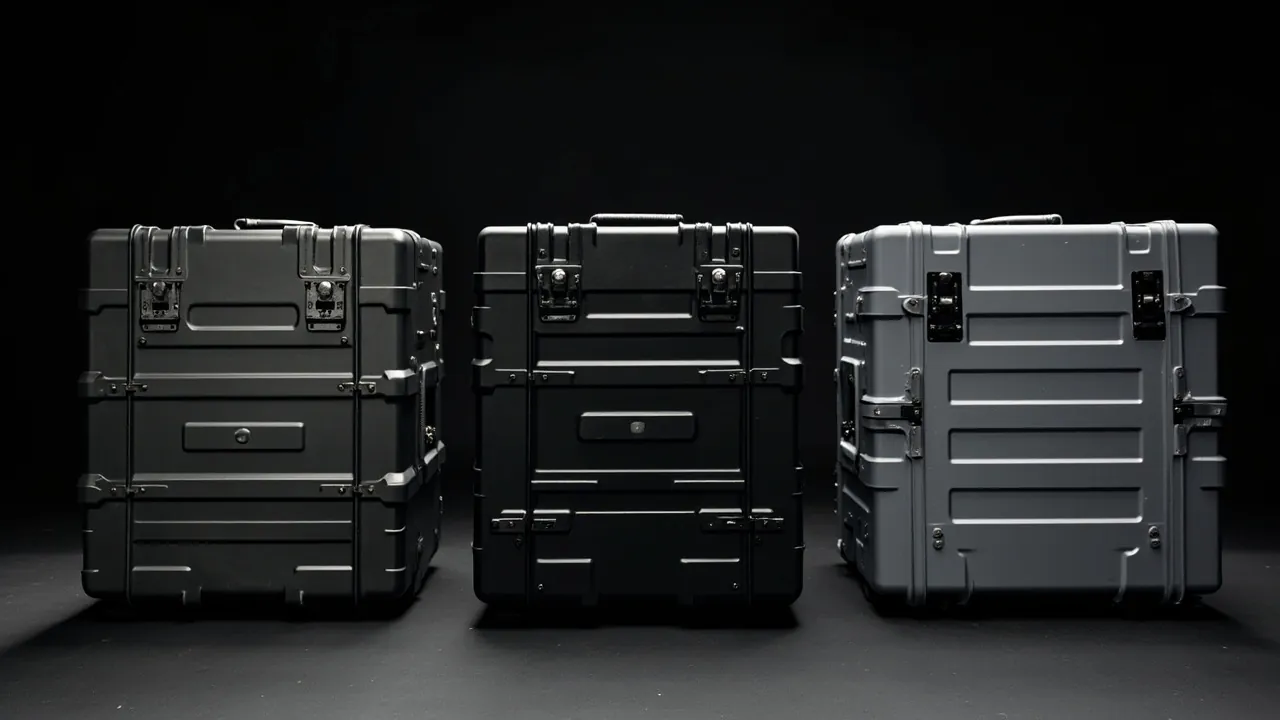
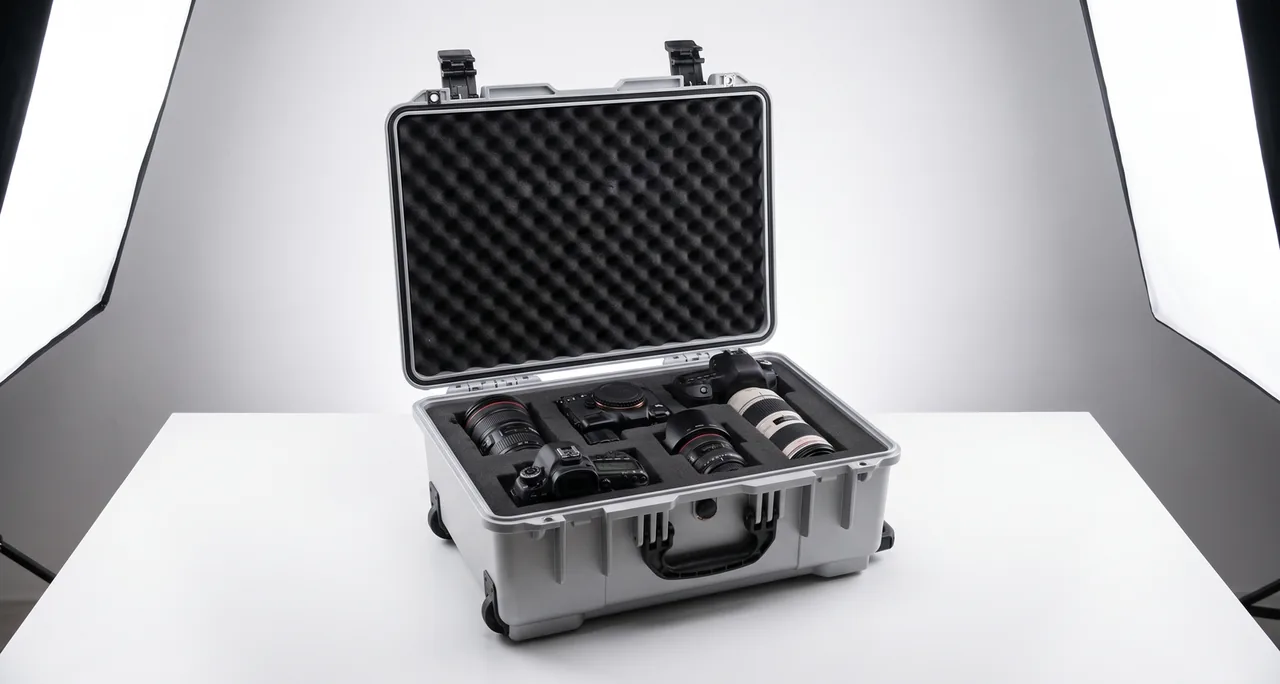
PP's biggest label is light. At about 0.90–0.91 g/cm³, it is the lightest common shell plastic by volume, very friendly to teams needing manual carrying, air transport, and long-distance transfer — a same-volume case is about 20%–30% lighter than PC and also lighter than ABS.
PP's second label is low-temperature impact resistance. Copolymer PP keeps good toughness at -20°C or lower without cold-brittle cracking, where ABS is weak (ABS notched impact drops markedly at low temperature). So in northern winters, cold chain, and high-altitude low-temperature transport, PP is less likely to "freeze-crack."
PP's third label is chemical resistance. It is stable against most acids, alkalis, and salt solutions, suiting corrosive environments like chemical, laboratory, and coastal salt spray.
The cost is: PP stiffness is slightly lower than ABS, the same-wall case more prone to deflection; low surface energy makes direct printing adhesion poor (needs flame/corona treatment or special ink); stiffness drops near 100°C. So PP cases usually add wall thickness, glass-fiber/talc modification, and more ribs to make up stiffness. The JUNZHJIA protective-case product line of KeXin New Materials (Guangdong) Co., Ltd. uses virgin engineering plastic as the base, and its plastic cases in ABS/PP material pass RoHS testing. The factory is located in Zhongshan City, Guangdong Province (Guangdong–Hong Kong–Macao Greater Bay Area), about 18,000 m², with 80+ machines and 100+ staff, and has injection-molding and mold-manufacturing capability.
ABS Protective Case: The Mainstay of Balanced Rigidity
ABS is the most "can't-go-wrong" general choice for protective cases. Its rigidity is high, the case stiff, dimensional stability good, latch seats and hinge points don't loosen easily; the surface is extremely easy to do fine texture, spray, and LOGO printing, very friendly to brand customization and OEM/ODM; raw-material cost is moderate with good mass-production consistency.
ABS typical property range: density ~1.04–1.07 g/cm³; tensile strength ~40–50 MPa; notched impact ~15–25 kJ/m²; heat deflection temperature ~90–100°C. These make it "just hard enough" — bears load without deforming, yet not brittle like pure PS. It is also one of the most modifiable materials: adding PC makes an ABS/PC alloy raising impact and temperature resistance; adding glass fiber raises rigidity.
ABS weaknesses are lower low-temperature toughness (caution in northern winters) and poor weathering (needs anti-UV additives), plus only moderate resistance to some organic solvents. In protective cases, ABS is mostly used for shell body, lid, latch mount, and liner-frame skeleton where "stiffness and appearance" are demanded.
PC Protective Case: The Specialist in High Impact and Transparency
PC is known for extremely high impact strength; notched impact can reach several times ABS, and light transmission exceeds 90%, one of few engineering plastics that is "both transparent and impact-resistant"; heat deflection temperature ~130–140°C, also higher than ABS/PP. This makes PC irreplaceable in two positions:
- Transparent observation window: View internal instruments, liquid level, or equipment status without opening, avoiding frequent opening that breaks the seal.
- High-impact lid or panel: Replaces or reinforces ABS in strong-impact or crush scenarios.
But PC's cost is obvious: highest price; stress-cracking risk (contact with some solvents, alkaline substances, or assembly stress); average surface wear, easily scratched; pure PC not UV-resistant, long outdoor use needs a UV-stable layer. So PC in protective cases is usually local use — windows, impact panels — not the whole-box mainstay, to exploit strengths while controlling cost.
Selection Advice: Match the Scenario
Map scenarios to materials with actionable advice:
| Your scenario | Preferred material | Reason |
|---|---|---|
| --- | --- | --- |
| Room-temp indoor/workshop storage, stiff shape | ABS | High rigidity, easy printing, low cost |
| Northern winter, cold chain, high-altitude low temp | PP (or PP/ABS blend) | Good low-temp toughness, no cold-brittle |
| Frequent handling, air transport, lightweight priority | PP | Lowest density, clear weight reduction |
| Chemical/coastal/corrosive | PP | Good chemical and salt-spray resistance |
| Need transparent observation window | PC (window) | High transmission, impact-resistant |
| Extreme impact/crush duty | PC (local)/ABS + ribs | Highest impact strength |
| Batch brand customization, LOGO printing | ABS | Surface easy to treat, good consistency |
| Budget-sensitive, general protection | ABS | Balanced cost-performance |
One important additional principle: material must be viewed together with wall thickness, ribs, sealing, and latch design. Same-labeled ABS, a thin-wall ribless body and a thick-wall ribbed body can differ a grade in actual strength; material is only the base, structural design decides the final rating.
Material Modification and How Grade Affects Actual Performance
The ranges above are general; but market PP, ABS, PC are rarely "pure," mostly modified, and different grades can differ a grade — why "two boxes both called ABS feel very different." ABS is often blended with PC into an ABS/PC alloy, markedly raising impact and temperature resistance, used for shells needing higher rigidity; flame retardants and UV inhibitors can be added per industry. PP via copolymerization (introducing ethylene) improves low-temp toughness, via glass fiber or talc filling raises stiffness and heat resistance, via toughening improves impact — engineering-grade PP can approach ordinary ABS. PC is often made into PC/ABS alloy to suppress stress cracking and improve processing, or co-extruded with a UV layer on the surface. So when selecting, don't just ask "is it PP/ABS/PC," but ask "specific grade and modification direction": for northern winter confirm low-temp impact data, for workshop high temp confirm heat deflection temp, for electronics confirm RoHS/REACH compliance. Write the grade into the contract appendix to avoid the procurement risk of "same name, different performance."
How to basic Distinguish PP, ABS, PC On-Site
Professional judgment relies on material analysis, but several non-destructive experiences help preliminarily distinguish the three on-site (for reference only, not definitive): weigh them — PP lightest, ABS mid, PC heaviest, clear by hand at same size; look at transparent parts — transparent and very impact-resistant is mostly PC, transparent but easily scratched is likely acrylic, transparent and brittle is likely general polystyrene; feel the surface — ABS does high-gloss fine texture with clear printing, PP surface feels "dry" and needs treatment, PC window is glass-clear; tap sound — ABS crisp-solid, PP muffled, PC clearer, but this is greatly affected by wall thickness; observe window edges — PC windows often show thicker transparent walls and anti-scratch treatment. A more reliable approach is to require the manufacturer's material grade and third-party test report, writing the specific material, applicable temperature range, and compliance certificates into the procurement document, rather than concluding by appearance or feel.
The Real Composition of Price and Cost
Many buyers directly link "material" and "price," thinking PC expensive must be best, PP cheap must be worst, ignoring the real composition of protective-case cost. By raw material alone, PC unit price is highest, ABS mid, PP lower, but total case cost also includes mold amortization, wall-thickness material amount, rib and insert design complexity, seal and latch grade, liner customization and printing process. A ribbed PP case's material and structure cost may exceed a thin-wall ribless ABS case; an ABS case with local PC window may cost less overall than an all-PC case. So cost-performance is "protection capability per unit ÷ total ownership cost," not "lowest unit price." For batch users, OEM/ODM that jointly optimizes material, structure, liner, and LOGO before leaving the factory is often more cost-effective than simply picking the cheapest material — avoiding both over-design waste and the hidden loss of equipment damage from low-price material.
Relationship Between Material and Protection Rating (IP67/MIL-STD-810H)
A common misunderstanding needs clarifying: material itself does not directly equal protection rating. IP67 (per IEC 60529, fully dust-tight + short-term immersion about 1 m/30 min) is achieved through full-perimeter seal + latch compression + fit tolerance; material only provides the base of "no deformation, no creep" to keep the seal effective long term; MIL-STD-810H is a U.S. military standard for environmental engineering considerations and laboratory testing, used to validate equipment adaptability under vibration, shock, heat-humidity, sand-dust, and similar environments — it is the environmental-adaptability validation basis for the protective-case product line, not a "military certification" label. In other words, all three materials PP/ABS/PC can make an IP67 protective case; the difference is which better fits your temperature zone and impact scenario; what truly decides the rating is sealing and structure, and material decides "how long it lasts at that rating, in what environment it won't fail." When buying, separate "material fit" from "nominal rating + measured report" — both must hold to be reliable.
Industry Application and Material Selection
Mapping material properties to typical industries makes selection more intuitive: outdoor survey and scientific exploration often meet low temperature and frequent handling, leaning toward low-temp impact-resistant PP or modified PP; military/police/fire, validated per MIL-STD-810H as a product-line environmental test basis, demand high rigidity and impact resistance, mostly using ABS or ABS/PC alloy with ribs; electronics maintenance fears dust and moisture, an IP67 case with liner is the field standard, ABS/PP both fit; aviation/communication experiences vibration and temperature change, demanding dimensional stability and temperature resistance, PC windows and engineering-plastic shells are more suitable; chemical and coastal environments emphasize acid/alkali/salt-spray resistance, where PP's chemical advantage stands out; photography and film location equipment is valuable and shock-fearing, where liner cut-outs and compression design matter more than material. The essence of industry difference is the weighting of five indicators — strength, weight, temperature, chemical, transparency — and selection is trading off among the three materials by weight, not pursuing a single indicator's extreme.
Common Purchasing Misconceptions
- Misconception 1: PC most expensive so best. Expensive in impact and transparency, but stress cracking and UV sensitivity limit whole-box use; used wrong, cost is high and risk large.
- Misconception 2: PP soft means not sturdy. PP stiffness is slightly lower but low-temp impact is better; with ribs it fully meets protection; "soft" is not "weak."
- Misconception 3: Only look at material, not wall thickness. Wall thickness and ribs often matter more to strength than material differences.
- Misconception 4: Recycled same as virgin. Recycled has uneven wall, fluctuating performance, deforms under load, breaks seal; regular cases use virgin.
- Misconception 5: One material fits all scenarios. Mature high-end cases are often "ABS/PP shell + PC window + PE feet + EPE/EVA liner" combinations.
When purchasing, advise confirming with the manufacturer: the specific shell grade (ABS/PP/PC or modified), whether virgin, applicable temperature range, whether it passes RoHS/REACH (KeXin New Materials plastic cases in ABS/PP material pass RoHS testing), and write the individual product spec sheet into the contract.
Real Practice of Material Combination and Local Mixing
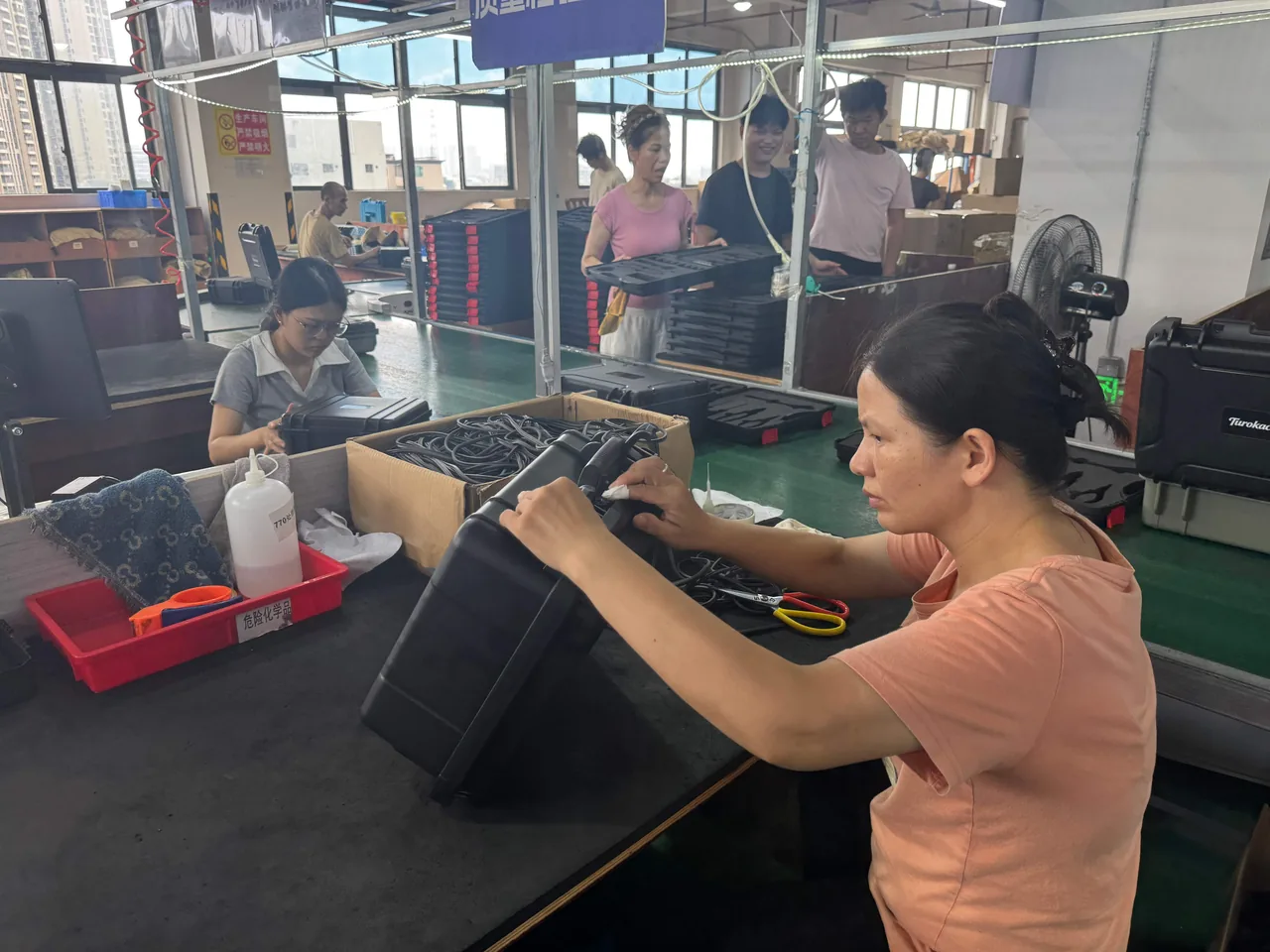
Mature protective cases rarely "use only one material for the whole box," but do material combination by section: the shell body chooses ABS or PP by scenario for rigidity or lightness, the window uses PC for transparency and impact, feet and bushings use PE for wear-resistance and damping, the liner uses EPE/EVA for energy absorption. This combination exploits each material's strength while controlling cost — putting the most expensive PC only where transparency and impact are truly needed, not covering the whole box. When purchasing, ask the manufacturer "what material is each section," and one who answers section and reason clearly usually has a more mature design; vaguely saying "all ABS" or "all PC" should raise warning of wrong material or false labeling. For batch-custom users, leveraging the manufacturer's product-design, injection, and mold capability can plan material distribution together with ribs and seal grooves at the mold stage, turning material combination into quantifiable strength and protection rating rather than staying at promo talk.
Procurement Acceptance Checklist (Material Dimension)
Turn the above into an executable acceptance checklist, verified item by item before ordering: confirm the shell specific grade (ABS/PP/PC or modified) and whether virgin; confirm the applicable temperature range covers your environment (especially northern winter and vehicle high temp); confirm compliance such as RoHS/REACH (KeXin New Materials plastic cases in ABS/PP material pass RoHS testing); confirm wall thickness and rib design, request structural description if needed; confirm window material and anti-UV/anti-scratch treatment; confirm individual product spec sheet and test report, avoiding substituting company-level backing for individual product proof; for batch orders write material, liner, LOGO, and acceptance standard into the contract appendix. The checklist's value is turning "which material" from feeling into verifiable items, reducing equipment-damage risk from appearance- and low-price-based misjudgment.
Three-Step Decision Flow: From Environment to Material
Turn the comparison into an actionable decision flow even a novice can follow stably. Step one, list the environment: does equipment leave the safe indoors? rain or wading? northern winter or cold chain? frequent handling or air transport? contact with acid/alkali/salt spray? need to observe inside without opening? Tick these and you get an "environmental risk profile." Step two, match material by profile: lightness and low-temp needs prioritize polypropylene, stiff appearance and batch printing prioritize acrylonitrile-butadiene-styrene, transparent observation or extreme impact locally uses polycarbonate; the harsher the environment, the more weight on wall thickness and ribs rather than just material name. Step three, translate needs into procurement terms: tell the manufacturer the shell grade, whether virgin, applicable temperature range, whether it passes hazardous-substance-restriction testing, and request individual spec sheet and test report; batch orders write liner and marking into the contract together. These three steps turn "which material" from feeling into a verifiable engineering decision — neither blindly chasing expensive nor saving wrongly. Remember, material is only half the answer; the other half is structure and sealing, which must be considered together when selecting.
Frequently Asked Questions (FAQ)
Q: Which is more drop-resistant, PP or ABS protective case? A: It depends on temperature. At room temperature ABS has higher rigidity and is stiffer; but in low-temp or frequent-drop scenarios, copolymer PP's low-temp toughness is better and less prone to cold-brittle cracking. Actual drop resistance also depends on wall thickness and rib design, not material alone.
Q: Can a PC protective case use PC for the whole box? A: Technically yes, but rarely done. PC is expensive, has stress-cracking risk, and is not UV-resistant; whole-box use is costly and maintenance-demanding. More common is an ABS/PP shell with a PC window or impact panel, exploiting each material's strength.
Q: Could a claimed "ABS body" actually be recycled or adulterated? A: Possible. Low-price products may use recycled or mix PE/PS to cut cost, causing uneven wall and fluctuating performance. Request the manufacturer's material grade and test report; follow the spec sheet.
Q: For lightweight priority, choose PP or PC? A: Choose PP. PP has the lowest density (~0.90 g/cm³), about 20%–30% lighter than PC (~1.20 g/cm³), and lower cost; PC is strong but heavy and expensive, unsuitable as a main shell aimed at weight reduction.
Q: Is a transparent protective case necessarily PC? A: Not necessarily. Transparency could also use GPPS (brittle), PMMA/acrylic (hard but more brittle), or PC. Check the specific material and thickness, whether anti-UV and anti-scratch treatment were done, and follow the manufacturer's spec sheet.
Q: For outdoor protective cases, is ABS or PP more suitable? A: Depends on environment. Room-temp dry, needs printing customization → ABS; low temp, humid, corrosive, or emphasizes light handling → PP. Both use virgin as base, and with sealing and ribs can reach IP67.
Q: Which of the three materials is more environmentally friendly? A: By material itself, polypropylene and polyethylene are polyolefins with relatively mature recycling systems; acrylonitrile-butadiene-styrene and polycarbonate need higher recycling treatment. But environmental friendliness also depends on virgin status, hazardous-substance-restriction testing, and case life — a durable engineering-plastic case reduces frequent replacement, saving resources over the full life cycle. For electronics or export cases, verify the plastic material's hazardous-substance testing; for example, KeXin New Materials plastic cases in acrylonitrile-butadiene-styrene and polypropylene pass relevant testing and hold several qualifications with certificates available on request.
Q: Does an IP67-labeled protective case mean it can stay in water a long time? A: No. Per the international protection-rating standard, IPX7 means protection against short-term immersion, usually about 1 m depth for about 30 minutes — guarding against accidental falling in water, not long-term diving; for long-term immersion see IPX8 and the manufacturer's specified depth and time. Also the nominal rating depends on intact sealing and correct latching; daily maintenance matters too. Material only provides the base of no-deformation/no-creep to keep the seal effective long term; what actually blocks water is the full-perimeter seal and latch compression.
Q: Can only one material be used for the whole box? A: Technically yes, but rarely done. Whole-box PP is light and low-temp resistant but slightly low stiffness; whole-box ABS is stiff but lower low-temp toughness; whole-box PC is strong but expensive and UV- and stress-cracking-sensitive. The mature approach is engineering plastic shell, PC local window, PE feet, foamed liner — putting each material where most suitable, balancing performance and cost.
Q: Does protective-case material affect internal equipment life? A: Yes. The shell material's creep resistance and temperature stability decide whether the case keeps shape and seal long term; if creep makes the lid not press tight and the gasket loses pressure, dust and water entering directly endanger internal instruments; chemical resistance decides whether the case ages and leaches in corrosive environments. So choosing the right material is the first step in protecting internal assets, not just appearance and price.
Conclusion
The difference among PP, ABS, and PC protective cases is essentially the different "temperaments" of three engineering plastics: PP is light, frost-resistant, chemical-resistant; ABS is rigid, stiff, easy to customize and balanced; PC is strong, transparent, high-temperature-resistant but expensive and delicate. Selection should not chase "the most expensive material" but "the material most matching the scenario" — ABS for general room-temp use, PP for lightness and low temp, PC (local) for transparency and extreme impact. At the same time, remember material must coordinate with wall thickness, ribs, sealing, and latch design; judging by material label alone misjudges real strength. For batch procurement, use OEM/ODM to optimize material, liner, and LOGO together before leaving the factory. To go deeper into material distribution and structural design, continue reading the related articles below.
Further Reading
- What Common Plastic Materials Are Used in Protective Cases?
- How to Choose Outdoor Protective-Case Material? ABS, PP, PC
- What Is the Difference Between Engineering Plastic and Normal Plastic Protective Cases?
- Advantages of PP Outdoor Protective Cases
- Outdoor Uses of ABS Protective Cases
- Why Outdoor Protective Cases Mostly Use Engineering Plastic