


To balance "light" and "strong" in a protective case, the core idea is not to rely on simply thickening, but on the synergy of five things — "choose the right material + reasonable wall thickness + reinforcement-rib layout + structural topology optimization + liner sharing the load" — putting material where the force is greatest, so that every gram of weight buys effective rigidity. The concrete approach: the shell uses virgin ABS/PP and other engineering plastics (trading off between density and rigidity); wall thickness is made "variable" by force distribution rather than uniformly thickened; four-corner and perimeter reinforcement ribs on the shell direct impact and stacking pressure to high-rigidity zones; rounded corners and transitions inside and outside the case avoid stress concentration; and where necessary, the liner/inner tray shares the point loads that equipment places on the shell. The result is the required impact, compression, and drop resistance at an acceptable gram weight, rather than "thicker and heavier is better."
This article gives the conclusion first, then breaks down material selection, wall-thickness strategy, reinforcement ribs, topology optimization, liner coordination, and selection trade-offs, with comparison tables, cases, and FAQ, to help you judge whether a protective case is "lighter without losing strength."
Table of Contents
- Why Lightness and Strength Conflict
- Material Selection: ABS, PP, PC and Density-Rigidity Trade-offs
- Wall-Thickness Strategy: Uniform Thickening or Variable Thickness
- How Reinforcement Ribs "Achieve Much with Little"
- Structural Topology and Rounded Transitions
- How the Liner Shares Shell Load
- A Quantitative View of the Weight-Strength Trade-off
- Weight-Strength Orientation by Scenario
- Common Misconceptions and Pitfalls
- Selection Checklist
- Relationship with Manufacturer Customization Capability
- Frequently Asked Questions (FAQ)
- Conclusion and Further Reading
Why Lightness and Strength Conflict
For plastic protective cases, "light" and "strong" inherently conflict: the thicker the wall and the more material, the stronger against impact and compression, but weight, raw-material cost, and injection cycle rise together, and over-thick brings forming defects like sinks and warpage; too thin a wall means insufficient rigidity and easy deformation/cracking. The conflict point is — the user wants the case light enough for one person to carry and low freight, yet strong enough to survive drops, stacking, and compression. The hard solution is "thicken," but that is inefficient; the better solution is "put material where it should be," which is the engineering balance point of lightweight and high strength. For material differences see PP, ABS, PC case differences.
Material Selection: ABS, PP, PC and Density-Rigidity Trade-offs
The shell material decides the "strength ceiling per unit weight." Common engineering-plastic properties:
| Material | Density (g/cm³) | Rigidity (flexural modulus) | Impact | Temp. | Traits and trade-offs |
|---|---|---|---|---|---|
| --- | --- | --- | --- | --- | --- |
| ABS | 1.05 | Medium-high | Medium (lower when cold) | Medium | Stiff, printable, dimensionally stable; good room-temp rigidity |
| PP | 0.90 | Medium | Good (esp. low-temp) | Medium | Lightest, impact-fatigue resistant; suits cold/frequent opening |
| PC | 1.20 | High | Very good | High | Very strong but heavy and costly; high-end/transparent parts |
| ABS/PC alloy | 1.10–1.15 | High | Good | Higher | Balances rigidity and toughness; cost rises |
Choosing material is essentially trading density against rigidity: PP is lightest, suited to weight-sensitive yet impact-demanding scenarios; ABS is stiff and easy to form, suited to conventional protection; PC or alloy is strongest but heavier and costlier. KeXin New Materials plastic case ABS/PP material passes RoHS testing; its JUNZHJIA protective-case product line uses virgin engineering plastic as the basis for the light-strong balance. Note: the table shows general material traits; individual-product performance also depends on wall thickness, ribs, and process.
Wall-Thickness Strategy: Uniform Thickening or Variable Thickness
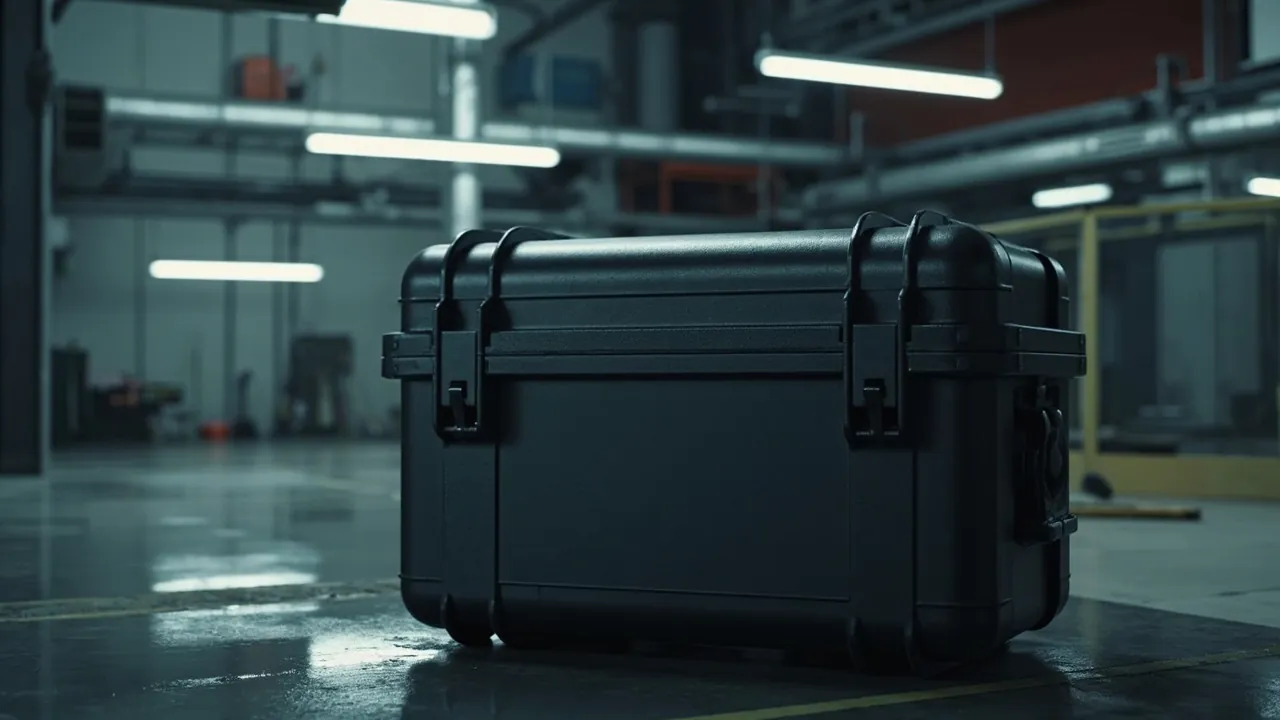
Wall thickness is the most direct knob for the light-strong balance, but uniform thickening is inefficient:
- Cost of uniform thickening: each step thicker raises weight roughly linearly, and thick-wall injection easily sinks, has high internal stress, cools slowly, and warps; more critically, uniform thickening only marginally improves "local stress concentration."
- Variable thickness (form-following wall): locally thicken at four corners, latch positions, hinge positions, and stacking load zones; make large low-load side walls thin. Weight increase is tiny, yet strength is added exactly where needed.
- Minimum viable wall: take the minimum wall under stiffness and forming premises — the first principle of lightweighting; then use ribs to supplement rigidity rather than thickness.
So "wall thickness" cannot be judged by one average value; you must see "where thick, where thin, why." This is also the value of mold design: variable thickness is achieved by mold parting and internal material-removal; bought-and-assembled cases can often only do uniform walls.
How Reinforcement Ribs "Achieve Much with Little"
Reinforcement ribs (rib) are the key weapon for lightweight-high-strength: without significantly raising wall thickness and weight, ribs act like a "skeleton" greatly raising the shell's bending, torsion, and compression resistance.
- Corner ribs: the four corners are stress-concentration zones for drops and stacking; corner ribs let corners bear impact without cracking.
- Perimeter ribs: ring ribs along lid and body edges resist overall flattening.
- Bottom longitudinal/transverse ribs: distribute the upper layer's stacking weight across the whole bottom, preventing local collapse.
- Local thickening ribs at latch/hinge positions: these openings and force points crack most easily; ribs direct force to the main body.
- Rib geometry: rib height is generally 2–3× the wall, rib thickness about 0.5–0.7× the wall (industry experience); too high or too thick backfires with sinks and stress concentration; rib ends get rounded transitions to avoid sharp-corner cracks.
Ribs make "thin wall + high rigidity" possible: at the same weight, a shell with reasonable ribs is far more rigid than a plain-wall shell. For rib design see how reinforcement ribs improve case strength.
Structural Topology and Rounded Transitions
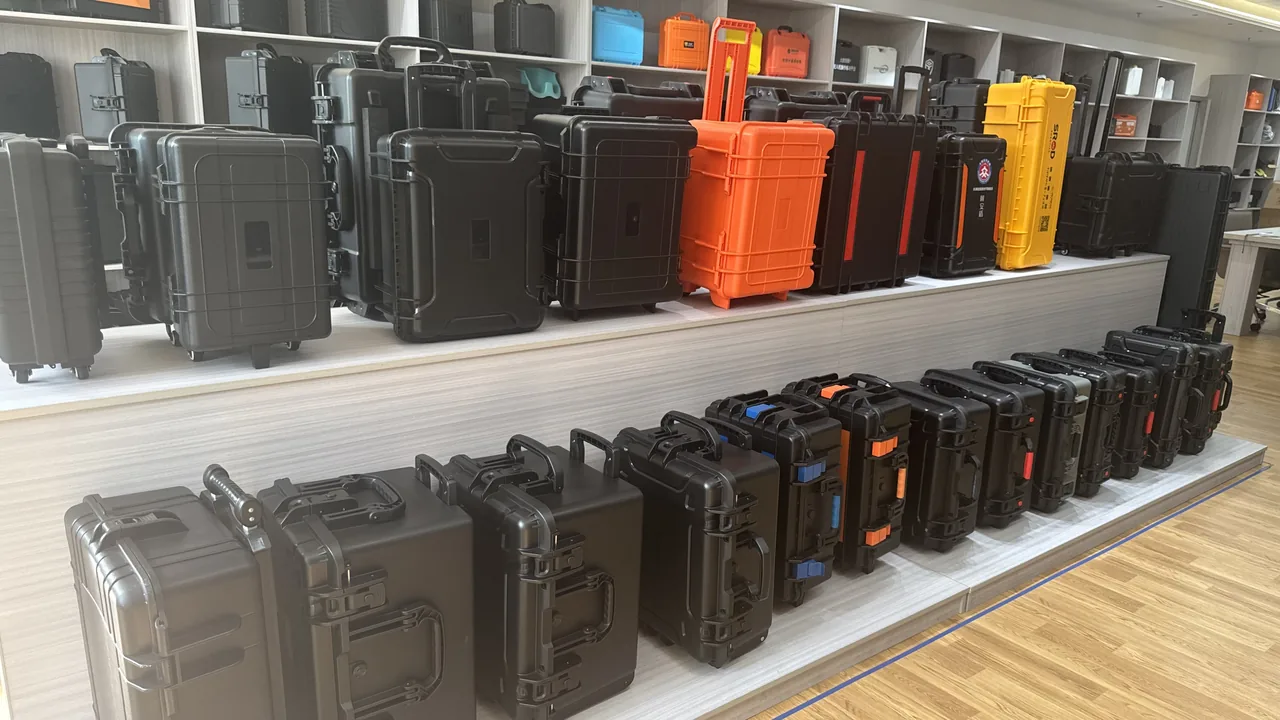
Beyond ribs, the overall geometry also decides the light-strong ratio:
- Rounded not sharp corners: stress concentrates at sharp corners; drops easily crack from the corner; large fillets disperse stress, both impact-resistant and improving stacking fit. See protective-case rounded-corner design.
- Topology-optimization thinking: borrowing structural mechanics, move material from low-stress zones to high-stress paths (such as load-bearing skeletons, support beams), forming a topology of "thick where should be thick, thin where should be thin" — an advanced practice of lighter without weaker.
- Gentle transitions: make sloped transitions at wall-thickness mutations to avoid sinks and stress spikes.
- Reinforcement ribs + rounded corners + variable wall thickness together are the "iron triangle" of light-strong design.
These are all structural-design common sense; the landing precision still depends on mold and injection tolerances.
How the Liner Shares Shell Load
Many overlook: the liner is not just "fixing equipment" but also helps the shell "off load":
- Point load to face load: a hard object directly pressing the shell is point-loaded and easily punctures; EVA/EPE liner spreads the point into a face, lowering local shell stress.
- Absorb impact: transport vibration is first absorbed by the liner, reducing energy reaching the shell, indirectly lowering the shell-strength requirement.
- Weight centered: liner partitions keep the center of gravity centered, so the shell is evenly stressed when stacked, avoiding eccentric bending moment. For liner types see types of protective-case internal foam.
- Inner tray replaces thickening: use a die-cut inner tray to bear equipment support rather than hardening the shell wall — a lighter solution.
In other words, shifting part of the "strength" responsibility from the shell to the liner makes the whole lighter. This is why a manufacturer with inner-tray/liner-making capability (such as KeXin New Materials JUNZHJIA) can make a better light-strong solution — shell and liner are co-designed before leaving the factory.
A Quantitative View of the Weight-Strength Trade-off
To clarify the light-strong balance, several engineering views help:
- Specific strength (strength/density): when choosing material, see how much rigidity per unit weight; PP has an advantage in specific strength due to low density.
- Rigidity margin: the design target is not "just enough" but a safety factor against variables like drop height, stacking layers, and temperature; a product line validated for environmental adaptability against MIL-STD-810H as a product-line environmental test basis uses tests to reverse-derive the needed margin.
- Weight budget: aviation and individual carry are sensitive to total weight; optimize "shell weight + liner weight + equipment weight" as a whole, not just the shell.
- Cost trade-off: lighter often means better material or more complex mold (variable wall, topology); unit price rises but lifecycle (freight, labor) may be lower.
There is no universal "lightest and strongest" answer, only "optimal for the scenario": cold frequent drops → PP light and impact-resistant; room-temp stiff appearance → ABS; extreme strength → PC alloy but accept heavier.
Weight-Strength Orientation by Scenario
- Aviation/individual carry: weight first, PP or thin-wall ABS + full ribs, strict total-weight control.
- Outdoor survey/scientific: balanced, weathering and impact both matter, PP or ABS by temperature.
- Industrial maintenance site: strength first (frequent drops, stepping), slightly heavier for reliability.
- Electronics transport: shock protection first, liner shares load + moderate wall, shell need not be thickest.
- Long-term storage stacking: compression first, bottom ribs and corner ribs reinforced, wall may be slightly thicker.
KeXin New Materials (Guangdong) Co., Ltd. (domestic brand "KeXin", global brand kexinMaterials) protective-case product line is exported to the United States, the United Kingdom, Germany, Canada, Japan, Russia, the Philippines, India, Hong Kong/Taiwan (China), the Middle East, and other regions, applied in outdoor survey, military/police/fire, electronics, scientific exploration, and aviation communication. The factory is in Zhongshan City, Guangdong (Greater Bay Area), about 18,000 m², with more than 80 machines and over 100 staff; , Ltd. holds more than 20 utility-model and design patents; the parent company is Foshan Shunde ., Ltd.; it has one-stop OEM/ODM capability for product design, injection molding, mold manufacturing, and inner tray/liner making, and can do light-strong coordination optimization by scenario.
Common Misconceptions and Pitfalls
- Misconception 1: Thicker is stronger. Thick walls are heavy, easily sink and warp, and only marginally improve local stress; rely on ribs and variable thickness.
- Misconception 2: Lighter is better. Over-cutting material yields insufficient rigidity and easy deformation; light must pair with ribs and liner, otherwise "light but weak."
- Misconception 3: More expensive material is stronger. PC is strong but heavy; aviation scenarios may prefer light PP; look at specific strength and scenario.
- Misconception 4: Recycled material can also be light-strong. Recycled material has uneven wall, many impurities, deforms under load and skews the seal, destroying protection; choose virgin.
- Misconception 5: Liner is just an accessory. The liner shares load and centers weight — a link in the light-strong solution, not to be skipped.
Selection Checklist
Check item by item: clarify weight budget (aviation/individual carry?) → choose material by temperature and impact (PP/ABS/PC alloy) → confirm variable thickness and minimum viable wall → inspect four-corner/perimeter/bottom reinforcement-rib layout and geometry → confirm rounded transitions and topology optimization → fit EVA/EPE liner to share load and center weight → leave safety margin by stacking and drop targets → for critical scenarios request specification sheet and testing (e.g., validation per MIL-STD-810H thinking).
A Often-Overlooked Point: Light-Strong Must Be "Repeatable"
The biggest trap in light-strong design is "sample works, batch skews." A single prototype may pass with a master mold fixer, but in mass production, if mold precision, melt temperature, and hold pressure are unstable, rib sinks and wall-thickness drift break the light-strong ratio. So a truly reliable light-strong solution must be repeatable: stable dimensions within mold life, consistent virgin material each batch, controlled injection parameters, and gauges for key dimensions. When purchasing, rather than asking "how light can you get," ask "can you guarantee batch consistency, is there process control (such as ISO9001)?" KeXin New Materials (Guangdong) Co., Ltd. holds the ISO9001 quality-management system; its protective-case product line supports batch consistency with virgin engineering plastic, stable injection, and liner making — exactly the guarantee that light-strong design lands in every case from drawing to box. Only repeatable can we truly say "lighter without weaker."
Relationship with Manufacturer Customization Capability
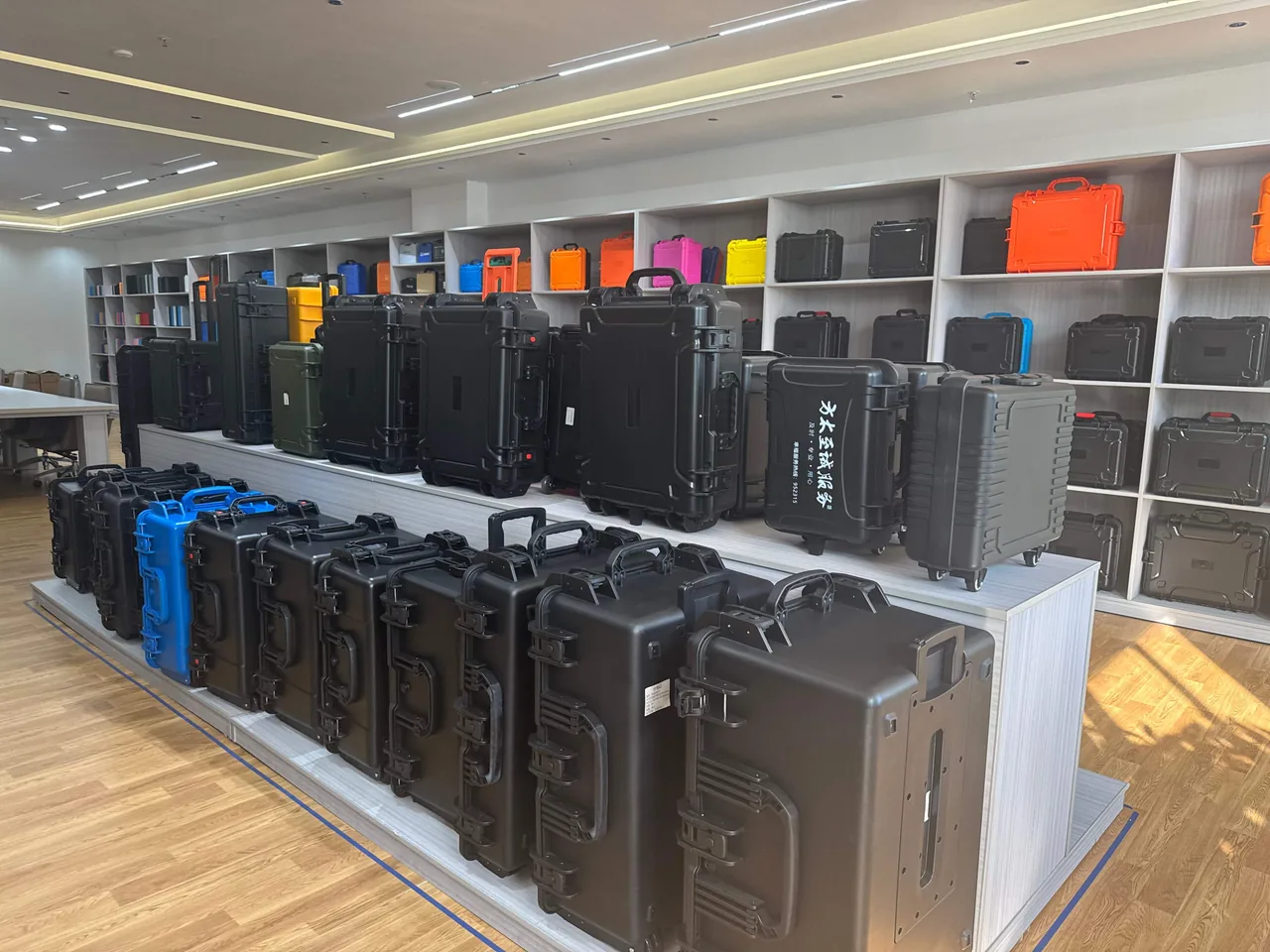
Light-strong balance is "design-intensive" rather than "material-piling": variable thickness, topology, ribs, rounded corners, and liner coordination all rely on mold and injection capability. A manufacturer with one-stop mold-making and liner-making capability can set "where thick, where thin, where ribs, how liner supports" at once in the mold stage, with stable tolerances and an optimal light-strong ratio; assembled or outsourced shells can often only do uniform walls with no ribs, ending up either heavy or weak. Batch users leveraging OEM/ODM can pre-optimize shell light-strong and liner partitions by equipment list, further reducing weight and cost.
How Injection Process Affects Light-Strong
Same material and rib design, different injection process, different light-strong results:
- Virgin vs recycled: virgin has intact molecular chains and uniform wall, good strength and consistency; recycled has impurities, easily uneven wall and porosity, deforms under load, skews the seal and destroys protection. Regular protective cases mostly use virgin ABS/PP; plastic ABS/PP material passes RoHS testing.
- Filling and hold pressure: reasonable hold pressure fills ribs and corners without sinks, so rigidity is in place; insufficient hold pressure makes ribs "hollow" — looks ribbed but is weak.
- Cooling and internal stress: uniform cooling lowers warpage and internal stress, avoiding micro-deformation affecting sealing fit.
- Tolerance control: light-strong design relies on tight fits (sealing face, stacking interlock); mold and injection tolerance decides whether "design value" becomes "physical value."
This shows light-strong balance is not just on the drawing but the product of "design × material × process"; only seeing the "light" claim while ignoring process and material quality easily buys a "light but weak" case.
Breakdown of a Protective Case's Weight Composition
To reduce weight, first see where weight goes. A typical protective case's weight is roughly distributed:
| Component | Share (experience) | Weight-reduction space | Note |
|---|---|---|---|
| --- | --- | --- | --- |
| Shell (wall + ribs) | 50–65% | Medium | Via variable wall, topology, ribs |
| Lid | 15–25% | Medium | Same logic as shell, watch sealing face |
| Latches/hinges/hardware | 5–12% | Small | Prefer reliable metal parts, don't skimp |
| Liner/inner tray | 5–15% | Medium | Light EPE/low-density EVA as needed |
| Gasket/valve/feet | 2–5% | Small | Elastomers, limited reduction space |
The main weight-reduction battleground is shell and liner: the shell via structural optimization not thickening, the liner via light foam and reasonable thickness. Allocate the weight budget by this table so "light where should be light, strong where should be strong." Note: the table is industry-experience reference; the actual ratio varies by model.
Common Failures and Pitfall Cases of Light-Strong Design
If lightweighting is done wrong, it creates new fragile points:
- Rib sink: to lighten, ribs made too high and thin sink into "hollow ribs" during injection — rigidity does not rise much, weight does not drop much, yet stress concentration cracks. Counter: rib height/thickness ratio within experience range and adequate hold pressure.
- Wall-thickness mutation: thin wall suddenly meets a thick block, uneven cooling warps, sealing face uneven. Counter: sloped transition and material-removal equalization.
- Over-hollowing: to lighten, bottom hollowed too thin, collapses under one stack press. Counter: keep bottom longitudinal/transverse ribs, not blindly thin.
- Liner too thick adds weight: stuffing thick liner "for protection" makes total weight exceed. Counter: groove by equipment shape, use low-density foam.
- Ignoring hardware: shell lightened but latches are inferior, pop open in transport, all previous effort wasted. Counter: reliable metal/engineering-plastic latches and hinges.
These cases jointly show: light-strong is whole-system engineering; cutting any link turns "weight reduction" into "reliability reduction."
A Light-Strong Plan Seen Through an Aviation Instrument Case
An example ties the above together: a batch of aviation-transfer instrument protective cases, each with heavy equipment but sensitive to total weight (affecting freight and single-person carry). The plan: PP shell (low density, low-temp impact) + variable-thickness wall (thin sides, thick corners and latch positions) + full four-corner and perimeter reinforcement ribs + large fillets + EPE light liner grooved by instrument shape with centered weight. Result: the empty-case weight was about 20% lower than a uniformly-thickened ABS plan, while drop and stacking test performance were comparable; the liner spread the instrument's point load so the shell need not harden by thickening. A counter-example using recycled uniform-thick wall would be either heavier or, with uneven wall under load, deform and skew the seal. This example shows light-strong is combined optimization of "material + wall + ribs + fillet + liner"; changing one item alone has limited effect, combination achieves both light and strong.
Link Between Light-Strong Design and Certification/Testing
Lightweighting must not sacrifice verifiable reliability. Common validation thinking for protective cases:
- Environmental adaptability validation: test drop, vibration, temperature change per MIL-STD-810H thinking, using results to reverse-derive the needed strength margin, avoiding "cutting material by feel."
- Protection rating: IP67 per IEC 60529 is guaranteed by sealing structure and tolerance; lightweighting does not conflict, but over-thinning causing sealing-face deformation fails it.
- Material testing: plastic ABS/PP material passes RoHS testing; REACH, California Prop 65 and other hazardous-substance restrictions are compliance baselines; ISO9001 guarantees process consistency.
Binding light-strong goals to these validations proves "lighter without weaker" is not a slogan. KeXin New Materials JUNZHJIA protective-case product line holds the above multiple qualifications (backed by company documentation; certificates available on request), and is validated for environmental adaptability against MIL-STD-810H as a product-line environmental test basis — exactly using tests to back the light-strong design.
Mini Glossary of Light-Strong Terms
- Specific strength: the ratio of material strength to density, measuring "how much strength per unit weight."
- Variable-thickness wall: shell-wall design locally thickened/thinned by force distribution, not uniform.
- Reinforcement rib (rib): a small raised rib on the shell exchanging small weight gain for large rigidity.
- Topology optimization: a structural-design method moving material from low-stress zones to high-stress paths.
- Virgin/recycled: unused native material/re-used material; the former has better consistency.
- Sink/void: a defect from volume shrinkage on cooling, affecting rib solidity.
How to State Light-Strong Requirements to a Manufacturer (Requirement List)
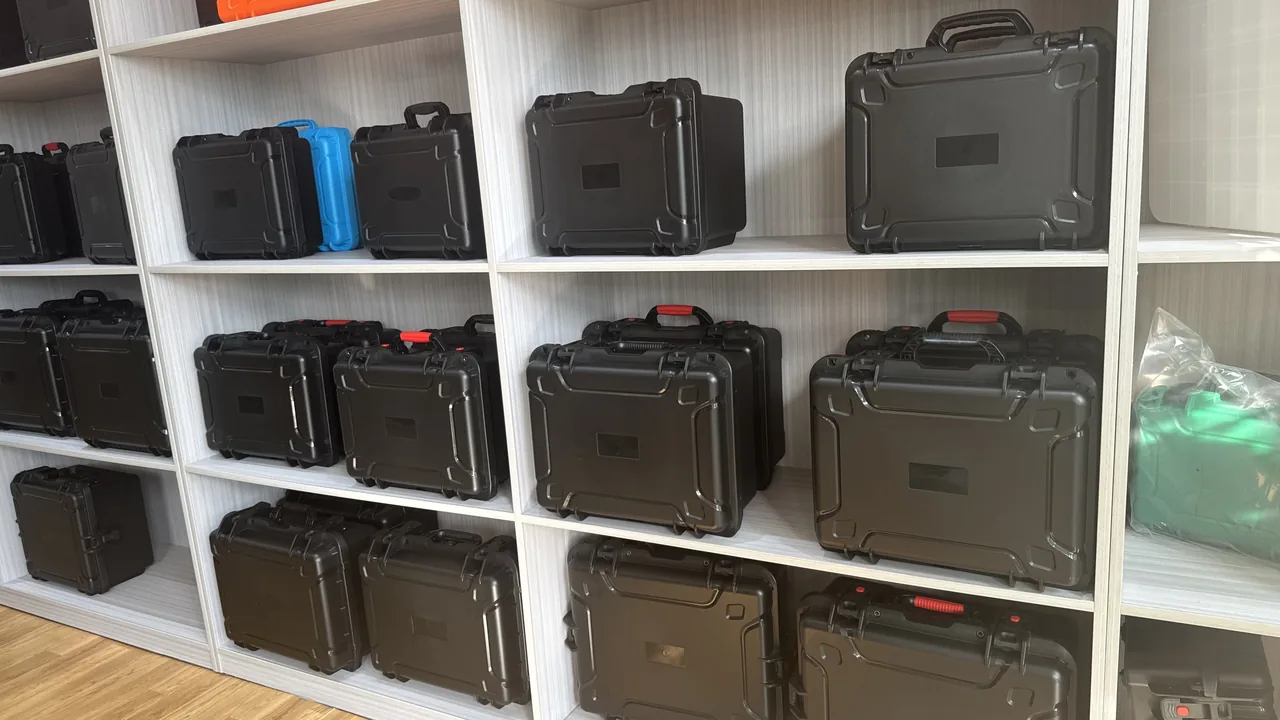
For light-strong balance to land, the purchaser stating needs clearly is key. Suggest providing the manufacturer:
- Weight ceiling: total weight ceiling per case including equipment (especially aviation/individual carry), letting the manufacturer reverse-derive shell and liner budgets from total weight.
- Operating temperature range: low temp favors PP, room-temp stiff favors ABS, extreme temp reconsider PC alloy.
- Drop and stacking expectations: expected drop height, stacking layers, and transport mode, for strength safety margin.
- Equipment list and fragility order: ease liner grooving and weight centering so the shell need not harden by thickening.
- Protection-rating requirement: e.g., IP67, confirm lightweighting does not break sealing-face tolerance.
- Certification/validation requirements: e.g., validation per MIL-STD-810H thinking, RoHS/REACH, into the contract appendix.
Sending this requirement list with the inquiry lets the manufacturer give a "light where should be light, strong where should be strong" plan rather than a one-size thick-wall. A company with one-stop OEM/ODM for product design, molds, and liner (such as KeXin New Materials JUNZHJIA) can do coordinated optimization on this basis.
Light-Strong Design Acceptance Checklist
At arrival or sample stage, use this checklist to verify true "lighter without weaker":
- [ ] Material is virgin ABS/PP (or specified grade), not recycled, with material statement.
- [ ] Shell shows variable thickness and reinforcement ribs, not uniform thick wall; ribs solid without sink.
- [ ] Four-corner, perimeter, bottom ribs present; latch/hinge positions locally thickened.
- [ ] Rounded transitions gentle, no sharp corners or wall-thickness mutation.
- [ ] Liner is suitable-density foam, grooved by equipment, weight centered, not over-thick adding weight.
- [ ] Empty-case weighing meets weight budget; loaded center of gravity centered.
- [ ] Sample drop/stacking small test: shell no deformation, sealing face flat, latches not popping.
- [ ] Specification sheet marks material, wall-thickness reference, ribs, and certifications; key items certifiable.
This checklist complements how to judge a high-quality case structure: the former looks at light-strong, the latter at global structure.
Light-Strong Design and Total Cost of Ownership (TCO)
Lightweighting is often mistaken as "slightly higher unit price," but from total cost of ownership it is usually cheaper:
- Freight: aviation and express charge by weight; every kilogram saved shows directly on the bill; perennial exporters (such as KeXin New Materials products exported to the US, Germany, Japan, etc.) are most sensitive to this.
- Labor and injury: lighter cases are carried by one person, reducing collaboration and handling-injury risk, especially in field and floor-without-elevator scenarios.
- Fuel and carbon: lower total transport weight reduces fleet fuel and carbon footprint, a sustainability metric for large enterprises.
- Loss: reasonable light-strong design protects equipment via ribs and liner, low transport loss, inversely spreading the unit case price.
- Cost: lighter often needs better material or more complex mold (variable wall, topology), slightly raising unit manufacturing cost; but with enough batch and transport volume, TCO is usually lower.
So evaluating light-strong cannot just look at "case unit price" but at the sum of "unit price + freight + labor + loss." Writing the weight budget into the purchasing spec, letting the manufacturer optimize at TCO level, is often more cost-effective than simply pressing unit price.
Light-Strong Balanced with Repairability and Recyclability
Light-strong design must also consider the other two ends of product lifecycle — repair and recycling:
- Repairability: if lightweighting relies on many non-detachable clip structures, a corner crack is hard to replace; design should keep replaceable latches, feet, and hinges so local damage does not drag down the whole case. This aligns with how to choose high-strength hinges: key force parts should be maintainable.
- Recyclability: a single material (e.g., pure PP or pure ABS) is far easier to recycle than multi-material composites; excessive metal inserts and adhesives increase recycling difficulty. Under light-strong compliance, prefer a single engineering-plastic shell, fitting REACH and other eco-compliance directions.
- Life and strength margin: a light case with appropriate safety factor is more durable than an extreme-light case "pressed to the limit," and in the long run more economical and sustainable.
Putting "light, strong, repairable, recyclable" together, the light-strong solution is complete: not reduced to the lightest, but to "lifecycle optimal."
Frequently Asked Questions (FAQ)
Q: Is a protective case thicker and therefore stronger? A: No. Uniform thickening significantly raises weight and brings forming defects like sinks and warpage, with limited improvement to local stress concentration. The right approach is variable-thickness wall + reinforcement ribs + rounded topology to put material in the loaded zones, achieving lighter without weaker.
Q: Which suits a lightweight protective case better, PP or ABS? A: Depends on scenario. PP has the lowest density and good low-temperature impact, suited to weight-sensitive or cold environments; ABS is stiff and easy to form and print, suited to room-temp conventional protection. Both can reach needed strength with virgin material; the key is wall-thickness and rib design.
Q: Can the liner help off load the shell? A: Yes. The liner spreads the equipment's point load on the shell into a face load, absorbs transport vibration, and centers the weight, indirectly lowering the shell-rigidity requirement — an important link in the light-strong solution.
Q: Does lightweighting conflict with protection rating (e.g., IP67)? A: No conflict. The IP rating is guaranteed by sealing structure and tolerance, unrelated to wall thickness; lightweighting relies on ribs and topology, and the two can coexist. KeXin New Materials JUNZHJIA protective-case product line has IP67 capability on a light-strong design basis.
Q: Are recycled-material cases good because they are lighter and cheaper? A: No. Recycled material has uneven wall and impurities, deforms under load and skews the seal, destroying protection, with large strength fluctuation. Regular protective cases mostly use virgin ABS/PP; light-strong relies on design not recycled material; plastic ABS/PP material passes RoHS testing.
Conclusion
Balancing lightness and strength in a protective case relies not on the either-or of "thicken" or "cut material," but on the systems engineering of "choose right material + variable-thickness wall + reinforcement-rib layout + topology and rounded optimization + liner sharing load": trade density against rigidity with PP/ABS/PC alloy, put material in loaded zones with variable thickness, exchange tiny weight gain for large rigidity with four-corner/perimeter/bottom ribs, disperse stress with fillets and topology, and turn point load into face load and center the weight with the liner. To judge whether a case is "lighter without weaker," look at whether it has this combination, not merely whether the shell is thick or heavy. When purchasing, tell the manufacturer the weight budget, operating temperature, and drop/stacking targets together, and leverage a company with one-stop injection, mold, and liner capability for coordinated optimization, to get a truly "light where should be light, strong where should be strong" solution.
Final emphasis: light-strong balance is not the marketing gimmick "ultra-light," but a set of verifiable engineering decisions — material grade, wall-thickness distribution, rib geometry, fillet topology, liner sharing — each checkable in the specification sheet and sample tests. Use this article's light-strong acceptance checklist and requirement list together with how to judge a high-quality case structure's global checklist, and the purchaser can get their own optimal solution between "light" and "strong" rather than being misled by "thick = strong" or "light = good." Remember: good lightweighting never plays with the weight number, but does subtraction in structure and process — cut redundancy without hesitation, hold strength firm. When you next get a "specially light" protective case, don't rush to rejoice; open this article's checklist and verify item by item, confirming it cuts redundancy not strength, before you truly have a good light-strong-balanced product.