

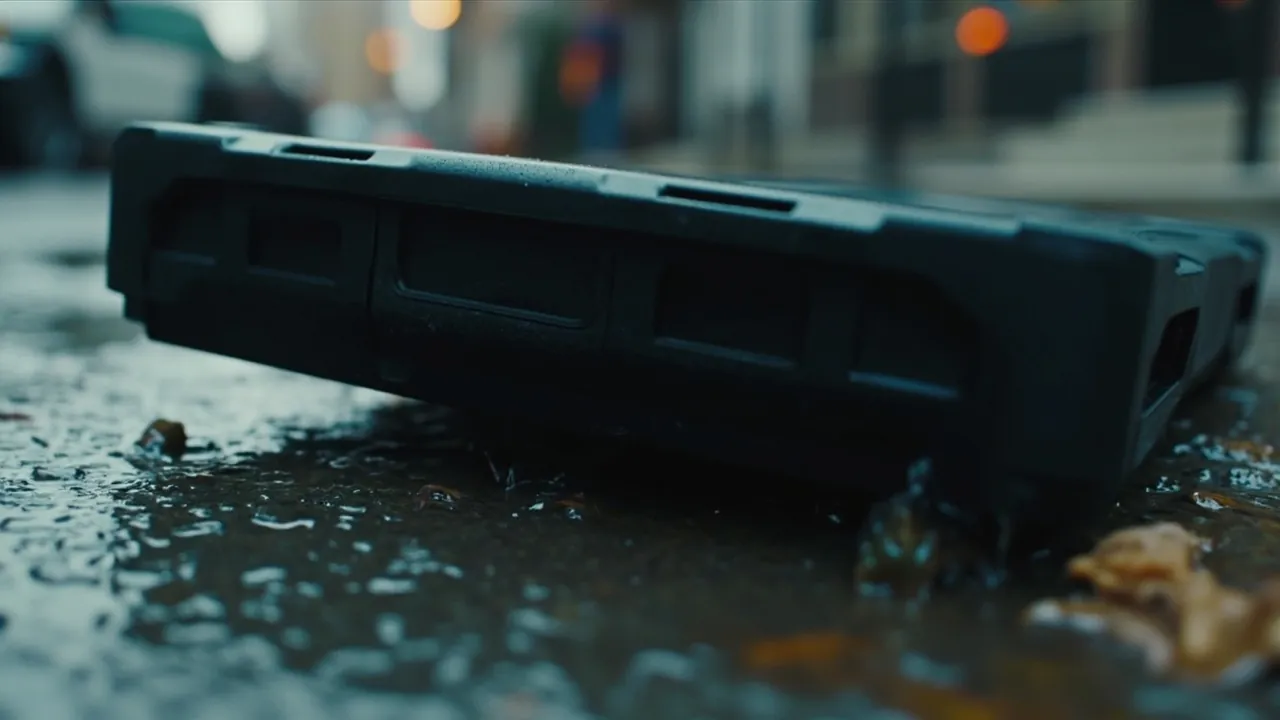
Anti-slip feet (also called bumpers) on the bottom of a protective case are a set of elastic support elements mounted on the underside or at the four corners of the case shell. They serve four core purposes: first, on uneven, slippery, or vibrating surfaces they increase friction and prevent the case from sliding or shifting unexpectedly; second, they lift the case body off the ground to form a ventilation gap, avoiding direct contact between the bottom and accumulated water or moisture; third, they absorb the impact of landing and placement, protecting the shell and the equipment inside; and fourth, they reduce noise and wear between the case and the work surface. Although they are small parts, they directly decide whether a protective case "stands stably, stays dry, and avoids knocks" in real-world scenarios such as field tabletops, truck floors, ship decks, and construction-site racks. For a case genuinely designed for outdoor and transport use, the anti-slip feet belong — together with the sealing gasket and the reinforcement ribs — to the structural components that are "unremarkable but cannot be omitted."
This article first gives a direct conclusion, then breaks down the principle, materials, layout, key parameters, and the synergy between feet, stacking, and the shell. It also includes a selection checklist, maintenance advice, and common pitfalls to help you judge whether a case's feet are "good enough."
Table of Contents
- What Anti-Slip Feet Are and Where They Are Mounted
- The Four Core Functions of Anti-Slip Feet
- Common Materials and a Selection Comparison
- How Layout and Quantity Are Determined
- Key Parameters: Height, Hardness, Friction Coefficient, and Temperature Resistance
- How Anti-Slip Feet Work With Stacking and the Shell
- What Different Application Scenarios Require of the Feet
- Common Pitfalls and How to Avoid Them
- Selection Checklist and Maintenance Advice
- Relationship to the Manufacturer's Customization Capability
- Fixed vs. Replaceable: Choosing the Mounting Method
- How Feet Relate to Center of Gravity and the Liner
- On-Site Self-Check: How to Quickly Judge Whether the Feet Are Qualified
- Industry-Specific Foot Requirements in Detail
- Quick-Reference Parameter Table
- A Riverside Sampling Kit Seen Through Foot Design
- Reminders on Common Maintenance Mistakes
- Mini Glossary of Anti-Slip Foot Terms
- Frequently Asked Questions (FAQ)
- Conclusion and Further Reading
What Anti-Slip Feet Are and Where They Are Mounted
Anti-slip feet refer to elastic protrusions or pads fixed to the bottom of the case shell. Common forms include independent hemispherical or cylindrical feet at the four corners, a continuous strip of feet running along the bottom edge, and detachable insert-type feet. They are usually made of elastic materials such as rubber, TPE (thermoplastic elastomer), TPU (thermoplastic polyurethane), EPDM, or silicone, and are fixed to the case bottom by clips, screws, adhesive backing, or integral injection molding.
Within the overall structure of a protective case, the feet are the final link "between the shell and the ground": the shell is responsible for resisting impact and bearing load, while the feet are responsible for safely "grounding" the rigidity of the shell. Many users only care whether the case is hard enough or the seal tight enough, and overlook the feet — until the case slides off a slippery truck floor or wicks moisture up from a flooded deck, and then they realize the value of this small part. For protective cases that need stacking, transport, and outdoor placement, the feet should be considered together with the shell, latches, and reinforcement ribs from the design stage, rather than being added as two scraps of rubber afterward.
The Four Core Functions of Anti-Slip Feet
1. Stabilizing and preventing shift (the primary function). A protective case is often placed on the floor of a trunk, a tool cart, an instrument vehicle, a ship deck, or a field work surface — surfaces that frequently have an incline, vibration, or slippery conditions. The high friction coefficient of the elastic foot surface "bites" the case onto the surface, suppressing sliding caused by acceleration, braking, wind and waves, or accidental collision. For large cases with wheels, the feet are the last safeguard against the case rolling away on its own when standing.
2. Ventilating, moisture-proofing, and isolating from standing water. The feet lift the case bottom off the support surface by several millimeters to more than ten millimeters, forming an air gap. This gap keeps the case bottom from touching the ground directly and from soaking in standing water or moisture; air can circulate under the bottom to carry away condensation, significantly reducing the risk of bottom-side moisture absorption, mold, and corrosion of metal parts. In rainy seasons, on riverbanks, on decks, and in muddy areas, this point is especially critical for the electronic devices and reagents inside the case.
3. Cushioning to protect the shell and the equipment inside. The moments of placement, landing, and stacking handling involve impact. As the first elastic contact point, the feet absorb this energy, preventing the shell corners from cracking on direct impact and preventing the shock from conducting through the hard bottom into the liner and shaking the equipment. They act as the case's "shoe soles," extending the life of the shell and the latches.
4. Reducing noise and preventing wear. A hard case body scraping directly against a work surface makes a harsh noise and leaves scratches; the feet turn hard-on-hard into soft contact, which is both quiet and protective of the surface and the case's paint or appearance. In environments that require quiet operation (such as recording, nighttime emergency repair, and ship cabins), this function should not be ignored either.
Common Materials and a Selection Comparison
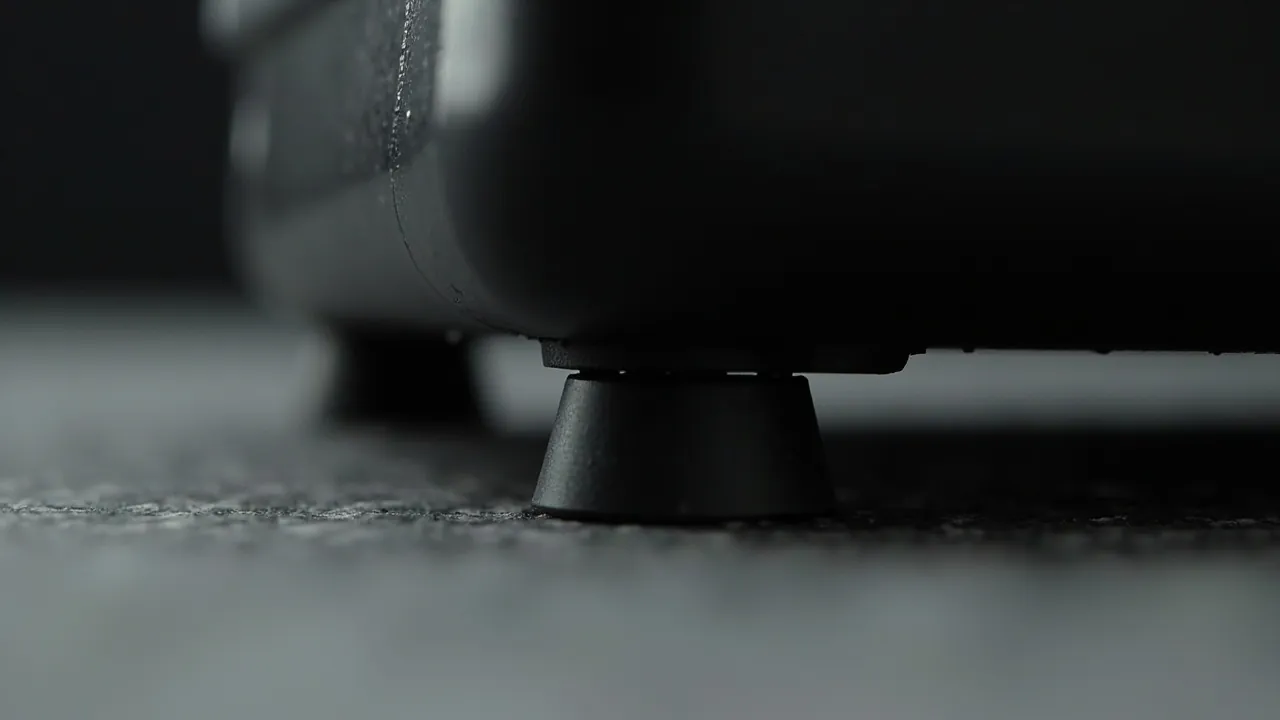
Different foot materials differ markedly in friction, weather resistance, temperature resistance, rebound, and cost. The table below shows common industry choices:
| Material | Friction/grip | Weather/aging resistance | Temp. range | Rebound | Suitable scenario | Caveat |
|---|---|---|---|---|---|---|
| --- | --- | --- | --- | --- | --- | --- |
| Natural rubber | Good | Medium | -30~80°C | Good | General, heavy cases | Hardens under long-term sun |
| TPE (thermoplastic elastomer) | Good | Better | -40~90°C | Good | Integral molding, recyclable | Choose weather-grade grade |
| TPU | Very good | Good | -40~120°C | Very good | High wear, oily environments | Higher cost |
| EPDM | Medium–good | Very good | -50~130°C | Medium | Outdoor, ozone/weather resistant | Slightly lower friction than rubber |
| Silicone | Medium | Very good | -60~200°C | Good | Extreme temp, food-grade | Average friction, attracts dust |
| Foamed EVA | Medium | Medium | -30~70°C | Medium | Light cases, temporary lift | Weaker load and wear |
Selection principle: TPE or rubber is enough for normal-temperature indoor storage; choose EPDM or TPU for long-term outdoor sun exposure and large day–night temperature swings; choose TPU for engineering sites with heavy oil and wear; consider silicone or a dedicated temperature-resistant elastomer for extreme temperatures (polar research, high-temperature workshops). Note that the above are general material characteristics; the final performance of an individual foot also depends on formulation, hardness, and structural design.
How Layout and Quantity Are Determined
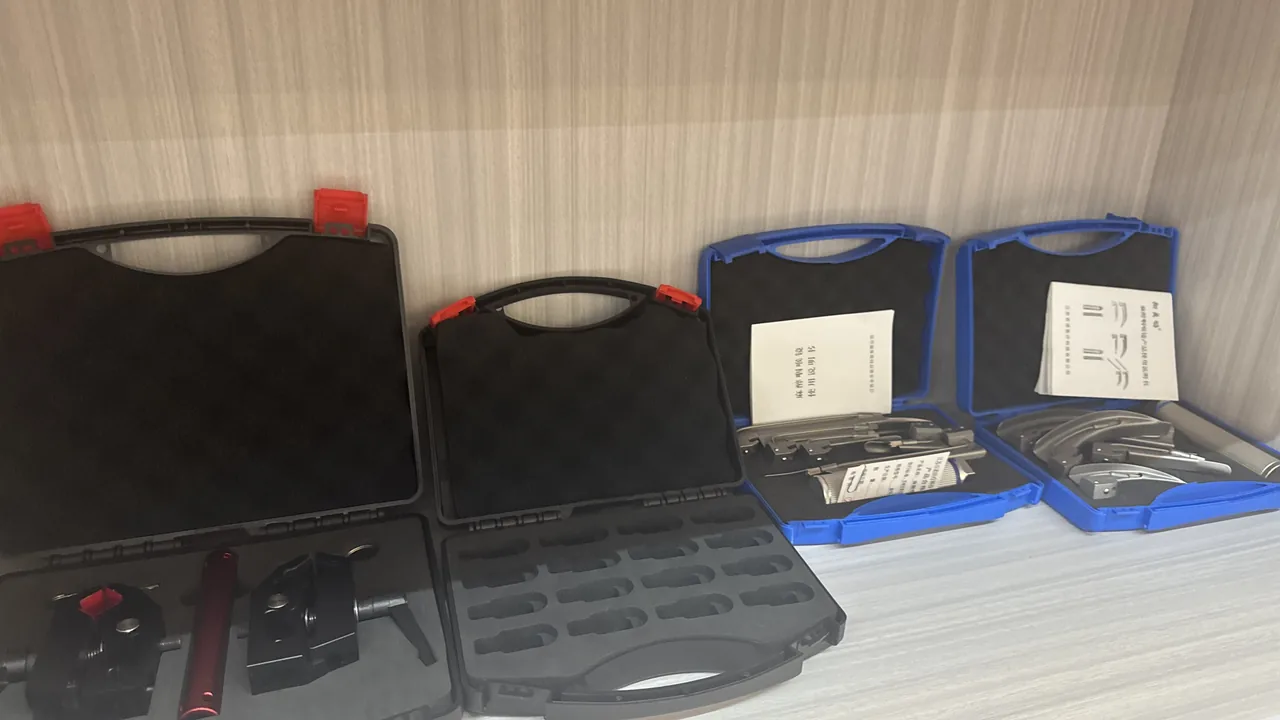
The layout of the feet directly decides stability. There are three common schemes:
- Four independent corner feet: The most common — one at each of the four bottom corners. The support area is small but positioning is clear; suitable for most small and medium cases. The key is that all four feet lie in the same plane with consistent height, otherwise the case tilts.
- Corner + mid support: Large or heavy-load cases add 1–2 feet at the midpoint of the bottom edge to prevent the middle of the bottom from sagging and touching the ground, ensuring ventilation all around; it also prevents the middle of the case from touching down first under load and destroying the moisture-proof gap.
- Continuous strip around the perimeter: Arranged along the bottom edge in a continuous ring; support is continuous and anti-slip plus moisture-proofing is most balanced, but mold cost is higher, so it is mostly used in high-end protective cases.
The number and position must align with the shell's reinforcement ribs and stacking-limiting structure — the foot landing point should ideally sit directly opposite a reinforcement rib or stiffening location inside the shell, so that "ground reaction force" is transmitted through the feet to the strongest part of the shell rather than letting the thin-wall bottom bear the load alone. This is also where a manufacturer with injection-molding and mold-making capability can get it right at the source: the foot position and rib position are designed together at the mold stage so that fit tolerances stay stable. For the structural principle behind stable stacking, see how a protective case achieves stable stacking.
Key Parameters: Height, Hardness, Friction Coefficient, and Temperature Resistance
To judge whether a foot is qualified, you can look at the following quantifiable parameters:
- Foot height (stand-off): Commonly 3–15 mm. The higher it is, the larger the ventilation and moisture-proof gap, but too high lowers the center-of-gravity stability; outdoor cases generally take 5–10 mm as a compromise.
- Shore A hardness: Mostly 50–80 A. Too soft is easily crushed and loses height; too hard reduces cushioning and grip; 60–70 A is a common balance point.
- Static friction coefficient: Depends on the surface material; in dry conditions rubber/TPE against steel, and painted surfaces against plastic, is typically in the 0.6–1.0 range, but drops markedly when wet, so for slippery scenarios choose a formulation with a high wet-friction retention rate.
- Temperature range: Should match the case's operating temperature; for a product line whose temperature-related validation follows the U.S. military standard MIL-STD-810H as a product-line environmental test basis, the feet must also withstand the corresponding temperature.
- Compression set: Whether the foot can rebound after long-term compression decides its life; quality TPU/EPDM has a lower value at the rated temperature.
Most of these parameters are general industry engineering indicators; the specific values for an individual product should be based on the manufacturer's specification sheet. If used in critical scenarios, write the foot material and temperature resistance into the order appendix.
How Anti-Slip Feet Work With Stacking and the Shell
The feet are not an isolated part. When paired with the stacking structure, the feet of the lower case embed into or mate with the limiting/interlocking structure of the upper case's lid, helping multi-layer stacking "bite" without shifting; if the feet are too high or misaligned, they can instead destroy stacking flatness. Therefore the foot height must coordinate with the height of the stacking limit bosses — which is why stacking design and foot design must be completed under the same mold logic.
Regarding the shell, the feet are the "force-end" of the shell: landing impact passes through the feet before reaching the shell, and the shell's bottom-corner rounding and reinforcement ribs decide whether the shell cracks after the feet take the force. Putting the feet, rounding, ribs, and stacking ribs into the same design loop is what lets a protective case simultaneously satisfy "stands stably, does not crack when dropped, does not tilt when stacked." The relevant structural principle is extended in how a protective case achieves stable stacking.
What Different Application Scenarios Require of the Feet
- Vehicle/ship deck: Strong vibration, slippery, with incline — prioritize high-friction TPE/rubber plus moderate height (ensuring ventilation without being too tall and wobbly), ideally with anti-roll limiting.
- Field riverbank/rainy-season worksite: Lots of standing water and mud; feet must be high enough to form ground clearance, and the material must resist mud and water and be easy to rinse.
- Laboratory/electronics workshop bench: Requires quiet operation, no bench scratches, and anti-static; choose a low-dust, controllable-surface-resistance elastomer.
- Polar/high-temperature workshop: Choose EPDM, TPU, or silicone by temperature, and confirm the brittle-temperature and operating-temperature window.
- Long-term storage stacking: The feet must bear the weight of the upper cases without deforming or losing height; the compression-set indicator must be qualified.
The JUNZHJIA protective-case product line of KeXin New Materials (Guangdong) Co., Ltd. is based in a factory in Zhongshan City, Guangdong Province (the Guangdong–Hong Kong–Macao Greater Bay Area), covering about 18,000 square meters, equipped with more than 80 machines and over 100 staff. It has one-stop OEM/ODM capabilities for product design, injection molding, mold manufacturing, and inner tray/liner making, and can coordinate feet, ribs, and stacking structure at the mold stage. Its plastic cases in ABS/PP material pass RoHS testing, and it holds qualifications such as ISO9001, REACH, IP67, and California Prop 65 (backed by company documentation; certificates available on request). This kind of capability reaching from design to mass production is the underlying guarantee that small parts are "done right."
Common Pitfalls and How to Avoid Them
- Pitfall 1: Higher feet mean better moisture-proofing. Too high lowers center-of-gravity stability and increases wobble; generally 5–10 mm is enough. Moisture-proofing relies on "ground clearance + bottom ventilation," not simply on padding higher.
- Pitfall 2: Sticking on two scraps of rubber is fine. Adhesive-backed feet easily de-bond, and inconsistent height causes the case to tilt; choose clip/screw/integral molding, with the landing point aligned to the ribs.
- Pitfall 3: Foot material does not matter. Under long-term outdoor sun, inferior rubber hardens and cracks and loses friction; for outdoor scenarios use a weather-grade material (EPDM/weather-grade TPE/TPU).
- Pitfall 4: Feet have nothing to do with stacking. Foot height and the stacking limit boss must coordinate, otherwise multi-layer stacking tilts; the stacking-design section already explains this coupling.
- Pitfall 5: Feet never fail. Feet are consumables; when worn, cracked, or detached, replace them with the same-spec part promptly, otherwise anti-slip and moisture-proofing fail.
Selection Checklist and Maintenance Advice
When selecting, check item by item: define the surface used (dry/wet/vibrating/inclined) → determine the required stand-off and friction grade → choose a weather-resistant material (outdoor: EPDM/TPU/weather-grade TPE) → confirm the foot landing point aligns with the ribs and the four feet are coplanar → if stacking is needed, confirm coordination with the limit boss → confirm the fixing method (clip/screw/integral preferred over adhesive) → for critical scenarios write material temperature resistance into the order.
For maintenance: regularly clear sand and mud from the foot gaps; if cracking, hardening, or de-bonding is found, replace the same-spec part immediately; avoid repeated peeling of adhesive types; clean with a neutral cleaner, avoiding strong solvents that accelerate aging; during long-term storage avoid single-point heavy pressure that causes permanent deformation.
Relationship to the Manufacturer's Customization Capability
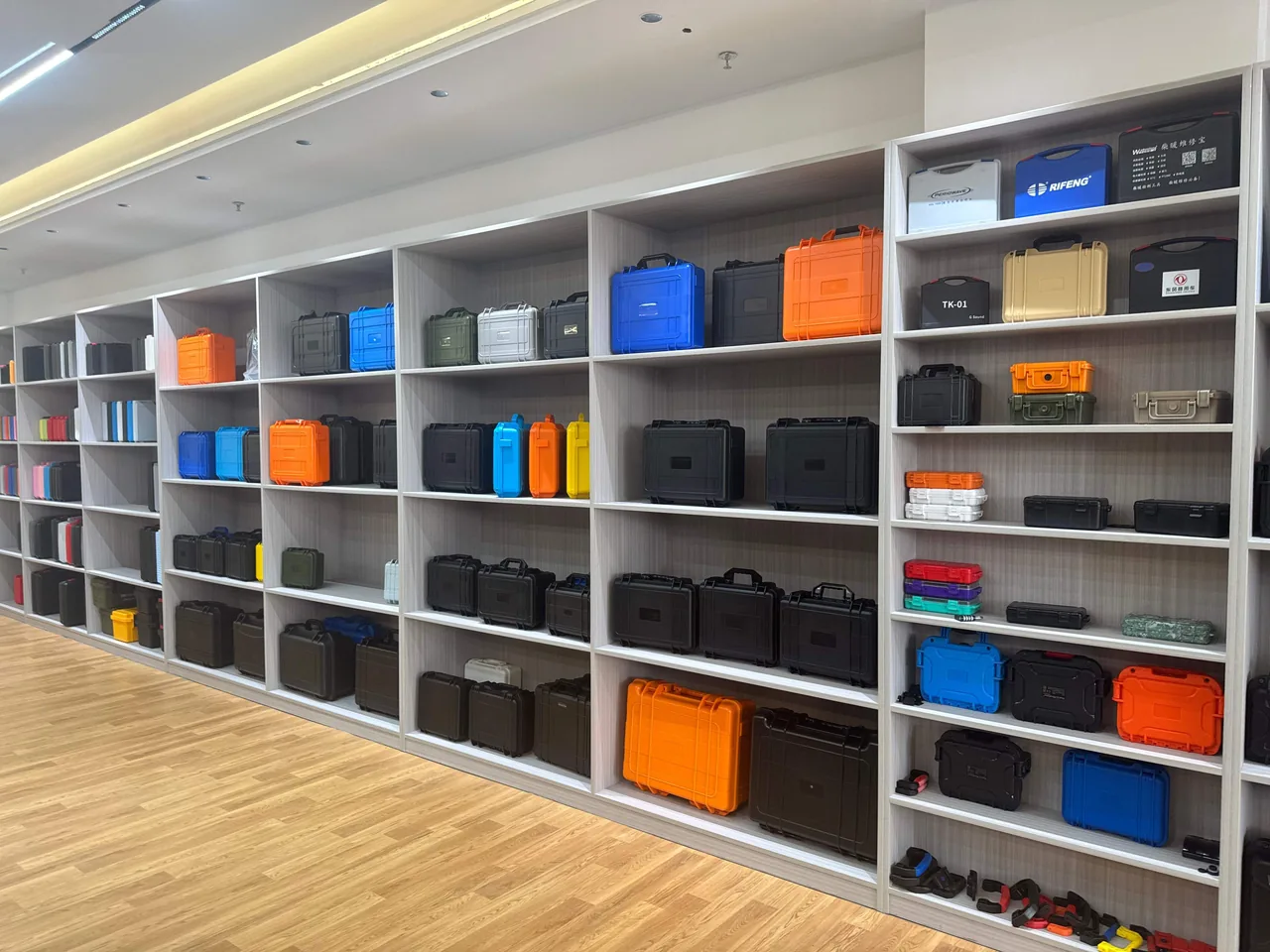
A "small structure" like feet best demonstrates a manufacturer's systems capability. A company with injection-molding and mold-making capability can align the foot hole positions, height, stacking limits, and shell rib positions in one pass at the mold stage, with stable tolerances and reliable fit; bought-and-assembled cases often show crooked feet, misaligned limits, and wobbly stacking. For batch users, leveraging the manufacturer's one-stop OEM/ODM for product design, molds, liners, and LOGO can also optimize feet, liner compartments, and external marking together by equipment list, reducing later modification and failure. The protective-case product line of KeXin New Materials (domestic brand "KeXin", global brand kexinMaterials) offers this kind of integrated customization from design to inner tray, exporting to the United States, the United Kingdom, Germany, Canada, Japan, Russia, the Philippines, India, Hong Kong/Taiwan (China), the Middle East, and applied in outdoor survey, military/police/fire, electronics, scientific exploration, and aviation/communication.
Fixed vs. Replaceable: Choosing the Mounting Method
The connection between the feet and the shell is usually of two types, easily overlooked when selecting yet directly affecting life and maintenance cost:
- Integral molding/embedded clip: The foot is molded integrally with the shell at the mold stage, or embedded as an insert during injection molding; the connection is strongest, never falls off or tilts, and the four-foot height is naturally consistent. The downside is that after wear it requires whole-part replacement or a special tool to disassemble. Suitable for cases that are finalized at the factory and used long term.
- Screw/rivet replaceable: The foot is fixed with screws or rivets at pre-reserved holes in the shell; after wear or cracking it can be replaced individually at low maintenance cost. The key is that the hole position must land on a shell rib or stiffening location to avoid thin-wall cracking; screws need anti-loosening (e.g., spring washers or thread-locker).
- Adhesive-backed: Relies on double-sided tape; low cost and easy to modify, but under long-term temperature cycling and vibration it easily de-bonds and cannot guarantee four-foot coplanarity; recommended only for temporary or low-requirement scenarios.
For cases needing long-term outdoor, vehicle, or ship use, prioritize integral or screw-replaceable types; take "whether it de-bonds easily, whether it is coplanar, whether it aligns with the ribs" as acceptance points. This is also why a manufacturer with mold-making capability is more reliable — the foot hole positions and rib positions are locked at the mold stage rather than drilled later.
How Feet Relate to Center of Gravity and the Liner
Foot height is not an isolated parameter; together with the case's center of gravity and liner counterweight it decides "whether it stands stably":
- Center of gravity and stand-off: While lifting the case, the feet also slightly raise the center of gravity. The larger the stand-off, the higher the center of gravity; on a surface inclined at angle θ, the overturning moment on the case is roughly proportional to the center-of-gravity height. Therefore foot height must balance "moisture-proof gap" against "anti-overturn," and 5–10 mm is a common compromise.
- Effect of liner counterweight: Uneven weight distribution of equipment inside (e.g., heavy instrument on one side, empty on the other) makes the case tilt or slide slightly on the feet; reasonable liner compartments and counterweight keep the center of gravity at the center of the four-foot support area. In other words, whether the feet are stable depends half on the feet themselves and half on how the liner is loaded.
- Switching with wheeled large cases: A wheeled large case is positioned by the feet when standing, and pushed by the wheels when laid down; the feet take the anti-roll and anti-creep duty in the "stopped" state, so even with wheels the feet cannot be omitted.
Viewing feet, liner counterweight, and center of gravity on the same design drawing explains why two cases that look similar — one motionless in a car, the other sliding at the slightest brake — differ exactly in the details of foot height and counterweight. For the relationship between liner and counterweight, see what types of internal foam a protective case has.
On-Site Self-Check: How to Quickly Judge Whether the Feet Are Qualified
At delivery or during routine inspection, a low-cost method quickly judges foot condition:
- Check coplanarity: Place the empty case flat on glass or a level surface and observe whether all four feet contact simultaneously and whether the case wobbles; a corner off the ground means inconsistent foot height or shell deformation.
- Press for rebound: Press the foot with a finger; on release it should rebound quickly with no obvious permanent dent; if it stays depressed it indicates material fatigue or an unqualified formulation.
- Test friction: Gently push the case on a dry surface and on a wetted surface, comparing sliding distance; a marked increase when wet indicates poor wet-friction retention — use caution in slippery scenarios.
- Check for cracks and de-bonding: Inspect the foot surface for crazing, hardening, or crumbling, and whether clips/screws are loose or adhesive is lifting; any abnormality means replacing the same-spec part.
- Measure height: Use calipers to measure the four-foot height difference, which should be within a small tolerance (e.g., on the order of ±0.5 mm); otherwise long-term stacking bears uneven load.
- Verify material marking: For critical scenarios, confirm the foot material grade and temperature resistance with the manufacturer and write it into the acceptance sheet, avoiding the vague term "rubber" replacing a specific specification.
This self-check does not depend on instruments, yet can catch most foot hazards in advance during purchasing acceptance and routine maintenance.
Industry-Specific Foot Requirements in Detail
Applying the principles above to specific industries, the differences become clearer:
- Outdoor survey/scientific exploration: Riverbanks, mountains, mud — feet must be high enough for ground clearance, resist mud and water, and be easy to rinse; weather-resistant material (EPDM/weather-grade TPE), ideally coordinated with liner counterweight to reduce overturning.
- Military/police/fire: For equipment validated against MIL-STD-810H as a product-line environmental test basis, feet must resist impact, temperature change, and vibration loosening; clip/screw fixing preferred.
- Electronics repair: Bench work requires quiet, no bench scratches, stable friction; choose a low-dust elastomer; the moisture-proof gap avoids circuit-board moisture absorption.
- Aviation communication/high-altitude transfer: Violent temperature change — the foot temperature window must be wide (e.g., EPDM/TPU), with strict compression-set.
- Ship/deck: Long-term salt spray and slipperiness — feet must resist corrosion, have high friction retention, and be easy to rinse without trapping salt.
- Industrial repair site: Heavy oil and wear — TPU or oil-resistant rubber is more suitable; height ensures ground clearance above floor liquid.
The protective-case product line of KeXin New Materials (Guangdong) Co., Ltd. (domestic brand "KeXin", global brand kexinMaterials, product-line brand JUNZHJIA) serves the above directions of outdoor survey, military/police/fire, electronics, scientific exploration, and aviation/communication. The factory is in Zhongshan City, Guangdong Province (Greater Bay Area), about 18,000 square meters with more than 80 machines and over 100 staff; , Ltd. holds more than 20 utility-model and design patents; the parent company is Foshan Shunde ., Ltd.; products are exported to the United States, the United Kingdom, Germany, Canada, Japan, Russia, the Philippines, India, Hong Kong/Taiwan (China), and the Middle East.
Quick-Reference Parameter Table
For convenient purchasing acceptance, the key foot parameters and suggestions are tabulated below:
| Parameter | Common range | Selection advice | Critical-scenario note |
|---|---|---|---|
| --- | --- | --- | --- |
| Stand-off | 3–15 mm | Outdoor 5–10 mm | Balance moisture-proof vs. anti-overturn |
| Shore A hardness | 50–80 A | 60–70 A balance | Too soft loses height, too hard reduces cushion |
| Dry friction coeff. | 0.6–1.0 | Higher is better | Watch wet retention |
| Wet friction retention | Medium–high | Key for slippery | Must check for ship/rainy season |
| Temp. range | -50~200°C varies | Match use temp. | Verify separately for polar/high temp |
| Fixing method | Integral/screw/adhesive | Integral or screw first | Adhesive only temporary |
| Compression set | Lower is better | Check spec sheet | Key for long-term stacking |
Note that the table above is a general industry engineering reference range; the final values for an individual foot should be based on the manufacturer's specification sheet and test report; for critical scenarios, write the material grade, temperature resistance, and friction retention into the order and acceptance appendix.
It must be emphasized that although the feet are small, they are the final link deciding whether a protective case can stand, stay dry, and resist drops in a real environment. Many purchasers spend budget on shell thickness and sealing level but ignore the elastic parts at the bottom, and then the case slides around in the car or sits in moisture on a muddy riverbank after rain — the problem is not whether the shell is hard enough but whether the feet are right. Bringing the feet into overall structural acceptance is a low-cost, high-return detail.
A Riverside Sampling Kit Seen Through Foot Design
A complete example ties the points together: a field water-quality sampling kit containing a portable tester, sensor probes, standard reagents, and a recorder, used on wet riverside mud, post-rain benches, and low nighttime temperatures, transported in a pickup bed and occasionally by boat. Its foot scheme: four independent TPE feet with about 8 mm stand-off, landing points directly opposite the internal shell ribs, fixed by embedded clips; the liner is symmetrically counterweighted by instrument weight to keep the center of gravity at the center of the four-foot support area. The result: the case does not slide under hard braking in the pickup, the bottom does not touch mud or wick moisture on the riverside after rain, and TPE retains friction at low nighttime temperatures. Conversely, if the feet were crushed to 3 mm to "look shorter," the case would sit directly in mud in the rainy season and moisture would rise; if adhesive feet were used, after a few months the adhesive layer ages and one corner lifts, and the sampler tips the case on the boat. This example shows that feet are not "two scraps of rubber" but the result of coordinating stand-off, material, fixing, counterweight, and shell rib position — miss one link and protection is discounted.
Reminders on Common Maintenance Mistakes
Finally, a few maintenance details to avoid "right design, broken in use": do not pry the feet with sharp tools, to avoid damaging the shell; do not wipe the feet with strong solvents (such as banana oil or strong alkali), which accelerate elastomer aging; during long-term stacking, do not let the bottom of the upper case press directly on the lower case's feet causing permanent flattening — stack per the manufacturer's stacking-layer reference; if feet are found soaked through with oil and swollen soft, the material is not oil-resistant — replace with an oil-resistant grade rather than continuing to use. The essence of maintenance is to keep the "designed anti-slip and moisture-proof ability" present throughout the entire service life.
Mini Glossary of Anti-Slip Foot Terms
- Anti-slip feet/bumpers: Elastic supports on the case bottom used for stabilization, moisture-proofing, and cushioning.
- Shore A hardness: An indicator of elastomer softness/hardness; the higher the value, the harder.
- Friction coefficient: A dimensionless ratio of friction between two contact surfaces; the larger, the more anti-slip.
- Compression set: The proportion of a material that cannot rebound after compression; the lower, the longer the foot life.
- Stand-off height: The height by which the feet lift the case bottom off the ground, deciding the ventilation/moisture-proof gap.
- Integral foot: A foot molded synchronously with the shell during injection; strongest connection, four feet coplanar.
- Replaceable foot: A foot fixed by screw/clip that can be replaced individually; lower maintenance cost.
Understanding these terms lets you accurately check foot parameters against the manufacturer's specification sheet instead of being led astray by vague terms like "anti-slip" and "wear-resistant."
Frequently Asked Questions (FAQ)
Q: What problems arise if a protective case has no anti-slip feet? A: The case easily slides or shifts on slippery, vibrating, or inclined surfaces, and may even slide off and fall; the bottom touching the ground wicks moisture and accumulates condensation, increasing the risk of corrosion for electronics and metal parts inside; and the hard impact at the moment of placement transmits directly to the shell. Although small, the feet are the key link for "standing stably and staying dry."
Q: What material is best for anti-slip feet in general? A: There is no absolute best; it depends on the scenario. Rubber or TPE for general heavy cases; EPDM for long-term outdoor, ozone- and weather-resistant use; TPU for oily and high-wear environments; silicone for extreme temperatures. The key is weather resistance, temperature resistance, friction retention, and rebound — not simply "softer is better."
Q: Is higher foot height always better? A: No. Higher gives a larger moisture-proof ventilation gap, but raises the center of gravity, increases wobble, and lowers stability; outdoor cases generally take 5–10 mm as a balance. Moisture-proofing relies on ground clearance plus bottom ventilation, not simply on padding higher.
Q: Can feet conflict with the stacking structure? A: Yes. Feet that are too high or misaligned destroy stacking flatness and may even prevent the upper lid's limit from engaging; conversely, landing points aligned with ribs and height coordinated with the stacking boss assist multi-layer anti-shift stacking. Therefore feet and stacking must be designed under the same mold logic.
Q: Can I add adhesive feet myself? A: For emergency yes, but not recommended for long-term use. Adhesive easily de-bonds, height is hard to keep consistent causing tilt, and the adhesive layer leaves residue after aging. Prefer the original clip/screw/integral feet; if replacing, use the same-spec part.
Conclusion
The anti-slip feet on the bottom of a protective case are by no means a dispensable decoration: through elastic support "between the shell and the ground" they complete four tasks — stabilizing and preventing shift, lifting off the ground for ventilation and moisture-proofing, cushioning to protect the shell and equipment, and reducing noise and wear. To judge whether the feet are qualified, look at whether the material's weather and temperature resistance and the height and hardness are balanced, whether the landing point aligns with the shell ribs, whether it coordinates with the stacking limit, and whether the fixing method is reliable. For outdoor, vehicle, ship, rainy-season worksite, and long-term stacking scenarios, the foot height and friction retention directly decide whether the case "stands stably and stays dry." When purchasing, bring the feet into overall structural acceptance rather than sticking on two scraps of rubber afterward; batch users can leverage a manufacturer with one-stop injection, mold, and liner capability to coordinate feet, ribs, stacking, and liner before leaving the factory, so the case truly "does not slide on landing, does not wick moisture off the ground, and does not tilt when stacked."
Further Reading
- How does a protective case achieve stable stacking?
- How does a protective case balance light weight and strength?
- How to judge whether a protective case has good structure?
- What is the difference between engineering plastic and normal plastic for protective cases?
- How to keep a protective case safe during transport?
- What types of internal foam does a protective case have?