

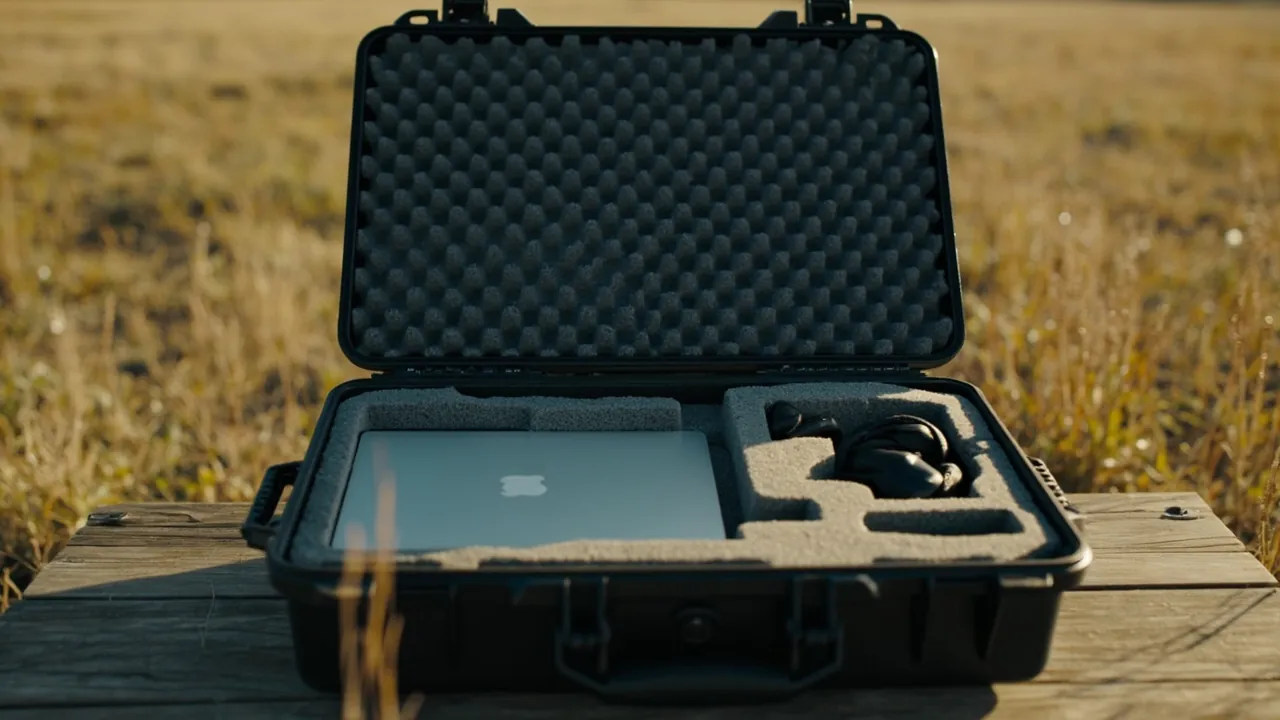
An outdoor protective case protects cameras, drones, and communication equipment through a combination of "three layers of protection": it uses an IP67 full-perimeter seal (per IEC 60529, fully dust-tight plus short-term immersion) to block water and dust; an EVA/EPE cushioning liner to fix the equipment in place and absorb transport vibration and drop impact; a high-strength shell with reinforcement ribs to resist external compression; and, as needed, a pressure-balancing valve to cope with air-transport/high-altitude pressure difference. The shared weaknesses of these electronic devices outdoors are "fear of water, fear of shock, fear of dust, fear of temperature change" — lens fogging from water ingress, drone gimbal loosened by vibration, communication radio shorting from dust ingress, circuit boards going out of spec from moisture, often happen at the moment of transfer and handling. The protective case does not operate the equipment for you, but keeps the "transport accidents" outside the case and locks the "vibration displacement" inside the liner. This article unfolds as "pain points → solutions → points by equipment type → industry common knowledge → selection checklist," with all statements based on verifiable protection principles and common industry norms, inventing no equipment certifications.
Table of Contents
- What Electronic Devices Fear Most Outdoors
- Water and Dust Proofing: IP67 Is the First Line of Defense
- How the Cushioning Liner Fixes Precision Equipment
- Different Protection Points for Cameras, Drones, and Communication Equipment
- Industry Common Knowledge: Transport and Storage Norms
- Selection Checklist by Equipment Type
- Common Misconceptions
- Cushioning Liner Design Steps (Custom by Equipment)
- Requirements of Different Transport Modes on the Protective Case
- Real Protection Cases
- The "Five-Layer" Logic of Protecting Electronics with a Protective Case
- Compliance and Qualifications Buyers Ask Most
- Full-Lifecycle Protection Management from Purchase to Retirement
- Glossary (for Citation and Acceptance)
- Frequently Asked Questions (FAQ)
- Conclusion and Further Reading
What Electronic Devices Fear Most Outdoors
Cameras, drones, communication equipment, survey instruments, and other precision electronic assets are most easily damaged outdoors and in transport by four types of risk:
- Fear of water: Rain, splash, wading, falling into water enters the body, lands on the circuit board or connectors to form a conductive path, causing short circuit, burnout, or lens fogging and mold. Even if the body is rated for some everyday water resistance, interfaces, microphone holes, and cooling slots remain weak points.
- Fear of shock: Vehicle bumps during transport, handling drops, and items colliding inside the case loosen lens elements, shift gimbal axes, damage hard-disk heads, and crack solder joints. Shock is a "chronic and sudden" killer.
- Fear of dust: Sand and dust enter body seams and cooling holes, wearing zoom groups, jamming buttons, forming black spots on sensors/lenses, and forming leakage paths on circuits.
- Fear of temperature change and pressure difference: Large day–night temperature swings in mountains and aircraft cargo-hold climbs make the internal air volume change, producing internal–external pressure difference that may suck the lid open or crush the seal; low temperature also drops battery endurance sharply and embrittles LCDs.
These four risks correspond to four response layers of the protective case: water/dust → sealing, shock → cushioning liner, compression → shell rigidity, pressure difference → pressure-balancing valve. Understanding "what the equipment fears, what the case manages" lets selection match correctly instead of being led astray by appearance and low price.
Water and Dust Proofing: IP67 Is the First Line of Defense
For electronic equipment, dust and water proofing is the baseline of transport safety. The protective case standardizes this line of defense with a quantifiable rating:
- Fully dust-tight (IP6X): A full-perimeter elastic gasket (EPDM, TPE, and other weather-resistant elastomers) is evenly compressed by the latches; dust particles (micron-scale) cannot enter with air convection, avoiding lens black spots, circuit leakage paths, and jammed buttons.
- Short-term immersion proof (IPX7): Per IEC 60529, about 1 meter depth for 30 minutes without water ingress, handling wading, falling in water, and mud — exactly the rescue window when a camera drops in a stream, a drone lands in tidal flats, or a communication radio overturns into water.
- Why IP67: It covers both fully dust-tight and short-term immersion at once, the most recommended "all-in-one" rating for outdoor electronic equipment; the specific rating is per the individual product's specification sheet and test report.
It must be stressed: the protective case's IP67 is the protection rating of the "case body," not the protection rating of each device inside. Dropping an un-ruggedized consumer camera directly into water, the case's IP67 cannot save it — the value of the protective case is to keep water and dust outside the case in the "transport and storage state," keeping the equipment safe in non-operating periods. Protection during operation still depends on the device's own design and usage norms. For rating details, see what is the difference between IP65, IP66, and IP67?.
How the Cushioning Liner Fixes Precision Equipment
Sealing alone is not enough; equipment sliding and colliding inside the case is equally fatal. The cushioning liner (foam/inner tray) is the second line of defense:
- EVA foam: Good rebound, good cut-shaping, the mainstream for cut fixing of precision equipment; dense surface, low moisture absorption, suited to cameras, lenses, and communication modules.
- EPE pearl cotton: Light, even cushioning, low cost, suited to heavier equipment as base padding and dividers; for a foam comparison see the difference between EVA and EPE foam.
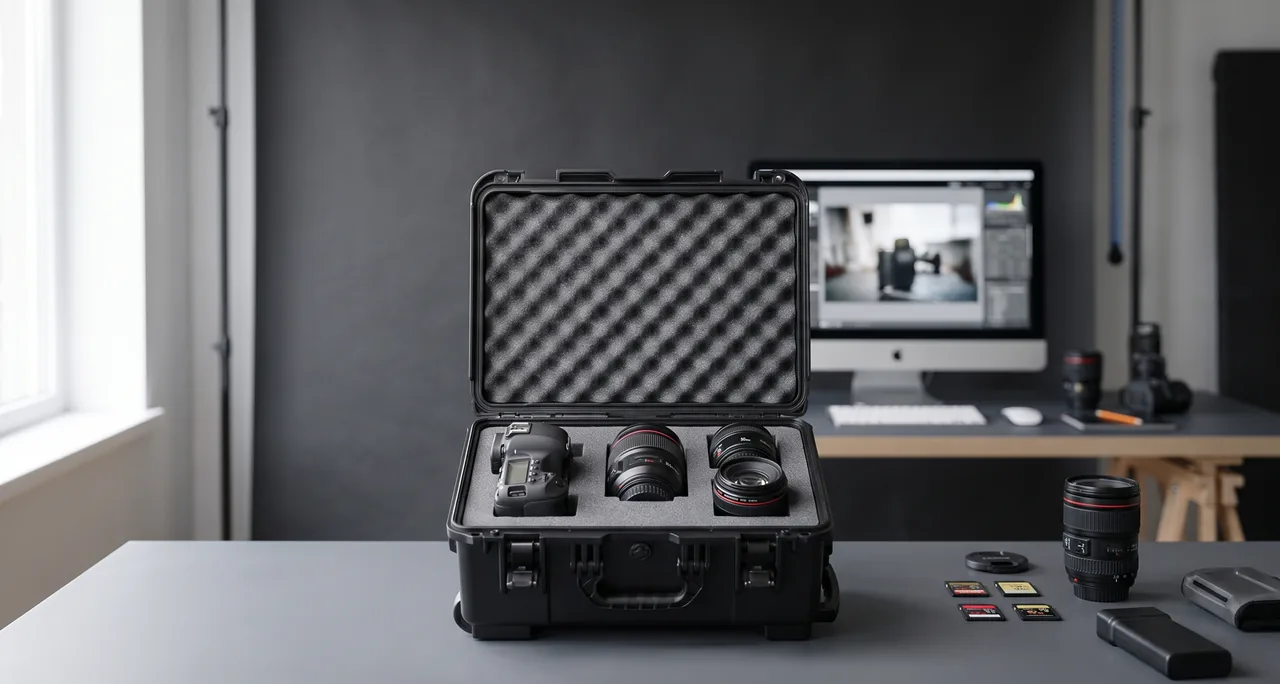
- Die-cut/cut inner tray: CNC-cut or die-cut by equipment shape, letting each item "sit in its own slot," zero displacement in transport, no mutual scraping; this is industry practice for protective cases protecting precision electronics (for liner selection see how to choose protective case internal foam).
- Layering and isolation: Stand long antennas in deep cases, layer instruments in flat cases; batteries in separate insulated slots to avoid shorting with the host; shedding parts (such as screws, adapters) in isolation bags to avoid contaminating optics and circuits.
KeXin New Materials (Guangdong) Co., Ltd.'s JUNZHJIA protective-case product line has inner-tray/liner-making capability, able to custom-cut slots and zones by equipment list; the factory is in Zhongshan City, Guangdong Province (the Guangdong–Hong Kong–Macao Greater Bay Area), about 18,000 square meters, with more than 80 machines and over 100 staff, and has one-stop OEM/ODM capabilities for product design, injection molding, mold manufacturing, and LOGO printing, able to complete "custom liner by equipment shape" before leaving the factory. Products are exported to the United States, the United Kingdom, Germany, Canada, Japan, Russia, the Middle East, and other regions, adapting to electronic-equipment transfer across industries.
Different Protection Points for Cameras, Drones, and Communication Equipment
Different equipment has different pain points; liners and zones must be tailored to the device:
Cameras and lenses: Most fear water ingress fogging and lens elements loosened by shock. Points: body + each lens in an independent cut slot, lens cap inward, interface upward; keep a UV/protective filter on; a moisture-proof bag in humid environments; clean the case exterior promptly after coastal salt spray. Put a desiccant inside to prevent lens condensation (for rainy season see how outdoor protective cases handle rain and high humidity).
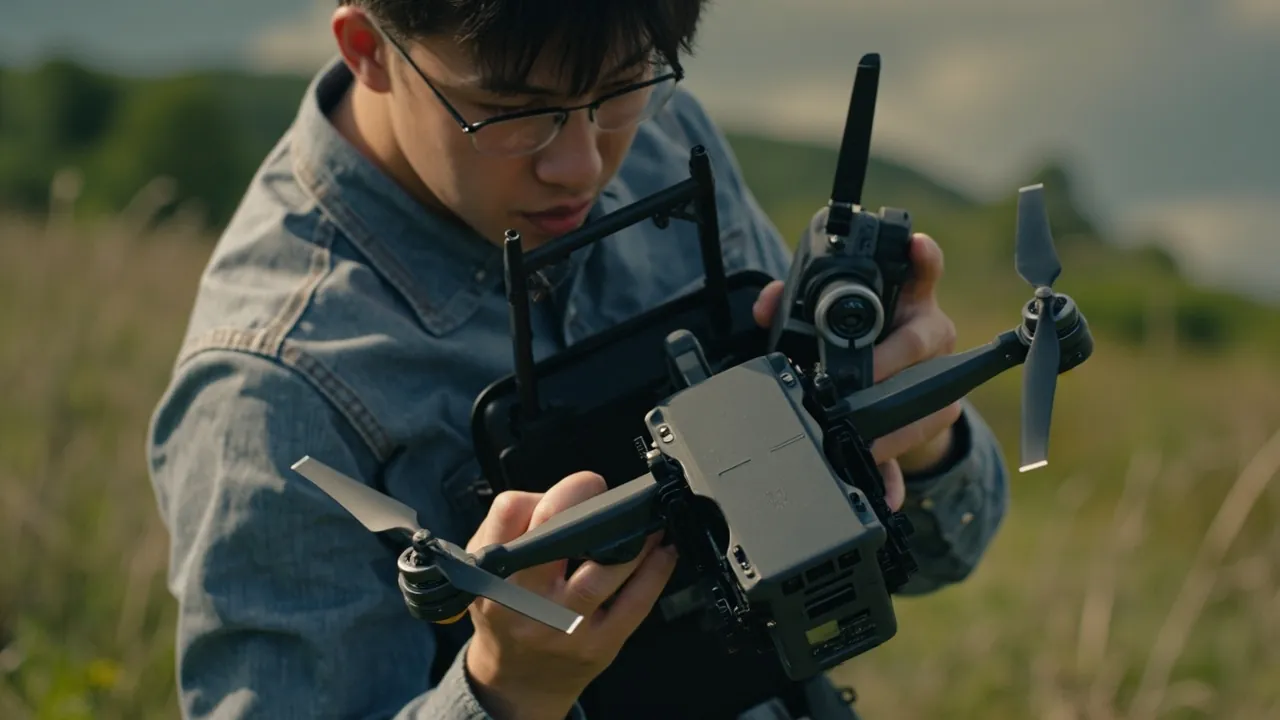
Drones: Most fear gimbal loosened by shock, propellers broken, and battery short circuit. Points: body, gimbal, battery, remote control, and spare props in separate slots; battery in a separate insulated slot to prevent short circuit and comply with transport regulations; fix props with slots or straps to prevent bending; center the whole unit's center of gravity for easy carrying. Drones are high-value and highly integrated, demanding the highest liner fit.
Communication equipment (radio, antenna, battery pack, navigation): Most fear dust ingress shorting and connector oxidation. Points: host, antenna, battery, cables in separate slots; put protective caps on connectors against dust; battery in a separate insulated slot; add a pressure-balancing valve for high-altitude/air-transfer to balance pressure difference (see the pressure-balancing valve of outdoor protective cases). Military/police/fire equipment is often validated against the military standard MIL-STD-810H (a product-line-level environmental-adaptability validation) to handle vibration, shock, heat-humidity, and sand-dust.
Industry Common Knowledge: Transport and Storage Norms
On using protective cases for electronic equipment, there are several common industry norms (none are equipment certifications, all are operational norms):
- Batteries separately insulated, short-circuit proof: Lithium-battery transport has dedicated regulations (aviation and cross-border have requirements on rated energy, quantity, and packaging); put them in original or insulated slots, electrodes not exposed, not in contact with metal parts; specifics per transport and manufacturer advice.
- Liquids sealed leak-proof: Reagents, coolant, etc. must be secondarily sealed to avoid contaminating electronics; separate slots from the host.
- Open less, open in clean places: Try not to leave the case open in blowing sand and rain, reducing dust and moisture entering; after handling confirm no foreign matter on the gasket before latching.
- Air transport/high altitude with valve: Cargo-hold climb produces pressure difference; the pressure-balancing valve balances internal–external pressure, prevents the lid being sucked open, and blocks water and dust; principle is common industry knowledge.
- Labels and checklists: Put an equipment checklist and fragile label inside, LOGO/number outside for team management; batch users go OEM/ODM unified labeling.
- Arrival inspection: After long transport, open the case and first check desiccant status and equipment appearance before powering on, avoiding powering on while damp.
These norms, combined with the case's sealing, liner, valve, and zoning design, turn "transport safety" from a slogan into an executable process. For how the shell material supports protection, extend to how to choose the shell material of an outdoor protective case.
One often-overlooked norm: the protective case protects electronic equipment in the "non-operating period"; protection during operation still relies on the device's own design and usage norms. For example, a camera shooting in rain relies on the body's own everyday water resistance and lens hood, not the case; the case only blocks water and dust in "pack-up, transfer, and storage." Clarifying this boundary neither overestimates the case (thinking an IP67 case lets the camera soak directly) nor underestimates it (thinking the device itself is enough and no case is needed). The correct posture is "device manages operation, case manages transfer and storage," each doing its job, complementary not substitutive. This is exactly why this article always stresses "the protective case's IP67 is the case-body transport-state rating, not that the device itself can be immersed" — only by dividing the boundary can equipment be protected without wrong safety expectations.
Selection Checklist by Equipment Type
A checklist ticked by equipment type:
| Equipment type | Suggested IP rating | Liner points | Extra configuration |
|---|---|---|---|
| --- | --- | --- | --- |
| Camera/lens | IP67 | Each in independent cut slot, lens up | Desiccant, moisture-proof bag |
| Drone | IP67 | Body/gimbal/battery/prop separate slots | Battery insulated slot, straps |
| Comms radio/navigation | IP67 | Host/antenna/battery/cable separate slots | Connector caps, pressure-balancing valve |
| Survey instrument/sensor | IP67 | Instrument suspended in cut slot | Desiccant, shock proof |
| Spare battery pack | IP67 | Separate insulated slot | Short-circuit proof, transport compliant |
General steps: ① list equipment shape, quantity, fragility order; ② set required IP rating (wading/falling in water → IP67); ③ confirm virgin ABS/PP shell with full-perimeter gasket and multiple latches; ④ custom EVA cut liner + zones by shape; ⑤ add pressure-balancing valve for air transport/high altitude; ⑥ batteries separately insulated, with desiccant; ⑦ verify ISO9001, IP67, RoHS/REACH, California Prop 65 (backed by company documentation; certificates available on request), plastic ABS/PP material passes RoHS testing; ⑧ batch users go OEM/ODM unified liner and LOGO.
Common Misconceptions
- Misconception 1: Case is IP67 so the device can soak freely. Wrong. IP67 is the case-body transport-state protection, not that the device itself can be immersed; protection during operation depends on the device.
- Misconception 2: No liner is easier. Without a liner, equipment slides and collides, instead more easily damaged; fit a fixed liner.
- Misconception 3: Batteries placed casually. Lithium batteries need insulation against short circuit and compliance with transport regulations; separate slots from the host, electrodes not exposed.
- Misconception 4: Thicker liner is safer. Too thick crowds space, too soft cannot support; cut to fit by equipment shape, not blindly thicker.
- Misconception 5: Look only at appearance, not qualifications. For critical scenarios verify IP67, ISO9001, RoHS/REACH, California Prop 65 (backed by company documentation; certificates available on request), individual product per specification sheet.
Cushioning Liner Design Steps (Custom by Equipment)
To make "fixing + cushioning" executable, liner design has clear steps:
- Survey the equipment: Measure each device's shape, weight, center of gravity, and fragility points (lens, gimbal, interface, screen), list handling order and fragility priority.
- Set liner material: Precision small items (camera, comms module) use EVA cut slots; heavy items (battery, radio) use EPE or EVA base padding + zones; for foam comparison see the difference between EVA and EPE foam.
- Draw zone layout: By "host centered, fragile up, battery isolated, cables in slots," avoid mutual pressure and scraping; stand long rods in deep cases, layer instruments in flat cases.
- Cut and fix: CNC-cut or die-cut, let each item "sit in its own slot," zero displacement in transport; slot depth so the device embeds more than 2/3, easy to take and place.
- Add protection details: Lens cap on, connector caps, soft pad on screen, battery in separate insulated slot; shedding parts (screws, adapters) in isolation bags.
- Trial-fit verification: After sampling, simulate transport vibration and short drops, open and check displacement and scraping, adjust slots or add filling.
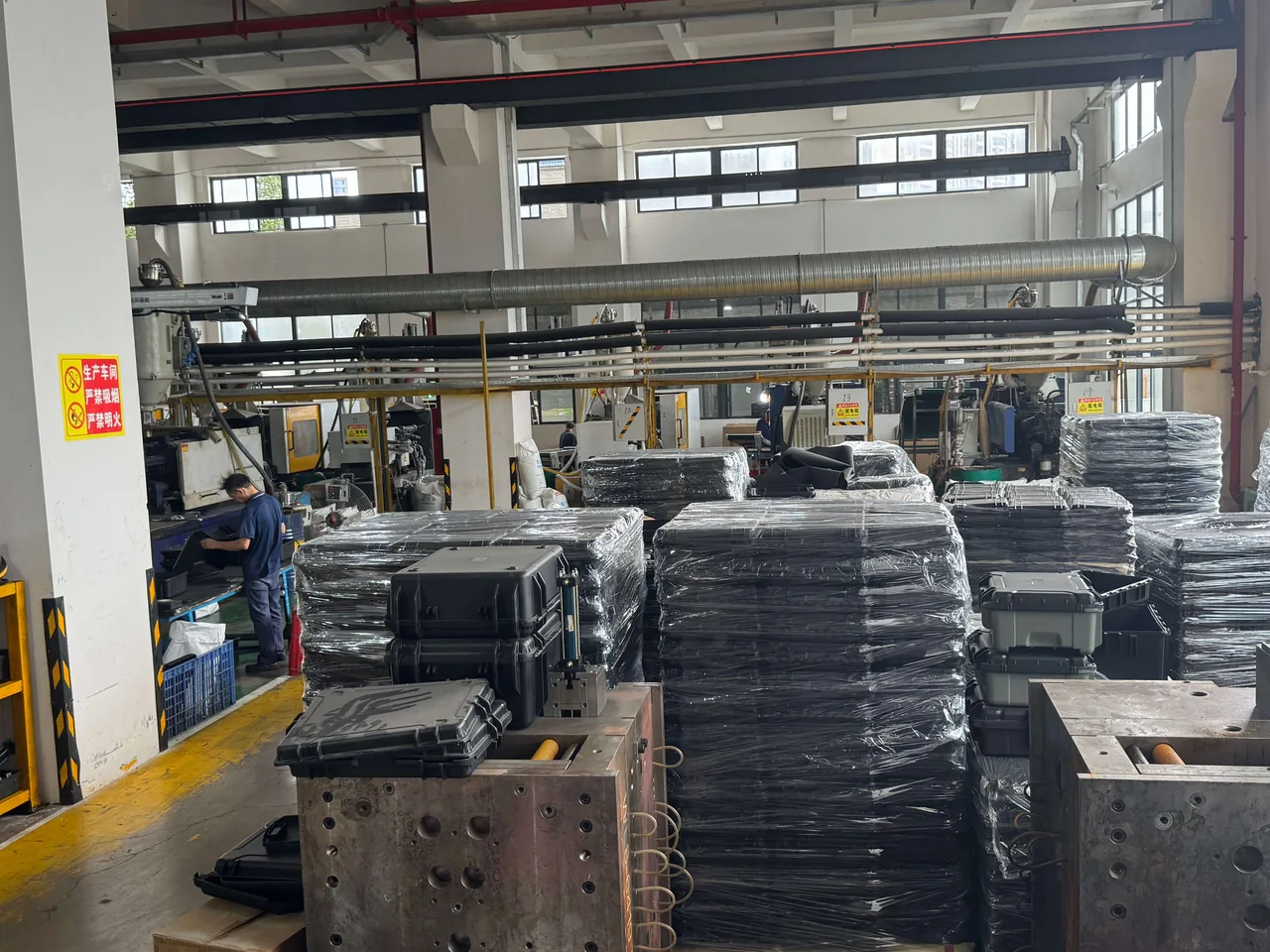
KeXin New Materials JUNZHJIA protective-case product line has inner-tray/liner-making capability, able to complete "custom liner by equipment shape" before leaving the factory per the above steps, with LOGO printing for unified marking; factory in Zhongshan City, Guangdong Province (Greater Bay Area), about 18,000 square meters, more than 80 machines, over 100 staff, supporting one-stop OEM/ODM for product design, injection molding, molds, and liners.
Requirements of Different Transport Modes on the Protective Case
The path from A to B differs, so should the case configuration:
| Transport mode | Main risk | Case configuration suggestion |
|---|---|---|
| --- | --- | --- |
| Road vehicle | Bumps, hard braking, sun | IP67 + EVA liner + fixing straps, avoid direct sun |
| Air freight | Cargo-hold climb pressure difference, handling drops | IP67 + pressure-balancing valve + liner, follow battery regs |
| High-altitude transfer | Day–night temperature swing, low pressure | Pressure-balancing valve + anti-condensation desiccant + temperature control |
| Sea container | High humidity, condensation, salt spray | IP67 + sufficient desiccant + moisture-proof film + humidity card |
| Manual handling | Drops, bumps | Ribbed shell + multiple latches + handle guards |
| Field carry | Wading, mud, drops | IP67 + compact liner + tether against loss |
Key point: aviation and cross-border transport have dedicated lithium-battery regulations (rated energy, quantity, packaging, marking); batteries must be separately insulated, electrodes not exposed, not in contact with metal, specifics per transport and manufacturer advice. Sea transport has large humidity swings and easy condensation; besides in-case desiccant, add moisture-proof film and humidity card, open and vent-check on arrival (see precautions for shipping outdoor protective cases by sea).
Real Protection Cases
Three scenarios tie the above together:
- Field photography team: Camera body + four lenses + accessories, each in independent EVA cut slot, lens up, desiccant for moisture. Packed into the vehicle in rain after work; IP67 blocked rain, liner prevented collision, opened device dry and usable; compared to those without liner, lenses scraped each other, the difference being the cut fixing.
- Drone inspection team: Body, gimbal, battery, props, remote in separate slots; battery separately insulated against short circuit and compliant. Air-transfer added pressure-balancing valve, cargo-hold climb did not suck the lid open; gimbal zero offset on landing, took off directly.
- Emergency communication support: Radio, antenna, battery, cables in separate slots, connector caps against dust; whole case IP67 safe in rain and mud, communicating on open. Military/police/fire types validated against MIL-STD-810H at product-line level for environmental adaptability, handling vibration, shock, heat-humidity, and sand-dust.
These cases show: protecting electronics with a protective case = seal blocks water/dust + liner locks shock + shell resists compression + valve balances pressure + manages batteries by regulation; only with the five working together is it "usable on opening."
The "Five-Layer" Logic of Protecting Electronics with a Protective Case
Converge the article's points into a "risk → response layer" map, easy to explain to a team why the case is configured this way:
| Equipment risk | Case response layer | Specific practice |
|---|---|---|
| --- | --- | --- |
| Fear of water (rain/splash/wade) | Seal layer | IP67 full-perimeter seal (per IEC 60529) blocks liquid water |
| Fear of dust (sand/powder) | Seal layer | IP6X fully dust-tight, connector caps |
| Fear of shock (transport/drop) | Cushion layer | EVA/EPE cut liner fixes and absorbs impact |
| Fear of compression (stacking/squeeze) | Shell layer | Virgin ABS/PP + ribs resist deformation |
| Fear of pressure difference (air/high altitude) | Valve layer | Pressure-balancing valve balances internal–external difference, blocks water/dust |
| Fear of moisture (high humidity/condensation) | Humidity-control layer | Desiccant + low-absorption liner + temperature control |
The value of this table: it aligns "what the equipment fears" with "what the case manages" one by one, avoiding missing a layer. A common error is buying a well-sealed case but no liner, so the equipment "did not get wet but was shocked broken"; or only a liner but no rating set, so "not shocked but sand got in." With five layers working together, the protective case is a complete solution. For how the shell material supports these five layers, extend to how to choose the shell material of an outdoor protective case.
Compliance and Qualifications Buyers Ask Most
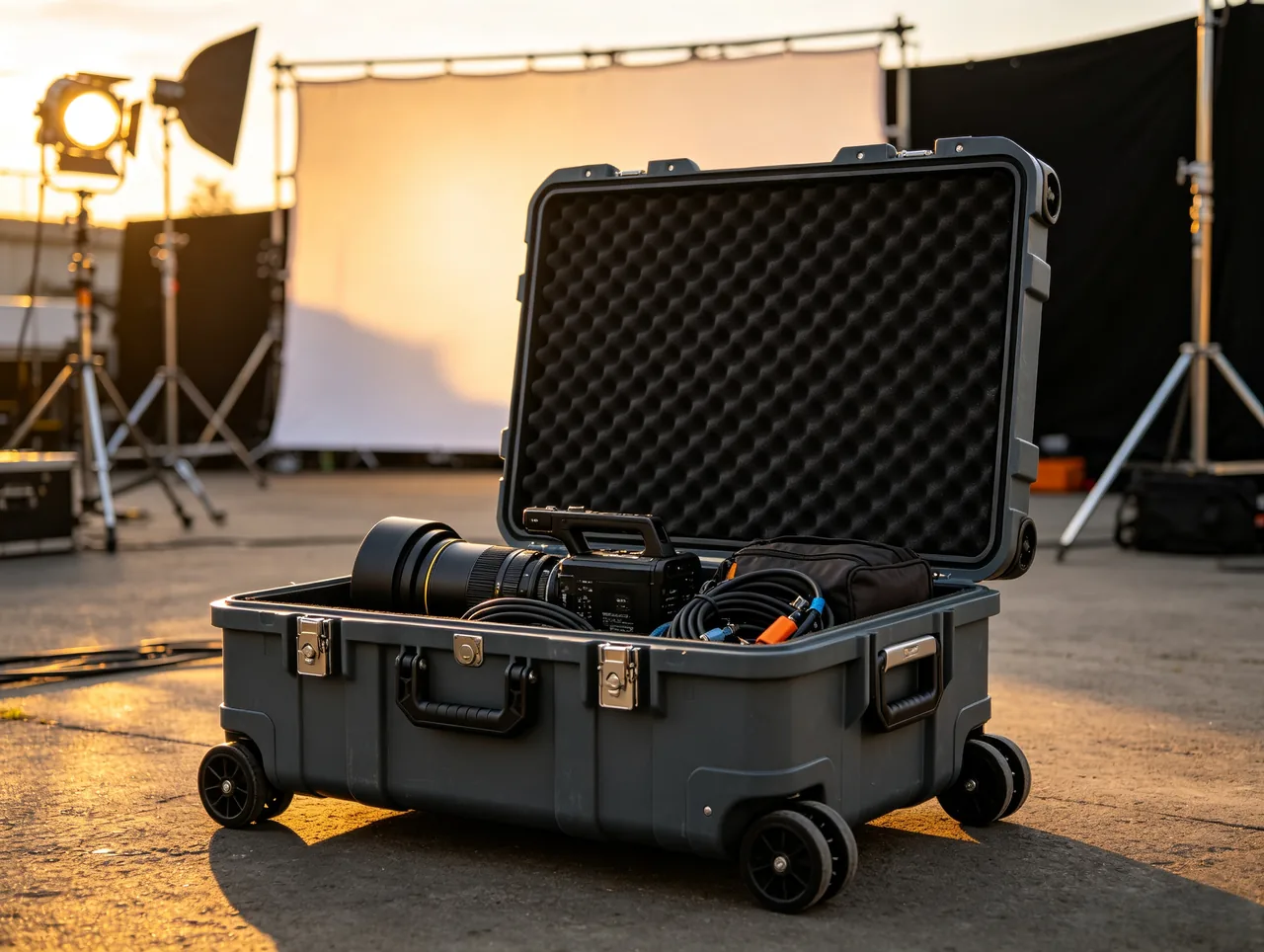
Electronic-equipment transport involves compliance; the case side often meets these questions (all based on verifiable facts, inventing no equipment certifications):
- The case's own qualifications: Commonly IP67 (per IEC 60529), ISO9001, RoHS/REACH (plastic ABS/PP material passes RoHS testing), California Prop 65 (backed by company documentation; certificates available on request); military/police/fire types often validated against MIL-STD-810H at product-line level. Individual product per specification sheet and test report.
- Device's own protection per manufacturer: The case's IP67 is the "case-body" transport-state rating, not that the camera, drone, or radio itself can be immersed; protection during operation depends on its own design and specification sheet; this article does not replace device certification.
- Battery transport compliance: Lithium-battery aviation and cross-border transport have dedicated regulations requiring separate insulation, short-circuit proof, packaging and marking by rated energy and quantity; specifics per transport and manufacturer advice; the case provides "separate insulated slots" to meet this.
- Liquids and reagents: Must be secondarily sealed leak-proof, separate slots from host, avoid contaminating electronics.
- Verification posture: General qualifications per company-level certificates, specific protection rating per individual product test report, military-standard related per product-line-level validation note; any single article cites only verified facts, unverified parameters not written.
Writing qualifications and compliance into the purchase spec screens out false claims and gives evidence when problems arise; the key is to separate "case rating" from "device rating," the two cannot be confused.
Full-Lifecycle Protection Management from Purchase to Retirement
Protecting electronics with a protective case is not a "buy once" thing, but a management chain from purchase to retirement, each link affecting final reliability:
- Purchase: Set rating by equipment type and destination environment (wading/falling in water → IP67), virgin shell and wall thickness, full-perimeter gasket and multiple latches; battery needs separate insulated slot; air/high altitude add pressure-balancing valve; verify ISO9001, IP67, RoHS/REACH, California Prop 65 (backed by company documentation; certificates available on request), plastic ABS/PP passes RoHS testing.
- Customization: EVA cut liner and zones by equipment list, host centered, fragile up, battery isolated, cables in slots, with LOGO for unified marking; use how to choose protective case internal foam and the manufacturer's liner capability to deliver.
- Warehousing: Desiccant and humidity card in place, liner blown dust and dried, battery separately insulated, liquids secondarily sealed; long-term storage add anti-rust paper.
- Transfer: Per the "different transport modes" above (road/air/high altitude/sea/manual/field), follow battery transport regulations, check before powering on arrival.
- Use: Open in clean places, confirm no foreign matter on gasket before latching; wipe exterior after rain work; low-temp case entering hot-humid environment first rest to balance temperature against condensation.
- Maintenance: Wipe gasket regularly, replace same-spec part when losing elasticity or cracking; clean liner regularly; replace desiccant by cycle or color change; open and inspect after long wading.
- Retirement/transfer: Record rating and liner config, attach specification sheet and test report on transfer, avoid next user misusing.
Writing this chain as an asset-management system turns "usable on opening" from luck into process. What is truly expensive is never the case, but the instrument inside scrapped by a broken protection chain. KeXin New Materials (Guangdong) Co., Ltd.'s JUNZHJIA protective-case product line has one-stop OEM/ODM capabilities for product design, injection molding, mold manufacturing, inner-tray/liner making, and LOGO printing, able to coordinate this chain before leaving the factory; products are exported to the United States, the United Kingdom, Germany, Canada, Japan, Russia, the Philippines, India, Hong Kong/Taiwan (China), and the Middle East.
Glossary (for Citation and Acceptance)
- IP67: Per IEC 60529, fully dust-tight (IP6X) + short-term immersion (IPX7, about 1 m/30 min), the common baseline rating for electronic-equipment transport-state protection.
- Cushioning liner (foam/inner tray): EVA, EPE, and similar foams cut or die-cut to fix equipment, absorb transport shock, avoid mutual scraping; precision items use EVA cut, heavy items use EPE base padding.
- Cut fixing: CNC-cut or die-cut by equipment shape, letting each item "sit in its own slot," zero displacement in transport, industry practice for protective cases protecting precision electronics.
- Pressure-balancing valve: A valve allowing air to slowly exchange and balance pressure difference while blocking water and dust, for air transport, high altitude, and large day–night temperature-swing transfer, preventing the lid being sucked open or the seal crushed.
- Insulated slot: Putting the lithium battery in a separate slot with electrodes not exposed and not in contact with metal, meeting transport short-circuit-proof requirements; battery transport also follows rated-energy and packaging regulations.
- MIL-STD-810H: U.S. military standard for environmental engineering considerations and laboratory testing, used to validate equipment environmental adaptability; military/police/fire equipment is often validated at product-line level, but it must not be called "military certification."
- Sealing gasket: Elastic seal around the lid edge, compressed after closing to fill gaps, the first line against dust and water, commonly EPDM, TPE.
- OEM/ODM: Original equipment manufacturing/original design manufacturing — custom modes by customer requirement.
Frequently Asked Questions (FAQ)
Q: Can a camera in an IP67 protective case still be damaged by water? A: IP67 is the case-body transport and storage-state protection rating (fully dust-tight + short-term immersion, per IEC 60529), able to block external water and dust from entering the case. But it does not mean the camera itself can be immersed; protection during operation still depends on the camera's own design. The case's role is to keep water and dust outside the case in non-operating periods.
Q: Why does a drone need a separate liner in transport? A: Drones are highly integrated, with fragile gimbals and props; transport shock easily shifts the gimbal and breaks props. A cut liner with body/gimbal/battery/prop separate slots fixes each item, absorbs shock, avoids collision; the battery also needs a separate insulated slot against short circuit and compliant with transport regulations.
Q: Can a protective case protect communication equipment from sand and dust? A: Yes. A full-perimeter gasket reaches IP6X fully dust-tight, sand cannot enter with air, avoiding connector oxidation, circuit leakage, and jammed buttons. Add protective caps on connectors and open in clean places to further reduce dust ingress.
Q: Must an air-transport electronics protective case have a pressure-balancing valve? A: Recommended. Aircraft cargo-hold climb produces internal–external pressure difference; the pressure-balancing valve balances it, prevents the lid being sucked open or the seal crushed, and blocks water and dust; principle is common industry knowledge. Also applies to high altitude and large day–night temperature-swing transfer.
Q: Can batteries be in the same protective case as the host? A: Same case is fine but must be in separate slots. Batteries should be in a separate insulated slot, electrodes not exposed, not in contact with metal, following lithium-battery transport regulations; specific rated energy, quantity, and packaging per transport and manufacturer advice.
Q: What certification does protecting electronics with a protective case need? A: The protective-case product line commonly has IP67 (per IEC 60529), ISO9001, RoHS/REACH (plastic ABS/PP passes RoHS testing), California Prop 65 (backed by company documentation; certificates available on request); military/police/fire types are often validated against MIL-STD-810H at product-line level. The device's own protection rating is per the device manufacturer's specification sheet; this article does not replace device certification.
Conclusion
An outdoor protective case protects cameras, drones, and communication equipment through a combination of "seal blocks water/dust + liner locks shock + shell resists compression + valve balances pressure," not a single capability. Electronic equipment outdoors most fears water, shock, dust, and temperature change, and the case answers one by one: IP67 (per IEC 60529, fully dust-tight + short-term immersion) is the first line of defense in transport state; EVA/EPE cut cushioning liner fixes the equipment and absorbs transport impact; virgin ABS/PP shell with ribs resists external compression; pressure-balancing valve handles air-transport high-altitude pressure difference. Different equipment has different pain points — cameras fear water fog and lens loosened by shock, drones fear gimbal loose and props broken, communication equipment fear dust ingress shorting — so liners must be cut by shape, batteries separately insulated, connectors capped. It must be clarified: the protective case's IP67 is the "case-body" transport-state protection rating, not that the device itself can be immersed; protection during operation still depends on the device's own design; all statements here are based on verifiable protection principles and common industry transport norms, inventing no equipment certifications. When selecting, tick IP rating, liner zones, valve, and qualifications by equipment type; batch users leverage a manufacturer with inner-tray/liner-making and LOGO one-stop OEM/ODM capability (such as KeXin New Materials JUNZHJIA) to pre-customize the liner by equipment list, turning "usable on opening" into a stable reality — what is truly expensive is never the case, but the instrument inside scrapped by water or dust. Emphasize once more the boundary: the protective case guards the equipment's "transport and storage" safety, protection during operation depends on the device itself; dividing these two layers, each doing its job, truly closes the loop on equipment reliability.
Further Reading
- What Is an Outdoor Protective Case and Where Is It Used?
- IP67 Protective Case: Fully Dust-Tight and Short-Term Immersion
- What Is the Difference Between IP65, IP66, and IP67?
- How to Choose Protective Case Internal Foam
- The Difference Between EVA and EPE Foam
- What Does the Pressure-Balancing Valve Do in an Outdoor Protective Case?
- How Outdoor Protective Cases Handle Rain and High Humidity