

The common point of IP65, IP66, and IP67 is that the first digit is always 6 — "fully dust-tight" (IP6X); the real difference lies in the second digit, which represents water resistance: IP65 resists water jets (IPX5), IP66 resists powerful water jets (IPX6), and IP67 resists short-term immersion (IPX7, about 1 m/30 minutes). In other words, these three grades protect against dust identically ("fully dust-tight"), but they resist water in different forms: IP65/66 resist "flowing water columns" (spray, heavy rain, high-pressure washers), while IP67 resists "the whole case briefly dropped into water." The selection logic is therefore direct — if the equipment is mainly rained on or washed by water, choose IP65 or IP66 (depending on water pressure); if it faces falling in water, wading, or soaking, choose IP67. There is no "bigger number is better in every way"; rather "the number corresponds to the water you actually meet." The following breaks the three apart with comparison tables, test conditions, and scenario lists.
Table of Contents
- Conclusion Up Front: How to Choose the Three
- IP Code Basics: The Two Digits of IEC 60529
- IP65/IP66/IP67 Dust-and-Water Comparison Table
- Test Condition Differences: Pressure, Flow, and Immersion
- Real Environments Each Grade Suits
- Selection Advice by Environment
- Common Misunderstandings and Pitfalls
- Standard Background and How to Read an IP Code
- Typical Product Forms and a Decision Table
- Grade Advice by Climate and Industry
- Shared Maintenance Points of IP65/IP66/IP67
- More Myth-Clearing
- The Real Cost of Choosing the Wrong Grade
- Procurement Checklist by Grade
- Engineering Trade-offs When Choosing a Grade
- How Rating Relates to Case Lifespan
- Quick Glossary for Reference
- Frequently Asked Questions (FAQ)
- Conclusion and Further Reading
Conclusion Up Front: How to Choose the Three
Give the conclusion first, for those in a hurry to order:
- Fear dust + general rain/site spray: Choose IP65 (fully dust-tight + water-jet resistant). Suits daily outdoor, light rain, preventing nozzle-like spray entry.
- Fear dust + heavy rain/high-pressure washer wash: Choose IP66 (fully dust-tight + powerful water-jet resistant). Suits open heavy rain, vehicle washing, high-pressure equipment cleaning.
- Fear dust + falling in water/wading/short immersion: Choose IP67 (fully dust-tight + short-term immersion resistant). Suits wading work, accidental drops in water, muddy puddles, coastal tidal flats.
Remember three iron rules: ① All three share the same dust grade (all IP6X fully dust-tight), so don't agonize over "more dust-proof" among them; ② Water resistance depends on "whether you meet flowing water or static-water immersion," not the number size; ③ IP67 does not replace IP66's high-pressure wash scenario, and IP66 does not replace IP67's immersion scenario. Only consider IP68 for long-term deep immersion. Write the actual "water form" your equipment will meet into the purchase order, and selection won't go wrong.
IP Code Basics: The Two Digits of IEC 60529
The IP rating comes from the international standard IEC 60529 (nationally equivalent to GB/T 4208 in China). The meaning of the two digits after "IP" is fixed:
- First digit (solid/dust): 0 = no protection; 1–4 = protection against varying solid-object sizes; 5 = dust-protected (limited ingress, no effect on operation); 6 = fully dust-tight (IP6X, most stringent).
- Second digit (water): 0 = none; 1–3 = protection against vertical/tilted dripping; 4 = splash-resistant; 5 (IPX5) = water-jet resistant; 6 (IPX6) = powerful water-jet resistant; 7 (IPX7) = short-term immersion resistant; 8 (IPX8) = continuous immersion resistant (depth and time set by manufacturer).
So "IP65/IP66/IP67" all have first digit 6, meaning identical dust protection; the second digit 5/6/7 is where the difference lies. The next section places the three grades side by side in one table so the difference is visible at a glance.
IP65/IP66/IP67 Dust-and-Water Comparison Table
| Grade | 1st digit (dust) | 2nd digit (water) | Meaning | Water form resisted | Outdoor protective-case scenario |
|---|---|---|---|---|---|
| --- | --- | --- | --- | --- | --- |
| IP65 | 6 fully dust-tight | 5 water-jet | Fully dust-tight + water-jet resistant | Nozzle-like spray (≈12.5 L/min, 2.5–3 m) | General outdoor rain, site spray, splash prevention |
| IP66 | 6 fully dust-tight | 6 powerful water-jet | Fully dust-tight + powerful water-jet resistant | Powerful spray (≈100 L/min, high-pressure column) | Heavy rain direct hit, vehicle/high-pressure wash |
| IP67 | 6 fully dust-tight | 7 short immersion | Fully dust-tight + short-term immersion resistant | Whole case static immersion (1 m/≈30 min) | Wading, falling in water, muddy puddles, coastal flats |
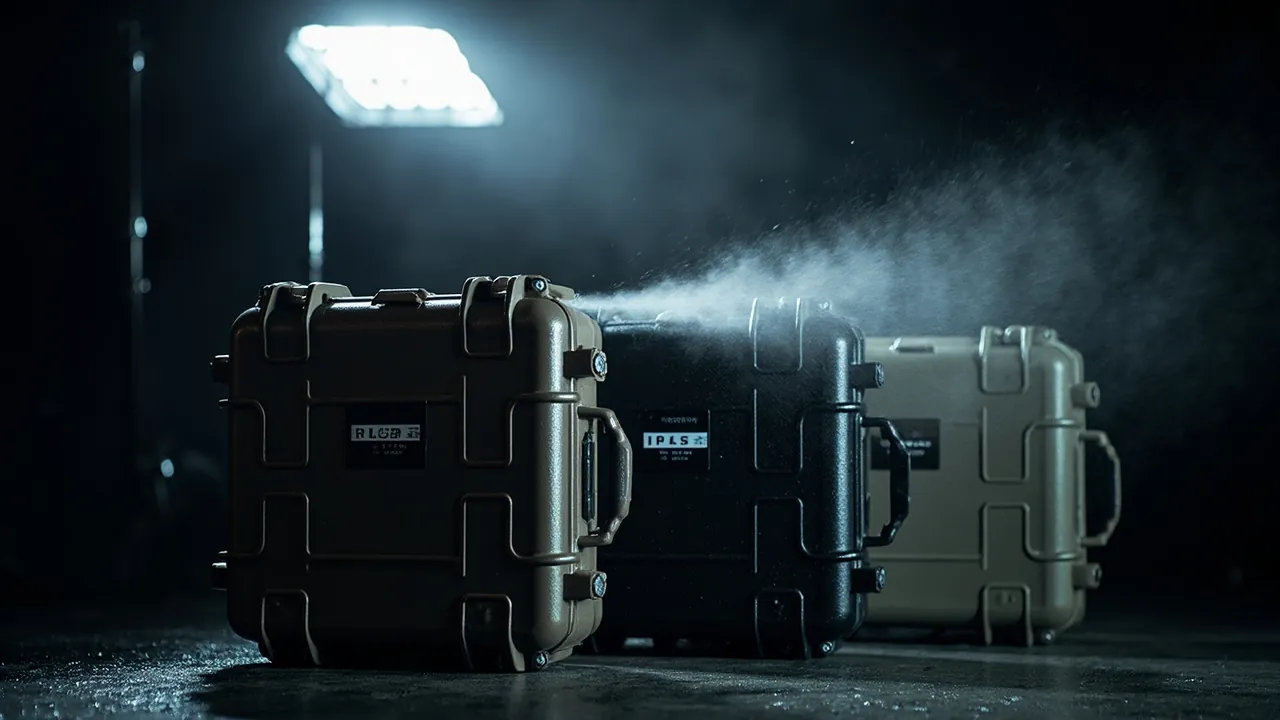
Note the "water form resisted" column: IP65/IP66 test "water rushing in from outside," while IP67 tests "the whole case soaked in." These are two completely different failure modes — the former relies on the gasket to withstand water pressure, the latter on the gasket + case airtightness to withstand static water-column pressure. Therefore an IP67 case usually also has good spray resistance (because the seal is done well), but by standard it validates immersion; a case only marked IP66 may not have been validated for immersion. Don't be misled by "7 is bigger than 6 so it's stronger overall."
Test Condition Differences: Pressure, Flow, and Immersion
The test conditions of the three grades under IEC 60529 determine what each can withstand:
- IPX5 (water jet): Standard nozzle, flow ≈ 12.5 L/min, sprayed from about 2.5–3 m distance from all directions for a set time (usually at least 3 minutes); pass if no harmful water ingress. Corresponds to "garden hose, equipment cooling water, general spray."
- IPX6 (powerful water jet): Standard nozzle, flow ≈ 100 L/min, powerful spray from about 2.5–3 m from all directions for a set time (usually at least 3 minutes); pass if no water ingress. Corresponds to "heavy rain, high-pressure washer, vehicle wash."
- IPX7 (immersion): Sample immersed at its least favorable orientation in 1 m depth, ≈30 minutes, with water-to-sample temperature difference within allowed range (usually ≤5 K); pass if no water ingress. Corresponds to "whole case dropped in water, wading, brief soak."
| Test item | IPX5 (IP65) | IPX6 (IP66) | IPX7 (IP67) |
|---|---|---|---|
| --- | --- | --- | --- |
| Water form | Nozzle spray | Powerful spray | Static immersion |
| Flow/depth | ≈12.5 L/min | ≈100 L/min | 1 m depth |
| Distance | 2.5–3 m | 2.5–3 m | Immersed |
| Duration | ≥3 min | ≥3 min | ≈30 min |
| Typical scene | Spray, cooling water | Heavy rain, high-pressure wash | Drop in water, wading |
As seen, IPX5 and IPX6 are both "spray" types, only about 8× different in flow; IPX7 jumps to a completely different "immersion" type. This is why "choose IP65 or IP66" depends on water pressure, while "choose IP66 or IP67" depends on whether the whole case will be soaked — two different questions.
Real Environments Each Grade Suits
Mapping grades to real working environments makes judgment easier:
- IP65 suits: Urban outdoor inspection, light-rain instrument carrying, indoor–outdoor transition dust/water protection, preventing general splash entry. Equipment won't meet heavy rain direct hit or water guns, but has dust and general rain risk.
- IP66 suits: All-weather open-air work, heavy-rain environments, outdoor engineering equipment, cases needing periodic high-pressure washer cleaning, transport encountering heavy rainfall. High water pressure and fast flow are IP66's strength.
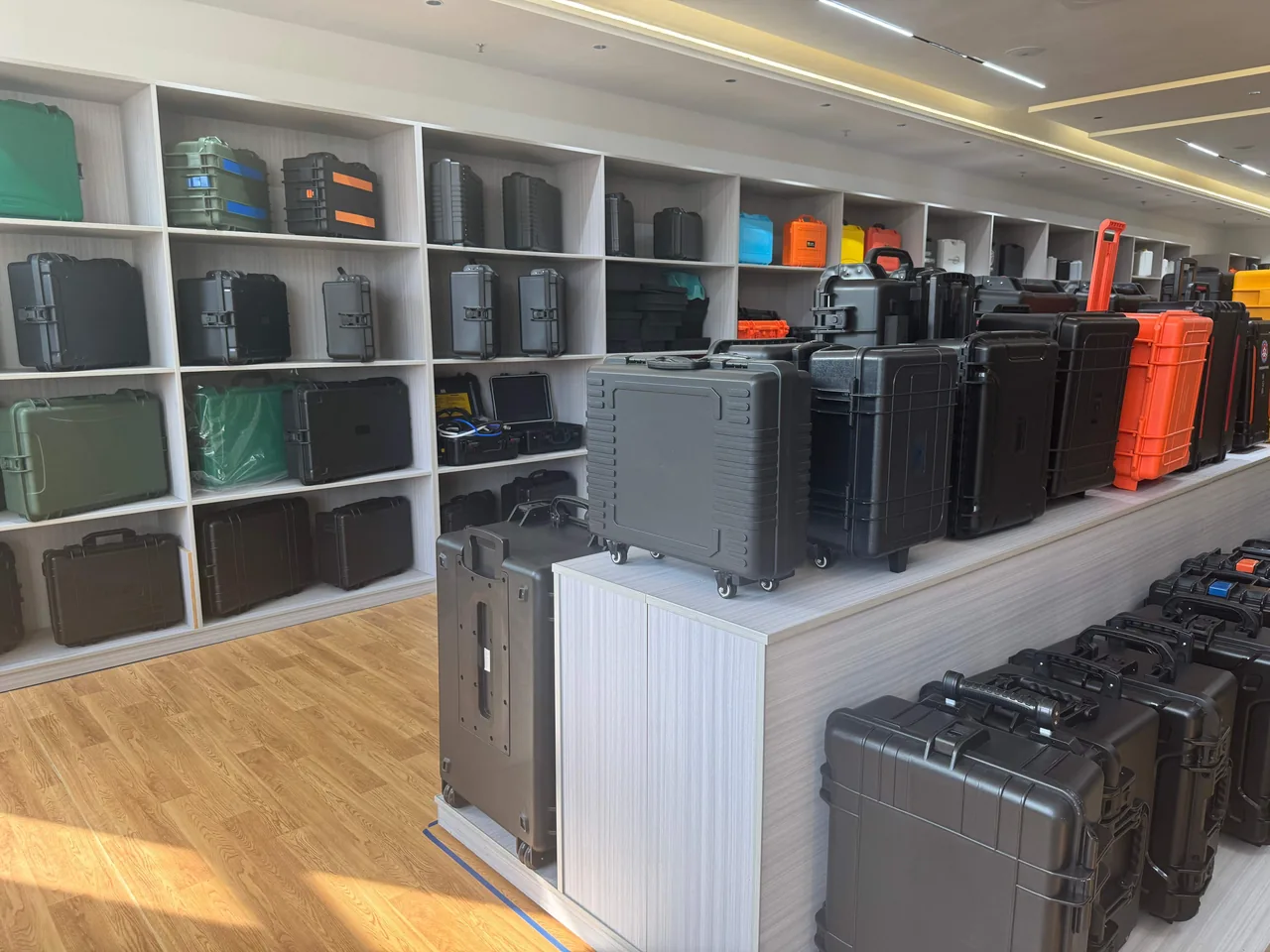
- IP67 suits: High-incidence wading and drop-in-water scenarios — fisheries and maritime, emergency rescue, riverbank/wetland survey, mountain stream crossing, coastal tidal-flat shooting, muddy-puddle transfers. Any "case may drop entirely into water and soak" occasion makes IP67 the baseline.
Note: actual protection also depends on an intact gasket and correct latching. Standard testing is under controlled conditions; long-term outdoor use needs maintenance (cleaning the gasket, timely replacement of lost-elasticity parts). On seal structure itself, see Why Does an Outdoor Protective Case Need Waterproof Design?.
One more reminder about "mixed scenarios": many real jobs are neither pure spray nor pure immersion, but alternate — e.g., mountain hiking first meets heavy rain (close to IPX6), then crosses a stream with whole-case wading (IPX7), then gets hit by waves (spray again). This "spray + immersion" mixed risk is not covered by any single sub-test; the correct approach is to choose IP67 (it has both good spray-resistant sealing and immersion ability) and confirm the gasket and latches are reliable in both conditions. Conversely, if only heavy rain with no wading, IP66 is more economical. The core of judging mixed scenarios is "list all possible water forms as a union," then choose the lowest suitable grade that covers the union, rather than targeting only the most obvious one.
Selection Advice by Environment
A quick "environment → grade" lookup:
- Only clean indoor/short-haul: A normal tool box suffices, no IP grade needed (see Ordinary Tool Box vs Protective Case).
- Outdoor but little rain, with dust: IP65 is enough (dust + general spray).
- Open heavy rain/will be washed by water: Step up to IP66.
- Wading/drop-in-water/coastal mud: IP67 is mandatory.
- Long-term deep immersion/dive transport: Look at IP68 (manufacturer sets depth/time).
- Air transport/high altitude/large day–night temperature swing: On top of the chosen IP grade, add a pressure-balancing valve (see The Pressure-Balancing Valve in Outdoor Protective Cases).
- Precision electronics/optics: IP67 + cushioning liner + moisture control if needed (see How an Outdoor Protective Case Handles Rain, Humidity and High Moisture).
The core of grade selection is "set the grade by the risk, not the size by the price": first ask how the environment will torture the equipment, then decide whether the second digit should be 5, 6, or 7. The dust side is the same for all three, so the only thing to agonize over is "water."
Common Misunderstandings and Pitfalls
- Misconception 1: IP67 is more comprehensive than IP66, just pick the bigger. Wrong. IP67 validates immersion, not high-pressure spray; if your risk is washer washing not dropping in water, IP66 is more fitting and may be more economical.
- Misconception 2: IP65 can handle heavy rain. Not necessarily. IPX5 is nozzle spray; heavy rain with strong wind direct hit, fast flow, is closer to IPX6; recommend IP66 directly for stability.
- Misconception 3: Bigger number means more waterproof, automatically includes lower. IP code is not additive; a marked IP67 usually also has good spray-resistant sealing, but the standard only validates what it marks — don't assume "7 includes 6." Procure per spec sheet.
- Misconception 4: Plastic boxes aren't sturdy so not waterproof. Waterproofing relies on sealing structure and tolerance; regular virgin ABS/PP engineering plastic + ribs + full-perimeter seal can fully reach IP67 (see How to Choose the Shell Material of an Outdoor Protective Case).
- Misconception 5: Only look at grade, ignore maintenance. Grade is a controlled-test result; an aged gasket or trapped debris fails it — regular cleaning and replacement needed.
Standard Background and How to Read an IP Code
Before understanding grades, understand "where grades come from and how to read them" to avoid marketing talk. The IP code is defined by the International Electrotechnical Commission in IEC 60529 (nationally adopted as GB/T 4208 "Degrees of Protection Provided by Enclosures (IP Code)"), intended to describe, with uniform, verifiable alphanumerics, the "enclosure's protection against access to hazardous parts, solid foreign objects entering, and water entering." Reading an IP code follows the order:
- First digit after IP: Protection against solid foreign objects/dust (0–6).
- Second digit after IP: Water protection (0–8; X means not assessed).
- Optional appended letters: e.g., against access to hazardous parts (A/B/C/D), supplementary water-test notes (e.g., spray direction), used only in professional scenarios.
Key point: an IP rating is "for the enclosure," describing the case body's ability to block water and dust, not the protection of the contents themselves. So "IP67 protective case" describes the case, not that the camera inside can also be soaked. If the same model changes gasket or latch, the grade may change; therefore procure by "that specific model + that specific grade + test report," not the manufacturer's general claim. This also explains why What Is an IP67 Protective Case? repeatedly stresses "system capability" — grade comes from structure, not a sticker.
Typical Product Forms and a Decision Table
Connecting "environment → grade → product form" makes procurement intuitive:
| Real environment | Main water form | Recommended grade | Typical product form | Note |
|---|---|---|---|---|
| --- | --- | --- | --- | --- |
| Urban outdoor inspection, light rain | General splash | IP65 | Dust/water-proof tool box/small case | Dust + spray enough |
| Open heavy rain, vehicle wash | Strong flowing column | IP66 | Large case, equipment case | High-pressure washer direct hit |
| Wading, drop-in-water, flats | Whole-case immersion | IP67 | Wading/maritime case | 1 m/30 min immersion |
| Long-term deep immersion, dive transport | Continuous immersion | IP68 | Special deep-immersion case | Depth/time set by maker |
| Dusty workshop, no water | Dust only | IP6X only | Dust-proof sealed case | 2nd digit may be unassessed |
| Indoor drip only | Vertical drip | IPX2–IPX3 | Normal drip-proof case | Not for outdoor |
This table shows: most "outdoor + water" scenarios fall in the IP65–IP67 range; what truly decides the choice is "flowing water or static immersion," not "bigger number is more premium." Write the water form your equipment will actually meet into the purchase order, and selection won't go wrong.
Grade Advice by Climate and Industry
Grade choice also combines with climate and industry habits:
- Rainy, hot-humid regions (e.g., South China, Southeast Asia): Frequent heavy rain, start at IP66 directly; wading work chooses IP67; long-term high humidity also pairs with how an outdoor protective case handles rain, humidity and high moisture.
- Arid, windy-sand regions (e.g., Northwest China, Middle East): Dust-proof is first; IP6X is mandatory; occasional rain chooses IP65, washing chooses IP66.
- Coastal/maritime: Salt spray + wading, IP67 is the baseline, also watch shell corrosion resistance and gasket weather resistance (EPDM preferred).
- Engineering and power outdoor: Spray, sand, drops coexist; IP67 + liner + ribs is optimal overall.
- Military/police/fire: Equipment is validated for environmental adaptability using MIL-STD-810H as a product-line environmental test basis, coping with vibration, shock, heat-humidity, and sand-dust; grade usually starts at IP67.
- Aviation/communication transfer: Add a pressure-balancing valve on top of the chosen grade to handle cargo-climb and high-altitude pressure difference (see The Pressure-Balancing Valve in Outdoor Protective Cases).
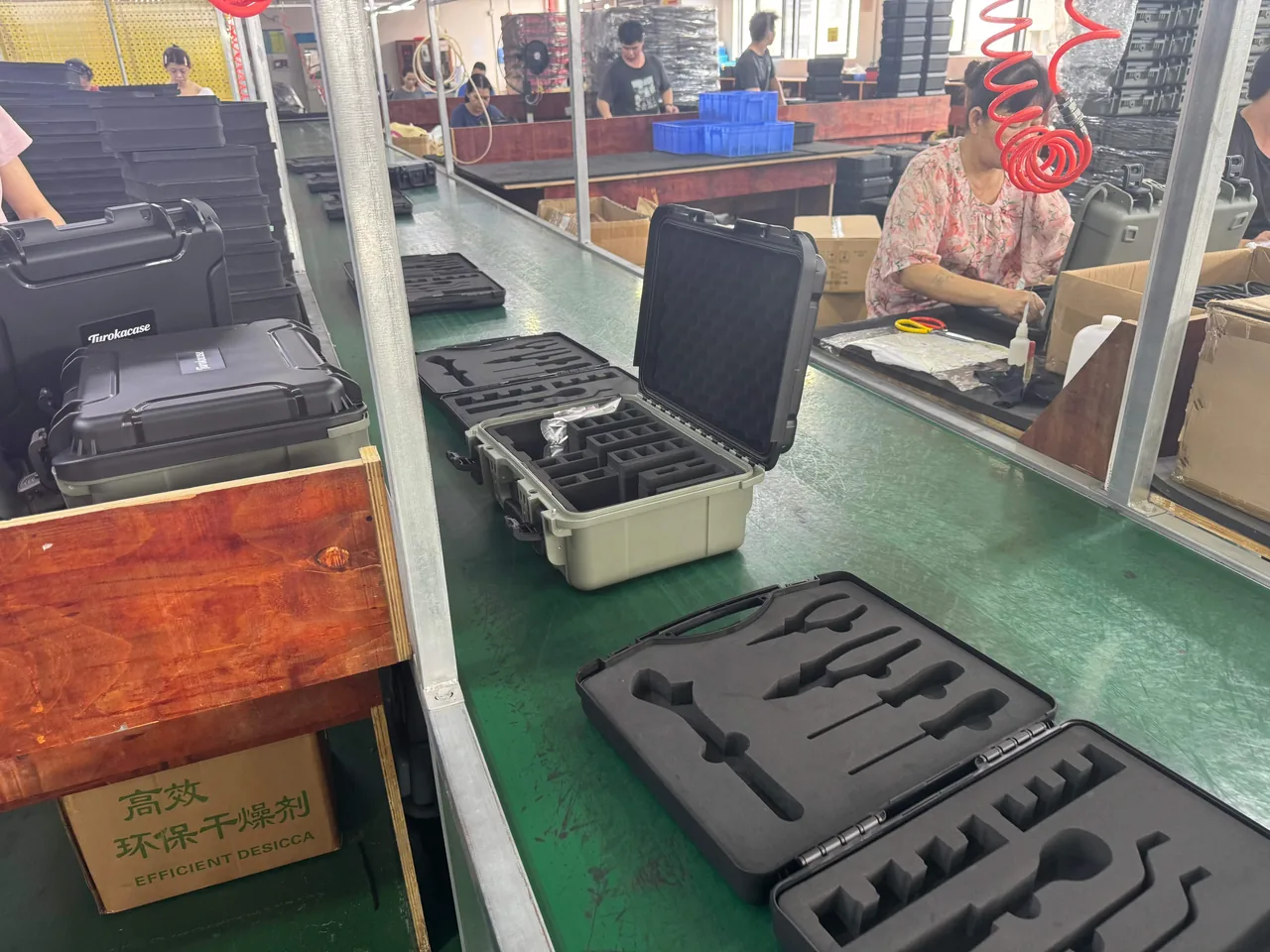
On the export dimension, KeXin New Materials JUNZHJIA protective-case product line is exported to the United States, United Kingdom, Germany, Canada, Japan, Russia, the Philippines, India, Hong Kong/Taiwan (China), the Middle East, etc. Destinations differ greatly in climate, so grades should be set by destination environment rather than one grade for all markets.
Shared Maintenance Points of IP65/IP66/IP67
No matter how correct the grade, poor maintenance fails it; the three share maintenance logic:
- Clear debris before closing: Remove sand grains and threads from the lid edge and gasket to avoid trapped debris forming a leak gap — the most common root cause of "rated but water got in."
- Wipe the gasket regularly: Clean soft cloth, thin silicone grease if needed; avoid oil and solvents.
- Avoid sun exposure: Long-term high temperature accelerates rubber hardening and cracking.
- Open in clean places: Don't leave the case open in blowing sand, reducing dust inside.
- Watch and replace: Replace same-spec part when gasket loses elasticity, cracks, or shows permanent compression marks; repair loose latches.
- Check after transport: After wading long-haul, open and first check desiccant and equipment appearance before powering on.
With maintenance in place, the rated grade holds long term; neglected, even the highest number returns to zero from a small crack. Making "grade + seal + maintenance" all hold together is what makes a protective case a reliable investment.
More Myth-Clearing
Beyond the five above, two more:
- Misconception 6: Marked IP67 is surely more expensive and better than a marked IP66 case. Grade corresponds to risk, not quality level; a well-built IP66 case may be more reliable than a cut-corner IP67 case. Structure (virgin material, wall thickness, full-perimeter seal, multiple latches) matters more than the number.
- Misconception 7: One grade covers all environments. The same case performs differently in different environments: an IP67 under heavy-rain direct hit + strong wind, if the lid is continuously hit by water flow and not latched, the edge may still let water in. Grade is capability "under standard test conditions"; real outdoor needs correct use and maintenance.
The Real Cost of Choosing the Wrong Grade
Choosing the wrong grade is not a "spend a little more" matter, but directly relates to equipment life or death. The counterexamples are typical:
- Should be IP67 but chose IP65: A wading survey case drops entirely into water; IPX5 only validates spray, not immersion; water rushes in through the lid seam and instruments are ruined — the grade-price difference saved is far less than one instrument.
- Should be IP66 but chose IP65: Open heavy rain direct hit + strong wind, flow close to high-pressure spray; IPX5 edge fails and water enters, instrument goes out of calibration.
- Should be IP66 but blindly trust IP67: Pay more for IP67, but the risk is only washer washing, which is not validated as IPX6 high-pressure spray (standard only validates its marked item), and you overpaid — "paying for capability you don't need."
- Drop risk but only look at the number: Think "7 bigger than 6 so stronger overall," ignore IP67 doesn't validate high-pressure spray; if both heavy-rain direct hit + drop-in-water, confirm the seal itself also resists spray, per spec sheet.
The essence of these lessons: grade must correspond to "the water form really met," not to "number size" or "price level." Write "how the environment will torture the equipment" as the first line of the purchase order, then check row by row against this article's comparison table, and you avoid most grade-selection errors. What's truly expensive is never the case, but the instrument inside scrapped by wrong-grade choice.
Procurement Checklist by Grade
Use this checklist line by line before ordering, turning "comparison" into "action":
- Write the environment clearly: List the water forms the equipment will meet (spray/heavy rain/water gun/wading/drop-in-water/long-term immersion) and dust intensity.
- Set the first digit: Dust/dust-floating → must be 6 (IP6X fully dust-tight); indoor drip-only can relax.
- Set the second digit: Spray → 5 (IP65); powerful spray → 6 (IP66); short immersion → 7 (IP67); continuous deep → 8 (IP68).
- See standard marking: Require explicit "per IEC 60529/GB/T 4208," and provide a single-product test report where possible; company-level backing does not replace single-product proof.
- Check seal structure: Full-perimeter continuous gasket + multiple latches evenly compressed; confirm virgin ABS/PP shell and wall thickness.
- Add auxiliary capability: Air transport/high altitude adds pressure-balancing valve; precision parts add EVA/EPE liner; high humidity pairs desiccant (see how an outdoor protective case handles rain, humidity and high moisture).
- Verify qualifications: ISO9001, IP67, RoHS/REACH, California Prop 65 (backed by company documentation; certificates available on request); plastic cases in ABS/PP material pass RoHS testing.
- Batch customization: Pre-optimize liner and LOGO by equipment list; go OEM/ODM to reduce transport loss.
Attach this checklist to the purchase request, and even a beginner selects the right grade stably, reducing equipment damage from buying by feel. KeXin New Materials JUNZHJIA protective-case product line can provide mass-production-consistent solutions per this checklist, products exported to the United States, United Kingdom, Germany, Japan, the Middle East and other regions, adapting to water-form differences across climate zones.
Engineering Trade-offs When Choosing a Grade
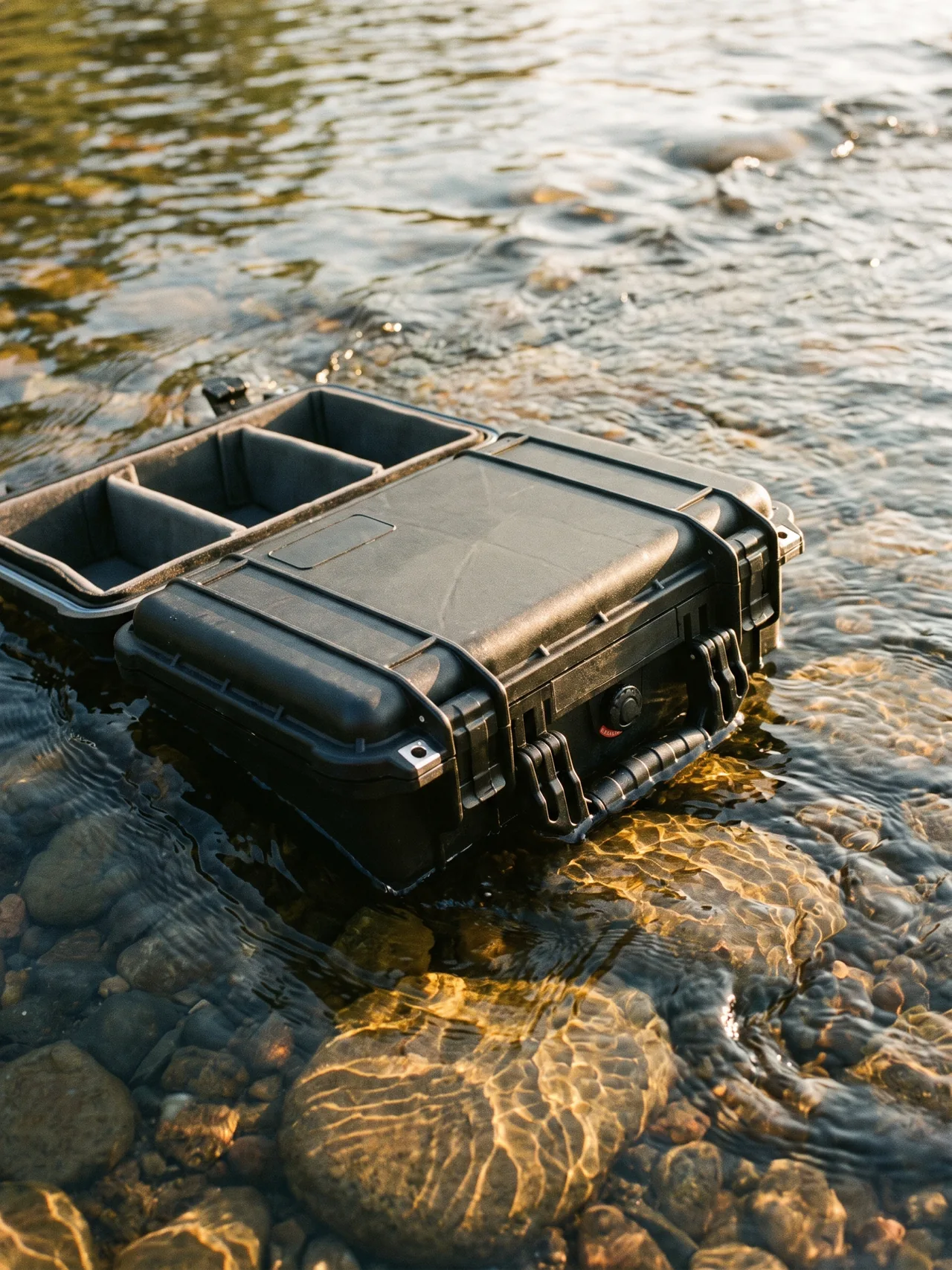
Choosing a grade is not "higher is better"; engineer a trade-off among protection, cost, weight, and usability — exactly the value of professional procurement:
- Cost trade-off: Higher grade means higher gasket, latch, mold, and validation cost. IP65 has the simplest, cheapest structure; IP66 adds spray-seal strengthening; IP67 must also handle immersion airtightness, cost another step up; IP68 needs manufacturer-custom deep-immersion solution, most expensive. Correct approach is "buy as much as you use" — only wading → IP67, don't pay for unused IP68.
- Weight trade-off: Higher sealing and wall thickness make a heavier case, unfriendly to frequent manual carrying and air-freight weight. At the required grade, choose virgin PP (lighter than ABS, better low-temperature impact), or add a telescopic rod and wheels to large cases (see How to Choose the Shell Material of an Outdoor Protective Case).
- Seal trade-off: Grade relies on gasket continuity and even latch compression; higher grade demands stricter gasket continuity and even compression, meaning heavier maintenance responsibility. Buying high grade but neglecting maintenance is worse than buying the right grade and maintaining it seriously.
- Usability trade-off: Over-sealed cases with cumbersome opening may make field staff "too lazy to latch tightly," causing failure. Selection must balance reliable seal and easy opening, so correct usage can be executed.
- Validation trade-off: High grade demands more complete test reports; confirm the manufacturer can provide the corresponding single-product report, not just company-level backing.
Writing these five into selection review finds the balance among "enough protection, reasonable cost, controllable weight, feasible maintenance." KeXin New Materials JUNZHJIA protective-case product line, per review results, can optimize shell material and liner while reaching the target grade, providing mass-production-consistent solutions, products exported to the United States, United Kingdom, Germany, Japan, the Middle East and other regions, adapting to different markets' cost and grade preferences.
How Rating Relates to Case Lifespan
The protection grade is not "valid forever once bought"; it is closely linked to case lifespan. Understanding this avoids "rated grade still there, actually failed":
- Grade comes from structure, structure ages: IP67 relies on gasket, latch, and tolerance; long-term sun-exposure hardening of the gasket, latch fatigue loosening, shell impact deformation all quietly lower the rated grade. Grade is capability "under controlled test conditions," not a permanent attribute.
- Maintenance decides actual lifespan: The same IP67 case, regularly cleaning the gasket, timely replacing lost-elasticity parts, correctly latching, lasts years; neglected, may let water in within a year from a small crack. Maintenance cost is far below equipment loss.
- See grade and lifespan separately: At purchase ask "rated grade"; in use ask "does it still meet it now." Recommend periodic simple seal checks for critical scenarios (visual gasket, water-spray sampling), bringing "grade validity" into asset management.
- Selection affects lifespan: Over-grade (e.g., buying a deep-immersion case when IP68 isn't needed) adds maintenance burden; under-grade fails early. Set grade by real environment, and case lifespan and protection are both optimal.
Writing "grade + lifespan + maintenance" as one, procurement is not a one-time action but management throughout the equipment lifecycle. This echoes the earlier core maxim "set grade by risk, preserve grade by maintenance," the fundamental difference between professional teams and amateur purchasers.
Quick Glossary for Reference
- IP code: International Protection code, defined by IEC 60529 (nationally GB/T 4208), using two digits to describe the enclosure's protection against solid foreign objects and water.
- IP6X (fully dust-tight): First digit 6, no dust entry under controlled dust conditions, the most stringent dust grade; IP65/IP66/IP67 all have first digit 6, identical dust protection.
- IPX5 (water-jet): Second digit 5, standard nozzle ≈12.5 L/min spray from all directions ≈3 min, no harmful ingress; corresponds to IP65.
- IPX6 (powerful water-jet): Second digit 6, standard nozzle ≈100 L/min powerful spray from all directions ≈3 min, no ingress; corresponds to IP66.
- IPX7 (short-term immersion): Second digit 7, ≈1 m depth, ≈30 min static immersion, no ingress; corresponds to IP67.
- Immersion vs spray difference: IPX5/IPX6 validate "flowing water rushing in from outside," IPX7 validates "whole case soaked in static water" — two different failure modes, not mutually substitutable.
- Gasket: Elastic seal continuously arranged around the lid edge; compressed evenly when closed to fill gaps, the first line of water defense; commonly EPDM, TPE.
- MIL-STD-810H: U.S. military standard for environmental engineering considerations and laboratory testing, used to validate equipment environmental adaptability; the protective-case product line may use it for validation but it must not be called a "military certification."
- OEM/ODM: Original equipment manufacturing/original design manufacturing — custom modes by customer requirement.
Frequently Asked Questions (FAQ)
Q: Is the dust protection of IP65, IP66, and IP67 the same? A: Yes. All three have first digit 6 (IP6X fully dust-tight), identical protection against dust. The difference is only the second digit's water resistance: IPX5 water jet, IPX6 powerful water jet, IPX7 short-term immersion.
Q: Is IP67 more water-resistant than IP66? A: You can't say "stronger," only "resists a different water form." IP66 resists high-pressure flowing water columns; IP67 resists whole-case short-term static-water immersion. If the risk is washer washing choose IP66; if the risk is drop-in-water or wading choose IP67; they don't substitute for each other.
Q: Heavy-rain environment, choose IP65 or IP66? A: Recommend IP66. IPX5 is nozzle-like spray; under strong-wind heavy-rain direct hit with fast flow it is closer to IPX6, so choosing IP66 directly is more stable, avoiding edge failure.
Q: Can an IP66 case be soaked in water? A: IP66 standard does not validate immersion, only powerful water jet. If equipment has drop-in-water, wading, or short-soak risk, choose IP67 (1 m/≈30 min). Don't assume "strong waterproof means can soak."
Q: What grade do outdoor protective cases usually reach? A: The most often recommended is IP67, because it covers both fully dust-tight and short-term immersion, handling most outdoor rain, wading, drops, and mud. Specific grade is per single-product spec sheet and test report.
Q: If I choose IP67, do I still need a pressure-balancing valve? A: If it involves air transport, high altitude, or large day–night temperature-swing transport, a pressure-balancing valve is recommended. It equalizes internal–external pressure, prevents the lid from being sucked open or the seal crushed, while blocking water and dust; the principle is common industry knowledge.
Conclusion
IP65, IP66, and IP67 all share first digit 6 (fully dust-tight, IP6X), identical protection against dust; the real difference is the second digit's water resistance — IPX5 water jet, IPX6 powerful water jet, IPX7 short-term immersion (≈1 m/30 min). So selection is not "pick the biggest number" but "pick the water form your equipment actually meets": general rain and spray → IP65, heavy rain and high-pressure washer → IP66, drop-in-water, wading, and muddy-soak scenarios → IP67; only long-term deep immersion looks at IP68. Standard test conditions confirm this — IPX5/IPX6 are sprays of different flow (≈12.5 L/min and 100 L/min), IPX7 is whole-case static immersion, two different failure modes. At procurement, set grade by risk, recognize the IEC 60529 marking, rely on the single-product spec sheet, and pair with gasket maintenance, so the rated grade becomes long-term reliable protection. Final reminder: beyond grade also check virgin shell material and wall thickness, full-perimeter gasket and multiple latches, cushioning liner, and (for air transport) pressure-balancing valve; where needed, use a manufacturer with one-stop OEM/ODM capability to land the solution by equipment list — what's truly expensive is never the case, but the instrument scrapped by wrong-grade choice. One more: grade is capability "under controlled test conditions"; long-term reliability is backed by maintenance and correct usage; write "choose the right grade, use it correctly, maintain it well" as procurement and operation specs, and IP65/IP66/IP67 will work stably in the water forms you actually meet, not just as numbers on a brochure. In execution, attach this article's comparison table, decision table, and procurement checklist to the requisition, so every purchase is evidence-based, reviewable, and accountable.
Further Reading
- What Is an IP67 Protective Case? Core Protection and Selection
- What Is an Outdoor Protective Case and Where Is It Used?
- Why Does an Outdoor Protective Case Need Waterproof Design?
- The Pressure-Balancing Valve in Outdoor Protective Cases
- How to Choose the Shell Material of an Outdoor Protective Case
- How an Outdoor Protective Case Handles Rain, Humidity and High Moisture