


An outdoor protective case handles rain through "full-perimeter sealing + a quantifiable IP rating" (such as IP67 per IEC 60529, fully dust-tight plus short-term immersion) to block liquid water from entering; it handles high-humidity environments through "seal barrier + moisture-proof liner + desiccant + correct storage," keeping the relative humidity inside the case in a safe range and avoiding condensation and moisture eroding circuits and metal. The key awareness: rain and liquid water are an "obvious threat," while high humidity and condensation are a "hidden threat" — equipment is often not ruined by a heavy rain but slowly suffers moisture, rust, short circuit, and mold in a long-term 80%+ humidity, day–night temperature-swing muggy environment. This article first breaks down how rain and humidity each harm equipment, then gives executable solutions for sealing, drainage, liner, desiccant, and storage, helping you stay "usable on opening" even in humid climates and rainy seasons.
Table of Contents
- The Real Harm of Rain and High Humidity to Equipment
- How the Protective Case Blocks Rain: Sealing and IP Rating
- High Humidity and Condensation: A More Hidden Threat than Rain
- How to Use Moisture-Proof Liner and Desiccant
- Storage and Transfer Notes for Rainy/High-Humidity Environments
- How Materials and Seals Resist Moisture
- Common Errors and Fixes
- The Physics of Condensation: Dew Point and Temperature Difference
- Moisture Strategies by Climate Zone
- Desiccant Selection and Replacement Cycle
- Real Cases of Rainy-Season Transfer
- The "Four-Piece Set" Method for Case Moisture Protection
- Rainy-Season Troubleshooting Table
- Standardized Rainy-Season Protection Process
- Glossary (for Citation and Acceptance)
- Frequently Asked Questions (FAQ)
- Conclusion and Further Reading
The Real Harm of Rain and High Humidity to Equipment
See the "enemy" clearly before choosing the "weapon." Outdoor moisture harm to equipment falls into two categories:
First category: liquid water (rain, splash, wading, falling in water). The direct harm is short circuit and rust — rain enters along seams, lands on the circuit board or connectors forming a conductive path, at best malfunction, at worst burnout; metal parts in long contact with water and electrolyte (rain contains dust, salt) accelerate electrochemical corrosion; labels, coatings, and sealant fall off after soaking. Liquid water is "sudden and visible," and the protective case intercepts it head-on with its sealing structure.
Second category: gaseous water/high humidity (high relative humidity, condensation, re-wetting). The harm is more hidden: when ambient relative humidity stays above about 60%–70% long term, the circuit board's insulation resistance drops after absorbing moisture; moisture combined with dust forms a leakage path; metal oxidizes and rusts under repeated high humidity; optical lenses fog on the surface under temperature difference; foam, fabric, and paper accessories grow mold. High humidity is a "slow knife, unnoticed accumulation" — many instruments "mysteriously go out of spec, mysteriously short" have root cause in long-term moisture. The protective case must not only "block the rain" but also "manage the moisture."
Understanding this, the solutions below split into two lines: block liquid water with a sealing rating, manage gaseous moisture with sealing + liner + desiccant + storage. Only with both is it truly "rain and moisture proof."
One more often-overlooked point: rain and moisture proofing is a "continuous process," not "a one-time action." Many think buying a good case solves everything, then in the first rainy-season transfer forget the desiccant and open a low-temp case directly, causing condensation. The right mindset treats moisture proofing as a routine action like charging and backup — check desiccant and humidity card before every departure, open and check before powering on after every long trip, update liner and gasket status before every rainy season. Writing this routine into team norms turns the protective case from "a box" into "a reliable process."
How the Protective Case Blocks Rain: Sealing and IP Rating
Blocking rain is essentially keeping liquid water out of the case. The protective case relies on this structure:
- Full-perimeter elastic gasket: A continuous weather-resistant elastomer (such as EPDM, TPE) arranged around the lid edge, evenly compressed after closing to fill microscopic gaps, the first line against water. The gasket material must resist ozone, UV, and high/low temperature, otherwise long outdoor sun exposure hardens and cracks it.
- Multiple latches evenly compress: Latches continuously press the lid onto the gasket, maintaining stable compression; multiple latches make pressure even along the perimeter, avoiding local weak-pressure leak points.
- Diversion and drainage details: Quality cases design diversion grooves on the lid edge; accidentally splashed water flows outside along the case, not pooling at the sealing seam.
- IP rating is the verification ruler: Rain-blocking capability is quantified by the second IP digit — general rain/spray at IPX5 (IP65), heavy rain/high-pressure washer at IPX6 (IP66), wading/falling in water/mud at IPX7 (IP67). The most recommended for outdoor protective cases is IP67 (fully dust-tight + about 1 m/30 min immersion), covering most rainy-season and wading scenarios. Specific rating per individual product specification sheet.
Note: the IP rating is a result under controlled testing; actual rain-blocking depends on an intact gasket and correct latching. In heavy rain, if the lid is not latched tight or the gasket has sand grains, the rating fails instantly. This is why why an outdoor protective case needs waterproof design stresses "sealing is a system capability."
High Humidity and Condensation: A More Hidden Threat than Rain
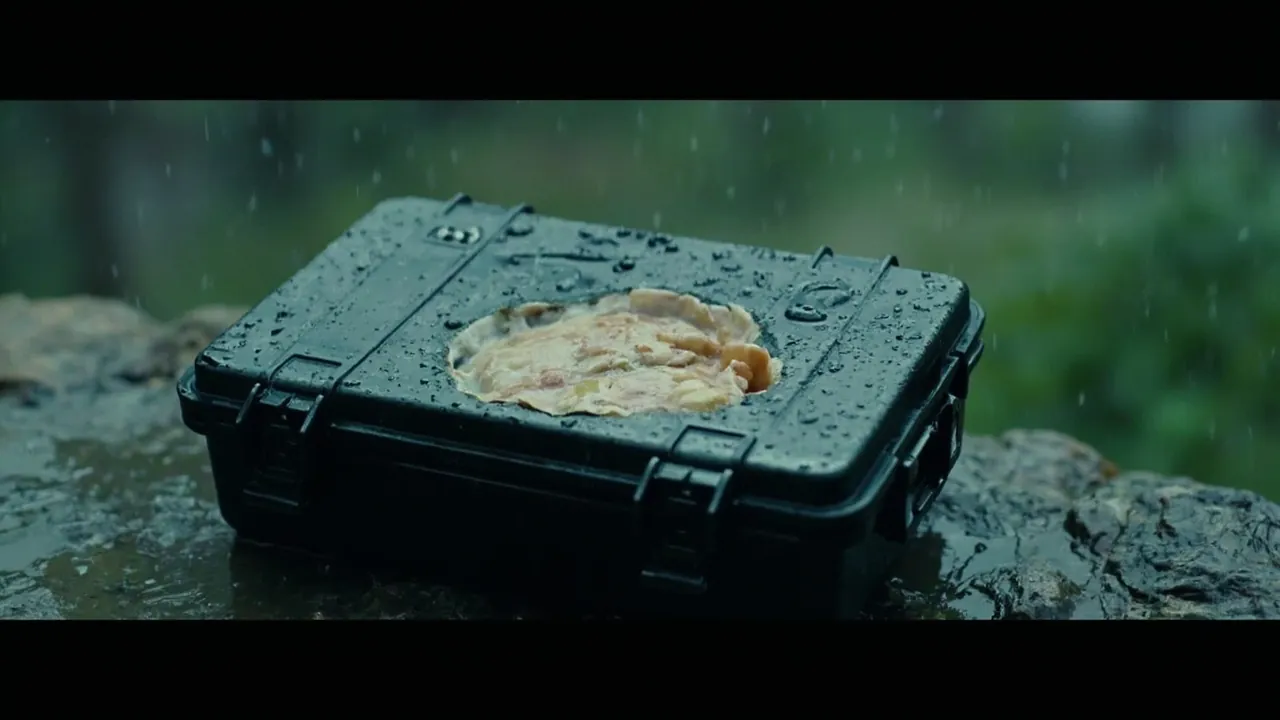
Many think "if the case does not leak, it is moisture-proof" — a misconception. Even with no leaking, high humidity still has two problems:
Condensation: When a protective case moves from a low-temperature environment (such as an air-conditioned room, night mountain) suddenly into a high-temperature high-humidity environment, or internal cold air meets warm humid air, the case wall temperature drops below the dew point and water vapor condenses into droplets on the inner wall — this is condensation. Condensation is harder to prevent than rain because it is "the case sweating from inside"; no matter how good the external seal, it cannot block internal temperature-difference condensation. Typical scenes: taking a cool case from a vehicle on a cool morning, opening the case instantly on a muggy rainy day, scientific survey with large coastal day–night temperature swings.
Continuous high-humidity penetration: Even without condensation, under long-term 80%+ humidity, if the case micro-breathes or frequent opening brings in humid air, internal relative humidity slowly rises, foam absorbs moisture, metal slowly oxidizes. Moisture proofing is not "one seal, permanently dry" but "continuously push humidity below the safety line."
So the core of moisture proofing is not sealing alone, but sealing + moisture absorption + temperature control + fewer openings. See below for practice. For pressure-change and temperature effects on cases, extend to how outdoor protective cases handle temperature extremes.
How to Use Moisture-Proof Liner and Desiccant
To push humidity down, rely on these two:
Moisture-proof liner: The liner (EVA, EPE foam or die-cut bracket) is not only cushioning; a reasonable choice also helps moisture proofing — high-density EVA has low moisture absorption and does not easily hold water; cut liner suspends equipment not directly against the wall, avoiding wall condensation droplets falling directly on equipment. The liner should be taken out regularly to blow dust and dry, avoiding accumulating moisture and re-contaminating equipment (for foam comparison see the difference between EVA and EPE foam).
Desiccant: Placing a moisture absorber inside the case is the most direct and effective means against high humidity and condensation. Common options:
- Silica gel desiccant: Reusable, changes color (blue → pink) when saturated to signal failure, regenerable by drying.
- Calcium chloride/montmorillonite and other high-efficiency absorbers: larger absorption at high humidity, suited to long-term storage.
- Humidity indicator card: Put inside to directly read whether relative humidity exceeds the limit, convenient for timely desiccant replacement.
Usage points: ① estimate desiccant amount by case volume and sealing; better sealing needs less; ② for long storage check and replace/regenerate every 1–3 months; ③ must top up before rainy season or sea freight; ④ place desiccant and equipment in separate zones to avoid dust contaminating precision parts; ⑤ close the lid quickly after opening to reduce humid air entry. For instruments needing long-term moisture proofing, combine "IP67 seal + low-absorption liner + silica gel desiccant + humidity card" four-piece set to stabilize internal humidity in the safe zone.
Storage and Transfer Notes for Rainy/High-Humidity Environments
Storage and transfer habits often decide moisture-proof success:
- Store in ventilated, moisture-avoiding places: For long storage avoid against the floor, against the wall, in basements where moisture gathers; elevate + off-wall, dehumidify if needed.
- Avoid sudden hot–cold changes: On muggy rainy days minimize "low-temp case suddenly into high-temp high-humidity" opening; move into warm environment and rest to balance temperature before opening, reducing condensation.
- Wipe exterior dry after rain: Wipe off water on the case promptly, especially latches and sealing seams, preventing water seeping along seams or long soaking the gasket.
- Elevate against flooding in transfer: In vehicle, ship, tidal-flat transfer, elevate the case off cabin-bottom water, avoid the case lower edge soaking in standing water long term.
- Open in clean dry places: Try not to leave the case open in rain or blowing sand; after handling confirm no foreign matter on the gasket before latching.
- Sea/cross-border notes: Container humidity swings large and easily condenses; besides in-case desiccant, outer packaging can add moisture-proof film and humidity card, follow battery and liquid transport regulations (see precautions for shipping outdoor protective cases by sea).
Writing the above as work norms lets teams execute stably across climate zones, guaranteeing "usable on opening."
How Materials and Seals Resist Moisture
The protective case's own materials also affect moisture resistance:
- Virgin ABS/PP shell: Engineering plastics themselves do not absorb moisture, are corrosion-resistant, non-conductive, less likely to rust in humidity than metal; KeXin New Materials plastic cases in ABS/PP material pass RoHS testing. PP resists fatigue and low temperature better; ABS is more rigid and easier to finish.
- Gasket weather resistance: EPDM resists ozone, weather, high/low temperature, suited to long outdoor use; inferior rubber rings harden and crack under heat-humidity and UV, a moisture-proof weak point, should be replaced with same-spec parts regularly.
- Metal-part protection: If the case has metal accessories/brackets, watch coating and rust proofing; long high-humidity storage suggest desiccant + anti-rust paper.
- Low-absorption liner: Prefer low-absorption EVA, avoid porous water-absorbing liner becoming a "wet sponge" in humidity.
KeXin New Materials (Guangdong) Co., Ltd.'s JUNZHJIA protective-case product line, factory in Zhongshan City, Guangdong Province (Greater Bay Area), about 18,000 square meters, more than 80 machines, over 100 staff, has inner-tray/liner-making and LOGO-printing one-stop OEM/ODM capability, able to custom low-absorption liner and zones by moisture needs; products exported to the United States, the United Kingdom, Germany, Japan, the Middle East, and other regions, adapting to moisture requirements across climate zones.
One supplement: moisture proofing is not only the case's unilateral job; the equipment's own packaging also participates. For extremely moisture-fearing optical lenses and precision sensors, besides in-case desiccant, use an independent moisture-proof bag or drying box for "secondary moisture proofing," forming "case seal + in-case desiccant + equipment independent moisture proofing" triple insurance; long-stored paper records and reagents suggest separate sealing before entering the case. Coordinating equipment packaging with case moisture proofing is more reliable and space-saving than simply piling desiccant. This is why batch users prefer to plan liner zones, desiccant positions, and equipment packaging together before leaving the factory rather than improvising on site.
Common Errors and Fixes
- Error 1: No leak = moisture proof. Sealing blocks liquid water, not condensation and high-humidity penetration; fix: add desiccant + control temperature + fewer openings.
- Error 2: Put desiccant and forget it. Saturated desiccant fails; fix: add humidity card, replace/regenerate regularly (1–3 months).
- Error 3: Store case against floor in rainy season. Rising moisture soaks the case; fix: elevate off-wall, ventilated place.
- Error 4: Do not wipe exterior after rain. Water seeps along seams or soaks the gasket; fix: promptly wipe latches and sealing seams.
- Error 5: Open low-temp case directly in hot-humid environment. Inner-wall condensation; fix: rest to balance temperature before opening.
- Error 6: Never clean liner. Liner accumulates moisture and dust, re-contaminating equipment; fix: take out regularly to blow dust and dry.
The Physics of Condensation: Dew Point and Temperature Difference
To manage condensation, first understand how it comes. The amount of water vapor air can hold grows with temperature; when humid air cools to a certain temperature, water vapor reaches saturation and begins to condense into droplets — that temperature is the dew point. The condition for condensation is direct: when the case wall temperature is below the dew point of the internal air, water vapor condenses into droplets on the wall.
The protective case easily triggers in two typical situations: ① cold case into hot-humid environment — such as taken from an air-conditioned vehicle or night mountain (low temp) into a muggy rainy environment (high temp high humidity), the wall still cool, hot-humid air condenses on contact; ② internal temperature-cycle — heated by day, cooled by night, internal air repeatedly passes the dew point. Condensation is harder to prevent than rain because it is "the case sweating from inside"; no matter how good the external seal, it cannot block internal temperature-difference condensation. The response principle is "reduce temperature difference + lower humidity": rest to balance temperature before opening into hot-humid environment; put desiccant inside to push relative humidity below the dew point; long storage with humidity indicator card. Writing the dew-point concept into work norms lets teams stably avoid "open the case to a face of water" across climate zones.
Moisture Strategies by Climate Zone
Moisture proofing is not one solution for all; adjust by climate zone:
| Climate zone | Main threat | Moisture strategy |
|---|---|---|
| --- | --- | --- |
| Tropical rainy (South China, Southeast Asia) | Heavy rain + long high humidity | IP67 seal + sufficient desiccant + humidity card, ventilated moisture-avoiding storage |
| Coastal/island | Salt spray + high humidity | IP67 + EPDM weather gasket + moisture-proof liner, wipe exterior after rain |
| Subtropical monsoon | Plum-rain high humidity | Denser desiccant replacement in plum season (1–3 months), top up absorption |
| Temperate humid | Spring/autumn re-wetting | Seasonal desiccant check, fewer openings |
| Arid zone (Northwest, Middle East) | Much dust, little rain | Dust-proof main, occasional rain IP65, low moisture pressure |
| High-altitude mountain | Large day–night temperature swing | Temperature control + pressure-balancing valve + anti-condensation desiccant |
KeXin New Materials JUNZHJIA protective-case product line exports to the United States, the United Kingdom, Germany, Japan, the Middle East, and other regions; destinations differ greatly in climate, and liner and sealing can be requested by destination climate zone, making the solution fit the real environment rather than one config for all markets.
Desiccant Selection and Replacement Cycle
Desiccant is the most direct consumable means of moisture proofing; choosing the right type and cycle matters:
- Silica gel desiccant: Blue indicator type turns pink when saturated to signal failure, can be dried and regenerated for reuse; widely used for instrument moisture proofing, cost-effective.
- Calcium chloride type: Large absorption, often liquefies after absorption, suited to high-humidity long storage, but needs leak-proof container to avoid liquid contaminating equipment.
- Montmorillonite/mineral desiccant: Natural mineral, eco-friendly, stable absorption, suited to general electronics moisture proofing.
- Humidity indicator card: Put inside to directly read relative humidity (such as 10%/20%/30% color-change points), convenient for timely replacement.
Replacement cycle reference: well-sealed, short transfer just check before use; long storage (quarter level) check every 1–3 months, must replace before plum rain/sea freight; saturated (color change, caking, liquefaction) replace immediately. Amount by case volume and sealing; better sealing and smaller volume need less; over-stacking desiccant instead crowds equipment space, should balance by volume. Making "desiccant + humidity card + cycle table" a checklist turns moisture proofing from experience into an executable process.
Real Cases of Rainy-Season Transfer
Three examples tie the above together:
- Rainy-season power inspection: A team transferred instruments and spare boards in a vehicle case under heavy rain; the case exterior was hit hard by rain. With IP66 rating + full-perimeter EPDM seal + multiple latches, opened instrument dry and usable; lesson: wipe latch seams before entering storage after rain, avoid water seeping along seams.
- Riverside water-quality survey: Detector and reagents transferred through wading, the whole case accidentally fell in water. IP67 (1 m/30 min) bought a recovery window, no internal water; afterward desiccant inside and humidity card checked for long-term moisture proofing.
- Coastal film shoot: Camera lens shot at the seaside, packed into the vehicle after work. Because the low-temp case rested to balance temperature before entering the hot-humid environment, and silica gel + moisture bag inside, the lens did not fog; compared to peers' "fog on opening" lesson, the difference was this one step.
These cases show: block rain with sealing rating, moisture proof with "seal + desiccant + temperature control + fewer openings" combination, all with maintenance and correct use, the protective case truly guards equipment reliability in the rainy season.
The "Four-Piece Set" Method for Case Moisture Protection
Converge the scattered practices into a replicable "four-piece set," the most stable approach in rainy season and high-humidity climates:
- First piece: IP67 seal: Use the full-perimeter seal per IEC 60529 to block liquid water and external water/dust, the base of moisture proofing; wading/falling-in-water scenarios especially rely on it. Specific rating per individual product specification sheet.
- Second piece: low-absorption liner: Choose low-absorption EVA cut, suspend equipment not directly against the wall, avoid wall condensation droplets falling directly on equipment; take liner out regularly to blow dust and dry, avoid re-contaminating equipment (for foam comparison see the difference between EVA and EPE foam).
- Third piece: desiccant + humidity card: Put silica gel or high-efficiency absorber inside to push relative humidity below the safety line, humidity card for direct monitoring; replace by 1–3 months or color change, must top up before sea freight.
- Fourth piece: correct storage and temperature control: Store elevated off-wall, ventilated moisture-avoiding; low-temp case rest to balance temperature before opening into hot-humid environment, reduce condensation; wipe exterior and sealing seams after rain.
Only with all four is it truly "rain and moisture proof"; doing one or two still fails in extreme climate. Writing the four-piece set into work norms lets teams execute stably across climate zones. KeXin New Materials JUNZHJIA protective-case product line can custom low-absorption liner and zones per this four-piece set; factory in Zhongshan City, Guangdong Province (Greater Bay Area), about 18,000 square meters, more than 80 machines, over 100 staff, products exported to the United States, the United Kingdom, Germany, Japan, the Middle East, and other regions.
Rainy-Season Troubleshooting Table

Make "problem → where to check" a table for quick on-site location:
| Phenomenon | Possible cause | Check and fix |
|---|---|---|
| --- | --- | --- |
| Water droplets on inner wall | Condensation (temperature difference) | Rest to balance temperature before opening, add desiccant and humidity card |
| Metal parts rust | Long high humidity/desiccant failed | Replace desiccant, check humidity card, ventilated moisture-avoiding storage |
| Lens fog | Cold lens meets hot-humid air | Moisture bag + desiccant, avoid opening directly into it |
| Seep at gasket | Foreign matter/not latched/aged ring | Clean, latch tight, replace same-spec ring |
| Foam mold | Liner accumulated moisture | Take out blow dust dry, replace low-absorption liner |
| Case long soaked outside | Stored not elevated | Elevate off-wall, elevate against flooding in transfer |
This table shows: most "case did not protect" cases root not in false rating but in poor use and maintenance — a gasket with foreign matter, a failed desiccant, a low-temp case opened directly, all make a qualified rating fail. Protection is a combination of "product + usage," neither dispensable.
Standardized Rainy-Season Protection Process
Turn the above into a "rainy-season/high-humidity standardized process" so anyone executing it is stably reliable:
- Before departure: Confirm case rating matches destination water form (wading/falling in water → IP67); check gasket no crack or foreign matter, latches compress normally; put sufficient desiccant and humidity card inside; batteries separately insulated, liquids secondarily sealed; liner blown dust dry.
- In transfer: Vehicle avoid direct sun and hard-brake impact, case elevated against flooding; air/high altitude confirm pressure-balancing valve; sea freight add moisture film and humidity card outside.
- In use: Open in clean dry places, confirm no foreign matter on gasket before latching; after rain work wipe exterior especially latches and seams before vehicle/storage.
- Before entering hot-humid environment: Low-temp case rest to balance temperature before opening, reduce condensation; cold items like lenses use moisture bag transition.
- Storage period: Elevate off-wall, ventilated moisture-avoiding; plum/heat-humid season check humidity card every 1–3 months, replace desiccant on color change; long storage add anti-rust paper (metal parts).
- On arrival/after long trip: Open case first check desiccant status and equipment appearance, confirm no moisture before powering on; if condensation found, dry before use.
This process makes "block rain + moisture proof + maintenance" jointly established into replicable actions rather than personal experience. Print it on the back of the equipment list or in the work instruction, a beginner can stably choose and use right, reducing equipment damage from guesswork. KeXin New Materials JUNZHJIA protective-case product line can custom low-absorption liner and zones per this process, supporting one-stop OEM/ODM for product design, injection molding, molds, liner, and LOGO; factory in Zhongshan City, Guangdong Province (Greater Bay Area), about 18,000 square meters, more than 80 machines, over 100 staff.
Glossary (for Citation and Acceptance)
- Relative humidity: Percentage of actual water vapor pressure to saturated water vapor pressure at the same temperature; higher means easier condensation, easier circuit moisture absorption, metal oxidation.
- Dew point: The temperature at which humid air cools to saturation and begins to condense into droplets; when the case-wall temperature is below the dew point it condenses, the physical cause of "the case sweating from inside."
- Condensation: Water vapor condenses into droplets on the case wall because the wall temperature is below the dew point from temperature difference; no matter how good the external seal, it cannot block internal temperature-difference condensation, solved by desiccant and temperature control.
- IP67: Per IEC 60529, fully dust-tight (IP6X) + short-term immersion (IPX7, about 1 m/30 min), the base rating for blocking liquid water.
- Desiccant: Material absorbing in-case moisture, commonly silica gel (color-changing indicator, dry-regenerable), calcium chloride/montmorillonite (large absorption at high humidity, suited to long storage).
- Humidity indicator card: Card put inside to directly read relative humidity (such as 10%/20%/30% color-change points), convenient for timely desiccant replacement.
- Moisture-proof liner: Low-absorption foam (such as EVA) cut, suspending equipment not directly against the wall, avoiding wall condensation droplets falling on equipment, and blown dust dry regularly.
- Sealing gasket: Elastic seal around the lid edge, compressed after closing to fill gaps, the first line against rain, commonly weather-resistant EPDM, TPE.
- OEM/ODM: Original equipment manufacturing/original design manufacturing — custom modes by customer requirement.
Frequently Asked Questions (FAQ)
Q: Can a protective case IP67 resist high humidity and condensation? A: IP67 blocks liquid water entry (fully dust-tight + short-term immersion), not internal condensation and continuous high humidity. High-humidity environments need desiccant, low-absorption liner, temperature control, and fewer openings; add a humidity indicator card for monitoring if needed.
Q: How to handle a protective case after use in rain? A: First wipe the exterior, especially latches and sealing seams; confirm no sand or foreign matter on the gasket before latching; for long storage place in ventilated moisture-avoiding place elevated off-wall; if the interior was opened bringing in humid air, check desiccant status.
Q: What desiccant is good inside a protective case? A: Commonly silica gel desiccant (color-changing indicator, dry-regenerable), calcium chloride/montmorillonite and other high-efficiency absorbers (suited to long storage), with a humidity indicator card for monitoring. Amount by case volume and sealing; better sealing needs less.
Q: What if camera lens fogs in rainy-season outdoor shooting? A: Lens fog is mostly condensation. Rest the case to balance temperature before opening from a low-temp environment into a hot-humid one; put desiccant and humidity card inside; lens separately in moisture bag/drying box; avoid humid air rushing the cold lens on opening.
Q: Can a protective case be stored in a basement long term? A: Not recommended to store directly against the floor in high-humidity places like basements. Elevate off-wall, in ventilated moisture-avoiding environment, top up desiccant inside and check regularly; add dehumidification if needed to avoid long high humidity raising internal relative humidity.
Q: What to watch for moisture proofing in sea freight? A: Container humidity swings large and easily condenses. Put sufficient desiccant and humidity card inside, add moisture-proof film outside; liquids and batteries follow transport regulations; on arrival open and vent-check promptly. Specifics per transport and manufacturer advice.
Conclusion
An outdoor protective case handles rain through full-perimeter sealing and a quantifiable IP rating (such as IP67 per IEC 60529, fully dust-tight plus short-term immersion) to intercept liquid water head-on; it handles high-humidity environments through "seal barrier + moisture-proof liner + desiccant + correct storage" to push internal humidity below the safety line. Two threats must be distinguished: rain and splash are "obvious threats," solved by sealing rating; high humidity, condensation, and re-wetting are "hidden threats," solved by desiccant, low-absorption liner, temperature control, and fewer openings — no matter how good the seal, it cannot block the case sweating from inside. The practice is the four-piece set: IP67 seal + low-absorption EVA liner (suspended cut) + silica gel/high-efficiency desiccant + humidity indicator card, with habits like wiping exterior after rain, storing elevated off-wall ventilated, avoiding sudden hot–cold opening, adding moisture film for sea freight. Final reminder: moisture proofing is a continuous action, not a one-time seal; desiccant replaced regularly, gasket cleaned regularly, liner dried regularly; only with "block rain + moisture proof + maintenance" jointly established does the protective case truly guard equipment reliability in rainy season and high humidity. Users needing custom low-absorption liner and zones by equipment list can leverage a manufacturer with inner-tray/liner-making and LOGO one-stop OEM/ODM capability (such as KeXin New Materials JUNZHJIA) to deliver the solution.
Further Reading
- Why Does an Outdoor Protective Case Need Waterproof Design?
- IP67 Protective Case: Fully Dust-Tight and Short-Term Immersion
- What Is the Difference Between IP65, IP66, and IP67?
- How to Choose Protective Case Internal Foam
- The Difference Between EVA and EPE Foam
- Precautions for Shipping Outdoor Protective Cases by Sea