

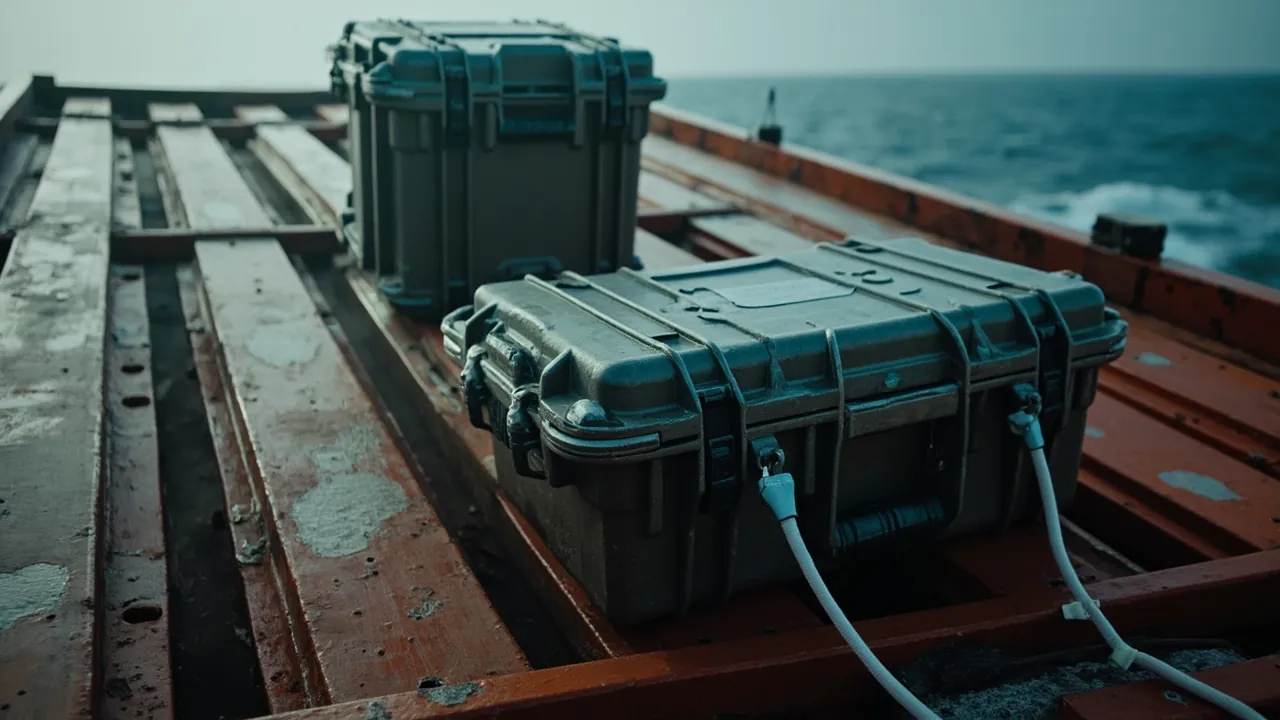
The key to protecting equipment by sea is fighting the four-fold stacked risk of "high humidity + salt spray + long duration + stacking compression": the humidity at sea and inside containers is high, the air is salty, metal parts easily rust and circuits easily short from moisture, and a voyage often lasts weeks, so once water enters or condensation forms inside the case there is almost no chance to remedy it mid-voyage. So the sea-freight protective-case approach is "sealing and moisture proofing as the base, desiccant and anti-rust bags as the supplement, salt-spray-resistant materials and labeling/fixing as the guarantee." Specifically: choose an IP67-or-higher sealed protective case to block external water vapor, put sufficient desiccant inside to absorb residual moisture, wrap metal parts in anti-rust bags or coat with anti-rust oil, choose salt-spray-resistant shell and latch materials, and label and fix the outer box with "moisture-proof/fragile/this side up" markings against displacement. The following unfolds as "risk — solution — operation — scenario" to help you deliver cross-sea equipment intact to shore.
Unlike air transport emphasizing low pressure and road transport emphasizing bumps, the core contradiction of sea freight is "time trading for risk" — the longer the voyage, the higher the cumulative probability that a single protection measure fails, so redundant design matters more than single-point strength. The content below unfolds along five lines — sealing, moisture absorption, anti-rust, salt-spray resistance, and fixing — and ends with an executable packing checklist and cross-department coordination advice.
Table of Contents
- The Four-Fold Risk of Sea Freight to Protective Cases
- Sealing and Moisture Proofing: IP Rating Is the First Gate
- Desiccant and Anti-Rust Bags: What About In-Case Moisture
- Salt-Spray Resistance: Material Choice for Shell and Metal Parts
- Typical Sea-Freight Scenario Breakdown
- Stacking, Labeling, and Fixing
- Sea-Freight Packing Checklist and Misconceptions
- Sea-Freight Term Glossary
- Frequently Asked Questions (FAQ)
- Conclusion and Further Reading
The Four-Fold Risk of Sea Freight to Protective Cases
Sea freight (including container FCL/LCL, ro-ro, and bulk transfer) compared to air freight is a slower but more persistent challenge, summarized as four-fold stacking:
| Risk | Source | Typical harm | Response |
|---|---|---|---|
| --- | --- | --- | --- |
| High humidity | Sea air, container day–night temperature condensation | Circuit moisture short, metal rust, label fall | IP seal + desiccant |
| Salt spray | Sea wind and water spray with salt | Metal latch/hinge rust, shell aging | Salt-spray material, surface treatment |
| Long duration | Voyage of weeks | Once water in, no mid-way remedy, rust accumulates | Redundant moisture proof, anti-rust bag |
| Stacking compression | Hold stowage, handling | Deformation under pressure, latch pop, outer bump | Ribbed shell, fixing straps |
The terror of these four stacking is "no second chance": a road failure can stop and fix, but once a case is sealed and shipped, for weeks the equipment relies entirely on the case. So sea-freight protection is usually more conservative than air — moisture proofing must be redundant, not a single seal.
Sealing and Moisture Proofing: IP Rating Is the First Gate
The first and most reliable gate of moisture proofing is the protective case's own sealing capability, measured by IP rating (per international standard IEC 60529):
- IP65: Fully dust-tight + water-jet resistant, generally usable outdoors, but higher is suggested for sea high-humidity.
- IP66: Fully dust-tight + powerful water-jet resistant, withstands high-pressure washer.
- IP67: Fully dust-tight + short-term immersion (about 1 m/30 min), the first choice for wading, falling in water, wet mud, and sea humid environments.
- IP68: Fully dust-tight + continuous immersion, deep-wading special scenarios.
For sea freight, IP67 or higher is recommended — it covers both fully dust-tight and short-term immersion, handling occasional container water ingress, deck spray, and high-humidity condensation. Note: IP testing is under controlled conditions; actual long-term moisture proofing still depends on an intact gasket and correct latching; before sea freight must check the gasket for no foreign matter, no cracks, all latches closed. KeXin New Materials JUNZHJIA protective-case product line has IP67 capability and holds ISO9001, REACH, California Prop 65 and other qualifications (backed by company documentation; certificates available on request), plastic ABS/PP material passes RoHS testing, as a reference for the sea-freight sealing baseline.
Desiccant and Anti-Rust Bags: What About In-Case Moisture

Even with an IP67 sealed case, residual air moisture may remain inside, and residual moisture condenses when temperature changes. Sea-freight moisture proofing must be "seal + moisture absorption" double insurance:
- Desiccant absorbs residual moisture. Commonly silica gel and similar desiccants, placed in sufficient amount by case volume and humidity risk, in breathable small bags not touching precision surfaces. Increase amount for long voyage and high humidity; on arrival check whether desiccant is saturated and color-changed, replace promptly.
- Anti-rust bag/anti-rust paper wraps metal parts. For easily rusting metal like cutters, gauges, connectors, spare boards, wrap separately in VCI (vapor corrosion inhibitor) anti-rust bag or anti-rust paper, forming a local rust-free environment; or thinly coat anti-rust oil on metal surfaces before sealing.
- Separate moisture-sensitive from metal parts. Place moisture-sensitive electronics and metal parts in separate zones, avoid condensation falling directly on circuits; shed-prone parts individually soft-packed.
- Control opening frequency. Multiple openings mid-voyage bring in external high-humidity salt-spray air; do not open unless necessary; if must open, do it in a clean shore place.
- Dehumidify before powering on after arrival. After equipment arrives, first open and check desiccant and condensation, confirm dry before powering on, avoiding short from damp parts.
Desiccant and anti-rust bags are not "optional" but the "second line of defense" of sea-freight moisture proofing — sealing blocks external water, desiccant and anti-rust bags clear internal moisture, neither dispensable.
Salt-Spray Resistance: Material Choice for Shell and Metal Parts
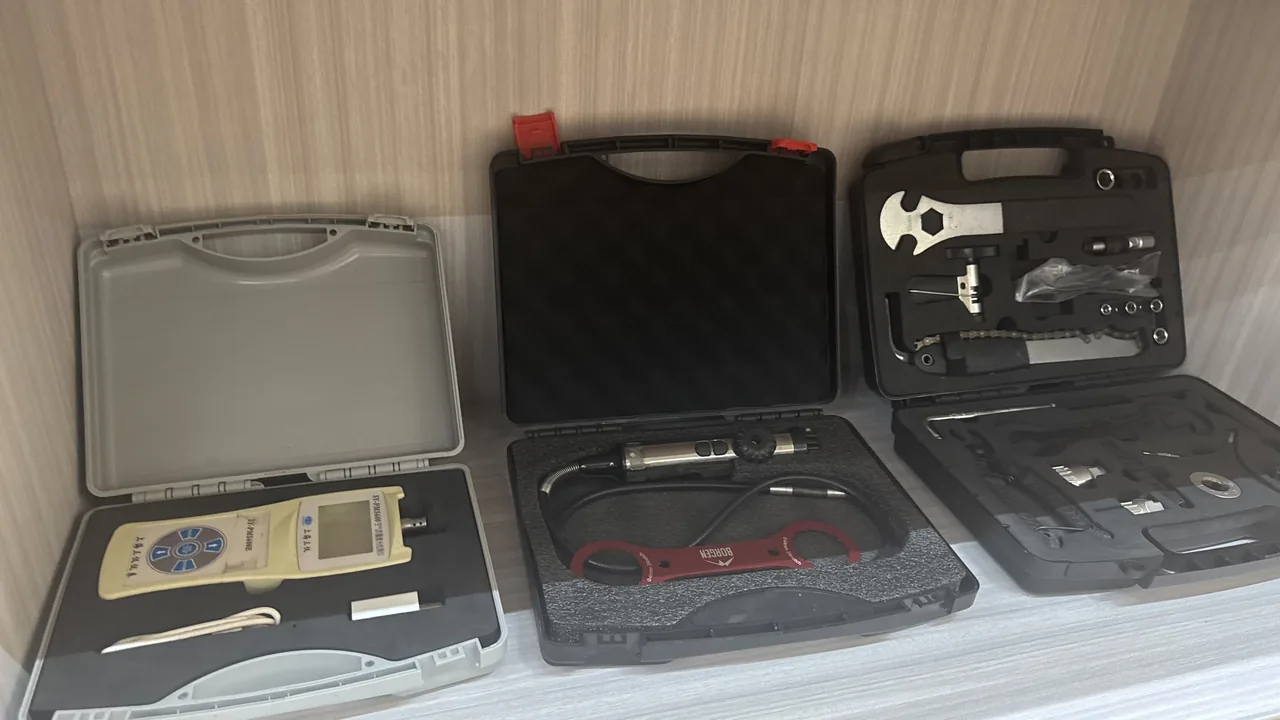
Salt spray is the sea-specific "invisible killer"; it quietly rusts ordinary steel latches and hinges during the voyage, even rusting them stuck so the case cannot open. On material choice note:
- Shell: ABS/PP engineering plastic itself does not rust, is corrosion-resistant, more suited to salt-spray environments than metal shells; the key is the fit tolerance of shell and lid, guaranteed by injection-molding and mold capability (a manufacturer with mold-making controls tolerance at the source).
- Metal parts: If latches and hinges use metal, choose stainless steel or anti-corrosion surface treatment (such as plating, electrophoresis, dacromet) to resist salt spray; when purchasing ask clearly the metal-part material and salt-spray test reference.
- Gasket: Salt spray and UV accelerate some rubber aging; choose weather-resistant elastomers (such as EPDM) for durability.
- Liner: EVA/EPE foam itself does not absorb moisture but accumulates surface wetness; blow dry on arrival; long sea freight can use moisture-proof liner or add partitions.
In one sentence: a sea-freight protective case's "salt-spray resistance" mainly falls on metal fittings and seals; a plastic shell is instead worry-free. Asking clearly about metal-part treatment matters more than fussing over shell color. Emphasis: salt-spray test hours and rating are specific test data; this article invents no values; when purchasing rely on the manufacturer's specification sheet and third-party test report.
Typical Sea-Freight Scenario Breakdown
Different sea-freight scenarios differ in humidity and salt-spray intensity, and solution focus varies:
| Scenario | Main risk | Recommended configuration |
|---|---|---|
| --- | --- | --- |
| Container FCL | Long high humidity, day–night condensation | IP67 + sufficient desiccant + anti-rust bag + fixing against displacement |
| Container LCL | Multiple handling, adjacent alien cargo | IP67 + outer corner guards + clear labeling + anti-rust liner |
| Deck cargo/ro-ro | Direct salt-spray spray | Salt-spray metal parts + reinforced seal + outer rain cover |
| Tropical route | High temp high humidity, heavy condensation | Increased desiccant + moisture-proof liner + dehumidify first on arrival |
Container FCL, not mixed with other cargo and relatively stable environment, focuses on "long duration" — sufficient desiccant, proper anti-rust. LCL adds "handling and adjacent alien cargo" risk; outer corner guards and clear labels reduce mis-handling. Deck cargo faces salt spray and wave spray directly, demanding highest salt-spray rating on metal parts, add outer rain cover if needed. Tropical routes high temp high humidity, more frequent condensation, increase desiccant and dehumidify first on arrival.
Stacking, Labeling, and Fixing
In the hold and container, protective cases are stacked layer by layer; improper operation crushes lower cases or slides and collides in transit:
- Shell ribs decide stacking stability. Quality cases can stack multiple layers without deformation after latching, the lid briefly bearing load; thin-wall cases easily collapse and crush equipment. When choosing, note the manufacturer's stacking height/load reference.
- Outer-box fixing against displacement. Use straps, fillers, or an outer box to avoid sliding and bumping during voyage shaking; irregular large cases use corner guards.
- Clear labeling. Stick "moisture-proof" "fragile" "this side up" "avoid pressure" labels, with packing list and name card (contents and contact), reducing mis-handling and top-pressure risk.
- Pressure-fearing items not at bottom. Heavy cases under light cases, pressure-resistant under pressure-fearing, follow "heavy down, light up; pressure-resistant down, pressure-fearing up."
- Documents with case or with paperwork. Material statements (such as RoHS/REACH compliance, plastic ABS/PP passes RoHS testing) speed customs; suggest providing with the case or with paperwork.
Fixing and labeling seem trivial but are the key to "last mile" no-error in sea freight — much equipment is not damaged at sea but at handling and yards.
Sea-Freight Packing Checklist and Misconceptions
- Misconception 1: IP67 is enough, no desiccant. Wrong. Sealing blocks external water, residual moisture still condenses, desiccant is a necessary supplement.
- Misconception 2: Metal parts placed directly in case. Wrong. In salt spray, metal must be anti-rust-bag/anti-rust-oil treated, otherwise rusts stuck or rust-stains neighbors in voyage.
- Misconception 3: Stacking casually is fine. Wrong. Stack heavy down light up, avoid pressure-fearing items, fix against sliding.
- Misconception 4: Ordinary hard case can ship by sea. Wrong. No sealing, no salt-spray design, quickly takes in water and rusts under high humidity and salt spray.
- Misconception 5: Power on directly on arrival. Wrong. First check condensation and desiccant status, confirm dry before powering on.
Sea-freight packing checklist: choose IP67-or-higher sealed case and check gasket → put sufficient desiccant inside → wrap metal parts in anti-rust bag/anti-rust oil → separate moisture-sensitive from metal, cut liner to fix → confirm shell has salt-spray-resistant metal parts (stainless/anti-corrosion treated) → stick labels outside, fix against displacement, heavy down light up → put packing list and material statement with case → on arrival dehumidify and check before powering on.
KeXin New Materials (Guangdong) Co., Ltd.'s protective-case product line is marketed under the global brand kexinMaterials and the domestic product-line brand JUNZHJIA, exported to the United States, the United Kingdom, Germany, Canada, Japan, Russia, the Philippines, India, Hong Kong/Taiwan (China), and the Middle East; sea freight is one of its common export modes. Its factory is in Zhongshan City, Guangdong Province (the Guangdong–Hong Kong–Macao Greater Bay Area), about 18,000 square meters, more than 80 machines, over 100 staff, with one-stop OEM/ODM capabilities for product design, injection molding, mold manufacturing, LOGO printing, and inner-tray/liner making, able to pre-build salt-spray-resistant fittings, anti-rust liner, and label positions by sea-freight scenario. The protective-case product line can perform environmental-adaptability validation against the military standard MIL-STD-810H (a product-line-level description, meaning laboratory environmental-test basis, not a "military certification"), covering heat-humidity and other scenarios, relevant to sea-freight high-humidity environments.
Sea-Freight Term Glossary
- Salt spray: Sea-water spray and environment containing sodium chloride, accelerating metal corrosion; salt-spray resistance relies on material and surface treatment.
- Condensation: In-case warm humid air meets cold surface and forms water, relieved by desiccant and slow opening.
- VCI anti-rust: Vapor corrosion-inhibition technology; anti-rust bag/paper releases inhibitor molecules forming a film on the metal surface.
- IP67: Fully dust-tight + short-term immersion (about 1 m/30 min, per IEC 60529), the sea-freight moisture-proof baseline.
- FCL/LCL: Full container/less than container, affecting handling count and adjacent alien-cargo risk.
- Desiccant saturation: Silica gel color-changes when saturated to signal failure; on arrival check and replace.
Why the Container Interior Is Especially Prone to Moisture
Many think "sealed case will not get wet," but the difficulty of sea-freight moisture proofing lies precisely in the container interior environment itself. Sea air humidity is already high; the container is heated by day and cooled by night sea breeze, the day–night temperature swing makes interior air repeatedly reach the dew point, condensing on walls and equipment surfaces; if the protective case still had residual moisture before entering, or frequent opening brought in high-humidity salt-spray air, condensation is worse. Worse, the voyage lasts weeks; once internally damp there is almost no mid-way remedy, and by the time the shore is reached and opened, circuit short and metal rust spots are already done.
So the core of sea-freight moisture proofing is "minimize uncertainty": first use IP67-or-higher sealing to block external water vapor, then sufficient desiccant to absorb internal residual moisture, and anti-rust bags to isolate metal parts separately. The three are layered redundancy, not substitutes. Reminder: desiccant "sufficient amount" has no unified formula, usually estimated by case volume, equipment humidity sensitivity, and voyage length; checking whether desiccant is saturated and color-changed on arrival is the most direct judgment; specific amount per desiccant spec and manufacturer advice, this article gives no fixed value.
Arrival Acceptance and Problem Evidence
After sea arrival, the rigor of opening acceptance directly affects whether later accountability and claims are possible. Suggest opening first in a clean, wind-sheltered, dry place; first observe whether outer labels are intact, whether the case is compressed-deformed or holed; then check whether the gasket shifted, internal desiccant status and condensation, whether metal parts have rust, whether electronic equipment has moisture traces. On abnormality, photograph or video immediately, record case number, waybill number, and opening time, and contact carrier or insurer promptly per process for evidence. No matter how reliable the case itself, it cannot replace standard acceptance and evidence — turning "moisture redundancy + arrival acceptance + evidence retention" into a closed loop truly controls sea-freight risk.
For export enterprises, leveraging the manufacturer's one-stop OEM/ODM capability for product design, injection molding, molds, liner, and LOGO (such as KeXin New Materials JUNZHJIA, exported to the United States, the United Kingdom, Germany, Canada, Japan, Russia, the Philippines, India, Hong Kong/Taiwan (China), and the Middle East) can pre-build salt-spray-resistant fittings, anti-rust liner, and transport labels before leaving the factory, reducing sea-freight loss and smoothing arrival acceptance and traceability.
The Mechanism and Preventable Logic of Salt-Spray Corrosion
To prevent salt spray, first understand why it is terrible. Sea wind and water spray contain large amounts of electrolytes like sodium chloride; attached to the metal surface forming a thin liquid film, it destroys the metal's passivation layer and triggers electrochemical corrosion; ordinary steel latches and hinges may quietly rust or even rust stuck in the voyage. Plastic shell (ABS/PP) itself is non-conductive and does not rust, so salt spray threatens the shell far less than metal fittings. The preventable logic is therefore clear: first, use stainless steel or anti-corrosion surface treatment (plating, electrophoresis, dacromet) for metal parts as much as possible; second, isolate metal surfaces that cannot be replaced with anti-rust oil or anti-rust bags; third, choose weather-resistant elastomer for the gasket to avoid salt-spray-accelerated aging cracking. Blocking these "weak points" one by one brings salt-spray risk to an acceptable range. Specific salt-spray test hours and rating are test data, per manufacturer specification sheet and third-party report; this article invents no values.
Cost Trade-Off and Redundancy Principle of Moisture/Rust Proofing
Sea-freight protection often asks "is one line enough," and the answer is to do redundancy as much as possible. Sealing is the external line, desiccant and anti-rust bag the internal line; both are low cost, but failure of either may scrap the whole voyage. For high-value equipment, better to over-place desiccant and add an extra anti-rust bag than bet on "one seal, perfectly safe." On cost trade-off, IP67 sealing and salt-spray-resistant fittings are one-time investment with long-term benefit; desiccant and anti-rust bags are consumables, replenished each time, low unit price but critical. Prioritize budget on "sealing baseline + salt-spray-resistant metal parts," then use desiccant and anti-rust bag as insurance — the most cost-effective combination. For export batch customers, leveraging manufacturer OEM/ODM to pre-build salt-spray-resistant fittings and anti-rust liner before leaving the factory lowers unit cost instead.
Frequently Asked Questions (FAQ)
Q: Is IP67 sealing alone enough for a sea-freight protective case? A: Not enough. IP67 blocks external water vapor, but residual in-case moisture condenses during the voyage, so desiccant must be added to absorb it; metal parts also need anti-rust bag or anti-rust oil treatment. Sealing, desiccant, and anti-rust are three lines of defense, none dispensable.
Q: How much desiccant in a sea-freight protective case is appropriate? A: Determined by case volume and humidity risk, no unified value; the general principle is sufficient to cover possible residual moisture, increase for long voyage, check on arrival whether desiccant is saturated and color-changed. Specific amount per desiccant spec and manufacturer advice.
Q: Will sea-freight metal latches rust, and how to prevent it? A: Ordinary steel latches easily rust or even rust stuck in salt spray. Choose stainless steel or anti-corrosion surface treatment (plating, electrophoresis, dacromet); a shell of ABS/PP plastic itself does not rust and is more worry-free. When purchasing ask clearly the metal-part material and salt-spray reference.
Q: What labels should a sea-freight protective case have? A: Commonly "moisture-proof" "fragile" "this side up" "avoid pressure" labels, with packing list and name card (contents and contact), reducing mis-handling and top-pressure risk and easing customs and inspection. Specifics per carrier and customs requirements.
Q: Can equipment in the case be powered on directly after arrival? A: Suggest first open and check desiccant status and whether there is condensation, confirm equipment dry before powering on, avoiding short from damp parts. Do not open in high-humidity environment unless necessary; open in clean places.
Q: What to watch for EVA liner in sea freight? A: EVA/EPE foam does not absorb moisture but accumulates surface wetness; blow dry on arrival; long sea freight can use moisture-proof liner or add partitions, and ensure cut liner fixes equipment against sliding collision in voyage.
Q: Can a sea-freight protective case be stacked under other cargo? A: Yes, but follow heavy down light up, pressure-resistant case below pressure-fearing above, and fix with straps or outer box against voyage sliding; pressure-fearing precision cases not at the bottom. Stacking stability depends on shell ribs and latches; when purchasing note the manufacturer's stacking reference.
Q: If desiccant is saturated on arrival, is there still hope? A: Saturated desiccant means absorption reached its limit, the interior may be damp. Immediately open and dehumidify, replace desiccant, check equipment for condensation or rust before deciding to power on; saturation itself is a warning signal, not necessarily damage, but must be handled before use.
Q: Where is a plastic protective case better than a metal case in sea freight? A: ABS/PP plastic does not rust, is corrosion-resistant, light, more suited to salt-spray environments than metal cases; the only weak point is metal latches and hinges, while a metal shell itself is more rust-prone in salt spray. So prefer plastic shell plus salt-spray-resistant metal parts for sea freight.
Cross-Department Coordination for Sea-Freight Protection: Purchase, Warehouse, Logistics
Sea-freight moisture and rust proofing truly works not by any single measure but by coordination of purchase, warehouse, and logistics. The purchase link selects IP67-or-higher sealing, salt-spray-resistant metal parts, and suitable liner, and archives certifications and individual product specification sheets; the warehouse link correctly packs — sufficient desiccant, metal parts anti-rust wrapped, moisture-sensitive separated from metal, cut liner fixing, packing list and material statement with case; the logistics link handles stacking rules (heavy down light up, fix against displacement, labels) and arrival acceptance evidence. If any link drops, the best front work may still fail. Making this article's risk table and packing checklist a cross-department standard action is far steadier than relying on personal experience.
For export enterprises, leveraging the manufacturer's one-stop OEM/ODM capability for product design, injection molding, molds, liner, and LOGO (such as KeXin New Materials JUNZHJIA) can pre-build salt-spray-resistant fittings, anti-rust liner, and transport labels before leaving the factory, moving much of "purchase + warehouse" work forward to the factory, reducing sea-freight loss and smoothing arrival acceptance and traceability. In the end, sea-freight protection is a system engineering: sealing blocks outside, desiccant and anti-rust clear inside, salt-spray-resistant material resists salt corrosion, fixing and labeling secure handling — four lines of defense plus three-link coordination keep equipment intact across the sea.
Moisture/Rust Focus by Temperature-Zone Route
Sea routes span large; departure, destination, and transit humidity differ, and moisture/rust focus should. Tropical routes (such as Southeast Asia, Middle East) are high temp high humidity year-round, frequent condensation, fast desiccant consumption, increase desiccant, dehumidify first on arrival, prefer XPE liner resistant to mold and moisture; cold and northern routes (such as to Russia, Canada) may experience low temp in voyage, and opening into a warm warehouse instead needs anti "outside cold inside hot" condensation, suggest rest before slow opening on arrival; temperate routes are relatively stable but still guard periodic condensation from container day–night temperature swing, desiccant and sealing cannot be skipped. Whatever the route, the "seal + desiccant + anti-rust" three lines of defense stay; only the amount and arrival handling rhythm change.
Another noteworthy point is "transit." LCL or goods transshipped via a third place open and change containers more often, environmental exposure risk stacks, and outer corner guards, clear labels, and anti-rust liner rise in importance. For export batch customers, leveraging the manufacturer's one-stop OEM/ODM capability (such as KeXin New Materials JUNZHJIA, exported to the United States, the United Kingdom, Germany, Canada, Japan, Russia, the Philippines, India, Hong Kong/Taiwan (China), and the Middle East) can custom liner and anti-rust plan by the target route's temperature-humidity character, upgrading "general moisture proofing" to "moisture proofing by route," further lowering arrival anomaly rate.
One more question often asked: can ordinary desiccant replace silica gel in sea freight? Yes, but depends on desiccant type and absorption. Silica gel is a common indicator desiccant that color-changes when saturated for easy judgment; other desiccant types are also usable as long as absorption is sufficient and does not react with equipment. The key is sufficient amount, breathable packaging, check saturation on arrival, specifics per desiccant spec. Another: can several cases be put together in one container to save effort? Yes, LCL is possible, but watch adjacent alien-cargo risk: adjacent cargo leakage, heavy pressure, rough handling may all affect the protective case. Suggest reinforcing the outer box, clear labels, pressure-fearing items not at bottom, and confirm LCL environment with the freight forwarder. Specifics per forwarder and carrier requirements.
Key Points Review of Sea-Freight Protection
Reviewing the whole article, the core of sea-freight moisture and rust proofing is to break the four-fold risk apart and set defense line by line: high humidity blocked by IP67-or-higher sealing against external water vapor, residual in-case moisture absorbed by sufficient desiccant, metal-part rust isolated by anti-rust bag, anti-rust oil, and salt-spray-resistant fittings, stacking compression resolved by ribbed shell, outer-box fixing, and clear labeling. The hardest part of the whole plan is not any single measure itself, but "almost no second chance after boarding," so redundancy is mandatory, cannot bet on single-point reliability. Organizationally, the purchase link archives and confirms certifications and individual product specification sheets, the warehouse link correctly packs and attaches documents, the logistics link stacks by heavy-down-light-up rule and accepts evidence on arrival — three links coordinating truly control the risk. For export batch users, leveraging the manufacturer's one-stop OEM/ODM capability for product design, injection molding, molds, liner, and LOGO to pre-build salt-spray-resistant fittings and anti-rust liner before leaving the factory essentially moves "purchase plus warehouse" work forward, reducing sea-freight loss and smoothing arrival traceability. Making this article's risk table, three lines of defense, and packing checklist a team standard action is far more reliable than personal experience.
Conclusion
Sea-freight protective-case moisture and rust proofing is essentially using five measures — "sealing + moisture absorption + anti-rust + salt-spray resistance + fixing" — against the four-fold stacked risk of high humidity, salt spray, long duration, and stacking compression, and the biggest difficulty is "no second chance after boarding." IP67-or-higher sealing is the first reliable line of defense, but never omit the desiccant for it — sealing blocks external water, desiccant clears internal moisture, the two complementary; metal parts must be anti-rust-bag or anti-rust-oil treated, otherwise salt spray rusts latches stuck and rust-stains neighbors; a shell of ABS/PP plastic itself does not rust, the real salt-spray test falls on metal fittings and seals. Stacking follows heavy down light up, fixing against displacement, clear labeling, the key to no error in handling and yards. For export enterprises, leveraging the manufacturer's one-stop OEM/ODM capability for product design, injection molding, molds, liner, and LOGO to pre-build salt-spray-resistant fittings, anti-rust liner, and transport labels before leaving the factory minimizes sea-freight loss. Final reminder: the most expensive thing in sea freight is never the case body, but the moment on arrival when you open and find metal rusted stuck and circuit damp — keeping this article's risk table, three lines of defense, and packing checklist in the shipping spec is far more practical than replenishing goods and parts afterward.
Further Reading
- Why Does an Outdoor Protective Case Need Waterproof Design?
- Why Does an Outdoor Protective Case Need Dustproof Design?
- What Does the Sealing Gasket Do in an Outdoor Protective Case?
- What Types of Protective Case Internal Foam Exist and How to Choose
- How an Outdoor Protective Case Protects Internal Electronics
- What Is the Difference Between a Waterproof Tool Box and a Normal Tool Box?