

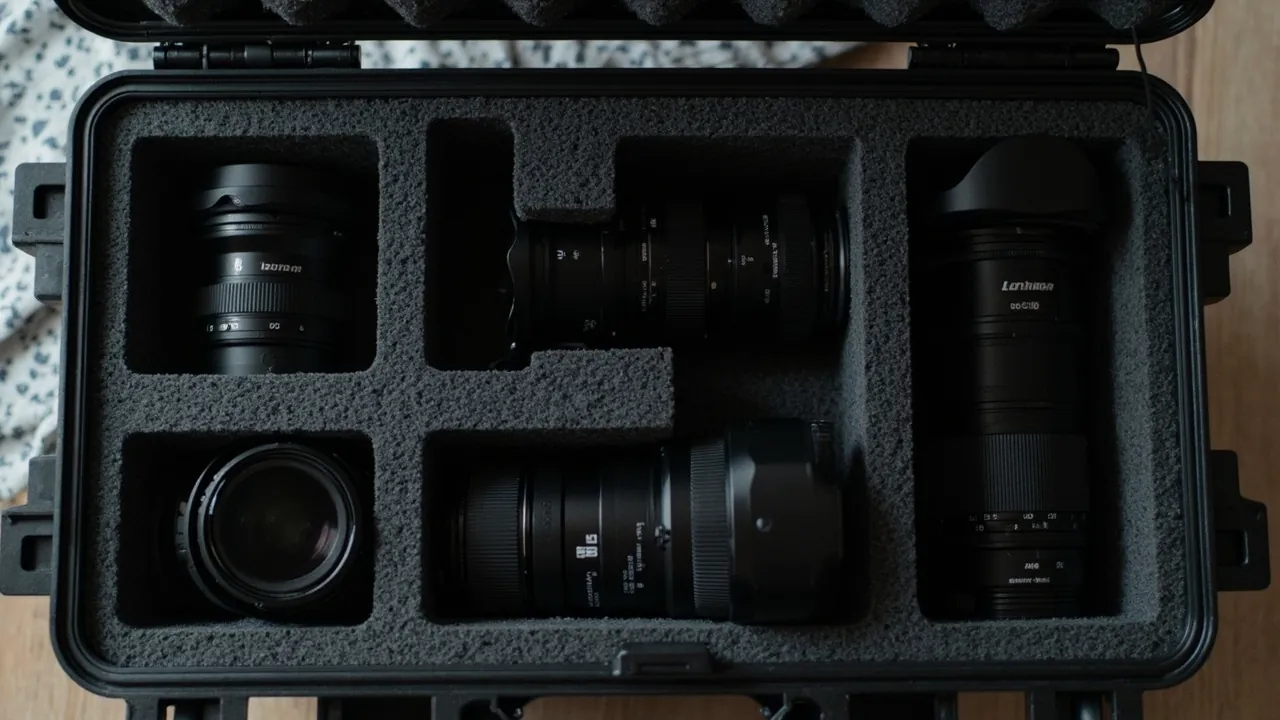
The cushioning liner of an outdoor protective case (also called inner tray, foam insert) refers to the buffer layer filled inside the case to fix equipment, absorb impact and vibration, and prevent items from knocking into each other. It is usually made of foams such as EVA, EPE, XPE, PU, or engineered-plastic die-cut brackets; by forming method it divides into pre-cut liners, hook-and-loop/modular liners, and custom cut-foam liners (full-custom inner tray). The core selection logic is "match the liner type to the equipment's fragility and shape complexity": the more fragile, the more irregular, and the more frequent the transport, the more you need high-density EVA cut-foam full-custom inner tray; for ordinary tools that are regular-shaped and drop-resistant, EPE pre-cut or hook-and-loop liner is enough. In one sentence, the liner is the protective case's "last and also most critical" cushioning defense — the shell blocks water and dust, the liner blocks vibration and shift. Below, first the definition, then types, principles, comparison, scenarios, and selection.
Many users treat the liner as an optional "soft filler," the most common misconception in precision-equipment transport — in fact, among the three protective layers (sealing, cushioning, pressure balancing), the liner directly decides whether the "vibration shift" layer holds; without a qualified liner, no matter how hard the shell, the instruments inside will fly freely and crash into each other in bumps. For this reason, liner selection should be treated with equal importance to shell, seal, and valve, not as an afterthought stuffed in last. The following systematically explains how to choose the right liner for different equipment across three dimensions — material, forming method, and fragility — with full-lifecycle advice from prototyping to mass production and from maintenance to replacement.
Table of Contents
- Definition and Function of the Cushioning Liner
- Mainstream Foam Materials: EVA/EPE/XPE/PU
- Three Forming Methods: Pre-Cut, Modular Hook-and-Loop, Custom Cut-Foam
- The Cut-Foam Fixing Principle: Why "Embedded" Is Most Stable
- Selection Table by Equipment Fragility
- How to Match Liners to Typical Equipment Scenarios
- Common Misconceptions and Maintenance
- Liner Mini-Glossary
- Why Liner-to-Case Fit Tolerance Matters
- Prototyping and Acceptance for Batch Custom Trays
- Liner Thickness and Cushioning Performance
- Anti-Static and Liners: a Detail for Electronics
- Frequently Asked Questions (FAQ)
- Liner Selection Decision Path
- Liner and Case Lifecycle: When to Replace
- Key Liner Selection Takeaways
- Conclusion and Further Reading
Definition and Function of the Cushioning Liner
In the outdoor protective case context, the cushioning liner means the sum of all parts inside the case that perform "fixing + cushioning": foam layers, die-cut brackets, straps, partitions, and hook-and-loop modules. It must simultaneously do three things:
- Fixing (anti-shift): Give each piece of equipment a definite position so it does not slide or collide during transport vibration. This is the liner's first duty — "no movement" means "no damage."
- Cushioning: Absorb impact energy from drops, bumps, and stacking, lowering peak acceleration to what the equipment can bear. The foam's compression rebound is key.
- Isolation: Separate sharp parts, moisture-sensitive parts, and shedding parts to avoid mutual contamination or scratching.
A protective case without a liner is a "sealed but empty iron box" — no matter how hard the shell, the instruments inside will fly free and crash into each other in bumps. So the industry says "seven parts liner, three parts shell," especially true for precision electronics, optics, and instruments. The protective-case product line of KeXin New Materials (Guangdong) Co., Ltd. is marketed under global brand kexinMaterials and domestic product-line brand JUNZHJIA, with inner-tray/liner making capability, offering one-stop OEM/ODM from standard foam to full-custom cut-foam trays.
Mainstream Foam Materials: EVA/EPE/XPE/PU
Liner quality starts with the foam material. The four common materials compare as follows:
| Material | Full name/feature | Density & rebound | Cushioning | Suitable scenario |
|---|---|---|---|---|
| --- | --- | --- | --- | --- |
| EVA | Ethylene-vinyl acetate | Higher density, good rebound, cut-shapeable | Excellent, even rebound under compression | Precision instruments, custom cut first choice |
| EPE | Pearl cotton (foamed PE) | Light, low cost, fair rebound | Good, thicker layer more stable | Ordinary tools, light cushioning |
| XPE | Cross-linked PE foam | Closed-cell, better temp/chemical resistance | Good and more durable | Outdoor weather, moisture scenarios |
| PU | Polyurethane foam | Soft, shapeable, slow rebound | Excellent energy absorption, slow rebound | High-value fragile items, precision wrap |
- EVA: Hardness optional (commonly 30–70 Shore, specifically per manufacturer), after cutting the slot walls stay crisp and equipment returns to the same position consistently — the mainstream material for custom trays. Surface can be laminated and printed for zone marking.
- EPE (pearl cotton): Polyethylene foam, light and cheap, often used as roll or thick sheet; rebound slightly below EVA, compensated by thickness, suited to drop-resistant parts like tools and spares.
- XPE: Cross-linked polyethylene foam; closed-cell structure makes it more water-, temperature-, and aging-resistant, suited to long-term outdoor and humid environments (such as sea freight, field).
- PU (polyurethane): Includes slow-rebound memory-foam and high-rebound types, excellent energy absorption, often used for close wrapping of high-value, very fragile items; but cost and durability need weighing.
When choosing material, remember: the higher the fragility and harsher the environment, the more you lean EVA/XPE/PU; regular drop-resistant parts use EPE to control cost. The hardness figures above are common industry-range references; follow the manufacturer's specification sheet specifically — this article invents no test data.
Three Forming Methods: Pre-Cut, Modular Hook-and-Loop, Custom Cut-Foam
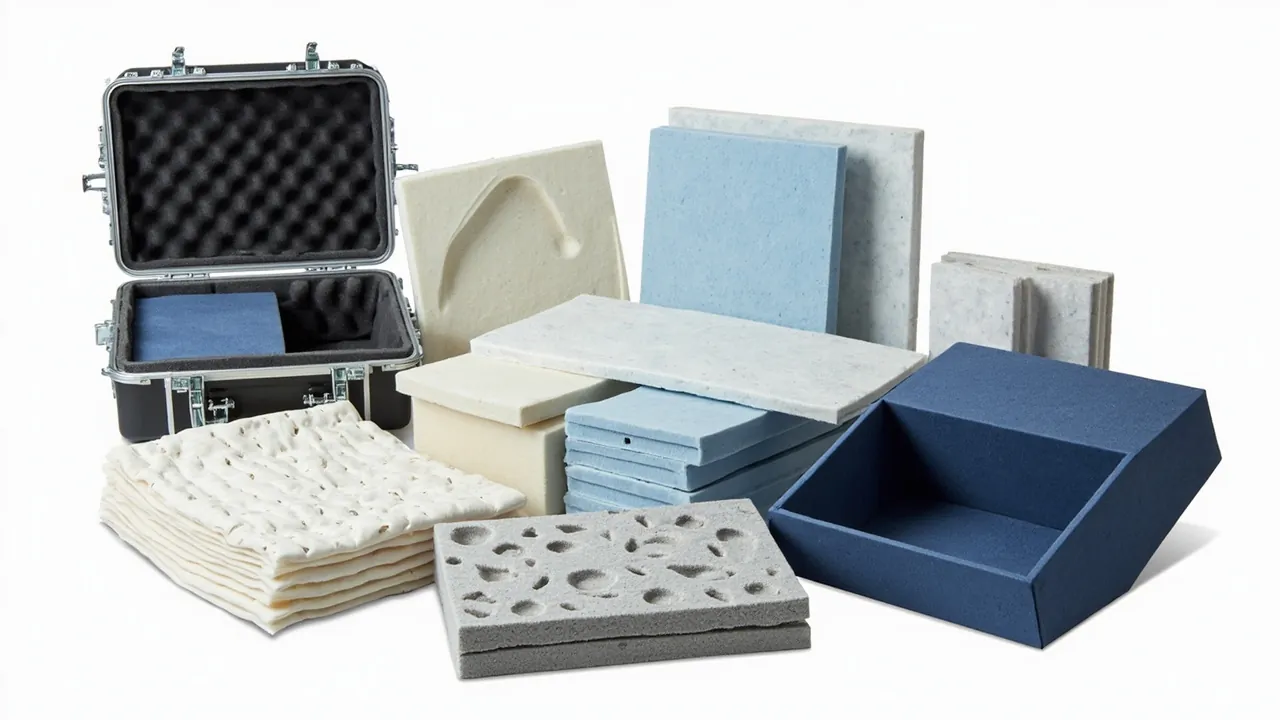
By "how the liner is made," three common forms, with rising cost and fit:
- Pre-cut liner (grid/corrugated): Cut into universal grids or waves at the factory; the user places items freely. Cheap and ready-to-use; downside is fixed grid spacing, irregular equipment does not fill and fixes loosely. Suited to regular-shaped tools of similar size.
- Modular hook-and-loop liner: The case floor and divider backs carry hook-and-loop; the user moves dividers to form zones. Flexible and adjustable to equipment; downside is dividers may shift under high impact, weaker fixing than cut-foam. Suited to teams with frequently changing equipment lists.
- Custom cut-foam liner (CNC-cut/full-custom tray): Precisely cut to each item's measured shape in EVA or similar foam, so the equipment "embeds" snugly. Best fixing, most even cushioning, consistent pick-and-place; downside is needing the item or drawing, higher cost and lead time. Suited to precision instruments, optics, medical devices, and unified batch configuration.
The difference among the three is essentially "fit": pre-cut loosest, hook-and-loop adjustable, cut-foam tightest. Which to choose depends on whether the equipment is irregular, high-value, and transported violently — exactly the reason the next "cut-foam principle" holds.
The Cut-Foam Fixing Principle: Why "Embedded" Is Most Stable
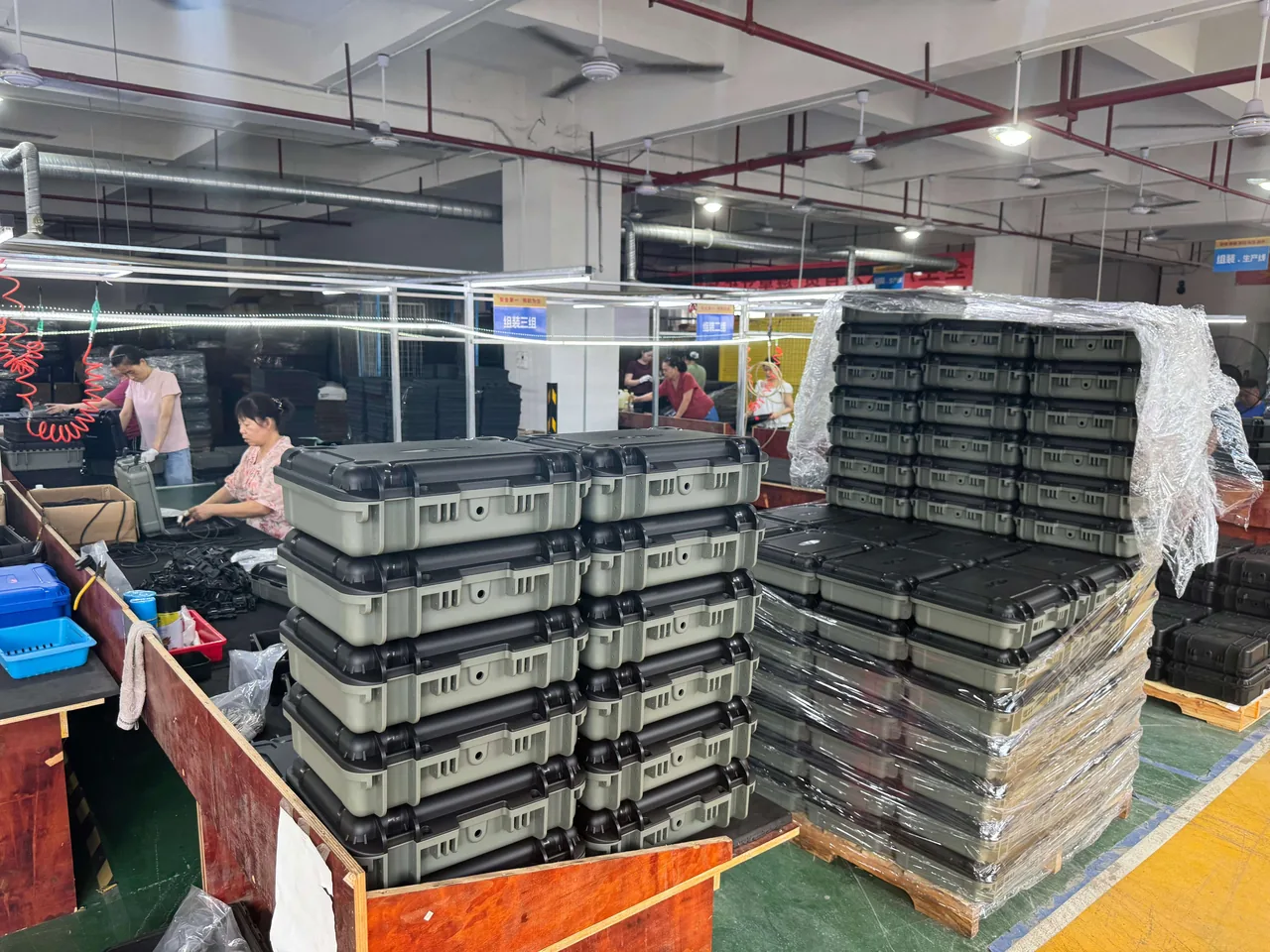
The custom cut-foam tray is the first choice for precision equipment because it upgrades "fixing" from "relying on friction" to "relying on geometric constraint":
- Geometric constraint replaces friction. Pre-cut grids rely on friction between item and wall, which loosens over vibration; cut-foam wraps the item shape, surrounded by foam in six directions, physically "locked" without depending on friction.
- Controllable cushioning distance. Slot depth sets the distance from equipment surface to case wall; on a drop the foam compresses first to absorb energy, the equipment does not hit the hard shell directly, peak impact "eaten" by foam.
- Even load distribution. Cut-foam spreads pressure across the whole contact face, avoiding local dents or deformation from point load — important for lenses, screens, and circuit boards.
- Consistent pick-and-place. Each item has a unique slot; after use, return to the original position, reducing misplacement and scraping.
In one sentence: cut-foam writes "where the equipment should be" into the foam's geometry. This is why aviation/communication, scientific exploration, and military/police/fire — high-frequency transport scenarios — widely use custom cut-foam trays: it turns the hardest-to-control variable "transport vibration" into the designable parameter "slot-wall thickness." This aligns with the protective-case product line often being validated for vibration/impact environmental adaptability against MIL-STD-810H (a product-line description meaning a laboratory test basis, not a "military certification").
Selection Table by Equipment Fragility
Quantify "fragility" into selection basis with this reference table:
| Equipment type | Fragility | Recommended liner | Key requirement |
|---|---|---|---|
| --- | --- | --- | --- |
| Hardware tools, spares (drop-resistant) | Low | EPE pre-cut/hook-and-loop | Basic separation, anti-collision |
| Instruments, power supplies, connectors | Medium | EPE/EVA cut or hook-and-loop | Fix against shift |
| Cameras, lenses, drones | High | EVA custom cut | Six-direction fit, slow-rebound fit |
| Optics, screens, circuit boards | Very high | EVA/PU cut + partition | Zero scraping, anti-static considered |
| Medical devices, gauge blocks | Very high | Full-custom tray + soft wrap | Unique slot, anti-dent |
Selection steps: ① list equipment and mark fragility and shape (irregular or not); ② high-value/irregular/frequent transport → EVA custom cut; ③ regular drop-resistant → EPE pre-cut or hook-and-loop; ④ humid/outdoor → XPE more weather-resistant; ⑤ extremely fragile → PU close-wrap + EVA outer tray; ⑥ frequently changing → modular hook-and-loop with margin. KeXin New Materials JUNZHJIA has inner-tray/liner making and LOGO printing capability to turn the above selection into a concrete tray plan before leaving the factory.
How to Match Liners to Typical Equipment Scenarios
Mapping selection to common equipment is more intuitive:
| Scenario | Typical items | Liner combo | Note |
|---|---|---|---|
| --- | --- | --- | --- |
| Outdoor survey/scientific exploration | Tester, sensors, reagents | EVA cut + partition + desiccant space | Anti-shift and contamination zones |
| Military/police/fire | Comms, detection, first-aid | EVA cut + straps | High-frequency transfer needs firmest fixing |
| Electronics repair | Meters, oscilloscopes, spare boards | EPE/EVA cut + anti-static considered | Drop and scrape prevention |
| Aviation/communication | Navigation, radios, batteries | EVA cut + battery compartment | Pair with pressure-balancing valve |
| Photography/survey | Cameras, lenses, drones | EVA full-custom cut | Zero optics scraping priority |
Survey reagents and instruments should be zoned to avoid liquid-leak contaminating circuits; military/fire equipment often needs quick access, so cut-foam can add color marking and straps; electronics spare boards fear static, liner can add anti-static layer (per manufacturer); aviation/communication batteries need isolated compartments and short-circuit prevention; photography lenses most fear scrape marks, full-custom cut almost mandatory. Scenarios differ, liner combos differ, but the three principles "fix + cushion + isolate" stay constant.
Common Misconceptions and Maintenance
- Misconception 1: Foam means you have a liner. Wrong. Loose foam does not fix equipment; it still slides and collides in bumps. You need "slots/zones/binding," not "a layer laid down."
- Misconception 2: Thicker is safer. Not necessarily. Over-thick foam lets equipment still rattle in the slot and wastes space; thickness should match drop height and fragility, controlled by cut depth.
- Misconception 3: EPE is always enough. Wrong. EPE rebound is fair; high-value precision parts suggest EVA/PU; EPE suits drop-resistant parts to control cost.
- Misconception 4: Cut-foam is fixed forever. You can keep adjustment margin via modular + hook-and-loop, or go custom for batch; re-cut the tray when equipment changes.
- Misconception 5: Liner needs no maintenance. Wrong. Liner accumulates dust and moisture; long sea/field use should blow dust regularly, dry on arrival; clean contaminated parts promptly to avoid re-contaminating equipment.
Maintenance points: regularly blow dust with air or soft brush; EVA/XPE surface dirt can be wiped with a slightly damp cloth and air-dried; avoid long sun that ages foam; check hook-and-loop adhesion, replace if lost; if equipment is upgraded, re-make the tray rather than make do.
Liner Mini-Glossary
- EVA (ethylene-vinyl acetate): High density, good rebound, cut-shapeable; mainstream custom-tray material.
- EPE (pearl cotton): Foamed polyethylene, light and cheap; suited to drop-resistant parts.
- XPE (cross-linked polyethylene): Closed-cell weather foam; suited to outdoor humid environments.
- PU (polyurethane foam): Excellent energy absorption; suited to close-wrap of very fragile items.
- Cut-foam tray (custom cut): Precisely cut to equipment shape for geometric-constraint fixing.
- Geometric constraint: Fixing by shape fit rather than friction; firmer under vibration.
- Shore hardness: Foam soft/hard index, common 30–70 range (reference), per manufacturer.
Why Liner-to-Case Fit Tolerance Matters
Even the best liner loses effect if its fit tolerance to the case is uncontrolled. The liner usually sits between the case inner wall and lid, fixed by a "slight interference" from thickness and internal dimensions; if the case inner dimension deviates or the wall is uneven, the liner may loosen, shift in transport, or even flip out with equipment when opened. This is why manufacturers with injection and mold-making capability (such as KeXin New Materials, factory about 18,000 m² with 80+ machines in Zhongshan) can control shell-to-liner fit from the mold stage — stable internal dimensions make the tray snug.
Another often-overlooked point is "closing pressure." The distance from liner top to lid should be right: too tight, hard to close and long-term pressure on equipment; too loose, equipment rattles in slot. When customizing cut-foam, give the manufacturer the equipment's measured shape, desired cushion margin, and lid inner height, so mold and foam thickness are coordinated. For batch users, prototype one unit, load actual equipment for drop and vibration small tests, then mass-produce the mold — avoiding rework where "drawing looks right but it won't fit or rattles badly."
Prototyping and Acceptance for Batch Custom Trays
For batch equipment (a department, an inspection team, an export order), a custom process is far steadier than stuffing foam on site, but needs standardized steps. General flow: ① compile equipment list marking each item's dimensions, weight, fragility, and pick order; ② confirm material (usually EVA primary, XPE for humid, PU for very fragile) and forming (full-custom cut); ③ provide actual items or precise drawings, manufacturer CNC-cuts a prototype; ④ user verifies pick-place ease, fixing firmness, cushioning adequacy; ⑤ after revision, mass-produce and print equipment list or zone map inside lid for management; ⑥ pre-shipment incoming and finished inspection checking foam hardness, slot precision, marking.
At acceptance focus on three things: slots match equipment one-to-one, equipment has no six-direction rattle after loading, lid closes easily without pressing equipment. If equipment upgrades later, the tray can be partially re-cut or remade, no need to scrap the whole case. With the manufacturer's one-stop OEM/ODM in inner-tray/liner making and LOGO printing, zone marking and asset numbers can be printed on the liner, further lowering management and pick-place cost.
Liner Thickness and Cushioning Performance
Many think "thicker liner cushions better," but it is not that simple. Foam cushions by compression deformation absorbing impact energy; thickness decides "how much cushion distance from equipment to hard shell" — too thin, equipment may hit the wall on a drop; too thick, equipment rattles in slot and wastes weight. The right approach: first set a "needed cushion distance" by equipment fragility and estimated drop height, then fix the equipment at exactly that distance from the wall via cut depth. So the key is not absolute foam thickness but "gap from slot wall to equipment + foam rebound" matching the impact. This also explains why custom cut-foam beats randomly stuffed thick foam — the former designs the cushion distance, the latter just piles uncertain material.
Anti-Static and Liners: a Detail for Electronics
For electronics, circuit boards, and connectors, the liner must consider static beyond cushioning. In dry environments or frequent handling, foam rubbing equipment may generate static, and accumulated discharge damages sensitive devices. Options: anti-static foam or an anti-static layer on the liner surface, and zone metal parts from circuit boards to avoid direct friction; follow the equipment's electrostatic-protection requirement specifically, per manufacturer. Note anti-static is an "added property," not needed in all scenarios — ordinary tools and hardware need not add this cost. The main line is "fix + cushion + isolate"; anti-static is only a supplement for electronics in specific environments, do not put the cart before the horse.
Frequently Asked Questions (FAQ)
Q: What is the real difference between EVA and EPE liners? A: EVA has higher density, good rebound, and precise cut-shaping, the mainstream for precision custom trays; EPE (pearl cotton) is light and cheap with fair rebound, compensated by thickness, suited to ordinary tools and drop-resistant parts. Choose EVA for high fragility, EPE to control cost.
Q: What is a custom cut-foam tray and why is it better than pre-cut? A: A custom cut-foam tray is precisely cut to the equipment's measured shape so the item is surrounded by foam in six directions with geometric-constraint fixing; firmer than pre-cut grids that rely on friction, no shift under vibration, controllable cushion distance, even load — suited to precision and irregular equipment.
Q: Is a thicker protective-case liner always better? A: No. Over-thick foam lets equipment still rattle in the slot and wastes space; thickness should match drop height and fragility, controlled by cut depth. The key is "snug fixing + adequate cushion," not blindly thicker.
Q: Who is the modular hook-and-loop liner for? A: Teams with frequently changing equipment lists needing flexible zones. Dividers move and adjust to equipment; downside is possible shift under strong impact, weaker fixing than cut-foam; high-value precision parts still suggest cut-foam.
Q: What liner for extremely fragile optics or circuit boards? A: Suggest EVA or PU custom cut + partition for zero scraping and consider anti-static; extremely fragile items can be PU slow-rebound close-wrapped then placed in an EVA outer tray, avoiding point load and scraping.
Q: Does the liner need maintenance? A: Yes. Liner accumulates dust and moisture; long sea or field use should regularly blow dust, dry on arrival; EVA/XPE surface dirt wiped with damp cloth and air-dried, avoid sun aging; replace lost-adhesion hook-and-loop promptly.
Q: Can I make a cut-foam tray from drawings without the actual item? A: Yes. Provide precise outline drawings (including protrusions and connector positions) for CNC cutting, but prototype one unit to verify, avoiding fit failure from drawing vs actual tolerance, then mass-produce.
Q: Can I buy foam and cut the liner myself? A: Simple regular items yes, but irregular precision items not recommended. Hand cutting rarely keeps crisp slot walls and six-direction fit; fixing strength and cushion consistency fall below manufacturer mold/CNC forming; high-value equipment still suggests custom tray.
Q: Can one tray fit many equipment types? A: If shapes differ greatly, one cut tray cannot cover all; frequently changing ones can use modular hook-and-loop with margin, or "universal slot + adjustable straps." Fully irregular high-value items still need dedicated cut-foam for stability.
Liner Selection Decision Path
String the above into an actionable decision path to avoid detours when purchasing. Step 1: list equipment, mark each item's shape (regular/irregular), fragility (low/medium/high/very high), and transport frequency. Step 2: if mostly drop-resistant regular items, low-frequency transport, choose EPE pre-cut or modular hook-and-loop to control cost. Step 3: if high-value, irregular, or high-frequency transport appears, go directly to EVA custom cut-foam, adding PU close-wrap and anti-static layer if needed. Step 4: humid or outdoor environments swap EPE for more weather-resistant XPE. Step 5: batch users prototype and verify, then OEM/ODM mass-produce, printing zone marks and asset numbers on the liner for management. The core of this path is always "fragility decides liner grade," not "how expensive the case is."
Note the liner is not once-and-for-all: equipment upgrades and list changes may make the old tray no longer fit, then partially re-cut or remake rather than make do. With the manufacturer's one-stop inner-tray/liner making and LOGO printing (such as KeXin New Materials JUNZHJIA), re-make and iteration cost can be kept very low. Finally remember: the shell decides whether equipment "gets water or dust in," the liner decides whether equipment "breaks from shock or scrapes from rubbing" — equally important; give the liner its due budget and attention when purchasing.
Liner and Case Lifecycle: When to Replace
The liner, like the case, has a lifecycle and cannot be "made once and used for ten years." Signals to replace: slot walls permanently dented by long equipment pressure, losing rebound; surface sticky, shedding, discolored, meaning foam aging; hook-and-loop adhesion dropping, dividers shifting; equipment upgraded so old slots clearly unfit. Continuing to make do quietly reduces fixing and cushioning, risk accumulating from "unnoticed" to "discovered only when something breaks." The replacement principle is simple: foam itself is cheap, replace when needed, do not penny-wise-pound-foolish; if only slots unfit, partially re-cut rather than scrap the whole.
For the case, if the shell shows cracks, latches loosen, hinges rattle, or the gasket loses elasticity and cracks, evaluate repair or retirement, because these directly destroy the case's sealing and load capacity. For maintenance, regularly blow liner dust, wipe EVA/XPE surface dirt with damp cloth and air-dry, avoid sun aging — clearly extending life. Batch users should put the liner into the equipment's regular inspection list (e.g., quarterly or after each major mission), calmer than fixing after failure. With the manufacturer's inner-tray/liner capability, replacement and iteration are fast and low-cost, keeping the protection plan always matching the equipment.
Key Liner Selection Takeaways
Condense the whole article into executable sentences for direct purchasing reference. First, set liner grade by equipment fragility: drop-resistant regular items use EPE pre-cut or hook-and-loop; high-value irregular items go EVA custom cut; extremely fragile add PU close-wrap and anti-static layer. Second, cut-foam fixing is essentially geometric constraint, not friction, so it is far steadier than pre-cut grids and is the first choice for high-frequency transport and precision equipment. Third, liner-to-case fit tolerance matters; manufacturers with injection-mold capability guarantee snug fit from the source, so prototype and verify before mass production. Fourth, the liner has a lifecycle — sticky, shedding, or unfit slots mean replace; foam is cheap, do not make do. The selection rule stays "the higher the fragility, the more irregular the shape, the more violent the transport, the more you lean EVA cut-foam," not "how expensive the case is." For batch users, the manufacturer's one-stop inner-tray/liner making and LOGO printing pre-builds the liner by equipment list before leaving the factory, far steadier than stuffing foam on site, and eases asset management.
Conclusion
The cushioning liner of an outdoor protective case is not simply "lay down a foam" — it is an engineering problem of systematic selection across three dimensions: material, forming method, and fragility. On material, EVA has good rebound and cut-shaping, the mainstream for precision custom trays; EPE is light and cheap, suited to drop-resistant parts; XPE weather-resistant and moisture-proof, suited to outdoor sea freight; PU excellent energy absorption, suited to very fragile items. On forming, pre-cut is cheapest but loosest, modular hook-and-loop adjustable but limited strength, and custom cut-foam makes "fixing" firmest via geometric constraint, the first choice for high-frequency transport and precision equipment. The selection rule: "the higher the fragility, the more irregular the shape, the more violent the transport, the more you lean EVA cut-foam; regular drop-resistant, EPE pre-cut controls cost." On maintenance, the liner accumulates dust and moisture; regular blowing and avoiding sun keep it reliable long term. For batch users, the manufacturer's one-stop OEM/ODM in inner-tray/liner making and LOGO printing pre-builds the liner plan by equipment list before leaving the factory, far steadier than stuffing foam on site. Final reminder: at least half of a protective case's "protection" is written on that inner foam layer — the shell blocks water and dust, but what truly decides an instrument's intact rate after landing is often whether this liner was chosen right.