

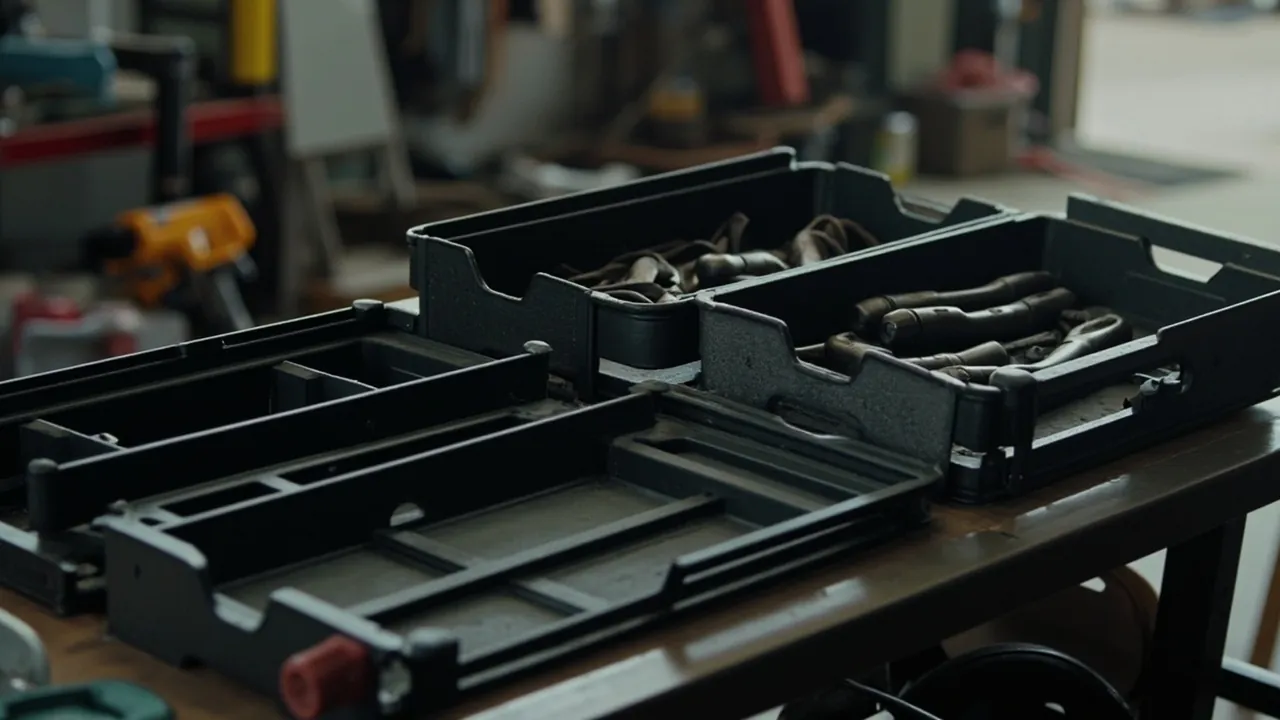
A toolbox needs modular internal design for one fundamental reason: the type, quantity and shape of your tools change all the time, and a case with fixed dividers cannot adapt to that change — which leads to tools knocking against each other, time wasted hunting for things, and wasted space. Modular design uses adjustable dividers, removable parts bins, plug-in trays and custom liners so that the same case can be re-organised around the task in front of you — it prevents precision tools from colliding while improving retrieval speed and space utilisation. In one line: modularity turns "finding tools to fit the case" into "configuring the case to fit the tools." Below we work through it from symptoms, to causes, to solutions, to prevention, and close with a selection and implementation checklist.
Contents:
- What Modular Internal Design Means for a Toolbox
- The Typical Pain Points Without Modularity (Symptoms)
- Why These Problems Happen: The Root Causes
- How Modular Design Solves Them: The Core Approach
- Common Module Types and Where They Fit
- How Modularity and Foam Liners Work Together
- The Value of Modularity for Inventory and Logistics
- Worked Example: One Case Serving Two Roles
- Common Mistakes When Implementing Modularity (Prevention)
- Frequently Asked Questions (FAQ)
- Conclusion
What Modular Internal Design Means for a Toolbox
Modular internal design means organising a toolbox's interior with functional units that can be independently removed and recombined, rather than fixed compartments that were welded or glued in place at the factory. Typical modules include:
- Adjustable dividers: slide sideways in pre-set slots or unplug and re-plug, changing compartment width.
- Independent parts bins / small parts boxes: removable small boxes for sorting screws, terminals, drill bits and similar small items.
- Plug-in trays: tiered trays whose number of layers can be increased or decreased, or a single layer pulled out on its own.
- Custom liners (foam / slotted EVA): slots cut to the tool outline so the tool is recessed and held — a "flexible module."
- Straps, hook-and-loop and elastic retaining strips: for fixing irregular or long tools.
What all these modules share is reconfigurability: today the case carries electrical supplies, tomorrow it carries surveying instruments — you just re-lay the dividers and liner, with no need to buy another case. For the JUNZHJIA protective-case system, which offers 150+ specifications and supports liner customisation, modularity plus custom liners is one of the core capabilities that lets it serve many industries — military/police/fire service, electronics, scientific exploration, aviation/communication and more.
To understand modularity, first understand what it solves. It is not "does the case have compartments" but "can the compartments change with the tools." When the tool list shifts from project to project, the case that can be re-organised is the case that stays useful.
The Typical Pain Points Without Modularity (Symptoms)
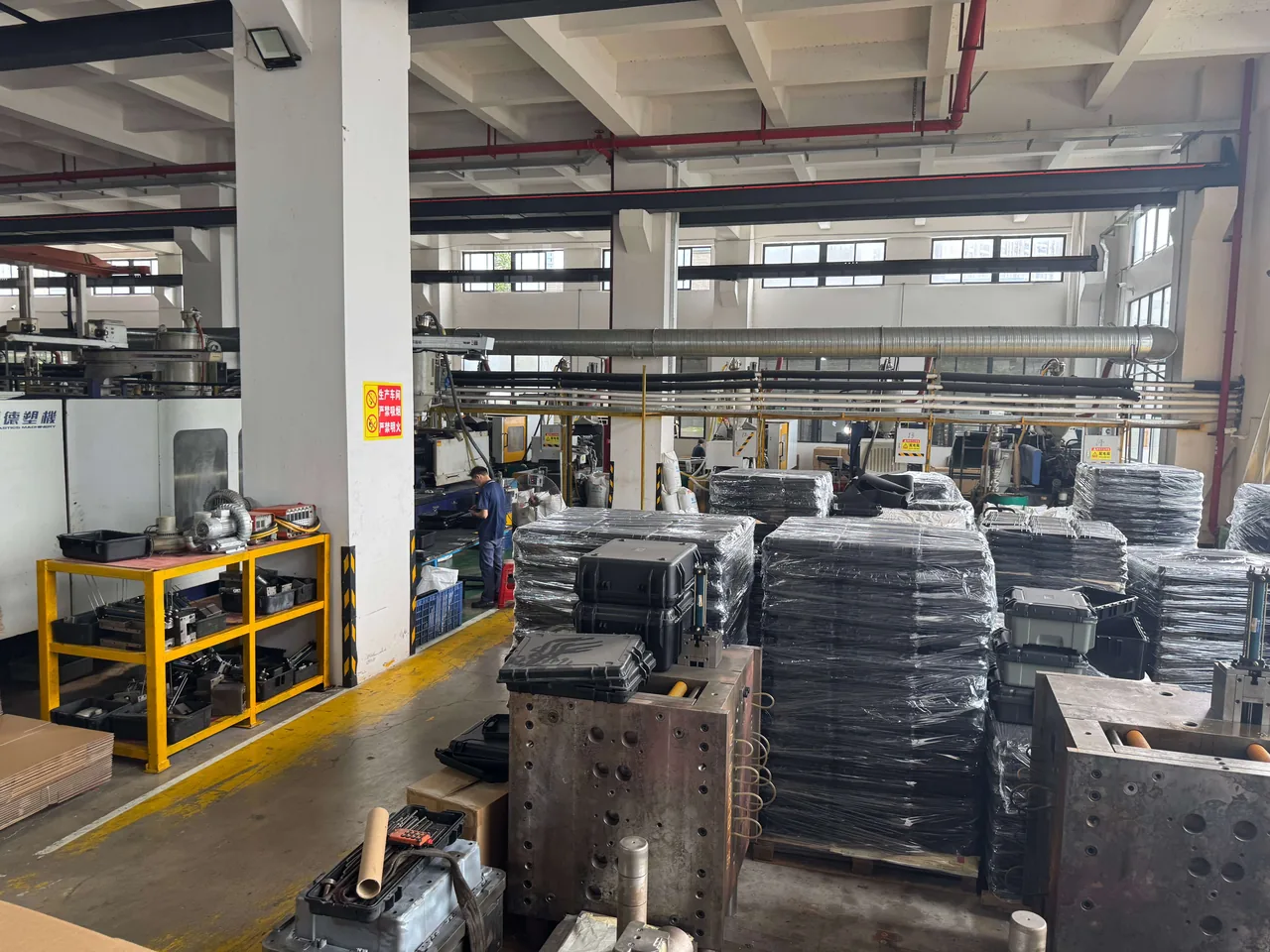
Start with the problems that recur in daily use of a non-modular case. These are exactly what modularity exists to fix. They are usually not the result of any individual user's carelessness; they are structural shortcomings of fixed-layout cases in real conditions. As long as the tool set keeps changing, transport keeps happening and tasks keep switching, they appear inevitably. Making the pain points explicit is how you see that modularity is not optional but necessary:
- Tools knock against each other. Everything is piled into one large empty space; during transport they shift and collide, chipping cutting edges, scratching dial faces and knocking precision instruments out of calibration.
- Hunting wastes time. Small screws, drill bits and pliers are all mixed together, so finding one means tipping half the contents out — and the job stops while you do it.
- Space is wasted. Fixed compartment sizes are rigid: a large tool will not fit into a small compartment (left empty), while small parts roll around loose in a large one (never filled). Overall utilisation stays low.
- Buy one more tool and nothing fits. The compartments cannot be adjusted, so one extra wrench means there is nowhere to put it — and the only answer is another case. Cases multiply.
- Switching tasks is expensive. Trying to pack camera accessories into a household repair case means incompatible shapes — either crushed or jammed in.
- Accountability and counting are hard. On professional sites (fire service, inspection rounds), a lost or damaged tool is hard to trace; with no zones there is no list.
- Rattling and movement in transit. A case with nothing secured in it bangs about for the whole journey, and you arrive to find the tools scattered and crushing each other.
The essence of all these symptoms is a mismatch between "case space" and "tool set" — and the tool set is dynamic. A fixed design can only match one static moment, so it is bound to fail. Put differently, fixed dividers aim for "tidy when it leaves the factory," while real use demands "tidy at every moment." Only modularity delivers both.
Why These Problems Happen: The Root Causes
Looking at it from both the design and the use side, the root causes cluster into three:
1. The tool set is highly heterogeneous and dynamic A single repair kit may contain long items (spirit level), flat items (hammer), round items (tape measure) and delicate items (multimeter) all at once, and the set grows and shrinks with the task. Fixed compartments designed around an "average size" will inevitably mismatch some of the space.
2. The mechanical demands of transport and storage A toolbox in motion is subject to vibration, shock and tilting. Unsecured tools slide and pile up inside, causing secondary damage. Modularity — especially recessed liners plus straps — locks out relative motion and eliminates collisions at source. Physically, an unsecured tool under acceleration *a* generates an inertial force *F = ma*: the greater the mass and the rougher the ride, the higher the impact energy. Modular fixing reduces relative displacement to zero, so the impact energy is absorbed by the foam rather than by tools hitting each other.
3. Each person, post and task prefers a different layout An electrician wants many small-parts compartments; a mechanic wants long tool channels; a surveyor needs shock-mounted instrument slots. A single fixed layout cannot serve all three, whereas modularity lets one case body serve several roles.
In short: static fixed structure vs dynamic heterogeneous demand equals systemic contradiction — and modularity is the engineering answer to it. It turns a "one-off design" into an "iterable design," so the case grows with its user instead of constraining them.
String those three causes together and a clear design logic emerges. Since tools change with the task and differ in shape, and since transport inevitably produces acceleration and shock, the interior must have two capabilities: reconfigurable and securable. Reconfigurability handles change; fixity handles mechanics. Fixed dividers solve only "tidy when new," while modularity solves both "tidy while changing" and "safe while moving." That is why, in professional protective cases and instrument cases, modularity and custom liners are close to standard equipment rather than optional extras. Once you grasp this, every selection and implementation suggestion below follows naturally.
How Modular Design Solves Them: The Core Approach
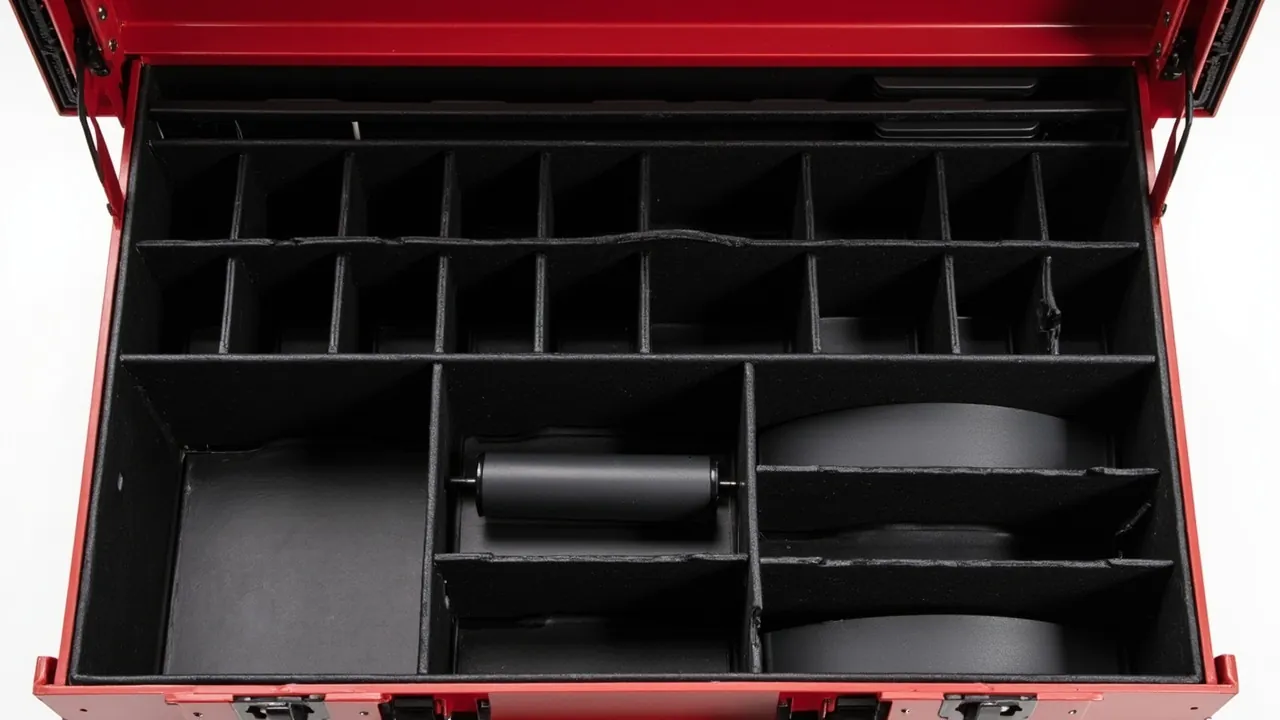
Modularity answers the pain points above along four dimensions:
Dimension 1: space can be reorganised, eliminating mismatch Adjustable dividers plus movable bins let compartment width and layer count follow the tools. Widen a compartment for a large tool, line up several bins for small parts, and space utilisation rises from the 50–65% typical of a fixed layout to 75–85%. Example: in a fixed four-compartment case where two compartments cannot take a power drill and stay empty, half the space is wasted. Convert to adjustable dividers, set the width to exactly fit the drill, and the two previously empty compartments become a usable long channel — effective carrying capacity roughly doubles. This "shape to need" is the essential advantage of modularity over fixed layouts.
Dimension 2: physical isolation, no collisions Every module puts tools "each in its own place." Precision tools go into independent slots or boxes and never touch in transit; combined with EVA liners (see the section on coordination below) to absorb further shock, this meets the protection demands of instrument transport — professional protective cases can use MIL-STD-810H as an environmental test basis for reference. Without isolation, one adjustable wrench can scratch every dial face in the case on a bumpy road. With independent slots, that wrench is boxed into a fixed position and has zero contact with its neighbours however hard it shakes. Isolation is the qualitative leap from "may collide" to "cannot touch."
Dimension 3: classification and labelling, faster retrieval Modules naturally support classification: labels on bins, zones divided by dividers, colours used to distinguish. Counting and retrieval change from "hunting" to "locating," and on-site efficiency rises noticeably. In emergency and fire-service work, "getting the right tool in three seconds" is directly tied to safety. A quantifiable rule of thumb: in an unsorted mixed case, finding one specific tool means disturbing 30–50% of the contents on average; after sorting and labelling, you locate it by sight and disturb almost nothing. For a technician billing by the hour, that saved time is real money.
Dimension 4: expand on demand, extending case life Add a tool → add a bin or move a divider, rather than adding a case. One modular case can stay with its user for years, spreading the cost and reducing inventory. For a company it means procurement shifts from "buy a pile of dedicated cases per project" to "buy a few general-purpose cases plus swappable modules," cutting idle assets. Better still, modules can be reused across cases: the same set of bins can serve an electrician in case A in the morning and be lifted into case B for assembly in the afternoon, so asset turnover rises and idle rate falls sharply.
The table below contrasts the key differences between fixed dividers and modular design:
| Comparison item | Fixed divider design | Modular design |
|---|---|---|
| --- | --- | --- |
| Space adaptability | Set at the factory, hard to change | Can be reorganised at any time |
| Compatibility with unusual tools | Poor; compartments empty or overstuffed | Good; width and layers adjustable |
| Collision protection | Weak; tools hit each other | Strong; independent slots and boxes |
| Small-parts management | Easily mixed and lost | Sorted bins, labelable |
| Task switching | Requires a different case | Reorganise the same case |
| Space utilisation | 50–65% | 75–85% |
| Long-term cost | Repeated case purchases | One case, many uses |
Common Module Types and Where They Fit
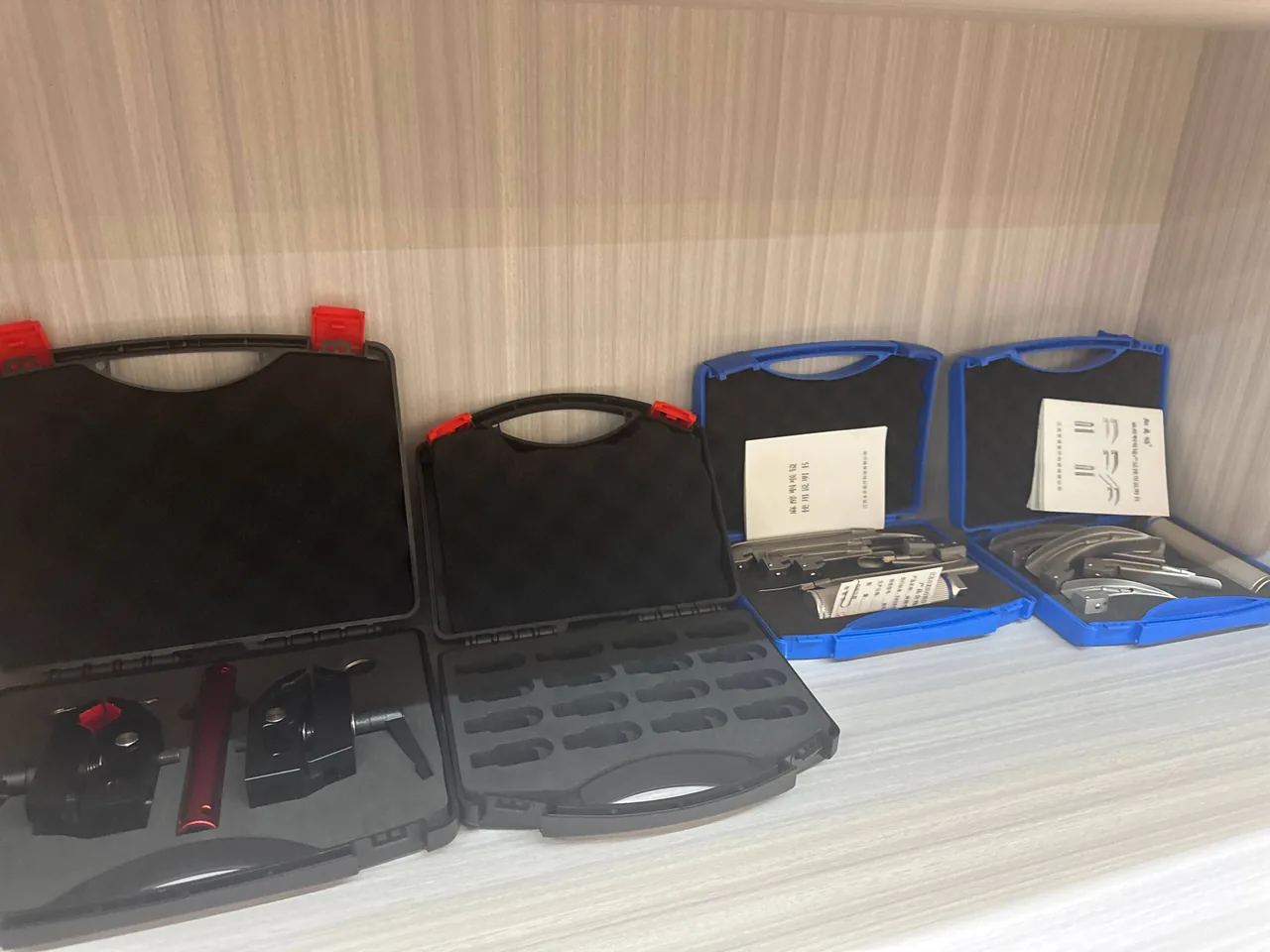
| Module type | Best for holding | Typical scenario |
|---|---|---|
| --- | --- | --- |
| Adjustable divider (vertical slot-in) | Hand tools of varying length | Electrical, plumbing repair |
| Independent parts bin / small box | Screws, terminals, drill bits, fuses | Electronics, assembly |
| Plug-in tray | Medium tools stacked in layers | General repair, inspection |
| Recessed EVA liner | Precision instruments, lenses, sensors | Surveying, photography, exploration |
| Straps / hook-and-loop fixing | Long, irregular, rolling tools | Outdoors, military/police/fire |
| Pick-and-pluck foam block | Temporary sorting, irregular items | General emergency, sample collection |
Selection principle: choose the module type by tool shape first, then set the layout by frequency of use — high-frequency tools in the upper, easy-reach zone, low-frequency spares deeper down, and delicate tools always into an independent slot or box. For shared cases used by several roles, prepare a few module sets as "role templates" and swap the whole set at shift handover — fast, and hard to get wrong. Choosing modules, like choosing the case, means "look at the tools first, then decide the plan." Never buy on appearance.
Here is each of the six module types with its characteristics and cautions, to help you match them precisely to tool shape:
- Adjustable divider (vertical slot-in): the most basic rigid module, fixed by slots on both sides of the case and slid sideways to change compartment width. Cheap and fast to re-lay. Watch out: the slot pitch sets the minimum compartment width, so confirm the slot density is fine enough when choosing the case. Best for quickly zoning hand tools of varying length in electrical and plumbing work.
- Independent parts bin / small box: can be lifted out whole for counting, ideal for screws, terminals, drill bits, fuses and other small items. Prefer bins with a locking catch so they cannot spring open and spill in transit; label the outside and subdivide the inside. Almost standard in electronics and assembly.
- Plug-in tray: stacks space vertically, increasing load per unit of height. Note that the tray itself consumes some height, and the smallest side of each layer limits the largest single item it can take. Suits general repair and inspection with many medium-sized tools.
- Recessed EVA liner: a flexible module, CNC-slotted 1:1 to the tool outline, giving both fixing and cushioning — the first choice for precision instruments. The downside is that once slots are cut for a particular tool set, freedom to reorganise falls, so it suits valuable items that stay fixed long term. The custom inner trays of JUNZHJIA protective cases use this approach.
- Straps / hook-and-loop fixing: an economical way to fix long, irregular or rolling tools (crowbars, spirit levels, gas cylinders) along the length of the case, working with dividers to stop them rolling. Note that hook-and-loop loses grip after repeated peeling, so use buckle straps on critical equipment.
- Pick-and-pluck foam block: a pre-cut grid surface you tear out by hand to wrap the tool — cheap and self-modifiable. Less accurate and less tidy than CNC, and best for temporary sorting such as general emergency response or sample collection.
A fuller treatment of the foam side is in how to choose toolbox internal foam, and the trade-off between the two approaches is set out in dividers versus foam.
How Modularity and Foam Liners Work Together
Modularity does not exclude foam; the two usually work together. Many users assume a "modular case" and a "foam-lined case" are two mutually exclusive things, when in fact they are two forces in the same interior system:
- Rigid modules (dividers, bins) manage "zoning and classification" — they answer "where does this go and how do I find it."
- Flexible liners (EVA/PE foam) manage "fixing and cushioning" — they answer "how does it not move and not get knocked."
Best practice is "dividers define the large zones + liner fixes the valuable items": use dividers to split the case floor into several zones, then use slotted foam inside each zone to lock precision tools firmly. This keeps the flexibility to reorganise while still delivering instrument-grade protection. When producing custom inner trays and liners, JUNZHJIA protective cases typically use this combined "zoning plus recessed fixing" approach, suiting everything from industrial maintenance to aviation communication equipment.
Mind the trade-off in this coordination: recessed foam fixing protects well, but once slots are cut for a given set of tools, freedom to reorganise drops. So the recommendation is deep foam slots for valuable items that stay put, and movable dividers or bins for tools that change often — balancing protection against flexibility. A common arrangement is swappable dividers on the case floor for frequently changing tools, and fixed EVA slots on the inside of the lid for precision instruments — dynamic and static zones separated, each doing what it does best. This "dynamic plus static" layout is the most mature practical form of modularity-plus-liner coordination, and it deserves priority at the selection stage.
The Value of Modularity for Inventory and Logistics
Modularity improves the experience of the individual user, but it also has visible value for equipment management at the enterprise level:
- Fewer purchase types. A general-purpose case body plus swappable modules replaces a large number of single-purpose cases, cutting SKUs and stock. A hundred-person engineering team, if each person buys a dedicated case per task, can accumulate a hundred boxes in assorted sizes; standardising on 10–20 general case bodies plus swappable modules reduces the complexity of stocking and managing them by an order of magnitude.
- Faster delivery. Customisation only means re-laying modules or liners — no new tooling — so lead times are shorter (especially in OEM/ODM mode). When an urgent task needs extra equipment at short notice, modularity can deliver a re-configured kit in days, whereas new tooling is measured in months.
- Easier stocktaking. Modules map to a list, so what is in the case is obvious at a glance and losses or damage are traceable. At audit or project close-out, you check item by item against the module list instead of opening and rummaging through every case.
- Transport efficiency. Once modularly fixed, cases can be stacked and mixed in transit with less movement and fewer damage claims. Logistics departments fear "loose cargo colliding" most; modularity turns the contents into a solid package that stacks stably and generates few claims.
- Asset reuse. At the end of a project, modules come out and get reused while the case moves to a new role, raising asset utilisation. The case is a durable item; modules are consumable or adjustable items. Decoupling the two significantly raises total utilisation over the case's life.
This is exactly the value behind KeXin New Materials' (JUNZHJIA) emphasis on one-stop customisation covering product design, injection moulding, mould manufacturing, LOGO printing and inner-tray/liner production — delivering the case, modules and liner as one reconfigurable system rather than selling an isolated box. For the user, the purchasing decision shifts from "which case do I buy" to "planning a system of equipment that can grow," with better long-term total cost of ownership and operational efficiency.
Worked Example: One Case Serving Two Roles
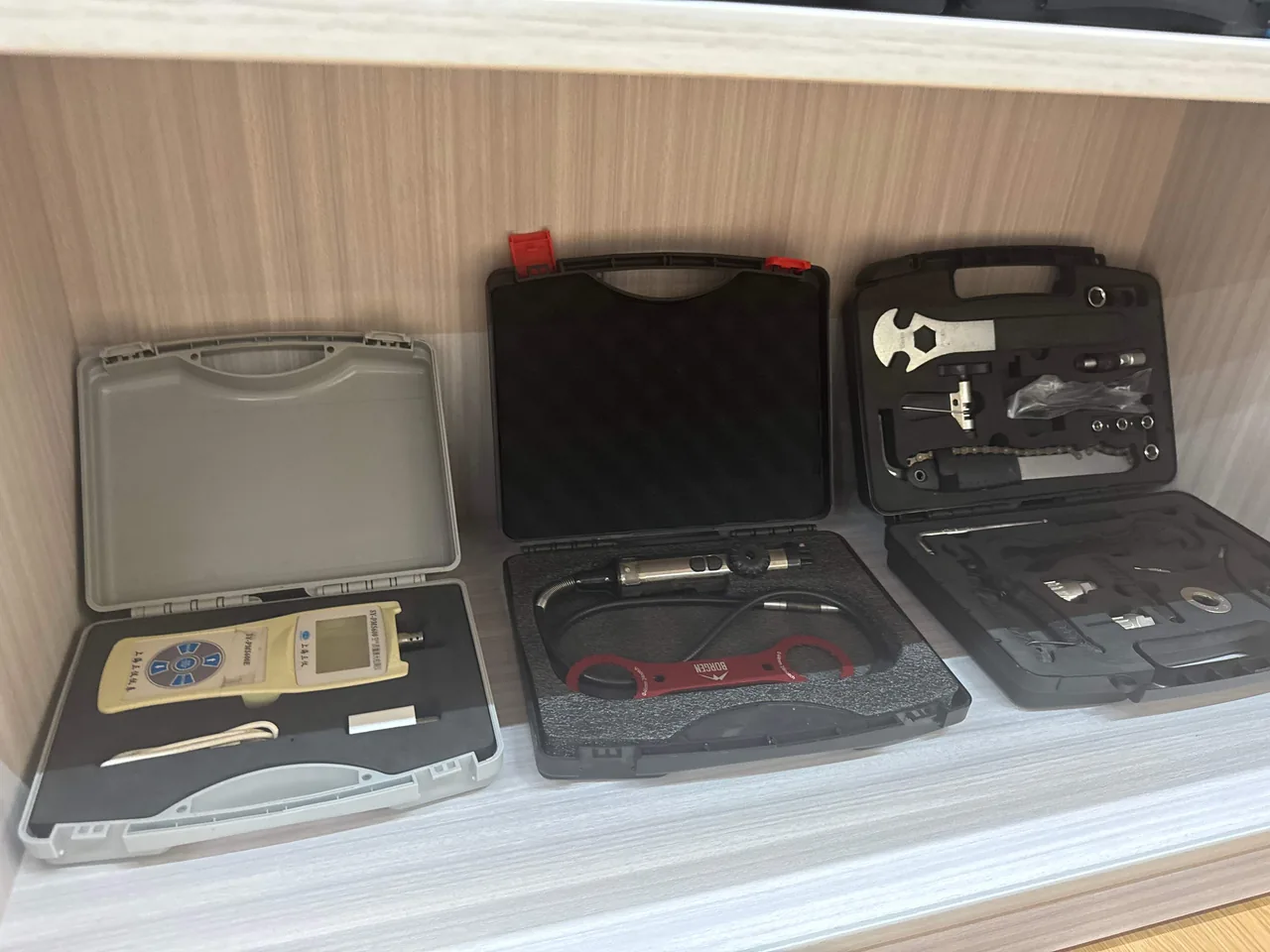
Principles alone are abstract, so here is a "one case, two roles" layout to show how modularity lands in practice. Scenario: an organisation has a 40 × 28 × 18 cm medium protective case (roughly 20 L net capacity), used by an electrician on Mondays and a surveyor on Wednesdays.
Electrician mode (module set A)
- Case floor: adjustable dividers create three vertical compartments holding an adjustable wrench, pliers and a screwdriver set.
- Upper level: two lidded bins with catches holding screws, terminals and fuses, labelled on the outside.
- Inside of the lid: hook-and-loop fixing for the tape measure and voltage tester.
- Layout logic: all small parts in bins, long tools in vertical compartments — retrieval changes from "tip half of it out" to "open and take."
Surveyor mode (module set B, swapped as a whole group)
- Lift out the electrician's modules and drop in a pre-made slotted EVA liner: level, total-station accessories and data logger each get an independent slot.
- The upper bins switch to marker stakes, batteries and record sheets.
- Layout logic: precision instruments have zero movement, meeting transport protection requirements (using MIL-STD-810H as an environmental test basis for reference).
The handover action: before finishing, the user takes module set A out and racks it, loads and locks module set B, and the role switch is complete in five minutes — with no second case needed. This example shows the core benefit of modularity directly: the case body is fixed capital, while the modules are the content system that flows with the task. Without modularity the organisation either buys two dedicated cases (doubling assets at low utilisation) or crams instruments and hardware into one case together (high collision risk). Raise the perspective from "the case" to "the system," and modularity stops being a money-saving trick and becomes infrastructure for equipment management.
Common Mistakes When Implementing Modularity (Prevention)
- Over-dividing. Cutting compartments too finely means no single compartment can hold a complete tool, which reduces utilisation instead. Rule: compartment width ≥ the width of the largest single tool.
- Ignoring the centre of gravity. Heavy items on top and light items underneath make the case tip over in transit. Heavy low, light high, low centre of gravity.
- Foam and dividers fighting each other. Thick foam plus a case packed with dividers squeeze each other and the lid will not close. Fix the foam plan first, then lay out the dividers.
- Counting modules but not checking fixing. Compartments without the tools secured still mean collisions. Modules must deliver both positioning and fixing.
- Missing labels. Sorting without labelling is the same as not sorting. Label bins and divider zones.
- Fixing everything permanently. Gluing dividers in place destroys the point of modularity. Prefer slot-in or clip-in types and preserve reconfigurability.
- Ignoring task switching. Laying out for only the current tool set means buying again next time. Leave 15–20% adjustable spare space.
- Modules with no list. Swapping modules without updating the list makes stocktaking meaningless. Bind modules to the list and manage them together.
Frequently Asked Questions (FAQ)
Q: Will modular design make the case more expensive and heavier? A: Modularity does not necessarily add much cost; many adjustable dividers and bins are single injection mouldings, so the weight increase is small. Compared with "having to buy several more cases because a fixed layout will not fit," one modular case serving many purposes actually spreads the total cost of ownership. On weight, the main addition is removable bins, which can be left out or included by task, so there is no pointless extra mass. In an enterprise setting, modularity also cuts dedicated-case SKUs and shortens customisation lead time — the one-off case investment gets reused repeatedly, and marginal cost keeps falling with each use. It is only by looking at the ex-factory unit price and ignoring whole-life cost that modularity looks "more expensive."
Q: For transporting precision instruments, are dividers enough or do I need foam? A: Dividers alone are usually not enough. What damages instruments is vibration and shock in transit, and that needs a cushioning layer to absorb the energy. The best practice is "dividers define zones + recessed EVA foam fixes the instrument," so the instrument sits in its slot without moving. Professional protective cases can be assessed using MIL-STD-810H as an environmental test basis. Dividers alone prevent collisions but cannot absorb shock — in a single drop, an uncushioned instrument can still be damaged by its own acceleration even if it never touches another tool. Isolation and cushioning are two separate layers of protection: dividers handle the first, foam the second. Neither is optional. See why a shockproof toolbox suits precision tool transport.
Q: I already have an old case with fixed dividers. How can I make it modular cheaply? A: Buy a universal adjustable-divider kit, independent bins, self-adhesive hook-and-loop retaining strips or self-adhesive EVA strip and convert it; for valuable tools, use pick-and-pluck foam blocks (torn to shape) as temporary fixing. Low-cost conversions will not fit as precisely as a custom liner, but they markedly improve sorting and collision protection. If the tools are valuable and shipped often, a custom CNC-slotted liner becomes the better value. Whatever you do, keep it adjustable — do not glue the dividers in, or you are back to a fixed layout.
Q: What special requirements does modularity have outdoors and in military/police use? A: The priorities are reliable fixing, fast access and dust/water protection. Prefer bins with locking catches (so they cannot spill under jolting), strap long tools down, and pair them with an IP67 sealed protective case to keep out sand and rain. The JUNZHJIA protective case is built for military/police/fire service and outdoor survey work, supporting liner customisation and modular combinations to meet exactly this kind of harsh requirement. In addition, some foams stiffen at low outdoor temperatures, so choose EVA/XPE with a wide temperature range to avoid losing grip in winter. More on this in what kind of toolbox suits outdoor work.
Q: Is there a generally recommended module layout? A: There is a rule of thumb: heavy and bulky items go low, flat on the floor; low-frequency spares go deep; high-frequency small parts go in upper bins with labels; delicate instruments go in independent slots; long tools are strapped along the length of the case. Leave 15–20% of blank adjustable space for additions. Your own tool list is the final authority, and the layout should be refined as tasks evolve. One often-overlooked detail is retrieval order — putting the most frequently used tools where they are visible the moment the lid opens, and reachable without reaching in, noticeably shortens on-site work time.
Q: What should I watch when calculating the capacity of a modular case? A: Effective capacity = internal net capacity − module occupancy (dividers / bins / foam). Adjustable dividers and bins occupy some volume themselves, but they buy high utilisation (75–85%); recessed foam occupies almost no extra capacity. Calculate along the lines of "net capacity × fit rate − module occupancy" — see the article on toolbox capacity calculation. Module occupancy typically falls in the 10–15% band of net capacity. Note that although modules take up a little volume, they lift the fit rate from around 0.5 to 0.8, so the net usable load is often *higher* than that of a "seemingly larger" fixed-compartment case.
Q: How should a company evaluate suppliers when buying modular cases? A: Focus on four things. First, specification coverage — does the supplier offer 150+ specifications so different equipment can be matched? Second, customisation capability — can it produce inner trays and liners against your tool list, print LOGOs, and do OEM/ODM? Third, quality system — are ISO9001, RoHS, REACH, IP67, California Prop 65 and similar certifications in place? Fourth, delivery and after-sales — tooling, lead times and spare parts. KeXin New Materials (JUNZHJIA) has verified capability on all four and can serve as an evaluation benchmark. Also ask for a "pre-configured module set by role" sampling service, test it with your real tools, and only then place a volume order.
Q: Will modularity make the case look messier and harder to maintain? A: Quite the opposite — with labels and a list in place, modularity is tidier and easier to maintain. The secret is the trio of sorting, labelling and listing: a name on every bin, a stated purpose for every zone, and a module list inside the case. Modularity without labelling is what gets messy; managed modularity is a visual equipment system where handover, stocktaking and reordering are all faster. Make the module list a replaceable card and swap it together with the modules when the task changes.
Q: Can modules be shared between cases of different sizes? A: Sometimes, but only within a family. Bins and dividers are sized to specific slot pitches and internal dimensions, so a module made for a 40 cm case will usually not fit a 60 cm one. When standardising a fleet, choose case sizes that share a module platform so the same bins and dividers transfer between them — that is where the asset-turnover benefit really comes from. Ask the supplier whether its range is designed around a common module interface.
Q: How often should the layout be revisited? A: Revisit it whenever the tool list changes materially — a new instrument, a new task type, or a role transfer — and at least once a year as routine. A layout that was right two years ago is rarely optimal now, and re-laying a modular case costs almost nothing compared with the time lost to a bad layout every working day.
Conclusion
Modular internal design is not "the icing on the cake." It is the key engineering answer to the systemic contradiction between a dynamic, heterogeneous tool set and a static, fixed space. Through four mechanisms — reconfigurable space, physical isolation, classification and labelling, and expansion on demand — it directly removes the four pain points of collisions, slow retrieval, wasted space and poor expandability, and it delivers asset-level benefits to the enterprise: fewer SKUs, shorter lead times, easier stocktaking and better transport.
When implementing it, hold to the coordination principle of "rigid modules manage zoning, flexible liners manage fixing" and avoid the traps of over-dividing, an unbalanced centre of gravity, inadequate fixing and missing labels.
Over a longer horizon, modularity upgrades "buying a case once" into "an iterable equipment system": the case body serves as fixed capital for years, while the content modules keep evolving with tasks, roles and tool lists — wasting neither space nor budget. For the individual, it means one case that stays with you from apprentice to master. For the company, it means equipment assets that can be managed precisely and reused across projects.
For users working across industries and tasks, choosing a protective-case system such as JUNZHJIA — 150+ specifications with liner and module customisation — lets one case serve different equipment and tasks flexibly for years. Behind it sits the manufacturing capability of KeXin New Materials (Guangdong) Co., Ltd.: an 18,000 m² factory in Zhongshan with 80+ machines and 100+ staff, supported by verified certifications including ISO9001, RoHS, REACH, IP67 and California Prop 65. Modularity is not just a few dividers inside a box — it is the expression of one-stop capability spanning product design, injection moulding, mould manufacturing and inner-tray/liner production. Plan modularity as a system rather than an accessory, and you will actually get the value out of it.
For bulk quotations, module planning or customisation enquiries, please use the contact form on this site.
Further Reading
- How Should You Choose Toolbox Internal Foam?
- What Are the Advantages of EVA Foam in a Toolbox?
- How Should Toolbox Capacity Be Calculated?
- What Kind of Toolbox Is Right for Outdoor Work?
- Why Is a Shockproof Toolbox Right for Transporting Precision Tools?
- Protective-Case Dividers Versus Foam: Which to Choose?
- Toolboxes for Industrial Maintenance: How They Differ