

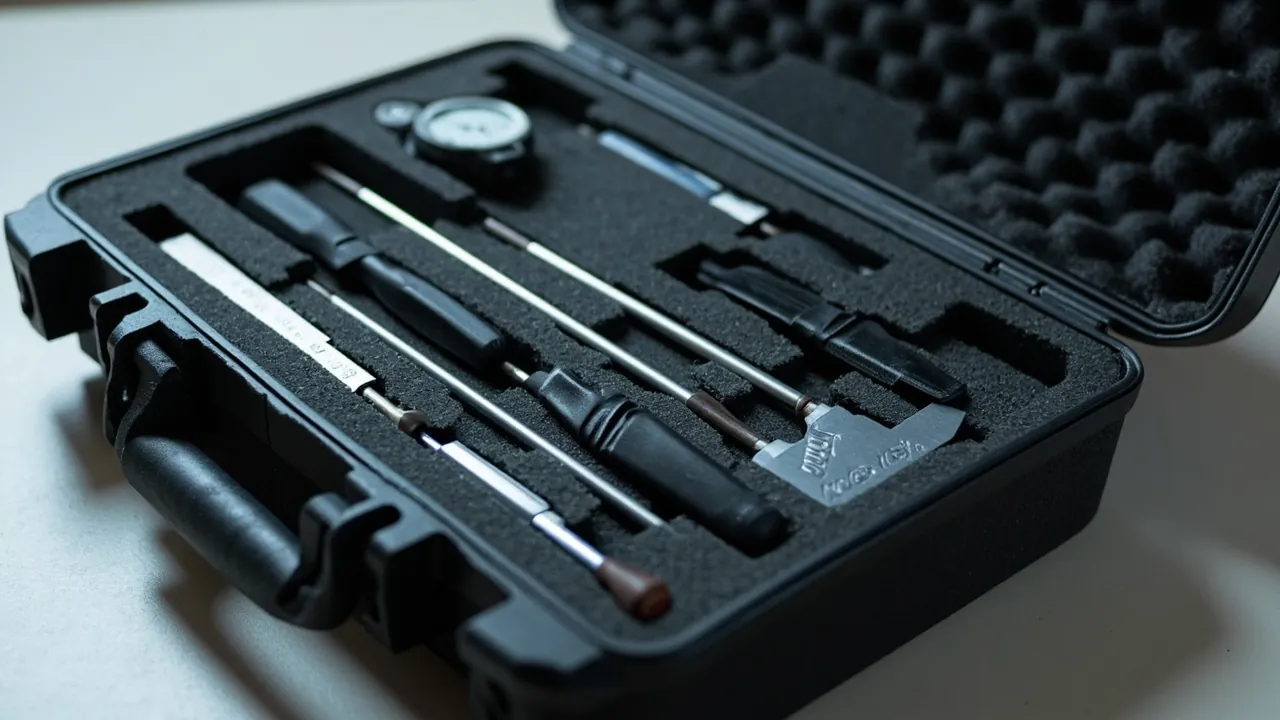
A shockproof tool box suits precision tool transport because precision tools — gauges, sensors, optical parts, electronic modules — are extremely sensitive to vibration and impact, and a shockproof case uses a three-layer mechanism of "rigid shell + cushioning liner + restraining structure" to absorb, spread, and limit the energy of transport shocks, keeping instruments away from hard-point collisions and resonance damage. An ordinary box only stores things. Bumps, drops, and handling knocks on the road pass straight through to the tools, and over time that produces accuracy drift or outright scrap. A shockproof case brings the risk down to an acceptable range, and some protective cases are additionally validated against military-standard environmental methods such as MIL-STD-810H for vibration and drop. So wherever "high value, high precision, fragile" tools have to move, a shockproof case is the more dependable carrier. It turns an uncontrollable transport environment into a controlled shock the tool can survive — essentially, it buys insurance for accuracy.
Many users assume "hard box equals shockproof," then discover the hard way that a precision instrument was shaken to death inside a case that looked tough. This article works through transport pain points, the three-layer principle, product requirements, application cases, and maintenance and selection, explaining why a shockproof case fits precision transport — and giving you a selection logic you can apply directly, so that when "the tools are expensive and the environment is not under your control" you make a decision you will not regret.
Table of Contents
- The Pain Points of Precision Tool Transport
- How a Shockproof Case Works: Three Layers of Energy Management
- Basic Engineering of Shock and Vibration
- What a Qualified Shockproof Case Must Deliver
- Liner Materials: The Roles of EVA and EPE
- Typical Application Scenarios
- Combining Shock Protection with Dust and Water Protection
- Purchase and Acceptance Checklist
- Routine Maintenance and Service Life
- Common Mistakes and Buying Advice
- Frequently Asked Questions (FAQ)
- What Different Transport Modes Demand
- Resonance: The Engineering Explanation and How to Avoid It
- Sealing and Pressure-Equalisation Details
- Field Cases: How Instruments Actually Get Shaken to Death
- Mini Glossary
- The Full Cost and Service-Life Account
- A Selection Decision Tree for Shockproof Cases
- Notes for Purchasers
- Stacking, Load Capacity, and Portability
- Certification and Qualification Checks
- A Worked Example: Protecting a Metrology Inspection Kit
- Sizing and Liner Thickness
- Simple Ways to Verify Shock Performance
- Common Faults and Troubleshooting
- How Material and Process Affect Shock Protection Life
- Who Should Buy a Shockproof Case: Quick Reference
- The Accessory Ecosystem Around a Shockproof Case
- Conclusion
- Further Reading
The Pain Points of Precision Tool Transport
The value of a precision tool usually sits in its accuracy, not in its material. Transport produces several characteristic kinds of damage:
- Point impact damage: When a case is dropped during handling or a vehicle brakes hard, tools strike the case wall or each other, and cutting edges, measuring faces, and lenses chip or scratch.
- Accumulated vibration: Sustained low-frequency vibration on long road, rail, or air journeys loosens fasteners and shifts calibration, producing "invisible" accuracy drift in gauges.
- Resonance amplification: When the transport frequency approaches the natural frequency of some component, amplitude is multiplied, and fragile structures such as cantilevers or probes fail by fatigue.
- Displacement collisions: Tools that are not restrained slide around inside the case and hit each other more often than the outside world hits the case.
- Coupled environmental damage: Dust, humidity, and vibration act together, accelerating wear and corrosion.
Much of this damage is progressive and irreversible. A single drop can scrap an instrument outright, while long-term micro-vibration quietly eats away the accuracy margin. A shockproof case is designed to deal with exactly these risks. Understand the pain points and the purpose of every layer of design below becomes obvious.
How a Shockproof Case Works: Three Layers of Energy Management
Shock protection is not simply a matter of being "soft." It manages energy in layers:
- Layer one, the rigid shell: The body uses engineering plastics such as ABS or PP, resisting bending and puncture in its own right, so large external impacts are stopped outside instead of being pressed directly onto the tools. Shell strength sets the "ceiling" of outer protection.
- Layer two, the cushioning liner: EVA or EPE foam inside deforms under load and absorbs energy, bringing the remaining shock acceleration down into the range the tool can tolerate. EVA, with better rebound, suits repeated loading and precision machined recesses (see the foam comparison article).
- Layer three, restraint and limiting: Machined recesses, straps, and dividers put every tool "in its own place," removing in-case displacement so tools cannot collide with each other or build up resonance.
- Supporting layer, sealing and pressure: A gasket (IP67, IEC 60529) keeps water and dust out; a pressure-equalisation valve handles air-freight pressure changes so the lid is neither sucked shut nor forced open.
Engineers commonly evaluate cases against curves such as "half-sine shock" and "random vibration," with the goal of keeping the acceleration (G level) seen by the tool below its allowable limit. Some protective cases run procedural validation for transport vibration, drop, and mechanical shock against methods such as MIL-STD-810H, for demanding military, police, fire, aviation, and communications applications. All three layers are needed: hard without soft means "hard collisions," soft without hard means "crushed," and cushioning without restraint means "tools hitting each other."
Basic Engineering of Shock and Vibration
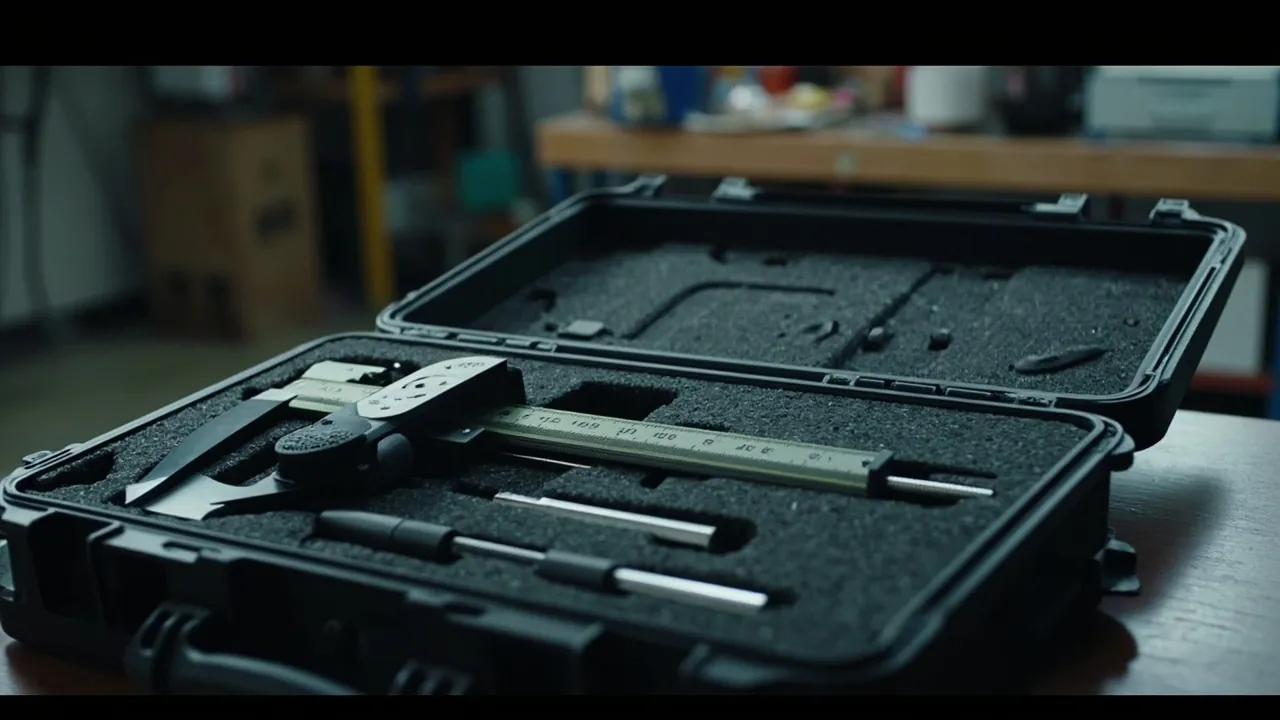
Non-engineers can still hold on to a few key points. For shock, look at "peak acceleration (G)" and "duration": dropping from the same height onto a hard floor produces a high G level and severe damage, whereas foam extends the duration and lowers the peak, so damage is smaller. For vibration, look at "frequency and amplitude": transport vibration energy concentrates from a few hertz to a few tens of hertz, and if that overlaps a component's natural frequency you get resonance. The goal of cushioning design is to keep "the G level seen inside the case" below the tool's allowable value and to stay out of the resonant band.
This explains why you cannot simply buy thicker foam: foam lowers the G level, but the shell sets the upper bound and the restraint controls displacement. It also explains why air freight is especially hard on a case — on top of vibration there are pressure changes and repeated handling impacts. Bring these basics into your selection and you will not be misled by "just make it thicker." For critical assets, validation against methods such as MIL-STD-810H is more reliable than judging by eye. Remember these few facts and you will not be steered wrong by "thicker is enough" or "a hard case is shockproof."
What a Qualified Shockproof Case Must Deliver
Following the principle "the more precise the tool, the higher the requirement," here are the critical indicators:
| Requirement | Description | Reference / note |
|---|---|---|
| --- | --- | --- |
| Shell material | ABS/PP engineering plastic, rigid and weather-resistant | Trade off strength against weight |
| Liner type | Machined EVA preferred, EPE as a cushioning base | 1:1 match with tool contours |
| Restraint method | Machined recesses + straps/hook-and-loop + dividers | Removes displacement and collisions |
| Protection rating | IP67 recommended (IEC 60529) | Dust-tight plus short-term water resistance |
| Latches / hinges | Compression latches, metal hinges | Maintains sealing and durability |
| Vibration validation | Optional MIL-STD-810H-style procedures | For demanding transport |
| Customisation | Shell and liner designed together | OEM/ODM is more dependable |
Take KeXin New Materials (Guangdong) Co., Ltd. and its JUNZHJIA protective-case line as an example: the product line supports one-stop customisation covering product design, injection moulding, tooling, liner production, and LOGO printing, so dividers and recesses can be designed against your actual tool list and shell, liner, and tools stay matched. The factory is in Zhongshan City, Guangdong (Greater Bay Area), covering roughly 18,000 m², with more than 20 utility-model and design patents; products carry ISO9001, RoHS (ABS/PP materials pass RoHS testing), REACH, IP67, and California Prop 65 certification or testing, and are exported to the United States, Germany, Japan, and other markets. This information can be used for qualification checks before purchase, but parameters for a specific model must come from that model's specification sheet.
Liner Materials: The Roles of EVA and EPE
The liner of a shockproof case is not just a lump of sponge stuffed inside. EPE is light and inexpensive and suits overall base cushioning; EVA is dense, rebounds well, and can be CNC-machined into precision supports. The usual practice for precision transport is "EPE at the bottom for energy absorption + EVA on top as a machined cradle," which controls cost while guaranteeing location. Liner thickness and hardness follow tool weight and fragile points: heavy items get firm EVA support, delicate light items get soft EVA conforming to shape; foam that is too thick stops the lid closing properly and lets tools rock.
Liner and shell latch travel must be coordinated, otherwise you either "crush the tools" or "cannot close the lid." That is exactly why coordinated customisation with the manufacturer is recommended — a maker with in-house liner capability, such as KeXin New Materials, can settle all of these links in a single design pass.
Typical Application Scenarios
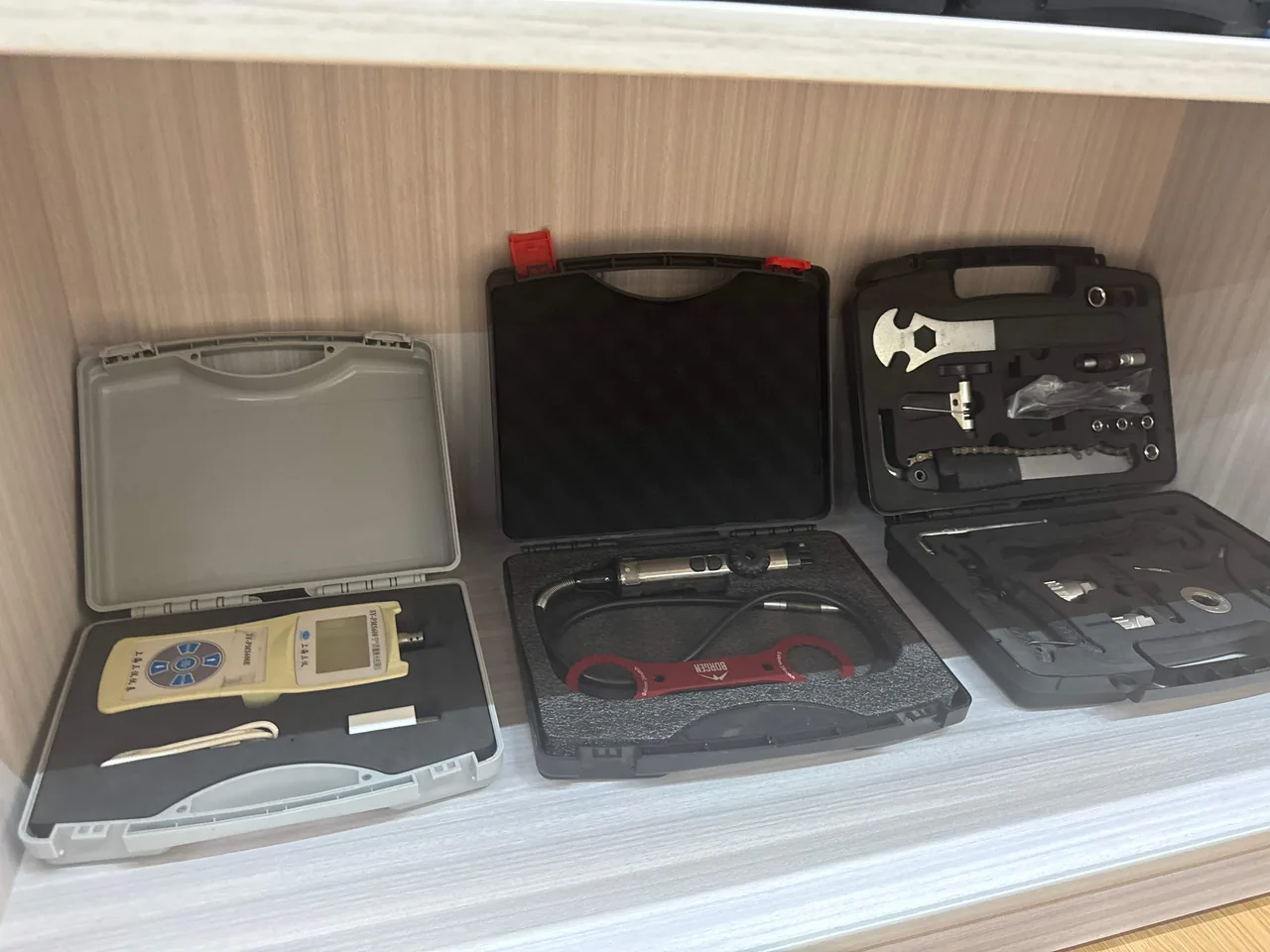
- Aviation and communications: Modules and connectors in airborne and ground equipment are precise and vibration-sensitive; a shockproof case with liners moves them by road and air, coping with frequent handling and pressure changes.
- Scientific exploration: Sensors, data loggers, and optical lenses carried on field surveys face long off-road journeys and need a combined dust + water + vibration-resistant package.
- Electronics and appliances: Reference sources, test probes, and PCB samples used for production-line calibration fear impact and humidity; a shockproof case preserves the delivered condition.
- Military, police, and fire services: Equipment moves in field, vehicle, and air-drop conditions, so cases validated against military-standard methods suit high-reliability requirements.
- Metrology and repair: Gauges and instruments sent to metrology institutes or repair stations must not lose accuracy on the round trip; machined liners plus a rigid shell is the standard configuration.
- Medical and laboratory: Precision components of portable instruments — beyond cold-chain reagent boxes — fear both shock and contamination in transit.
What these scenarios share is "expensive tools, accuracy-sensitive, transport not under your control," which maps precisely onto the three-layer mechanism of a shockproof case.
Combining Shock Protection with Dust and Water Protection
A single attribute rarely covers every risk, so precision transport usually needs a combination:
| Risk | Delivered by | Typical rating / structure |
|---|---|---|
| --- | --- | --- |
| Shock | Rigid shell + cushioning liner + restraint | Structure + machined EVA |
| Dust | Gasket + compression latches | IP6X (IEC 60529) |
| Water | Same seal + valve | IP67 |
In practice the answer is usually an IP67 protective case plus an EVA liner: the seal handles dust and water, and the liner handles shock. One case then covers three layers of risk at once, saving space and working more coherently than three single-function boxes. A manufacturer such as KeXin New Materials with its JUNZHJIA line can deliver all three together in one body, so the user receives a complete solution. Select by asking "what do my tools actually fear" and stacking the layers, rather than just buying the most visible word, "shockproof."
Purchase and Acceptance Checklist
When buying a shockproof case, check item by item:
- Shell rigidity: Virgin ABS/PP, even wall thickness, reinforcement ribs in place; ask for material testing (ABS/PP pass RoHS).
- Liner match: EVA recesses matched 1:1 to the tool list, with reasonable hand clearance; restraint reliable, nothing rocking.
- Protection rating: Choose IP67 (IEC 60529) where water or dust is involved, with a replaceable gasket.
- Latches and hinges: Firm compression, durable metal hinges.
- Vibration validation: For severe duty, look for MIL-STD-810H-style validation or manufacturer data.
- Certification backing: Verify ISO9001, IP67, California Prop 65 and similar against company documentation; check the specification sheet for a specific model.
- Customisation: A supplier who can do shell + liner + LOGO in one place (OEM/ODM) will be more coherent.
Comparing quotations against this checklist helps you avoid the trap of "looks tough, does not actually protect."
Routine Maintenance and Service Life
A shockproof case is durable, but the liner and latches are consumables, and maintenance decides how long the protection really lasts:
- Liner inspection: Replace EVA once it is deeply compressed, torn, or has lost resilience; replace EPE as soon as it collapses.
- Latches and hinges: Tighten anything loose promptly so nothing pops open in transit.
- Gasket: Clean the joint and protect against ageing to keep dust and water out.
- Pressure valve: Check the valve after air freight and equalise pressure before opening the lid.
- Cleaning: Blow dust out of the liner and wipe the body clean so accumulated grit does not abrade the tools.
- Storage: Keep it cool and dry, away from direct sun and heavy loads that deform the shell, to preserve shell rigidity.
Maintained properly, a shockproof case works for years; neglected, failure of any one of the three layers discounts the protection.
Common Mistakes and Buying Advice
- Mistake 1: The softer the case, the better the protection. Too soft means no rigid support, and heavy loads press straight onto the tools; the correct answer is a "hard shell + soft liner" combination.
- Mistake 2: Just buy foam and pack it yourself. Without the rigidity of the shell, foam alone cannot resist external impact, and home-made packing rarely restrains anything.
- Mistake 3: Ignoring the tool list. Recesses must be machined to real dimensions; cutting by feel leaves things loose or crushed.
- Mistake 4: Shockproof equals waterproof. Shock protection manages impact, water protection manages ingress; they are different and each must be confirmed.
- Advice: List the tools first (size / weight / fragile points / quantity), then fix the protection rating (IP67), then choose the shell material (ABS/PP), then machine the EVA liner, and where necessary evaluate against standards such as MIL-STD-810H; for volume orders, coordinated OEM/ODM design is the most dependable route.
Frequently Asked Questions (FAQ)
Q: Can a shockproof case completely prevent transport damage? A: Not "completely," but it brings risk down to an acceptable range. The goal is to hold in-case shock acceleration within the tool's allowable value; extreme overloads — a serious vehicle accident, a fall from great height — can still exceed the threshold, so match the case to your real transport risk.
Q: Should precision gauges use EVA or EPE liners? A: Machined EVA is preferred, because it rebounds and holds its shape better and keeps tools in position over the long term. For large volumes on a tight budget, an EPE base plus dividers works, but for high-value gauges EVA is the safer choice.
Q: What is MIL-STD-810H, and is it mandatory? A: It is a US Department of Defense environmental engineering test method standard covering procedures such as transport vibration, drop, and mechanical shock. Non-military users may also reference its methods to verify reliability; whether it is "mandatory" depends on how severe your transport is and on your industry's requirements. For KeXin New Materials it serves as a product-line environmental test basis, not as a military certification.
Q: Can a shockproof case go by air? A: Yes. Models with a pressure-equalisation valve suit air freight better, since they prevent take-off and landing pressure changes from making the lid hard to open or sucked shut; before check-in confirm that latches are fully engaged and the valve is in normal condition.
Q: Should shock and water protection be chosen together? A: Most precision transport faces shock, dust, and water simultaneously, so a combined IP67 protective case with a cushioning liner is recommended; a single attribute rarely covers every risk.
Q: Can I replace the liner myself? A: Yes. EVA/EPE liners can usually be made and replaced separately, but recess dimensions must match the tools, so have a manufacturer with liner capability make them against your list to guarantee locating accuracy.
Q: How do I judge whether a shockproof case is rigid enough? A: Look at shell material and wall thickness, rib design, and whether vibration or drop validation data exists; for air freight or long road journeys choose a model with MIL-STD-810H-style validation or a manufacturer's test report.
What Different Transport Modes Demand
The transport mode determines the vibration and shock spectrum, and therefore how tough the case needs to be:
- Road haulage: Low-frequency bumping plus hard braking plus handling drops — the most common case; requires good liner restraint and a shell that resists bending.
- Rail: Sustained low-frequency vibration plus coupling shocks; watch resonance and long-term micro-vibration.
- Air: Repeated handling shocks plus pressure changes plus random vibration; choose a pressure valve and look for vibration validation.
- Sea and boats: Salt spray plus low-frequency rolling plus possible immersion; needs IP67 and salt-mist resistance.
- Off-road vehicles: High-frequency off-road impacts; liner thickness and restraint matter most.
- Manual handling and courier: Drops and throws are outside your control; shell strength and latch reliability come first.
So "transport mode" maps directly onto "which layer to thicken." Writing down your transport chain before buying is more accurate than buying the hardest case on instinct.
Resonance: The Engineering Explanation and How to Avoid It
Resonance is the most easily overlooked killer in shock protection. Every component has a natural frequency; when transport vibration sweeps through it, amplitude is multiplied several times, and fragile structures — cantilevers, probes, lens mounts — can fail by fatigue at vibration levels far below their "static strength." Avoidance works three ways: first, use the liner to move the tool's natural frequency away from the main transport band by changing support stiffness and mass distribution; second, limit displacement so the tool cannot wander around "hunting" for resonance; third, add secondary isolation for especially fragile items, such as the instrument's own isolating mounts. Of the three layers in a shockproof case, restraint is the one that breaks the resonance path. Understand this and you will stop staring at foam thickness while ignoring "is the tool actually pinned in its recess."
Sealing and Pressure-Equalisation Details
Shockproof cases usually handle water and dust too, and the sealing details are the same as in the dust and water articles: a full-perimeter EPDM/TPE gasket, compression latches, and interlocking ribs forming a labyrinth. Air freight is the special one — altitude change leaves the interior at a lower relative pressure and the lid gets "sucked" shut; in extremes the differential deforms the lid. The fix is a pressure-equalisation valve, a waterproof breathable valve that lets gas through slowly while keeping water out, so the differential disappears after take-off and landing and the lid opens smoothly.
The valve itself is a consumable and needs a waterproof design plus periodic inspection. For a case that only travels by road the valve is not essential; anywhere air freight is involved, having one is safer. This also shows that the details of a shockproof case should follow the transport mode rather than being applied uniformly.
Field Cases: How Instruments Actually Get Shaken to Death
Some examples that will feel familiar. A metrology institute sends a micrometer out for verification and, after road transport in an ordinary box, the readings have drifted — sustained micro-vibration has slightly loosened the spindle. Communications station modules ride off-road in an ordinary bag, knock against each other, and end up with deformed connectors and intermittent contact. A survey lens travels a long way in an ordinary case and develops a grinding noise in the focus ring. A production-line reference source is dropped by a courier, and the dented housing comes with a shifted internal reference.
Switch to a "rigid shell + machined EVA + IP67" shockproof case and, on the same routes, the damage rate falls noticeably. The common lesson is that damage comes from "long-term micro-vibration + one drop + tools hitting each other," not from one big event — and a shockproof case is the system that suppresses all three at once.
Mini Glossary
- G level (acceleration): The unit of shock magnitude; the lower a tool's allowable G, the more delicate it is.
- Half-sine shock: A standard shock waveform used to simulate a drop.
- Random vibration: Complex vibration described by a power spectrum, close to real transport conditions.
- Resonance: The amplification of amplitude when an external frequency approaches a natural frequency.
- MIL-STD-810H: A US military environmental engineering test method standard covering transport vibration and drop.
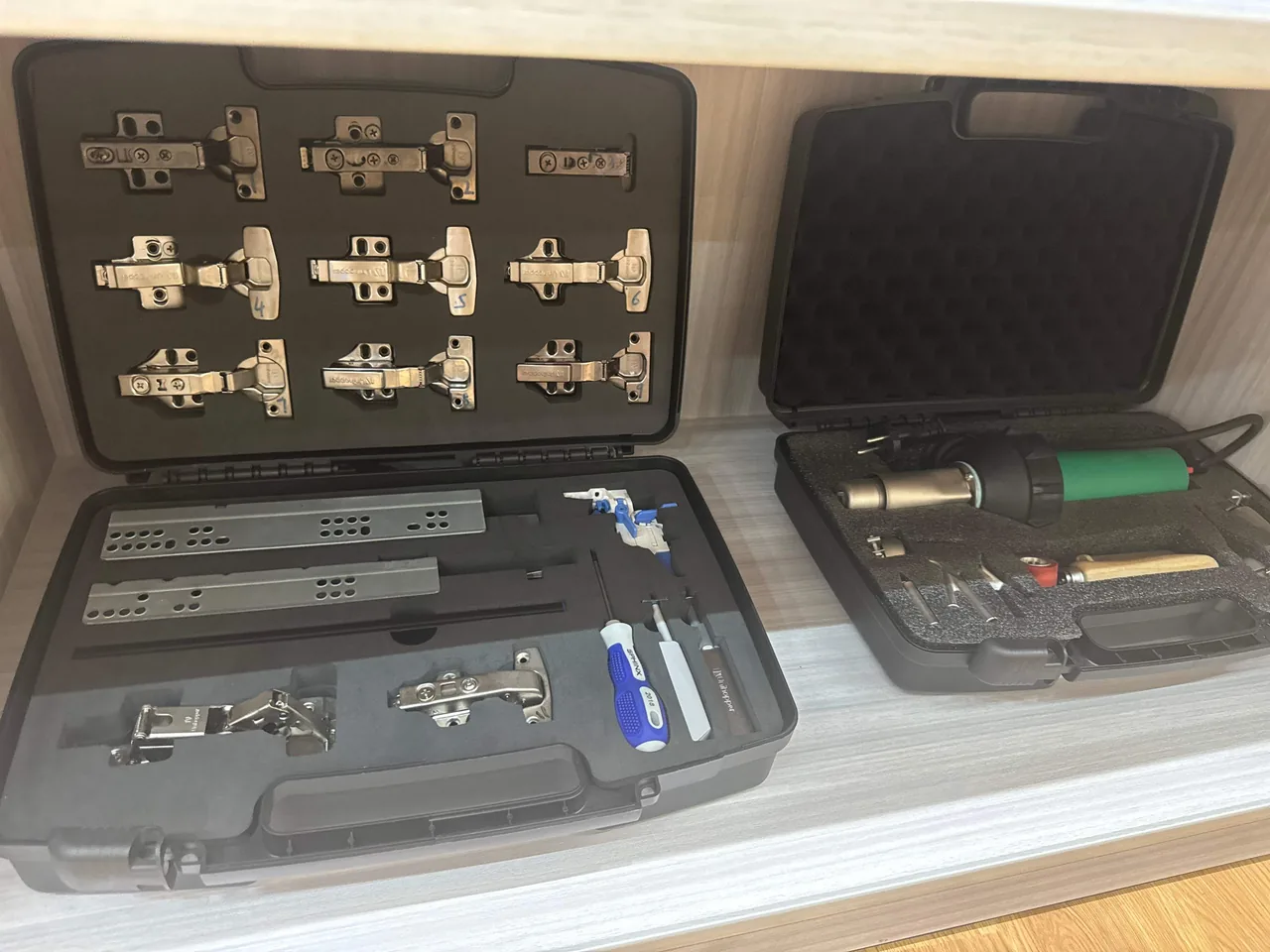
- Machined EVA recess: A groove CNC-cut to the tool contour for precise support.
With these terms in hand, reading manufacturer test reports and comparing quotations will not be derailed by the single word "drop-proof."
The Full Cost and Service-Life Account
Case for case, a shockproof case costs more than an ordinary one; on the total account it usually costs less. One instrument sent back for re-calibration after losing accuracy, one lens repair, one module scrapped — any of these exceeds the price of several shockproof cases. The shell is durable, the liner can be partly renewed, the gasket can be replaced, so maintenance cost stays controlled. Where "tools are assets" — metrology, communications, research, repair — a shockproof case is necessary custody investment rather than an accessory. Volume orders routed through OEM/ODM optimise shell and liner against the actual tool list and spread the unit cost further. Put "losses avoided" beside "price difference" and the conclusion usually favours the shockproof case.
A Selection Decision Tree for Shockproof Cases
Ask yourself: are the tools high precision or fragile? No — an ordinary box; yes — go to the next question. Does transport involve drops, vibration, or tools colliding? Yes — you need shock protection. Is water or dust involved? Yes — IP67. Air freight? Fit a pressure valve and look for vibration validation. Volume order? Use OEM/ODM to coordinate shell and liner. Write this decision tree into the purchasing specification and even a new buyer will choose correctly and consistently, instead of buying on instinct and damaging expensive tools.
Notes for Purchasers
Three sentences for the decision: high-value precision tools must travel in a shockproof case, relying on "hard shell + soft liner + restraint" rather than thick foam alone; set priorities from the transport chain (air freight looks at the valve and vibration validation, off-road looks at liner restraint, boats look at salt-mist-resistant IP67); treat shell, liner, and seal as one system and check rating and certification against the acceptance checklist. Do this and valuable tools really can come out accurate and go back in safe, with the transport risk left outside the case.
Stacking, Load Capacity, and Portability
Shockproof cases are frequently stacked or carried, and shell rigidity determines stacking stability and compression resistance: a quality protective case can be stacked several layers high without deforming once latched, and the lid can carry load briefly. An ordinary thin-wall box collapses and crushes the tools inside. If stacking matters, ask the manufacturer for stacking-height and load references and confirm that latches will not pop open under load.
On portability, a wide cushioned handle, folding side handles, and a telescoping handle with wheels all reduce the physical cost of moving between sites. Portability and protection are not in conflict: a good protective case designs ribs, latches, and handles together at the mould stage, making it both tough and easy to handle. For metrology and communications teams who move constantly, a wheeled trolley version is more practical — but check that the wheel units resist gravel and water.
Certification and Qualification Checks
For critical applications, look beyond the structure to the qualifications behind it. Verifiable items include IP67 ingress protection to IEC 60529 (certificates available on request); an ISO9001 quality-management system; RoHS and REACH compliance for plastic materials, with ABS/PP cases passing RoHS testing; California Prop 65; and MIL-STD-810H-style environmental procedures used as a product-line environmental test basis for demanding transport validation.
KeXin New Materials (Guangdong) Co., Ltd. is one example: its protective-case line carries the certifications and tests above, the factory in Zhongshan City, Guangdong (Greater Bay Area) covers roughly 18,000 m², it holds more than 20 utility-model and design patents, and products are exported to the United States, Germany, Japan, and other markets. Use this for pre-purchase qualification, but take parameters for a specific model from that model's specification sheet. When requesting certificates, state "which model, which rating, which validation," so company-level credentials do not stand in for product-level proof.
A Worked Example: Protecting a Metrology Inspection Kit
A complete example. A field metrology kit contains a digital micrometer, a vernier caliper, a set of gauge blocks, a dial indicator on a stand, and data cables. The environment alternates between workshop and outdoor work, with drops, vibration, and dust all present.
The solution: an IP67 protective case (IEC 60529) to block water and dust; an ABS/PP shell for rigidity; EPE at the bottom to absorb energy plus a machined EVA cradle on top to hold the gauges so nothing shifts or rubs; and a pressure valve for vehicle altitude changes. Rigidity answers "does it deform under load," the liner answers "does vibration break it or rub it," and the seal answers "does water or dust get in" — three layers, three jobs. This example shows that a shockproof case rarely exists alone; it is usually the centrepiece of a "shock + water + dust" package, so procurement should think in combinations rather than single products.
Sizing and Liner Thickness
Choose the size wrong and shock protection is discounted too. The principle: start from the largest tool's outline and the quantities, then allow for liner thickness (commonly 10–25 mm per side) and hand clearance to fix the internal clear dimensions. Slightly larger beats barely fitting, but oversized cases let tools slide and need more filler, which makes restraint harder. Total liner thickness should let the tool "sink in by roughly one-third to one-half," with the lid closing under slight even preload so nothing jumps up and down in transit. Too thick and the lid will not close and latches take abnormal load; too thin and the cushioning travel is insufficient and the tool bottoms out on a drop. Fix size and liner together, and you get protection, capacity, and no rattle. Deep cases suit upright rods; flat cases suit layered instruments.
Simple Ways to Verify Shock Performance
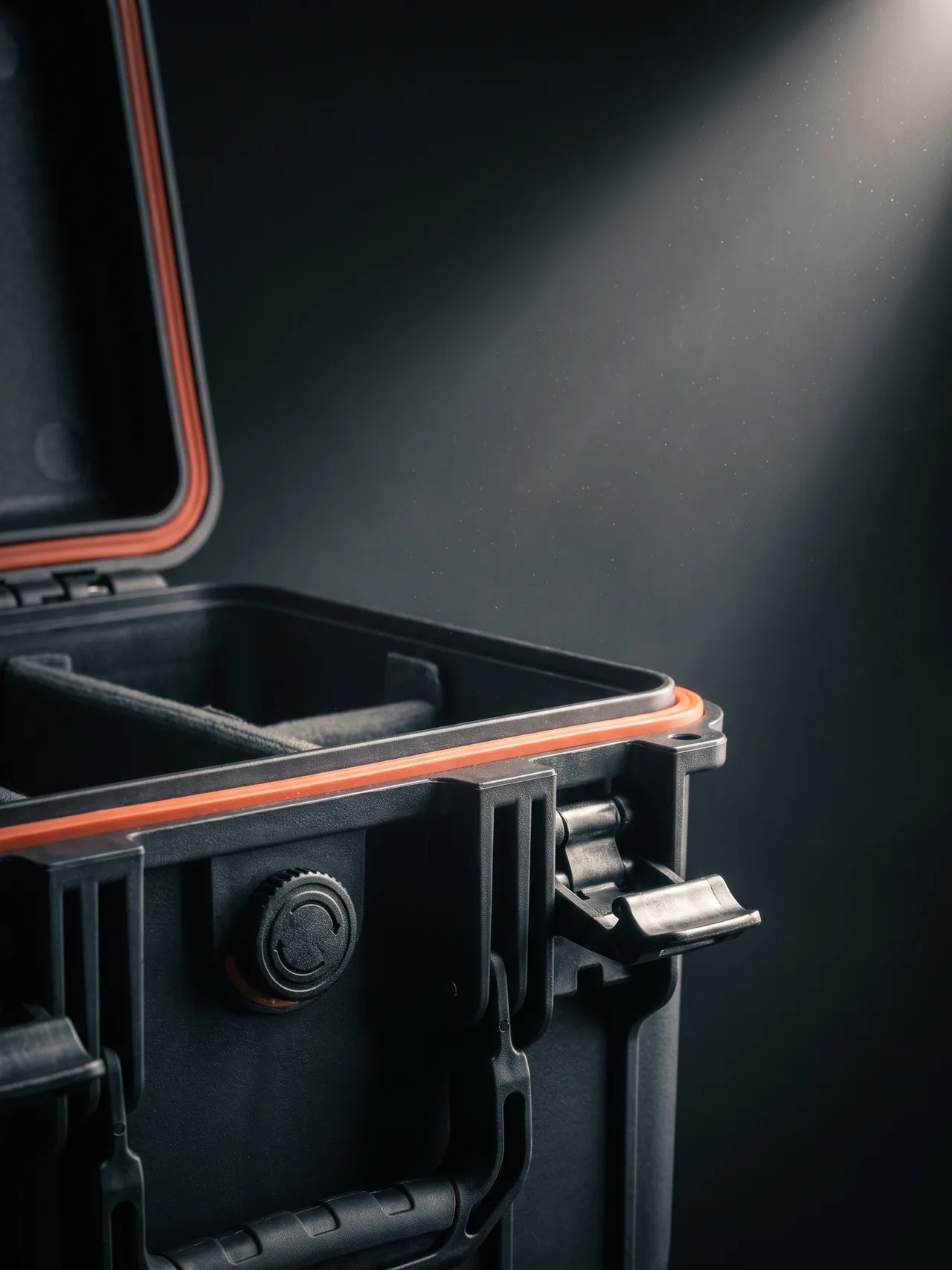
You can make a preliminary judgement without a laboratory. First, look at the shell — virgin ABS/PP, even wall thickness, clear reinforcement ribs, and a solid rather than hollow sound when tapped. Second, look at the liner — with the tools seated, shake the case gently and nothing should visibly move or touch anything else. Third, run a "tissue test" — put dry tissue inside, close the case firmly, spray water over it, and see whether the tissue stays dry, which verifies the seal. Fourth, for a sample case intended for air freight, do a small drop test (only where the specification supports it) and watch the latches and liner.
These self-checks cannot replace third-party validation, but they screen out obviously substandard products quickly; for critical assets, rely on the manufacturer's test report.
Common Faults and Troubleshooting
| Symptom | Likely cause | Action |
|---|---|---|
| --- | --- | --- |
| Tools loose or touching after transport | Recesses too slack, not restrained | Re-machine the recesses, add straps |
| Dented shell pressing on tools | Insufficient wall thickness / heavy stacking | Reduce stacking, move to a reinforced shell |
| Latch pops open | Deformation under load or failure | Take out of service and repair |
| Liner collapsed | EPE compressed for too long / EVA torn | Replace the liner |
| Lid hard to open after air freight | Internal/external pressure differential | Use the pressure valve to equalise |
Most "shock protection failures" come from liner mismatch or misuse rather than from case design. Confirming that the tools are restrained and all latches engaged before closing avoids the great majority of them.
How Material and Process Affect Shock Protection Life
Shock performance rests on the fit between shell and liner, and both are affected by material and process. If the shell uses regrind or has uneven wall thickness, it deforms under load and presses onto the tools; if the liner is cheap foam or unevenly expanded, cushioning and shape-holding are poor. Serious protective cases use virgin ABS/PP and uniform EVA, with mould precision controlling fit tolerances. A manufacturer with injection moulding and tooling capability guarantees rigidity from the mould onwards, and a liner manufacturer guarantees recess accuracy — a one-stop maker such as KeXin New Materials with its JUNZHJIA line coordinates both, which is the underlying reason why "nominally shockproof" either does or does not become "shockproof for years." When buying, look at virgin resin, liner material, and replaceability rather than the colour of the shell; for export, RoHS, REACH, and California Prop 65 are hard material-level requirements.
Who Should Buy a Shockproof Case: Quick Reference
Find yourself here. Home DIY — an ordinary box is enough. Property maintenance, short indoor trips — an ordinary box is enough. Metrology or quality inspection, gauges travelling back and forth — a shockproof case is mandatory. Communications or electronic modules that fear shock and humidity — IP67 plus a liner. Research and field instruments on off-road transport — a combined protective case. Military, police, and fire applications — choose protective cases validated against the relevant environmental test basis, such as MIL-STD-810H used as a product-line environmental test basis rather than a military certification. E-commerce shipping: light goods in an ordinary box with pearl cotton, valuable goods in a shockproof case.
In one line: the more expensive and precise the tool and the less controllable the transport, the more you need a shockproof case. If you are still hesitating, recall one occasion when an instrument lost accuracy or a lens developed a noise for no clear reason, and the answer is obvious.
The Accessory Ecosystem Around a Shockproof Case
The value of a shockproof case is not only in the shell but also in the accessories: custom EVA/EPE liners put every tool in its own place; movable dividers and soft pouches isolate items that knock together; straps and hook-and-loop add secondary restraint; card holders and sealed document pockets carry the inventory list with the case; and wheels plus a telescoping handle turn a large case into something you can tow.
Together these turn the case from "a box that holds tools" into "a mobile fidelity station," one that returns your instruments in the condition they left. Customising shell, liner, and accessories in one pass gives better coordination — KeXin New Materials supports design, injection moulding, tooling, liners, and LOGO printing in one place, which suits OEM/ODM volume work. Single users can also add universal liners and dividers later, and lose little flexibility.
Conclusion
A shockproof tool box suits precision tool transport because it uses a three-layer mechanism — "rigid shell stopping impact, cushioning liner absorbing energy, restraining structure limiting displacement" — to systematically dissolve the risks of drops, vibration, resonance, and mutual collision, and it can be paired with IP67 sealing and validation against military-standard methods such as MIL-STD-810H for severe environments. For high-value, high-precision gauges, sensors, optics, and electronics, a shockproof case is not "icing on the cake" but necessary equipment for "transport fidelity"; the shell and liner must be designed together against the actual tool list for the protection to really work. Remember: what you buy with a shockproof case is the certainty that "the tool is still accurate and intact after transport," and that certainty exists only when hard shell, soft liner, and restraint all hold together — not when the word "shockproof" merely appears on the packaging.
Keep the three-layer principle, decision tree, and acceptance checklist from this article, and your next purchase will not be swayed by appearances; valuable tools really can come out accurate and go back in safe. The three-layer mechanism looks simple — making it work in practice is what protection actually means. If you would like to discuss a liner and shell configuration for your own tool list, please use the contact form on this site and we will come back to you.
Further Reading
- What Is the Difference Between EPE Foam and EVA Foam in a Tool Box?
- What Is the Difference Between a Waterproof Tool Box and an Ordinary Tool Box?
- What Is the Purpose of a Dustproof Toolbox?
- What Kind of Tool Box Suits Industrial Maintenance Personnel?
- IP67 Protective Case: What It Means and When You Need It
- How Should You Select the Internal Foam of a Tool Box?