

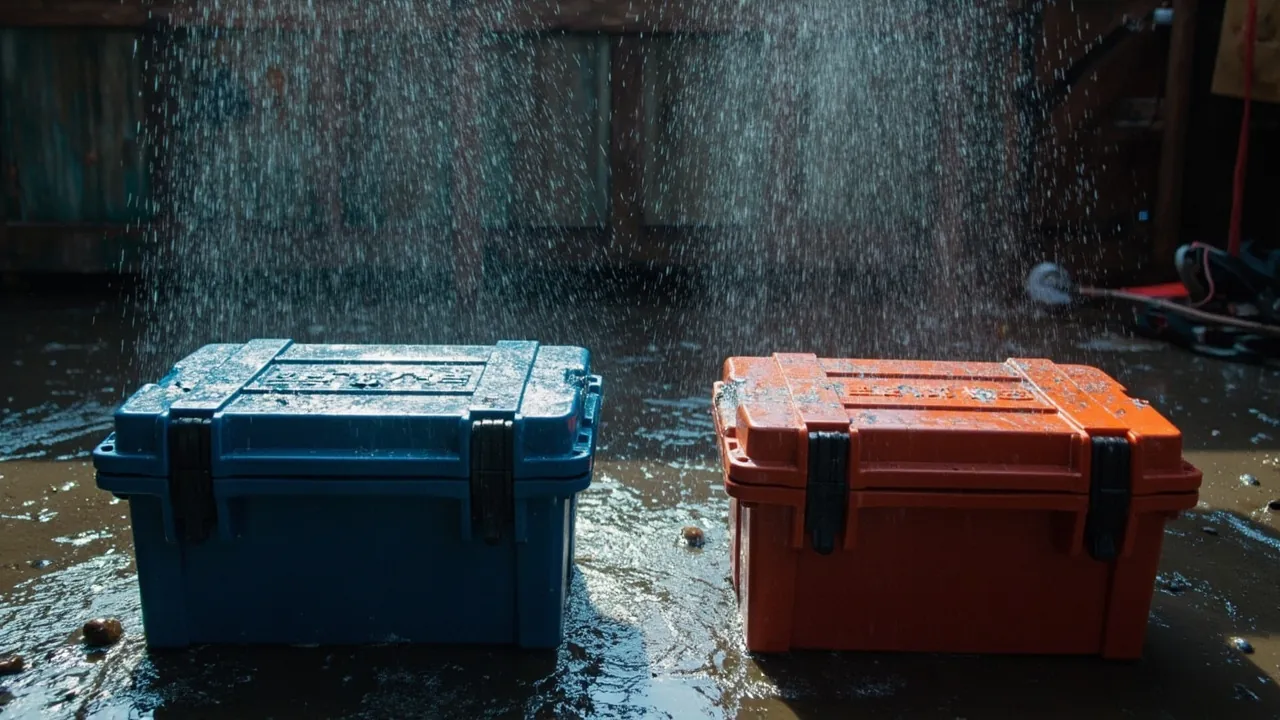
The most fundamental difference between a waterproof toolbox and a standard one is whether the box has a sealed waterproof structure. A standard toolbox is usually an open-top or half-latching design: the lid is held closed by a simple catch, and a gap remains between lid and body, so it only resists dust and light splashing. A waterproof toolbox carries an elastic gasket (sealing strip) around the lid perimeter, working with compression latches and interlocking sealing ribs on the body to form a near-airtight interior, with a protection rating marked on it (commonly IP67, per IEC 60529). So: a standard toolbox solves storage and carrying; a waterproof toolbox additionally solves protection in wet, dusty, and humid environments. Whether you need waterproofing depends on whether your tools are harmed by water (humidity counts) and whether the working environment involves rain or standing water. Put differently, the test is not "would I like waterproofing?" but "can my tools and my environment tolerate water getting in?" — once the answer is no, the lid gap on a standard box becomes a liability.
In real-world use, "waterproof" is not a marketing word; it is a verifiable structure and a verifiable rating. Many users mistake "having a lid" for "being waterproof," and only discover the difference when tools rust and seize after a rainy carry, a vehicle wading through water, or storage in a boat cabin. This article works through structure, principle, rating, scenario, selection, and maintenance so you can decide on real environmental risk rather than on looks.
Table of Contents
- What Are Standard and Waterproof Toolboxes?
- Core Difference Comparison Table
- How Waterproofing Works: Gasket, Latches, and Sealing Ribs
- IP Rating Comparison (IEC 60529)
- How IP Ratings Are Actually Tested
- Shell Materials: ABS vs PP
- How to Choose by Scenario
- Purchase Acceptance Checklist
- Routine Maintenance and Gasket Care
- Common Misconceptions and Buying Advice
- Frequently Asked Questions (FAQ)
- Real Transport Risk Scenarios
- How to Check Whether Your Case Is Really Waterproof
- Cost Difference and Total Cost of Ownership
- Stacking, Load Capacity, and Shell Rigidity
- The Accessory Ecosystem of a Waterproof Case
- Common Faults and Troubleshooting
- A Selection Decision Tree
- Mini Glossary
- Typical Waterproof-Case Applications by Industry
- How Material and Process Affect Waterproof Service Life
- Certifications and Credential Verification
- Three Reminders for Buyers
- Storage and Long-Term Keeping
- One Complete Outdoor Inspection Kit
- Size and Volume Selection
- Handles and Portable Design
- Who Should Buy: A Quick Reference
- Conclusion and Further Reading
What Are Standard and Waterproof Toolboxes?
A standard toolbox is the usual household or workshop box: a plastic or metal body, a top-opening lid, a handle, and a simple latch. Its design goal is to gather tools in one place and make them easy to carry. Once the lid is closed, gravity and the catch hold it in position, and there is usually a gap of a few millimetres at the lid seam, so rainwater can run in and dust can get in. The standard box wins on price, weight, and opening speed, and suits dry indoor use and short carrying.
A waterproof toolbox belongs to the protective-case family. Structurally it adds three elements: a gasket around the lid perimeter, latches able to apply compression force, and interlocking sealing ribs between body and lid. Once the lid is closed and the latches tightened, the gasket is compressed and deformed to fill the gap, forming a watertight barrier. Such cases usually carry an IP rating — the JUNZHJIA protective-case line from KeXin New Materials, for example, offers IP67 capability, meaning it can be temporarily immersed without water entering. The waterproof case gives up a little weight and cost in exchange for reliable blocking of water, dust, and humidity.
The two are not substitutes; they cover different levels of risk. In a dry everyday environment a standard box is enough; where rain, wading, or precision storage is involved, a waterproof case is required. Whether a lid gap exists is the quickest first-glance way to tell them apart.
Core Difference Comparison Table
| Comparison dimension | Standard toolbox | Waterproof toolbox |
|---|---|---|
| --- | --- | --- |
| Lid sealing | No gasket; held by a catch | Elastic gasket plus compression latches |
| Protection rating | Usually no IP marking | Commonly IP65/IP67 (IEC 60529) |
| Rain protection | Light splashing only | Heavy rain and temporary immersion |
| Dust protection | Moderate; dust enters through gaps | Can reach dust-tight (IP6X) |
| Moisture protection | Weak | Strong; interior is near-airtight |
| Compression/impact | Depends on material, usually average | Mostly ABS/PP engineering plastic, stronger structure |
| Weight | Lighter | Slightly heavier (gasket and ribs add weight) |
| Price | Low | Medium to high |
| Typical use | Household, workshop, short carrying | Outdoor, wading, military/police/fire, instrument transport |
| Interior lining | Mostly fixed dividers | Usually EVA/EPE customisable lining |
The conclusion is straightforward: in a dry environment with tools that do not mind water, a standard box is enough; where rain, wading, or humidity and dust sensitivity are involved, choose a waterproof case.
How Waterproofing Works: Gasket, Latches, and Sealing Ribs
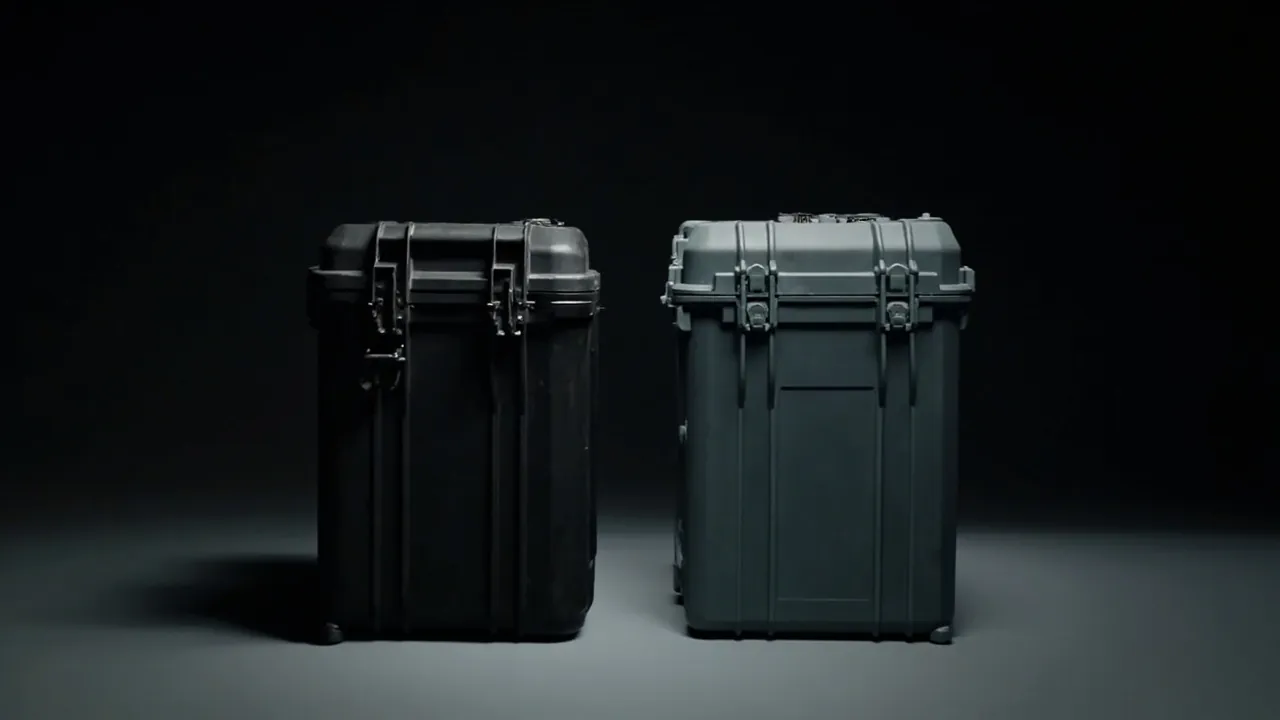
Waterproofing comes down to "blocking the gap and keeping it compressed," achieved by three parts working together:
- Gasket: Usually EPDM rubber or a TPE elastomer, laid in a full loop around the inside of the lid. When the lid closes, it is compressed, and the elastomer fills the microscopic unevenness between lid and body, cutting off the path for water and dust. Poor-quality rubber hardens and cracks and loses the seal.
- Compression latches: The catch on a standard box merely hooks on. Waterproof-box latches pull the lid toward the body as they close, keeping the gasket under compression. Insufficient compression is a common cause of leaks, which is why waterproof cases have tighter and more numerous latches.
- Sealing ribs / labyrinth structure: The mating faces of lid and body often use interlocking ribs and grooves, so even if a little water runs along the surface to the seam it is stopped at several stages — adding redundancy to the seal.
- Pressure relief valve (some models): Higher-end cases include a pressure equalisation valve, balancing internal and external pressure during air transport or altitude changes so the lid is not sucked shut or forced open, while still maintaining waterproofing.
One caveat: waterproofing depends on the gasket being intact and the latches being correctly closed. Gasket ageing, deformation, or trapped foreign objects all cause failure — one link in overall protection, not something you can judge from the claimed rating alone. Many "water got in" incidents trace back to a grain of sand caught on the gasket before closing, not to the case being inherently non-waterproof. Usage habits matter just as much.
IP Rating Comparison (IEC 60529)
The IP rating is defined by IEC 60529 in the form IPXX, where the first digit indicates dust protection and the second water protection.
| IP code | Dust meaning | Water meaning |
|---|---|---|
| --- | --- | --- |
| IP54 | Dust-protected (limited ingress) | Splashing water from any direction |
| IP55 | Dust-protected (limited ingress) | Low-pressure water jets |
| IP65 | Dust-tight (IP6X) | Low-pressure water jets |
| IP66 | Dust-tight | Powerful water jets |
| IP67 | Dust-tight | Temporary immersion (1 m, 30 minutes) |
| IP68 | Dust-tight | Continuous immersion (conditions set by the manufacturer) |
For toolboxes, IP67 is the practical sweet spot: it covers the great majority of outdoor wading, drop-in-water, and heavy-rain situations. When buying, look for the rating the manufacturer states and the standard it is based on (IEC 60529), not a vague "waterproof." IP68 suits prolonged or deeper immersion, but the conditions are defined by the manufacturer, so read the specific depth and duration.
How IP Ratings Are Actually Tested
Understanding how testing works is what lets you judge whether a claimed rating is credible. In IEC 60529, water tests use directed jets or immersion: IPX7 immerses the sample 1 metre below the surface for 30 minutes, passing if no harmful ingress occurs; IPX6 uses powerful jets from multiple directions. Dust testing places the sample in a sealed chamber with talcum powder or quartz dust for a set period, then checks how much dust got inside.
For large items such as toolboxes, manufacturers may use equivalent methods or verify against the case structure specifically. For critical applications, ask to see the test report or certificate. Note that a claimed IP67 normally refers to the capability with the case properly closed and the gasket intact; latches left undone or a damaged gasket are not covered.
Shell Materials: ABS vs PP
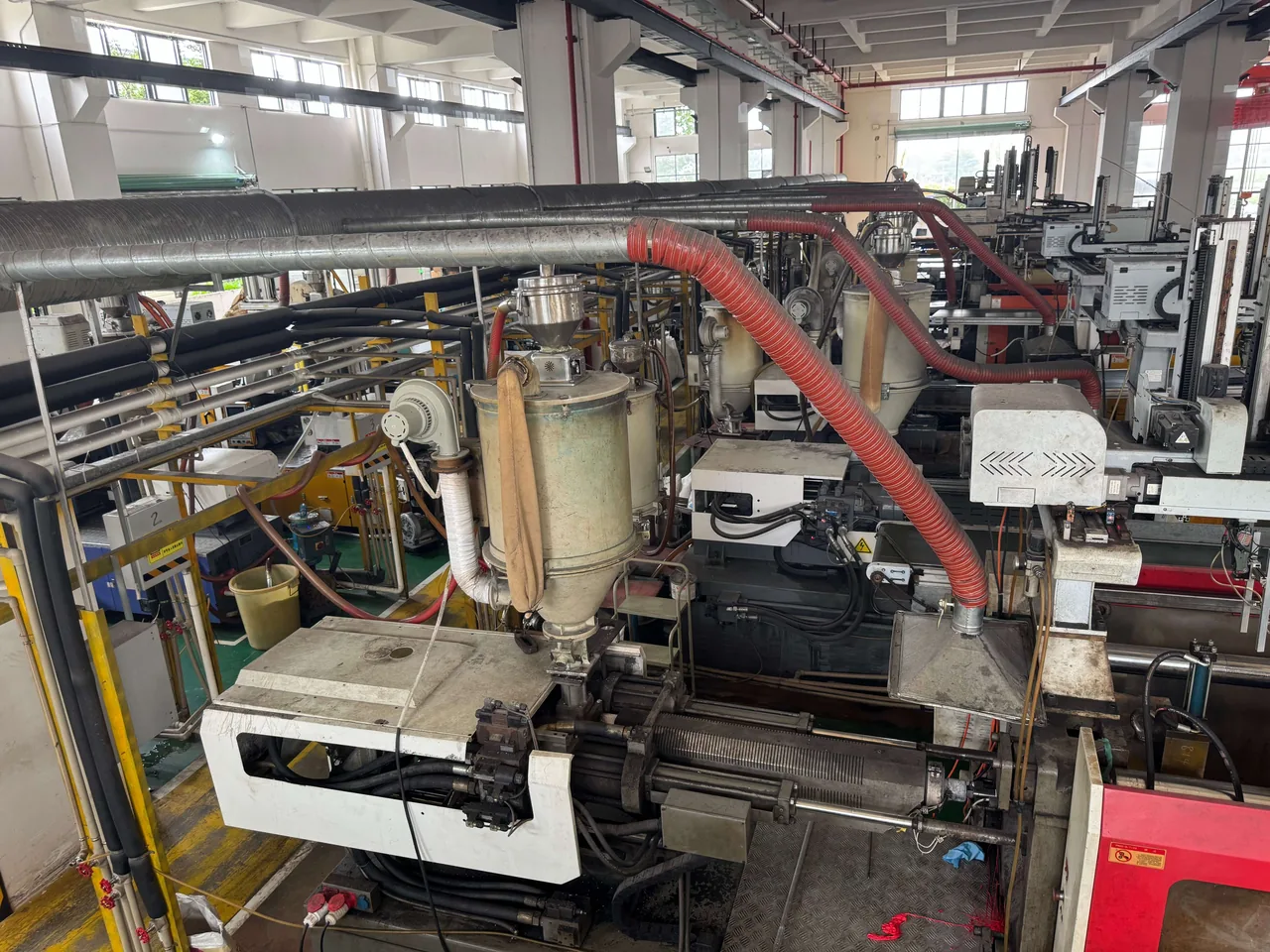
Waterproof case shells are mostly engineering plastics, commonly ABS and PP:
- ABS: High rigidity, hard surface, good impact resistance, crisp appearance — well suited to high-strength protective cases. Its weaknesses are slightly lower low-temperature toughness and possible yellowing under prolonged UV exposure.
- PP (polypropylene): Good toughness, fatigue resistance, excellent chemical resistance, lower density and therefore lighter. It performs better than ABS at low temperature, but has somewhat lower rigidity and a surface that scratches easily.
Real protective cases often use ABS/PP blends or modified formulations to balance the two. The ABS/PP materials used by KeXin New Materials have passed RoHS testing, which serves as an environmental-compliance reference. Choose a shell by weighing strength against weight against weather resistance — and evaluate it together with the gasket and latches, not in isolation. For a fuller material comparison, see PP vs ABS Toolboxes: What Is the Difference?.
How to Choose by Scenario
- Home / garage: A standard plastic box is fine and offers the best value.
- Outdoor work, construction sites: Choose IP65 or above to handle rain and muddy water.
- Boats / wading / coastal use: Start at IP67, and pay attention to salt-spray corrosion resistance of latches and hinges.
- Instruments, electronics, optics: Combine a waterproof case with an EVA lining and, where needed, anti-static treatment.
- Military/police/fire, scientific exploration: Protective cases verified against environmental test methods such as MIL-STD-810H for vibration and drop are the safer choice; the JUNZHJIA line from KeXin New Materials is designed along these lines.
- E-commerce and warehousing: For short-term splash protection a standard box with pearl cotton is adequate; for long-term moisture-proof storage, choose a waterproof case.
When the environment combines water, dust, and vibration at once, consider rating, lining, and shell rigidity together — no single attribute covers all the risks.
Purchase Acceptance Checklist
When buying waterproof cases, check the following point by point:
- IP rating and standard: A clear statement of IP67 (IEC 60529) and the test conditions; reject vague "waterproof" claims.
- Gasket material: EPDM/TPE weather resistance, and confirm the gasket can be replaced separately.
- Latch count and compression force: Multiple latches, firm compression, and an even lid gap after closing.
- Shell material: ABS/PP or a blend, and ask for RoHS or other test documentation where relevant.
- Lining compatibility: Whether EVA/EPE custom linings are supported (OEM/ODM).
- Certification backing: ISO9001, IP67, California Prop 65, and others, verified against company documentation; the individual model is governed by its specification sheet.
- Accessories: Whether a pressure equalisation valve and a name-card holder are included, and whether the valve itself is waterproof.
Using this checklist as the basis for comparing quotations is what keeps you out of the "marked IP67 but not actually waterproof" trap.
Routine Maintenance and Gasket Care
A waterproof case is durable, but the gasket is a consumable item, and maintenance determines service life.
- Before every closing: Check the lid edge and the gasket, and remove sand and threads, so no trapped object creates a local leak path.
- Wipe periodically: Clean the gasket with a soft cloth; a thin film of silicone grease can slow rubber ageing (follow the manufacturer's advice).
- Avoid direct sun: Prolonged high temperature accelerates hardening and cracking of the rubber.
- After immersion: Rinse off salt and mud with clean water and dry before storage, so latches do not corrode.
- Watch for deformation: If the gasket has lost its elasticity or has cracks, replace it with the same specification promptly.
- Check the latches: Loose hinges and latches reduce compression; tighten them in time.
With proper maintenance, a waterproof case lasts for years. Neglected, even an IP67 case will fail because of a small crack.
Common Misconceptions and Buying Advice
- Misconception 1: "It says waterproof, so it is waterproof." Look at the IP rating and the standard; a generic claim may only mean splash resistance. Insist on IP67 plus IEC 60529.
- Misconception 2: "A waterproof case can be used as a diving case." IP67 is 1 metre for 30 minutes; prolonged deep immersion requires IP68 with clearly defined depth conditions.
- Misconception 3: "The gasket needs no maintenance." Wipe it regularly, keep foreign objects out of it, and guard against ageing — rubber parts have a service life.
- Misconception 4: "Heavier means more waterproof." Weight comes from structure and material; waterproofing comes from sealing design. Heavy does not equal reliable.
- Advice: First define the environmental risk (water / dust / shock / load), then choose the IP rating and material (ABS/PP), and finally specify the lining. For volume requirements, use OEM/ODM to customise shell and lining together.
Frequently Asked Questions (FAQ)
Q: Can a standard toolbox be converted into a waterproof one? A: Not reliably. Sticking on your own strip cannot guarantee the latch compression or the rib fit needed to reach a stated IP rating. Where protection matters, buy a waterproof case with a proper sealing structure.
Q: Can an IP67 case be checked in as airline baggage? A: Yes, but pressure changes can make the lid hard to open; models with a pressure equalisation valve suit air transport better. Before checking in, confirm the latches are fully closed and the valve is in its normal state.
Q: Can the gasket of a waterproof case be replaced? A: On most reputable protective cases the gasket is replaceable on its own. Use the same specification from the manufacturer to guarantee compression and weather resistance.
Q: Is a waterproof toolbox much heavier? A: The gasket, reinforcement ribs, and thicker shell make it somewhat heavier than a standard box of the same size, but engineering plastics (ABS/PP) are strong in their own right, so the added weight is limited — an acceptable price for the protection.
Q: Do I still need desiccant if I put electronic tools in a waterproof case? A: If the case is sealed and ambient humidity is not high, usually not. For prolonged high humidity, or if the case is opened frequently in damp conditions, add food-grade desiccant and replace it periodically for extra moisture protection.
Q: How do I choose between IP67 and IP68? A: IP67 is enough for the great majority of outdoor and transport scenarios. Only consider IP68 for long or deeper immersion (outboard storage, underwater work), and read the depth and duration conditions the manufacturer defines.
Q: Does a waterproof case keep out dust completely? A: An IP67 marking includes dust-tight (IP6X), meaning no dust ingress under the standard's requirements. In practice it still depends on the gasket being intact and the latches being properly closed.
Q: Does a waterproof case also protect against shock? A: Not automatically. Waterproofing and shock absorption are two separate capabilities: the gasket blocks water and dust, while shock absorption comes from the lining and shell structure. For delicate instruments, specify a custom EVA or EPE lining as well.
Real Transport Risk Scenarios
Putting an abstract rating into concrete situations makes it easier to judge whether you need a waterproof case. Common failure stories: a pickup bed caught in a downpour, water entering through the lid seam of a standard box, and wrenches rusting overnight; a box in a boat cabin wetted by spray, with measuring tools drifting out of calibration; muddy site water splashing in and sand jamming a ratchet; light rain during an outdoor service call, shorting a circuit module. These losses often far exceed the price difference. Conversely, if tools only move short distances around a dry workshop, a standard box is adequate and waterproofing just adds weight and cost. So the core question is: "How large is the water and dust risk for my tools and my environment?"
How to Check Whether Your Case Is Really Waterproof
You can make a preliminary judgement without a laboratory. First, look at the lid seam — after closing, is there still a visible gap around the perimeter? A waterproof case should be compressed by the gasket with no obvious gap. Second, look at the gasket — continuous all the way round, elastic, free of cracks? Third, run a "tissue test" — put dry tissue inside, close the case fully, spray it with water or briefly immerse it at shallow depth (only if the case is rated for it), then check whether the tissue stays dry. Fourth, check the latches — does the lid press in evenly with no rattle? This self-test cannot replace third-party IP testing, but it screens out obviously substandard products. For critical assets, still rely on the manufacturer's test report.
Cost Difference and Total Cost of Ownership
A waterproof case costs more per unit than a standard one, but from a total-cost-of-ownership view it is not necessarily more expensive. Water entering a standard box causes rusted tools, instruments going out of calibration, and electronic parts written off — a single incident often costs more than several waterproof cases. A waterproof case with a replaceable gasket and a customisable lining lasts for years when maintained. For professional repair, inspection, military/police, and research work — where "tools are productivity" — a waterproof case is closer to an insurance premium than to a markup. Put the per-case price difference next to the potential loss and the conclusion is usually clear.
Stacking, Load Capacity, and Shell Rigidity
Waterproof cases often need to be stacked in transit or used as a work surface. The shell's reinforcement ribs and corner design determine stacking stability: a good protective case can be stacked several layers deep without deforming when latched, and the lid can bear load briefly. Standard boxes, usually thin-walled, collapse when stacked and crush the tools inside. If stacking matters, look at the stacking height and load guidance the manufacturer provides, and confirm the latches will not pop open under pressure. Rigidity also affects waterproofing — if the shell deforms it pulls the gasket out of alignment, so "stiff enough" is a precondition for "waterproof enough."
The Accessory Ecosystem of a Waterproof Case
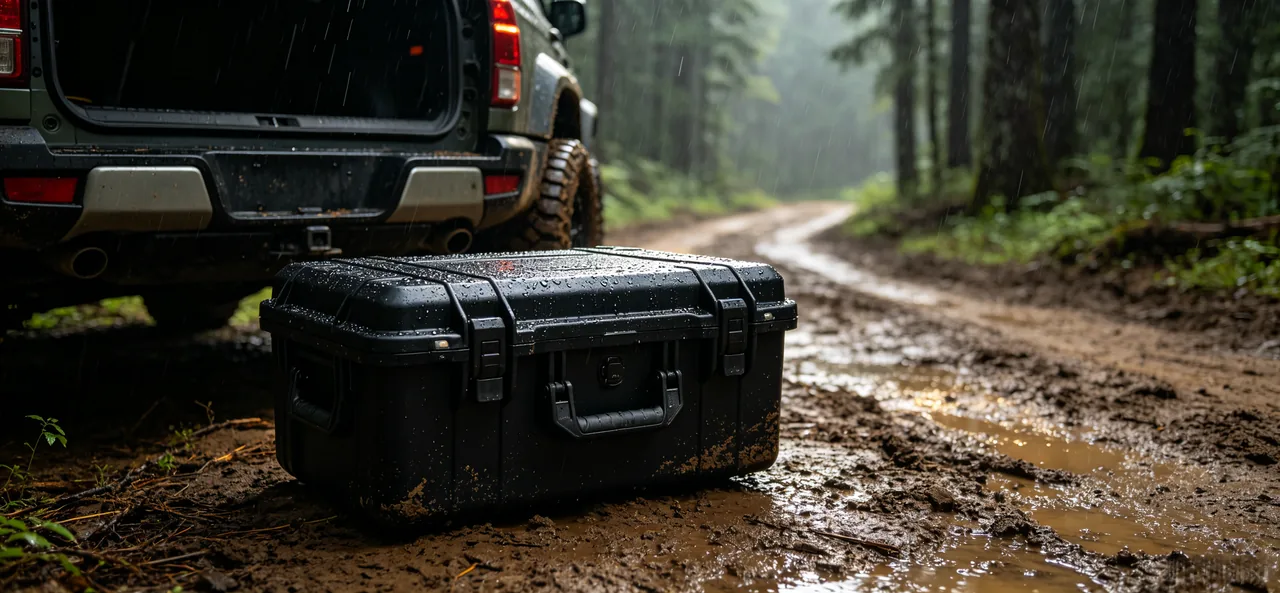
The value of a waterproof case lies not only in the shell but in its expandable accessories: custom EVA/EPE linings put every tool in its own place; removable dividers and mesh pockets add layered storage; a card holder and a sealed document pouch carry a contents list; wheels and a pull handle turn a large case into something you can tow. Together these upgrade a waterproof case from "a box that holds tools" into a mobile workstation. If you can specify shell, lining, and accessories in one order, the fit is better — JUNZHJIA from KeXin New Materials supports product design, injection moulding, moulds, linings, and LOGO printing in one place, which suits OEM/ODM volumes.
Common Faults and Troubleshooting
| Symptom | Likely cause | Action |
|---|---|---|
| --- | --- | --- |
| Water inside after immersion | Object trapped in gasket / ageing / latches not fully closed | Clean the seam, replace the gasket, re-latch |
| Lid hard to open (after air freight) | Internal/external pressure difference | Release pressure through the valve; do not lever it open |
| One side of the lid seam loose | Loose latch or deformed shell | Tighten the latch, inspect the shell |
| Gasket cracked | Ageing / sunlight / oil contamination | Replace with the same specification |
| Latch popping open | Deformation under load or latch failure | Take out of service for repair; avoid the lid opening in transit |
This table shows that most "waterproof failures" are not design problems with the case, but sealing maintenance and usage issues. Building the habit of checking before you close the lid avoids most faults.
A Selection Decision Tree
Ask yourself step by step. Do the tools mind water or humidity? No → standard box. Yes → next question. Is the case used outdoors, in water, on a boat, or in heavy rain? No → standard box or IP54. Yes → start at IP67. Does it contain delicate electronics or optics? Yes → IP67 plus EVA lining plus anti-static treatment if needed. Is the environment humid long-term? Add desiccant. Do you need stacking or air transport? Confirm rigidity, the pressure valve, and load ratings. Is it a volume purchase? Use OEM/ODM to optimise. Writing this tree into your purchasing specification lets even a newcomer choose correctly.
Mini Glossary
- IEC 60529: The international protection-rating standard that defines the IP code and its test methods.
- IP67: Dust-tight plus temporary immersion (1 metre, 30 minutes).
- Gasket: The elastic sealing element around the lid perimeter; compressed, it blocks water and dust.
- Compression latch: A fastener that pulls the lid toward the body when closed, maintaining gasket compression.
- Pressure equalisation valve: A waterproof valve that balances internal and external pressure and makes the case easier to open after air transport.
- EPDM/TPE: Elastomer materials commonly used for gaskets, with good weather resistance.
Mastering these terms means you will not be misled by the word "waterproof" when reading specification sheets and comparing quotations.
Typical Waterproof-Case Applications by Industry
Industries rely on waterproof cases to very different degrees. Households and light repair mostly manage with a standard box, but in the following situations a waterproof case is close to standard equipment: equipment storage on ships and yachts, where spray and salt spray are constant; firefighting and rescue field work in rain and mud; communications and power-line inspection, where equipment travels through all weather; scientific fieldwork between streams, deserts, and rainforests; photography and surveying, where lenses and sensors fear water and dust; and defence and security, where equipment is shipped to military-standard verification. What these share is "the environment is uncontrollable and the tools must not get wet," which is why industry users treat the waterproof case as a baseline configuration rather than an upgrade.
How Material and Process Affect Waterproof Service Life
Waterproof capability ultimately rests on the fit between gasket and shell, and both are affected by material and process. If the shell uses regrind or has uneven wall thickness, it deforms under load and pulls the seal out of alignment; if the gasket uses cheap PVC or reclaimed rubber, it hardens and cracks quickly. Reputable protective cases generally use virgin ABS/PP and weather-resistant EPDM/TPE, and control lid-gap uniformity through mould accuracy. A manufacturer with in-house injection and mould capability, such as KeXin New Materials, can guarantee the fit tolerance at the mould stage — the underlying reason why "rated waterproof" does or does not become "waterproof for years." Whether the shell is virgin material and whether the gasket is replaceable matters far more than the colour of the shell. For export products, RoHS, REACH, and Prop 65 compliance is also a hard requirement at the material level.
Certifications and Credential Verification
For critical scenarios, look beyond the claim to the credentials. Items commonly open to verification include: IP67 capability (per IEC 60529, backed by company documentation, certificates available on request); the ISO9001 quality management system; RoHS/REACH for plastic materials (for example ABS/PP that has passed RoHS testing); California Prop 65 restrictions on hazardous substances; and the use of environmental test methods such as MIL-STD-810H for demanding transport verification. KeXin New Materials (Guangdong) Co., Ltd. is one example: its protective-case line holds several of the above credentials, its factory in Zhongshan, Guangdong (Greater Bay Area) covers about 18,000 m², it holds 20+ utility-model and design patents, and its products are exported to the US, Germany, Japan, and other markets. This information is useful for pre-purchase qualification checks, but the parameters of any individual model remain governed by its specification sheet. When requesting certificates, specify "which model, which rating."
Three Reminders for Buyers
Three sentences settle the decision: for dry indoor short-distance use, take a standard box; for rain, wading, and precision storage, take an IP67 waterproof case; and always verify the IP rating plus IEC 60529 plus gasket replaceability rather than judging on appearance. Treat shell, gasket, and lining as one integrated solution and confirm each item on the acceptance checklist. Do that, and your tools really will be protected in wet and dusty environments.
Storage and Long-Term Keeping
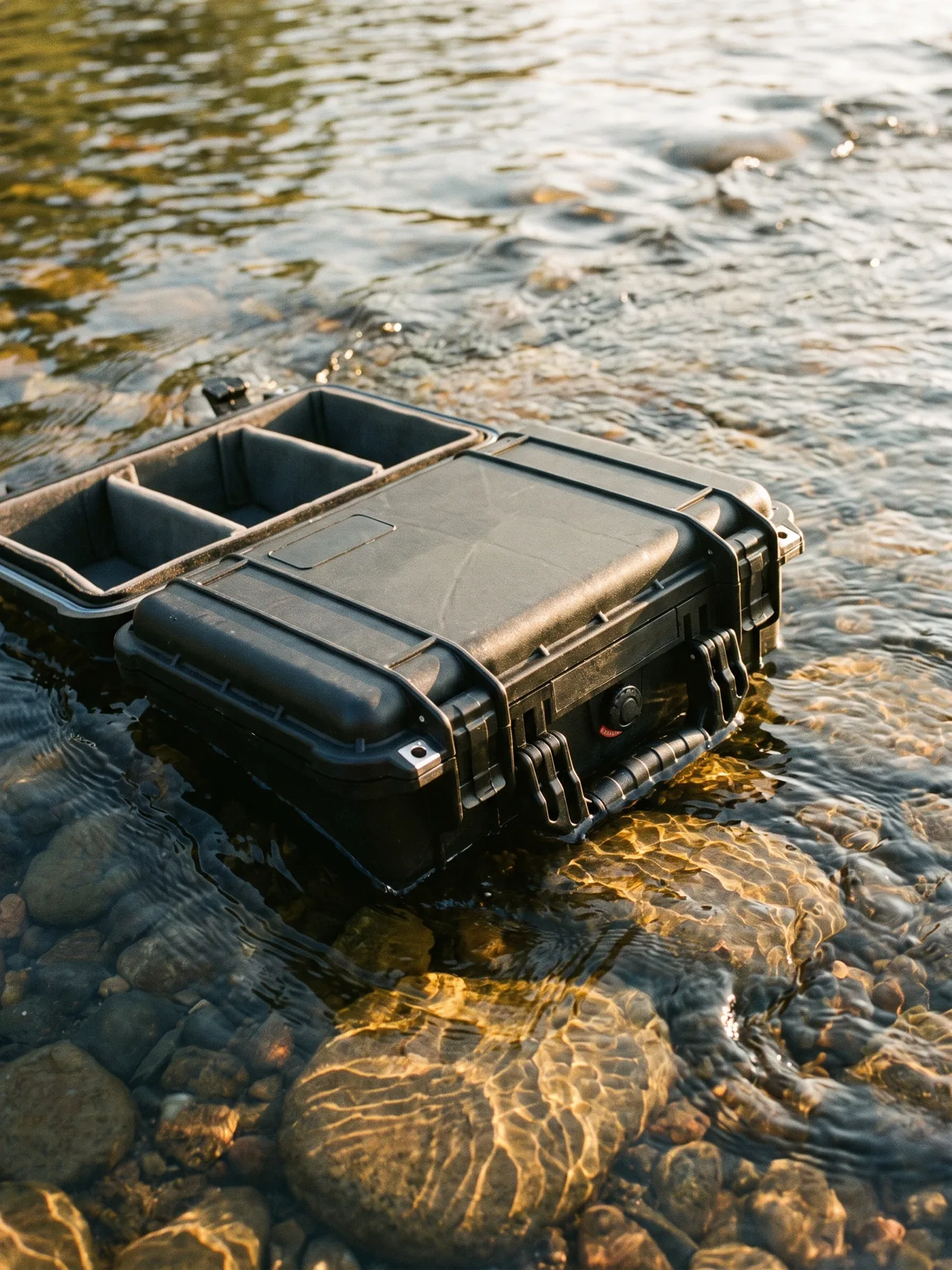
Even after buying an IP67 case, storage affects service life. Before long-term storage, dry the interior and clean the gasket, and leave the lid slightly open for ventilation so the strip is not compressed flat and sticking. Choose a cool, dry spot away from direct sunlight to slow rubber ageing, and do not stack higher than the manufacturer recommends. If precision parts are stored inside, put desiccant in the case and replace it periodically. Before taking the case out on a job, do one closing check: gasket free of debris, all latches closed, valve normal. Good storage habits can add years to the effective life of a waterproof case.
One Complete Outdoor Inspection Kit
Here is a full example. An outdoor power-inspection kit contains a multimeter, a clamp meter, an insulation tester, spare parts, and manuals. The environment brings wind and rain, vehicle vibration, and the occasional wading. The solution: an IP67 protective case (IEC 60529) handles water and dust; an ABS/PP shell provides rigidity; an EVA cut-out lining holds the instruments so they cannot shift; a pressure equalisation valve copes with altitude change; and desiccant handles high humidity. Shell, seal, lining, and accessories each cover one category of risk, and no single attribute has to carry the whole load. This also shows that a waterproof case is usually the centrepiece of a "waterproof + shockproof + dustproof" combination, and should be purchased as a combination rather than as a single product.
Size and Volume Selection
Choose the wrong size and even the best waterproofing is wasted. The principle: list the dimensions and quantity of your largest tools, allow for lining thickness (commonly 10–25 mm per side) and hand clearance, then fix the internal net dimensions. Slightly too large beats barely too small, but an oversized case lets tools slide and needs more filler. A waterproof case has slightly less net space than a standard box of the same external size, because of wall thickness and the gasket, so size on net dimensions. A deep case suits standing long items upright; a flat case suits layered instruments. For a large wheeled case, consider air-transport size and weight limits. If your tool set will change, a modular case with add-on dividers is more flexible.
Handles and Portable Design
Because a waterproof case has a thicker structure and often carries a heavier load, portability design matters more than on a standard box. Common options are a top handle (wide, thick, anti-slip, with a stated load rating), folding side handles for two-handed carrying of a large case, a telescopic handle with wheels, and external strap attachment points. When choosing, look at whether the handle is integrally reinforced into the shell — a weak connection breaks under heavy load, and the protection is wasted. On a wheeled case, also check whether the wheel assembly resists gravel and water. Portability and protection are not in conflict: a good protective case designs ribs, latches, and handle together at the mould stage. For crews who relocate frequently, a wheeled model noticeably reduces physical strain.
Who Should Buy: A Quick Reference
A quick way to find yourself: a DIY hobbyist working in the garage now and then, and property-maintenance staff doing short indoor trips, are both fine with a standard box; electricians and power-line inspectors who regularly meet wind and rain should choose IP67; boats, yachts, and coastal users need waterproofing and salt-spray resistance; photography and surveying need waterproofing plus a lining; research and military/police users choose protective cases verified to military-standard test methods; e-commerce shipping that needs short-term splash protection can use a standard box with pearl cotton. In one sentence: the more valuable the tools and the less controllable the environment, the more you should move to a waterproof case.
Conclusion
The difference between a waterproof and a standard toolbox is not in the name but in "whether there is a sealed waterproof structure plus a verifiable IP rating." A standard box covers basic storage; a waterproof case (IP67, per IEC 60529) additionally provides reliable protection in wet, dusty, and humid environments. Select on the real risk in your working environment, and treat the shell, gasket, and lining as one integrated solution. Verify rating, material, and certification against an acceptance checklist, and maintain the gasket in daily use, and the protection will genuinely last. What you buy with a waterproof case is peace of mind — but that peace of mind comes from structure, rating, and maintenance all holding true together, not from the word "waterproof" on the packaging.