

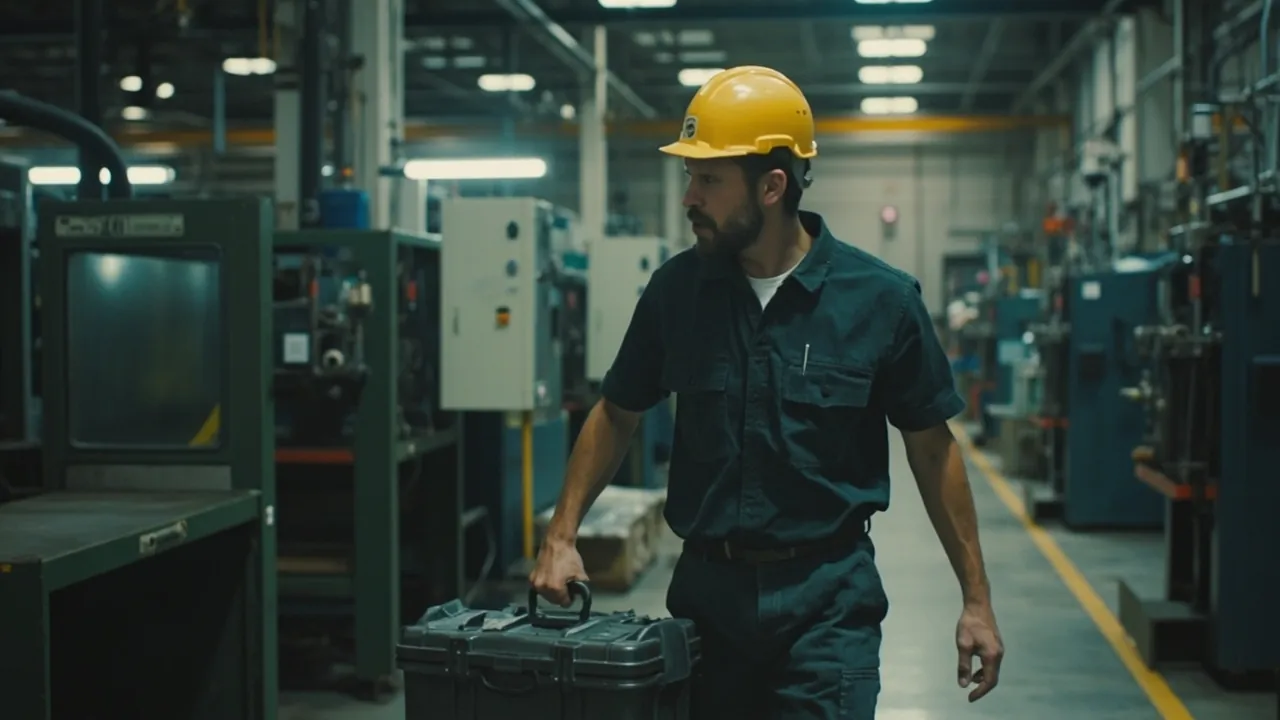
Short answer: a tool box that suits industrial maintenance personnel must meet four hard conditions: a modular liner for fast access and nothing going missing, enough load capacity and mobility by hand, shoulder, or wheels, an appropriate protection rating for dust and oil, with IP54 to IP67 where work is outdoors or damp, and compliance plus durability backed by ISO9001, RoHS, REACH, and IP67. Different trades — mechanical, electrical, instrumentation, automotive — weight liner and protection differently, but the shared goal is "less time looking for tools, fewer damaged tools, fewer trips back and forth." Put simply, what an industrial maintenance technician needs is not "a box that holds tools" but a working system that follows the workstation, keeps every tool in its place, and does not fail in a harsh environment. On total cost of ownership, a modular industrial box costs more per unit than a household box, yet because tools are lost and damaged less often, access is faster, and service life is longer, it works out cheaper over time.
The rest of this article runs through "pain points → solution → product requirements → selection by trade → a real configuration → common mistakes," helping a maintenance team leader or buyer move straight from need to a concrete box type.
Table of Contents
- The Real Pain Points Facing Industrial Maintenance Personnel
- What Kind of Tool Box Solves These Pain Points
- Product Requirement Checklist for Industrial Maintenance Tool Boxes
- Selection by Maintenance Trade
- A Maintenance Team's Tool Box Configuration Case
- Common Mistakes: The Traps Maintenance Staff Fall Into Most
- Frequently Asked Questions (FAQ)
- Conclusion and Buying Advice
- Further Reading
The Real Pain Points Facing Industrial Maintenance Personnel
To choose the right box, first be clear about what maintenance staff fight every day. Maintenance work is distinctive in that tools are both an extension of the means of production and a guarantee of safety and accuracy: any moment when "the tool is not at hand" or "the tool has gone damp and lost accuracy" slows the whole line directly.
Tools are many and varied, and finding them costs time
A mechanic's kit typically includes assorted wrenches, sockets, screwdrivers, calipers, a torch, and measuring instruments — thirty or forty items at least, over a hundred at most. Tip them all into one large cavity and every job starts with a search; open and close the box dozens of times a day and the wasted time adds up fast. Worse, searching means oily hands and divided attention, which raises the risk of error.
Hostile environments: dust, oil mist, and knocks
Workshops, production lines, pump rooms, and machine rooms generally have metal dust, lubricating-oil mist, uneven floors, and frequent knocks. An ordinary thin-wall box either lets dust in and rusts the tools, or is cracked by a forklift or a piece of equipment, and tools spilling out can create a safety hazard. Automotive and machining shops are the clearest examples: oil mist smears the labels, and metal dust works into latch gaps until they seize.
Precision instruments fear shock and humidity
Maintenance staff routinely carry multimeters, insulation testers, and calibration sensors. These fear drop impact and damp; an ordinary box is hard against hard and unsealed, so they are easily damaged in transit. A single calibrator can cost a great deal, and one drop can scrap it — before even counting the downtime that follows.
Movement between different workstations
Maintenance is not a desk job; you go to whatever has broken. From the machine shop to the line, from the ground floor to the top floor, from the plant to a customer site, the tools have to travel with the person, ideally in one trip, to cut return journeys. One round trip often takes ten-odd minutes, and a few of those a day is one or two hours of lost productivity.
Compliance and accounting requirements
Tool boxes bought by an enterprise often have to be entered in the accounts, exported, and survive an audit; without RoHS, REACH, or IP67 marking they can stall at acceptance or customs. For export orders the destination country may additionally require REACH, California Prop 65, and similar, so compliance has to be verified up front.
The knock-on risk to safety and compliance
A failing tool box is not only about "can I find the tool." A latch releasing on a bumpy ride scatters tools across the floor, where someone can trip or they can be drawn into machinery; a seal failing lets insulated tools take up moisture, and the risk rises sharply when working live. So the reliability of an industrial maintenance box is in essence a safety barrier, and it cannot be treated with the "make do" logic of a household box.
Maintenance boxes seen as an investment
Many teams treat tool boxes as low-value consumables and buy the cheapest. Do the arithmetic instead: a modular industrial box may cost several times a household box per unit, but it lasts years more, loses and damages fewer tools, and saves every person ten-odd minutes a day of searching. For a team of twelve, the working hours and tool losses saved in a year usually exceed the price difference. So do not compare sticker prices — compare cost per use.
Inventory the tools before choosing a box
The most important step before buying is to draw up a tool list: record every tool you hold by name, quantity, size, value, and frequency of use. That list does two jobs. First, it tells you how many liner pockets and parts boxes you need, so you do not buy a box that is too small. Second, it separates "frequent / precision / heavy / consumable," which maps directly onto the trade-based selection below. Many teams buy a big box blindly and end up with 60% of the space empty while the everyday items are still impossible to find — and the root cause is skipping the inventory.
What Kind of Tool Box Solves These Pain Points
The table below maps each pain point directly onto the capability the box needs, so you can work through it point by point:
| Pain point | Corresponding box capability |
|---|---|
| --- | --- |
| Slow to find things | Modular liner, parts boxes, tiered trays, shadow board |
| Dust and oil | IP54–IP67 sealing, easy-clean materials |
| Precision items fear shock | EVA/EPE foam liner, cushioning structure |
| Frequent movement | Handle / shoulder strap / wheels and trolley handle, stackable |
| Compliance and accounting | ISO9001, RoHS, REACH, IP67 and similar certification |
What this shows is that the answer does not lie in "how big the box is" but in "how it is organised" and "what protection rating it has." A 40 cm modular sealed box often suits a maintenance site better than a 60 cm empty cavern.
What modularity actually means
Modularity is not fancy dividers; it is a discipline — every tool has a fixed place, visible the moment the lid opens and locked the moment it closes. It is delivered through tiered trays (small items above, large below), parts-box arrays (standard items separated), EVA/EPE liners cut to tool outlines, colour management (red for hazardous or live working, blue for everyday, yellow for awaiting repair or on loan), and shadow boards where a missing item is obvious at a glance. When everyone on the team stores things by the same logic, cover shifts, stocktakes, and audits all become simple.
Choosing the protection rating
Protection is not "the higher the better"; it must match the scenario. In a dry indoor workshop, IP54 dust and splash protection is enough and cheaper. Where equipment gets washed down, the plant is coastal and damp, or you go out on emergency call-outs, IP67 — fully dust-tight and able to withstand short-term immersion — is recommended. Chasing IP67 unnecessarily also adds weight and cost, so rate against your harshest scenario: neither reckless nor wasteful.
The accessory ecosystem: parts boxes, liners, and labels
A genuinely useful maintenance kit depends on its accessory ecosystem. A parts-box range covering more than 150 specifications can span everything from M3 screws to O-rings; custom EVA liners make tool outlines fit precisely; labels and colour blocks turn "finding by memory" into "taking by identification." Choosing a manufacturer with scaled customisation capability also makes later top-ups of boxes and liners easy, so a discontinued model does not render the whole system obsolete.
Carrying methods in detail: handle, shoulder strap, or wheels
- Handle: Suits light boxes of 30–40 cm up to about 15 kg loaded; one hand, flexible. Beyond 20 kg, regular carrying damages the back.
- Shoulder strap: Frees both hands for stairs and thresholds, but the centre of gravity is unstable and the box swings on bumpy ground.
- Wheels and trolley handle: Best for heavy configurations of 45 cm and above that include power tools; pushing across level ground takes almost no effort. The drawback is that it needs a reasonably flat floor, and on a muddy site it becomes a liability.
Practical advice: use handle or shoulder for a person's everyday box, wheels for shared heavy configurations, and the combination covers most workshop and plant routes.
Colour management and shadow boards
Colour management is the cheapest way to raise efficiency: red compartments for live or hazardous tools, blue for high-frequency daily items, yellow for items awaiting repair or on loan. A shadow board draws the outline of every tool on the lid or liner, so a missing item is visible instantly without counting. For a maintenance team that must respond to failures quickly, this visual system collapses "search plus count" into "one glance," and is worth far more than it costs.
How a gasket actually keeps water out
Waterproofing does not come from "closing the lid tightly." It comes from a ring of resilient gasket, TPE or EPDM, being compressed as the lid presses down and filling the gap. So sealing depends on three things: the resilience of the gasket material, the fit tolerance of the body, and whether the latches pull the lid down evenly. Any weak link — aged gasket, deformed body, loose latch — makes the IP rating nominal only. Understand this and you see why industrial boxes spend money on latches and corner reinforcement.
Product Requirement Checklist for Industrial Maintenance Tool Boxes
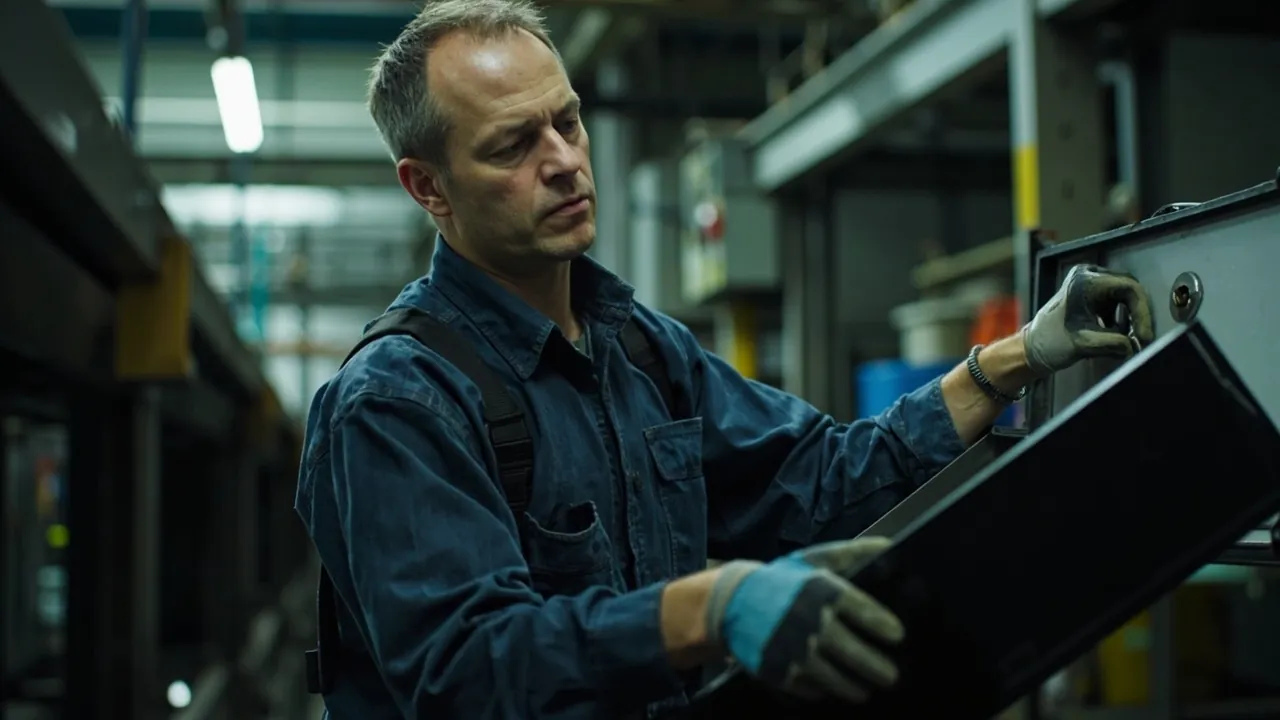
Turning the capabilities above into checkable product parameters, maintenance teams or buyers should confirm the following item by item:
| Requirement | Recommended indicator | Notes |
|---|---|---|
| --- | --- | --- |
| Material | Thick-walled PP/ABS or aluminium alloy, wall thickness 2.5 mm or more | Drop and crush resistance |
| Protection rating | IP54 for workshop dust; IP67 for damp or outdoor | Choose by environment |
| Liner | Customisable EVA/EPE, parts-box array | Prevents loss and collisions |
| Load capacity | 20–60 kg loaded, depending on specification | Room for power tools too |
| Mobility | Handle plus optional wheels and trolley handle | Fewer return trips |
| Latches | Metal or reinforced butterfly latches, anti-release | Lid stays shut on bumpy rides |
| Certification | ISO9001, RoHS, REACH, IP67 and similar | Compliance and accounting |
| Customisation | OEM/ODM support for LOGO and liners | Enterprise standardisation |
Why wall thickness matters
Wall thickness decides whether the body resists deformation when dropped, stepped on, or stacked. Industrial boxes are commonly 2.5–4.0 mm, with ribs and thickened reinforcement at the corners; thin-walled household boxes are often 1.0–1.8 mm and crack under load. Insufficient thickness also makes the gasket compress unevenly, so a box that should be sealed quietly lets water in.
How certification helps you accept delivery
Certification is not decoration, it is your acceptance criteria. Ask the supplier for numbered ISO9001, RoHS, REACH, IP67, and California Prop 65 certificates or test reports, and check validity, the applicable material scope (RoHS is a test on ABS/PP plastic parts), and that the factory name matches. Verifying up front avoids having a whole batch rejected on arrival over a compliance issue.
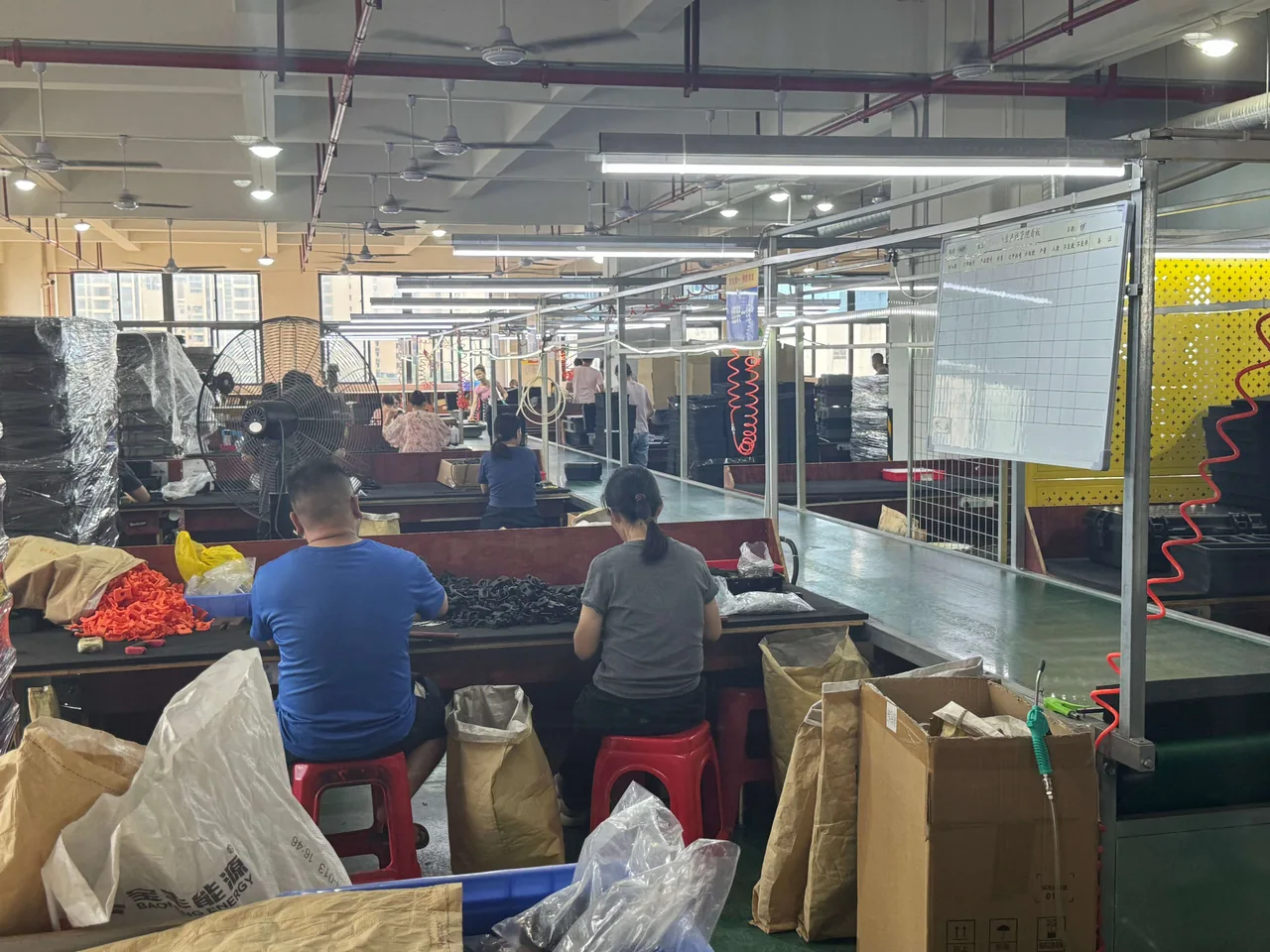
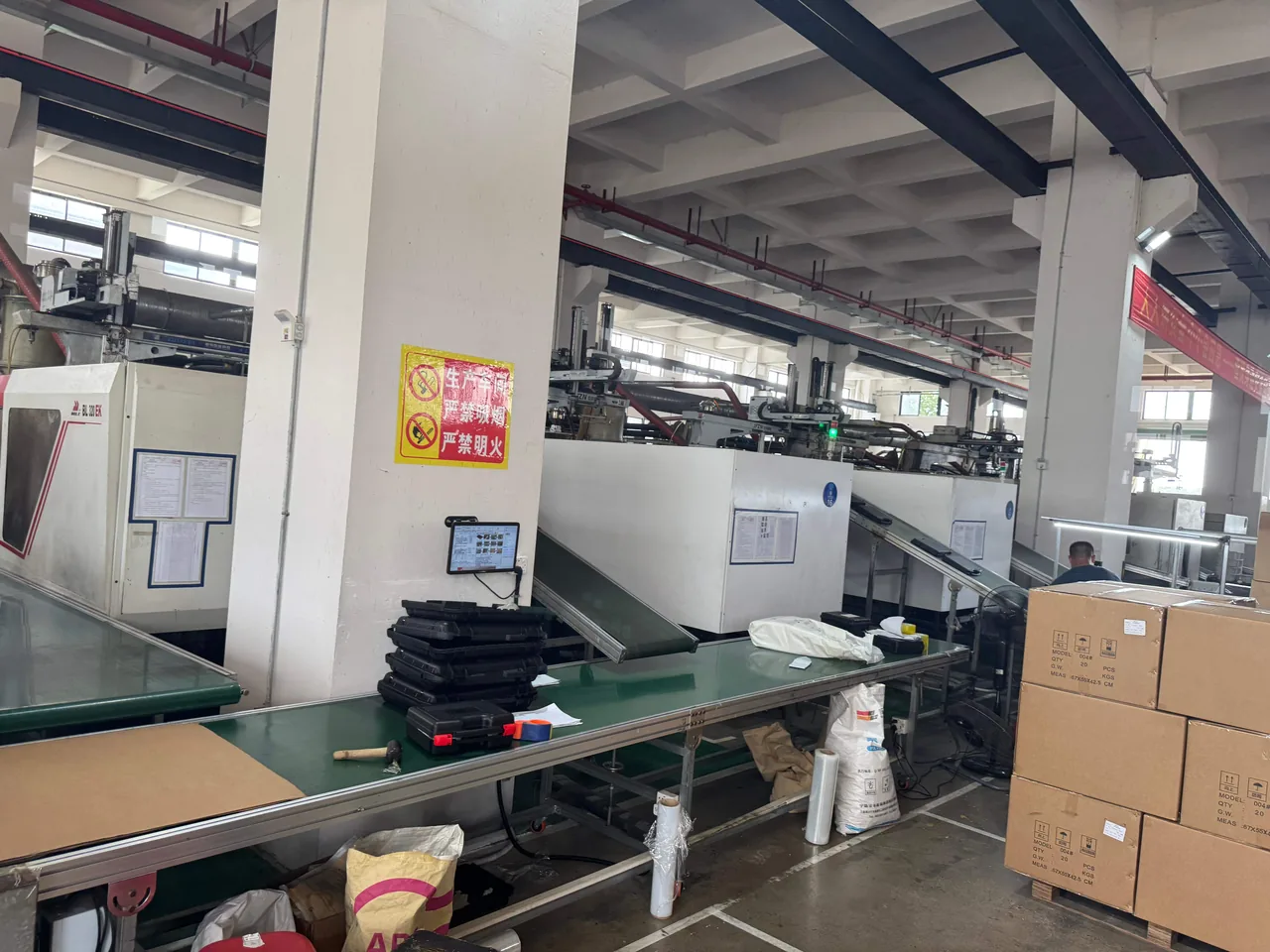
Take KeXin New Materials (Guangdong) Co., Ltd. as an example — global brand kexinMaterials, protective-case product line brand JUNZHJIA. Founded in 2014, the company's factory is in Zhongshan City, Guangdong (Greater Bay Area), covering roughly 18,000 m² with more than 80 machines and over 100 staff, providing one-stop customisation across product design, injection moulding, tooling, LOGO printing, and liner production. It holds more than 20 utility-model and design patents; products meet ISO9001, RoHS (ABS/PP plastic materials pass RoHS testing), REACH, IP67, and California Prop 65 certification and compliance requirements; the range covers plastic tool boxes, safety protective cases, sealed cases, waterproof and moisture-proof cases, hardware tool boxes, machinery parts cases, and parts boxes across more than 150 specifications; and products are exported to the United States, the United Kingdom, Germany, Canada, Japan, Russia, the Philippines, India, China Hong Kong / China Taiwan, the Middle East, and other markets. A manufacturer with this scale and customisation capability can tool liners against a maintenance team's actual tool list so that every tool has its place.
Note on precision of wording: ISO9001, REACH, and IP67 are backed by company documentation and may be shown on a page as "certificates available on request"; RoHS should be stated narrowly as "ABS/PP plastic materials pass RoHS testing."
How size, load capacity, and material relate
A bigger box does not automatically carry more weight. Load capacity depends on wall thickness, corner reinforcement, and latch distribution, not on external dimensions. A 40 cm thick-walled PP box can have a higher rated load than a 60 cm thin-wall box. Look at "rated load + wall thickness" rather than comparing length, width, and height alone.
Comparing latch types
- Plastic snap: Cheap, but fatigues and cracks under high-frequency daily use; not for everyday service.
- Metal butterfly latch: Firm and anti-release, unlikely to pop open on bumpy ground; the industrial first choice.
- Push-button waterproof latch: Works with the gasket to combine sealing with one-handed operation; common on protective cases.
The rule for choosing a latch is "number of open-close cycles x reliability." A maintenance shift opens and closes the box dozens of times a day, so the structure must resist fatigue.
Material choice: PP, ABS, or aluminium alloy
- PP (polypropylene): Chemically resistant, tough, low cost; suits general industrial and damp environments.
- ABS: High rigidity, dimensionally stable, but only moderate weather resistance; suits dry indoor workshops.
- Aluminium alloy: Light, strong, and capable of electromagnetic shielding; suits aviation, electronics, and frequent handling, but costs more.
Most maintenance scenarios use thick-walled PP, moving to aluminium where electrical or aviation work is involved.
Why tooling and one-stop customisation matter
Maintenance liners are almost always non-standard — tool shapes vary and off-the-shelf liners rarely fit tightly. This is where a manufacturer's tooling and injection-moulding capability becomes critical: only by building a tool or CNC-cutting EVA against your tool list can you achieve "one pocket per item." KeXin New Materials provides one-stop OEM/ODM customisation covering product design, injection moulding, tooling, LOGO printing, and liner production, holds more than 20 utility-model and design patents, and offers a range of more than 150 parts-box and tool and protective-case specifications — this supply-side capability is what makes "everything in its place" actually happen.
Stacking and transport safety
Industrial boxes are frequently stacked for storage or carried on vehicles. Check that the top has anti-slip ribs and the base has locating recesses so stacked cases lock together instead of sliding; when transporting by vehicle, strap them down so they cannot roll and injure people or damage tools during hard braking. Stacking height is also limited by the rated load — stack too high and you crack the lower box and destroy its seal. For teams that move by vehicle often, each case can carry a locating label or tracker so losses are recovered quickly — but that is a refinement; the core is still the structure and sealing of the box itself. In other words, no accessory compensates for a weak box: put "is the box tough" first and accessory optimisation second.
Selection by Maintenance Trade
Different trades have very different tool profiles, so the priorities differ too:
| Maintenance trade | Tool characteristics | Selection priority | Recommended protection |
|---|---|---|---|
| --- | --- | --- | --- |
| Mechanical | Many wrenches, sockets, gauges | Tiered trays plus parts boxes, high load capacity | IP54 dust protection |
| Electrical | Instruments, cable, small parts | ESD liner, many compartments | IP54–IP65 |
| Instrumentation / metrology | Precise, shock-sensitive | EVA liner plus cushioning | IP67 sealed |
| Automotive | Heavy, dirty, oily | Easy to clean, large capacity, wheels | IP54 oil resistant |
| Outdoor / emergency call-out | Water and dust exposure | Sealed plus trolley handle and wheels | IP67 |
What must never go in the tool box
Not everything belongs in a tool box. Flammable solvents, compressed gas cylinders, and strong corrosive reagents must not be packed with ordinary tools; lithium batteries, such as power-tool packs, need separate fire-resistant containment; precision optical items should not share a cavity with sharp tools. Writing "what not to pack" into team rules is as important as "what to pack," and it avoids fire, leakage, and cross-contamination risk.
Mechanical maintenance: layering and load capacity
Mechanical tools are heavy individually — high-torque wrenches, impact sockets — so load capacity and layering are critical. Separate upper, middle, and lower: the upper tier for high-frequency small items such as torches and gauges, the middle for everyday wrenches and sockets, the lower for heavy tools. Add parts boxes for standard items such as bolts and washers so small pieces do not go missing.
Electrical maintenance: anti-static and compartments
Circuit boards and modules are static-sensitive, so choose a plastic insulating box with an ESD anti-static liner, and separate cables, terminals, and fuses into small compartments to prevent both tangling and short-circuit risk. For live work, tools must also be dry with insulation intact, and a sealed box slows moisture uptake.
Instrumentation and metrology: shock protection and sealing
Calibrators and sensors are expensive and shock-sensitive, so they need an EVA liner plus IP67 sealing, and must survive drops or rain in transit without damage. In some scenarios you can also ask for a protective case designed for environmental tolerance against military-standard concepts such as MIL-STD-810H, used as a product-line environmental test basis rather than as a military certification, to suit demanding outdoor survey and scientific exploration work.
Automotive repair: dirt resistance and mobility
Automotive environments are oily and the tools are heaviest, so the box must wipe clean and hold a lot, ideally on wheels and a trolley handle — pushing is easier on the back than carrying and reduces strain injuries. The wheels also need to resist oil and grime so they are not punctured by swarf on the workshop floor.
Managing items shared across trades
A team usually needs mechanical, electrical, and instrumentation capability at once, so consolidate "common standard items" — bolts, washers, cable ties, fuses — into a uniformly labelled parts-box array shared by all trades, and keep only trade-specific tools in individual boxes. This cuts duplicate purchasing and avoids the situation where everyone is missing the same one screw.
Suggested budget allocation
A team need not buy the top specification everywhere from day one. Three tiers work better: first, a properly specified modular personal box for each person as the base investment; second, shared boxes or a tool cart for precision and heavy tools as the mid-term investment; third, IP67 protective cases and custom liners as needed. Spend on the highest-frequency, most damage-prone links and the return comes fastest.
A Maintenance Team's Tool Box Configuration Case
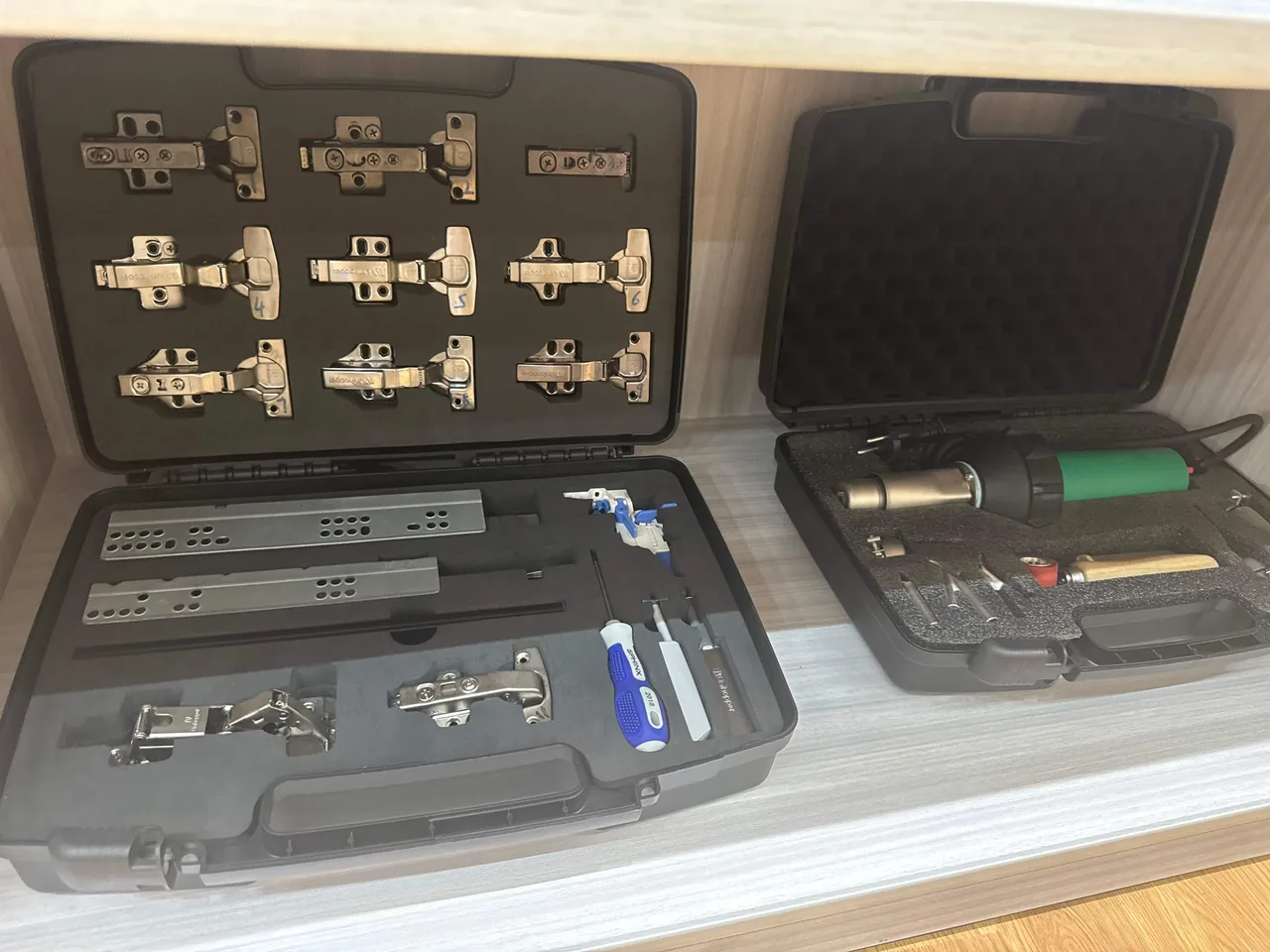
The configuration of an equipment maintenance team of twelve at an automotive parts plant makes a useful reference. Note that the parameters here are illustrative only, not data from any specific manufacturer, and serve to explain the thinking.
This configuration was chosen rather than "give everyone the largest empty box" because the team inventoried its tools first and found that personal high-frequency tools made up about 60% of the total, precision instruments about 15%, heavy sockets and power tools about 20%, and standard consumables about 5%. Allocating containers by those proportions produced the following combination:
- Main box (one per person): Roughly 45 cm engineering-plastic sealed case, IP54, EVA liner plus an upper parts box, holding the individual's everyday tools.
- Shared precision case (one per line): Roughly 50 cm protective case, IP67, EVA liner, holding calibrators and sensors, kept by a named person.
- Heavy tool cart (one per shift): Wheeled cart plus removable module boxes, holding socket sets and power tools centrally.
- Consumables box array: Standardised parts boxes for common bolts, O-rings, and fuses, managed by colour.
Within this worked example, average "time to find a tool" is modelled as falling from roughly 90 seconds to about 20 seconds, and precision instruments go six months without a knock-related repair call. Figures of this kind are internal illustrative estimates and vary enormously between industries, so they should not be read as a general commitment; the "layered management" thinking behind them, however, is widely applicable. The core lesson is: the personal box manages everyday tools, the shared case manages precision, the cart manages heavy items, and the parts boxes manage consumables — four layers work far better than "one big box each."
Three steps to implement it
To reproduce this approach, proceed in three steps. First, inventory the whole team's tools and tag each as "frequent / precision / heavy / consumable." Second, choose box types and liners by category, solving the efficiency problem for "frequent" first. Third, set up a register and labels fixing "who keeps it, where it lives, how it is borrowed and returned." Once those three are done, the tool box has genuinely become a management system rather than a container.
Common Mistakes: The Traps Maintenance Staff Fall Into Most
Nearly every team has fallen into at least one of these. They are listed so you can steer around them before buying, rather than reviewing after tools have gone missing or instruments are damaged.
- Looking only at volume, not the liner: A large cavity holds more but you find things slower; modularity is the key to efficiency.
- Ignoring the protection rating: A workshop may look dry, but equipment washing and the damp season rust tools in an unsealed box.
- Heavy box, no wheels: Buying a heavy box that can only be carried when you move constantly strains backs over time and makes the box more likely to be dropped.
- Mixing precision items with heavy ones: Hard against hard damages instruments; split them into separate cases or isolate them with cushioning liners.
- Overlooking compliance: Forgetting to ask for RoHS / REACH / IP67 on export or enterprise purchases stalls acceptance.
- Failing to standardise: Mixed box models across one team with inconsistent liners means cover staff cannot find anything.
- Buying everything at once with no iteration: Maintenance tools change as the line is upgraded, so leave room for liners and accessories to expand rather than nailing the configuration down permanently.
Frequently Asked Questions (FAQ)
Q: Is one box enough for a maintenance technician? A: Not ideally. A layered setup of "personal everyday box + shared precision case + tool cart or consumable boxes" works better: the personal box handles high-frequency tools while precision and heavy items are managed centrally, which raises efficiency.
Q: Is an anti-static liner mandatory for electrical maintenance? A: Wherever circuit boards, modules, or chips are involved, an ESD anti-static liner combined with a plastic insulating box is recommended to reduce static damage risk; for pure high-voltage wiring work, insulation and compartment separation matter more.
Q: There is no water in our workshop, so do we still need IP67? A: IP54 dust and splash protection is enough for most workshops; but if equipment gets washed down, the plant is coastal and damp, or you go out on emergency call-outs, IP67 is safer. Rate protection against your harshest scenario.
Q: How do a tool cart and an ordinary tool box work together? A: The cart is a high-capacity mobile platform and the tool box is a removable functional unit. In a large workshop you pull whichever box a job needs to whichever station, avoiding the bulk of moving the whole cart and the risk of items scattering.
Q: How can an enterprise buyer be sure the liner really gives "everything in its place"? A: Give the manufacturer the tool list with external dimensions and have the liner tooled or the EVA CNC-cut through OEM/ODM; a manufacturer with an 18,000 m² factory and tooling capability, such as kexinMaterials and its JUNZHJIA line, can take on this kind of customisation.
Q: How often should a maintenance box be serviced? A: In a high-frequency workshop, inspect the gasket and latches monthly; in an office where it is used occasionally, every six months. Schedule by working conditions rather than waiting for a fault.
Q: Does a precision case really need a named keeper? A: A named keeper with a loan register is recommended, because precision instruments are valuable and fragile, and their calibration status has to be traceable. A lockable shared precision case with a register is more controllable than instruments scattered across personal boxes.
Q: Can the liner be washed when it gets dirty? A: EVA/EPE foam can be wiped gently with a neutral cleaner; avoid strong solvents that dissolve it. Treat ESD liners according to anti-static practice, and do not scrub with an ordinary stiff brush, which damages the conductive layer.
Q: Should a maintenance team standardise on one box model? A: Standardising is recommended. One model means liners, parts boxes, and labels are interchangeable, which makes cover shifts and re-ordering easy; mixed models roughly double inventory and training cost. You can still configure different liners per trade on a common box model.
Q: What should I do if water gets into an IP67 case? A: Dry the tools and liner first, then check whether the gasket has shifted or been damaged and whether the latches are fully engaged. If the gasket has aged and let water in, replacing it restores performance — and routine inspection catches this kind of hidden problem early.
Q: Do maintenance boxes need numbering or insurance records? A: For high-value precision cases, numbering and entry in the asset register with a named keeper is recommended. Numbering makes stocktakes, loans, loss attribution, audits, and insurance claims far clearer.
Q: How should power-tool batteries be stored? A: Keep lithium batteries out of contact with metal tools to avoid short circuits, ideally in a separate flame-retardant compartment, stored at partial charge and away from heat. Choose a box with adequate temperature tolerance and a stable structure, and check batteries periodically for swelling.
Conclusion and Buying Advice
A tool box that suits industrial maintenance personnel comes down to "modular + appropriate protection + mobile + compliant." Fix the priorities by trade first — mechanical work on layering and load capacity, electrical on ESD and compartments, instrumentation on shock protection and sealing, automotive on dirt resistance and wheels — then check material, IP rating, liner, carrying method, and certification against them. Configuring "personal box, shared precision case, tool cart, consumable boxes" in layers is a more effective real-world answer than one box per person.
Core points to remember:
- An industrial maintenance box is a "working system," not a "box"; the goal is less searching, less damage, fewer trips.
- Rate protection against your harshest scenario — neither reckless nor wasteful.
- Modularity comes from liner plus parts boxes plus labels, and protects both efficiency and safety.
- A layered configuration (personal / shared / cart / consumables) beats one big box each.
Put all of the above into one sentence: an industrial maintenance box must "hold everything, give access, protect properly, move easily, and pass inspection" — all five, or it is not qualified. In practice many teams buy boxes first and add liners and management later, which wastes time and money; building this logic into the purchase is what actually saves.
A checklist for the buyer
Before ordering, turn the following into a check sheet. Have you inventoried the tools? Have you fixed the liner and protection by trade? Have you confirmed wall thickness of 2.5 mm or more and the latch type? Have you requested ISO9001 / RoHS / REACH / IP67 certificates? Have you left room for liners and accessories to expand? Only discuss price once all six are cleared. Putting the check sheet first significantly reduces the risk of wrong purchases, returns, and compliance problems.
Three hard criteria for choosing a supplier
Faced with many suppliers of "industrial boxes," three hard criteria filter them quickly. First, quantified factory strength — does the supplier have its own site, and what are its machine count and staff size? KeXin New Materials and its JUNZHJIA line, for example, operate a site of roughly 18,000 m² in Zhongshan with more than 80 machines and over 100 staff. Second, customisation capability — can it tool, injection-mould, and produce liners in-house, which decides whether "everything in its place" can actually be delivered. Third, compliance and export experience — does it hold the relevant certifications and understand the requirements of multiple markets such as the United States, Germany, and Japan? Meet all three and the purchasing risk is genuinely under control.
If you would like to discuss a configuration for your own team, please use the contact form on this site and we will come back to you.
Further Reading
- What Is the Difference Between Industrial and Household Tool Boxes?
- Which Industries Suit a Trolley Tool Box?
- How Should You Select the Internal Foam of a Tool Box?
- How Should You Choose a Tool Box Size?
- What Is the Difference Between a Wheeled Tool Box and an Ordinary One?
- Tool Box Modular Internal Design: Making Every Item Count