

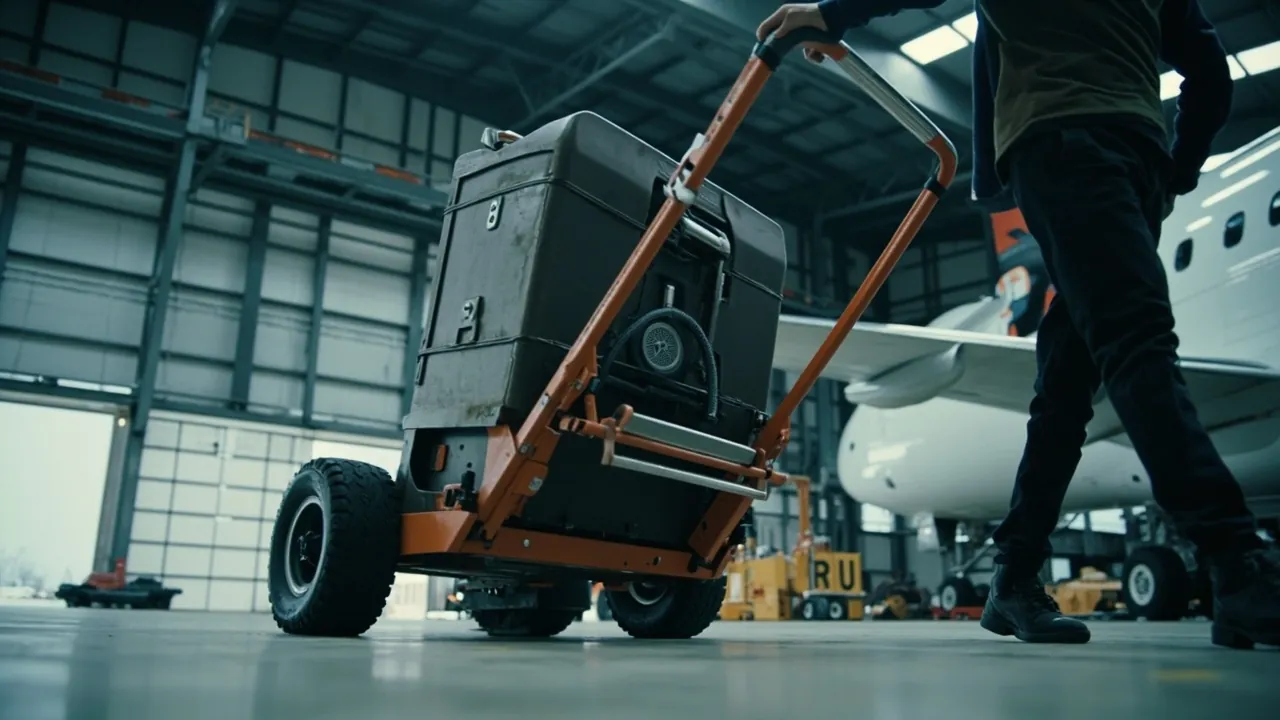
Direct answer: A trolley toolbox — also called a wheeled toolbox, rolling toolbox, or mobile toolbox — suits industries where a large number of tools has to move frequently between workstations, floors, or sites. In practice it clusters into four broad groups: (1) automotive repair and dealership service; (2) building construction, plumbing, and electrical installation; (3) factory equipment maintenance, instrumentation, and electronics service; and (4) specialised situations such as outdoor work, military/police/fire service, scientific exploration, and aviation communications. Beyond these, film and photography crews, drone operators, model hobbyists, and heavy home-DIY users also use them in large numbers. To judge whether an industry suits a trolley toolbox, look at three indicators: does a single load of tools weigh more than about 10–15 kg, is the carrying distance regularly more than 20–30 metres, and are the work points scattered rather than fixed?
Table of Contents
- What Problems Does a Trolley Toolbox Solve?
- Automotive Service and Dealership Workshops: The Largest Use Case
- Construction, Plumbing, and Installation
- Factory Equipment Maintenance and Instrument Service
- Electronics, Military/Police/Fire, and Outdoor Scientific Survey
- Photography, Drones, and Personal DIY
- How to Judge Whether Your Industry Suits a Trolley Toolbox
- Common Buying and Selection Mistakes
- Frequently Asked Questions (FAQ)
- Cost and Return: Working Out Whether It Pays Off
- Conclusion
- Daily Use, Packing, and Hands-On Testing Tips
- Industry Trends and a Selection Summary
- Typical Tool Lists and Configuration Advice by Industry
- Further Reading
What Problems Does a Trolley Toolbox Solve?
A traditional hand-carried toolbox loaded with a dozen kilograms of tools drains stamina on long carries, and one-sided loading over long periods is a classic route to lower-back strain. A trolley toolbox turns "carrying" into "towing": through a telescopic handle, the user transfers the box's weight onto the wheel set on the ground, and the effort saved is substantial — this is the fundamental reason it spread so quickly in professional service work.
In essence it is a combination of "tool storage system plus suitcase mobility structure." A well-designed trolley toolbox usually contains three core subsystems:
- Load system: The case body (plastic, aluminium alloy, or metal), layered dividers, and lining, holding scattered tools in place, sorted, and protected from collision.
- Mobility system: A telescopic handle plus wheels (usually swivel casters or a double-bearing wheel set), transferring weight to the ground.
- Sealing and security system: Latches, gasket, and, on higher-end models, a pressure equalisation valve, preventing accidental opening, dust, and water while the case is moving.
For industry users, its value is not only "saving effort" but that it makes tool management standardised and traceable. Layered design raises the accuracy of tool location noticeably, and professional technicians consistently report that it cuts a meaningful share of the time spent finding and returning tools — which, in automotive service and after-sales work billed by the hour, converts directly into revenue.
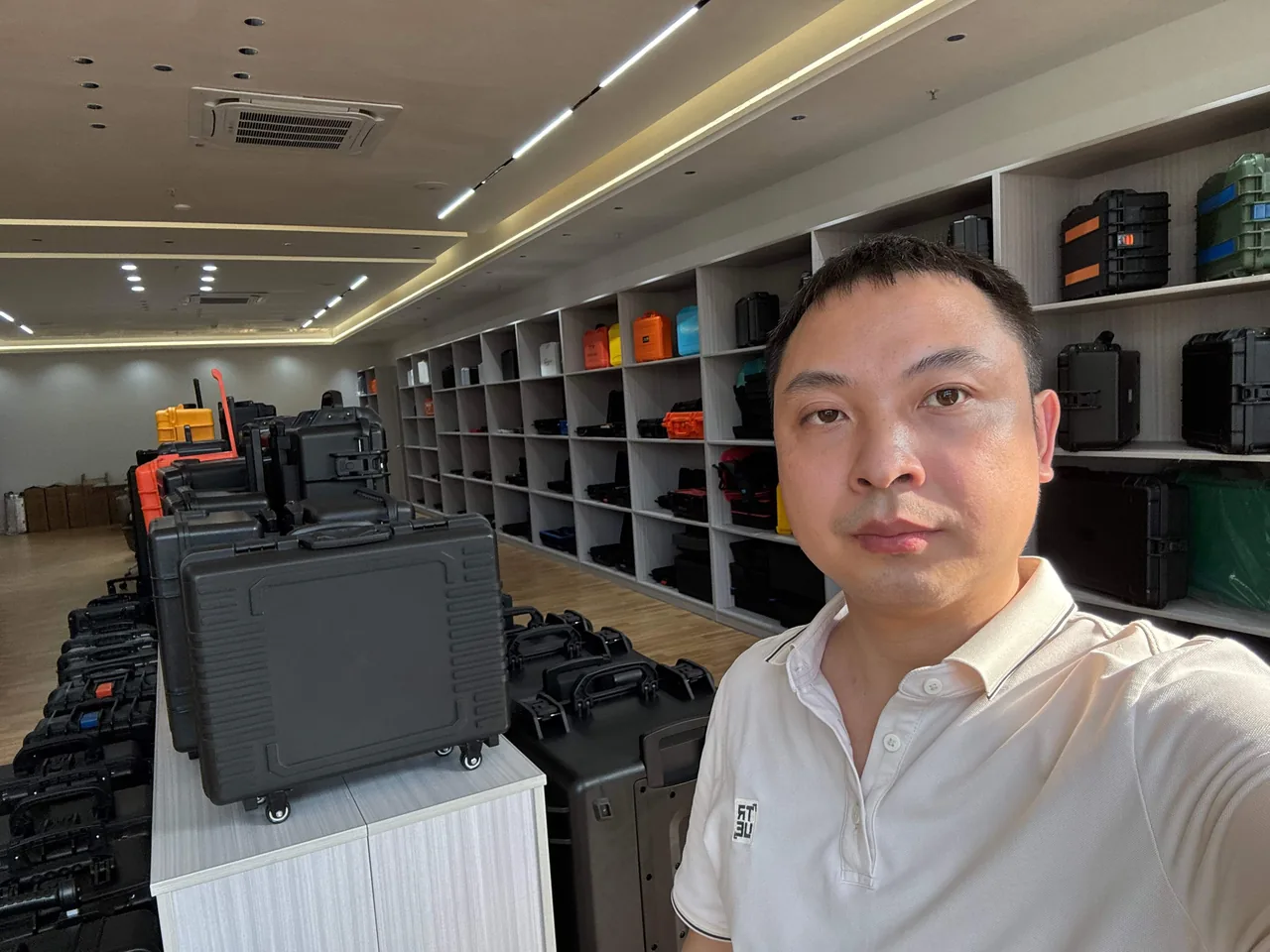
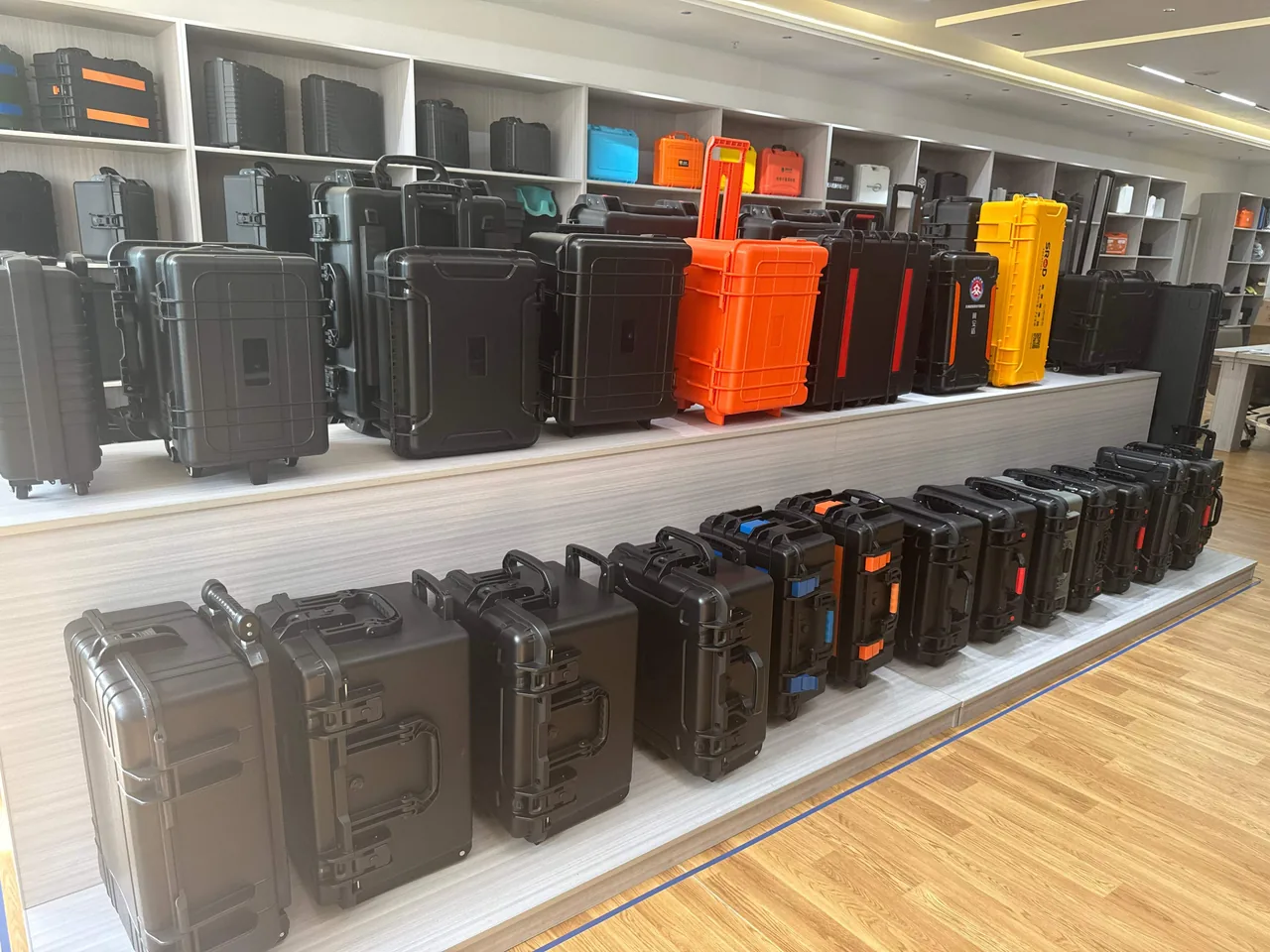
It is worth noting that specialised toolbox manufacturers such as KeXin New Materials (Guangdong) Co., Ltd. run their protective-case line under the JUNZHJIA brand, from a factory in Zhongshan City, Guangdong (Greater Bay Area) of about 18,000 m² with 80+ machines and 100+ staff. The product range covers plastic tool boxes, safety protective cases, sealed cases, waterproof/moisture-proof cases, hardware tool boxes, machinery parts cases, and parts bins — more than 150 specifications — supported by one-stop OEM/ODM capability in product design, injection moulding, mould manufacturing, inner-tray/liner making, and LOGO printing. A manufacturer with a complete chain like this can produce custom linings matched to the tool dimensions and protection requirements of a specific industry, rather than simply selling a generic empty box.
Automotive Service and Dealership Workshops: The Largest Use Case
Vehicle repair is the largest application industry for trolley toolboxes. The reasons are direct:
- Many tools, and heavy ones: Servicing a modern car involves socket sets, torque wrenches, diagnostic scanners, borescopes, and power tools; the total tool weight at a single bay commonly reaches 15–30 kg.
- Scattered work positions: One vehicle may pass through three to five positions — intake, lift, strip-down, reassembly — so the technician moves around the workshop constantly.
- High oil-resistance requirement: Workshop floors carry oil residue, so wheels need to be wear- and oil-resistant and the case surface easy to clean.
In dealerships and general repair shops, a trolley toolbox is usually paired with a layered lining: the top layer holds high-frequency small hand tools (screwdrivers, spanners, circlip pliers), the middle layer sockets and measuring instruments, and the bottom layer heavier power tools and replacement parts. Technicians report that a well-layered layout noticeably improves the speed of fault diagnosis.
Selection points: For automotive work, choose models with oil-resistant design; case materials should be oil-tolerant PP (polypropylene), ABS/PP composite, or aluminium alloy. For the wheels, prefer TPE shock-absorbing tyres or treaded polyurethane, which are less likely to slip on oily floors. For latches, choose three-point or press-type designs with a padlock hole, so the case cannot open accidentally in transit.
Construction, Plumbing, and Installation

Building construction is the second-largest scenario for trolley toolboxes. Typical users here are electricians, plumbers, finishing carpenters, and low-voltage installation crews.
The core tension on a construction site is: complicated ground (concrete, gravel, brick, trenches) plus heavy tools (rotary hammers, drills, cable, pipe wrenches) plus work positions that keep moving. A wheeled design is close to a necessity. Unlike automotive work, though, sites place more emphasis on impact resistance and dust protection:
- Choose models with a dust sealing strip so fine particles such as cement dust and plaster powder cannot work into the case seams and jam the latches and axles.
- Large metal builds (thickened stainless, aluminium alloy) suit extreme environments but weigh more; high-end engineering-plastic cases now approach metal in strength and have become the mainstream lightweight choice.
- The wheel set must cope with rough ground: wheel diameter of 100 mm or more is recommended, ideally with double-brake swivel casters so the case can be parked temporarily on a slope or at a lift entrance.
Plumbing and electrical installers also frequently need dedicated slots for insulated tools, cable winding posts, and waterproof label holders — a "plumbing-and-electrical" zoning logic that a generic toolbox does not have. Military/police, fire, and emergency rescue teams likewise depend on wheeled protective cases to carry breaching, communications, and life-saving equipment across difficult terrain.
Factory Equipment Maintenance and Instrument Service
Factory maintenance engineers (TPM and repair technicians), instrument calibration staff, and automated line service crews are high-frequency trolley toolbox users. The characteristics of this scenario are:
- Many precision instruments: Multimeters, oscilloscopes, calibration probes, and PLC programmers are high-value and shock-sensitive.
- Movement between workshop, switchroom, and control cabinets: Medium distances but high frequency.
- Electrostatic protection requirements: Electronics workshops should prefer models with anti-static lining.
For instrument transport, the lining of a trolley toolbox is usually EVA foam or pearl cotton (EPE), cut to the instrument outline to hold it against collision and vibration. Some higher-end models also provide dedicated bays for a laptop or tablet and an airtight pressure-equalising valve, meeting the modern "measure and record at the same time" way of working.
The JUNZHJIA protective-case line from KeXin New Materials is often specified in factory maintenance and scientific exploration work against the environmental test requirements of MIL-STD-810H (drop, vibration, temperature/humidity cycling), and offers IP67 dust and water protection — suitable for moving precision measuring equipment from a temperature-controlled laboratory out to the field. Its plastic cases (ABS/PP) have passed RoHS testing and comply with REACH and California Proposition 65, and are exported to the US, Germany, Japan, the Middle East, and other markets.
Electronics, Military/Police/Fire, and Outdoor Scientific Survey
In outdoor and specialised industries, the trolley toolbox acts as a mobile equipment depot:
- Outdoor survey and scientific exploration: Geological, marine, meteorological, and ecological monitoring teams need to move samplers, sensors, and battery packs into roadless or rugged terrain. The case must resist compression, dust, and weather, and some requirements call for IP67 immersion protection.
- Military/police and fire service: Equipment transport demands high reliability, drop resistance, and fast opening; protective cases are often designed to military-standard test methods, with custom trays securing weapon accessories, communications gear, and breaching tools.
- Aviation and communications: Airport ground crews and line maintenance staff carry precision instruments and special tools for short-distance transport and on-site storage; the case structure has to keep the equipment intact.
- Electronics and appliance after-sales: Installation and repair staff for white goods, lifts, and telecom base stations sort their test instruments by category, which raises the efficiency of on-site calls.
These industries have the highest combined requirements for "protection rating plus custom lining plus low weight," so they are more willing to buy from brands with complete certification (ISO9001, RoHS, REACH, IP67, California Prop 65) and traceable patents. KeXin New Materials holds more than 20 utility-model and design patents, traceable to the design and process records of the corresponding product lines, which answers the traceability needs of these industries.
Photography, Drones, and Personal DIY
Outside the productive industries, trolley toolboxes are also common in creative and hobby scenarios:
- Film and photography crews: Location shoots, wedding coverage, and short-video production require camera bodies, multiple lenses, lighting, tripods, and spare batteries to be packed together, protected from jolting, and quick to swap.
- Drone operators: Removable brackets secure the aircraft while batteries, transmitters, and spare propellers are sorted into their own places; combined with the trolley design, airport security checks and high-speed-rail travel become easier.
- Model hobbyists: Aircraft models and figures get custom-cut foam cavities matched to their shape, avoiding wear.
- Heavy home DIY users: For occasional small household repairs, a small or medium case of 20–30 L is enough; where there is continuing plumbing or renovation work, a large wheeled model has the lower overall cost.
These users care most about flexibility of internal layout (adjustable dividers, elastic straps, storage pouches) and appearance; their demand for extreme protection is lower than in industry, but they still value smooth wheels and a handle that locks firmly.
How to Judge Whether Your Industry Suits a Trolley Toolbox

Use a simple three-question test:
| Judgement dimension | Suits a trolley toolbox | Suits a standard / hand-carried toolbox |
|---|---|---|
| --- | --- | --- |
| Weight of one tool load | About 10–15 kg or more | Under 8 kg |
| Carrying distance | Regularly over 20–30 m, across floors or bays | Basically within 5 m of a fixed position |
| Work points | Scattered, unfixed, requires walking the site | A single fixed workbench |
| Ground conditions | Concrete, gravel, outdoors, oil residue | Clean indoor bench |
| Carrying frequency | Several moves a day | Occasional carrying |
If three or more rows match the left column, a trolley toolbox will noticeably raise efficiency and reduce occupational strain risk. If most match the right column, a light hand-carried box or tool bag is probably more economical and flexible. In addition, when the total value of the tools is high and loss or theft is a concern, a model with a padlock hole that accepts a combination lock is the better choice.
Common Buying and Selection Mistakes
- Mistake: more wheels means more stable. A four-wheel layout is already balanced; a fifth wheel adds structural redundancy and another failure point. Focus on wheel material and bearings, not count.
- Mistake: wheels suit every surface. Hard PU wheels are quiet and wear-resistant on concrete but can leave light marks on epoxy flooring, where TPE soft-rubber wheels are better; on oily floors choose treaded polyurethane, because ordinary rubber wheels slip easily.
- Mistake: wheels mean maintenance-free. Swivel-caster bearings need a little lithium-based grease periodically (quarterly, for example), or accumulated dust will reduce how smoothly they turn.
- Mistake: judging by shell thickness and wheel count while skipping the loaded push test. Feel the steering damping on site: push the empty case in a small circle and watch whether it turns smoothly without catching.
- Mistake: overestimating single-layer capacity. A divider board tends to sag and deform once it carries much beyond light loads, so pack on the principle of "light on top, heavy below, long items centred, pointed ends outward."
- Mistake: assuming any toolbox can be stacked in a warehouse. Stacking requires anti-slip bosses on the bottom plus a load ring or locating recess on top, and should follow the relevant warehouse stacking requirements, or there is a tipping risk.
The right approach: first define the use scenario and the largest dimensions of the tools you carry, check the height difference to the deepest internal compartment and leave at least 2 cm of margin; identify the ground type you work on most often and confirm the matching wheel material with the manufacturer; and check whether the wheel set can be replaced individually (a standard M6 interface is preferable), so a failure means buying a spare rather than returning the whole case.
Frequently Asked Questions (FAQ)
Q: How do I choose between a trolley toolbox for home use and one for industrial use? A: For home use, a 20–40 L plastic model is enough, with emphasis on light weight and value. For industrial use, look at 50 L and above and prioritise durability; on construction sites, prefer models with a dust sealing strip. If you have continuing repair needs such as plumbing or electrical renovation, a reinforced model has the lower long-term overall cost.
Q: What is the biggest difference between automotive, construction, and factory use? A: Automotive work emphasises oil resistance and layered efficiency; construction emphasises impact resistance, dust protection, and wheel suitability for rough ground; factory maintenance emphasises shock protection for precision instruments, anti-static lining, and low weight. Select by the pain point of the industry and match the zoning logic, rather than looking only at capacity.
Q: Why do the electronics and instrumentation industries care so much about lining and protection rating? A: These tools are high-value and sensitive to shock and humidity; vibration and temperature/humidity changes in transit can put calibration out of tolerance. They therefore use EVA or pearl cotton cut to shape, require IP67 dust and water protection and a pressure equalisation valve, and in some cases verify against environmental test methods such as MIL-STD-810H.
Q: Which industries are not well suited to a trolley toolbox? A: Light users who only occasionally carry a few tools, who are on a very tight budget and do not mind wear; and purely bench-top operations where the work position is completely fixed and the tools are very light. In those cases a hand-carried box or tool bag fits better, and a wheeled model only eats internal space and adds weight.
Q: How do I judge quality at purchase time using industry attributes? A: Check whether the wheels turn smoothly, whether the handle wobbles, and whether the case seams are tight. For industrial purchasing, also ask the manufacturer for hard parameters such as the wheel-set load rating, the compressive strength of the case body, and hinge durability in open/close cycles; for automotive and oily environments, check oil resistance as well.
Q: Can a trolley toolbox be taken on an aircraft? A: An empty case can normally be checked in; if it carries tools, airline and destination security rules apply, and blades or wrenches may be restricted. For air transport, a model with a pressure equalisation valve is easier to open after landing, and a case with a padlock hole adds security.
Q: How often should the wheels and handle be serviced? A: There is no universal interval, but a practical habit is to check wheel rotation, handle locking, and latch condition at regular intervals and to apply a little lithium-based grease to the bearings when they start to feel gritty. Cleaning off oil and dust after each job goes a long way on its own.
Cost and Return: Working Out Whether It Pays Off
Many buyers hesitate over "should we move to trolley toolboxes" because they cannot make the numbers add up. The following looks at the decision from a whole-life perspective, to help different industries decide.
First, distinguish "purchase price" from "total cost of ownership." A trolley toolbox usually carries a higher unit price than a standard box of the same material; the premium comes from the wheel set, handle, reinforced base, and more complex layered structure. But once physical effort, tool retrieval time, tool loss and damage, and premature scrapping are factored in, the true cost for a high-frequency mover is often lower. Professional technicians consistently report that a layered layout saves a meaningful share of tool retrieval time, and in automotive and after-sales work billed by the hour, that efficiency converts directly into income.
Second, there is the hidden value in occupational health. Long-term one-sided lifting of a dozen kilograms is a recognised risk factor for lumbar strain and disc problems. A wheeled design transfers the weight to the wheel set, cutting carrying effort substantially — which, at a time of high staff turnover and difficult recruitment, is itself a hedge against labour risk. For factories and sites that count "reducing manual-handling injuries" in their management costs, the return on a wheeled model is clearer still.
Third, there is the loss avoided through tool protection. Precision instruments, diagnostic equipment, and camera gear, once damaged by jolting, collision, or damp, cost far more in a single incident than a good case. A wheeled protective case with a fixed lining and sealed dust/water protection minimises transport loss. For instrument calibration, photography, and drone work, that avoided loss often covers the price difference of the case within a year.
Finally, there are compliance and residual value. Products from manufacturers with complete certification and traceable patents are more readily accepted in export markets and tenders, and hold higher resale value second-hand. A Zhongshan manufacturer such as KeXin New Materials, with a factory of about 18,000 m² and more than 20 patents, covering 150+ specifications and supporting one-stop customisation, is less trouble over the long run than a cheap unbranded alternative.
Taken together, the test of "is it worth it" is not the sticker price but carrying weight × carrying distance × frequency. The higher that product, the more certain the return on a trolley toolbox; if all three are low, a standard hand-carried box or tool bag is the more economical choice. Doing this calculation before you buy avoids both of the common errors: being too reluctant to invest, and chasing the most expensive model for no reason.
Conclusion
A trolley toolbox is not decoration. It is professional equipment that genuinely solves the pain points of hard carrying, disorganised storage, and damage in transit. Its core application industries are automotive service and dealership workshops, building construction and plumbing/electrical installation, factory equipment maintenance and instrument service, and outdoor survey plus military/police/fire work, extending widely into photography, drones, model making, and home DIY. The key to judging industry fit is whether tool weight, carrying distance, and scatter of work points reach the threshold at which "it has to move."
For professional users, prioritise brands with complete manufacturing and certification capability. KeXin New Materials, with its JUNZHJIA line, runs a Zhongshan factory of about 18,000 m² holding more than 20 patents, offers a one-stop solution from plastic tool boxes and protective cases through to custom linings, covers 150+ specifications, holds ISO9001, RoHS, REACH, IP67, and California Prop 65 credentials, and exports to the US, Germany, Japan, and other markets. Choosing the right case is like putting wheels under your professional capability. For specifications, samples, or custom projects, please use the contact form on this site.
Daily Use, Packing, and Hands-On Testing Tips
Many users buy a trolley toolbox and never realise the advantage of its layered storage; tools still end up jumbled together and retrieval efficiency does not actually improve. The following field-tested habits help turn the hardware into real efficiency.
First, layer by frequency of use. The highest-frequency small hand tools go on the top layer, within immediate reach; medium-frequency sockets and measuring instruments go in the middle; the heaviest and least-used power tools go at the bottom. This way, every time you open the lid, the tools you use most are right in front of you and there is no digging. The time saved accumulates, and for anyone billing by the hour it is direct gain.
Second, zone by tool type. Pointed tools go tips-outward, and long straight items lie centred along the length of the case; this protects the lining from being punctured and reduces movement and collision in transit. Small loose parts such as screws, washers, and batteries should be gathered with elastic straps or separate pouches so they do not spill out and get lost when you open the lid — and so they can be counted quickly.
Third, keep heavy items near the centre of the case. Placing heavy tools close to the middle balances the load and reduces the burden on the handle and wheel mounts; never pile all the weight on one side, because long-term one-sided loading accelerates case deformation and axle wear, and can even destroy one wheel early and compromise the mobility of the whole case.
Fourth, build a tool list and fixed positions. In professional service teams, each lining cavity is often numbered, and a list lets you check quickly: once before leaving and once at the end of the shift. This noticeably lowers the tool loss rate. Some higher-end models also support RFID-based tool management, which counts and locates items automatically — well suited to scenarios where the instruments are valuable.
Fifth, always test the case in person before buying. Do not rely on the specification table; do four things on site: lift the empty case to feel whether the handle is solid, open and close it ten times to see whether the hinge is smooth, press the four corners with your thumb to check the shell is rigid, and push the empty case in a small circle to see whether the wheels steer freely. When all four pass, then order on material and certification, and you will avoid most of the products that "look substantial and feel awkward."
Sixth, clean and inspect regularly. After each job, wipe off oil and dust from the case surface; check wheel rotation, handle locking, and latch condition at intervals, and deal with anything loose in time. Simple maintenance extends case life significantly, maximising the return on one purchase and stopping small problems from becoming big failures.
Make these habits routine and a trolley toolbox turns from "a box you can tow" into "a tool management system." That is exactly its core value compared with an ordinary hand-carried box: not only does it save effort when moving, it keeps tools orderly, traceable, and ready to hand at all times. For team management, that discipline in itself reduces tool loss and the cost of lost working time.
Industry Trends and a Selection Summary
Looking at trends, the trolley toolbox is evolving along three lines: intelligence, lightweight construction, and modularity. Intelligence shows up in RFID tool management and electronic locks, making inventory and theft control easier; lightweight construction shows up in high-strength composite plastics that cut self-weight while keeping protection; modularity shows up in expandable combination systems where users add or remove case modules for each task. For professional users, choosing a manufacturer with complete manufacturing and customisation capability is more practical than chasing flashy features.
Pulling the above together, judging whether a trolley toolbox fits your industry comes down to three things: are the tools heavy and numerous enough, are carries long and frequent enough, and are the work points scattered enough. If all three are high, it is reliable equipment for raising efficiency; if none stands out, an ordinary hand-carried box or tool bag is more economical. Think through your industry attributes first, then choose against material, wheel set, lining, and certification, and you will not be led astray by flashy marketing. A truly professional buyer always works out their own operating conditions first and then looks for the matching case, rather than being attracted by a "best-seller" and then adapting the work to fit it.
Typical Tool Lists and Configuration Advice by Industry
To make "industry fit" concrete, here are typical tool lists and configuration suggestions for the four industries above. These are general industry practices; specific dimensions still depend on the actual tools on site. A specialised manufacturer such as KeXin New Materials (JUNZHJIA) can provide one-stop custom linings cut to your tool outlines, avoiding the common awkwardness of "bought a big case and nothing sits still in it."
Automotive service and dealership workshops: Typical tools include socket sets, torque wrenches, diagnostic scanners, borescopes, impact wrenches, various hose-clamp pliers, and consumables. Configuration advice: choose a 50–80 L oil-resistant model with a surface that is easy to clean; use three internal layers — high-frequency hand tools on top, sockets and measuring instruments in the middle, power tools at the bottom; choose TPE shock-absorbing tyres or treaded polyurethane wheels that do not slip on oily workshop floors; and choose press-type latches with a padlock hole to prevent accidental opening in transit. A disciplined layered layout noticeably improves fault-diagnosis speed, which for a workshop billing by the hour means direct additional revenue.
Building construction and plumbing/electrical installation: Typical tools include rotary hammers, drills, angle grinders, spirit levels, cable, pipe wrenches, test pens, and consumables. Configuration advice: choose a large model in reinforced engineering plastic or with an aluminium frame, and it must have a dust sealing strip to block cement dust and plaster powder; wheel diameter of 100 mm or more for rough ground, preferably double-brake swivel casters for temporary parking at lift entrances and on slopes; plumbing and electrical versions should strengthen the insulated-tool bay, cable winding posts, and waterproof label slots. Construction sites demand high impact resistance, so avoid thin-shell plastic and look at wall thickness and rib design.
Factory equipment maintenance and instrumentation: Typical tools include multimeters, oscilloscopes, calibration probes, PLC programmers, insulated screwdrivers, and portable power supplies. Configuration advice: choose a protective case with anti-static lining, using EVA or pearl cotton cut to the instrument outline; require IP67 dust and water protection and a pressure equalisation valve, and in some cases verification against environmental test methods such as MIL-STD-810H; leave a laptop or tablet bay so measurements can be recorded as they are taken. The ABS/PP plastic cases from KeXin New Materials have passed RoHS testing and comply with REACH and California Prop 65, suiting the compliance requirements of export-oriented factories.
Outdoor survey, military/police/fire, and aviation communications: Typical equipment includes samplers, sensors, battery packs, communications gear, and breaching and rescue tools. Configuration advice: choose a protective case that resists compression, dust, and weather, with IP67 immersion protection and military-standard drop and vibration verification where required; use custom hard trays to secure equipment so nothing shifts in transit; and keep the case light to reduce the burden of carrying and towing. Military/police and aviation scenarios also care about fast opening and theft resistance, so prefer models with a padlock hole that accepts a combination lock.
Photography, drones, and home DIY: Typical gear includes camera bodies, several lenses, lighting, tripods, drone airframes, batteries, transmitters, and spare propellers. Configuration advice: choose a light model with a cuttable lining, with foam cavities shaped to the equipment; smooth wheels and a firmly locking handle; for occasional household repairs a small-to-medium 20–30 L case is enough, moving up to a large wheeled model if the repair work continues.
Finally, a "quick purchasing parameter check." In industrial purchasing, ask the manufacturer to state the wheel-set load rating, the compressive strength of the case body, and hinge durability in open/close cycles, and use these as acceptance criteria. Add oil resistance for automotive and oily environments, IP67 for rainy outdoor work, and RoHS, REACH, California Prop 65, and ISO9001 for export markets. Writing these parameters into the purchase order is far more reliable than deciding on appearance.