

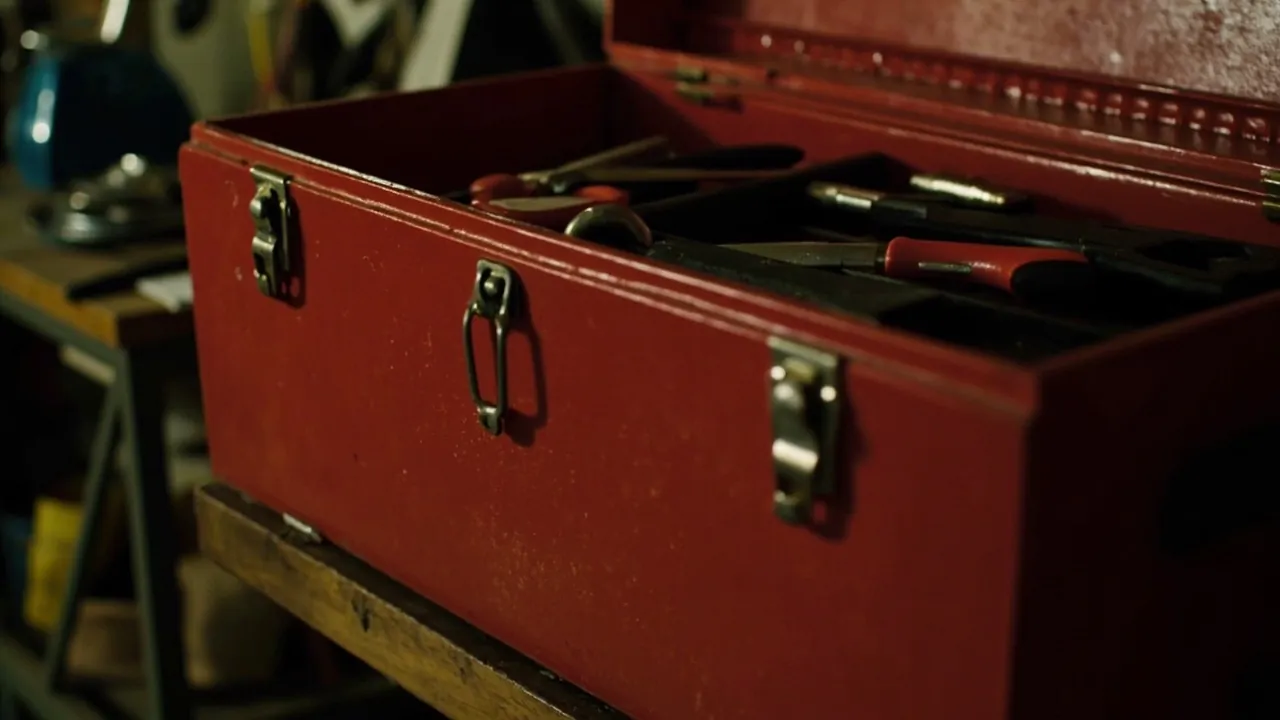
Direct answer: A toolbox (or tool case) is a container or case system used to store, sort, carry, and protect hand tools, hardware fittings, and small equipment. Its real value is not that it is "a box that holds tools," but that through sensible compartment layout, interior lining, and latch structure it enables fast access, prevents loss, and protects contents from impact while being carried. By material, toolboxes fall into metal (steel, aluminium alloy), plastic (engineering plastics such as ABS and PP), and composite builds; by structure, into hand-carried, drawer-type, wheeled, belt-worn, and protective case (waterproof, dustproof, shock-resistant) designs; by application, they cover home repair, automotive service, electrical work, industrial production lines, outdoor survey work, military/police/fire service, electronics, and scientific exploration. When buying one, match type and material against four main lines: the number and volume of your tools, the working environment (damp, outdoor, or in need of protection), portability requirements, and budget.
Table of Contents
- Definition and Core Functions of a Toolbox
- Basic Structural Components of a Toolbox
- Main Types of Toolboxes (by Material / Structure / Use)
- Common Toolbox Materials and Their Properties
- Protection Ratings and Common Standards for Toolboxes
- Toolbox Sizes, Capacity, and the Specification System
- How to Choose a Toolbox for Different Applications
- The Materials Science of Toolboxes: Polymer Properties of ABS and PP
- A Self-Inspection Checklist for Toolbox Quality
- The Evolution of the Toolbox: From Wood to Engineering Plastics to Modular Systems
- Common Misconceptions About Toolboxes
- Frequently Asked Questions (FAQ)
- Conclusion
- Further Reading
Definition and Core Functions of a Toolbox
In essence, a toolbox is a piece of *mobile tool infrastructure*. It gathers scattered screwdrivers, wrenches, pliers, measuring instruments, and consumables into one controlled space, so that whether the user is at home, in a workshop, or out in the field, the tool needed is found and reached in the shortest possible time.
A competent toolbox carries out four functions:
- Storage and sorting: Dividers, drawers, and parts bins keep different tools in separate categories, so they neither knock against each other nor tangle, and small parts (screws, nuts, washers) do not go missing.
- Portability and carrying: A handle, shoulder strap, or set of wheels lets the tools move with the person — essential for on-site service calls, field construction, and outdoor work where "the tools have to follow the worker."
- Protection and cushioning: The shell, latches, and interior lining (foam, EVA, EPE) together absorb drops, crushing loads, and transport vibration, protecting precision instruments and cutting edges from damage.
- Environmental isolation: A protective case with a sealing design keeps out dust, water, and humidity, and may even meet IP67, so tools stay dry and usable in rain, mud, and salt spray.
Understanding these four functions is the starting point for deciding "what kind of toolbox do I actually need." Capacity is only the most superficial indicator; shell rigidity, sealing capability, the logic of the internal layout, and the way the box is carried are what really determine whether a toolbox is good to use. Parts bins, parts cabinets, tool carts, and tool walls are close relatives of the toolbox, and together they form a complete tool-management system — but what makes the toolbox distinct is that it can be carried as one unit.
Looking at the terminology, the English word "toolbox" originally meant a box for hand tools. As applications expanded, the modern term now spans a broad spectrum from small household tool cases to industrial-grade protective cases (also called hard cases). In aviation, military/police, and scientific expedition work, the same object is often called an "equipment case," "safety case," or "instrument transit case" — but it is still fundamentally the same piece of mobile tool infrastructure, simply pushed to a higher standard of protection rating, lining precision, and structural strength. So when discussing "toolboxes," it is a mistake to look only at the small household box; the whole protective-case family belongs in the picture.
Basic Structural Components of a Toolbox
Whether it is a simple plastic box or an industrial-grade protective case, the structure is usually built from the following parts.
| Structural part | Function | Common designs |
|---|---|---|
| --- | --- | --- |
| Body | Main load-bearing structure; determines strength and capacity | One-piece injection moulding / bent steel sheet / aluminium frame |
| Lid | Closes the top; usually joined to the body by a hinge | Flip lid, split lid, lift-up lid |
| Hinge | Connects lid and body; carries the opening/closing fatigue load | Metal hinge, PP living hinge |
| Latch | Secures the lid and prevents accidental opening | Single-point snap catch, multi-point latch, butterfly (draw) latch |
| Gasket | Provides the dust and water seal | Rubber / TPU perimeter seal strip |
| Handle | Hand carrying | Fold-flat handle, rubber-overmoulded handle |
| Lining / tray (foam / tray) | Holds tools in place, cushions shock | Pre-cut foam, EVA, divider trays |
| Wheels / feet | Heavy-load movement or stable placement | Wheel + telescopic handle, anti-slip feet |
The way these parts are combined is exactly what defines the different toolbox types. A plastic box with a gasket and multi-point latches is a typical *protective case*; one with drawers and slides is a *drawer-type toolbox*; one with wheels and a pull handle is a *wheeled toolbox*.
A few notes on the key components:
- Hinge: This is the weak point for the whole-box opening life. Metal boxes mostly use steel or aluminium hinges, which carry heavy loads; plastic boxes often use a PP one-piece "living hinge," which is low cost and can be flexed repeatedly without breaking, but is sensitive to low-temperature brittleness. A multi-point hinge resists deformation better than a single-point one.
- Latch: Types include press-snap catches, butterfly (draw) latches, and keyhole types. Protective cases generally use a butterfly latch with a rubber pad, which presses the lid evenly onto the gasket when tightened; where theft protection or transport security is needed, a padlock hole can be added.
- Gasket: Usually an inserted EPDM/TPU perimeter strip, fitted into a groove on the inside of the lid. Its cross-section shape (O-ring, hollow rectangular) and compression-recovery rate determine seal life; once aged, seepage appears and the strip needs periodic replacement.
- Lining: This is the key to "tools not fighting each other." Pre-cut grid foam (pick-and-pluck) suits fast DIY custom cavities; flat EVA sheet can be CNC-routed to match the outline of precision instruments; divider trays suit sorting small parts.
Main Types of Toolboxes (by Material / Structure / Use)
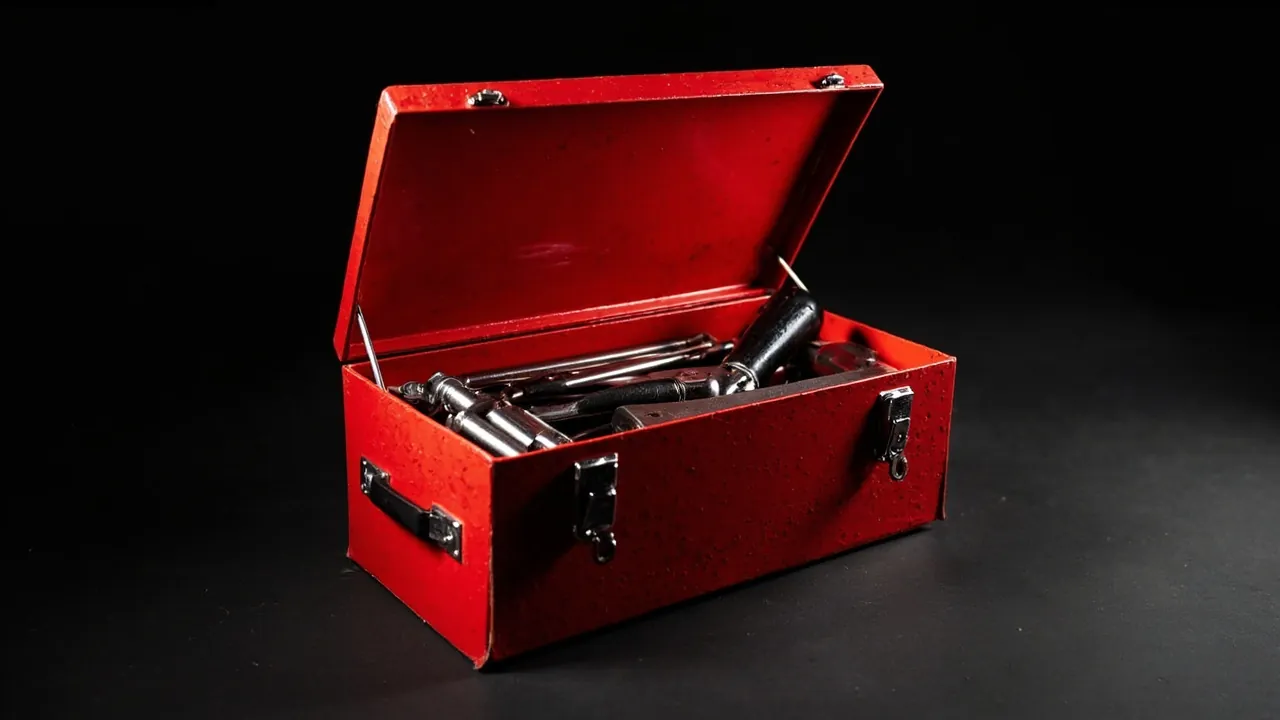
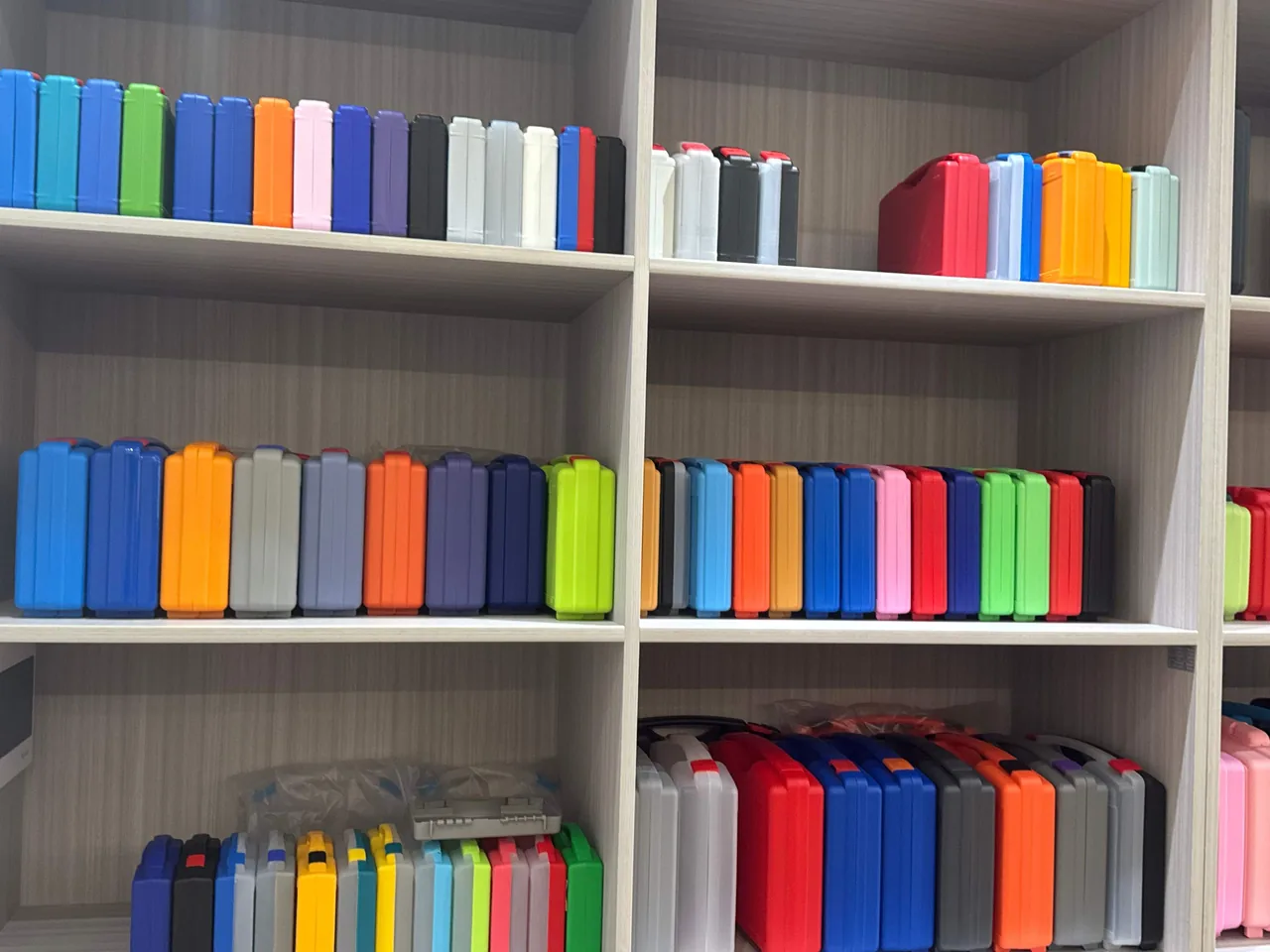
Toolboxes can be classified along three dimensions. The table below lists the common types and their characteristics.
| Dimension | Type | Main characteristics | Typical scenario |
|---|---|---|---|
| --- | --- | --- | --- |
| By structure | Hand-carried toolbox | Simple, light, one-handed | Home repair, in-vehicle tools |
| By structure | Drawer-type toolbox | Multi-layer drawers, large capacity | Workshop, workbench |
| By structure | Wheeled / trolley toolbox | Wheels and pull handle, easy to move | Industrial maintenance, vehicle use |
| By structure | Belt-worn / shoulder tool bag | Worn on the body, fast access | Electricians, inspection rounds |
| By structure | Protective case (safety case) | Sealed, impact-resistant, custom lining | Outdoor, military/police, precision instruments |
| By material | Metal toolbox | Strong, high load capacity, heavy | Industrial, heavy-duty work |
| By material | Plastic toolbox | Light, rust-free, low cost | Household, light-duty work |
| By material | Composite toolbox | Balances light weight and strength | Professional repair, outdoor |
| By use | Home repair box | Compact, basic tool set | Everyday household |
| By use | Automotive service box | Oil-resistant, good load capacity | Vehicle repair |
| By use | Electrician's box | Anti-static, clear compartments | Electrical maintenance |
| By use | Precision instrument case | Shock-absorbing, custom tray | Electronics, surveying, communications |
This multi-dimensional classification makes one thing clear: there is no "universal toolbox," only the toolbox that best matches the task at hand. Later sections break down material properties and scenario-matching logic separately. It is also worth noting that many modern products are hybrids — for example a metal frame with plastic panels, which keeps the load-bearing skeleton of metal while using plastic to cut weight and improve corrosion resistance.
Common Toolbox Materials and Their Properties
Material determines a toolbox's strength, weight, protective capability, and price. The mainstream options are:
1. Metal (steel / aluminium alloy)
- Carbon steel / galvanised steel sheet: high strength and compression resistance, able to survive heavy objects dropping on it and oily environments, but heavy, prone to rust (needs anti-corrosion treatment), and cold to the touch in winter.
- Aluminium alloy: roughly lighter than steel while still reaching a large share of steel's strength, with good corrosion resistance, but at higher cost.
2. Plastics (ABS / PP and other engineering plastics)
- ABS (acrylonitrile-butadiene-styrene): high impact strength, smooth surface, easy to colour, good appearance; but only moderate heat resistance, and sensitive to some organic solvents.
- PP (polypropylene): low density — among the lightest common plastics — resistant to acid and alkali corrosion, low cost, recyclable (resin code 5); but slightly lower rigidity, becomes brittle at low temperature, and the surface does not take printing directly.
- An empty engineering-plastic box typically weighs only a fraction of an equivalent metal box, and is naturally rust-free and moisture-resistant.
3. Composites
- Hybrid structures such as a steel skeleton with a PE/PP shell, or an aluminium frame with an ABS liner, strike a balance between support and weight, and suit professional repair and outdoor work that involves frequent movement.
4. Wood (less common)
- Attractive in a retro way and easy to customise, but poor moisture resistance and prone to warping; mostly used for display, collection, or specific craft scenarios (watchmaking, for instance) rather than as a mainstream working toolbox.
From a manufacturing standpoint, plastic boxes rely on injection moulding: once the tool is built, they can be produced in volume at low unit cost, and complex snaps and thin-wall structures become possible. Metal boxes depend on sheet-metal bending, welding, and surface treatment (painting, plating). This also explains why plastic toolboxes on the market come in a far wider range of specifications and colours. For a detailed comparison of PP and ABS, see PP vs ABS Toolboxes: What Is the Difference?.
Protection Ratings and Common Standards for Toolboxes
When a toolbox is used outdoors, in industry, or for professional transport, "protective capability" is usually quantified by standard ratings.
- IP rating (Ingress Protection): Composed of two digits. The first indicates dust protection (0–6, with 6 being fully dust-tight); the second indicates water protection (0–8, with 7 meaning protection against temporary immersion, commonly no water ingress at 1 metre depth for 30 minutes). A protective case marked IP67 therefore means "fully dust-tight plus resistant to temporary immersion," suitable for rain, mud, and shallow water. Note that IP ratings are determined under laboratory conditions; real-world ageing and latches that are not fully closed both reduce the protection actually achieved.
- MIL-STD-810H: A US Department of Defense standard covering environmental engineering considerations and laboratory tests, including drop, vibration, high/low temperature, humidity, and salt spray. When a protective-case product line states that it is tested to MIL-STD-810H, this means the line has undergone environmental suitability verification using that standard's test methods. It is a product-line-level test basis, not a military certification, and it is commonly referenced for military/police, aviation, and field deployment scenarios.
- RoHS (Restriction of Hazardous Substances): Limits the content of lead, cadmium, mercury, hexavalent chromium, and other substances in electrical and electronic equipment. A plastic case (ABS/PP) that has passed RoHS testing means its materials meet the relevant requirements on restricted substances, making it suitable for storing and shipping alongside electronic products.
- REACH: The EU regulation on registration, evaluation, authorisation, and restriction of chemicals, focused on controlling hazardous chemical substances in materials.
- California Proposition 65: A California regulation on warnings for substances known to cause cancer or reproductive toxicity; related compliance statements are commonly found in documentation for products exported to the US market.
- ISO 9001: A quality management system standard, reflecting the manufacturer's process-control capability.
Together, these standards and certifications form the evidence chain for a toolbox's "credible protection." KeXin New Materials (Guangdong) Co., Ltd., for example, operates a factory in Zhongshan City, Guangdong (Greater Bay Area) of about 18,000 m² with 80+ machines and 100+ staff; its product line (plastic tool boxes, safety protective cases, sealed cases, waterproof/moisture-proof cases, hardware tool boxes, machinery parts cases, and parts bins — more than 150 specifications) serves outdoor survey, military/police/fire, electronics, scientific exploration, and aviation/communication applications, and holds ISO9001, RoHS, REACH, IP67, and California Prop 65 credentials, with the protective-case line described against MIL-STD-810H environmental test methods. Certificates such as ISO9001, REACH, and IP67 documentation are available on request for verification.
At the purchasing stage, ask the supplier for the corresponding certificate numbers and test reports rather than judging from page copy alone. Export markets in particular — the US, Germany, and Japan, for example — have explicit requirements for RoHS, REACH, California Prop 65, and similar compliance, and keeping certificates on file helps with customs clearance and after-sales traceability. For high-value protective cases, it is also worth asking whether third-party laboratory records for drop, vibration, and immersion testing are available; measured data carries more weight than a rating printed on a label.
Toolbox Sizes, Capacity, and the Specification System
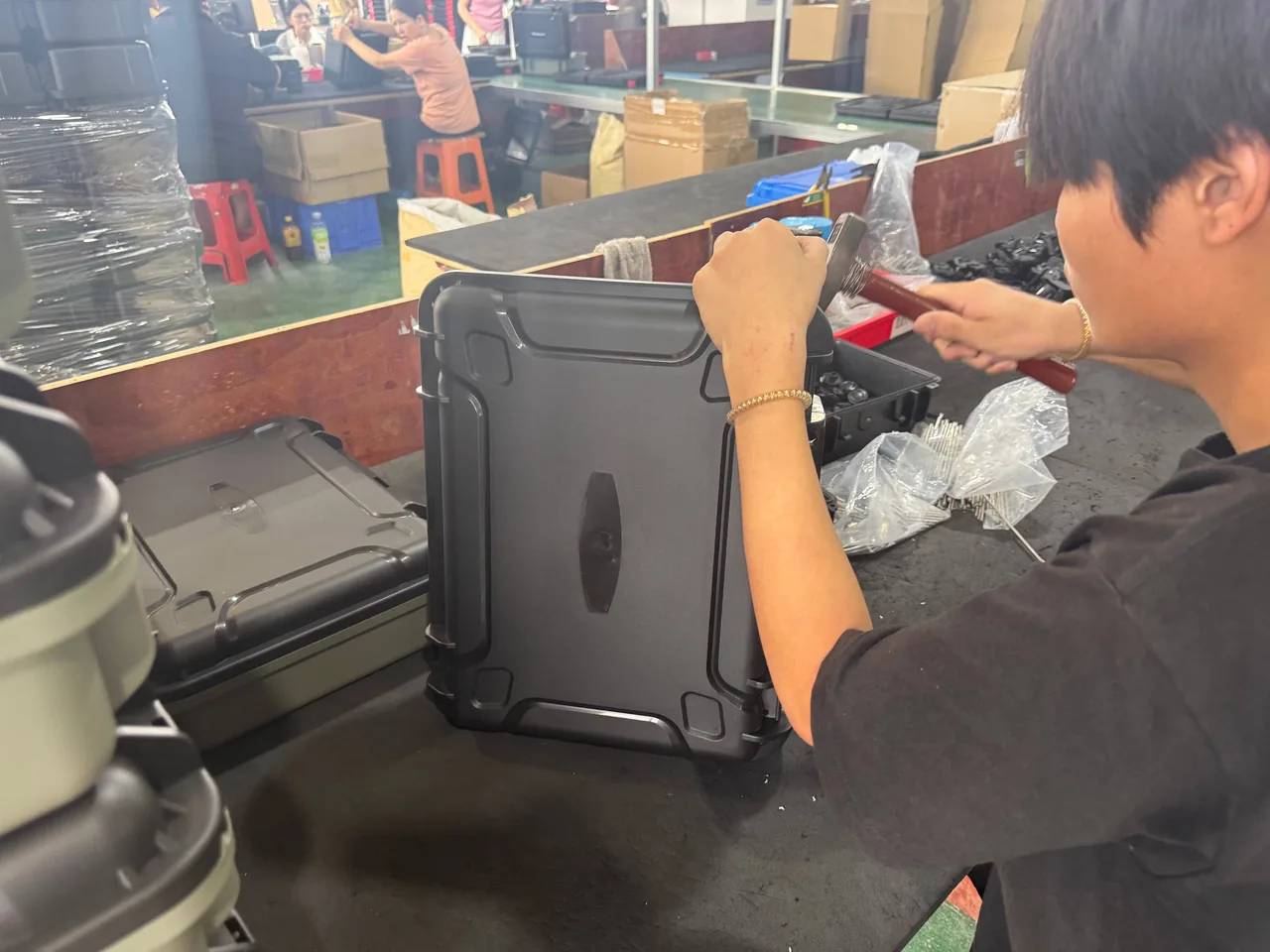
Toolbox sizes are conventionally given in inches (1 inch ≈ 2.54 cm) measured on the long side, which follows the habit of the hardware tool industry. Common tiers are:
| Size tier | Approximate long side | Typical capacity positioning | Suitable for |
|---|---|---|---|
| --- | --- | --- | --- |
| Small (about 12") | ~30 cm | Basic six-piece set, carry-along tools | Household, in-vehicle |
| Medium (14–17") | ~35–43 cm | Including cables, test pens, pipe wrenches | Electricians, vehicle use |
| Large (20" and up) | ~50 cm+ | Crew-level kit, angle-grinder accessories | Industrial, work crews |
Capacity is generally expressed in litres (L) or as internal length × width × height (cm). It is important to distinguish nominal capacity from effective usable capacity: internal structures, dividers, and wheels all consume space, so the volume of tools you can actually load is usually smaller than the stated figure. As a rule of thumb, allow for "existing tool volume × 1.3" of headroom, so the lid can still close once the box is full. Heavy tools (sledgehammers, pipe wrenches) raise the centre of gravity noticeably; for these, prefer a low-centre-of-gravity box with latches and anti-slip feet so it does not tip over.
Beyond capacity, pay attention to the match between empty weight and fully loaded total weight. A plastic box is light when empty, but once loaded with metal tools the total may not be small at all, and the handle and latches must have enough load margin. A wheeled box spreads the weight, but the durability of the wheel-axle bearings and the strength of the bottom tray determine how many towing trips it will survive. For scenarios that require frequent stair climbing or long walks, keep the fully loaded weight within what one person can handle, and if needed switch to a hand-pushed tool cart to share the load.
How to Choose a Toolbox for Different Applications
Requirements differ sharply between applications, and choosing wrong leads either to "looks like it fits, falls apart in use" or to "more features than needed, a burden to carry."
- Home repair: Short, light tasks (tightening a tap, changing a bulb, assembling furniture). Prefer a light plastic hand-carried box, single-layer, around 12", with a quick-open lid and shallow compartments so common tools can be located within three seconds.
- Automotive service / workshop: Frequent contact with oil, heavy objects, and drop risk. The shell must resist oil corrosion and carry load; metal or thickened engineering plastic with multiple drawers or dividers fits better.
- Electrical / inspection rounds: Requirements for anti-static behaviour, insulation, and portability, with fast access from the body. A belt-worn tool bag or a divided portable plastic case with an anti-static lining is the safer choice.
- Outdoor survey / field science: Focus on sealing, temperature adaptability, and low weight. A protective case with an IP67 gasket keeps out dust and water, and PP material scores well for its low density and chemical resistance.
- Military/police/fire, aviation and communications: Emphasis on impact resistance, shock absorption, and protection rating, usually corresponding to protective-case product lines verified against environmental test methods such as MIL-STD-810H.
- Electronics / scientific exploration: Precision instrument transport demands shock absorption and custom trays; ABS, with its high impact resistance and good surface finish, protects vulnerable parts such as lenses and circuit boards.
Many specialised manufacturers build subdivided product lines around exactly these scenarios. KeXin New Materials (Guangdong) Co., Ltd., for instance, brings its protective cases to market under the global brand kexinMaterials and the protective-case product-line brand JUNZHJIA, offering plastic tool boxes, safety protective cases, sealed cases, waterproof/moisture-proof cases, hardware tool boxes, machinery parts cases, and parts bins across more than 150 specifications. Applications span outdoor survey, military/police/fire service, electronics, scientific exploration, and aviation/communications, backed by one-stop OEM/ODM customisation covering product design, injection moulding, mould manufacturing, LOGO printing, and inner-tray/liner making. Its products are exported to the US, UK, Germany, Canada, Japan, Russia, the Philippines, India, Hong Kong and Taiwan (China), and the Middle East.
The Materials Science of Toolboxes: Polymer Properties of ABS and PP
To really understand the performance limits of a plastic toolbox, you have to go back to the molecular structure of the material itself. ABS and PP are the two most common engineering plastics used in toolboxes, but they are chemically quite different.
ABS (acrylonitrile-butadiene-styrene) is a terpolymer in which the three monomers each play a role:
- Acrylonitrile (A) provides rigidity, hardness, and chemical resistance.
- Butadiene (B) disperses as a rubber phase through the matrix, delivering toughness and high impact resistance — the reason ABS is hard to break by dropping.
- Styrene (S) gives a smooth surface, good gloss, and easy processing, so the case looks refined and can be painted or plated directly.
ABS therefore combines "hard, tough, glossy," and suits scenarios that demand both appearance and impact resistance.
PP (polypropylene) is a semi-crystalline polyolefin with a regular molecular chain and very low density, which brings two distinctive advantages: first, fatigue resistance — it can be flexed repeatedly without breaking, making it the material of choice for living hinges; second, chemical inertness — it resists most acids, alkalis, and organic solvents (strong oxidisers excepted). PP also has weak points: at low temperature molecular chain movement is restricted and it becomes brittle, and its low surface energy makes it hard to bond or print on directly, so flame or corona treatment is usually needed before colouring.
These materials-science differences directly determine how a toolbox behaves in different environments. For a deeper comparison, see PP vs ABS Toolboxes: What Is the Difference?.
A Self-Inspection Checklist for Toolbox Quality
When you have a toolbox in hand, the following checks give a quick read on build quality and help you avoid "looks like it fits, falls apart in use."
- Check shell wall thickness and reinforcement ribs: Even wall thickness plus ribs on the side walls means better resistance to deformation; industrial-grade products often raise rigidity through rib layout or double-wall construction.
- Feel the latch action: A good latch opens and closes smoothly and leaves no visible gap when shut; the multi-point butterfly latches of a protective case should compress the gasket evenly.
- Inspect hinge durability: For metal hinges, look at whether the welds are sound; for plastic living hinges, check whether the root has a thickened transition to avoid stress-concentration cracking.
- Verify the gasket: The seal should sit fully in its groove with no breaks, and should spring back when pressed by hand rather than feeling stiff or coming loose.
- Feel the lining fit: Pre-cut foam should have clean grid lines that tear away easily; an EVA tray should have neat edges that follow the tool outline.
- Weigh the overall balance: Once loaded, the centre of gravity should sit low, load on the handle should be even, and the box should not sit crooked.
These six checks work together with scenario-based selection: for household use, items 1, 5, and 6 are enough; for industrial and outdoor use, verify 2, 3, and 4 carefully.
The Evolution of the Toolbox: From Wood to Engineering Plastics to Modular Systems
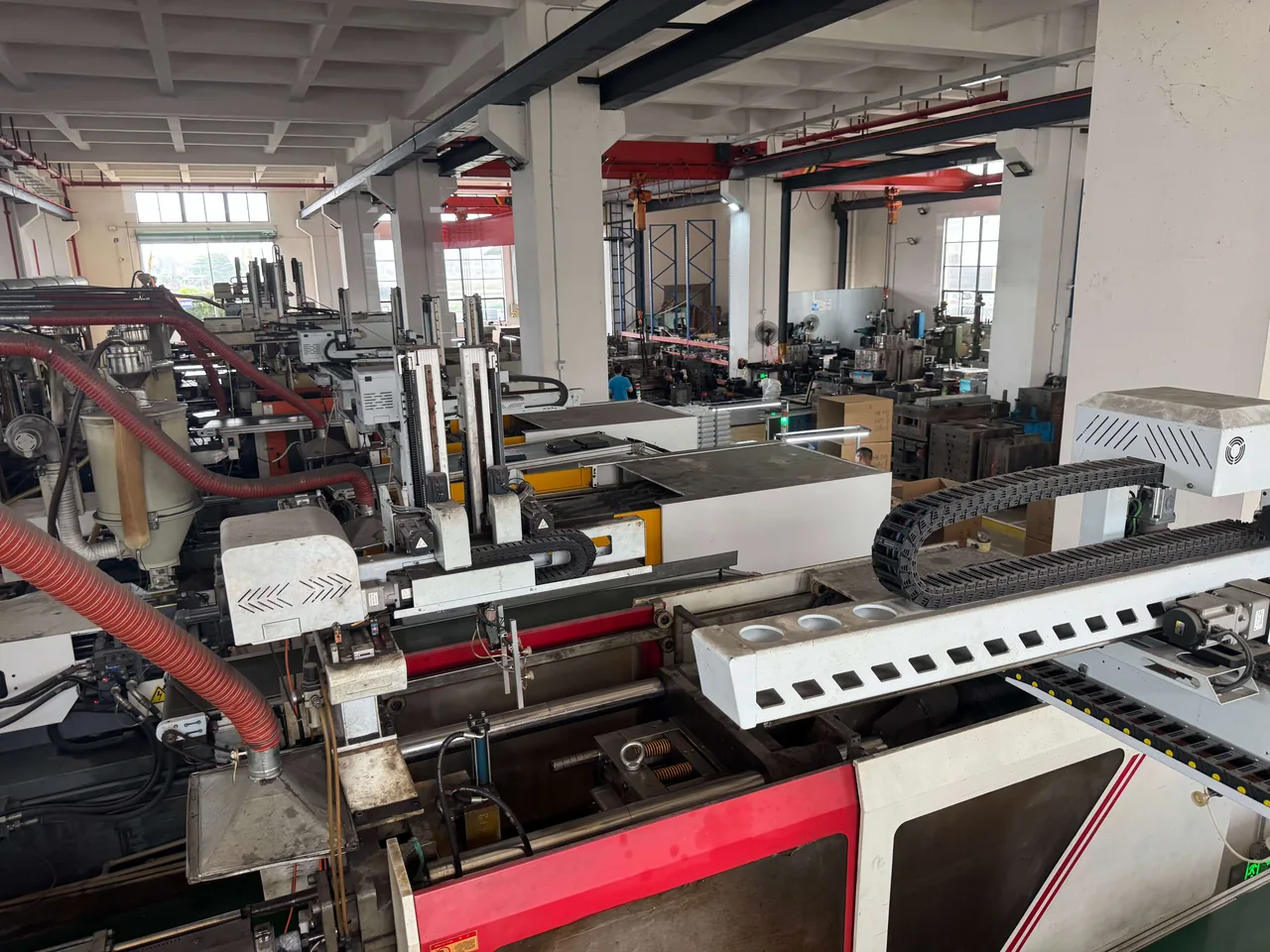
The material evolution of the toolbox has moved in step with the materials industry. Early toolboxes were mostly wooden — attractive but heavy and vulnerable to damp. Metal (steel sheet, aluminium) then became the industrial mainstream, offering strength but struggling with weight and rust. From the mid-20th century, as new polymers such as polypropylene became available, plastic parts boxes and tool boxes began progressively replacing traditional wooden and metal ones, spreading quickly on the back of light weight, rust resistance, low cost, and easy formability.
Today's toolboxes show three clear trends:
- Modularity: Interchangeable divider trays, drawers, and liners let users reconfigure the interior quickly for each task.
- Customised lining: CNC-routed EVA and pre-cut foam give every tool its own cavity, so nothing shifts in transit.
- Granular protection ratings: From ordinary dust resistance to IP67 sealing, and on to environmental suitability verification against methods such as MIL-STD-810H, protective cases have become standard equipment for shipping delicate apparatus.
KeXin New Materials illustrates this trend: drawing on product design, injection moulding, and mould manufacturing at its Zhongshan factory, it supplies more than 150 specifications from plastic tool boxes and safety protective cases through to parts bins, and supports one-stop customisation of LOGO printing and inner trays/liners — a concrete expression of the "modular + customised + graded protection" direction.
Common Misconceptions About Toolboxes
Several misconceptions come up repeatedly when buying and using toolboxes:
- "Bigger capacity is always better." An oversized box actually reduces access efficiency and adds carrying burden on short everyday tasks. Capacity should match the number of frequently used tools, not the whole household inventory.
- "Plastic means not durable." Modern engineering plastics (ABS/PP), once structurally reinforced, perform well in impact and weathering and are naturally rust-free; metal is strong but heavy and needs corrosion protection. No material is absolutely better — only better matched to a scenario.
- "A box is enough; I don't need a lining." The lining (foam/EVA) holds tools in position and absorbs transport vibration; without it, precision tools knock against each other and get damaged on rough roads.
- "A sealed box is automatically waterproof." Waterproofing depends on gasket material, latch compression force, and the fit accuracy of the shell; only an IP67 marking indicates resistance to temporary immersion. An ordinary box is merely dust-resistant or splash-resistant.
- "All plastics can handle chemicals." ABS is sensitive to ketones, esters, acetone, and similar organic solvents, which can attack and crack it; PP has better chemical resistance. Laboratory and chemical work needs the right material.
- "A 20-inch box will hold all my industrial tools." Nominal size does not equal usable capacity; internal dividers, wheels, and trays consume space, and heavy tools raise the centre of gravity. Judge on effective capacity and balance together.
Frequently Asked Questions (FAQ)
Q: What is the difference between a toolbox and a tool cabinet? A: A toolbox emphasises portability — it usually has a handle or wheels and suits mobile work. A tool cabinet is a fixed or semi-fixed high-capacity storage unit, typically placed in a workshop or at a workbench, sorting tools through multiple drawers; it holds more but is not easy to move. Many users combine the two: frequently used core tools go in the hand-carried box, bulky spares in the cabinet.
Q: What materials are toolboxes usually made from? A: The mainstream options are metal (carbon steel, aluminium alloy) and plastic (ABS, PP). Household and light-duty work mostly uses plastic; industrial and heavy-load work mostly uses metal or a metal-framed composite. Among plastic boxes, PP offers chemical resistance and low cost, while ABS offers impact resistance and good appearance. See Plastic vs Metal Toolboxes: What Is the Difference?.
Q: What size toolbox is right for home use? A: It depends on how many tools you have. For a basic household six-piece set (screwdriver, wrench, pliers, hammer, tape measure, electrical tape), a single-layer hand-carried box of about 12" (~30 cm) is enough. If the kit includes a test pen, cables, or a pipe wrench, go to 14" or larger in a double-layer reinforced model, which balances capacity with stability in a car boot.
Q: What is the foam lining in a toolbox for? A: The lining (commonly EVA, EPE, or pre-cut foam) fixes each tool in position, absorbs drop and transport shock, and stops metal tools from scratching or denting each other. When transporting precision instruments, photographic equipment, or survey devices, a custom tray significantly lowers the damage rate.
Q: Can I check a toolbox in as airline baggage? A: An empty box can normally be checked in. If it contains tools, airline and destination security rules apply — blades and wrenches may be classed as restricted items, so check requirements with the airline and customs in advance. For delicate equipment, prefer a protective case with latches and a custom lining.
Q: How do I maintain a toolbox so it lasts longer? A: For metal boxes, clean regularly and keep them dry, with a little lubricant on moving hinges. For plastic boxes, wipe with a neutral cleaner and avoid strong acids and alkalis. Keep gaskets out of direct sunlight to slow ageing. During long storage, leave the lid slightly open for ventilation and take the lining out to air-dry in the shade, so mould does not develop.
Q: What does IP67 mean, and do I need it at home? A: In IP67, the "6" means fully dust-tight and the "7" means protection against temporary immersion at 1 metre for 30 minutes. Ordinary household use generally does not require IP67; but if tools live in a car boot or on a balcony, or need rain and dust protection, a protective case with a sealing strip saves a lot of trouble.
Q: Why do some toolboxes reference MIL-STD-810H? A: MIL-STD-810H is a US Department of Defense environmental test methodology covering drop, vibration, temperature/humidity, salt spray, and other stresses. A protective case referencing it has been verified for environmental suitability using those methods, which suits demanding military/police, aviation, and field deployment work. It is a test basis for the product line, not a military certification.
Q: Do plastic toolboxes release harmful substances? A: ABS/PP plastic boxes from a reputable manufacturer that have passed RoHS testing keep restricted substances (lead, cadmium, mercury, hexavalent chromium, and others) within the relevant limits, and can safely be stored and shipped alongside electrical and electronic products. When buying, simply check whether RoHS/REACH compliance statements are provided.
Q: Can toolboxes be stacked for storage? A: Yes, provided the case top is flat and preferably has interlocking ribs so stacked units do not slide. The weight of the upper box must not exceed the load limit of the lower box's lid, or that lid will deform or even crack. Protective cases are usually designed with stacking ribs and corner reinforcement, making them better suited to multi-tier stacking in transit.
Q: How do I work out what capacity I actually need? A: List the tools you carry most often, take their combined volume, and multiply by about 1.3 for headroom. Then check the internal net dimensions, not the external ones. If you need help with the arithmetic, see How to Calculate Toolbox Capacity and How to Choose a Toolbox Size.
Conclusion
A toolbox is far more than "a box that holds tools." It is a mobile tool system built around four functions — storage, portability, protection, and environmental isolation. When choosing, first establish the number and volume of your tools, whether the working environment is damp or needs protection, whether frequent movement is involved, and your budget range; then match across metal / plastic / composite, and across hand-carried / drawer / wheeled / protective-case structures. Understanding material behaviour (the difference between PP and ABS, the trade-off between metal and plastic), the size and specification system, protection standards (IP67, MIL-STD-810H test methods, RoHS), and the demands of your scenario (household, industrial, outdoor, professional) is what lets a toolbox genuinely raise efficiency instead of becoming a burden. For specific models you are still unsure about, combine the self-inspection checklist above with a hands-on session — actually opening and closing the box tells you more than comparing spec sheets.