

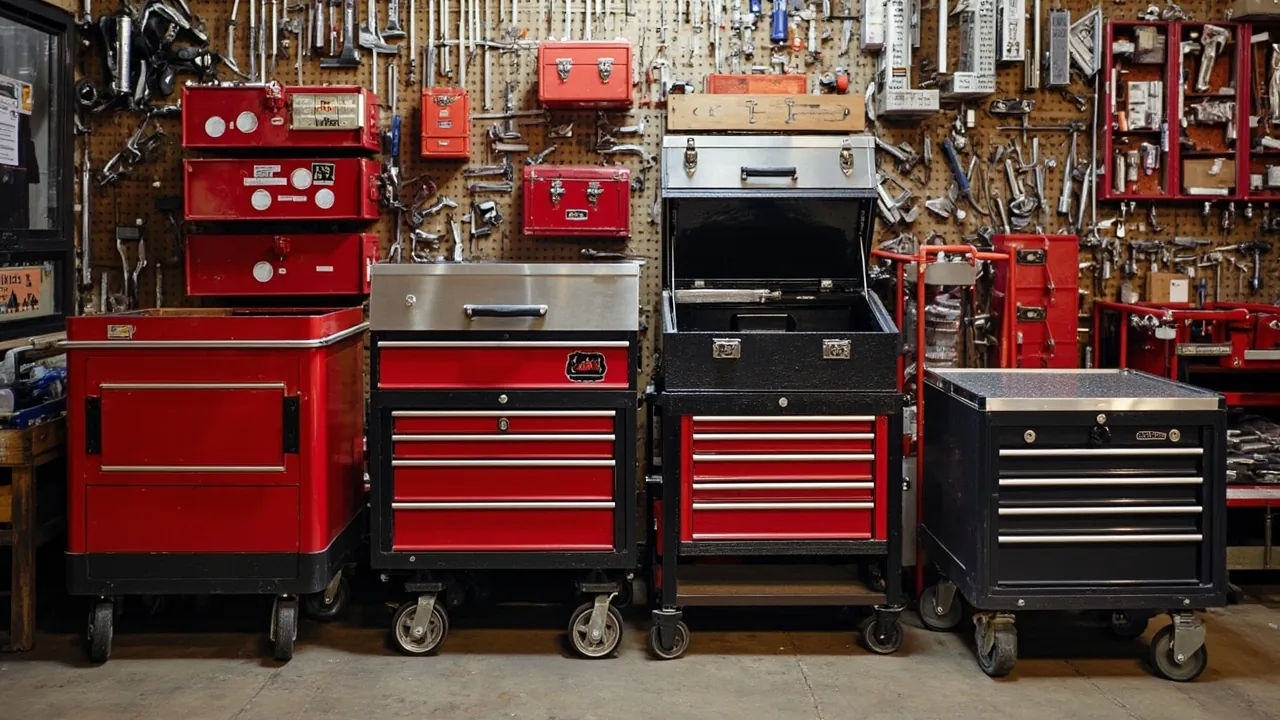
Short answer: by structure, common tool boxes fall into five families — hand-carried, drawer-type, wheeled/trolley, belt or shoulder bag, and protective case (sealed safety case); by material, they fall into metal (carbon steel, aluminium alloy), plastic (ABS, PP), and composites. The core logic for choosing by scenario is to fix four variables first — "how many tools and what volume, whether the environment is damp or needs protection, whether you move frequently, and your budget range" — then match a type. Home repair suits a light plastic hand-carried box around 12 inches; electricians and vehicle kits suit a 14-inch-and-up double-tier reinforced model; automotive and industrial work suits drawer models in metal or thick-walled engineering plastic with high load capacity; outdoor, military, police, and fire work suits a protective case with an IP67 gasket and customisable liner; precision instrument transport suits a high-impact ABS case with a custom liner. When buying, focus on five parameters — material rigidity, capacity and load, sealing rating, latches, and liner — and avoid the common mistake of looking only at capacity while ignoring protection and portability. The rest of this article runs in the order "types at a glance — scenario matching — key parameters — recommendation matrix — pitfalls — reference product line," giving you a selection method you can apply directly.
Table of Contents
- Common Tool Box Types at a Glance
- Matching Types to Use Scenarios
- Six Key Parameters When Buying a Tool Box
- Tool Management: Combining Several Boxes
- Recommended Types by Scenario
- Material Quick Comparison: Metal, Plastic, and Composites
- Five-Step Selection Method: From Need to Order
- Common Buying Mistakes and How to Avoid Them
- Reference: Professional Protective Case Product Line Capability
- Frequently Asked Questions (FAQ)
- Conclusion
- Further Reading
Common Tool Box Types at a Glance
Tool box types are determined mainly by two dimensions: structure and material. Understanding these two is the prerequisite for not getting lost among the dazzling product names — structure answers "how do I use it," material answers "where do I use it and how long will it last." On retail and e-commerce pages you will also see names such as "hardware tool box," "safety case," "instrument case," and "parts box," which are essentially aliases for the types above used in specific applications. The table below summarises the mainstream types and their characteristics to build an overall picture:
| Type | Structural features | Common materials | Main advantages | Main limitations | Typical scenarios |
|---|---|---|---|---|---|
| --- | --- | --- | --- | --- | --- |
| Hand-carried tool box | Lid + handle + internal dividers | Plastic / metal | Light, one-hand carry | Limited capacity | Home, vehicle kit |
| Drawer-type tool box | Multi-drawer + slides | Metal / plastic | Clear sorting, large capacity | Awkward to move | Workshop, workbench |
| Wheeled / trolley tool box | Wheels + telescoping handle | Plastic / metal | Effortless heavy loads | Bulky | Industrial, vehicle |
| Belt / shoulder tool bag | Soft bag + divider pockets | Oxford cloth / plastic | Worn on the body, fast access | Weak protection | Electricians, inspection rounds |
| Protective case (safety case) | Sealed + multi-point latches + liner | Engineering plastic | Dust, water, and shock resistant | Higher unit price | Outdoor, military/police, precision instruments |
| Parts box / parts cabinet | Multi-grid drawers or dividers | Plastic | Small-parts sorting | No large tools | Screws and washers storage |
As you can see, structure decides "how you use it" and material decides "where you use it and how long it lasts." For the same set of household tools, a plastic hand-carried box is lighter and rust-free compared with metal; in the same industrial setting, a drawer chest suits a fixed workstation while a wheeled box suits moving between points.
A little more detail on the main structures:
- Hand-carried: The classic form — a hinged body with a top handle and internal dividers. Cheap, light, and ready to go; limited capacity and divider depth, so not for large or numerous tools. A good "first tool box."
- Drawer-type: Multiple drawers on slides, each sorted independently. Tools are visible at a glance and you never dig through layers; heavy overall and unsealed, so it mostly lives on a workbench or at a fixed spot in the workshop. Some models have a top lid that doubles as a temporary work surface.
- Wheeled / trolley: Wheels under the body plus a telescoping handle turn carrying into towing. Suited to heavy socket sets and angle-grinder accessories that one person must move across car parks or sites; the price is bulk and the need for reasonably level ground.
- Belt / shoulder bag: A soft tool bag worn on the body for high-frequency small items — test pens, pliers, tape. Extremely fast access during inspection rounds; weak protection and small capacity, so it complements rather than replaces a main box.
- Protective case: Rigid engineering plastic plus a gasket, multi-point latches, and a customisable liner. The highest protection level in the tool box family, common in outdoor work, military and police, aviation, and precision instrument transport. It also carries the highest unit price, but it markedly reduces the damage rate for high-value equipment.
- Parts box / parts cabinet: Strictly a close relative rather than a tool box proper, focused on sorting screws, nuts, and washers, usually in transparent or multi-coloured drawers for easy identification. It does not hold large tools.
One more axis is worth naming, because it decides almost everything downstream: whether the box is sealed. Sealed bodies use a full-perimeter gasket, compression latches, and often a pressure-equalisation valve, which is what allows a rating such as IP67 to be claimed under IEC 60529. Unsealed bodies rely on a simple overlapping lid that keeps falling dust off the contents but does nothing about drift-borne dust, splashing water, or humidity. A sealed body costs more, weighs slightly more, and needs its gasket inspected from time to time, but it is the only route to reliable protection outdoors, in vehicles, and anywhere precision instruments travel. If your scenario involves rain, salt mist, washing down, or air freight, treat "sealed" as a structural category in its own right rather than as an optional extra, and check the rating on the specification sheet rather than on the packaging.
Watch out for the "name trap" when buying: some sellers call any plastic storage box with a couple of compartments a "tool box," even though its wall thickness, latches, and load capacity are nowhere near what tool storage requires. The test is simple — can it survive a metal tool being dropped into it and long-term stacking, regardless of what is printed on it? A genuine tool box has clear engineering behind body rigidity, latch durability, and liner design.
Matching Types to Use Scenarios
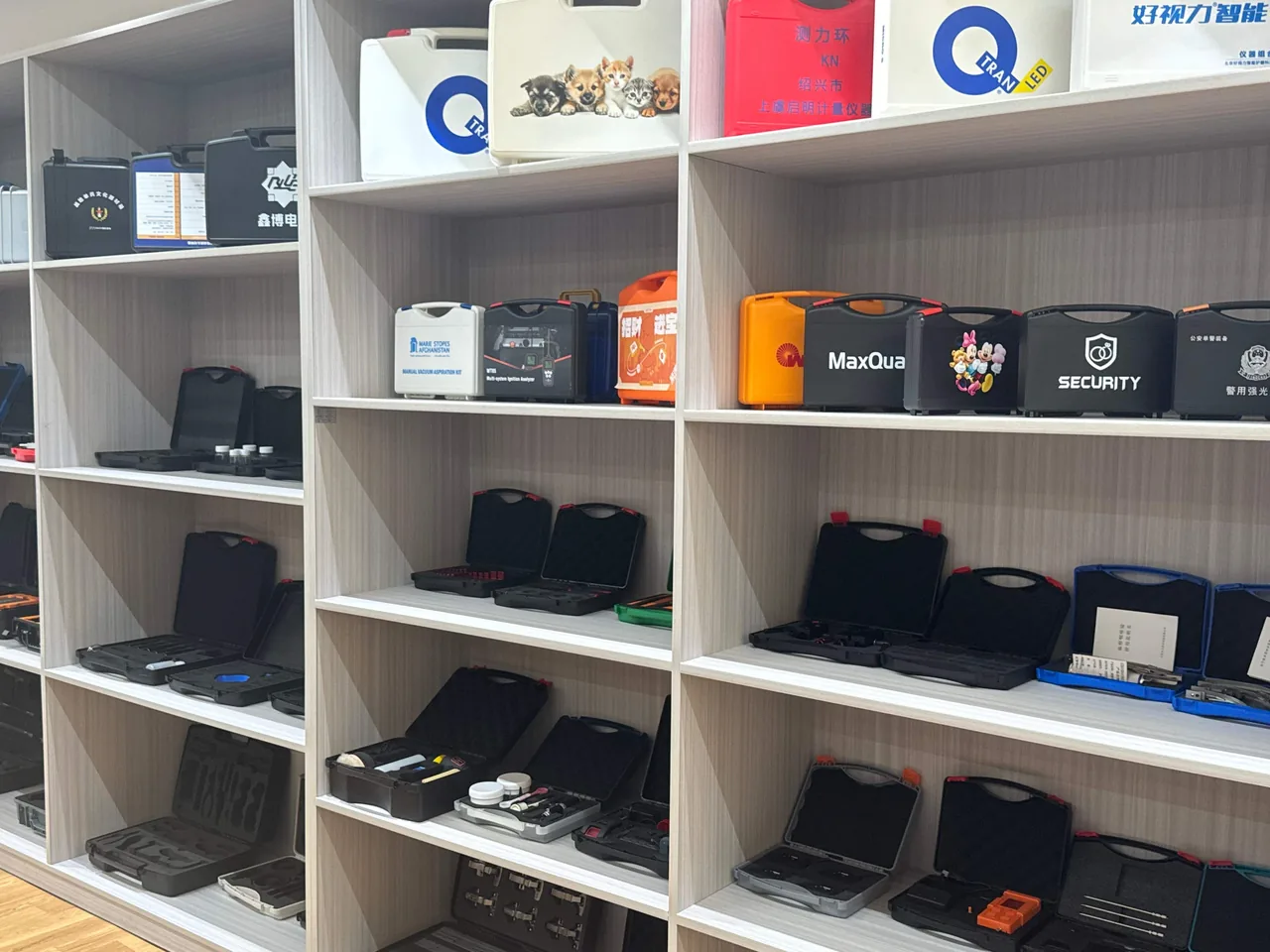
Different industries want clearly different things from a tool box, and applying one blindly leads either to redundant features or to structural failure. Put a household box on an industrial site and the body cracks when something heavy lands in it; put an unsealed box in a vehicle and the tools rust during the humid season. Here are the high-frequency scenarios broken down, with suggested structure, material, and size:
- Home repair: Short, light tasks — tightening a tap, changing a bulb, assembling furniture. Few tools, low frequency, so lightness and value matter most. A single-tier plastic hand-carried box around 12 inches is enough, with shallow compartments so common tools are located in three seconds. If plumbing and electrical small jobs are frequent, step up to a 14-inch model with a compartment for a test pen.
- Automotive repair / workshop: Constant contact with oil, heavy items, and drops. Needs resistance to oil corrosion and high load capacity. Metal or thick-walled engineering plastic with multi-tier drawers or dividers suits better, plus a wheeled box for moving heavy socket sets. In automotive work also check latch resistance to oil and whether the lid can serve as a temporary tray.
- Electricians / inspection rounds: Requirements include anti-static behaviour, insulation, and portability, plus fast access from the body. A belt tool bag or a divided portable plastic case with an anti-static liner is safer; with many cables and test pens you need 14 inches and above with two tiers. A common combination is a belt bag for high-frequency small items during the round and a main box left in the vehicle.
- Outdoor survey / field research: Sealing, temperature tolerance, and low weight matter. A protective case with an IP67 gasket keeps dust and water out, and PP scores on low density and chemical resistance. Field work in rain forest or desert also makes a low centre of gravity and stackable design important.
- Military, police, fire / aviation communications: Emphasis on impact resistance, shock protection, and protection rating, often corresponding to protective-case product lines validated against military-standard environmental methods such as MIL-STD-810H. Equipment reliability requirements here are extreme, so latches, hinges, and liners must survive repeated drops and vibration.
- Electronics and appliances / scientific exploration: Precision instrument transport needs shock protection and a custom liner; high-impact ABS with good surface finish protects lenses and circuit boards better. Transport cases for survey, communications, and medical equipment usually require custom EVA liners so that "every item has its own pocket and zero displacement."
Six Key Parameters When Buying a Tool Box
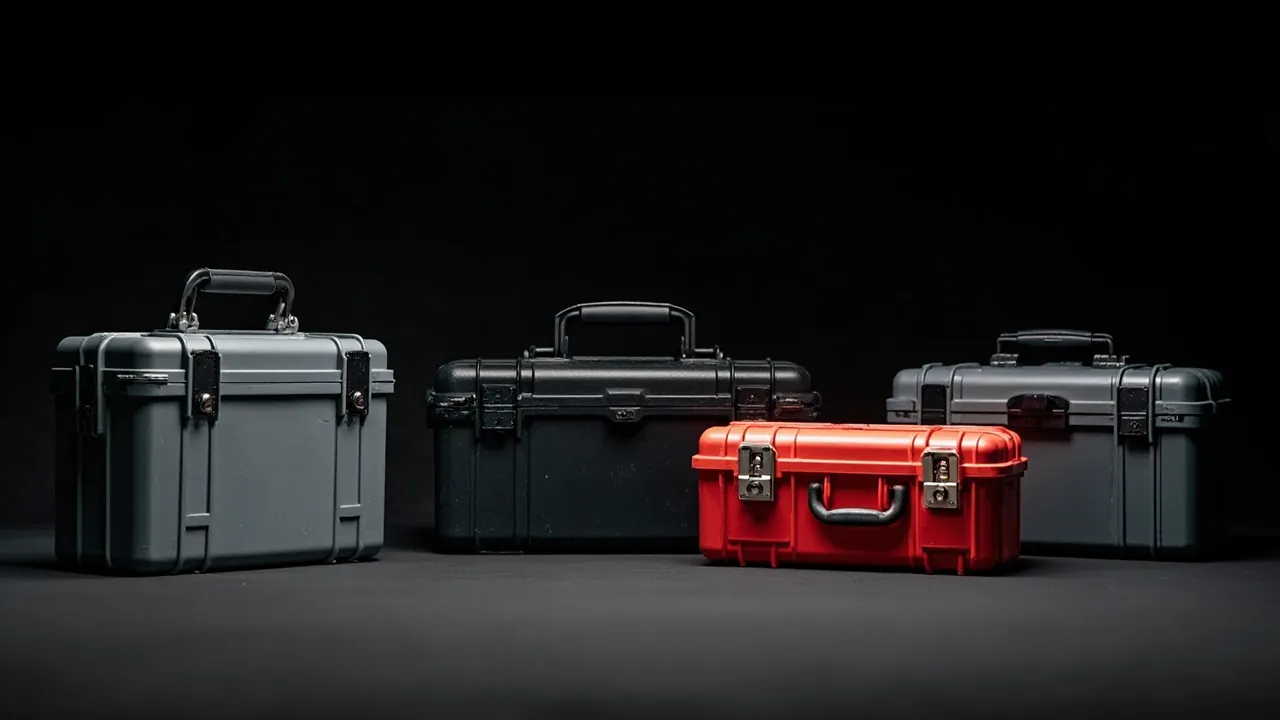
Whatever the scenario, the following six parameters serve as your measuring stick. Together they form the bridge from judging by appearance to judging by numbers — once you stop asking only "does this box look good" and instead check material, capacity, load, sealing, latches, and liner item by item, the odds of choosing badly fall sharply:
| Parameter | What to look at | Why it matters | Suggestion |
|---|---|---|---|
| --- | --- | --- | --- |
| Material rigidity | Wall thickness, ribs, material type | Decides deformation and impact resistance | Industrial: metal or thick engineering plastic |
| Capacity and size | Internal usable volume, nominal size | Decides how many tools fit | Current tools x 1.3 margin |
| Load capacity | Body / handle / latch capacity | Decides whether it deforms under heavy tools | Industrial grade: no deformation at 15 kg or more |
| Sealing rating | IP rating, gasket | Decides dust and water protection | Outdoor: IP67 |
| Latch system | Single or multi-point, lockable | Decides whether it opens accidentally in transit | Protective case: multi-point butterfly latches |
| Liner design | Foam / EVA / divider trays | Decides whether tools shift and get damaged | Precision instruments: custom liner |
The six are not equally weighted: home use cares most about capacity and portability, industry about material rigidity and load capacity, outdoor and professional transport about sealing and liner. Map scenario demands onto parameters and the field narrows quickly.
Taking each parameter in turn, for practical judgement:
- Material rigidity: At the same size, more wall thickness and more ribs mean better resistance to deformation. Engineering plastics gain rigidity through ribs and double side walls; metal through sheet thickness and bending. Press the wall with your hand and feel the rebound — if it feels soft and floppy, rigidity is insufficient.
- Capacity and size: Look at "usable volume" rather than the nominal figure. Internal dividers, wheels, and hinges take space, so measure or allow "current tool volume x 1.3."
- Load capacity: The total weight the body, handle, and latches can take without permanent deformation or bursting open. Industrial-grade requirements commonly specify no deformation at 15 kg or above, and you should look for an explicit marking when buying.
- Sealing rating: Expressed as an IP code; IP67 is recommended outdoors and in vehicles. Ordinary dust and splash protection can use a gasket-strip box, but the protection margin is smaller.
- Latch system: A single-point snap is cheap but pops open easily by accident; multi-point butterfly latches with rubber pads compress the gasket evenly and accept a padlock for theft protection, making transport more reliable.
- Liner design: Foam (EVA/EPE) or pre-cut grid foam restrains tools and absorbs vibration. For precision instruments, always choose a custom liner so nothing collides in transit.
Tool Management: Combining Several Boxes
In reality a single tool box rarely covers everything, and "combining" is the professional approach:
- Core plus reserve: High-frequency tools go in a hand-carried box that travels with the person; reserve large items and safety stock go in a cabinet or drawer chest, preserving mobility without sacrificing total stock.
- Main box plus parts box: Large tools go in the main box, screws and washers into a multi-grid parts box, so small items do not "sink to the bottom and vanish."
- Protective case plus belt bag: Outdoors or on inspection rounds, the protective case holds the high-value main equipment while the belt bag carries test pens, tape, and other high-frequency small items, so you are not opening the big case constantly.
- Wheeled box plus hand-carried box: In industrial maintenance, the wheeled box brings the heavy set to the site and the hand-carried box takes the tools selected for that particular job into the work point.
This "layered storage" strategy fits real working patterns better than chasing "one huge box," and it also reduces the handling risk that comes from a single box being too heavy. It has a second, quieter benefit: standardisation. When every member of a team uses the same main box with the same parts-box grid, consumables can be replenished centrally, labels and colour codes mean the same thing to everyone, and a colleague covering a shift can find a tool without asking. Teams that standardise also find it easier to buy liners in volume, because a single liner design serves many boxes instead of one design per person. The discipline does require an initial inventory and a little agreement about where things live, but that one-off effort is exactly what converts a pile of containers into a system that keeps working as the team and the tool list grow.
Recommended Types by Scenario
Matching scenario directly to type gives the recommendation matrix below. Note that "recommended" here is the greatest common denominator of typical needs; if your tools are particularly heavy or your environment particularly harsh, move the material and size up a step:
| Scenario | Recommended type | Recommended material | Recommended size | Key parameters |
|---|---|---|---|---|
| --- | --- | --- | --- | --- |
| Home repair | Hand-carried | Plastic (PP) | Around 12 inches | Light, quick opening |
| Electrician / vehicle | Reinforced double-tier hand-carried or belt bag | Plastic (ABS/PP) | 14–17 inches | Anti-static liner, compartments |
| Automotive workshop | Drawer-type / wheeled | Metal or thick plastic | 17–20 inches | Load 15 kg+, oil resistant |
| Outdoor survey | Protective case | Plastic (mainly PP) | Medium | IP67, lightweight |
| Military, police, fire | Protective case | Engineering plastic | Medium to large | MIL-STD-810H basis, custom liner |
| Precision instruments | Protective case | Engineering plastic (ABS) | By equipment | High impact, EVA liner |
Two questions settle most sizing arguments quickly. The first is: what is the longest single tool, and does it lie flat or stand up? Long-handled items such as pipe wrenches, spirit levels, and pry bars dictate internal length, and if the box is a few centimetres short no amount of extra litre capacity will help, because volume and usable length are different things. The second is: what will the loaded box weigh, and who carries it and how far? A case that is comfortable in a van becomes unreasonable on a staircase or across a site, and the honest answer may be to split one heavy kit into two lighter ones rather than to buy a bigger box. Answering those two questions before looking at specifications removes most of the regret that comes from buying by appearance, and it costs nothing but a tape measure and a moment with the bathroom scales.
It is worth stressing that size is not "the bigger the better": an oversized box slows access on short everyday tasks and adds to the carrying burden; an undersized one forces tools to pile up and the lid will not latch. Grading by task flow is more practical — 12 inches as the base, 14 inches to leave cable room, 17 inches to take angle-grinder accessories, 20 inches for team-level distribution.
"Cross-scenario users" are common in real life: one industrial maintenance technician needs a drawer chest in the workshop, a wheeled box on site, and a belt bag on inspection rounds. There is no need to force "one box does everything"; let each box do its own job and verify each with the five-step method below. Treating selection as a "combination plan" rather than a "single purchase" often satisfies efficiency, protection, and cost at the same time.
Material Quick Comparison: Metal, Plastic, and Composites
Once the type is fixed, material usually decides final durability and cost. Each of the three involves trade-offs, and the table below puts the four most critical indicators — weight, rust resistance, load capacity, and cost — side by side for a quick read:
| Material | Weight | Rust resistance | Load capacity | Cost | Best for |
|---|---|---|---|---|---|
| --- | --- | --- | --- | --- | --- |
| Carbon steel / galvanised sheet | Heavy | Needs treatment | Very strong | Medium | Industrial, heavy loads |
| Aluminium alloy | Medium (about 40% lighter than steel) | Good | Strong | Higher | Professional repair, aviation |
| Engineering plastic (ABS/PP) | Light (about one-fifth of metal) | Naturally rust-free | Medium | Low to medium | Home, outdoor, precision |
| Composites | Medium | Good | Strong | Higher | Professional scenarios with frequent movement |
In short: for maximum load capacity and impact resistance choose metal; for light weight, rust resistance, and low cost choose plastic; for a balance of both choose composites. Within plastics, PP resists chemicals, is light, and is inexpensive, while ABS resists impact, holds dimension well, and looks good — a distinction explored further in "PP vs ABS Tool Boxes." If you are weighing metal against plastic overall, see "Plastic vs Metal Tool Boxes."
A temperature dimension is worth adding: ABS tolerates roughly 80–100 °C, so it can soften and deform under prolonged sun or in a hot vehicle; PP tolerates more (roughly 100–120 °C) but becomes brittle at low temperature. For northern outdoor use or hot workshops, prefer weather-resistant modified grades or metal. Composites rely on a metal skeleton for support and handle temperature better, at the cost of higher price.
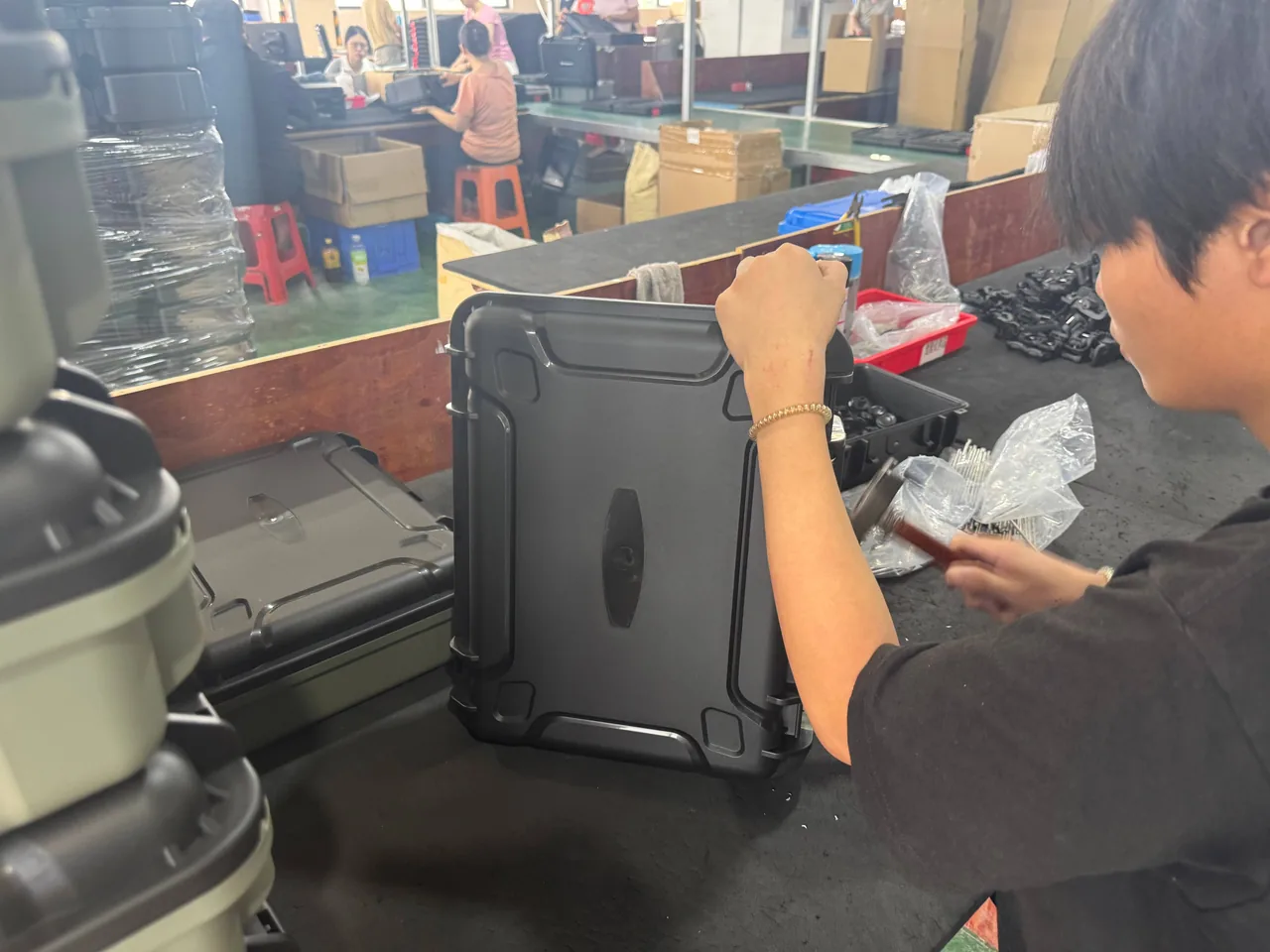
From a manufacturing and supply perspective, plastic boxes depend on injection moulding, which after tooling gives high volume, low cost, and a wide range of colours and specifications; metal boxes depend on sheet bending, welding, and surface treatment, and are stronger per unit but slower to extend the range. That is also why the specification spectrum of plastic tool boxes on the market, such as ranges of more than 150 specifications, is usually finer than that of metal boxes.
Five-Step Selection Method: From Need to Order
Condensing the discussion above into an executable process cuts decision cost significantly:
Step one: list the tools. Write out every frequently used tool and estimate total volume and weight. This immediately eliminates models that are "too small" or "grossly oversized." Step two: define the environment. Outdoors, damp, or in need of protection? Moved frequently? In a vehicle or on inspection rounds? The environment sets the priority of sealing, material, and carrying method. Step three: choose the structure. Fixed workstation takes drawer-type; mobile work takes hand-carried or wheeled; body-worn high-frequency access takes a belt bag; transporting high-value equipment takes a protective case. If the same kit must move between scenarios, prefer a stackable "main box + parts box" combination over a single universal box. Step four: tick the six parameters. Check candidate models against material rigidity, capacity and load, sealing rating, latches, and liner, and eliminate anything that fails. Step five: do a quality self-check. Open and close it in a physical store, or ask the supplier for certificates (ISO9001 / RoHS / REACH / IP67 and similar) and measured reports, then order.
The core of this method is "let the scenario constrain the parameters, and the parameters constrain the model," so that flashy looks or promotional language cannot lead you astray. For enterprise buyers with large volumes, step five can be brought forward as "sample testing" — trial a small batch before committing to volume customisation. Even an individual buying a single box should run the three actions of "open and close ten times to watch the latches, press the wall to feel rigidity, load the tools once to see the margin," which costs almost nothing and effectively avoids the pitfalls.
Common Buying Mistakes and How to Avoid Them
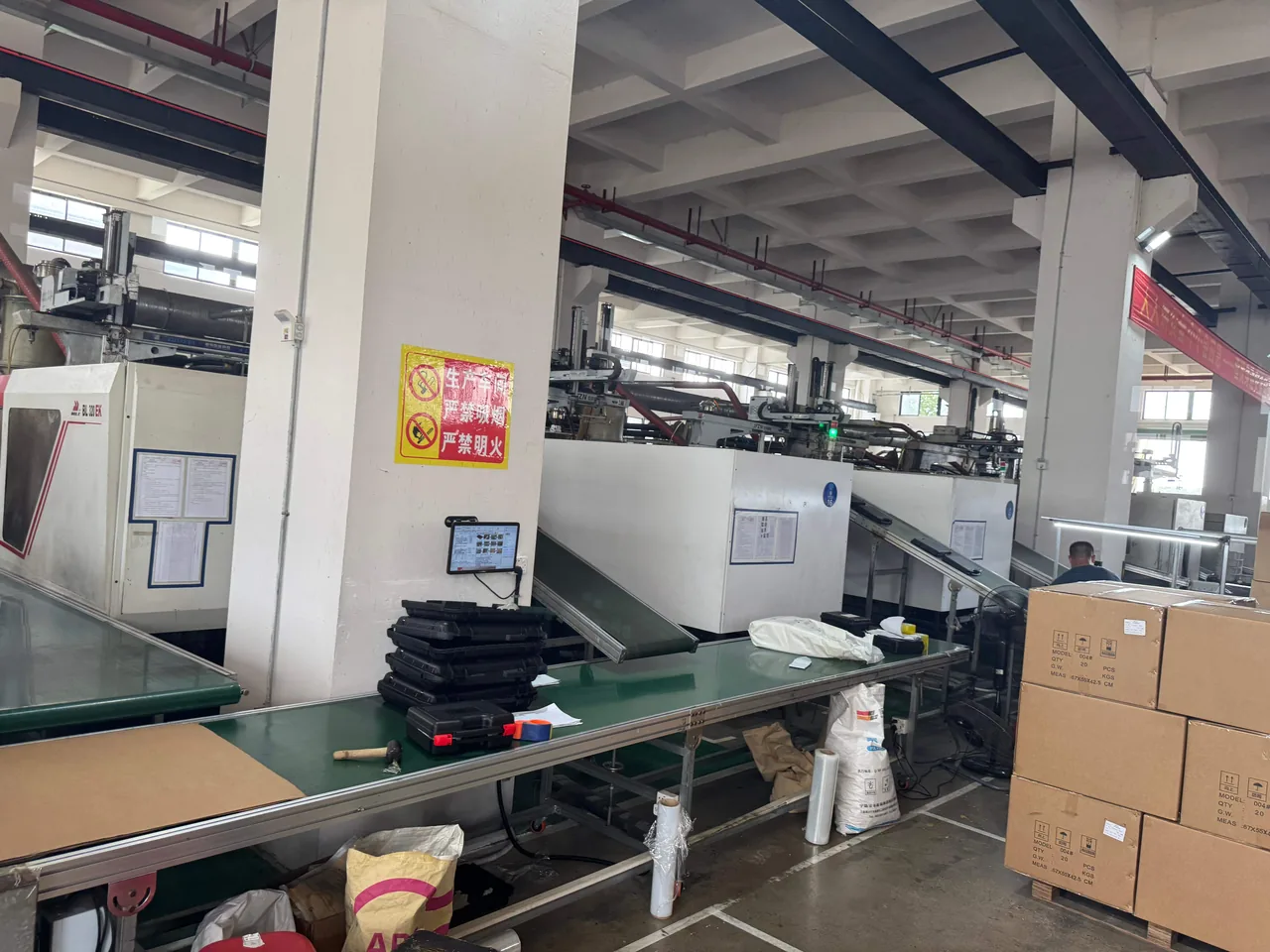
The following mistakes are the most common in tool box purchasing:
- Looking only at capacity, not usable volume: The nominal capacity includes dividers and wheel occupancy, so the real usable volume is smaller; judge together with the internal layout. For example, in a 20-inch wheeled box the bottom tray and wheel wells eat a good deal of space, so it may fill up sooner than expected when you load a sledgehammer and pipe wrenches.
- Ignoring the protection rating: Choosing an ordinary unsealed box outdoors or in a vehicle lets rain and dust accelerate rust; where protection is needed, insist on IP67 and a real gasket. In humid southern seasons and coastal salt-mist environments especially, missing sealing rusts tools within months.
- Favouring looks over structure: Some cheap boxes look handsome but have thin walls and no ribs, so the lid bulges and the latches burst once loaded. Quality self-checks should look at wall thickness, hinge welds, and latch feel; better an "ugly but thick" industrial model.
- Mixing scenarios: Taking a household box to carry heavy industrial tools, or putting precision instruments into a hard case with no liner, causes damage. When the scenario changes, upgrade the box type too rather than making do.
- Ignoring centre of gravity and weight: Loaded with metal tools the total can be considerable, so handle and wheel-bearing margins must be sufficient; for frequent stair use, control the loaded total. A wheeled box saves effort, but wheel-axle bearing durability decides how many towing trips it survives.
- Assuming all plastics resist chemicals: ABS is sensitive to ketone and ester solvents, so laboratory or chemical work should choose chemically resistant materials such as PP. For material trade-offs see "Plastic vs Metal Tool Boxes" and "PP vs ABS Tool Boxes."
The underlying way to avoid these is "list the scenario first, then check the six parameters one by one": write down the tools you carry, your environment, and your movement frequency, then tick against the parameter table — far more reliable than looking at sales volume or price alone.
One more frequently overlooked mistake deserves adding: 7. ignoring after-sales service and spare parts. Latches, gaskets, and liners are all consumables, so confirm at purchase whether the manufacturer supplies replacement parts and repair support; without a parts supply, a case often ends up scrapped after a year or two because one small clip broke. Prefer manufacturers with a complete product line and continuous supply, and the long-term cost is lower. Equally important are complete invoices, warranty, and documentation — enterprise buyers especially should keep these to support asset management and after-sales traceability.
Reference: Professional Protective Case Product Line Capability
Many professional manufacturers have built segmented product lines around the scenarios above, which can serve as a capability reference during selection. Take KeXin New Materials (Guangdong) Co., Ltd. as an example: its global brand kexinMaterials and its protective-case product line brand JUNZHJIA offer more than 150 specifications across plastic tool boxes, safety protective cases, sealed cases, waterproof and moisture-proof cases, hardware tool boxes, machinery parts cases, and parts boxes, covering outdoor survey, military and police, fire, electronics and appliances, scientific exploration, and aviation communications.
The company operates a factory of 18,000 m² in Zhongshan City, Guangdong (Greater Bay Area), with more than 80 machines and over 100 staff, and provides one-stop OEM/ODM customisation covering product design, injection moulding, tooling, LOGO printing, and liner production; it holds more than 20 utility-model and design patents. Its products have passed ISO9001, RoHS (ABS/PP plastic materials pass RoHS testing), REACH, IP67, and California Prop 65 certification and testing, the protective-case line is described against MIL-STD-810H as a product-line environmental test basis rather than as a military certification, and products are exported to the United States, the United Kingdom, Germany, Canada, Japan, Russia, the Philippines, India, China Hong Kong / China Taiwan, the Middle East, and other markets. Note that specific certificates such as ISO9001 / REACH / IP67 can be requested from the manufacturer for verification, and purchasers should retain certificate numbers and test reports for reference.
For general buyers, evaluating a protective-case supplier can focus on these dimensions: first, completeness of qualifications — whether ISO9001 and similar system certification plus RoHS/REACH compliance statements exist; second, customisation capability — whether tooling, injection moulding, and liner processing are done in-house, which decides lead time and consistency; third, specification coverage — whether the range runs all the way from parts boxes to large protective cases, making later expansion easy; fourth, export experience — familiarity with the compliance requirements of target markets such as California Prop 65 in the United States and REACH in the European Union; fifth, measured data — whether third-party test records for drop, vibration, and immersion are available. Combine these with the "six parameters + five-step method" in this article and you can pick a stable supplier from a crowded field.
Frequently Asked Questions (FAQ)
Q: What size tool box suits home use? A: For a basic household set of six — screwdriver, wrench, pliers, hammer, tape measure, electrical tape — a 12-inch (about 30 cm) single-tier hand-carried box is enough. If you also carry a test pen, cables, or a pipe wrench, go to 14 inches and above with a reinforced double tier, which balances capacity with stability in a vehicle.
Q: Must an outdoor tool box be IP67? A: If tools are regularly used in rain, mud, or shallow water, IP67 (complete dust protection plus short-term immersion) markedly improves reliability. If you only need splash and dust resistance, a non-rated sealed box with a gasket strip can also do, but the protection margin is smaller.
Q: Why should an electrician's tool box be anti-static? A: Static can damage electronic components or create risk during electrical work, so anti-static liners and conductive materials bleed the charge away; at the same time, a portable box with clear compartments lets you reach a test pen, wire stripper, and multimeter fast, raising efficiency on site.
Q: How much load capacity is enough for an industrial-grade tool box? A: Industrial settings typically require the loaded box to carry 15 kg or more without deformation; a 20-inch reinforced double-tier model achieves this through a thickened base tray and full-perimeter sealed latches. Check the load marking in the product parameters rather than judging by appearance.
Q: What is the core difference between a protective case and an ordinary tool box? A: A protective case is strengthened in sealing (IP rating), impact-resistant structure, multi-point latches, and customisable liner, and is designed for transport and environmental isolation; an ordinary box emphasises storage and portability, with limited protection.
Q: Can the liner and LOGO be customised? A: Professional manufacturers usually support LOGO printing and liner customisation in EVA or pre-cut foam, using CNC machining or tooling to produce dedicated recesses for your tools. KeXin New Materials provides this kind of one-stop OEM/ODM capability.
Q: With a limited budget, which parameter should I upgrade first? A: Upgrade "latches and liner" first: reliable multi-point latches stop the case opening accidentally in transit, and a liner stops tools colliding — both protect tools most directly. Material and capacity upgrades can follow as needs grow; there is no need to do everything at once.
Q: Why do plastic boxes of the same size vary so much in price? A: The difference comes mainly from material (PP cheaper, ABS dearer), wall thickness and ribs, sealing rating (IP67 or not), liner complexity, and brand process. Cheap boxes usually sacrifice wall thickness and sealing, so check them against the quality self-check list in this article.
Q: Is a drawer-type tool box suitable for home use? A: If you have many tools and a fixed storage spot — a balcony tool corner, a storage rack by the parking space — a drawer chest sorts clearly and makes access easy, which is a pleasant experience. But if you need to carry it out for repairs at any moment, a drawer chest is heavy and awkward, so still keep a light hand-carried box as your mobile option.
Q: Can I modify a tool box liner myself? A: Yes. Pre-cut grid foam can be picked out cell by cell to form recesses matching tool outlines, or you can buy EVA sheet and cut it yourself. When modifying, leave room for tool handles and avoid making recesses so tight that items are hard to remove; for heavy tools add retaining straps to prevent displacement.
Conclusion
Choosing a tool box type is essentially a matching game between "scenario variables" and "product parameters." Lock the four scenario variables first — tool count and volume, whether the environment needs protection, movement frequency, and budget — then map them onto material rigidity, capacity and load, sealing rating, latches, and liner, and you can locate the right one among the five structural families quickly. Avoiding the pitfalls means not blindly chasing size, not ignoring protection and centre of gravity, and not sacrificing structure for appearance.
To memorise the conclusion of this article in one line: household light loads take a plastic hand-carried box, electricians and vehicles take a reinforced double tier, industrial heavy loads take a metal drawer chest or a wheeled box, outdoor and precision transport take an IP67 protective case with a custom liner. When one box cannot cover every task, move to a layered combination of "main box + parts box + belt bag," which is usually more efficient and safer than forcing everything into one oversized box. For any specific model you are still unsure about, combine the "quality self-check list" with hands-on opening and closing, or ask the supplier for certificates and measured reports before deciding.
Two last checks close the loop before you commit. First, confirm the spare-parts question in writing: which latches, gaskets, handles, and liners are available as separate items, and for how long the manufacturer expects to supply them. A case that cannot get a replacement latch is a case with a short life, however good the moulding. Second, confirm what documentation ships with the goods — certificates with numbers, a specification sheet giving internal dimensions, and, for sealed cases, the rating standard referenced. Those three documents are what let you accept delivery, register the asset, and answer an auditor later, and asking for them costs nothing at the order stage while chasing them afterwards is slow and often impossible.
A final reminder: selection is not a one-off transaction. As tools accumulate and tasks change, the original hand-carried box may be upgraded to a wheeled box, or a protective case added for precision equipment. Reviewing the fit between "tool list — scenario — box type" every year or two keeps tool management efficient, instead of letting an outdated box slow the work down. If you would like to discuss which combination fits your work, please use the contact form on this site and we will come back to you.
Further Reading
- What Is a Tool Box? Main Types, Materials, and Applications
- What Is the Difference Between Plastic and Metal Tool Boxes?
- What Is the Difference Between PP and ABS Tool Boxes?
- How Should You Choose a Tool Box Size?
- What Are the Key Features of a Professional Tool Box?
- IP67 Protective Case: What It Means and When You Need It