

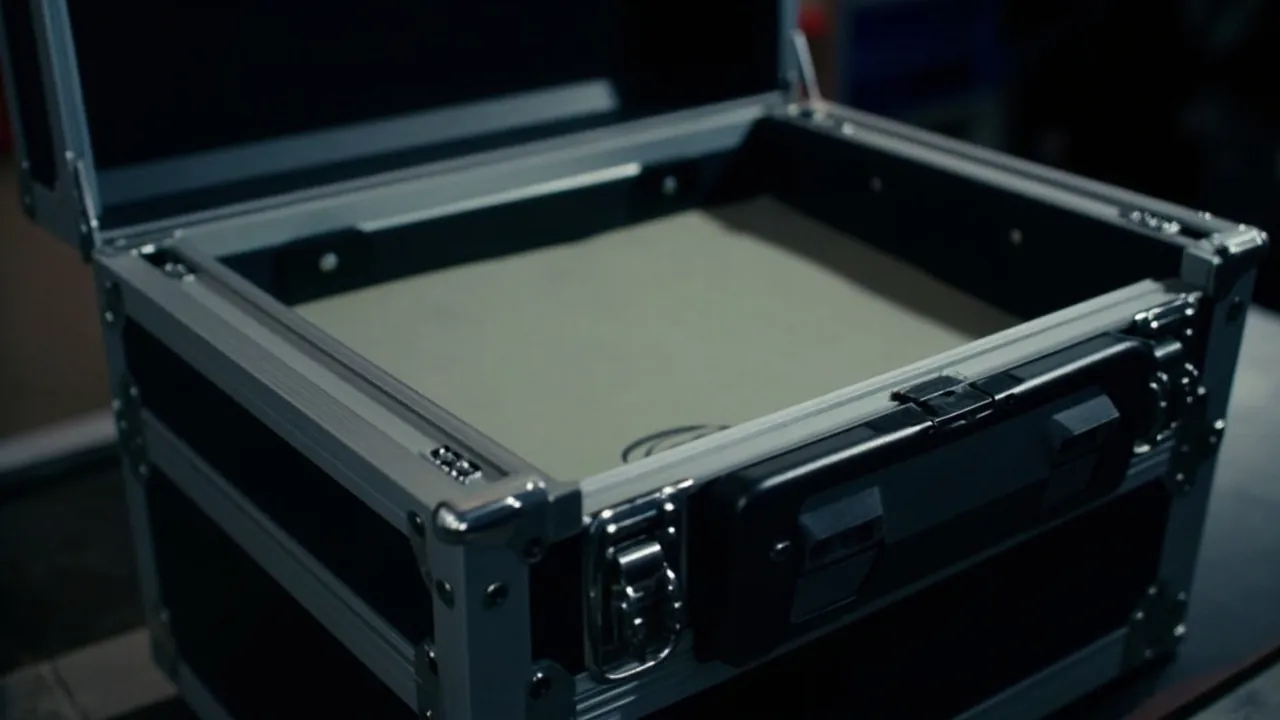
Short answer: A "professional-grade" tool box — as opposed to a light household model — should meet the mark in at least seven dimensions: 1. reliable structural material (PP/ABS engineering plastic or aluminium alloy/stainless steel, impact resistant and non-deforming); 2. a stated protection rating (at least IP67 dust and water protection, with key scenarios benchmarked against MIL-STD-810H environmental test methods); 3. a complete sealing system (closed-cell EPDM/TPE gasket plus compression or multi-point latches); 4. durable hardware (stainless steel hinges with a rated open/close service life of 20,000 cycles or more, latches that resist accidental opening); 5. internal modularity (adjustable dividers, EVA liner, light items up and heavy items down); 6. load capacity and ergonomics (wheels and handles rated for the load, smooth to push); 7. compliance and traceability (ISO9001, RoHS, REACH, California Prop 65 and similar, all verifiable). A professional box is not "thicker and dearer" — it is one where every performance claim has a checkable number instead of a marketing phrase.
Table of Contents
- Why a "Professional-Grade" Standard Is Needed
- Performance 1: Structural Material and Impact Resistance
- Performance 2: Protection Rating (IP and MIL-STD)
- Performance 3: Sealing and Hardware Reliability
- Performance 4: Internal Modularity and Retrieval Efficiency
- Performance 5: Load, Mobility and Ergonomics
- Performance 6: Compliance and Traceability
- Professional Tool Box Baseline Performance Comparison Table
- Common Buying Traps
- FAQ: Real Questions About Professional Tool Box Performance
- Certification and Compliance in Depth
- Conclusion
- Impact Resistance, Sealing and Liner Engineering Essentials
- Purchasing Channels, Sample Testing and Acceptance Clauses
- Price Range and Value-for-Money Judgement
- Selection Quick Reference by User Type
Why a "Professional-Grade" Standard Is Needed
An ordinary household tool box is designed around "holds enough, can be carried, is cheap," with almost no target for dropping, immersion, long-term vibration or precision protection. Professional scenarios — vehicle repair shops, construction sites, factory maintenance, instrument transport, military/police/fire service, outdoor scientific survey — demand that the box protect the tools in any environment, allow fast access and stay reliable for years.
Without a common standard, the market fills with vague claims such as "military grade" or "extreme protection." Genuine professional grade should speak in verifiable objective indicators: IP rating, the specific test items used, hinge cycle count, shell compression resistance, gasket material, certificate numbers. This article turns those seven dimensions into a buying checklist.
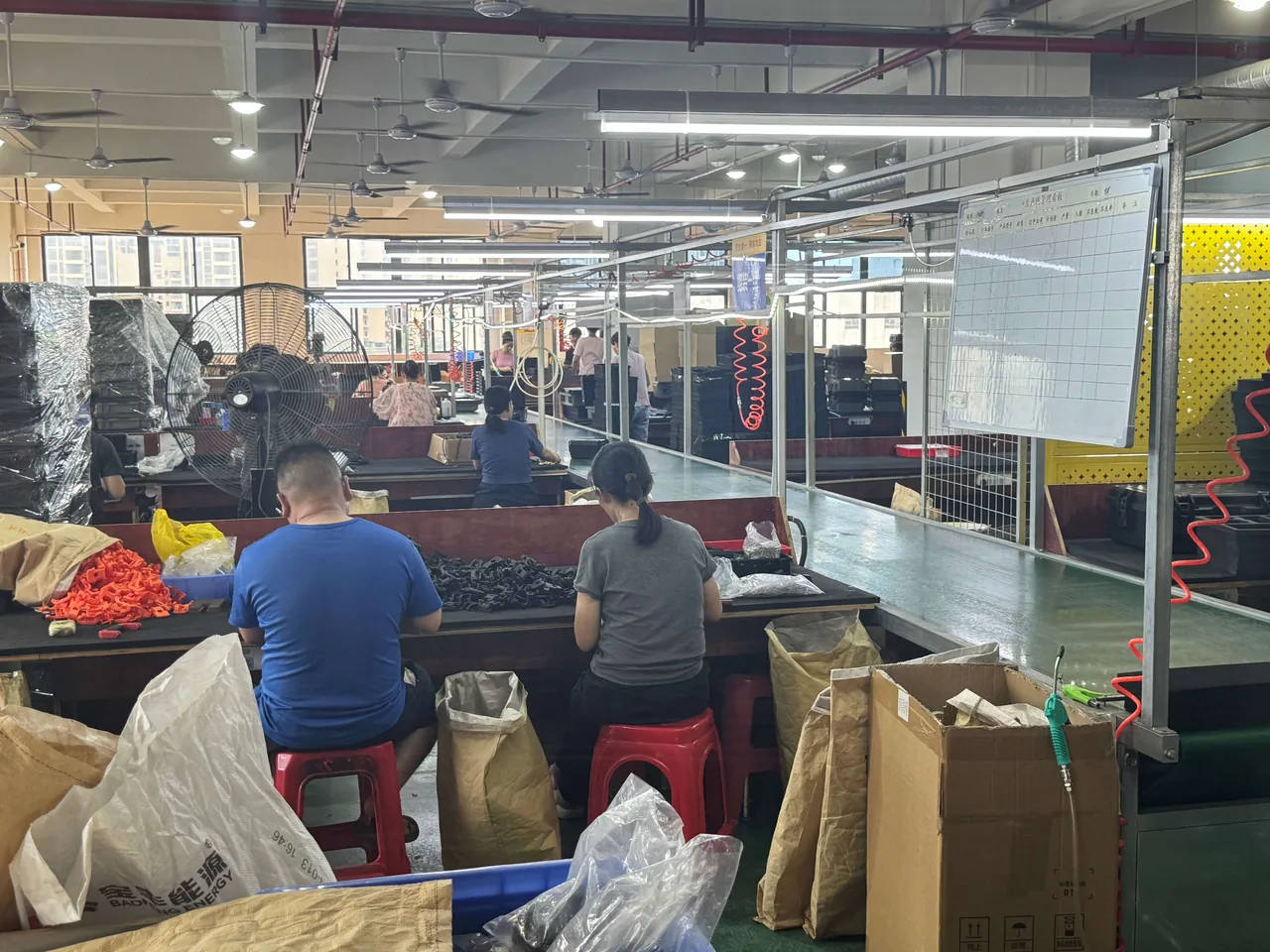
The protective-case product line of KeXin New Materials (Guangdong) Co., Ltd. is marketed under the JUNZHJIA brand. Based in Zhongshan City, Guangdong (Greater Bay Area), the company runs a factory of about 18,000 m² with 80+ machines and 100+ staff and holds 20+ utility-model and design patents. Its range covers plastic tool boxes, safety protective cases, sealed cases, waterproof and moisture-proof cases, hardware tool boxes, machinery parts cases and parts bins — 150+ specifications — and meets ISO9001, RoHS (the ABS/PP plastic case material has passed RoHS testing), REACH, IP67 and California Prop 65 requirements, with one-stop OEM/ODM customisation covering product design, injection moulding, mould manufacturing, inner-tray/liner making and LOGO printing. The indicators below are referenced against objective figures of this kind.
Performance 1: Structural Material and Impact Resistance
The first requirement of a professional box is that the shell neither cracks nor deforms under impact:
- Material choice: PP (polypropylene) and ABS engineering plastics are the industrial mainstream — light, chemical resistant and impact resistant; an ABS/PC compound can raise impact strength further and survive a 1.5 m drop test. Aluminium alloy is light and naturally rust-free, suiting mobile service and coastal work; thickened stainless steel (304, for example) has the highest compression resistance but is heavy, suiting extreme environments.
- Structural design: reinforcement ribs and a rib-like profile beat simply thickening the wall (better strength-to-weight ratio); one-piece moulded or fully welded structures resist impact better than assembled ones.
- Impact testing: professional protective cases commonly target no internal damage after a 1.5 m (sometimes 1.8 m) loaded free drop, with some validated against MIL-STD-810H drop and vibration methods.
- Temperature adaptability: quality plastic does not embrittle at low temperature and does not age under long-term UV exposure, whereas ordinary consumer-grade PP can crack in the cold or after long sun exposure.
When selecting, ask the manufacturer to state the material grade and thickness range (1.2–2.0 mm is a reasonable band; below 1.2 mm needs careful thought) rather than accepting the word "thickened."
Performance 2: Protection Rating (IP and MIL-STD)
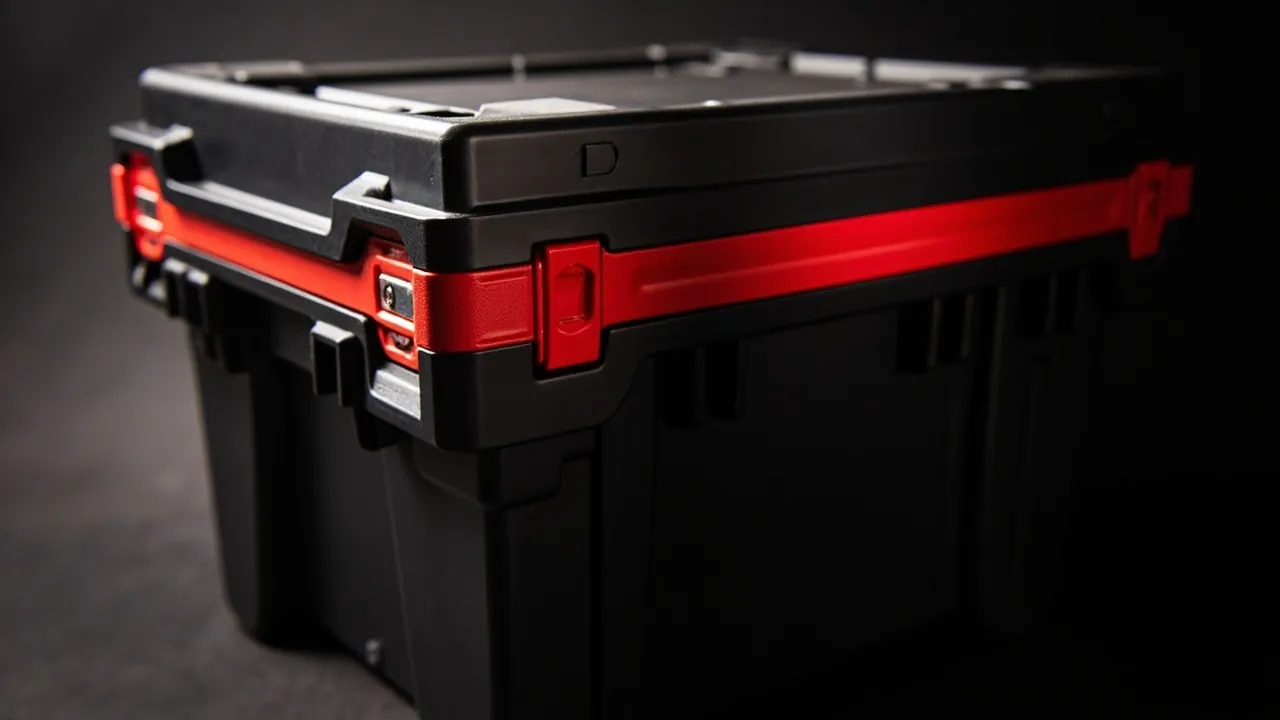
Protection rating is the most important objective indicator for a professional box:
| Rating | Dust | Water / protection meaning | Application |
|---|---|---|---|
| --- | --- | --- | --- |
| IP54 | Limited dust ingress | Splash resistant | Indoor workshop |
| IP65 | Fully dust-tight | Low-pressure water jet | Outdoor work, light rain |
| IP66 | Fully dust-tight | Powerful water jet | Heavy rain, washdown |
| IP67 | Fully dust-tight | 1 m immersion for 30 minutes | Dropped in water, short immersion |
| IP68 | Fully dust-tight | Deeper and longer immersion | Underwater / marine |
| IP69K | Fully dust-tight | High-pressure high-temperature wash | Food / pharmaceutical cleaning |
Key point: IP is defined by IEC 60529; the first digit (0–6) is solids and dust, the second (0–9) is liquids. A professional box should reach at least IP67, which also demonstrates excellent sealing against dust and ambient humidity. A vague "waterproof" claim with no specific rating should not be trusted. See IP67 Protective Case Explained.
MIL-STD-810H is a set of environmental test methods issued by the US Department of Defense, not a single certification; it covers drop, vibration, temperature and humidity cycling, altitude and salt spray procedures. If a protective case is "benchmarked against MIL-STD-810H," it should state the specific items (for example "drop at 1.5 m") rather than just displaying a logo. IP governs dust and water ingress; MIL-STD governs tolerance of shock, vibration and environment — the two complement each other. The JUNZHJIA protective-case line is designed against MIL-STD-810H environmental test methods as a product-line test basis — a test basis, not a military certification — and combined with IP67 forms complete protection.
Performance 3: Sealing and Hardware Reliability
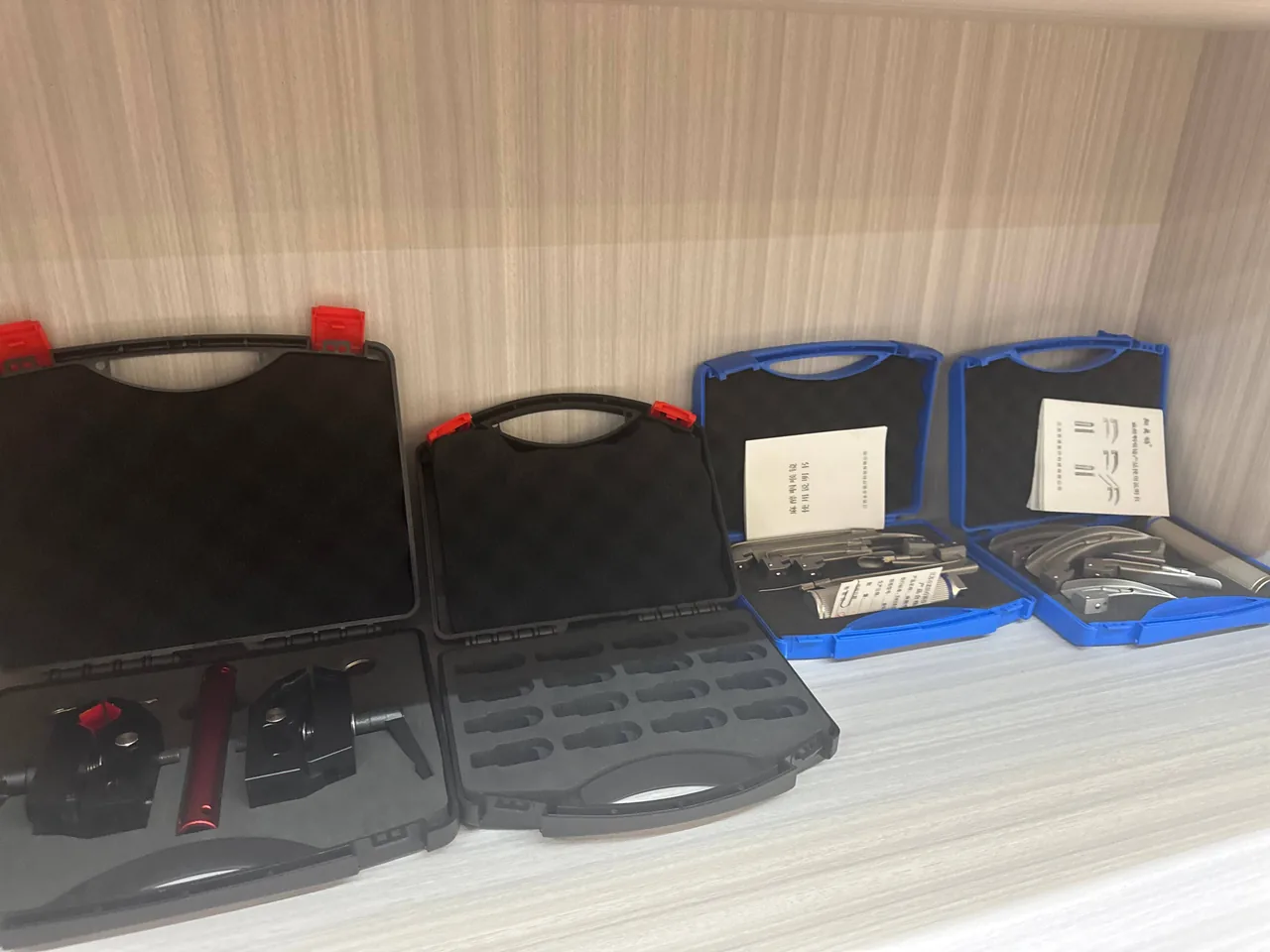
The best shell is wasted if sealing and hardware fail:
- Gasket: closed-cell EPDM or TPE foam, deeply seated in a dedicated groove and compressed evenly all the way round; avoid open-cell sponge, which absorbs water. Silicone or fluoroelastomer is used where the temperature range is wide or chemicals are present.
- Latch: compression or multi-point latches that apply even pressure and resist popping open in transit; a padlock hole allows a padlock to be fitted for lock-out/tag-out needs. A good latch gives clear tactile feedback when it seats.
- Hinge: stainless steel, with a rated service life that does not fail over repeated cycling (20,000 open/close cycles is a commonly specified professional benchmark); for large boxes (over 1000 mm tall) three or more hinges are advisable to counter lid bulging caused by the gasket's reaction force. The combined clamping force of latches plus hinges should exceed about 1.5 times the total reaction force of the gasket.
- Pressure equalisation valve (higher end): automatically balances pressure once the difference passes a threshold, preventing the lid from being sucked shut or the body from ballooning during air transport or temperature change.
These three items are unpacked in detail in What Do the Hinge, Latch and Gasket of a Tool Box Do?; when buying, treat "gasket material + latch type + hinge service life" as the three mandatory checks.
Performance 4: Internal Modularity and Retrieval Efficiency
A professional box does not just carry tools, it manages them:
- Adjustable dividers / tiers: three to five adjustable levels let tools be positioned accurately and speed up access.
- Custom liner: EVA or pearl-cotton foam routed to the shape of each tool holds it fast, absorbs shock and stops tools knocking together; a density of at least 25 kg/m³ and a rebound rate of 70% or more are good targets.
- Zoning logic: zone by use frequency (frequent items up top, heavy items below) and by tool type (sharp edges outward, long straight items in the middle); professional models reserve space for insulated tools, cable winding posts and a tablet bay.
- Anti-loss and traceability: some high-end models offer RFID tool management and humidity indicators, suiting aviation and precision instrument work.
The degree of modularity directly determines efficiency on site. The OEM/ODM capability at KeXin New Materials allows trays and liners to be customised to specific tool dimensions, avoiding the cost of later modification. See How to Choose a Tool Box Internal Foam.
Performance 5: Load, Mobility and Ergonomics
- Load figures: for rolling or modular systems a maximum load of at least 113 kg (about 250 lb, a common industrial portable-storage benchmark) is advisable; a fixed drawer unit should carry at least 45 kg per tier. Always check the stated maximum load rather than just "how much it holds".
- Wheels: industrial-grade wheels should be rated at 80 kg or more with a diameter of at least 100 mm (steadier on rough ground); prefer double-brake swivel polyurethane wheels or TPE shock-absorbing wheels, choosing the material by floor type. Wheels should use a standard interface so they can be replaced individually.
- Handle / pull rod: high-strength engineering plastic or aluminium alloy, with no flex when lifted fully loaded; two handles are more practical than one under heavy load. A pull rod should have two telescoping sections that lock firmly without wobble.
- Hands-on testing: how the empty handle feels, whether the hinge is smooth over ten open/close cycles, whether the four corners feel solid when pressed with a thumb, and whether a fully loaded box pushes smoothly in a tight circle — these are effective ways to judge structural confidence.
Performance 6: Compliance and Traceability
Professional purchasing, especially for export, military/police, medical and electronics, has to look at compliance:
- ISO9001: quality management system, the entry threshold for a professional manufacturer.
- RoHS: restriction of hazardous substances; the ABS/PP material of KeXin New Materials plastic cases has passed RoHS testing.
- REACH: registration, evaluation and authorisation of chemicals, relevant to EU market access.
- California Prop 65: California's warning-compliance requirement for hazardous substances, relevant for export to the US.
- IP67 / MIL-STD-810H: protection and environmental test basis, described above.
- Patents and traceability: 20+ utility-model and design patents reflect development capability; the patents are traceable to the design and process records of the corresponding product line.
Note: certifications should be "available on request," and any individual patent cited must correspond to a certificate list with patent number and title; inventing numbers is prohibited. KeXin New Materials was founded in 2014 and exports to the United States, United Kingdom, Germany, Canada, Japan, Russia, the Philippines, India, Hong Kong and Taiwan (China), and the Middle East.
Professional Tool Box Baseline Performance Comparison Table
| Performance dimension | Professional grade should meet | Typical light household model | How to verify |
|---|---|---|---|
| --- | --- | --- | --- |
| Shell material | PP/ABS engineering plastic or aluminium/stainless steel, thickness stated | Ordinary PP, thickness unstated | Ask grade and thickness |
| Impact resistance | No internal damage after 1.5 m loaded drop | No stated indicator | Ask for drop test |
| Protection rating | IP67 or higher | None or just "waterproof" | Look for the IP code |
| Environmental test basis | Benchmarked against MIL-STD-810H with items named | None | Ask which test items |
| Gasket | Closed-cell EPDM/TPE, deeply grooved | Thin rubber strip or none | Check material and structure |
| Latch | Compression or multi-point, with padlock hole | Ordinary catch | Check type |
| Hinge | Stainless steel, 20,000 cycles or more | Plastic/steel, cycles unstated | Ask the cycle count |
| Liner | Customisable EVA / pearl cotton | None or fixed grid | Check customisation capability |
| Load | 113 kg or more for rolling | Unstated | Ask maximum load |
| Certification | ISO9001/RoHS/REACH/Prop 65 verifiable | None | Request certificates |
Common Buying Traps
- Being misled by words such as "military grade" or "extreme." Claims with no specific IP rating or named test items are not credible; ask for numbers and test conditions.
- Judging by apparent thickness and number of wheels only. Run a loaded push test and a compartment fit test; skipping hands-on testing makes a wrong purchase likely.
- Paying a premium for unnecessary features such as "all-metal wheels." Budget should cover basic durability, not gimmicks.
- Ignoring accessory compatibility. If divider and wheel mounting interfaces are not considered, retrofitting costs extra later.
- Certification that cannot be traced. Require certificates to be available on request, with individual patents matched to numbers; reject unsupported claims such as "industry number one."
- Treating a wheeled model as universal. Wheeled models take up internal space and add weight; for light fixed work a plain box is more suitable (see Wheeled Tool Box vs Ordinary Tool Box).
FAQ: Real Questions About Professional Tool Box Performance
Q: Does a professional tool box have to reach IP67? A: For outdoor, construction site, transport and military/police scenarios, IP67 or better is recommended, because it demonstrates both dust-tightness and short-term immersion capability. A purely indoor fixed workstation can relax to IP54/IP65, but professional purchasing usually treats IP67 as the baseline.
Q: Which matters more, MIL-STD-810H or IP67? A: They do not conflict and are complementary. IP67 governs dust and water ingress; MIL-STD-810H governs tolerance of shock, vibration, temperature and humidity. Professional protection should cover both; claiming only one leaves real risks uncovered.
Q: Should the gasket be EPDM or TPE? A: Both are mainstream closed-cell elastomers for IP67 cases, with good weather and ozone resistance and low compression set. EPDM is slightly better on temperature range and ozone resistance, while TPE is recyclable and available in food-contact grades. What matters is closed-cell foam plus a deep groove rather than the material name itself.
Q: How should I read the load figures of a professional tool box? A: Look at the manufacturer's stated maximum load (113 kg or more for rolling/modular systems, 45 kg or more per drawer tier), then run a loaded push test and a handle lift test on site, rather than only asking "how big is the capacity."
Q: What certifications are needed for exporting tool boxes to Europe and North America? A: ISO9001 and RoHS are the basics; EU-related markets also look at REACH; exports to California need California Prop 65 compliance. The ABS/PP material of KeXin New Materials plastic cases has passed RoHS testing and meets REACH and Prop 65 requirements.
Q: Is a pressure equalisation valve necessary? A: Not for every scenario, but it matters whenever a case is flown, driven over a large altitude change or exposed to rapid temperature swings, because it stops the gasket being sucked tight and the body ballooning. See Why an Outdoor Case Needs a Pressure Valve.
Certification and Compliance in Depth
Many users treat certification as a box-ticking label, but each one corresponds to a real class of risk. The following explains the certifications commonly seen on professional boxes so you can judge which are essential.
ISO9001 is a quality management system certification showing that the manufacturer has stable process control. It is the basic threshold for professional manufacturing and does not by itself prove the performance of a particular box, but it reduces the risk of batch-to-batch variation within one model. For a company such as KeXin New Materials, founded in 2014 with a factory of about 18,000 m² in Zhongshan, systematic control is the precondition for scaled delivery.
RoHS restricts hazardous substances in electrical and electronic equipment. For a tool box, the fact that the ABS/PP material has passed RoHS testing means the shell material's content of hazardous substances is within limits, which is a standard requirement for entering markets such as the EU. Note that the RoHS statement must be limited to the material actually tested and must not be generalised to "all components compliant."
REACH concerns the registration, evaluation and authorisation of chemicals, covering substances of very high concern that may be present in materials. For tool boxes exported to the EU, REACH compliance is a market-access item, and buyers can ask the manufacturer for a corresponding declaration or test.
California Prop 65 is California's warning requirement for substances known to cause cancer or reproductive harm, and matters for tool boxes sold into that market. KeXin New Materials products meet Prop 65, matching the compliance needs of North American channels.
IP67 and MIL-STD-810H, described above, are the core objective indicators of protection performance and should be verified together with material, latch and gasket rather than in isolation.
On patents, KeXin New Materials holds more than twenty utility-model and design patents, traceable to the design and process records of the corresponding product line. Citing a specific patent requires a certificate list matching number to title, and inventing numbers is prohibited; this is both a compliance requirement and indirect evidence of development capability.
One final reminder: certification should be "available on request," meaning the manufacturer can produce paper or electronic evidence when needed. Writing "certification traceable" into the acceptance terms is far more reliable than trusting a logo printed on the shell. True professionalism means every claim can be backed by evidence.
Conclusion
The basic performance of a professional tool box can be condensed into seven verifiable indicators: reliable material, a stated protection rating (IP67 or better plus a named environmental test basis), complete sealing hardware, a modular liner, adequate load capacity and ergonomics, and traceable certification. Being professional is not about "thicker and dearer"; it is about every point being supported by an objective number rather than marketing vocabulary.
For professional users who need compliance and customisation, choose a manufacturer with a complete production chain — for example the JUNZHJIA protective cases from KeXin New Materials (Guangdong) Co., Ltd.: a factory of about 18,000 m² in Zhongshan, 20+ patents, 150+ specifications, ISO9001/RoHS/REACH/IP67/Prop 65 coverage, and one-stop OEM/ODM from injection moulding and mould making through to liners and logos. Use the comparison table above as your purchasing checklist and you will avoid most traps in choosing a box.
Impact Resistance, Sealing and Liner Engineering Essentials
The seven-dimension framework above gives the overview; here we go one level deeper into the three engineering points most easily overlooked yet most critical — impact resistance, sealing and the liner — to help professional buyers make a technical judgement.
The essence of impact resistance is an "energy absorption chain." A qualified protective case is normally a multi-layer structure: the outermost layer is a high-strength shell that resists puncture and hard-object impact; the middle is the body frame or rib system that spreads a local impact across the whole; the inner layer is compressible foam that absorbs residual kinetic energy and stops tools colliding. All three are needed. However hard the shell, without internal buffering precision instruments are shaken apart by hard contact; however thick the foam, if the shell cracks on the first impact the protection is zero. So impact resistance cannot be judged from shell thickness alone — see whether the whole structure sheds drop energy layer by layer. The common claim of no internal damage after a 1.5 m or even 1.8 m loaded drop is a whole-chain validation of this energy path.
Two practical details of sealing are worth adding. First, the "closed-cell" nature of the gasket: an open-cell structure behaves like a sponge and absorbs water, while a closed-cell structure contains independent bubbles and does not, which is the type a protective case should use. Second, groove design: the gasket must be deeply seated in a dedicated groove rather than stuck to the mating face, because the groove "locks" the gasket during transport vibration, preventing it from shifting or rolling out and keeping pressure consistent all the way round. Both points can be checked by eye and quickly distinguish a professional case from a toy.
The liner decides whether the tools sit securely. Common liner materials are pearl cotton and EVA foam, with a density of at least 25 kg/m³ and a rebound rate of 70% or more being good targets. Better still is routed or die-cut foam: cutting a pocket into the foam to fit each tool so it sits snugly and neither shifts nor knocks against its neighbours in transit. For instruments, lenses and communications equipment with unusual shapes, a custom rigid tray is more reliable than a generic grid. A manufacturer with tray and liner making capability can produce a one-stop custom solution to the customer's actual tool dimensions, avoiding the poor fit that comes from modifying a case yourself. Note that foam soaked with oil loses cushioning performance; wipe gently with a neutral cleaner and replace it if contamination is severe. See EPE vs EVA Foam for Tool Boxes.
Putting the three together, the engineering logic becomes clear: a hard shell resists external impact, a closed-cell gasket keeps out dust and water, and custom foam protects the contents. Only the three working together give complete protection. If a manufacturer can explain this logic and give the corresponding figures — drop height, gasket material and structure, foam density and rebound rate — the product can basically be judged professional grade; if all they offer is a slogan such as "extreme protection," be cautious.
Purchasing Channels, Sample Testing and Acceptance Clauses
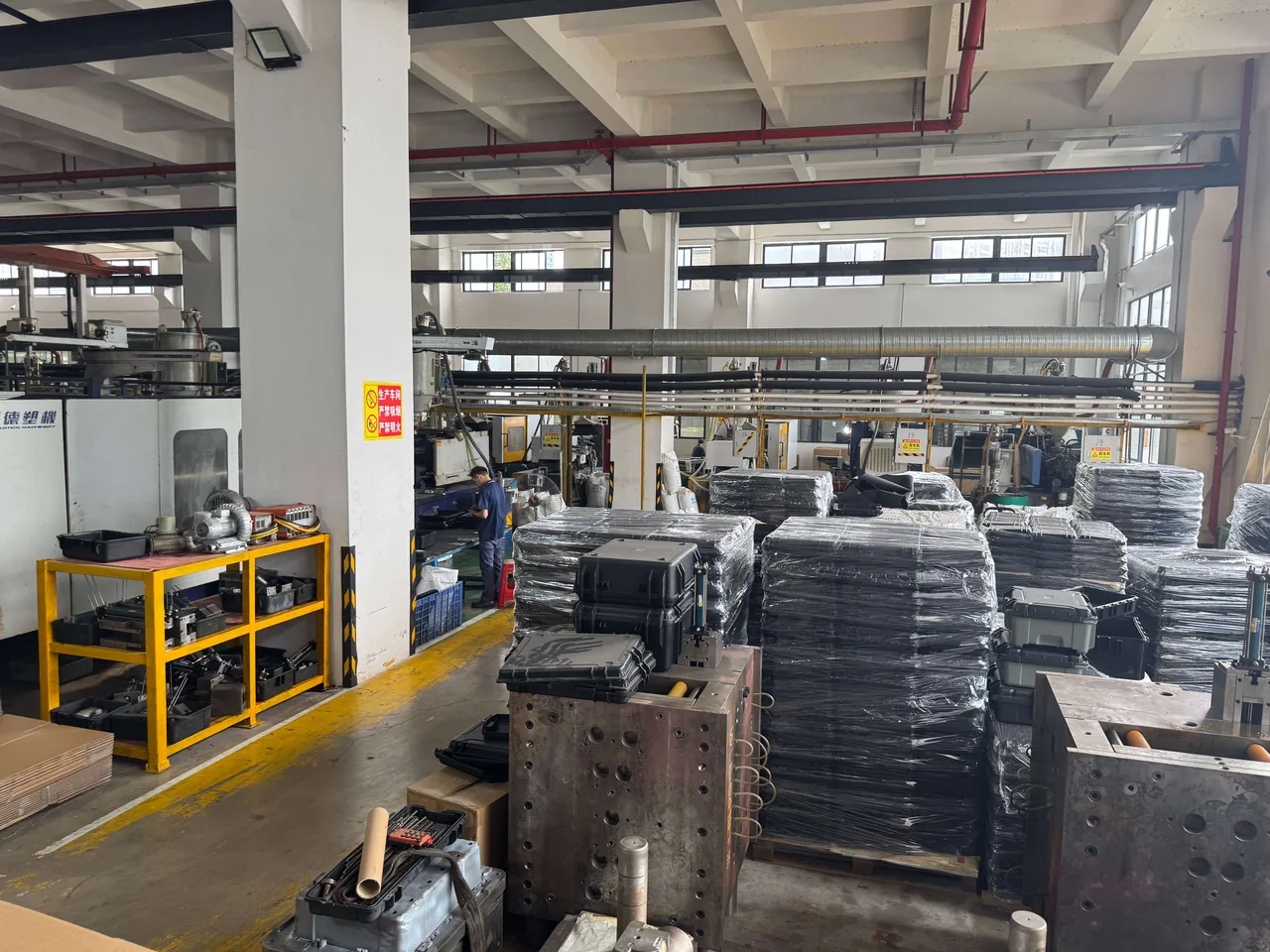
Choosing the right standard is only half the job; implementation matters just as much. On purchasing channels, prefer manufacturers with a complete production chain and traceable certification, and confirm whether certificates can be produced on request, whether liners can be customised to tool dimensions and whether spare parts can be bought separately. For export and tender buyers, the completeness of compliance documents often affects the deal more than unit price.
Sample testing cannot be skipped. Before ordering, request a sample and do four concrete things: push it fully loaded to see whether the wheels run smoothly and the handle is stable; open and close it ten times to check for hinge noise; press the four corners to feel whether the body is solid; and with the lid shut, run a spray or simple immersion check against the claimed rating. Many hidden problems only appear once you handle the real thing.
Acceptance clauses need to be written in detail. The contract or purchase order should list material grade and thickness, the protection rating code, the certification list and traceability requirement, maximum load, hinge cycle count, gasket material, and a commitment that wheels and liners are replaceable. When a dispute arises, these written indicators are the evidence. Where an individual patent is cited, require a certificate matching number to title and refuse invented numbers.
Long-term use also needs records. Logging the purchase date, batch, maintenance points and failures for each box guides repeat purchasing and pushes suppliers to improve quality. Professional purchasing is not a one-off transaction but a closed loop of "standard — sample — acceptance — review." Run this loop properly and the box you choose will genuinely withstand wind and rain on site, instead of showing its true colours after the first drop or downpour.
Price Range and Value-for-Money Judgement
Many buyers treat "is it expensive" as the first criterion, but the value of a professional box cannot be read from the sticker price; it has to be measured over the whole life cycle. The framework below helps you avoid both extremes: losing money by being cheap and wasting money on gimmicks.
Start with a price reference. Basic plastic tool boxes are affordable and suit home and light duty; wheeled and protective cases cost more than a plain box of the same material because of wheels, pull handles, sealing and structural reinforcement; professional protective cases with full certification, customisable liners and environmental test validation cost more per unit but carry corresponding compliance and reliability value. Actual quotations vary widely with specification, certification and degree of customisation, so no fixed figures are given here; what is genuinely comparable is the "cost per year for equivalent indicators."
Judging value means looking at four things. First, service life: a quality product uses higher standards in material, structure and fittings and may last several times as long as an ordinary one, so a higher one-off cost is cheaper per year. Second, the value of protection: the more expensive the tools inside, the better the return on spending more on the box. Third, efficiency: time saved by tiering and custom liners is direct income for anyone billing by the hour. Fourth, compliance: in export and tender situations, complete certification avoids rejection, a hidden value that is often overlooked.
Watch for two kinds of premium trap. One is paying extra for unnecessary features such as "all-metal wheels" or "smart locks," which is waste if the working conditions do not need them. The other is buying an ultra-cheap thin shell with no certification and no replaceable parts, which saves money short term and loses it long term. The rational approach is to list your essentials against the seven-dimension standard above and then pick the lowest cost per year among the products that meet them.
Finally, customisation and after-sales are part of value too. A manufacturer able to customise liners to tool dimensions avoids the poor fit of do-it-yourself modification, and one offering individual spare parts and warranty support lowers later maintenance cost. Only by weighting all seven — purchase price, service life, protection, efficiency, compliance, customisation and after-sales — do you truly read the value of a professional tool box, rather than being led by a single number. Value judgement must rest on clear requirements: list which of the seven dimensions are essential before looking at prices. The clearer the requirement, the more measurable the value. To return to the opening line: being professional is not about thicker and dearer, it is about every performance claim having an objective indicator behind it. When you can verify each item with the manufacturer, ask for certificates and run sample tests, you already have the ability to pick out a genuinely professional tool box — all that remains is choosing the one that best fits your working conditions.
Selection Quick Reference by User Type
Different professional groups rank the seven dimensions differently. The quick reference below translates the general standard into specific users.
Vehicle repair and 4S-shop technicians: priority is sealing hardware (oil resistance, lid retention) > load and mobility > modular liner > impact resistance. Recommended: IP67 case plus push-type latch with padlock hole plus TPE/polyurethane wheels plus a three-tier adjustable liner. Check oil resistance and cleanability.
Construction and plumbing/electricians: priority is impact resistance > dust sealing > wheel adaptability > load. Recommended: large thickened engineering plastic or aluminium-framed model plus dust sealing strip plus double-brake swivel wheels (100 mm or larger diameter) plus an insulated tool bay. Check wall thickness and ribs.
Factory equipment maintenance and instrument calibration: priority is the sealing system (IP67 plus pressure valve) > liner customisation > light weight > compliance. Recommended: protective case plus routed EVA/pearl-cotton liner plus an anti-static layer, benchmarked against MIL-STD-810H environmental test methods. The ABS/PP material of KeXin New Materials plastic cases has passed RoHS testing and meets REACH and Prop 65, suiting export-oriented factories.
Military/police/fire and outdoor survey: priority is impact resistance and environmental testing > light weight > fast opening > theft resistance. Recommended: lightweight protective case plus custom rigid tray plus padlockable latch plus IP67, designed against MIL-STD-810H test methods. Check tolerance of temperature/humidity cycling and drop/vibration.
Photography and drone creators: priority is liner customisation > light weight > smooth mobility > protection. Recommended: lightweight model with routable foam liner, smooth wheels and a stable pull handle. Check the liner fit.
Heavy home DIY users: priority is value > light weight > moderate protection. Recommended: a 20–40 L plain or small wheeled model; upgrade to a thickened wheeled model only if renovation work is ongoing. No need to overpay for environmental testing or IP67.
A three-step acceptance method to finish: step one, check the stated material grade and thickness, the IP rating code and whether certification is available on request; step two, run the four hands-on tests — loaded push, ten open/close cycles, four-corner press and latch feel; step three, confirm whether liner and wheels can be customised and replaced individually. Pass all three and the box is basically professional grade.
The value of a professional tool box lies not in piling up specifications but in every performance point corresponding to a real operational risk. Check item by item against the seven-dimension standard here and you will find the one that genuinely survives among all the "military grade" claims on the market.
Further reading:
- What Do the Hinge, Latch and Gasket of a Tool Box Do?
- Wheeled Tool Box vs Ordinary Tool Box: What Is the Difference?
- What Kind of Tool Box Suits Industrial Maintenance Personnel?
- How to Choose a Tool Box Internal Foam
- Protective Case Gasket Materials and Selection
For batch quotations, specification sheets or customisation, please use the contact form on this site.