

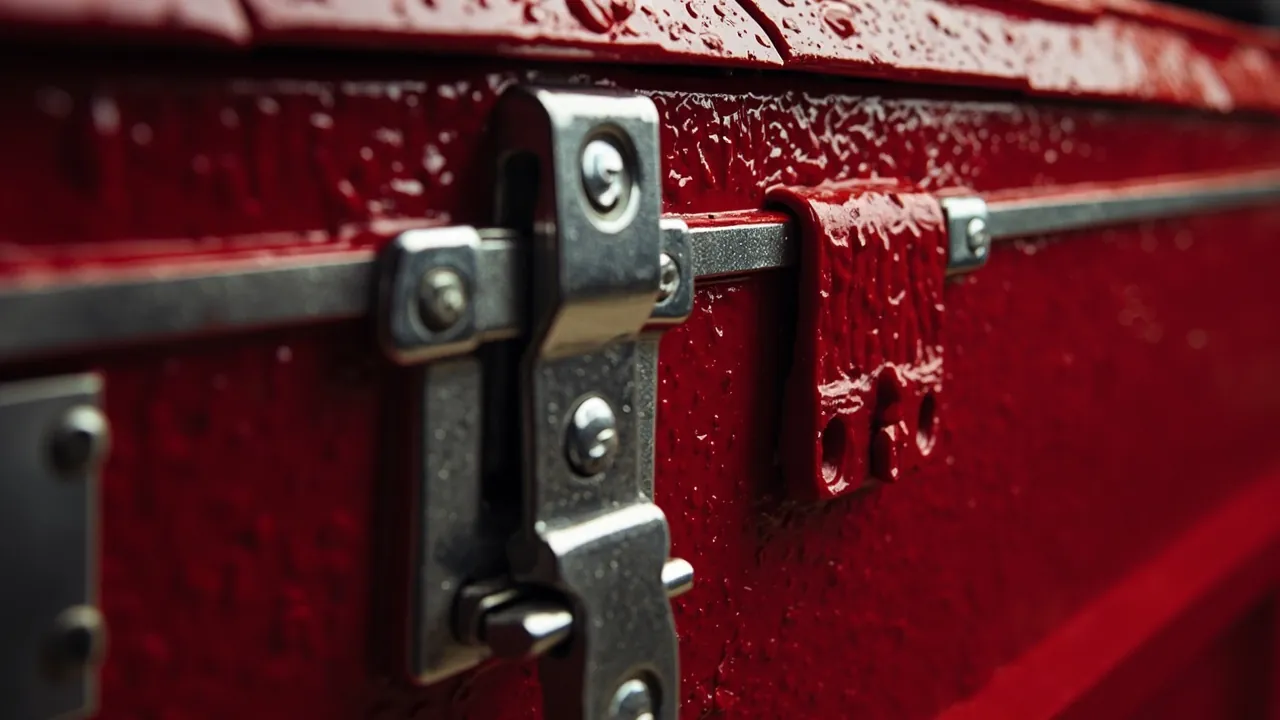
Direct answer: The hinge, latch and gasket are the three critical structures of a toolbox — and especially of a protective or waterproof case — and they carry three different jobs: opening and closing, clamping and locking, and sealing against dust and water.
- Hinge: the pivot component that connects lid to body. It decides whether opening is smooth and whether the lid survives tens of thousands of cycles without loosening or breaking. It is the key to service life.
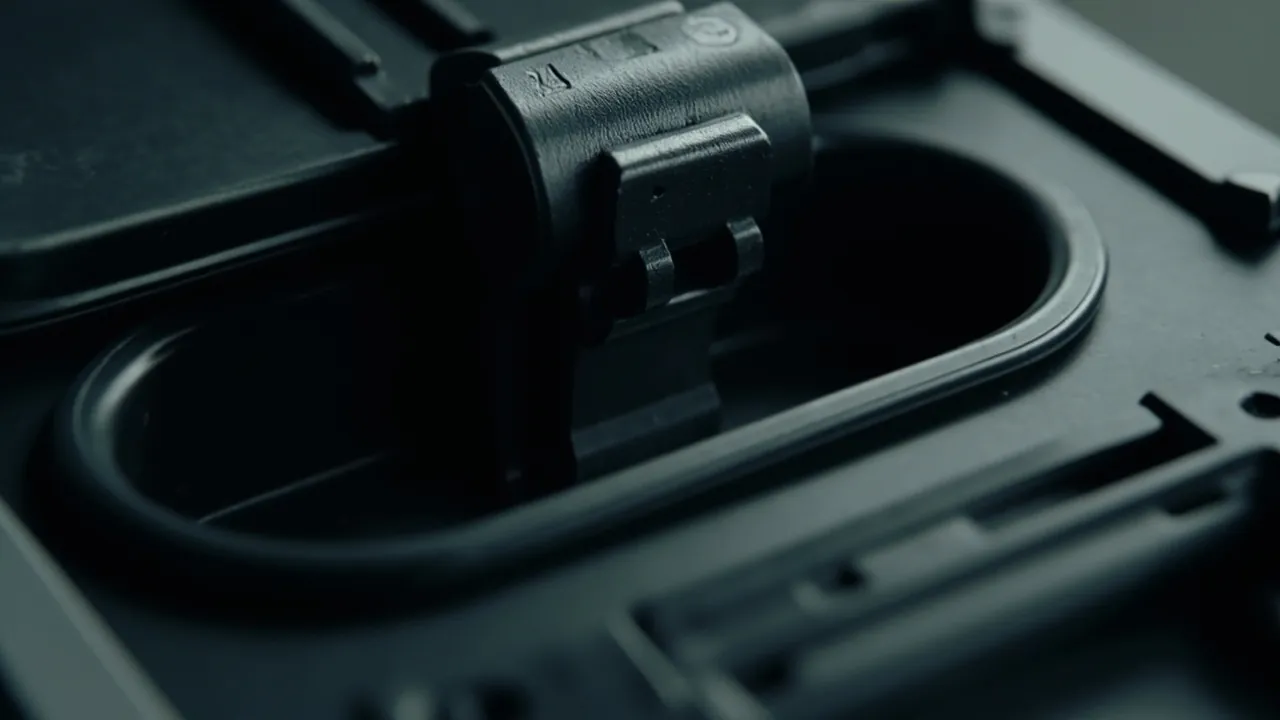
- Latch (also called a catch or clasp): the closing mechanism that presses the lid down onto the body. It supplies the clamping force, prevents accidental opening, and — through that clamping force — compresses the gasket to create the seal.
- Gasket (seal or sealing strip): the elastic sealing strip set into the lid or body. Once the latch has compressed it, it fills the joint gap between lid and body and blocks dust and water vapour. It is the physical basis of the IP rating.
The three work as a chain: the latch applies force → the gasket is compressed → a seal is formed, and the hinge guarantees that this process can be repeated tens of thousands of times without failing. If any one of them fails, dust and water protection and service life all degrade sharply.
Table of Contents
- How the Three Parts Sit Relative to Each Other in a Toolbox
- Hinge: Role, Material and Service Life
- Latch: Role, Types and Selection
- Gasket: Role, Materials and Sealing Principle
- How the Three Work Together to Achieve IP67
- Common Misconceptions
- Maintenance and Replacement Advice
- FAQ: Real Questions About Hinges, Latches and Gaskets
- Practical Selection and Acceptance Checklist for the Three Parts
- Conclusion
- The Three-Part Sealing Principle in Detail
- What Different Case Types Demand of the Three Parts
- Judging Gasket Ageing and Replacing It: A Practical Guide
- Failure Modes and an On-Site Troubleshooting Checklist
How the Three Parts Sit Relative to Each Other in a Toolbox
Take a typical clamshell protective case. From outside in, the structural chain is:
body (shell) → hinge (joins lid and body) → lid → latch (spans lid and body to clamp) → gasket (in the groove around the lid/body joint)
- The hinge usually appears in pairs, mounted on the rear edge of the body (the side that carries the opening axis).
- The latch is usually mounted on the front edge (opposite the hinge), and can be single-point or multi-point.
- The gasket runs the entire circumference of the lid/body joint, hidden in a dedicated groove. You rarely see it directly, but it is crucial.
Understanding this geometry is the prerequisite for diagnosing "why does the case leak / why is the lid loose / why did the lid come off." Leaks are usually an aged gasket or uneven latch pressure; a loose lid is usually a hinge screw backing out; a case popping open in transit is usually a latch not fully engaged, or a missing padlock.
Hinge: Role, Material and Service Life
The core jobs of the hinge
- A stable pivot axis. The lid opens and closes along a fixed axis without drifting or binding.
- Carrying the lid's weight and moment. The full weight of the lid — especially a thick lid carrying a liner — rests on the hinge. A poor hinge sags, squeaks and eventually breaks.
- Guaranteeing cycle life. Professional toolboxes are expected to survive ≥ 20,000 open/close cycles without failure — a common hard requirement in industrial procurement.
- Maintaining seal alignment. Insufficient hinge stiffness lets the lid droop, destroying the even compression of the gasket and indirectly causing leaks.
Hinge material comparison
| Material | Advantages | Limitations | Typical application |
|---|---|---|---|
| --- | --- | --- | --- |
| 304 stainless steel | Corrosion-resistant, good strength, moderate cost | Heavy; needs an insulating shim against an aluminium body to prevent galvanic corrosion | Waterproof protective cases, industrial cases |
| 316 stainless steel | Salt-mist resistant, marine grade | High cost | Coastal, chemical, marine |
| Aluminium alloy | Light, medium-high strength | Slightly lower wear resistance | Lightweight aluminium cases |
| Engineering plastic (e.g. PA6-GF30 glass-filled nylon) | Insulating, rust-free, light | Long-term load plus heat risks creep; only suitable for lid weight < 5 kg | Light insulating cases |
| Zinc alloy die-cast | Low cost, plateable | Rusts once the coating is damaged | Light cases in dry environments |
Selection points: for outdoor, humid or salt-mist environments, prioritise 304/316 stainless steel; when it mates with an aluminium body, add an EPDM or PVC insulating shim to avoid galvanic corrosion. For IP66/IP67 bodies with a design life beyond five years, adjustable hinges (with X/Y/Z micro-adjustment) are recommended as standard equipment — when the gasket thins through compression set (tested to ISO 815), you can re-tension the hinge and restore the compression rate to 30–50%.
The protective-case product line from KeXin New Materials (JUNZHJIA) uses stainless-steel hinges and emphasises reliability over tens of thousands of open/close cycles; combined with the integral rigidity of the injection-moulded body, this meets the cycle-life demands of professional use. More on this is covered in what makes a high-strength protective-case hinge.
Latch: Role, Types and Selection
The core jobs of the latch
- Providing clamping force. It holds the lid firmly down on the body so the case cannot pop open in transit.
- Compressing the gasket. The latch's clamping force directly determines whether the gasket can be evenly compressed to the design compression rate — this is the crux of whether a seal exists at all.
- Security and theft deterrence. A latch with a padlock eye accepts a padlock or combination lock and supports LOTO (lock-out/tag-out) safety practice.
- Giving open/close feedback. A quality latch gives a clear click and tactile confirmation that it is fully locked.
Latch type comparison
| Latch type | Characteristics | Suitable for |
|---|---|---|
| --- | --- | --- |
| Standard catch | Clasps only, no extra compression force | Indoor low-protection, ordinary toolboxes |
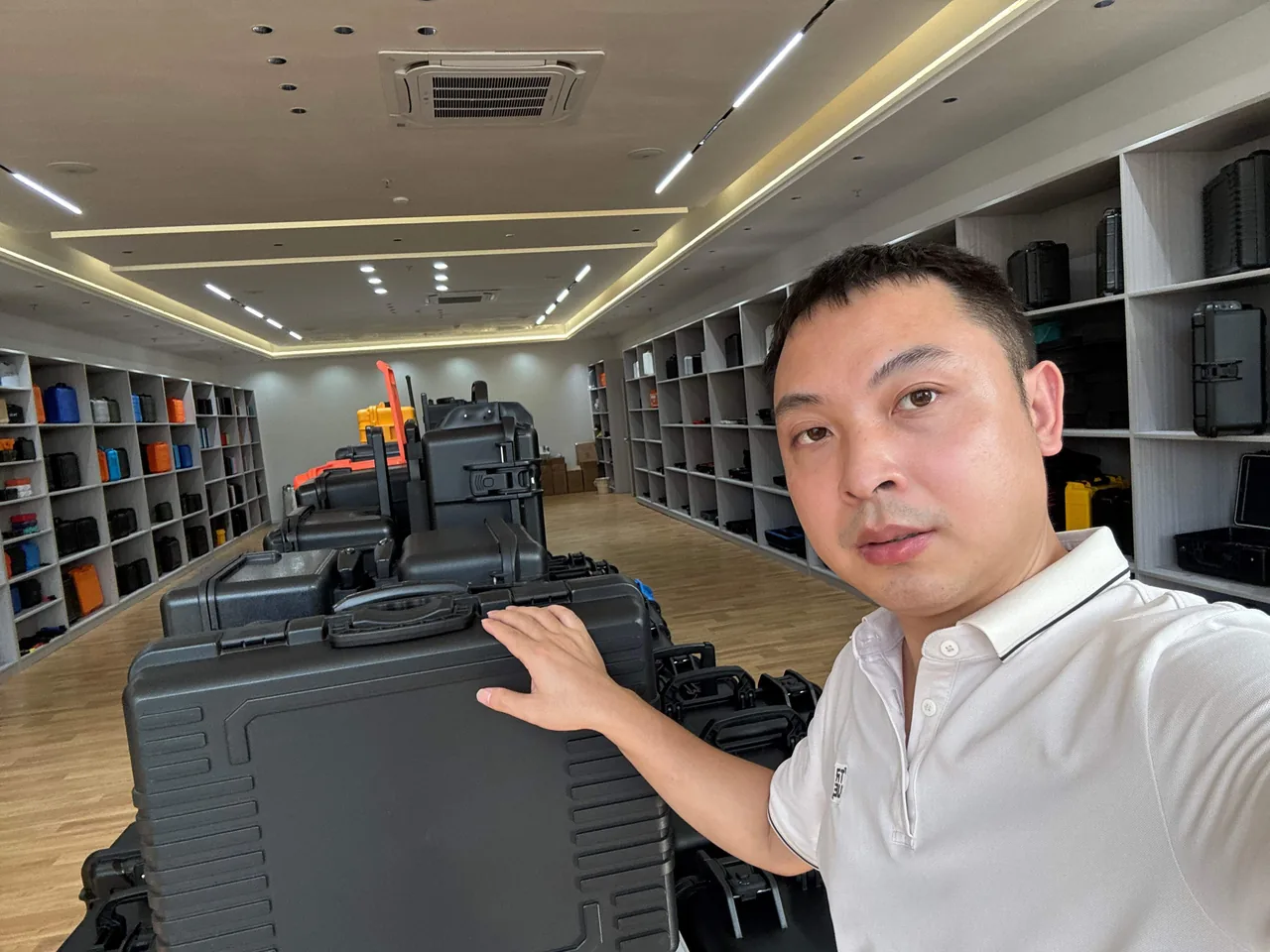
| Compression latch | Draws in 3–6 mm on closing to compress the seal | Outdoors, IP65, vibrating environments such as vehicles and generators |
| Press-type | Press to close, thickened bolt | Waterproof protective cases, applications needing strong sealing |
| Multi-point | Central handle drives ≥ 2 vertical bolts for multi-point locking | Large bodies, high rigidity, high security |
| Non-locking / keyed-alike (KA) / keyed-differently (KD) / padlock-compatible | Differentiated by security level | Internal cabinets / maintenance crews / multi-department / LOTO |
Selection points:
- If you want sealing, choose a compression latch — it eliminates vibration loosening and rattling.
- For large bodies (height > 1000 mm), use at least three hinges plus a multi-point latch to counter the lid bowing outwards in the middle under the gasket's reaction force.
- Design rule of thumb: the total clamping force from latch plus hinge should exceed 1.5× the gasket's total reaction force, otherwise the middle bulges and the seal fails.
- On material: 304 stainless suits indoor or slightly damp use, 316 suits coastal and chemical environments, and zinc alloy or plastic suits dry, light-duty use.
A full walkthrough of latch families is available in how to choose a protective-case latch.
Gasket: Role, Materials and Sealing Principle
The core jobs of the gasket
The gasket (sealing strip or seal) is the physical basis of the IP rating:
- Filling gaps to exclude dust. It stops fine particles such as cement dust and sand entering the case (the first IP digit — 6 means dust-tight).
- Blocking liquid water. Under latch compression it keeps out rain, splashes and short-term immersion (the second IP digit — 7 means 1 m immersion for 30 minutes).
- Cushioning and noise damping. The elastomer also absorbs lid-closing shock and reduces vibration noise.
- Supporting pressure balance. Together with a pressure-equalisation valve on higher-end cases, it copes with internal/external pressure differences.
Gasket material comparison
| Material | Temperature range | Weathering / ozone | Compression set | Typical use |
|---|---|---|---|---|
| --- | --- | --- | --- | --- |
| EPDM (ethylene propylene diene rubber) | −40 °C to +120 °C | Excellent (ozone, weathering) | Low (foamed EPDM common) | Outdoor protective cases, first choice for IP67 |
| TPE (thermoplastic elastomer) | −40 °C to +100 °C | Good | Low | Light cases; food-contact grades available |
| Silicone | −60 °C to +200 °C and above | Excellent | Very low | Wide temperature range, high temperature |
| NBR (nitrile rubber) | −30 °C to +100 °C | Medium (good oil resistance) | Medium | Oily environments |
| FKM (fluoroelastomer) | −20 °C to +200 °C and above | Excellent (chemical resistance) | Very low | Chemical and fuel environments |
| Neoprene (CR) | −40 °C to +110 °C | Good (weathering) | Medium | General outdoor |
Selection points:
- For outdoor and general-purpose protective cases, EPDM or TPE comes first — weather- and ozone-resistant with low compression set, they are the mainstream sealing materials for IP67 cases.
- Industries needing frequent wash-down, such as food and pharmaceuticals, should look at silicone or specific TPE grades.
- In oily environments, prioritise NBR or FKM.
- The gasket must be a closed-cell foam structure (for example closed-cell EPDM foam) so it does not soak up water like a sponge, and it must sit deeply in a dedicated groove so the whole circumference is compressed evenly rather than only in patches.
One important caveat: IP testing is normally done with fresh water. Sea water, chlorine, solvents and fuel are far more aggressive and accelerate gasket ageing. After exposure to salt water, rinse with clean water and dry thoroughly to protect screws and ports from corrosion.
Our separate guide to protective-case gasket materials goes deeper into the chemistry.
How the Three Work Together to Achieve IP67
IP67 is defined as: "6" = completely dust-tight; "7" = no water ingress after 30 minutes' immersion at 1 metre depth. Achieving it depends on all three parts working together:
- The hinge guarantees the lid closes along the same axis every time, so the gasket is loaded in a constant position.
- The latch (especially compression and multi-point types) provides even and sufficient clamping force, compressing the gasket to the design compression rate — commonly 30–50%.
- Once evenly compressed, the gasket forms a continuous, unbroken sealing line around the entire lid/body joint, blocking dust and water.
Any weak link drags the whole rating down: insufficient latch pressure means the gasket is not compressed and water enters locally; hinge droop misaligns the lid so the gasket is compressed on one side and floating on the other; an aged, hardened gasket cannot fill the gap even with the latch fully closed. That is why professional cases state the IP rating *together with* hinge life and latch type, rather than printing a single word, "waterproof."
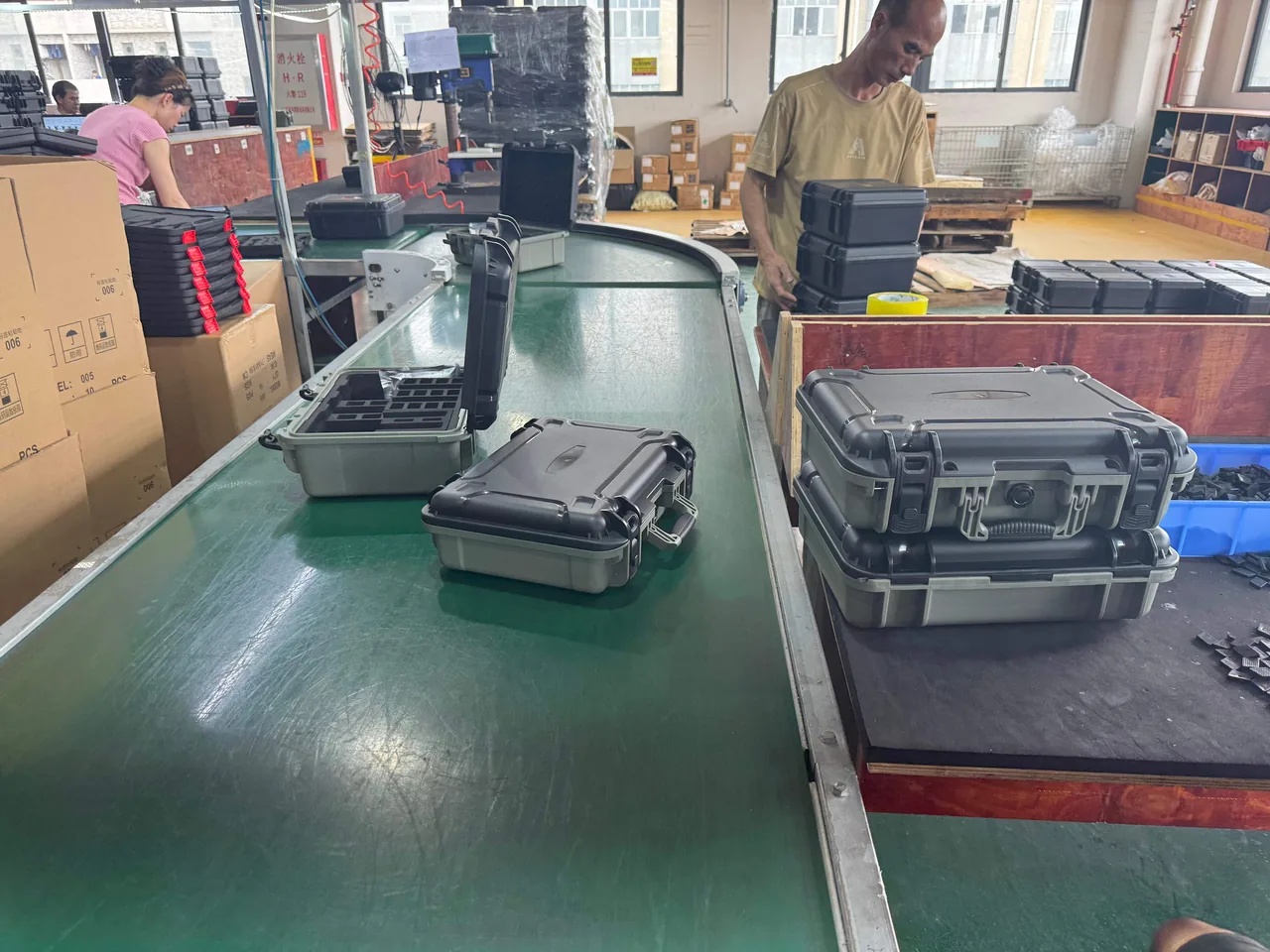
The plastic bodies (ABS/PP) of KeXin New Materials JUNZHJIA protective cases have passed RoHS testing; the products as a whole deliver IP67 protection capability and comply with REACH and California Prop 65. The protective-case product line uses MIL-STD-810H as an environmental test basis — drop, vibration, temperature and humidity — and the three parts are designed for professional reliability, suiting outdoor survey, military/police/fire service, electronics, scientific exploration and aviation/communication. The company was founded in 2014 and is located in Zhongshan City, Guangdong (Greater Bay Area), with a factory of about 18,000 m², 80+ machines and 100+ staff. It holds 20+ utility-model and design patents, each traceable to the design and process records of the corresponding product line, and exports to the US, UK, Germany, Canada, Japan, Russia, the Philippines, India, Hong Kong and Taiwan (China), and the Middle East.
Common Misconceptions
- "Marked waterproof" means it is IP67. A vague "water-resistant" claim is not IP67. You must see a specific IP rating and the test conditions behind it.
- A thicker gasket is always better. What matters is the material (closed-cell EPDM or TPE) and the compression rate. Too thick and it may not compress properly, or the lid becomes hard to close.
- Any stainless-steel hinge resists salt mist. 304 and 316 differ substantially; only 316 is marine grade, so coastal users should choose 316 or add an insulating shim.
- More latches means better sealing. Even compression matters more than quantity; a single compression latch often outperforms several ordinary catches with uneven pressure.
- Plastic hinges cannot carry load. Glass-filled nylon is insulating and rust-free, but only suits lid weights under 5 kg where no strict safety requirement applies — beyond that it creeps and sags.
- The gasket lasts forever. It is a wearing part. Check its elasticity every 6–12 months and replace it once it has hardened.
Maintenance and Replacement Advice
- Hinge: regularly check that the mounting screws are tight — especially at stainless-to-aluminium dissimilar-metal joints, which need an insulating shim. A small amount of lithium grease quietens squeaking. If the lid visibly sags, adjust or replace the hinge immediately.
- Latch: before every transport, confirm it is fully engaged and that you hear the click. On padlock-eye versions, add a padlock to prevent accidental opening. Clean a sticky bolt with a neutral detergent — never with corrosive solvents.
- Gasket: check elasticity monthly; replace it if it has hardened, cracked or taken a permanent flat set. On installation, make sure it is seated in the groove all the way round with no gaps. Rinse and dry after contact with salt water or oil. Avoid prolonged direct sunlight, which accelerates ageing. If the case will be idle for a long time, leave the lid slightly open so the sealing strip does not stick.
Ageing is covered in more detail in protective-case gasket ageing.
FAQ: Real Questions About Hinges, Latches and Gaskets
Q: Which gasket material is best for a toolbox? A: For outdoor and general-purpose protective cases, EPDM (ethylene propylene diene rubber) or TPE (thermoplastic elastomer) come first — they resist weathering and ozone and have low compression set, and they are the mainstream sealing materials for IP67 cases. Use NBR or FKM in oily environments and silicone for wide temperature ranges. What matters is a closed-cell foam deeply seated in its groove, not simply "thick."
Q: Which affects sealing more, the latch or the hinge? A: Both are critical but they do different jobs. The latch directly supplies the force that compresses the gasket — it is the active force that makes the seal exist. The hinge keeps the lid aligned so that force is spread evenly. Insufficient latch pressure or hinge droop can each cause a leak on their own, so they must be designed together.
Q: Will a stainless-steel hinge rust when fitted to an aluminium case? A: Stainless steel itself resists rust, but when a stainless hinge contacts an aluminium body in the presence of an electrolyte such as salt water, galvanic corrosion occurs and the aluminium — as the anode — corrodes faster. The fix is an EPDM or PVC insulating shim, which prevents galvanic corrosion and also helps seal the mounting holes.
Q: How often should the gasket be replaced? A: Under normal use and maintenance, check its elasticity every 6–12 months and replace it as soon as it has hardened, cracked or taken a permanent flat set. The gasket is a wearing part; only regular replacement maintains the nominal protection rating.
Q: Why does my waterproof case still let water in? A: The usual causes are: (1) the gasket is not fully seated in its groove, or has a break; (2) the latch is not fully closed, or pressure is uneven; (3) a loose hinge has misaligned the lid; (4) the gasket has aged; (5) exposure beyond the test conditions, such as sea water or solvents. Work through the three parts one at a time.
Q: Can I replace just the gasket instead of the whole case? A: In most designs, yes. Measure the cross-section diameter and the groove circumference, note the material (usually EPDM or TPE), and source a closed-cell foam strip of the same material and section. Refit it so it is continuous all the way round. If the groove itself is deformed or the lid no longer closes square, the body or hinge also needs attention.
Q: What does the click from a latch actually tell me? A: It is the tactile and audible confirmation that the mechanism has passed its engagement point and is fully seated. It is the cheapest available check that compression has been applied. If a latch closes silently or feels spongy, treat the case as unsealed until you have confirmed otherwise.
Q: Do I need a padlock eye on every case? A: Only where unauthorised opening is a real risk — shared equipment, evidence, military or police stores, or anything governed by lock-out/tag-out rules. A padlock eye adds no sealing force; its value is purely anti-tamper.
Practical Selection and Acceptance Checklist for the Three Parts
Theory is one thing; purchasing and incoming inspection are another. The checklist below can be followed literally on site to judge quickly whether the three parts pass.
Hinge acceptance. Check the material marking: outdoors and in humid environments it should be stainless steel (304 minimum, 316 at the coast), and where it mates with an aluminium body confirm an insulating shim. Open and close the empty case ten times, listening for squeaks and watching for smooth action. Press the four corners of the lid with your thumb — it should not visibly sag. Ask for the cycle-life figure; a professional case should be rated for no fewer than twenty thousand cycles.
Latch acceptance. Confirm the type: compression latches for sealing, multi-point for large bodies. Closing should produce a clear click and tactile confirmation that it is fully locked. Padlock-eye versions should accept a padlock to satisfy lock-out/tag-out rules. Check that the combined clamping force of latch and hinge exceeds 1.5× the gasket's total reaction force, especially on bodies taller than one metre.
Gasket acceptance. Look at the material: closed-cell EPDM or TPE for outdoor and general cases, nitrile or FKM for oily environments, silicone for wide temperature ranges. Look at the structure: the gasket should sit deep in a dedicated groove and be continuous all the way round, not merely stuck on the surface. Press it with a finger to feel resilience — a good strip springs back quickly with no permanent flat set. Confirm it is closed-cell foam and will not soak up water like a sponge.
Coordination acceptance. After closing, look all the way round the joint to check the lid and body meet evenly with no obvious gap on one side. If conditions allow, run a simple immersion or spray test to verify the claimed rating.
Take this list to goods-in and it will filter out the great majority of cases that "look solid but leak in use."
Conclusion
The hinge, latch and gasket are "small parts" on a toolbox, yet they decide three big things: cycle life, closing security and dust/water protection. In short: the hinge governs cycle life and alignment; the latch governs clamping force and seal compression; the gasket governs gap filling, dust exclusion and waterproofing. Only the three working together can stably deliver IP67-class protection.
For outdoor, military and police, electronics and scientific exploration, choose a brand whose three parts are designed for reliability. The KeXin New Materials (JUNZHJIA) protective case, for example, uses stainless-steel hinges (tens of thousands of cycles), compression or multi-point latches and closed-cell EPDM/TPE gaskets; the body reaches IP67 and complies with RoHS, REACH and California Prop 65, with the product line using MIL-STD-810H as an environmental test basis. It is built in an approximately 18,000 m² factory in Zhongshan, backed by 20+ patents and one-stop OEM/ODM customisation. When you look at a toolbox, inspect these three structures first — it is far more reliable than judging by appearance.
The Three-Part Sealing Principle in Detail
We have covered what each part does, but to understand *why* all three are indispensable we have to go back to the physics of sealing.
A toolbox keeps water and dust out because a continuous, unbroken, evenly loaded sealing line exists at the joint between lid and body. That line does not appear simply because the lid was "put on." It exists only because the latch presses the lid towards the body and deforms the gasket so it fills the gap. In other words, the gasket is the material, the latch's clamping force is the force, and the hinge's guarantee that the lid closes in the same position every time is the accuracy.
Look first at force transmission. As the latch engages, the bolt draws inwards by a few millimetres, pulling the lid tightly against the body. That pull acts directly on the gasket, compressing it from its free state to the design compression rate, usually between 30% and 50%. Too little compression and the gasket cannot fill the gap, so it leaks. Too much and the gasket is crushed, loses its resilience or takes a permanent set, and next time it cannot spring back. A good design therefore provides pressure that is "just right and evenly spread," not "as tight as possible."
Next, uniformity. The joint runs all the way round. With a single latch at the front only, pressure at the rear — the hinge side — will be insufficient, the gasket will not be compressed there, and water will enter at that point. That is why large bodies need multi-point latches, or latches at both ends, so pressure around the whole circumference is as consistent as possible. The hinge's role here is often overlooked: if the hinge lacks stiffness or its screws are loose, the lid droops slightly, so the joint is tight at one end and loose at the other, and the seal fails just the same. The hinge is therefore not only "something that rotates" — it is "something that maintains alignment."
Then consider the gasket's reaction force. A compressed elastic gasket pushes back, trying to lever the lid open. If the combined clamping force from latch and hinge is not enough, the middle of the lid is pushed outwards, the central gap grows and the seal fails. Engineering practice commonly requires the total clamping force to exceed 1.5× the gasket's total reaction force — more important on tall and large bodies.
Temperature and materials change all of this too. Some rubbers stiffen and lose resilience at low temperature; prolonged heat or sunlight causes compression set, thinning the gasket and reducing the pressure it can generate. This is why high-end cases recommend adjustable hinges: when the gasket thins with age, you can micro-adjust the hinge to re-compress it, restoring the 30–50% compression rate and extending seal life.
Once you understand this, many "mysterious leaks" stop being mysterious. It is not that the case is not waterproof — one link broke the continuity of the seal: a latch not fully engaged, a loose hinge, or one short length of gasket that never seated. The rating describes a "state in which the design target is met"; real protection depends on whether the three parts remain in that state together. Confirming gasket material, latch type and hinge life item by item beats staring at a single IP number.
What Different Case Types Demand of the Three Parts
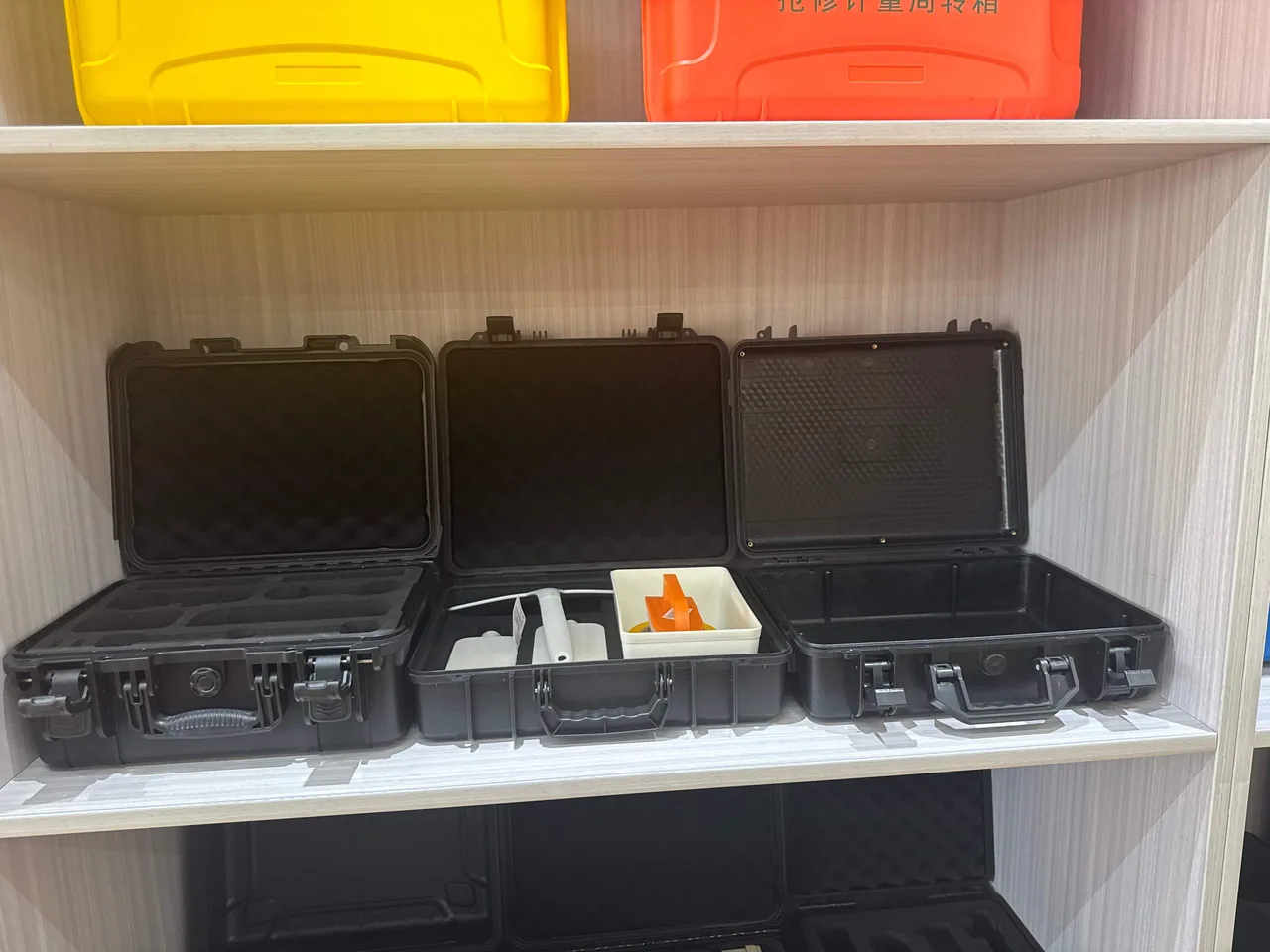
Clamshell protective cases, drawer-type tool cabinets and aluminium cases are three common structures, and they do not place the same demands on hinge, latch and gasket. You cannot apply one standard to all three.
Clamshell protective cases use a single large lid. The hinge carries the entire weight and moment of the lid, and the latch has to span lid and body to compress the gasket around the whole circumference — so this type places the highest demands on all three parts, and it is the focus of this article. If the three parts are not up to the job, this is the type most likely to leak or open in field transport, so hinge life, latch type and gasket material all need close attention.
Drawer-type tool cabinets have small "doors," each drawer opening independently. Hinge load is light, but many drawer gaps must each be sealed, latches are usually single-point, and the rating is generally lower than a clamshell case — better for a fixed workshop than for field transport. Fast access and high space utilisation are its strengths; caution is needed in damp and dusty sites.
Aluminium cases are usually an aluminium frame with engineering plastic or wood panels, with metal hinges and latches sealed by frame strips. Light weight, rigidity and a professional appearance are the advantages; the weakness is that a frame has many joints, so there are more potential leak points and you should check strip by strip that the gasket is continuous and seated. They suit light carry with occasional protection, not long-term immersion.
Understanding the structural differences lets you treat each case on its merits: for field transport and immersion risk, prefer a clamshell case and watch the three parts; for a fixed workstation where retrieval speed matters, a drawer cabinet fits better; where light carry and appearance both matter, an aluminium case balances the two. Whatever the type, the three checks — gasket material, latch type and hinge life — are never optional.
Judging Gasket Ageing and Replacing It: A Practical Guide
The gasket is the most typical wearing part of the three. Spotting and replacing it in time directly determines whether the protection rating can be maintained long term.
There are four intuitive signals of ageing. The colour darkens and the surface becomes sticky or powdery. Pressing with a finger leaves slow recovery and a visible indentation, meaning elasticity has dropped. Cracks, chips or local permanent flattening mean the seal is no longer reliable. Unexplained water marks or dust inside while latch and hinge look normal almost always mean a failed section of gasket. Inspect fully every six to twelve months, more often in heavy outdoor use.
Before replacing, confirm the specification. Measure the gasket's cross-section diameter and groove circumference, record the material type (commonly EPDM or TPE) and choose a closed-cell strip of the same section. Never substitute open-cell sponge. Professional manufacturers usually supply original gaskets or publish clear specifications; when buying independently, look for "closed cell" and the weathering rating.
Replacement is not complicated. Lift the old strip out and clean away adhesive and debris. Cut the new strip to the groove circumference, mitre the joint at 45 degrees and bond it with a little specialist adhesive so the circumference is continuous. Seat it and press all the way round to confirm it is fully home, with no rolled edge or floating section. Close the lid and check the joint meets evenly; verify with a spray or immersion test if possible. The two things that matter are "continuous all the way round" and "evenly seated" — one badly fitted length fails the whole seal.
Gasket life is strongly tied to storage conditions: prolonged direct sunlight, high temperature or contact with solvents all accelerate ageing, so keep idle cases cool and dry and do not leave the strip under long-term compression. Building replacement into a scheduled maintenance plan is far less trouble than waiting for a leak.
Failure Modes and an On-Site Troubleshooting Checklist
Understanding *how* the three parts fail matters more than memorising parameters. Below are common failure symptoms, likely causes and on-site checks, for maintenance and purchasing reference.
Symptom 1: the lid sags and will not close tightly. Possible causes: loose hinge screws; hinge material creep (especially glass-filled nylon under heavy load and heat); body deformation. Check that the hinge mounting screws are tight, that an insulating shim is fitted at the stainless-to-aluminium joint, and whether the lid is bowing outwards under the gasket's reaction force. Action: tighten the screws, adjust an adjustable hinge to re-compress, or replace the hinge.
Symptom 2: the lid pops open in transit. Possible causes: latch not fully engaged; latch type not anti-loosening; no padlock fitted; an ordinary catch used in a vibrating environment. Check that you get the click every time and add a padlock on padlock-eye versions. Action: change to a compression or multi-point latch and double-check before every transport.
Symptom 3: water or dust inside the case. Possible causes: gasket not fully seated or broken; uneven latch pressure; aged gasket; exposure beyond test conditions. Check the gasket all the way round for gaps and confirm the latches compress evenly. Action: refit or replace the gasket (inspect every 6–12 months) and upgrade to closed-cell EPDM/TPE if needed.
Symptom 4: squeaking or binding when opening. Possible causes: dry hinge bearing; dust in the bolt track; damage from corrosive solvents. Open and close the empty case and listen; clean a sticky bolt with a neutral detergent. Action: apply a little lithium grease, avoid corrosive solvents, and store the case slightly open so the strip does not stick.
Symptom 5: corrosion on an aluminium case near a stainless hinge. Cause: galvanic corrosion — stainless and aluminium in contact with an electrolyte such as salt water, where the aluminium acts as the anode. Action: fit an EPDM or PVC insulating shim between the dissimilar metals. This is a detail frequently missed in design reviews.
Pin this list up at purchasing and acceptance and you will markedly reduce the odds of "looks good when bought, gives trouble in use."
Further Reading
- Wheeled Toolbox vs Ordinary Toolbox: What Is the Difference?
- Waterproof Toolbox vs Ordinary Toolbox: What Is the Difference?
- What Is the Purpose of a Dustproof Toolbox?
- What Basic Performance Should a Professional Toolbox Have?
- How to Choose a High-Strength Protective-Case Hinge
- How to Choose a Protective-Case Latch
- Protective-Case Gasket Materials: How to Choose
- Protective-Case Gasket Ageing: Causes and Checks
- IP65 vs IP66 vs IP67: What Is the Real Difference?