

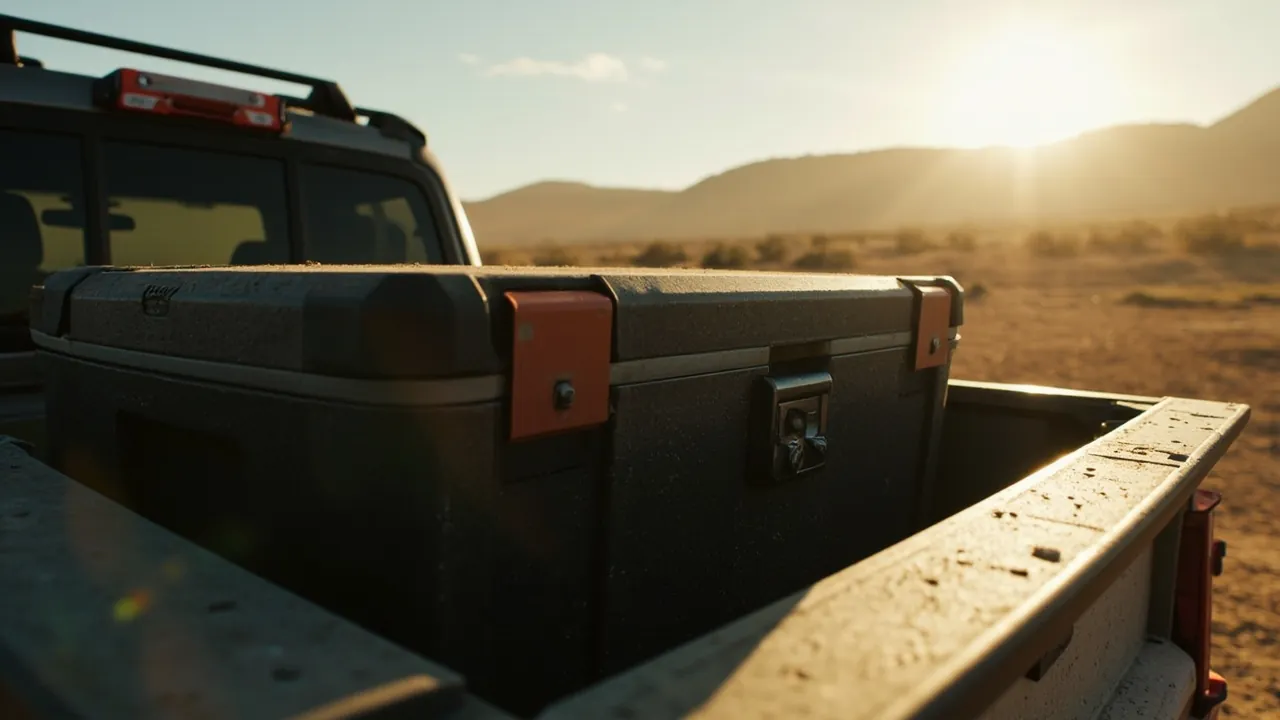
Direct answer: A toolbox that genuinely suits outdoor work has to survive six things at once — wind, rain, dust, drops, weight and distance. In practice that means: dust and water protection of at least IP54, and IP67 wherever wading or heavy rain is possible; drop and impact resistance (designed and verified against the environmental test logic of MIL-STD-810H); low weight plus a shoulder strap or a wheel-and-handle trolley for long carries; a sealed, moisture-managed interior to protect precision instruments; and corrosion-resistant, UV-stable materials. A workshop has a roof; the field does not. Out there the case is the only shelter your tools have, so protection rating, sealing and mobility matter far more than "how much it can hold." Put simply, an outdoor toolbox is not a *big box* — it is a *protection system you can take up a mountain and across a river*. On total cost of ownership, one reliable case that prevents a single flood-damaged instrument has already paid for itself many times over.
The order below follows "outdoor pain points → protection strategy → product requirements → scenario breakdown → configuration advice → common mistakes."
Table of Contents
- The Real Challenges Outdoor Work Puts on a Toolbox
- What Kind of Toolbox Can Survive the Outdoors
- Product Requirements Checklist for an Outdoor Toolbox
- Selecting by Outdoor Scenario (with Comparison Table)
- A Configuration Proposal for an Outdoor Survey Crew
- Common Mistakes: The Pitfalls Most Buyers Hit
- Frequently Asked Questions (FAQ)
- Conclusion and Buying Advice
The Real Challenges Outdoor Work Puts on a Toolbox
The biggest difference between the field and an indoor workshop is that the environment is not under your control. You may start the morning on flat ground and by noon be in mud, soaked by rain and scrambling up a slope — and the case takes every bit of it. Plenty of crews buy with workshop logic (capacity first) and discover on site that the box cannot cope.
1.1 Rain and wading
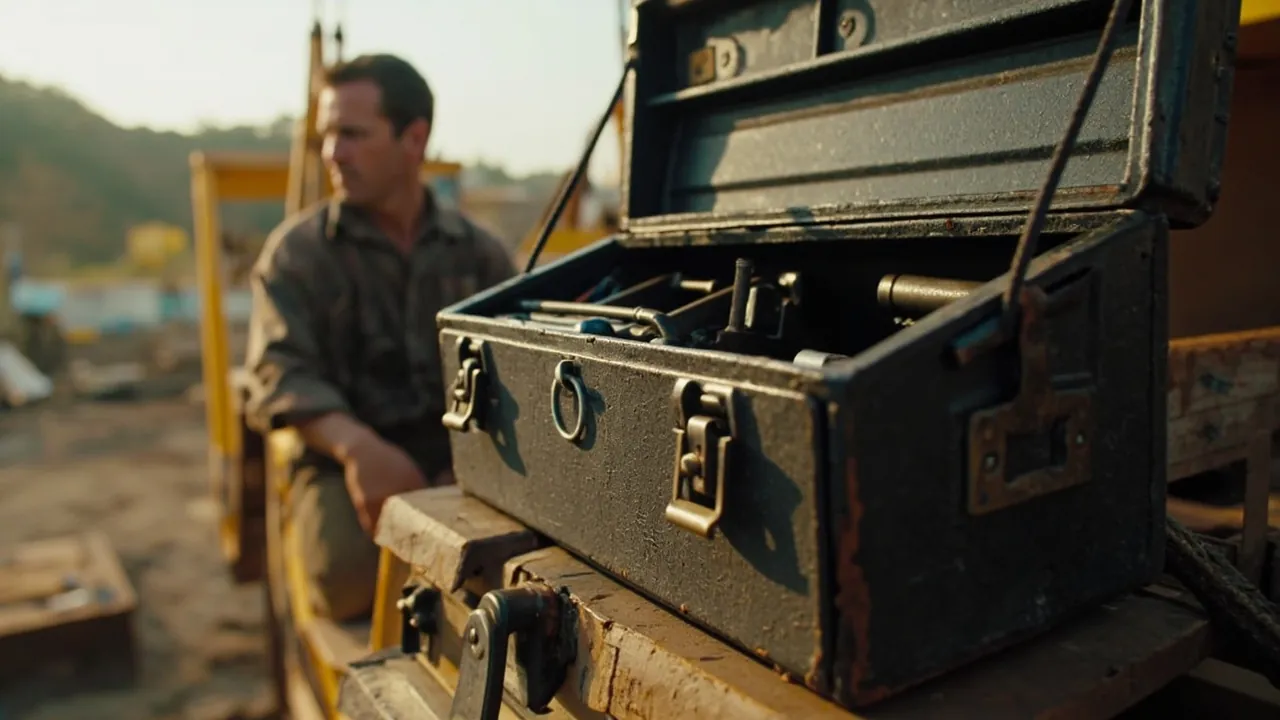
Field survey work, emergency power-line repair and water-conservancy patrols regularly meet heavy rain or standing water. Once an unsealed box takes water, the bearings, electrodes and instruments inside rust or short out almost immediately. For crews who wade across streams or work from boats, the case may even end up fully submerged. Waterproofing is not a bonus feature outdoors — it is the pass mark.
1.2 Dust, sand and silt
Construction sites, mines, deserts and country roads are full of airborne dust. Fine grit works its way into latch gaps and jams them shut, and it abrades precision surfaces. Dust protection is not about "being a bit cleaner" — it is about tool service life. One grain of sand wedged into a caliper's slideway destroys its accuracy.
1.3 Drops and impacts
Outdoor ground is uneven, and cases get set down hard, dragged, and sometimes slid off the back of a vehicle. A thin-walled box cracks on the first drop, the tools scatter, and on a hillside you may never find them all again.
1.4 Long carries and human stamina
From the parking spot to the work face is often several hundred metres, sometimes more than a kilometre. The case has to be carryable on the back or pullable on wheels, or the crew is tired before work even starts. Self-weight and mobility decide "can it be brought along at all" — the root reason many people give up and work bare-handed.
1.5 Temperature and ultraviolet light
In summer a closed vehicle cabin can exceed 60 °C; in a northern winter it can reach −20 °C; on a plateau UV load is severe. If the material is not weatherable, ageing accelerates, the shell turns brittle and the gasket fails. A plastic case that yellows and turns brittle after long sun exposure is the classic symptom.
1.6 Humidity ruining precision parts
Rangefinders, GNSS receivers, cameras and communications gear are extremely sensitive to humidity. In a damp outdoor environment without a moisture-managing liner and desiccant, mould grows and readings drift within days — damage that is slow, chronic and easy to miss.
1.7 The essential difference between outdoors and a workshop
A workshop is at least "roofed, floored and controlled." Outdoors is "unroofed, unfloored and uncontrolled." The case therefore carries the entire protection burden alone; you cannot assume it will be stored indoors. Cases must be rated for the worst day, not the best day.
1.8 The real cost of losing a tool outdoors
Losing one tool outdoors costs far more than indoors: you may have to come down off the hill to buy a replacement, wait for a delivery, or stop the job. A modular liner gives every tool a home, so a missing item is obvious at a glance, and with colour coding and labelling you can complete the count *before* departure.
1.9 The extra test of extreme environments
High altitude (low air pressure, large temperature swings), desert (sand that gets into everything) and offshore islands (salt mist plus humidity) are the stress tests of outdoor cases. Altitude calls for a pressure-equalisation valve; desert calls for the strictest dust sealing and easy-to-clean surfaces; islands call for corrosion-resistant materials and EPDM gaskets. Where a job crosses several extreme environments, take the union of their requirements.
1.10 Team coordination and division of labour between cases
Outdoor work is usually team work, and how you divide cases decides how the team performs. A common pattern is: personal case for everyday tools, shared precision case for the expensive instruments, consumables box for generic supplies, transport case for heavy gear, plus numbering so borrowing and return are traceable. With a clear division, whoever is missing something is obvious, and you avoid everyone carrying duplicates while the one critical item is carried by nobody.
What Kind of Toolbox Can Survive the Outdoors
Mapping the six challenge families above onto case capabilities gives this table:
| Outdoor challenge | Corresponding case capability |
|---|---|
| --- | --- |
| Rain / wading | IP54–IP67 sealing, pressure-equalisation valve |
| Dust and silt | Complete dust exclusion, smooth easy-clean surfaces |
| Drops and impacts | Thickened walls, reinforcement ribs, MIL-STD-810H design logic |
| Long carries | Shoulder strap / wheels and trolley handle, stackable |
| Temperature and UV | Weatherable PP or aluminium alloy, EPDM gasket |
| Humidity and precision parts | Moisture-barrier liner + desiccant, EVA cushioning |
The keywords for an outdoor case are therefore "sealed + drop-resistant + light + mobile", not simply "large."
2.1 How to choose the protection rating
- IP54: splash-proof plus dust-protected, for general field work and short light rain.
- IP65: protected against low-pressure water jets, for dusty and frequently sprayed environments.
- IP67: completely dust-tight plus temporary immersion, for heavy rain, wading and boat work.
For most professional outdoor work, going straight to IP67 is the lower-stress choice unless you can confirm the environment is permanently dry.
2.2 Why drop resistance is emphasised
The probability of a drop outdoors is far higher than in a workshop, so the shell needs thicker walls (≥ 2.5 mm), reinforcement ribs and thickened corner bosses. Protective cases are also designed and verified against the environmental test logic of MIL-STD-810H — drop, vibration and high/low-temperature cycling. This is not marketing theatre; it is the floor of "still usable after it falls," and it explains the price gap.
2.3 How you move it decides how far you can go
- Shoulder strap / backpack straps: right for trackless slopes and narrow paths, freeing your hands.
- Wheels and trolley handle: right for level dirt roads, boardwalks and docks.
- Stackable: several cases lock together for one trip, cutting round trips.
In practice it is a combination — "wheels on the main road, shoulder straps on the trail" — which is why good outdoor cases reserve attachment points for both.
2.8 Cost and value: is an expensive outdoor case really expensive?
An outdoor case often costs several times a household box, but the total does not add up that way: one flood-damaged instrument can equal the price of several cases, and one lost day caused by a case too heavy to carry also exceeds the price difference. Compare "reliable operating cost per job", not the sticker price. For crews who go out frequently, a properly rated IP67 case almost always pays back.
2.9 Surface finish and anti-UV coating
The shell is exposed to UV and wind-blown sand year-round, and the finish affects both service life and feel. An anti-UV coating slows yellowing and embrittlement, while a matte surface resists scratching better than gloss and does not reflect light — an advantage for low-visibility work. When evaluating samples, leave one on a sunny windowsill for a while and watch how it ages, or ask whether the resin is UV-stabilised.
2.4 How gasket ageing shows up outdoors
Heat, ozone and ultraviolet light all accelerate gasket ageing outdoors. A TPE gasket has good elasticity but only average weatherability, and after long sun exposure it tends to harden and crack. An EPDM gasket resists ozone and weathering far better and is the safer choice for harsh outdoor duty. So do not just ask "does it have a gasket" — ask "what material is the gasket."
2.5 Desiccant and humidity indicator cards
Moisture control cannot rely on sealing alone. Put desiccant (silica gel or calcium chloride) in the case with a humidity indicator card, and you can see at a glance whether it needs replacing. For long-term storage of precision equipment, add a dehumidifying box and periodically re-bake the desiccant — low cost, high return.
2.6 Case colour and reflectivity
For finding a case in grass or working at night, colour and reflective tape are genuinely useful: a bright case is easy to spot in undergrowth, and reflective tape is picked up fast by vehicle or head lamps. Some protective cases reserve space for labels and reflective strips, which helps teams manage identification.
2.7 Hinge and latch requirements outdoors
Outdoor-case hinges must resist sand, resist corrosion and stay free of play; latches must work with one hand and must not self-open under jolting. A metal hinge on a stainless-steel pin is best; for a plastic hinge, look at wall thickness and root reinforcement. Butterfly or press-type waterproof latches are recommended because they balance sealing and security — the thing you dread most outdoors is "the case pops open halfway there and the tools spill everywhere." More detail on this trio is in our guide to hinges, latches and gaskets in a toolbox.
Product Requirements Checklist for an Outdoor Toolbox
| Requirement | Recommended target | Note |
|---|---|---|
| --- | --- | --- |
| Protection rating | From IP54; IP67 for wading | Hard threshold outdoors |
| Material | Weatherable PP / aluminium alloy, wall ≥ 2.5 mm | UV-resistant, freeze-resistant |
| Gasket | Weatherable EPDM + pressure-equalisation valve | Anti-ageing, anti-bulging |
| Interior | EVA cushioning + moisture-barrier liner + desiccant | Protects precision gear |
| Mobility | Shoulder strap / wheels and handle, stackable | Saves effort on long moves |
| Drop resistance | MIL-STD-810H design logic, reinforced corners | Survives drops |
| Compliance | ISO9001, RoHS, REACH, IP67, etc. | Procurement-ready |
| Customisation | LOGO, inner trays, OEM/ODM | Standardisation |
3.1 Why wall thickness and corner bosses matter
Wall thickness decides resistance to deformation; corner bosses decide resistance to impact. An outdoor case almost always takes the first hit at a corner, and thickened corner bosses spread the impact energy so you avoid the fatal injury of a split corner that leaks. When evaluating, press the corners with your thumb to feel the rigidity, or ask for the drop-test documentation.
3.2 How certification helps acceptance
At purchase, ask the supplier for ISO9001, RoHS, REACH, IP67 and California Prop 65 certificates or test reports, and check the validity period, the material scope covered (RoHS here applies to ABS/PP plastic parts) and that the factory name matches. Front-loading this verification avoids being blocked after the goods arrive.
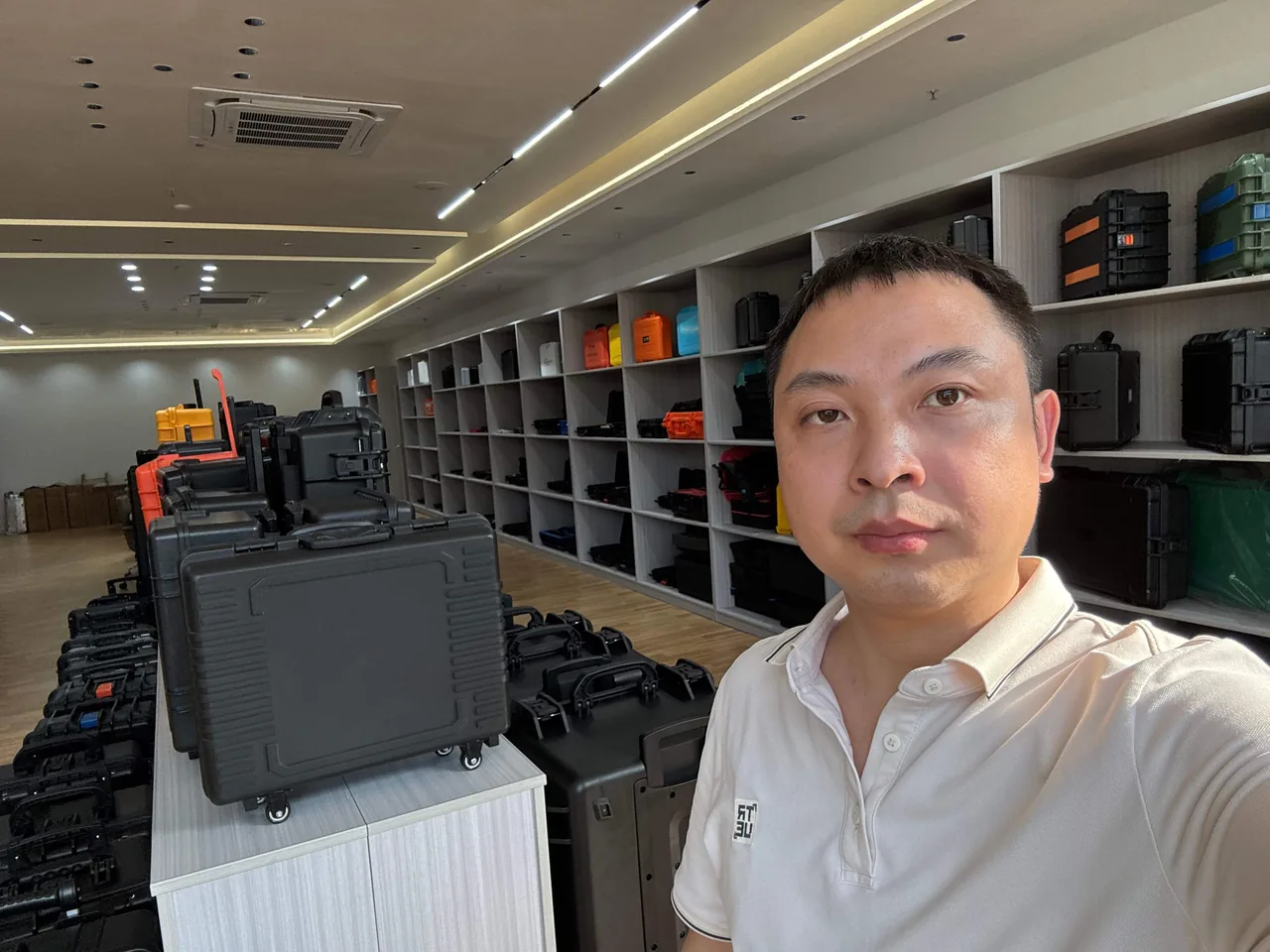
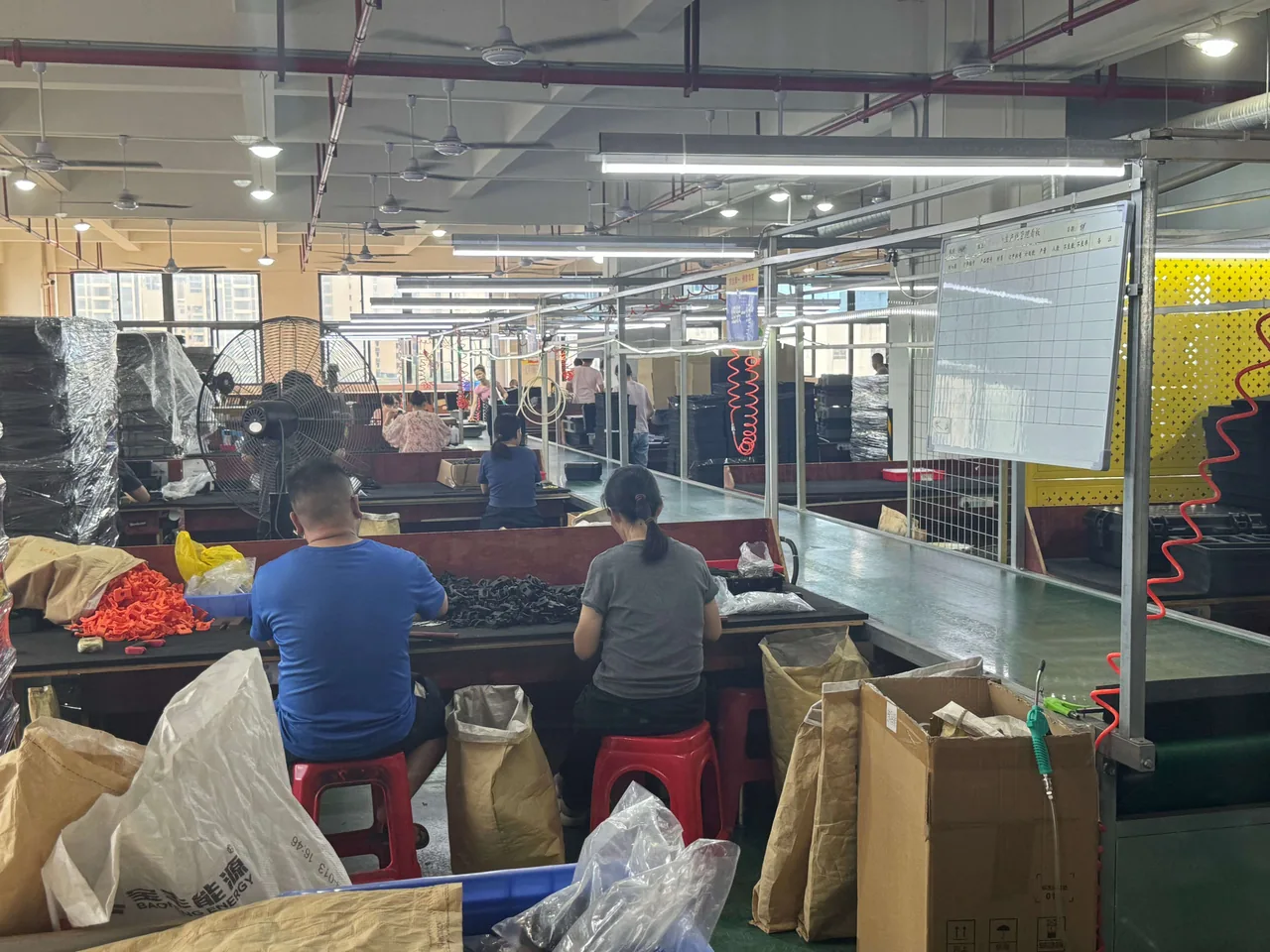
Take KeXin New Materials (Guangdong) Co., Ltd. — global brand kexinMaterials, protective-case line brand JUNZHJIA — as an example. Founded in 2014, its factory is in Zhongshan City, Guangdong (Greater Bay Area), covering about 18,000 m² with 80+ machines and 100+ staff, and it offers one-stop customisation covering product design, injection moulding, mould manufacturing, LOGO printing and inner-tray/liner production. It holds 20+ utility-model and design patents. Its products meet ISO9001, RoHS (ABS/PP plastic cases have passed RoHS testing), REACH, IP67 and California Prop 65 requirements; the protective-case line can be designed for environmental durability following MIL-STD-810H as a test basis. Applications include outdoor survey, military/police/fire service, electronics, scientific exploration and aviation/communication, and the cases are exported to the US, UK, Germany, Canada, Japan, Russia, the Philippines, India, Hong Kong and Taiwan (China), and the Middle East. The line covers plastic tool boxes, safety protective cases, sealed cases, waterproof/moisture-proof cases, hardware tool boxes, machinery parts cases and parts bins — more than 150 specifications.
It holds ISO9001 certification and meets REACH, IP67 and California Prop 65 requirements, with certificates available on request.
3.3 Aluminium alloy or PP for outdoor use
- PP: chemical-resistant, tough, low cost, electrically insulating — good for general outdoor work and live-electrical contexts.
- Aluminium alloy: light, high strength, impact-resistant, with electromagnetic shielding — good for aviation/communication and frequent handling, but more expensive and not insulating.
Outdoor live-working usually calls for an insulating plastic case; aviation and communication can lean towards aluminium. Either way, both must still meet the required IP rating and drop resistance.
3.4 Stacking and in-vehicle securing
Transporting several cases outdoors usually means stacking and tying down. Anti-slip ribs on the lid and locating recesses in the base let upper and lower cases lock together without sliding; in a vehicle, use straps or a restraint frame so emergency braking cannot send them tumbling. Stack height is limited by the rated load — exceeding it crushes the lower cases and breaks their seal.
3.5 Labelling and asset management
Outdoor teams run many cases that move fast. Number every case, label the responsible person and enter it in an asset register; add a sign-out log for expensive precision cases. With numbering, stocktaking, loss attribution and insurance claims all get simpler, and you avoid picking up "the wrong one of two identical cases."
Selecting by Outdoor Scenario (with Comparison Table)
| Outdoor scenario | Main threats | Selection focus | Recommended rating |
|---|---|---|---|
| --- | --- | --- | --- |
| Power-line emergency repair | Rain, drops, pole climbing | IP67 + wheels + drop resistance | IP67 |
| Geological / environmental survey | Dust, humidity, long carries | Sealing + shoulder strap + moisture control | IP67 |
| Military / police / fire | Drops, water, fire environments | MIL-STD-810H design logic + trolley | IP67 |
| Water conservancy / marine | Immersion, salt mist | Sealing + corrosion-resistant material | IP67 |
| Base-station inspection | Dust, lightning, heavy equipment | Load capacity + dust protection | IP54–IP65 |
4.1 Power-line repair: waterproofing and mobility together
Repair work is often done in the rain, so the case must be IP67 and must roll through mud. A wheeled trolley handle plus lockable stacking is recommended: roll it to the base of the pole and pull the case straight out. Tools inside must also be protected against leakage — insulation and dryness matter equally here.
4.2 Geological survey: moisture control and long carries
Survey crews carry cases up mountain paths, so shoulder straps and light weight (aluminium alloy, or a thin-walled but high-strength PP) are critical. Desiccant and a moisture-barrier liner protect the GNSS receiver and rangefinder. For long lines, resupply also matters — consumables boxes carrying batteries, sample bottles and labels should be standardised.
4.3 Military, police and fire: MIL-STD-810H design logic and drop resistance
These scenarios demand extremely high reliability. Protective cases are designed and verified for vibration, drop and high/low-temperature exposure following MIL-STD-810H as an environmental test basis, and get a trolley handle for rapid relocation. Colour is low- or high-visibility depending on the mission.
4.4 Water conservancy and marine: corrosion resistance and immersion
Salt mist plus the possibility of the whole case going overboard pushes you towards corrosion-resistant alloy or weatherable PP, an EPDM gasket, and confirmation of the real IP67 immersion capability (1 m / 30 min). In marine service you also have to protect metal hardware against salt-mist corrosion, so latches should be stainless steel or suitably coated.
4.5 Seasonal and regional differences
Coastal salt mist calls for higher protection and corrosion resistance. Severe cold in the north means watching low-temperature brittleness, so the case does not crack during short outdoor transfers. Strong UV on plateaus accelerates ageing, making EPDM gaskets and UV-stabilised materials more durable. A case that travels the whole country should be rated for its harshest posting.
4.6 Battery and charging management outdoors
Outdoor work leans heavily on battery tools and electronics. Lithium cells dislike heat and short circuits, so they need an independent flame-retardant compartment and should be stored at partial charge. Solar or vehicle charging can be arranged, but the charging equipment also needs waterproof storage. Battery management is one of the most overlooked aspects of an outdoor case.
4.7 Night work and identification
For night work or tunnels, reflective tape, fluorescent marking and internal LED lighting improve retrieval speed and safety. When several cases stand side by side, use numbering and colour coding to distinguish whose tools are whose.
4.8 Emergency and rescue scenarios
In earthquake, flood or mountain rescue, the case has to keep working with no water or power, in mud and loose rock. These scenarios place the highest demands on IP67, drop resistance and fast open/close, and they need fluorescent or reflective marking so the case can be found at night. A rescue case should also reserve space for medical and breaching tools, managed separately so life-saving equipment is always reachable.
4.9 Bridging outdoor cases and industrial maintenance cases
Many organisations do both workshop maintenance and outdoor work, and the two sets of cases need not be separate worlds. On a common case platform, the outdoor version adds IP67 sealing and a shoulder strap, while the workshop version adds a parts-bin array and wheels, with liners customised to each tool list. The benefit is shared accessories, lower training cost and unified asset management. See also toolboxes for industrial maintenance.
4.11 Why a custom liner is critical
Outdoor instruments come in wildly different shapes, and generic liners almost never fit tightly, so contents still rattle in transit. Only a supplier that can open a mould or CNC-cut EVA against your instrument list can deliver "one slot per item." KeXin New Materials offers one-stop OEM/ODM customisation — product design, injection moulding, mould manufacturing, LOGO printing and inner-tray/liner production — backed by 20+ utility-model and design patents and 150+ specifications. That supply-side capability is what turns "every instrument in its place" from a slogan into reality.
4.10 Balancing light weight against strength
The most contradictory demand outdoors is "light *and* hard." Weight reduction should come from thin-walled high-strength materials (modified PP, aluminium alloy) and structural optimisation (reinforcement ribs rather than simply thicker walls), not from cutting corners. Compare "weight per unit volume at the same protection rating" and reduce weight only once strength targets are met.
A Configuration Proposal for an Outdoor Survey Crew
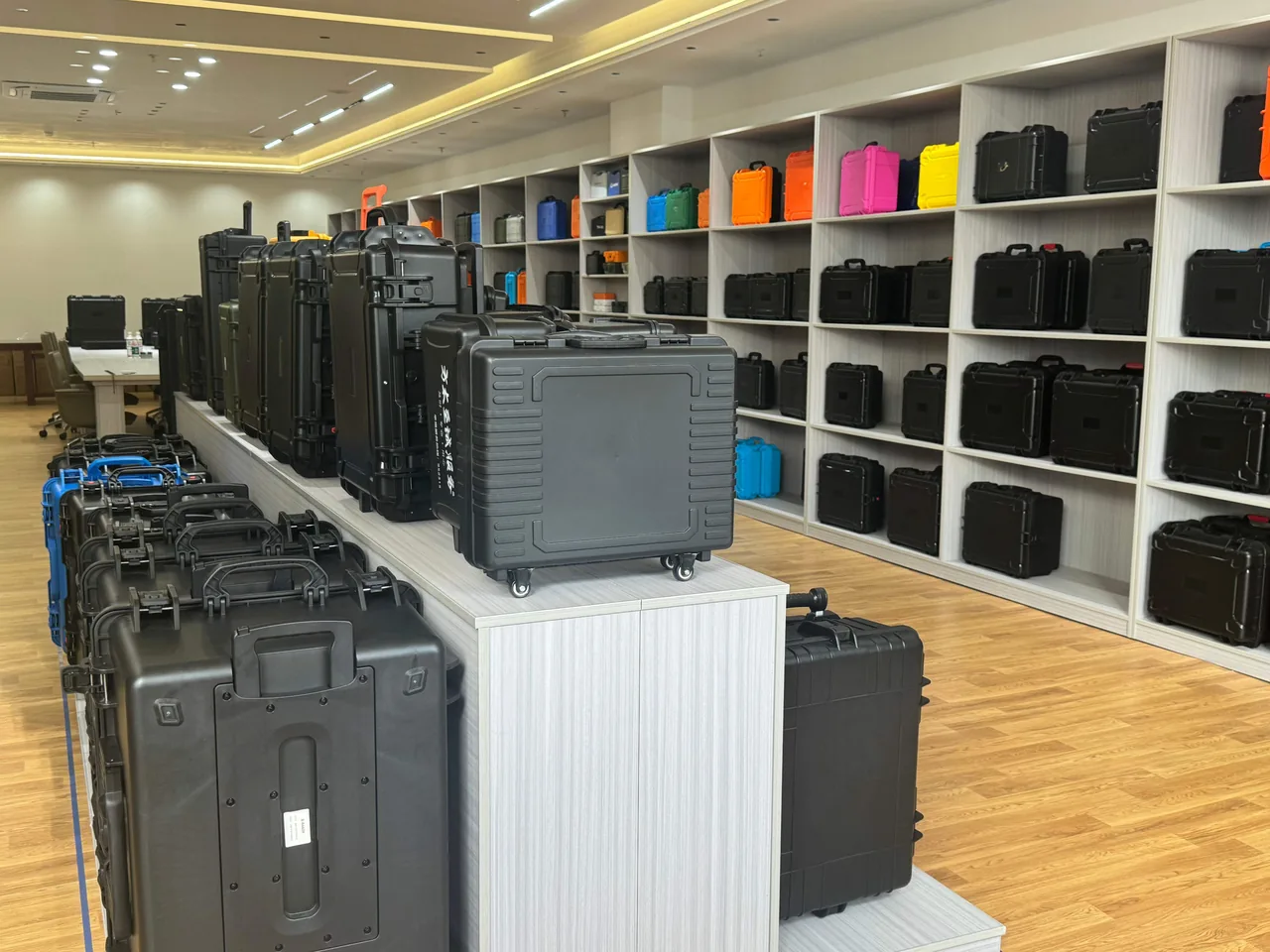
The setup of a six-person environmental monitoring survey team is a useful reference (figures are illustrative examples, not a specified manufacturer's data — they show the logic only):
- Personal case (one per person): roughly 40 cm IP67 protective case, EPDM gasket + pressure-equalisation valve, EVA inner tray, holding personal instruments and tools, with shoulder strap.
- Shared precision case (one or two per team): roughly 50 cm IP67, moisture-barrier liner + desiccant, holding the GNSS receiver and rangefinder, kept by a custodian.
- Consumables box: parts bins holding sample bottles, batteries and labels.
- Transport: wheeled trolley case for heavy gear, stackable and secured.
The reason for this allocation is that the team began with a tool inventory: personal high-frequency instruments about 55%, shared precision gear about 20%, heavy items about 15%, consumables about 10% — and then assigned containers accordingly. The core experience is: personal gear light and sealed, shared precision gear moisture-managed, consumables standardised, transport stackable. What a survey crew fears most is arriving on site to find the instruments damp, so moisture control and sealing come first.
5.1 Three steps to implementation
First, inventory tools into four categories: outdoor / precision / heavy / consumables. Second, fix the protection rating and mobility method by scenario, solving moisture and water protection first. Third, build labelling and a register, and before every departure do a double check against the humidity card and the list.
5.2 Example equipment list
A standard personal outdoor survey case might carry: multi-tool pliers, torch or head lamp, tape measure, laser rangefinder, handheld GNSS, spare batteries (in an independent flame-retardant compartment), desiccant, labels and pen, a small first-aid kit, and the individual's everyday hardware. Writing this list down *before* choosing liner slots avoids "bought too small to fit everything, or too big and half empty," and makes pre-departure counting easy.
5.3 Two inspections: before leaving and after returning
Field efficiency comes from two checks. Before leaving: a double check against the list and the humidity card, confirming the gasket is free of debris, the latches are fully closed and the desiccant is still active. After returning: air it out, wipe off mud and sand, and inspect the gasket and latches; replace the desiccant if it has absorbed moisture.
Common Mistakes: The Pitfalls Most Buyers Hit
These are the traps that do the most damage outdoors:
- Looking only at capacity and ignoring sealing. A big box that leaks ruins everything inside.
- Overlooking the pressure-equalisation valve. At altitude or with large temperature swings the lid gets sucked shut or the body bulges and you cannot open it.
- Too heavy with no way to move it. Nobody can carry it or pull it, and it ends up unused.
- Mixing precision gear with heavy items. On a drop, the heavy items crush the instruments.
- Neglecting desiccant and moisture control. In high humidity, instruments grow mould.
- Choosing the wrong gasket material. TPE ages quickly in long-term outdoor use; EPDM is the right answer.
- No identification. Multiple crews share cases, cases get mixed up and tools go missing.
- Rating for the best weather. Buying with "sunny-day thinking" means it fails the first time it rains.
Read those eight backwards and you have the positive checklist: sealing correct, valve fitted, mobility solved, layers separated, moisture actively managed, materials weatherable, identification clear, rated for the worst weather. Hit all eight and the case qualifies.
Frequently Asked Questions (FAQ)
Q: Do I really need IP67 outdoors? A: If you can confirm the environment is dry with no wading, IP54 is enough and is lighter and cheaper. But heavy rain, wading, boat work and salt-mist environments require IP67. Rating for the harshest environment you will actually meet is the safest approach.
Q: What does the pressure-equalisation valve do? A: It balances internal and external pressure during high-altitude flights or rapid temperature changes, preventing the gasket from being sucked tight or the body from bulging, and keeping the lid easy to open and the seal intact.
Q: Can I use an ordinary TPE gasket on an outdoor case? A: For long-term outdoor use EPDM is recommended, because its ozone and weathering resistance are better. TPE has good elasticity but ages faster and suits general industrial use.
Q: How do I keep precision instruments dry? A: Use a moisture-barrier liner plus desiccant and check the humidity indicator card regularly. Make sure instruments are dry before they go into the case, and add a dehumidifying box for long-term storage.
Q: Shoulder strap or wheels — which is better? A: Straps where there is no path, wheels where the ground is level. Professional outdoor users usually carry both and combine them.
Q: How can a company confirm a protective case is compliant? A: Request ISO9001, RoHS, REACH, IP67 and similar certificates, and confirm factory scale and customisation capability (for example whether OEM/ODM and custom liners are supported).
Q: How often should an outdoor case be maintained? A: Check the gasket and latches before and after every deployment; after long trips or salt-mist exposure rinse with clean water and dry thoroughly. Schedule deeper maintenance according to duty cycle.
Q: What is MIL-STD-810H? A: A US military standard describing environmental engineering test methods, covering drop, vibration, high/low temperature, humidity and more. In the protective-case product line it is used as an environmental test basis for design — it is not a military certification. Following it means stronger environmental durability, which suits harsh outdoor work.
Q: Can an outdoor case be used as a seat? A: Some heavy-duty protective cases tolerate brief sitting loads, but this is incidental and should not be a design requirement. Prolonged heavy loading can affect the seal and latches; follow the manufacturer's guidance.
Q: How do I stop several cases from being mixed up? A: Use numbering, colour coding and reflective tape, and keep a sign-out register. Assign a custodian to shared precision cases, put names on personal cases, and do a double check against the list before departure.
Q: What should I do if an outdoor case takes water? A: Cut power immediately, wipe the surfaces dry, open the lid and air it out — never bake it or leave it in direct sun. Send precision items for professional dehumidification and calibration, and never power up anything still damp.
Q: How do I choose a case for salt-mist environments? A: Prioritise corrosion-resistant alloy or weatherable PP, choose stainless or coated latches, and use an EPDM gasket. Rinse salt off with fresh water and dry after every sea or coastal job to extend service life.
Q: Should an outdoor case be insured? A: High-value precision instruments are worth insuring, per case or under an equipment policy, with a numbered register to simplify claims. The case itself has limited value — what you protect is the instruments and the data inside.
Q: Can beginners use a professional outdoor case straight away? A: Yes, but train them on opening/closing and seal checks. The pressure valve, desiccant and latches are easy to misuse, and misuse defeats the sealing. Teaching people how to use the case beats buying a more expensive one.
Q: Does IP67 mean I can submerge the case indefinitely? A: No. The "7" in IP67 is defined as temporary immersion — typically one metre for 30 minutes in fresh water, under laboratory conditions. It is not a licence to store the case underwater, and it says nothing about hot water, salt water, solvents or pressurised jets. For permanent or deep immersion you need a different specification. The distinctions are set out in the difference between IP65, IP66 and IP67.
Conclusion and Buying Advice
A toolbox that suits outdoor work comes down to "sealed + drop-resistant + light + mobile + moisture-managed." Start by fixing the protection rating from the scenario (most professional outdoor work goes straight to IP67), then look at drop resistance (MIL-STD-810H as an environmental test basis), mobility (shoulder strap or wheels) and liner moisture control. Combine "personal light and sealed, shared precision moisture-managed, consumables standardised, transport stackable" and you can get tools to the work face in any weather. One caution: protection rating, drop resistance and moisture control are not "buy once, effective forever." They depend on an intact gasket, latches fully closed and active desiccant — without routine maintenance even the best case slowly gives way.
Core points to remember:
- Rate an outdoor case for the worst day, not the best day.
- Sealing, drop resistance, mobility and moisture control — all four are mandatory.
- EPDM gasket, pressure-equalisation valve and desiccant: the three outdoor details that matter most.
- A layered configuration (personal / shared / consumables / transport) beats one big box.
In one line: an outdoor case must "seal tight, survive the drop, carry easily, stay dry, and stay accounted for."
8.1 A buyer's pre-order checklist
Before ordering, check: was the IP rating set from the harshest environment? Have wall thickness ≥ 2.5 mm and reinforced corners been confirmed? Were an EPDM gasket and pressure-equalisation valve selected? Are shoulder strap / wheels and stacking provided? Have ISO9001, RoHS, REACH and IP67 certificates been requested? Only talk price once all five are satisfied.
8.2 Three hard criteria for choosing a supplier
To screen the many suppliers calling themselves "protective case" makers, use three hard criteria. First, factory strength — does the supplier own its site, equipment and workforce (for example, kexinMaterials / JUNZHJIA operates an approximately 18,000 m² site in Zhongshan with 80+ machines and 100+ staff)? Second, customisation capability — can it open its own moulds, injection-mould and build inner trays, which decides whether the moisture-barrier liner and slot layout can actually be delivered? Third, compliance and export experience — does it hold the relevant certifications and does it know the requirements of the US, German and Japanese markets? Meet all three and procurement risk becomes manageable.
Put another way, reliability comes not only from the product but also from whether the supplier can keep providing accessories, liners and compliance support — choosing the right partner matters as much as choosing the right case. For most organisations, starting by not buying the wrong case and not skipping a single pre-departure check is more practical than chasing the highest specification. The goal of outdoor work is not "to own a top-tier case," but "every time the team goes out, the tools are intact, findable and delivered."
For bulk quotations, specification sheets or customisation enquiries, please use the contact form on this site.
Further Reading
- What Is an Outdoor Protective Case and Where Is It Used?
- What Does IP67 Actually Guarantee on a Protective Case?
- How Is the Waterproof Design of an Outdoor Case Built?
- How to Choose the Seal Ring for an Outdoor Case
- Toolbox Internal Foam: How to Choose It
- Toolboxes for Industrial Maintenance: How They Differ