

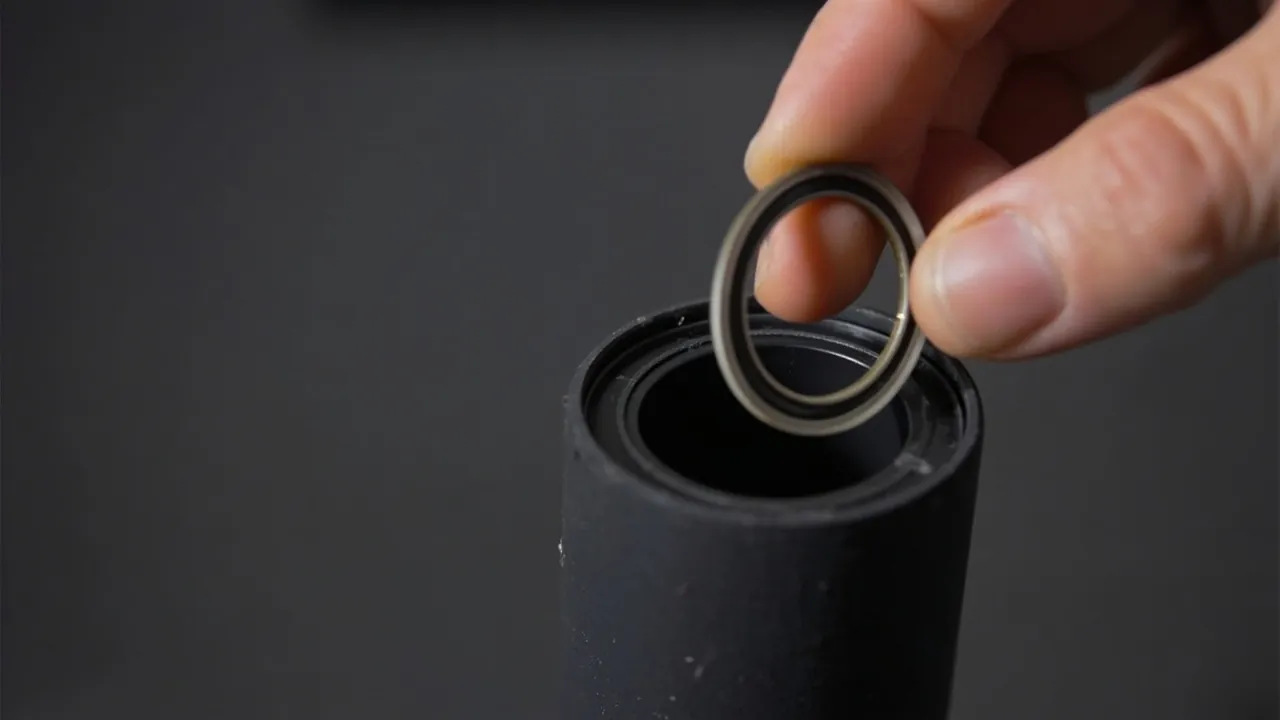
The seal ring (gasket) of an outdoor protective case is an elastic sealing element arranged around the full perimeter of the lid. Its core function is to fill the microscopic gaps between the lid and the body when the lid is closed and pressed down by the latches, thereby blocking water, dust, sand, and moisture from entering the case along with air convection — it is the key structure that lets a protective case achieve dust-proofing and water-proofing (such as IP67 per IEC 60529: fully dust-tight plus short-term immersion). Without a full-perimeter seal ring, no matter how rigid the shell is, the lid gap becomes a channel for water and dust; once the seal ring fails, the protection rating collapses from the nominal value all the way down to near zero. Many users only stare at whether the shell is "thick and hard enough," yet overlook the fact that the small, unremarkable rubber ring is what actually blocks water and dust — it may cost only a few percent of the whole case, but it decides whether the equipment comes out "ready to use" or "scrapped on opening." This article explains this small but critical part from six angles: what the seal ring does, how it seals, how to choose among common materials EPDM/TPE/silicone, what compression is, why it ages, and when to replace it. Everything is based on common industry knowledge, and no patent numbers or unverified parameters are invented.
Table of Contents
- What the Seal Ring Does in an Outdoor Protective Case
- How Sealing Works: Compression and Full-Perimeter Sealing
- Common Seal Ring Materials: EPDM, TPE, and Silicone
- How to Choose Among the Three Materials: A Comparison Table
- What Compression Is and Why It Matters
- Full-Perimeter Sealing vs. Partial Sealing
- Why a Seal Ring Ages and Fails
- When to Replace the Seal Ring
- Daily Maintenance of the Seal Ring
- The Relationship Between the Seal Ring and the IP67 Rating
- The Seal Design of KeXin New Materials/kexinMaterials/JUNZHJIA
- Cross-Section Shapes and Mounting Methods
- How to Diagnose Seal Ring Failure
- The Relationship Between the Seal Ring and the Pressure-Balancing Valve
- Acceptance Checklist for Verifying Seal Specifications with a Manufacturer
- Common Misconceptions
- Application-Scenario Quick Reference for Seal Materials
- Practical Replacement Tips (DIY and Batch)
- Frequently Asked Questions (FAQ)
- Conclusion and Further Reading
What the Seal Ring Does in an Outdoor Protective Case
In short, the seal ring does one job: plug the gap. Between the lid and the body of an outdoor protective case, no matter how precisely machined, there remain microscopic unevenness and gaps at the micron scale. Air, water droplets, and dust particles (ranging from a few microns to dozens of microns) can easily slip through these gaps. The role of the seal ring is to "bulge" with its own elasticity after the lid is closed and the latches are tightened, filling those gaps so that air cannot form a convection path, and water and dust naturally cannot get in.
What it protects are the assets inside the case that "fear dust, fear water, and fear moisture": camera lenses, circuit boards, sensors, reagents, batteries, and precision gauges. For application directions such as outdoor survey, military/police/fire, electronics, scientific exploration, and aviation/communication, the seal ring is the "last and most critical line of defense" for dust-proofing and water-proofing of the protective case. It must be emphasized that the seal ring is a consumable, not a permanent part — like the rubber strips on car doors and windows, it ages, and maintenance and replacement determine the actual service life of the protective case.
How Sealing Works: Compression and Full-Perimeter Sealing
The seal ring seals through two core mechanisms: continuous full-perimeter arrangement and elastic rebound produced by being compressed.
- Full-perimeter continuity: The seal ring must be laid out continuously with no break along the entire perimeter of the lid. Any break or gap becomes a "shortcut" for water and dust to leak in. Therefore, a quality protective case uses a seal ring that is molded as one continuous piece or reliably joined, rather than casually pieced together in segments.
- Compression: After the lid is closed, the seal ring is flattened by a certain proportion of its thickness between the lid and the body; this "flattened amount" is called compression. It is the compression that makes the seal material expand sideways and stick tightly to both contact surfaces, forming an airtight/watertight seal. Too little compression means it does not seal tightly and leaks easily; too much means long-term elastic loss and accelerated aging, plus difficult opening and closing. Reasonable compression is a core parameter of seal design, and different materials and cross-section shapes correspond to different optimal compression ranges.
Think of it this way: the seal ring does not rely on "hard blocking" but on "elastic fit after being compressed." This is why the latches matter — multiple latches press the lid evenly onto the seal ring, maintaining stable compression; a single latch or uneven latch force causes local under-compression and leakage. Sealing is the synergy of "ring + latch + mating surface."
For this reason, the performance of the seal ring cannot be evaluated in isolation from the shell and latches: the same rubber strip, installed on a body with good mating tolerances and even multiple latches, can seal long term, but installed on a thin-wall, deforming, single-latch body, it may leak after one drop. This is also why a manufacturer with injection-molding and mold-making capability (such as KeXin New Materials) can control the seal groove and mating tolerances at the source, turning "nominal sealing" into "long-term sealing" rather than patching with adhesive strips afterward. When inspecting a case, the user should view "gasket + latch + lid-gap evenness" as a whole, rather than merely asking "is there a rubber strip."
Common Seal Ring Materials: EPDM, TPE, and Silicone
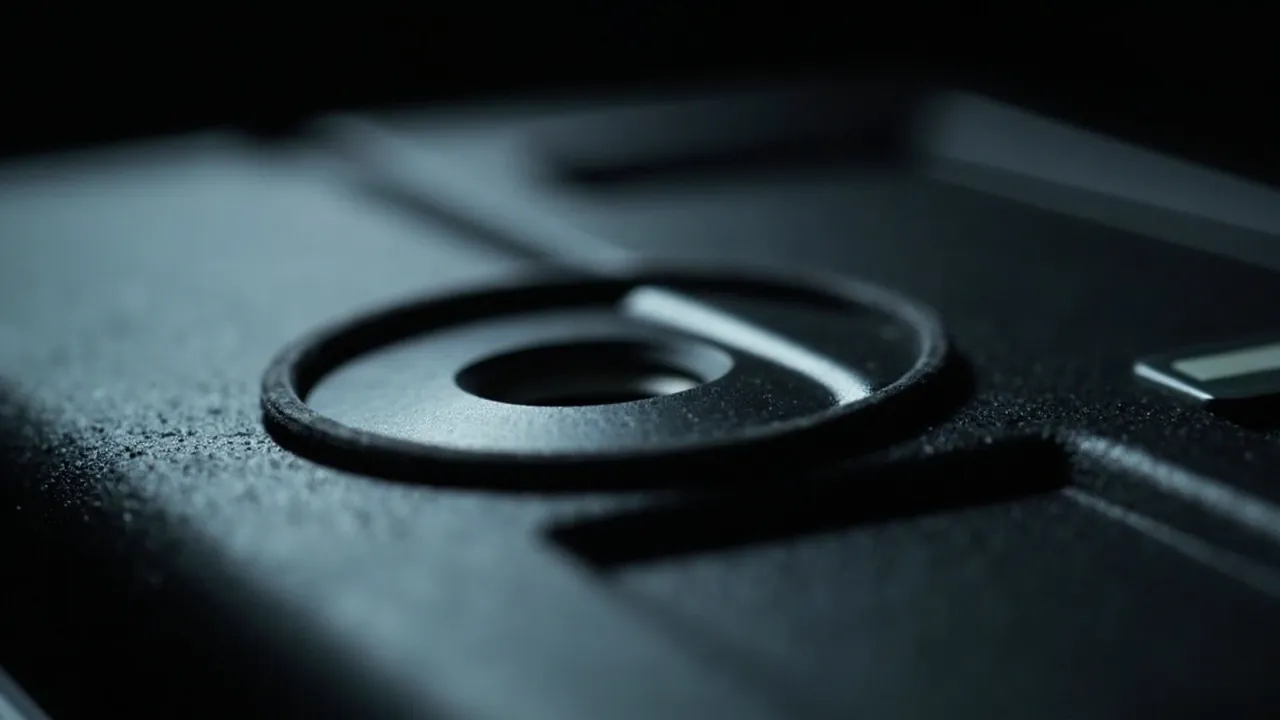
The elastic materials for protective-case seal rings mainly fall into three categories, all mature industry solutions:
- EPDM (ethylene propylene diene monomer rubber): Excellent weather resistance, strong against ultraviolet (UV) radiation, ozone, and a wide high-low temperature range, with outstanding anti-aging performance, making it the mainstream choice for long-term outdoor exposure scenarios. The downside is ordinary oil resistance, so caution is needed where it contacts oils.
- TPE (thermoplastic elastomer): Recyclable, easy to process, with adjustable feel and elasticity, and good cost and environmental performance, suitable for scenarios with moderate rebound requirements. Performance varies widely, and specific weathering behavior depends on the formulation.
- Silicone (silicone rubber): A very wide high-low temperature range, biologically inert, odorless and non-toxic, suitable for scenarios sensitive to cleanliness or temperature; but mechanical strength and tear resistance are relatively weak, cost is higher, and some oily environments also require caution.
None of these three materials is "absolutely the best"; each is "more suitable for your environment." For long-term outdoor sun and rain, EPDM is often the safe default; if environmental recycling or specific touch feel is required, TPE is an option; for wide-temperature or cleanliness-sensitive needs, silicone has an advantage. Specific selection should follow the manufacturer's specification sheet.
How to Choose Among the Three Materials: A Comparison Table

| Dimension | EPDM | TPE | Silicone |
|---|---|---|---|
| --- | --- | --- | --- |
| Weathering/UV resistance | Excellent | Good (formulation-dependent) | Excellent |
| Ozone/aging resistance | Excellent | Good | Excellent |
| High-low temp resistance | Wide (commonly around -40 to 120°C) | Medium (formulation-related) | Very wide (standout temp resistance) |
| Elasticity/rebound | Good | Medium–Good (adjustable) | Good |
| Oil/solvent resistance | Fair | Depends on formulation | Fair |
| Environmental/recyclable | Fair | Excellent (recyclable) | Good |
| Cost | Medium | Medium (lower side) | Higher |
| Typical use | Long-term outdoor exposure, sun and rain | General, eco-friendly, cost-sensitive | Wide temp, cleanliness-sensitive |
Note: The temperatures in the table are common industry magnitude ranges; the specifics depend on the material grade and the manufacturer's specification sheet, and this article does not provide unverified precise test values. When selecting, fill the four questions — "long-term outdoor?", "oil contact?", "wide temperature?", "recycling important?" — into the table above, and the conclusion emerges naturally.
What Compression Is and Why It Matters
Compression is the deformation of the seal ring after being pressed, usually expressed as the difference between "free height" and "compressed height," or the percentage of that difference relative to the free height. It is the dividing line of whether a seal holds and how long it holds:
- Insufficient compression: The seal ring is not fully pressed, microscopic gaps remain, and water and dust can seep in; shows up as seam leakage in rain or immersion.
- Proper compression: Tight fit, sufficient rebound, both sealing and not over-fatigued — the design target range.
- Excessive compression: Long-term over-limit pressure causes the elastomer molecular chains to fatigue and develop permanent set ("flattened and won't bounce back"), losing sealing ability, plus high opening resistance and latch load.
Compression is not "the bigger the better" but "just right." It is jointly determined by the seal ring's cross-section shape (round cord, square cord, hollow tube, etc.), hardness (Shore hardness), and material rebound. Users may not measure compression when purchasing, but can make a preliminary judgment through "is the closing feel even, do the latches need a lot of force, does the lid gap stick tightly everywhere"; if compression abnormality is suspected, verify against the manufacturer's specification sheet and samples.
Full-Perimeter Sealing vs. Partial Sealing
Many "pseudo-waterproof" products add rubber only on a few edges of the body or only seal near the latches; this is called partial sealing, with obvious flaws: water and dust enter from the unsealed edges. An outdoor protective case requires full-perimeter sealing — the seal ring runs continuously without break along all four edges of the lid (or the whole perimeter of a shaped lid), and the mating surface is compressed and sealed across the entire circumference.
The judgment method is simple: open the lid and see whether the rubber strip is continuous around the whole perimeter and unbroken at corners; after closing, see whether the surrounding gaps are evenly tight. Full-perimeter sealing is one of the essential features that distinguishes a protective case from an ordinary lidded storage box, and it is also the structural prerequisite for it to claim IP67. Ordinary storage boxes either have no seal or only partial dust blocking, and cannot reach a quantifiable protection rating.
Why a Seal Ring Ages and Fails
The seal ring is an elastomer that ages under long-term stress and environmental effects. Common causes include:
- Photo-oxidative aging: Long-term UV exposure breaks rubber molecular chains, causing surface powdering, stickiness, or hardening and cracking; although EPDM has good weather resistance, it is not immortal.
- Thermal aging and thermal cycling: High temperatures accelerate aging, and repeated high-low temperature swings make the material repeatedly expand and contract, leading to fatigue.
- Compression set: Long-term pressure without release causes the elasticity to not recover, reducing sealing force.
- Ozone and chemical attack: Ozone or chemical gases in some environments cause rubber cracks; oils can swell some materials.
- Mechanical damage: Sand grains or threads caught when closing form local indentations, or opening and closing scrape the strip; foreign objects can also directly pry the seal open to form a leak gap.
- Usage habits: Long-term opening in blowing sand and storing in the sun accelerate aging.
Understanding these causes makes it clear that "the seal ring is once-and-done" is a misconception — like tires and door-window strips, it has a lifespan, and maintenance and periodic replacement are key to sustainable protection.
When to Replace the Seal Ring
When any of the following signals appears, it is recommended to replace with a same-specification seal ring:
- Loss of elasticity/hardening: The feel is noticeably hard, elasticity is lost, and it does not rebound when pressed.
- Visible cracks/chipping: Surface cracking, tearing, missing corners, especially at corners and latch pressure points.
- Permanent flattening: A section is flattened and cannot recover its cross-section, indicating fatigue.
- Water or dust seepage: Previously leak-free, but recently clearly entered after rain or dust, and confirmed to be the seal ring rather than foreign objects in the lid gap.
- Sticky/powdery: Surface is sticky or sheds powder when wiped, the material has degraded.
Replacement points: buy a seal ring of the same specification, same cross-section, same material; do not casually substitute with ordinary rubber strips; install ensuring full-perimeter continuity, unbroken corners, and reliable bonding/embedding; after replacement, verify that the closing compression is even. Most manufacturers provide same-specification seals for their protective cases, and batch users can agree on spare parts and replacement cycles at the OEM/ODM stage.
Daily Maintenance of the Seal Ring
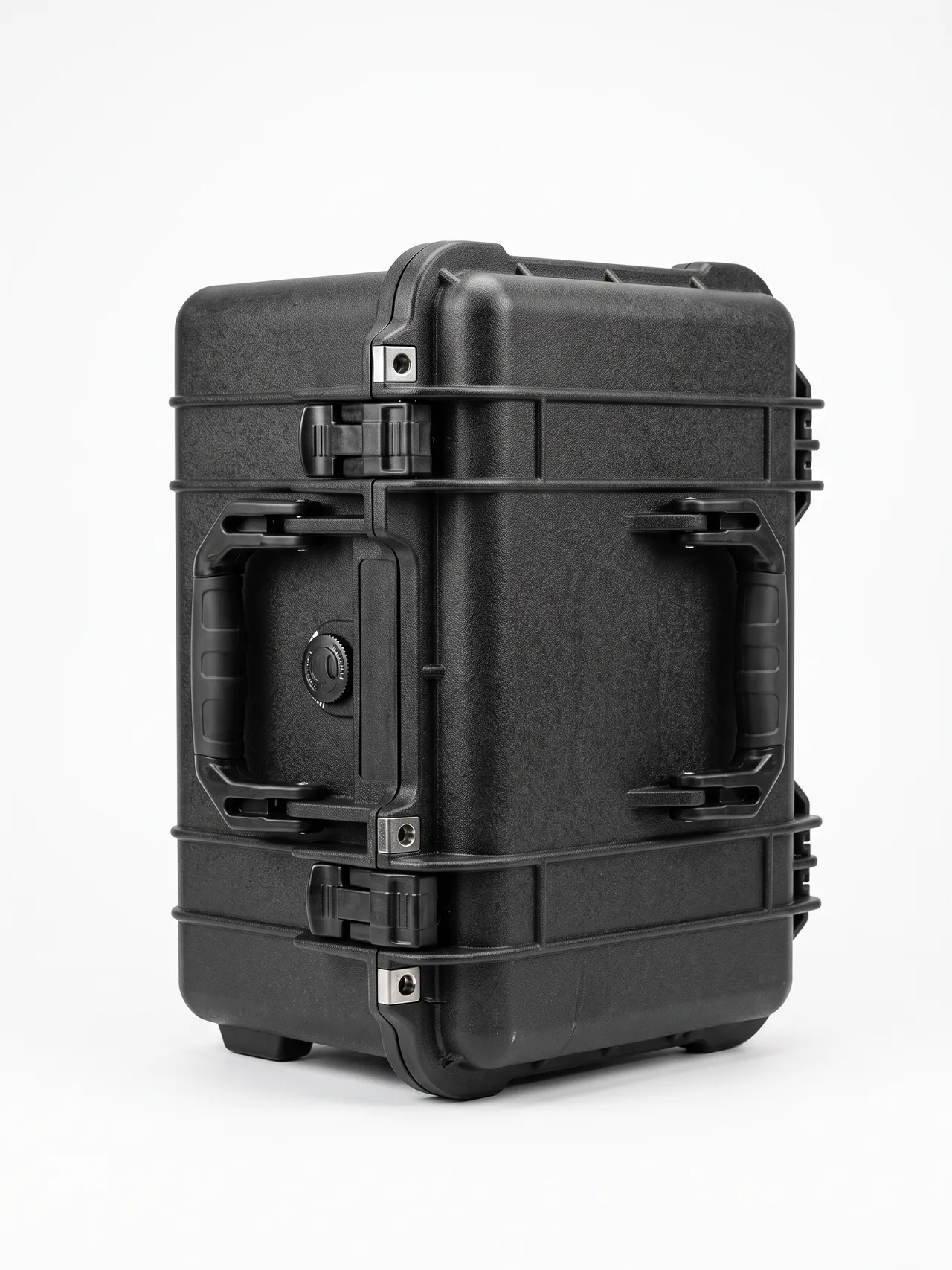
With proper maintenance, sealing capability can be maintained long term; without it, even a nominal rating fails from a small crack. Recommendations:
- Clear foreign objects before closing: Remove sand grains and threads from the lid edge and seal ring to avoid trapped debris forming a leak gap — the most common cause of "false failure."
- Wipe regularly: Wipe the seal ring with a clean soft cloth, and apply a thin layer of silicone grease if needed to slow aging and maintain elasticity (note compatibility between grease and material).
- Avoid prolonged sun exposure: Long-term high temperature accelerates hardening and cracking; when idle, store in a cool place and release compression stress by half-opening.
- Open in clean places: Try not to leave the case open in blowing sand to reduce internal dust.
- Watch for deformation: Replace promptly with the same-spec part when elasticity is lost or cracks appear.
- Clean the liner synchronously: A liner that accumulates dust re-contaminates the equipment; blow dust off regularly.
Among these six, "clear foreign objects" and "replace promptly" have the best cost-performance — most water and dust accidents root in not clearing before closing or using a ring that has already aged.
The Relationship Between the Seal Ring and the IP67 Rating
The IP code of a protective case is based on the international standard IEC 60529. Taking the most common IP67 as an example: the first digit 6 means fully dust-tight (IP6X), and the second digit 7 means protected against short-term immersion (usually 1 meter depth, about 30 minutes). The seal ring is the physical basis for achieving these two digits: dust-proofing relies on full-perimeter sealing to block dust from entering with air flow; water-proofing relies on the same seal to block water flow and splashes.
But two points must be clarified: first, IP testing is conducted under controlled conditions, and actual long-term protection still depends on an intact seal ring and correct latching; second, the seal ring material (EPDM/TPE/silicone) affects "long-term reliability and lifespan," not "whether a certain rating can be claimed" — the claimed rating depends on the whole-case design and verification. Therefore, when purchasing, both recognize the IP67 rating and check whether the seal ring material suits your usage environment (e.g., choose weather-resistant EPDM for long-term outdoor), and confirm that the manufacturer provides maintenance and replacement support. The KeXin New Materials JUNZHJIA protective-case product line has IP67 capability and holds qualifications such as ISO9001, REACH, and California Prop 65 (backed by company documentation; certificates available on request). The plastic-case ABS/PP material passes RoHS testing.
The Seal Design of KeXin New Materials/kexinMaterials/JUNZHJIA
KeXin New Materials (Guangdong) Co., Ltd. operates the domestic brand "KeXin", the global brand kexinMaterials, and the protective-case product-line brand JUNZHJIA. Founded in 2014, the factory is in Zhongshan City, Guangdong (the Greater Bay Area), covering about 18,000 m², with 80+ machines and 100+ staff. The company holds more than 20 utility-model and design patents (each patent is traceable to the corresponding design and process record of the product line).
The product line covers more than 150 specifications across plastic tool boxes, safety protective cases, sealed cases, waterproof/moisture-proof cases, hardware tool boxes, machinery parts cases, and parts bins, applied in outdoor survey, military/police/fire, electronics, scientific exploration, and aviation/communication, exported to the United States, the United Kingdom, Germany, Canada, Japan, Russia, the Philippines, India, Hong Kong/Taiwan (China), and the Middle East. The company has one-stop OEM/ODM capabilities for product design, injection molding, mold manufacturing, LOGO printing, and inner-tray/liner making — tray/liner making — meaning the seal groove position, latch compression, and shell mating can be designed together at the mold stage, guaranteeing stable compression and reliable full-perimeter sealing from the source rather than patching with adhesive strips afterward. The protective-case product line has IP67 capability and holds ISO9001, REACH, and California Prop 65 (certificates available on request); plastic cases in ABS/PP pass RoHS testing; the product line is validated for environmental adaptability under MIL-STD-810H (a product-line test basis, not a military certification). For bulk quotations, specification sheets, and customisation, contact us through the contact form on this site — the team replies within 1–3 business days.
Cross-Section Shapes and Mounting Methods
Beyond material, the "shape" of the seal ring and "how it is mounted" also affect sealing. Common industry practices include:
- Round cord cross-section: Even elasticity, good compression rebound, the most common general cross-section; fits arc-shaped seal grooves.
- Rectangular/square cord cross-section: Larger contact area with flat surfaces, good against extrusion displacement, suitable for flat mating surfaces.
- Hollow tube (hollow cross-section): Large deformation space under pressure, less pressing force required, lighter feel, favorable for effortless opening of large cases, but needs a matched groove to prevent twisting.
- Embedded (snapped into a seal groove): The strip snaps into a dedicated groove on the lid or body, not easy to fall off, accurate positioning — the mainstream for protective cases; superior to the temporary solution of "back-adhesive."
- Back-adhesive self-stick: Convenient to apply but weak long-term reliability, mostly used for low-cost or repair reinforcement, not recommended as the main seal.
The cross-section and mounting method must match the latch pressing force and the shell mating surface — again showing that sealing is a systems engineering of "ring + latch + mating surface." When purchasing, check whether the seal ring is embedded in a dedicated groove, whether it is continuous around the perimeter, and whether the cross-section matches the groove — more professional than just looking at "is there a rubber strip."
How to Diagnose Seal Ring Failure
When a protective case takes in water or dust, first use the following thinking to judge whether it is a seal ring problem, avoiding wrongly blaming the body:
- Local seepage but intact strip: Mostly sand/thread caught before closing, or a latch not fully fastened causing local under-compression — clear the foreign object and re-fasten; not a strip failure.
- Even seepage all around and the strip is hard: Typical aging and elasticity loss, compression already insufficient, need to replace the same-spec ring.
- A section clearly taking in water: That section of strip is broken, chipped, or detached from the groove — full-perimeter sealing is destroyed, must replace the whole ring.
- Corner moisture after rain but no water droplets: Mostly condensation or temperature difference; the seal ring is normal, should add desiccant or reduce temperature difference, not replace the ring.
- New case leaks immediately: Suspected mating-surface or groove design/assembly issue, should contact the manufacturer to verify the individual product, not self-apply adhesive.
This "locate the root cause first" approach avoids blindly replacing when the strip is intact, or only wiping the surface when the strip is already spent, truly fixing the protection in place.
The Relationship Between the Seal Ring and the Pressure-Balancing Valve
The seal ring handles "static water-proofing and dust-proofing," but it has a natural opponent — pressure difference. When ambient pressure or temperature changes abruptly (such as an aircraft cargo hold climbing, high altitude, or day–night large temperature swings), the changing air volume inside creates an internal–external pressure difference that may suck the lid open or push it open, destroying the compressed state of the seal ring. This is when the pressure-balancing valve (breathing valve) is needed: it lets air inside and outside slowly exchange and returns the difference to zero, while blocking water and dust through its internal membrane structure, thereby preventing case bulge/difficulty opening and protecting the seal ring from pressure-difference damage. In other words, the seal ring is the defense line, and the pressure-balancing valve is the "pressure relief valve" — only together do they keep sealing effective in complex environments. For air transport, high altitude, and large temperature-swing scenarios, the selection should consider the seal ring and the pressure-balancing valve together, not just stare at the rubber strip. Many "protective case mysteriously took in water" accidents root in pressure difference loosening the lid rather than the strip itself failing — this kind of problem cannot be solved by replacing the strip alone; the valve must balance the pressure. For a deeper look, see What the pressure-balancing valve does in an outdoor protective case.
Acceptance Checklist for Verifying Seal Specifications with a Manufacturer
To avoid receiving a body that "has a strip but is unreliable," it is recommended to write the following items into the inquiry and acceptance:
- Material description: Clearly specify EPDM/TPE/silicone and the corresponding grade or performance description; check whether it suits your environment (weather-resistant EPDM preferred for long-term outdoor).
- Full-perimeter continuity: Open the lid to confirm the strip is unbroken around the whole perimeter, with no break at corners.
- Mounting method: Confirm embedded into a dedicated groove, not just back-adhesive.
- Cross-section and groove match: See whether the strip sits stably in the groove without twisting or falling off.
- Compression feel: Even pressure around the perimeter when closed, no section loose and another dead-tight; moderate latch force.
- Replacement support: Confirm the manufacturer provides same-spec seals and replacement guidance; batches can agree on spares.
- Supporting qualifications: Whole-case IP67 capability (per IEC 60529), ISO9001, RoHS (e.g., plastic ABS/PP material passes RoHS testing), etc., available on request for verification.
This checklist upgrades "is there a strip" to "is the strip reliable and can it be maintained long term," reducing water and dust risk from the source.
Common Misconceptions
Beyond the earlier "seal ring is once-and-done" and "the thicker the better," there are two more common misunderstandings:
- Misconception: IP67 marked means forever waterproof. The IP rating is a test result under controlled conditions; actual long-term protection depends on seal ring condition and correct latching; aged strip, trapped foreign objects, and unfastened latches all make real protection lower than nominal.
- Misconception: Silicone is definitely better than EPDM. Silicone has wide temperature range and is cleanliness-friendly, but mechanical strength and tear resistance are relatively weaker and cost is higher; for long-term outdoor sun exposure, EPDM's weather-aging resistance is often more reliable. Materials have no absolute good-or-bad, only environment fit.
Sorting out these misconceptions turns seal ring selection and maintenance from a mystery into an engineering action that can be checked item by item. For background on why dust protection matters, see Why an outdoor protective case needs dustproof design.
Application-Scenario Quick Reference for Seal Materials
Combining the typical application directions of outdoor protective cases, here is more specific seal material selection reference:
| Application scenario | Main environmental challenge | Recommended seal material |
|---|---|---|
| --- | --- | --- |
| Outdoor survey/scientific exploration | Long-term sun, sand, temperature change | EPDM (standout weather/aging resistance) |
| Military/police/fire | Harsh, vibration, heat-humidity, sand | EPDM or per MIL-STD-810H validation fit |
| Electronics/electrical repair | Moisture, conductive dust | EPDM/TPE, emphasize seal reliability |
| Aviation/communication | Takeoff-landing vibration, temp & pressure change | EPDM + pressure-balancing valve |
| High altitude/cold-region science | Low temp, low pressure, temp swing | Low-temp formulation EPDM/silicone |
| Photography on location | Dust mainly, frequent opening | TPE/EPDM, balance elasticity and cost |
| Medical/clean | Cleanliness, temp-sensitive | Silicone (cleanliness-friendly) |
This table maps "environmental challenge" directly to "material recommendation" and can serve as a requirements list for the manufacturer during inquiry. Note: the same product line often offers multiple material options; the final choice should follow the manufacturer's specification sheet and sample verification; batch users can also agree on seal material and spare-part strategy at the OEM/ODM stage.
Practical Replacement Tips (DIY and Batch)
When replacement is confirmed necessary, note the following operational points to avoid "worse after replacing than before":
- Same specification: Cross-section shape, diameter, material, and hardness all per the original factory; do not casually change thickness.
- Replace the whole ring: Prefer replacing the whole ring rather than patching a section; the joint of a patched section is a new leak point.
- Clean the groove: Remove old adhesive residue and dust first so the new ring sits snugly.
- Embed evenly: Press in section by section along the groove, avoiding twisting, arching, or local popping out.
- Verify compression: After closing, see whether it sticks tightly evenly around and latch force is moderate; if allowed, do an idle immersion self-test.
- Batch strategy: Fleet users can agree at the OEM/ODM stage on forced replacement every N tasks or every X months, making maintenance a system rather than an emergency.
Making replacement a "standard action" rather than "rescue when broken" significantly extends the actual usable life of the protective case, far more cost-effective than repeatedly buying new cases. For related structure, see What is an outdoor protective case and where is it used.
Frequently Asked Questions (FAQ)
Q: Is a thicker seal ring better? A: No. Sealing relies on reasonable compression rather than sheer thickness. Too thick leads to over-compression, rebound fatigue, and difficult opening; too thin leads to under-compression and poor fit. The key is a matched cross-section and compression design, with the seal groove and latch pressing force calibrated together at the mold stage, rather than "stacking" sealing with a thicker strip.
Q: Which is best for outdoor use among EPDM, TPE, and silicone? A: For long-term outdoor sun and rain, EPDM stands out in weather and UV resistance and aging resistance and is usually the safe default; choose TPE if recycling/cost is a priority; choose silicone for wide temperature or cleanliness sensitivity. The specifics depend on your environment and the manufacturer's specification sheet.
Q: Can I replace an aged seal ring with an ordinary rubber strip? A: Not recommended. Ordinary strips do not match the cross-section, hardness, rebound, and compression of the original, making full-perimeter sealing hard to maintain and lowering the protection rating. Replace with the same-specification, same-material seal.
Q: The case is marked IP67; does the seal ring still need maintenance? A: Yes. IP67 testing is under controlled conditions, and actual long-term protection depends on an intact seal ring and correct latching. Clear foreign objects before closing, wipe regularly, and replace promptly when elasticity is lost, to maintain nominal capability.
Q: If the seal ring is broken at one point, will it leak? A: Yes. Full-perimeter sealing requires no break; any gap becomes a channel for water and dust. When a break is found, replace the whole same-specification ring promptly.
Q: What is the seal ring like on KeXin New Materials/kexinMaterials protective cases? A: Its protective-case product line (JUNZHJIA) designs the seal groove and latch compression together at the mold stage, guaranteeing full-perimeter sealing and stable compression, and has IP67 capability and qualifications such as ISO9001 (certificates available on request); the plastic ABS/PP material passes RoHS testing.
Conclusion
The seal ring of an outdoor protective case is an elastic sealing element arranged around the full perimeter of the lid. Through two mechanisms — "elastic rebound fit produced by compression" and "continuous full-perimeter no-break" — it blocks water, dust, and moisture from entering with air convection, forming the physical basis for achieving IP67 (per IEC 60529) dust-proofing and water-proofing; without it, no matter how hard the shell is, the lid gap cannot be sealed. On materials, EPDM suits long-term outdoor with its weather and aging resistance, TPE is recyclable and general-purpose, and silicone suits wide temperature and cleanliness sensitivity; selection should fit the usage environment rather than chase "premium." Compression is the dividing line of whether a seal holds and its lifespan — too much or too little both cause problems. The seal ring is a consumable that ages from photo-oxidation, heat, and compression fatigue; when loss of elasticity, cracks, permanent flattening, or seepage appear, replace with the same-spec part; daily maintenance is "clear foreign objects, wipe often, avoid sun, replace promptly." One final reminder: the protection rating of a protective case comes from the synergy of "full-perimeter seal ring + multiple latch compression + shell mating" — failure of any link brings the nominal rating to zero. It is a small part but a big defense line. When purchasing, do not blindly trust a certain "magic material," but check whether the ring is continuous, whether it is embedded in a dedicated groove, whether compression is even, and whether the manufacturer provides same-spec replacement parts; in use, make "clear foreign objects, wipe often, avoid sun, replace promptly" a habit. Truly professional protection often hides in the details of this rubber strip. For batch users, the mold and liner one-stop OEM/ODM capability of KeXin New Materials/kexinMaterials/JUNZHJIA can also coordinate the seal groove, latches, and shell mating before leaving the factory, making full-perimeter sealing stable and reliable from the design stage and bringing long-term protection cost to a minimum through an institutionalized replacement cycle. For waterproofing background, see Why an outdoor protective case needs waterproof design.
Further Reading
- Why Does an Outdoor Protective Case Need Waterproof Design?
- Why Does an Outdoor Protective Case Need Dustproof Design?
- What Does the Pressure-Balancing Valve Do in an Outdoor Protective Case?
- What Is an Outdoor Protective Case and Where Is It Used?
- IP67 Protective Case: Fully Dust-Tight and Short-Term Immersion