

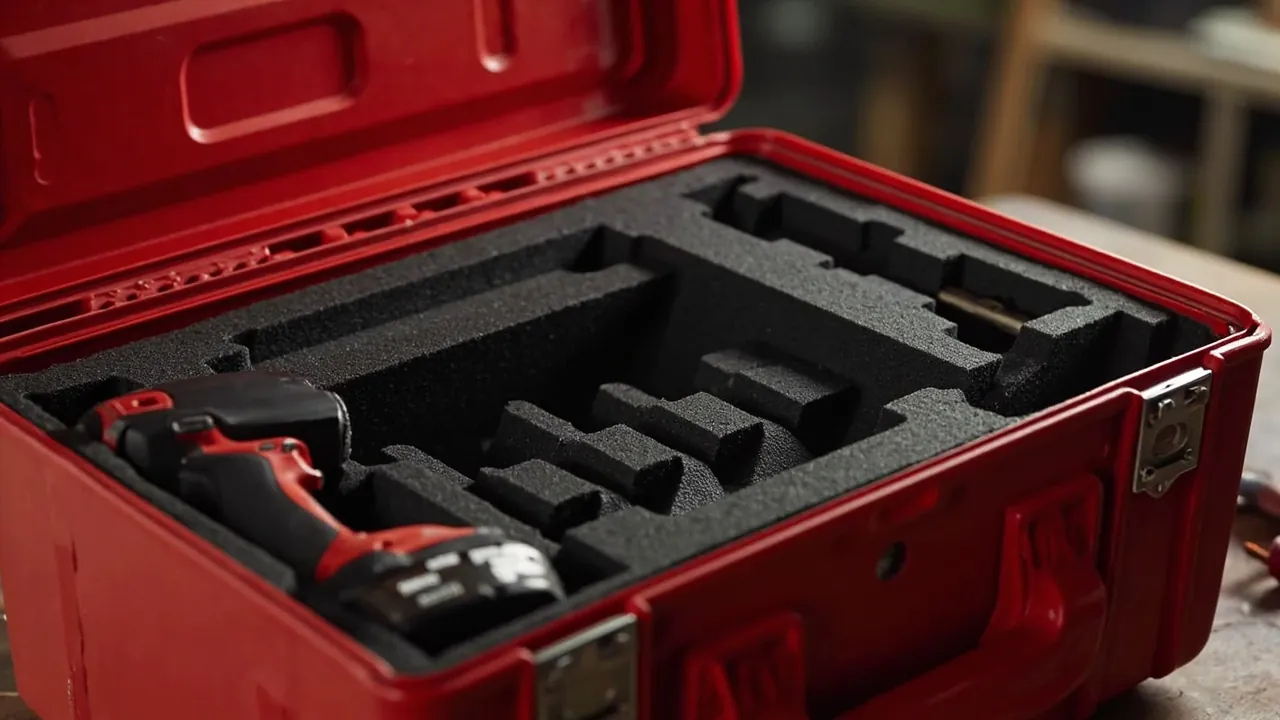
The core advantage of EVA foam in a tool box is this: its closed-cell structure delivers excellent shock cushioning, water and oil resistance, and dimensional stability, while the material machines cleanly on a CNC router so tools are held firmly and the foam does not shed crumbs. Across the foams commonly used, EVA offers the most balanced combination of protective performance and customizability. Compared with EPE, PU, and similar materials, EVA performs more consistently on the three axes that matter most — precision retention, tolerance of harsh environments, and long-term reuse — which is why it has become the mainstream liner material for protective cases, instrument cases, and tool boxes. What follows is a systematic treatment: material properties, comparison, selection criteria, pitfalls to avoid, and commercial evaluation, ending with a decision checklist for purchasing.
Table of Contents
- What Is EVA Foam? A Material Primer
- The Six Core Advantages of EVA Foam
- EVA Compared With Other Foams
- Five Criteria for Buying an EVA Liner
- EVA Solutions for Different Applications
- The Chemistry and Foaming Process Behind EVA
- Commercial Buying Pitfalls to Avoid
- Supplier Evaluation Checklist
- Worked Example: Lining a Survey Instrument Kit
- Frequently Asked Questions (FAQ)
- Conclusion and Selection Advice
- Further Reading
What Is EVA Foam? A Material Primer
EVA is a foam made by expanding an ethylene-vinyl acetate copolymer. It is a closed-cell material — the interior consists of many small, independently sealed bubbles that are not interconnected and do not absorb water. By adjusting the vinyl acetate (VA) content and the expansion ratio, EVA can be produced across a wide span of grades, from soft to fairly firm and from low to high density. Densities commonly fall between 30 and 80 kg/m³, with Shore C hardness roughly in the 30 to 65 range, so the material can be matched to different tool weights and protection levels.
It is precisely this combination of "tunable plus closed-cell plus easy to machine" that lets EVA serve both as lightweight padding and as a high-density precision instrument liner, making it one of the most widely used foams in tool boxes. One distinction matters: EVA is a *family* of materials, and performance differences come mainly from density, VA content, and foaming process. Two grades both called EVA — one at 30 kg/m³ and one at 80 kg/m³ — can feel and support as differently as two unrelated products, so after choosing "EVA" you still have to choose the right EVA grade.
It also helps to separate EVA from the "rubber foam" and "sponge" often mentioned in the market. Conventional sponge is mostly open-cell, absorbing water and shedding particles. Rubber foam has good resilience but costs more, is harder to process, and resists precision routing. EVA sits in the sweet spot of adequate performance, moderate cost, and friendly processing. What matters is closed-cell ratio, density, and whether it can be CNC-routed, not what it is called.
The Six Core Advantages of EVA Foam
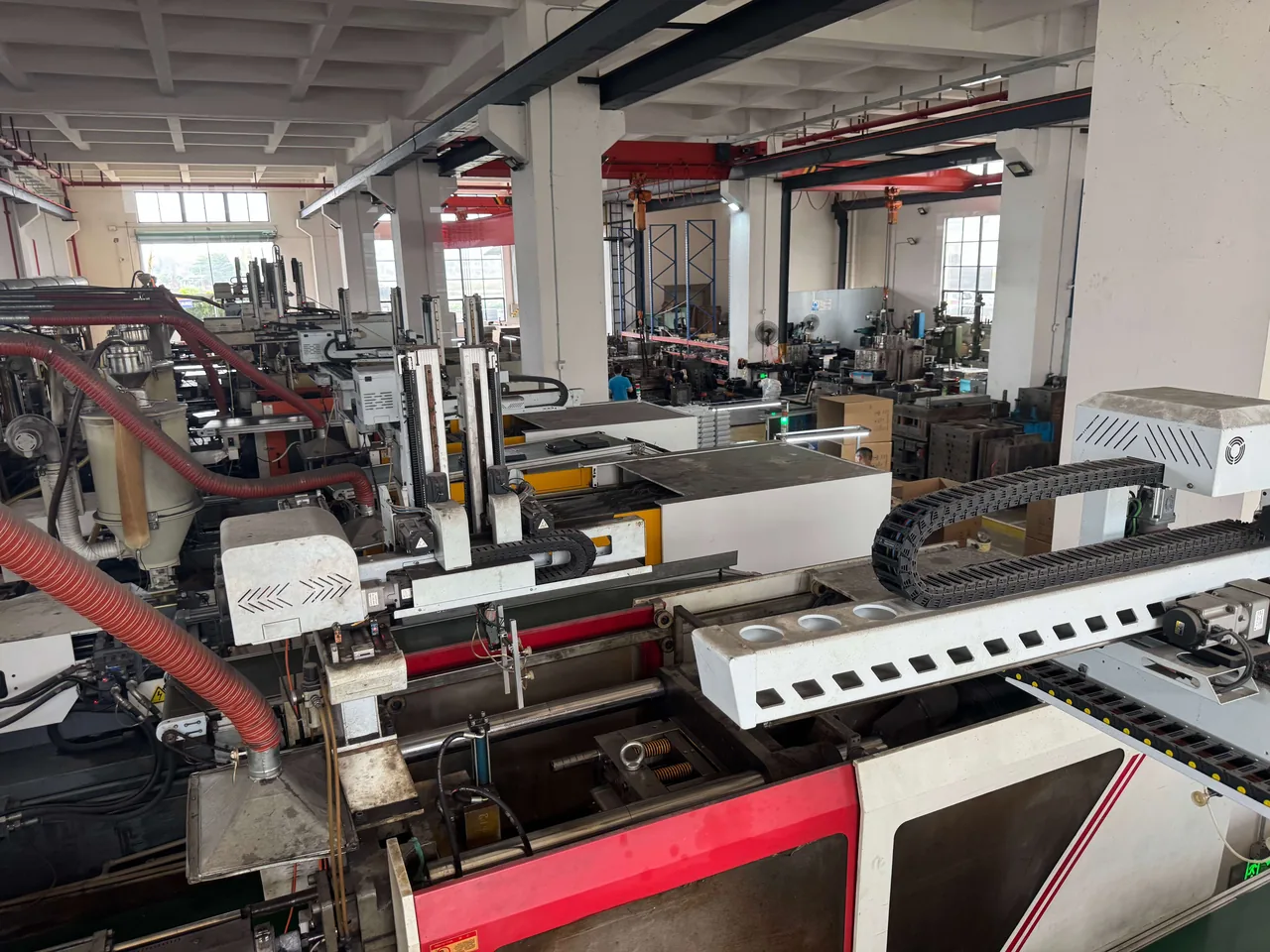
1. Strong shock absorption and cushioning When compressed, EVA's closed cells deform to absorb impact energy. It recovers well and has low compression set, so it keeps working after repeated drops and vibration, protecting vulnerable parts such as cutting edges, dial faces, and lenses. For transport protection, evaluation can follow the approach of standards such as MIL-STD-810H, which this product line uses as an environmental test basis rather than as any form of military certification. A micrometer dropped from desk height onto a hard case floor can lose its calibration entirely; with 20 mm of EVA underneath, the shock is absorbed by the cell structure and the instrument barely feels a hard impact. That soft landing is EVA's most fundamental everyday value.
2. Waterproof, oil-resistant, moisture-proof Because the cells are closed, water does not wick through and oil penetrates poorly, giving clear advantages over open-cell PU and ordinary EPE where water and oil are present. Paired with an IP67 sealed case, EVA provides a second line of defence in wet, dusty conditions. After the same soaking, a PU liner becomes heavy and grows mould if left, while an EVA liner wipes dry and the contents are unaffected.
3. Easy CNC routing, strong holding power EVA machines well and can be CNC-routed into recesses matching a tool's outline one-to-one, so every item "sits into its slot" with zero movement. This is its biggest process advantage over EPE, which resists precision routing, and over PU, which is too soft and collapses — and it is why EVA is the first choice for precision instrument liners. Recesses can be cut to a clearance of 0.5–1 mm over the tool: easy to remove, no rattle. That repeatable accuracy is something hand cutting can never achieve.
4. Dimensionally stable, non-shedding, low outgassing EVA's structure is stable: in normal service it does not crumble, powder, or shed particles, which suits clean environments such as electronics work and laboratories. Open-cell PU, by contrast, sheds and contaminates easily. For clean rooms and precision electronics repair this characteristic is critical. Shedding looks like a small matter, but a crumb landing on a circuit board or optical surface can cause a short circuit or a scratch, and EVA's low-outgassing, non-shedding nature is what qualifies it for such sensitive applications.
5. Good weathering and temperature adaptability EVA retains elasticity across a wide temperature range, resisting brittle failure at low temperature and excessive softening at high temperature, with exact limits depending on formulation. It is therefore more reliable than ordinary EPE where temperatures swing. In outdoor and vehicle-mounted applications that see day-night temperature cycles, EVA behaves more consistently. A case left outdoors in a northern winter with ordinary EPE can harden and become brittle enough to crack when flexed; EVA formulations with a wider service range stay resilient at low temperature.
6. A solid basis for environmental compliance Qualified EVA material can pass regulations such as RoHS and REACH, and export shipments should also consider requirements such as California Prop 65. The ABS/PP cases from KeXin New Materials (JUNZHJIA) pass RoHS testing, and EVA liners can be supplied within a compliant framework to meet multi-country export needs. For export-oriented companies compliance is not an optional extra but a mandatory requirement, and EVA's mature certification pathways reduce customs risk.
Summarising the six: EVA simultaneously provides energy absorption, isolation, restraint, cleanliness, weathering resistance, and compliance. Most competing materials are strong in only some of these, so EVA's value is that all six are adequate and the critical ones stand out.
One caveat: these advantages hold only for "correctly specified EVA." Low-density EVA made with regrind loses closed-cell ratio, resilience, and durability, so purchasing still has to verify density, hardness, and resilience.
EVA Compared With Other Foams
| Dimension | EVA | EPE (pearl cotton) | XPE | PU (polyurethane) | Solid PE |
|---|---|---|---|---|---|
| --- | --- | --- | --- | --- | --- |
| Structure | Closed cell | Closed cell | Closed cell | Mostly open cell | Solid / low expansion |
| Cushioning resilience | Good to excellent | Medium | Good | Excellent but soft | Weak, hard |
| Water absorption | Low | Low to medium | Low | High | Very low |
| Oil resistance | Good | Medium | Good | Poor | Excellent |
| CNC routing | Easy, precise | Hard to route finely | Possible | Sheds crumbs | Difficult |
| Non-shedding | Yes | Generally yes | Yes | No | Yes |
| Relative cost | Medium | Low | Medium | Low to medium | Medium |
| Overall positioning | Precision main liner | Simple padding | Flat liner | Surface layer / acoustic | Load-bearing base |
The picture is clear: EVA has almost no weakness on the three axes of holding precision, environmental tolerance, and cleanliness, making it the best-value main liner material. EPE is cheap but hard to shape, PU is soft yet absorbs water and sheds, and XPE approaches EVA but is slightly behind on routing and hardness adjustability. In one sentence: if you need items "set in and held," choose EVA; only consider EPE or XPE if you just want "a cheap layer of padding."
From a total-cost-of-ownership view, EVA's value is clearer still. Per square metre it costs more than EPE, but it extends tool life by reducing impact damage, lowers transport claims by reducing instrument losses, and raises reuse rates because a CNC liner can serve the equipment for its whole life. Those hidden gains usually exceed the material price difference many times over. For high-value equipment, EVA is not "the expensive option," it is "the cheaper total account."
EVA is not universal, of course. If the contents are cheap, robust, and regularly shaped, the budget is extremely tight, and transport is gentle, flat EPE or even no liner will do. If you need strong sound absorption or an ultra-soft contact layer, add a thin PU surface layer on top of EVA. Rational selection is "EVA first wherever its advantages convert into real protection."
Five Criteria for Buying an EVA Liner
For commercial purchase of EVA liners, verify the following five criteria rather than looking only at unit price:
- Match density to tool weight. Light tools are fine at 30–45 kg/m³; precision or heavy instruments need 50–80 kg/m³ for both support and cushioning. Density is the foundation of an EVA liner — if it is too low, even the best routing will not hold up, because deep recess walls collapse inward under tool weight, loosening the tool or tearing the pocket.
- Match hardness (Shore C) to the surface. A general range is 40–60. Too hard can mark precision surfaces; too soft will not hold. For valuable instruments, run a sample compression test. A practical technique: on delicate surfaces such as lenses and screens, laminate a softer thin material at the contact point of a hard EVA pocket, so the item is held but also protected.
- Set thickness by protection level. Typically 5–15 mm for general use and 15–30 mm for precision; also confirm that lid closure compression stays at or below 30%. Thickness and internal case height trade off against each other, so allow space for the foam at the case-selection stage — otherwise you end up with "the case is exactly tall enough, and adding foam means it will not close."
- Prefer CNC routing. Require the supplier to route recesses from 1:1 tool drawings rather than cutting by hand, to guarantee fit and appearance. CNC's advantage is not only accuracy but repeatability: dozens of liners come out identical, which simplifies spares and interchange, whereas hand-cut pockets differ from one to the next and cause maintenance headaches later.
- Compliance and environment. Confirm the material meets RoHS, REACH, and California Prop 65 for export, and request test or conformity statements with certificates available on request. Compliance statements should reference specific batches rather than a vague "our products comply," so they can be traced during audits and customs clearance.
Beyond these, assess whether the supplier can produce inner trays and liners in one place from case dimensions and a tool list (OEM/ODM), and whether they support LOGO printing and mould manufacturing, since this determines how easily designs are revised and volume delivered. Scoring suppliers against the five criteria beats taking the lowest quotation — the hidden cost of cheap low-density regrind usually surfaces only after tools are damaged.
EVA Solutions for Different Applications
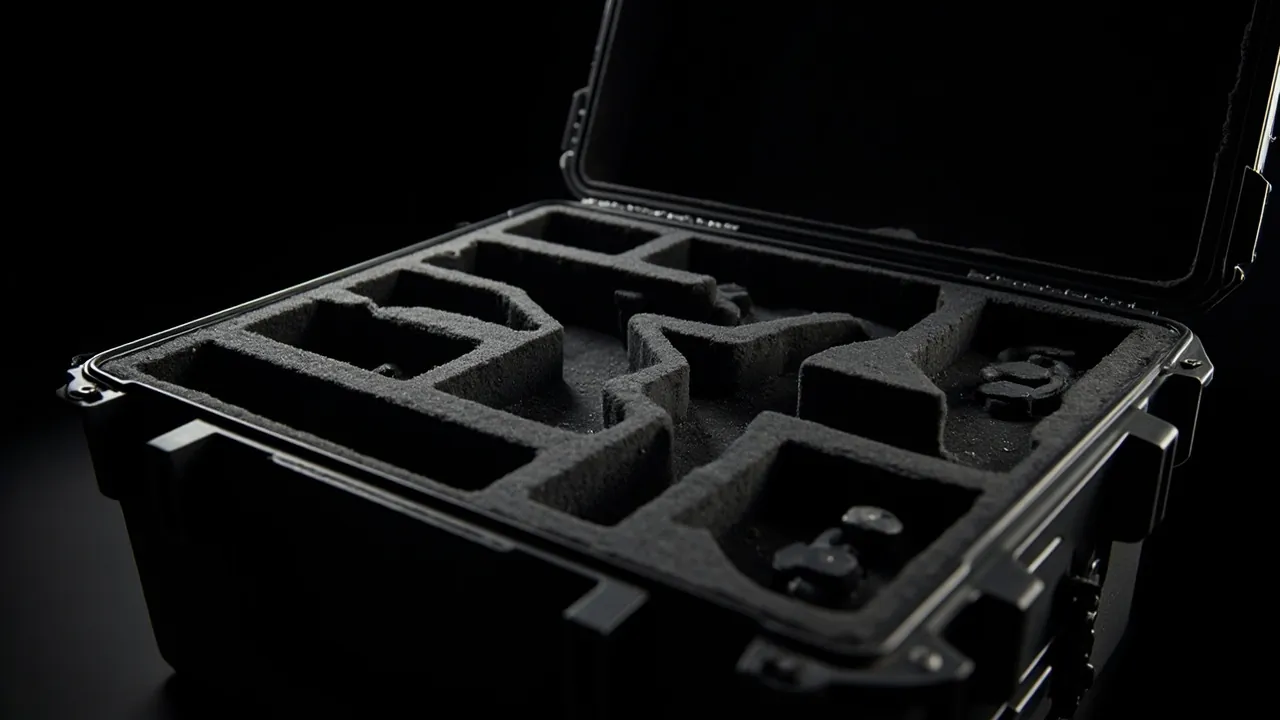
- Precision instrument transport (surveying, photography, sensors): High-density EVA (50–80) plus independent CNC recesses and layering for zero movement in transit, using the same thinking as the protective-case transport environmental test basis. These scenarios place the highest demand on "zero movement," so wall thickness, recess depth, and spacing all need careful calculation, and where necessary two EVA layers — a firm base and a soft contact layer — provide support and scratch protection together.
- Industrial and machine repair: Medium-density EVA with zoning, plus local routed pockets to hold cutting tools and gauges; an oil-resistant surface simplifies cleaning. Workshop oil is everywhere, and a foam surface that absorbs oil gets dirtier with use, whereas EVA's closed-cell oil resistance means one wipe cleans it and maintenance cost stays low.
- Outdoor, military, police, and fire service: Closed-cell EVA plus an IP67 sealed case for water, moisture, and sand protection; modular parts bins combined with EVA for fast access. Field work may involve wading and wide day-night temperature swings, so EVA's weathering and low water absorption underpin reliability, forming a "double line of defence" together with the sealed case.
- Electronics and laboratories: Low-outgassing, non-shedding EVA to avoid contamination, prioritised for clean environments. Circuit boards and optical elements are extremely sensitive to particles and volatiles; EVA's characteristics let it clear the cleanliness threshold for such applications, while open-cell PU is largely ruled out.
- Export equipment: EVA meeting RoHS, REACH, and California Prop 65, shipped with compliance documentation for smooth multi-country clearance. Export depends on the documentation chain as much as the material, so making compliance statements a delivery requirement avoids goods being held at port.
It should be noted that these "scenario to grade" mappings are not absolute; the tool list decides the real specification. The same outdoor case carrying camera gear leans toward precision, while carrying hardware leans toward oil resistance, and EVA's adjustability is exactly what makes "one case, one solution" possible. That is also why a custom liner is worth more than a generic pad: it engraves the scenario differences directly into the foam.
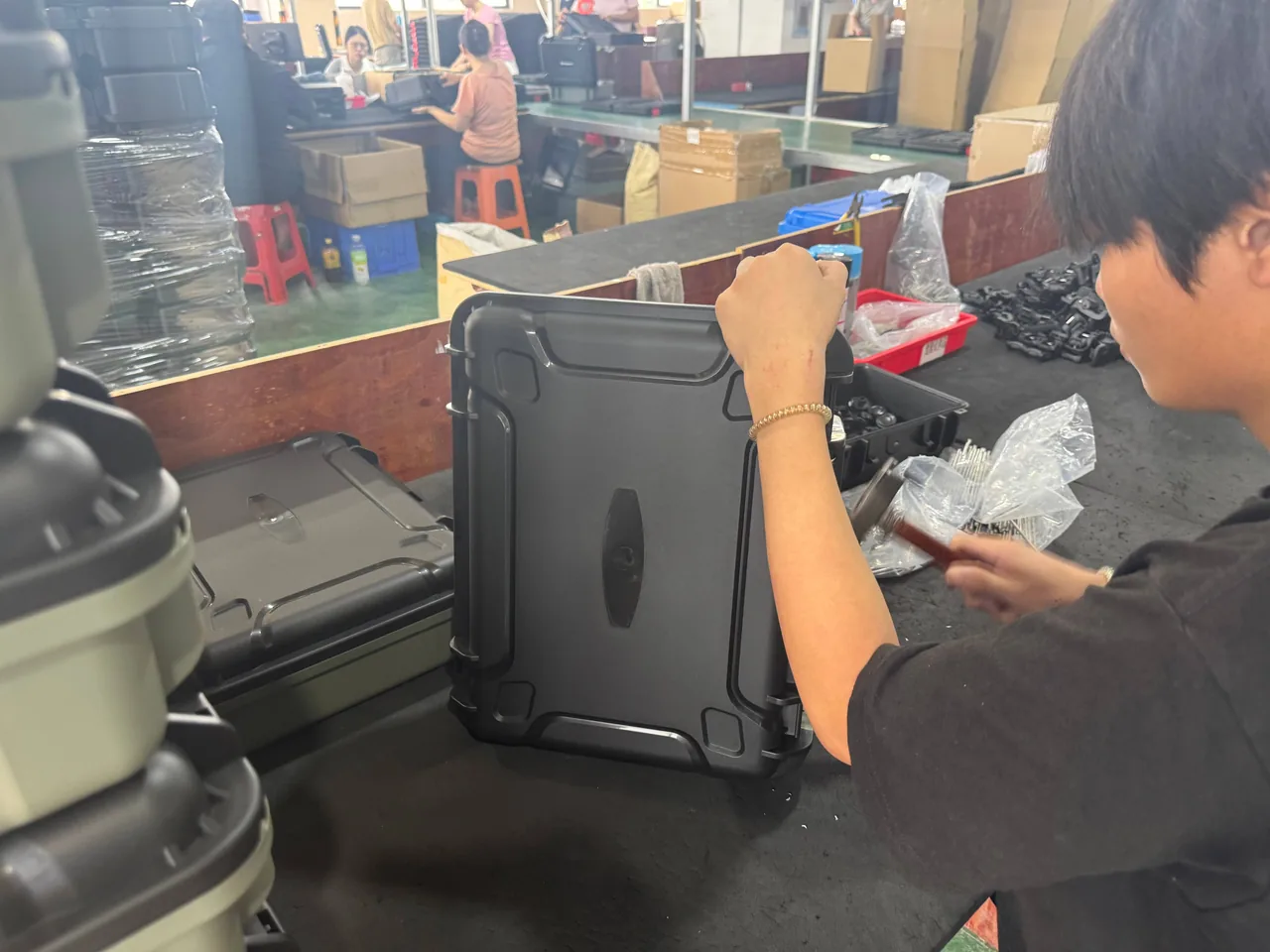
In the JUNZHJIA protective-case system there is a matching answer for each of these scenarios. The brand offers more than 150 specifications, supports inner-tray and liner customization and OEM/ODM, and its factory in Zhongshan City, Guangdong (Greater Bay Area) covers about 18,000 m² with 80-plus machines and more than 100 staff. Its certifications include ISO9001, RoHS, REACH, IP67, and California Prop 65; products are exported to the United States, the United Kingdom, Germany, Canada, Japan, Russia, the Philippines, India, Hong Kong and Taiwan (China), and the Middle East, serving outdoor survey, military/police/fire, electronics, scientific exploration, and aviation communication applications.
The Chemistry and Foaming Process Behind EVA
Understanding a little material science helps you avoid being misled by "same name, different quality." Two products both labelled EVA can differ enormously in density and closed-cell ratio, which is exactly where low-price traps come from — and why the earlier advice to check density, hardness, and resilience matters.
- Effect of VA content: Higher VA content makes EVA softer, clearer, and more polar; liners usually use low-to-medium VA formulations to balance hardness and stiffness. Too much VA makes the material soft, and deep pockets collapse easily.
- Expansion ratio and density: A higher expansion ratio means lower density, lighter weight, and softer feel; strong support requires a low expansion ratio, that is, high density. Density and expansion ratio are roughly inversely proportional, and this is the core knob when specifying a grade.
- Closed-cell ratio: Quality EVA has a high closed-cell ratio, with independent, unconnected bubbles and therefore low water absorption. A "semi-open" structure with insufficient closed-cell ratio absorbs some water and protection suffers.
- Crosslinking method: EVA foaming often uses chemical or physical crosslinking to improve resilience and temperature resistance; adequately crosslinked products show lower compression set and longer life.
- Regrind risk: Adding recycled material lowers closed-cell ratio, density, and resilience. The difference is hard to see but real, which makes sample testing and supplier qualification important.
These process parameters usually do not all appear on a product sheet, but "density plus hardness plus resilience" reflects them well enough. Requiring the supplier to state density and hardness ranges, and backing that up with your own sample testing, is an effective way to avoid regrind.
The process background also explains why two EVA liners can differ several times in price. High density, high closed-cell ratio, thorough crosslinking, and precision CNC routing each add cost, and each sustains one of the six advantages above. Cheap EVA usually cuts expansion ratio and closed-cell ratio: it looks similar, but performance is quietly discounted. Ask not "is it EVA" but "which grade of EVA is it."
Commercial Buying Pitfalls to Avoid
- Looking only at unit price and ignoring density. Cheap low-density EVA collapses when deep pockets are routed, failing over time. Set density from tool weight instead of squeezing price.
- Substituting hand cutting for CNC. Hand-cut pockets fit poorly and work loose, leaving precision tools free to move. Require CNC routing and inspect a sample.
- Ignoring environmental compliance. Export goods containing restricted substances in the EVA can be held at customs. Confirm RoHS, REACH, and California Prop 65 in advance and keep certificates available on request.
- Mismatching thickness to the case. Too thick and the lid will not close; too thin and there is no cushioning. Measure available internal height first, then set thickness.
- Suppliers without customization or sampling capability. Without these you can only buy generic pads and protection suffers. Choose a manufacturer able to do OEM/ODM and produce samples.
- Confusing EVA with EPE. Some cheap "foam liners" are actually EPE, which is hard to shape and protects weakly. Write "EVA" and the density into both contract and sample.
- Skipping sample validation. Before a large batch, fit one or two samples with the real tools and run a transport test, confirming zero movement, proper lid closure, and no pressure marks before mass production.
- Ignoring compression. Caring about thickness but not about compression after closing leaves the foam permanently crushed and prematurely aged. Write "compression at or below 30%" into acceptance.
These eight condense into one discipline: set density by weight, route with CNC, keep compliance on file, size thickness to case height, and validate with samples first. Sacrificing any one discounts EVA's advantages. Sample validation is the cheapest insurance available — one sample set removes the risk of an entire batch of equipment arriving unprotected.
Supplier Evaluation Checklist
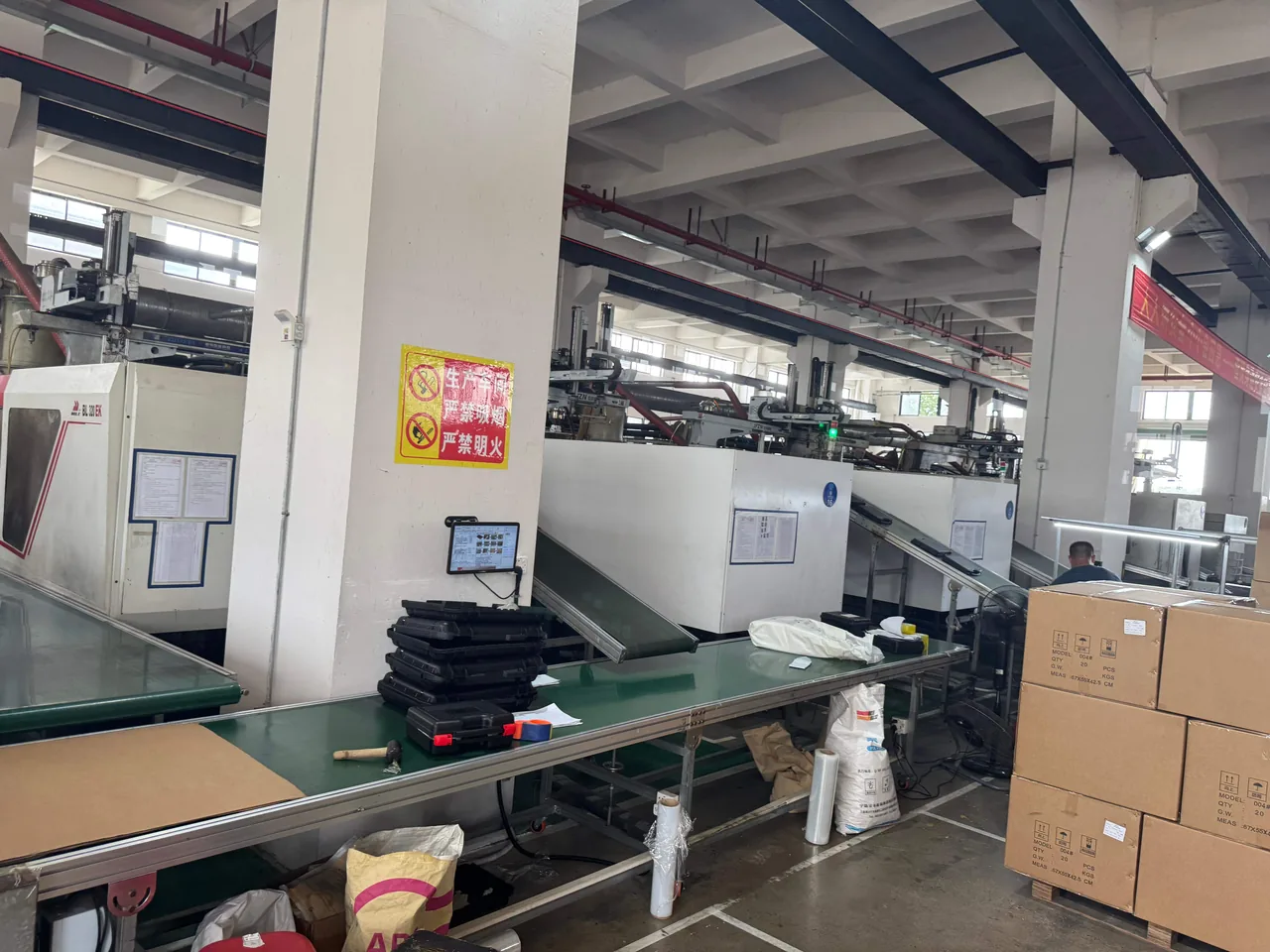
When a company buys EVA liners, or a complete protective-case system, a short checklist helps evaluate suppliers:
- Specification coverage: Whether enough case specifications exist to match different equipment, such as the 150-plus specifications of JUNZHJIA. Broader coverage means you can "choose the case from the tool dimensions" rather than "find tools to fit the case," which follows the same logic as capacity calculation and modular design.
- Customization capability: Whether they can produce inner trays and liners from a tool list, do CNC routing, print logos, and build moulds (OEM/ODM). This directly determines whether the EVA liner is really routed to your tools or is just a generic pad.
- Quality system: Whether ISO9001, RoHS, REACH, IP67, California Prop 65 and similar certifications are complete and available on request. System certification underpins batch consistency: making one good unit is easy, making ten thousand stable ones takes a system.
- Manufacturing strength: Whether they own their factory and equipment, such as the 18,000 m² Zhongshan facility with 80-plus machines and more than 100 staff, which affects lead time and consistency. Suppliers who subcontract heavily show more variation in both.
- Export experience: Whether they know the regulations and logistics of the target market and already ship to multiple countries. Export involves compliance, packaging, and transport protection, and experienced suppliers make fewer mistakes.
- Sampling and after-sales: Whether they can sample for validation, and whether they supply spares and support revisions. Sampling moves risk forward; after-sales determines long-term cost of use.
Attaching this checklist to an RFQ puts quotations on a comparable basis and avoids comparing "both called EVA liner" products with very different performance. The hidden costs — insufficient density, regrind, missing compliance documents — usually surface only when tools are damaged or a shipment is held, by which time the loss far exceeds the material saving.
Worked Example: Lining a Survey Instrument Kit
An example ties the criteria together. The scenario: provide a liner for a survey instrument set — total station main unit, tripod, prism, data recorder, and several batteries — inside a protective case, with requirements of zero movement in transit, splash resistance, and exportability.
Applying the five criteria one by one:
- Density: the instruments are heavy and delicate, so choose 60 kg/m³ high-density EVA, giving deep pockets that stay upright without collapsing.
- Hardness: the main unit has a delicate screen, so add a thin 45 Shore C transition layer at the pocket contact surface to prevent pressure marks.
- Thickness: drop risk in transit is medium to high, so the main-unit pocket is 25 mm deep, balancing cushioning and routability.
- Process: fully CNC-routed 1:1 pockets, with an independent pocket for the main unit and another for the batteries, so any leakage is isolated.
- Compliance: for export to the EU and the United States, the EVA meets RoHS and REACH, with a California Prop 65 statement added and certificates available on request.
Result: the case is layered — a 25 mm high-density EVA base layer with the main-unit pocket, a 15 mm medium-density EVA accessory layer on top, and a 5 mm thin layer inside the lid to secure the data recorder. Lid closure compression is about 22%, within the 30% limit. This scheme converts all six advantages of EVA — energy absorption, water resistance, holding, cleanliness, weathering, and compliance — into concrete parameters rather than a vague claim that "using EVA is better."
Two details stand out. Isolating the batteries is not an afterthought: a leaking cell can destroy a coated prism or corrode a connector, and a separate pocket contains the damage. And holding compression at 22% rather than making the liner thicker preserves pocket wall life, since foam compressed beyond its elastic range takes a permanent set and the pockets loosen within a year.
Frequently Asked Questions (FAQ)
Q: EVA foam costs more than EPE — is it worth it? A: It depends on tool value. EPE is cheaper but hard to route precisely, weaker in resilience, and poor at holding, so it suits low-cost padding. EVA has adjustable density and hardness, routes easily on CNC, resists water and oil, and does not shed; for precision or high-value tools it markedly reduces transport damage. Ordinary hand tools can use EPE; valuable instruments deserve EVA. On the total account, the instrument losses and transport claims avoided usually exceed the material price difference.
Q: How long does an EVA liner last, and will it collapse? A: EVA has low compression set and good resilience, so with a correct load and compression at or below 30% it can be reused for a long time without collapsing, provided density and thickness match tool weight. Avoid sustained overload and high-temperature sunlight and it can last for years. Include the liner in periodic maintenance and replace it once powdering or crushing appears: visually inspect every one to two years in normal use, every six months under high temperature, heavy load, or permanent vehicle mounting.
Q: Is EVA foam environmentally acceptable, and are there export problems? A: Qualified EVA can pass RoHS and REACH, and shipments to the United States should also consider California Prop 65. Require the supplier to provide test or conformity statements with certificates available on request. The ABS/PP cases from KeXin New Materials pass RoHS testing, and EVA liners can be supplied within a compliant framework for export to multiple countries. Archive the compliance documents so they can be produced during audits and clearance. Note that compliance has two elements, material and documentation: with compliant material but no batch-specific statement, you may still be asked for supplementary documents at the border, so the contract should state that compliance documents are delivered with the goods.
Q: What information does a manufacturer need for a custom EVA liner? A: Typically the case's internal dimensions (length × width × height), the tool list with each item's external dimensions and weight, the areas needing priority protection, whether layering or a logo is required, and the target environment and compliance requirements. From these the manufacturer designs the inner tray and CNC routing. JUNZHJIA supports one-stop liner customization from a tool list under OEM/ODM. The more complete the information, the better the pocket fit and the less rework; photos of the actual tools or 1:1 templates improve accuracy further, especially for irregular shapes.
Q: How do I choose between EVA and XPE? A: Both are closed-cell with low water absorption. XPE is finer and flatter, while EVA usually offers a wider adjustable range of hardness and density and better CNC precision, making EVA the preferred main liner; XPE is acceptable where you only need a flat separator layer and the budget is tight. Decide based on how precisely the tools must be held. In practice XPE often appears as a separator with EVA as the routed holding layer, each doing what it does best while controlling cost. When in doubt, use one rule: anything that must "sit in with zero movement" gets EVA.
Q: Does a foam liner reduce the usable capacity of the case? A: A flat pad reduces internal height by area times thickness; a CNC-routed recessed liner takes almost no extra capacity, consuming only 1–3 cm of the surface layer. Combine this with the case's internal clear dimensions during selection so the lid still closes. Allow height for the foam at the case-selection stage rather than fixing it afterwards. If internal height is tight, prefer routed recesses over flat padding, which preserves more loading space at equal protection.
Q: How can I tell whether a supplier really gives me EVA rather than regrind or EPE? A: Three methods. Check whether the specification sheet states density, in the 30–80 kg/m³ range, and a hardness range. Run your own sample tests: weigh and measure to calculate density, compress and check for permanent set, and look for crumbs and odour. Check certification and batch consistency. Regrind EVA usually has inflated density claims, poor resilience, and a smell. Self-testing cannot replace third-party testing, but it screens out obvious misstatement.
Q: Can an EVA liner be reused and moved between projects with different tools? A: Yes, but it depends on the pocket format. Deep CNC pockets are cut to a specific tool outline, so a new tool set means re-routing or a new liner board. With a "replaceable liner board plus fixed case" design, one board serves one project; when the project ends, the board is pulled out and stored, and the case and other boards are unaffected, giving high asset utilisation. Plan for the liner board as a replaceable module. For teams running several projects, keeping a few boards for different tool sets and rotating them is more economical than buying a whole case per project, and fits the modular approach better.
Conclusion and Selection Advice
Using EVA foam in a tool box means using one "closed-cell, tunable, easy-to-machine" material to solve four needs at once: shock protection, water and oil resistance, precise holding, and cleanliness with compliance. Among common foams its overall value is the highest. For commercial purchasing, hold to five criteria — density matched to weight, hardness matched to the surface, thickness set by protection level, CNC routing preferred, compliance certificates available on request — and avoid the pitfalls of cheap low-density material, hand cutting, and confusing EVA with EPE.
For users operating across industries, multiple scenarios, and export markets, a protective-case system with one-stop customization is advisable. JUNZHJIA, from KeXin New Materials under the global brand kexinMaterials, offers more than 150 specifications of protective cases and tool boxes, supports inner-tray and liner customization, LOGO printing, and OEM/ODM, and its factory in Zhongshan (Greater Bay Area) holds ISO9001, RoHS, REACH, IP67, and California Prop 65 certifications, with products exported to the United States, the United Kingdom, Germany, Canada, Japan, Russia, the Philippines, India, Hong Kong and Taiwan (China), the Middle East, and other markets, serving outdoor survey, military/police/fire, electronics, scientific exploration, and aviation communication. Commissioning an EVA liner against a real tool list lets you plan case selection, foam selection, and modularity in one pass, so equipment receives stable, verifiable protection across its whole life cycle.
One last principle: treat the EVA liner as insurance for the equipment, not as an accessory. Its value is not visible in the unit price but in one fewer knock to a tool, one fewer destroyed instrument, one fewer shipment held at customs. When you verify density, hardness, thickness, routing, and compliance, EVA's advantages stop being marketing language and become verifiable protective capability. If you would like a liner design reviewed against your own tool list, or want to discuss OEM/ODM options, please use the contact form on this site.
Further Reading
- How Should You Choose the Foam Inside a Tool Box?
- EPE Foam vs EVA Foam in a Tool Box: What Is the Difference?
- Why Does a Tool Box Need a Modular Internal Design?
- Why Is a Shockproof Tool Box Right for Precision Tool Transport?
- What Factors Matter in a Custom Protective-Case Foam Insert?
- What Is an IP67 Protective Case?