

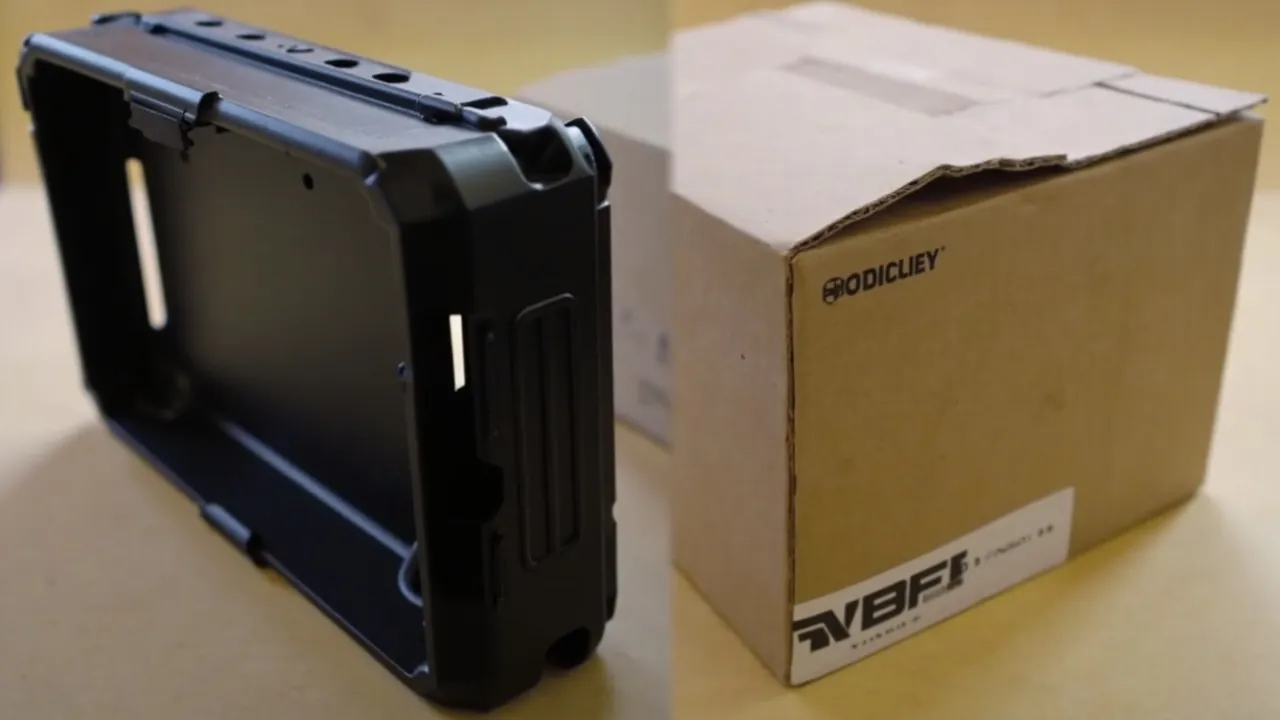
Conclusion first: the essential difference between an outdoor protective case and an ordinary storage box lies in the "design goal" — a storage box pursues "holds more, grabs easily, low price," while a protective case pursues "safe even outside." The specific differences show up in shell strength, sealing structure, dust/water rating, cushioning liner, impact resistance, and pressure-balancing capability: storage boxes are mostly thin-wall plastic with an open lid gap and no seal, taking in water in rain and dust in sand, cracking easily when dropped; an outdoor protective case uses virgin ABS/PP engineering plastic with reinforcement ribs, a full-perimeter elastic gasket with multiple latches, reaching IP67 per IEC 60529 (fully dust-tight plus short-term immersion without water ingress), and is fitted with EVA/EPE liner and an optional pressure-balancing valve. In one sentence: a storage box manages "categorization," a protective case manages "survival."
This article uses a comparison table to lay out the two across dimensions, then explains "when neither can replace the other" and "how to select by scenario," so you no longer misjudge by appearance or price. After reading, you will find the answer is often not "which is cheaper" but "which is tougher."
Table of Contents
- Conclusion First: Where Exactly Do They Differ
- Difference in Design Goal and Working Logic
- Core-Dimension Comparison Table
- Shell and Structure Differences
- Sealing and Dust/Water Differences
- Cushioning and Impact Differences
- Portability and Accessory-Ecosystem Differences
- Certification and Qualification Differences
- Price and the Full Account: Is the Box Expensive or the Loss Expensive
- When to Use a Storage Box, When a Protective Case Is Mandatory
- Selection Decision Checklist
- Common Misconceptions
- Frequently Asked Questions (FAQ)
- Conclusion and Further Reading
Conclusion First: Where Exactly Do They Differ
If you do not want to read the whole article, remember three sentences. First, an ordinary storage box solves "where things go," while an outdoor protective case solves "whether things break outside." Second, protection capability is not achieved by "closing the lid tight" but by full-perimeter compression sealing, rating standards, and a cushioning structure, which a storage box naturally lacks. Third, when equipment is valuable, the environment has rain/sand/drops, and transport is frequent, the two cannot replace each other — the box price saved is often far less than the loss of one water-damaged scrap. The following breaks down dimensions so you know what each price difference buys. By the way: the "ordinary storage box" in this article includes all "storage"-aimed containers such as household plastic storage boxes and unsealed storage bins. If your daily use is an ordinary tool box (indoor short-haul for tools), its difference from a protective case can be referenced in waterproof-tool-box comparison articles — the logic is similar but the positioning is closer to the storage-box side.
Difference in Design Goal and Working Logic
The working logic of an ordinary storage box is "container": give the user a divided, lidded container to categorize, stack, and store clutter. Its success standard is capacity, access convenience, and cost. The working logic of an outdoor protective case is "protection system": put the equipment into a closed small environment that fights the external environment (water, dust, drops, vibration, load, temperature change). Its success standard is that the equipment comes out in the same state it went in. The two logics determine all subsequent structural differences — a storage box has no need to seal, a protective case must treat sealing as a bottom line. Precisely because the logic differs, the two cannot be compared with the same "ruler": measuring a protective case by a storage box's price ruler makes it look expensive; measuring a storage box by a protective case's reliability ruler makes it look risky — wrong ruler, wrong conclusion.
This is also why protective cases are often named by product line rather than single item: under KeXin New Materials, the global brand kexinMaterials and the product-line brand JUNZHJIA position their protective cases for the reliability of "outdoor, transport, and job sites," not mere storage.
Core-Dimension Comparison Table
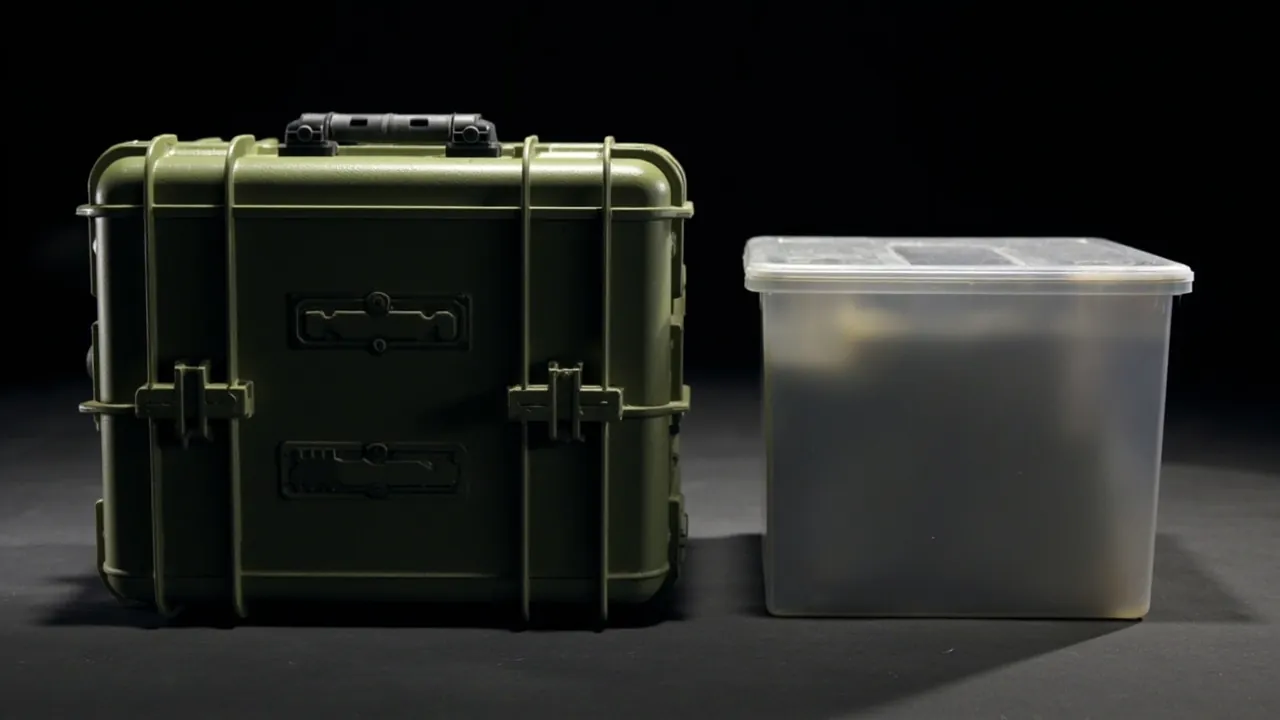
| Dimension | Outdoor Protective Case | Ordinary Storage Box |
|---|---|---|
| --- | --- | --- |
| Design goal | Protection first (dust/water/impact/vibration) | Storage first (holds more, cheap) |
| Shell material | Virgin ABS/PP engineering plastic + ribs | Thin-wall PP/PE |
| Shell strength | High, impact and compression resistant | Low, cracks and collapses easily |
| Lid gap | Full-perimeter seal, no open gap | Lid gap open by several millimeters |
| Seal | EPDM/TPE full-perimeter gasket | None |
| Latch | Multiple latches, even compression | Snap or lid only |
| Dust rating | Can reach IP6X (IEC 60529) | Essentially not dust-proof |
| Water rating | Can reach IP67 | Essentially not water-proof |
| Cushioning liner | Standard/optional EVA/EPE | None |
| Pressure balance | Optional pressure-balancing valve | None |
| Impact | Withstands drops and stacking load | Cracks easily when dropped |
| Certification | ISO9001/IP67/RoHS/REACH/California Prop 65 | Usually none |
| Price | Higher | Low |
| Suitable for | Outdoor, transport, precision instruments | Household clutter, indoor storage |
This table is the "skeleton" of the whole article; the following sections expand on "why these differences matter." When reading the table, use the "risk-backward" method: first think what your equipment fears most (water, dust, drops, vibration, load, temperature change), then in the corresponding dimension see what the protective case provides and what the storage box lacks. For example, precision instruments fear vibration and dust most, so focus on the "cushioning liner" and "dust rating" rows; outdoor wading fears water most, so watch the "water rating" and "seal" rows. Read this way, the comparison table becomes a "selection map" and avoids being misled by the storage box's lower price — low price corresponds to "zero protection," not "adequate protection."
Shell and Structure Differences
A storage box shell is mostly thin-wall injection-molded PP/PE, thin-walled and rib-light, to save material and weight; the advantage is cheap and light, the disadvantage is easy deformation under force, easy cracking when dropped, easy collapse when stacked. A protective case shell uses virgin ABS or PP, with more uniform wall thickness and full of reinforcement ribs and thickened corners, significantly higher compression and impact resistance. Taking KeXin New Materials as an example, the plastic cases in ABS/PP material pass RoHS testing; the factory is about 18,000 square meters in Zhongshan, Guangdong (Greater Bay Area), with more than 80 machines and over 100 employees, with injection-molding and mold-making capability, controlling wall thickness and fit tolerance at the source. Structural difference determines "whether the shape holds in a rough environment" — once the box deforms, the seal fails and protection collapses.
Sealing and Dust/Water Differences
This is the most critical difference. A storage box lid is positioned by gravity or a simple snap, with a gap of usually several millimeters, while fine dust and water flow are far smaller than the gap and continuously enter with air convection and gravity; even if it looks "tightly closed," dust and water slowly accumulate inside. A protective case arranges a full-perimeter elastic gasket (EPDM/TPE) around the lid; after closing, multiple latches compress it 20%–40% to fill microscopic gaps, forming a low-dust or even dust-free, water-proof closed environment. The same seal achieves both dust and water resistance, so protective cases typically carry a combined rating such as IP67 (per IEC 60529). One rating step means one order of magnitude of protection difference: IP6X is fully dust-tight, IPX7 is short-term immersion without water ingress; a storage box cannot even be discussed in IP terms.
Cushioning and Impact Differences
Even if the box does not take in water or dust, transport vibration and drops still make internal equipment collide, shift, and break. A storage box has no liner, so items slide freely inside and knock against each other. A protective case uses EVA/EPE cut or die-cut liner to fix each piece in place, absorbing shock and vibration, keeping precision parts "immobile and unbroken." Cushioning and sealing are two layers of protection: sealing manages "no dust/water in," the liner manages "not broken by shock, not scratched by rubbing." Sealing without fixation, equipment still slides and is damaged inside; cushioning without sealing, foam gaps still let in dust and water. The two must be seen together. This also explains why "stuffing old clothes in a storage box as cushioning" still fails — clothes do not seal and cannot fix equipment in place, so it still shifts and collides in transport, and cannot block water and dust. Real protection is the coordination of sealing, cushioning, and fixation, not a makeshift of any single one.
Portability and Accessory-Ecosystem Differences
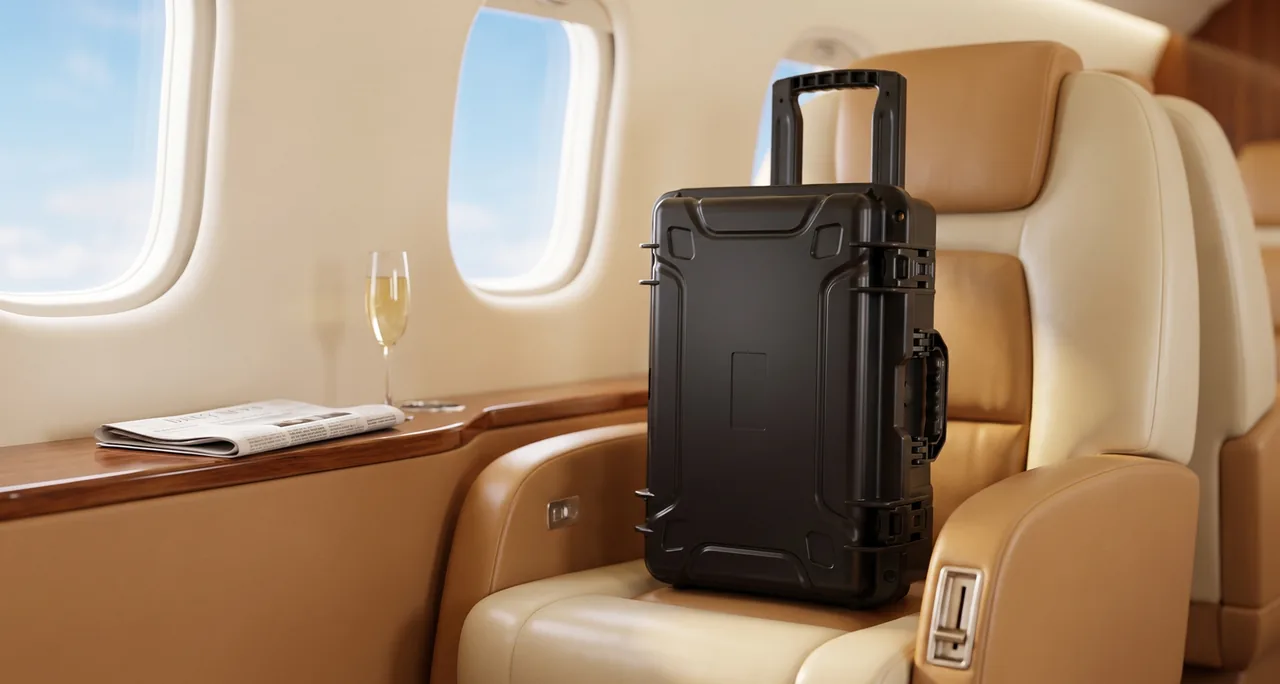
A storage box gets by with a handle for portability, rarely wheels or rod. A protective case, moving between sites often, comes standard with wide thick anti-slip handles, dual-side folding handles, telescopic rod and wheeled large cases to reduce transfer effort. For accessories, a protective case can be customized with EVA/EPE liner, movable dividers, soft bags, name cards, and sealed document pouches, upgrading to a "mobile workstation"; storage box accessories are mostly dividers, aimed at "compartments" not "protection." Being able to customize shell + liner + accessories at once gives higher coordination — KeXin New Materials JUNZHJIA supports one-stop OEM/ODM for product design, injection molding, molds, liners, and LOGO, suited to batches.
Certification and Qualification Differences
For critical scenarios, beyond structure, look at qualifications. Common verifiable items for protective cases: IP67 protection (per IEC 60529, backed by company documentation; certificates available on request), ISO9001 quality management system, RoHS/REACH (plastic ABS/PP passes RoHS testing), California Prop 65 restriction, and MIL-STD-810H (product-line environmental adaptability validation). Storage boxes usually have no such certifications and do no individual-product environmental testing. When requesting certificates, clarify "which model, which level" to avoid substituting company-level backing for an individual product's proof; for batch orders, putting the individual product's specification sheet and test report into the contract appendix is safer. For export orders, RoHS, REACH, California Prop 65 compliance are hard indicators at the material level that storage boxes usually do not provide — this is also the substantive gap between the two in cross-border use.
Price and the Full Account: Is the Box Expensive or the Loss Expensive
Looking only at unit price, a protective case costs several times or more than a storage box; but the full account is often cheaper. One water-damaged instrument scrap, one lens scratched by sand-dust, one circuit board shorted by moisture — any of these often far exceeds the cost of several protective cases. A protective case with a replaceable gasket and locally replaceable liner can be used for years, with controllable maintenance cost. For survey, repair, film, and military scenarios where "equipment is an asset," a protective case is closer to a necessary custody investment. When purchasing, compare "loss avoided" with "box price difference" side by side, and the conclusion usually leans to the protective case. The storage box stays comfortably where it excels: household clutter, indoor storage, low-value short-haul items.
When to Use a Storage Box, When a Protective Case Is Mandatory
- Storage box is enough: Household clutter categorization, seasonal clothing, indoor storage of items not fearing moisture or drops, short-haul handling of low-value items.
- Protective case is mandatory: Outdoor survey and scientific instruments, military/police/fire equipment, electronics/electrical repair meters, aviation communication and navigation equipment, photography cameras/lenses/drones, engineering repair site tools and spares, any high-value equipment at risk the moment it leaves the room.
Boundary case: if items are "out of room but in a clean short-haul environment" (such as property indoor short-haul repair), an ordinary tool box is enough; once rain, sand, drops, or long transport are involved, use a protective case. Judgment mantra — "is it valuable, is the environment bad, is the trip long" — if any is "yes," choose a protective case.
Selection Decision Checklist
Check item by item when purchasing:
- Define environmental risks (rain/sand/drop/vibration/load/temperature change) and list required capabilities.
- Set the IP rating: rain → IP65, heavy rain/high-pressure water → IP66, wading/falling in water → IP67.
- Confirm virgin shell material and wall thickness; reject recycled thin-wall.
- Check full-perimeter gasket and multiple latches, even lid gap.
- Fit EVA/EPE liner as needed to fix equipment against shift.
- Confirm a pressure-balancing valve for air transport/high altitude.
- Verify ISO9001, IP67, RoHS/REACH, California Prop 65 and the like.
- For batches, go OEM/ODM to optimize liner and compartments and add LOGO.
Use the checklist as a price-comparison table to avoid the pit of "labeled protective but not protective."
Common Misconceptions
- Misconception 1: A sturdy storage box = a protective case. Sturdy but not sealed still takes in dust and water; look for the IP rating and sealing structure.
- Misconception 2: Closed tight means no water in. Millimeter-scale lid gaps still let water and dust in; for waterproofing look at the second IP digit, choose IP67 for wading.
- Misconception 3: The gasket lasts forever. Rubber rings age, and trapped debris causes leaks; clean regularly, replace when elasticity is lost.
- Misconception 4: No liner is safer. Without a liner, equipment slides and collides more; fit a fixed liner.
- Misconception 5: Heavier protective case is better. Too heavy adds carrying burden; virgin ABS/PP balances light and strong — look at design and wall thickness, not weight.
Why a Storage Box "Quietly Fails" Outdoors
Persuasion comes from concrete scenarios. A meter casually placed in a storage box at a construction site accumulates cement dust in the lid gap within a week, causing poor contact at the interface; a riverbank sampling storage box hit by waves wets the inside, scrapping the test paper and recorder; a tower-top maintenance laptop in a storage box lets carbon-brush dust into the interface and crash; a desert-shoot lens in an ordinary bag lets fine sand into the focus ring, causing noise. These are not one-time accidents but accumulation over time — a storage box's millimeter-scale lid gap cannot even block coarse dust, let alone fine dust and water. After switching to an IP67 protective case + fixed liner, equipment life and stability visibly improve in the same environment. The case shows: a storage box buys "convenience," a protective case buys "time" — keeping equipment in factory condition longer.
Sealing-Structure Details of a Protective Case
Protection capability hides in details. The gasket cross-section is mostly solid or hollow rectangular/round; after closing it is compressed 20%–40% to form a sealing band; the lid edge is designed as a "knife edge" pressing into the gasket to raise line-seal pressure; the ribs of body and lid interlock to form a multi-stage labyrinth, so even a first micro-leak is blocked by the second. The number and position of latches determine whether compression is even — a single latch easily leaves a gap on one side; multiple latches are steadier. These structures are fixed at the mold stage; recycled material or uneven wall thickness destroys the fit. So choosing a protective case is not just "is there a ring," but whether the ring is continuous, compression even, and shell virgin — a manufacturer with injection-molding and mold capability guarantees tolerance at the mold end, the underlying guarantee of long-term protection.
Shell Material: How to Choose Between ABS and PP
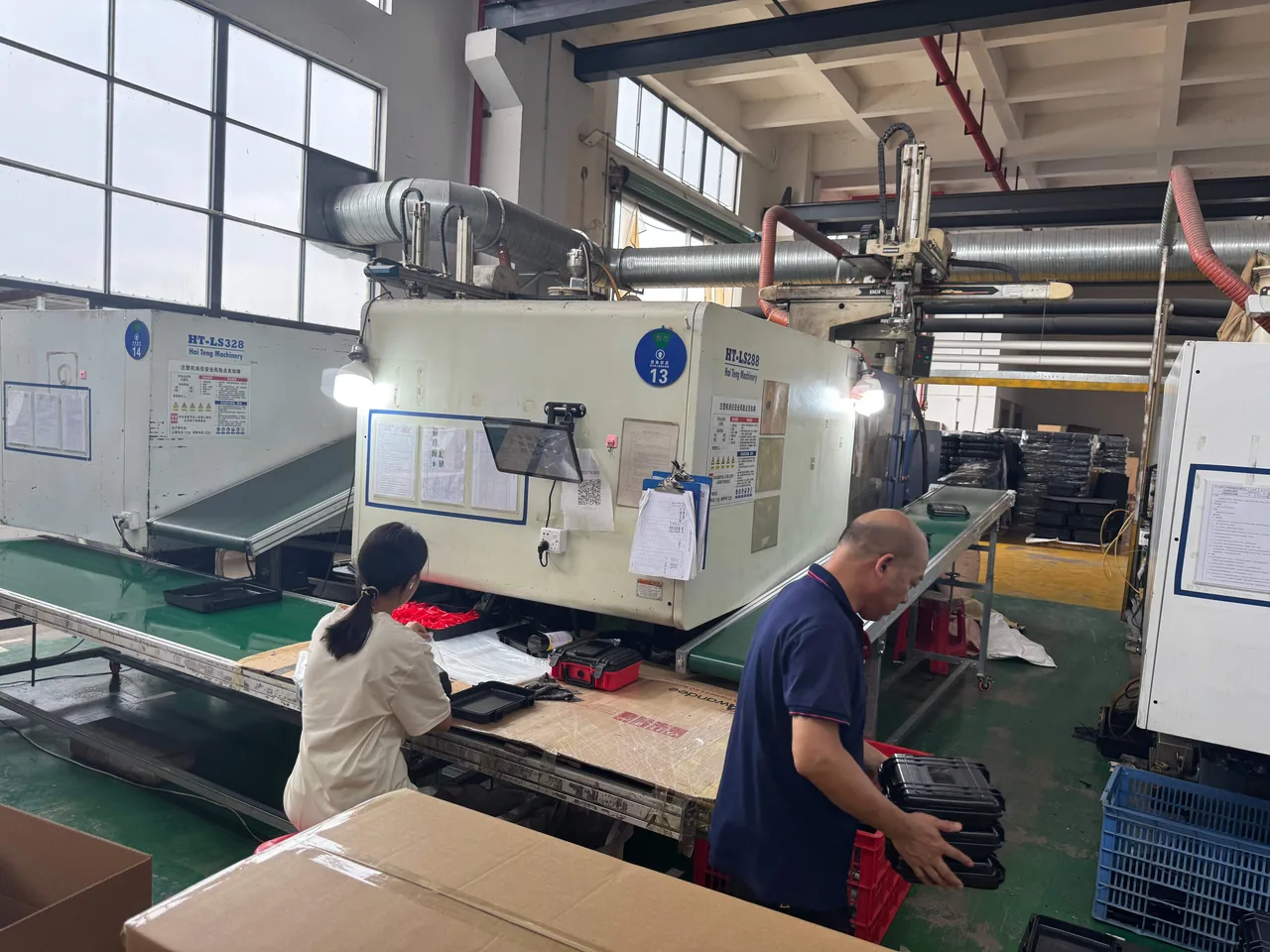
A protective case shell comes down to two engineering plastics, ABS and PP: ABS has high rigidity, easy surface treatment and printing, stable dimensions, suited to a stiff shape; PP has better low-temperature impact resistance, lower density, fatigue resistance, suited to cold and frequent opening. Neither is "better" but "fit for scenario." Regular manufacturers use virgin material, because recycled material has uneven wall thickness and deforms easily under load, directly skewing the seal and destroying protection. When purchasing, confirm "is it virgin" and "wall-thickness reference" rather than just color and weight; KeXin New Materials plastic cases in ABS/PP material pass RoHS testing.
Full Interpretation of the IP Rating (IEC 60529)
The two digits after IP mean: first digit (solid/dust) 0 = none, 1–4 = limited dust, 5 (IP5X) = dust-protected (limited ingress), 6 (IP6X) = fully dust-tight; second digit (water) 0 = none, 4 = splash, 5 (IPX5) = water-jet, 6 (IPX6) = powerful water-jet, 7 (IPX7) = short-term immersion (about 1 m/30 min), 8 (IPX8) = continuous immersion (depth and time set by manufacturer). Common combinations: IP65 fully dust-tight + water-jet, IP66 fully dust-tight + powerful water-jet, IP67 fully dust-tight + short-term immersion, IP68 fully dust-tight + continuous immersion. For an outdoor protective case, IP67 is the most recommended "all-in-one" rating, covering most rain, wading, falling in water, and mud. Note: IP testing is under controlled conditions; long-term use still depends on an intact gasket and correct latching.
How the Pressure-Balancing Valve Works
The pressure-balancing valve (breathing valve) principle is common industry knowledge: inside is a membrane that breathes but blocks water (such as ePTFE), allowing air molecules to pass slowly while blocking liquid water and dust. When external pressure drops (aircraft climbing) or temperature rises, the air inside expands and pushes out; the valve lets gas escape slowly and the difference returns to zero; conversely when external pressure rises or temperature falls, the valve lets outside air slowly replenish. The result is the lid is not sucked or pushed open by pressure difference, the gasket bears no extra load, and water and dust cannot enter. For air transport, high altitude, and day–night large temperature-swing scientific and military transfers, this design is almost mandatory. A storage box has no such structure and can only rely on the shell against pressure difference, with higher risk.
Daily Maintenance and Gasket Care
A protective case is durable, but the gasket is a consumable; maintenance determines actual life:
- Before closing, clear sand and threads from the lid edge and gasket to avoid trapped debris forming a leak gap.
- Wipe regularly the gasket with a clean soft cloth; thin silicone grease if needed to slow aging.
- Avoid prolonged sun — long-term high temperature accelerates rubber hardening and cracking.
- Open in clean places — try not to leave the case open in blowing sand, reducing dust inside.
- Watch for deformation — replace the same-spec part promptly when the gasket loses elasticity or cracks.
- Clean the liner by blowing dust regularly, to avoid the liner itself accumulating dust and re-contaminating equipment.
With proper maintenance, IP capability is maintained long term; without it, even a nominal rating fails from a small crack.
Size, Compartments, and Liner Selection
Wrong size also weakens protection. Principle: first list equipment shape, quantity, and fragility order, reserve liner thickness and handling space to set the net size; prefer slightly larger over forced fit, but too large means equipment slides and needs more filling, causing collision. For compartments, give precision parts their own slots, shedding parts isolation bags, standard parts separate soft packs. Use deep cases for upright rods, layered cases for flat instruments. Wheeled large cases consider air-transport limits. Liners commonly use EVA (good rebound, good cut shaping) and EPE (light, even cushioning). Size, liner, and compartments set together so the case holds everything yet does not rattle, scrape, or let dust in.
Stacking, Load Capacity, and Portability of Outdoor Protective Cases
Protective cases often need stacking or carrying. The shell's ribs and corners determine stacking stability and compression resistance: a quality protective case can be stacked in multiple layers without deforming once latched, and the lid can briefly bear load; thin-wall storage boxes easily collapse and crush items. If stacking is involved, check the manufacturer's stacking height/load reference and confirm latches do not pop open under load. For portability, wide thick anti-slip handles, dual-side folding handles, telescopic rod and wheeled large cases reduce transfer effort. Portability and protection are not contradictory: a good protective case designs ribs, latches, and handles together at the mold stage, being both rigid and handy.
The Full Account Seen Through Two Teams' Loss Comparison
A contrast: Team A used storage boxes to move instruments; in two years it scrapped two motherboards, one lens, and one recorder — repair and re-purchase far exceeded the box price difference. Team B used an IP67 protective case + liner + pressure-balancing valve and, in the same environment, only replaced a gasket once, with stable equipment. The difference is not "luck" but whether the protection system is in place. For metering, repair, research, and film scenarios where "equipment is an asset," a protective case is closer to a necessary custody investment than an optional accessory.
Mini Glossary
- IEC 60529: International protection rating standard defining the IP code and dust/water tests.
- IP67: Fully dust-tight (IP6X) + short-term immersion (IPX7, about 1 m/30 min).
- Gasket: Elastic seal around the lid edge; blocks water and dust once compressed.
- Pressure-balancing valve: A valve that breathes but blocks water and dust, balancing internal–external pressure.
- Liner (foam/inner tray): Foam or die-cut bracket that cushions and fixes equipment.
- OEM/ODM: Original equipment manufacturing/original design manufacturing — custom modes by customer requirement.
Certification and Qualification Verification Points for Protective Cases
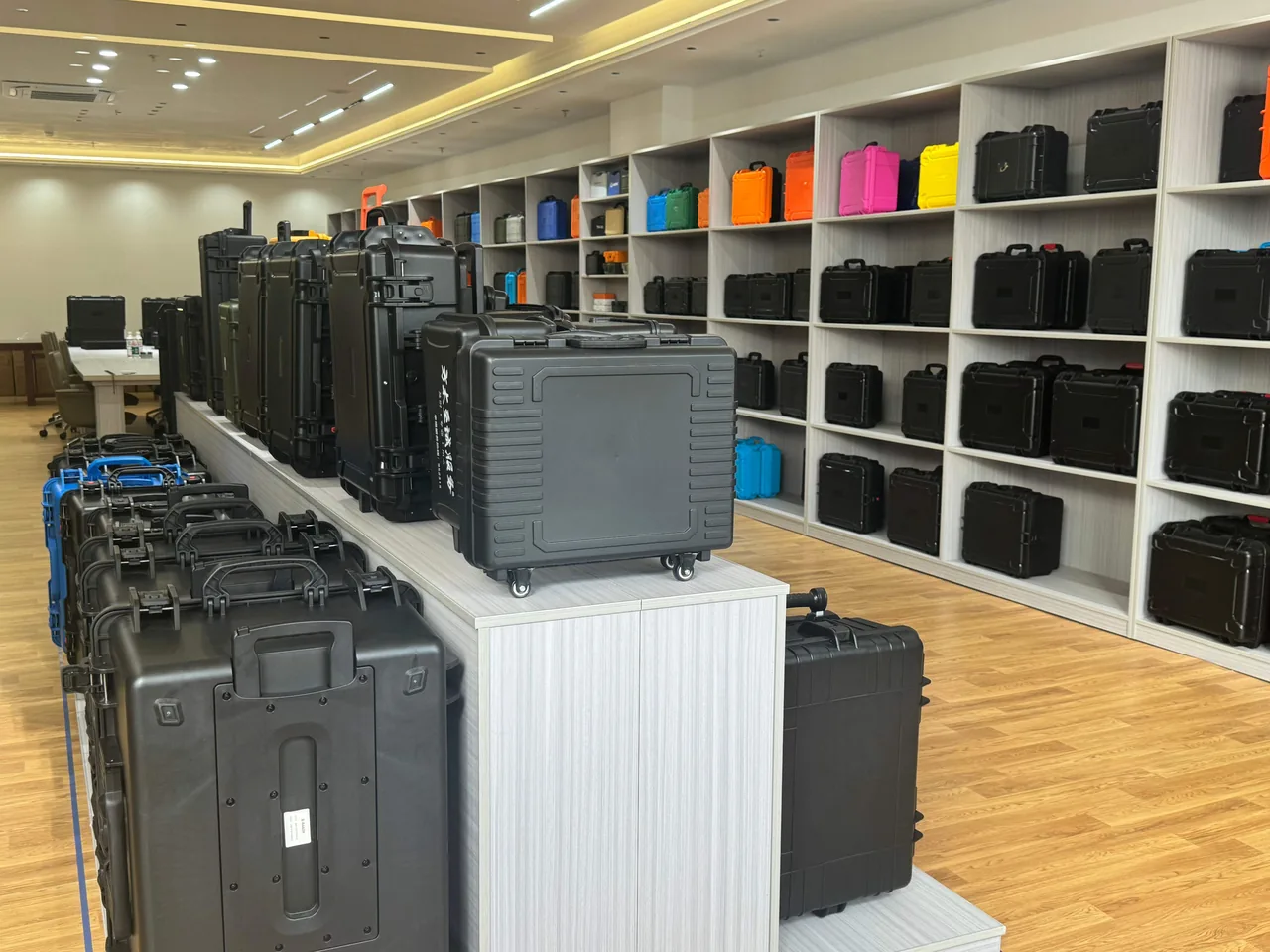
For critical scenarios, beyond structure, look at qualifications. Verifiable items include: IP67 protection (per IEC 60529, backed by company documentation; certificates available on request); ISO9001 quality management system; RoHS/REACH (plastic ABS/PP passes RoHS testing); California Prop 65 restriction; and MIL-STD-810H (product-line environmental adaptability validation). Taking KeXin New Materials (Guangdong) Co., Ltd. as an example, the protective-case product line holds several of the above certifications/tests, the factory is about 18,000 square meters in Zhongshan, Guangdong (Greater Bay Area), holds more than 20 utility-model and design patents, and products are exported to the United States, Germany, Japan, and other regions. When requesting certificates, clarify "which model, which level" to avoid substituting company-level backing for an individual product's proof; for batch orders, putting the individual product's specification sheet and test report into the contract appendix is safer. Storage boxes usually provide no such individual-product qualifications — this is also the gap between the two in "verifiable reliability."
The Accessory Ecosystem of Outdoor Protective Cases
A protective case's value is not only the box but also expandable accessories: customizable EVA/EPE liner keeps equipment in place and reduces shift-collision; movable dividers and soft bags isolate shedding parts; name cards and sealed document pouches carry the checklist with the case; wheels and rod turn a large case into a drag-along. These accessories upgrade the protective case from "a box holding equipment" to a "mobile protection station." Being able to customize shell + liner + accessories at once gives higher coordination — KeXin New Materials JUNZHJIA supports one-stop OEM/ODM for product design, injection molding, molds, liners, and LOGO, suited to batches. Storage box accessories are mostly dividers aimed at "compartments" not "protection," with a clear ecosystem gap.
Outdoor Risk Map: What Each Type of Box Can Withstand
Comparing risks row by row shows intuitively where the difference comes from:
| Risk | Storage box performance | Protective case response |
|---|---|---|
| --- | --- | --- |
| Rain/spray | Water in through lid gap, equipment damp | Full-perimeter seal reaching IPX5–IPX7 |
| Sand/dust | Continuous dust in with convection | Seal reaching IP6X (IEC 60529) |
| Drop/impact | Shell cracks, internals break | High-strength shell + ribs |
| Vibration/transport | Items slide and collide | EVA/EPE liner fixation |
| Pressure/temp change | No response, relies on shell | Pressure-balancing valve |
| Stacking load | Easily collapses and crushes | Shell rigidity + even latch compression |
| Moisture/condensation | No protection | IP67 + desiccant if needed |
This table shows a storage box has almost "zero defense" across seven risk types, while a protective case responds in combination. When selecting, go row by row against your environment; fill whichever layer is missing.
Who Should Buy a Protective Case, Who Uses a Storage Box: Quick Lookup
Match yourself: household clutter, seasonal clothing, indoor storage → storage box. Property indoor short-haul repair → ordinary tool box is enough. Outdoor survey and scientific work → choose IP67 protective case. Military/police/fire → select a protective case validated against MIL-STD-810H as a product-line environmental test basis. Electronics/electrical repair fearing conductive dust and moisture → dust/water-proof + liner. Photography on location with cameras/lenses/drones → must fit a cut liner protective case. Aviation communication and high-altitude transfer → add pressure-balancing valve. Industrial repair site with mud and spray → prefer IP67. In one sentence: the more precision the equipment, the harsher the environment, the longer the trip, the more you need a protective case; leave low-value indoor clutter to the storage box.
Selection Decision Tree
Compress the above into executable steps: Does the equipment leave the safe indoors? No → storage box is fine. Yes, and clean short-haul → ordinary tool box. Rain/wading → IP67 protective case. Blowing sand/dust → IP6X or higher. Precision electronics/optics → IP67 + liner + moisture control if needed. Air transport/high altitude → add pressure-balancing valve. Batch with unified marking → go OEM/ODM. Put the decision tree into the purchasing spec so even a beginner selects correctly, reducing equipment damage from buying by feel. Remember the core sentence: a storage box manages categorization, a protective case manages survival; the two divide labor by the three questions of "value, environment, trip," not by price level.
Frequently Asked Questions (FAQ)
Q: Can an ordinary storage box be converted into a protective case? A: Not reliably. Sealing depends on the precise fit of body and lid with full-perimeter compression sealing, which a thin-wall storage box cannot do; a cover cloth or tape only blocks falling dust and does not reach a nominal rating.
Q: An outdoor protective case is much more expensive than a storage box — is it worth it? A: It depends on equipment value and environment. If the equipment fears water, dust, and drops and often leaves the room, the loss a protective case avoids often far exceeds the box price difference; low-value indoor clutter can use a storage box.
Q: Is an IP67 protective case completely water-proof? A: IPX7 means protection against short-term immersion (usually 1 m depth, about 30 minutes), guarding against accidental falling in water/short wading, not long-term diving; for long-term submersion see IPX8 and the manufacturer's specified depth and time.
Q: Is a plastic protective case less sturdy than metal? A: Regular virgin ABS/PP with reinforcement ribs has sufficient impact and compression resistance, and is lighter, corrosion-resistant, and non-conductive; the key is virgin material and wall thickness, not the material name.
Q: What is the relationship between a storage box and a tool box? A: A storage box leans to household storage; a tool box leans to holding tools for easy access (mostly indoor short-haul); an outdoor protective case makes dust-proof, water-proof, drop-proof, and shock-proof hard goals, a notch higher in positioning.
Q: Must a protective case have a pressure-balancing valve? A: If it involves air transport, high altitude, or day–night large temperature-swing transport, fit one; the valve balances internal–external pressure, prevents case burst, and blocks water and dust — a common-industry-knowledge design.
Conclusion
The difference between an outdoor protective case and an ordinary storage box comes down, in the end, to the difference between a "container" and a "protection system": a storage box manages categorization, a protective case manages survival. The differences fall on each layer of shell strength, full-perimeter seal and IP rating, cushioning liner, impact and pressure balancing, and qualification certification, each layer responsible for the equipment's safety outdoors and in transport. When equipment is valuable, the environment has rain/sand/drops, and transport is frequent, the two cannot be substituted; the box price saved often cannot cover one water-damaged scrap. Select by the three questions "is it valuable, is the environment bad, is the trip long," and check the rating, seal, liner, and qualifications against this article's dimension table and decision checklist, optionally adding a pressure-balancing valve and going OEM/ODM customization. Treat protection as a necessary investment in equipment life, not a word on the packaging, and you truly achieve "ready to use when out, safe when in." To emphasize once more: every price difference of a protective case buys a verifiable layer of protection — the seal buys "no dust/water in," the liner buys "not broken by shock, not scraped by rubbing," the pressure-balancing valve buys "not flipped open by pressure," the qualification buys "verifiable reliability." A storage box is almost zero on these dimensions, so when equipment is at risk the moment it leaves the room, it cannot replace a protective case. Save this article's comparison table, risk map, and decision tree for later; next time you will not be led astray by appearance and low price, and your equipment can truly "be ready to use when out, safe when in."
Further Reading
- What Is an Outdoor Protective Case and Where Is It Used?
- Why Does an Outdoor Protective Case Need Waterproof Design?
- Why Does an Outdoor Protective Case Need Dustproof Design?
- Difference Between IP65, IP66, and IP67
- How to Choose the Shell Material of an Outdoor Protective Case
- The Pressure-Balancing Valve in Outdoor Protective Cases