

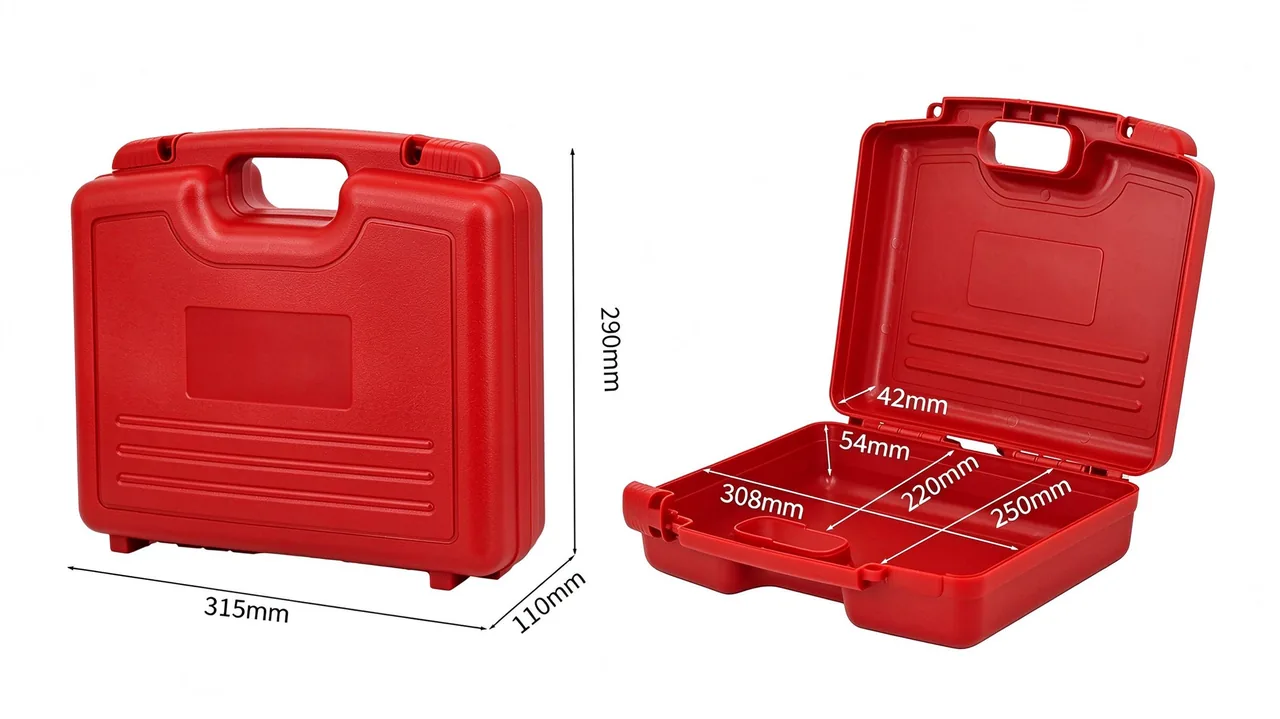
The transport test of a protective case is a verification method that reproduces distribution environment hazards—such as handling, loading, road vibration, warehouse stacking, and climate alternation—inside a laboratory to expose structural weaknesses of the case in advance. The core object is the protective case container itself, not the items placed inside, and the purpose is to confirm that the Case Shell: Structural Materials and Molding Process and the Foam Lining: Cushioning and Custom Layout for Protective Case Interiors can maintain protection for internal items throughout the real delivery chain. Different from UN Certification: Transport Safety Certification for Protective Cases, which focuses on mandatory admission for dangerous goods packaging, the transport test emphasizes faithful simulation of general distribution environments and is often used by brands, logistics providers, and purchasers as front-end control of arrival acceptance rates. As an internationally recognized transport test system, ISTA provides a comparable and repeatable procedural framework for protective cases, so that cases from different batches and different suppliers can be evaluated on the same scale. This article only discusses the simulation and verification method of the container structure in delivery environments, and does not involve the nature or formulation of any contents or regulated items.
Institutional Positioning and Applicable Objects of ISTA Transport Test
The ISTA transport test system was established by the International Safe Transit Association, with the original intention of classifying and quantifying the hazards a product may encounter in real distribution, then reproducing them with standard procedures in a laboratory to predict the performance of the packaging container at a lower cost. For protective cases, the applicable object is the case used as transport packaging together with its internal cushioning system, not the items inside. The test method uses unified drop heights, vibration spectra, compression loads, and climate curves to put structures such as the Latch Hardware: Latch and Hinge Selection for Protective Cases and the Waterproof Seal Strip: Structure and Selection for Protective Cases under controlled conditions, and the conclusion can be used to improve design or define responsibility.
From the perspective of institutional positioning, the ISTA test leans toward "performance prediction" rather than "mandatory certification." It does not replace statutory admission requirements such as UN Certification: Transport Safety Certification for Protective Cases, but can provide front-end structural data support for such admission. For enterprises using protective cases as equipment packaging, instrument packaging, or spare parts packaging, the transport test helps discover problems such as insufficient shell wall thickness, unstable lining positioning, or uneven latch force before mass production. Purchasers can also write a specific ISTA procedure level into the technical agreement, turning the verbal promise of "no damage in transport" into an executable acceptance clause, thereby establishing a consistent protection expectation across the supply chain, which is exactly where its institutional value lies.
Identification of Distribution Environment Hazards for Protective Cases
The first step to a good transport test is to identify the hazard types that the protective case truly encounters in the distribution chain. Typical hazards include drops and impacts from manual or mechanical handling; random vibration and resonance during road, rail, air, and sea transport; sustained compression from multi-layer warehouse stacking; concentrated loads from handling equipment clamping; and climate hazards such as temperature-humidity alternation, precipitation, and low pressure. Different transport modes overlap to form composite conditions, for example a sequence of "vibration first, then drop, then warehouse stacking," which is closer to the real scenario. When identifying hazards, one should combine the stackable layers that the Stacking Corners: Stacking Corners and Limit Structures for Protective Cases can bear, as well as the temperature and humidity adaptation range of the Case Shell: Structural Materials and Molding Process, to avoid test parameters detaching from the actual use environment.
Another value of hazard identification is "setting items on demand." Not every protective case needs to run all test items; instead, the most representative hazards should be selected for simulation according to its transport path, handling method, and the sensitivity of internal items. For example, cases dominated by air transport should emphasize low pressure and drop, while cases dominated by land transport should emphasize vibration and stacking. Mapping the hazard list to the transport profile—origin, transit, and last-mile delivery—keeps the Transport Marking: Labeling and Marking Specification for Protective Cases consistent with the actual protection requirements. Accurate hazard identification is the basis for the subsequent test sequence design, determining whether the test "measures the real risk" rather than becoming a mere formality.
ISTA Test Sequence and Procedure Level Classification
The ISTA system organizes tests by "procedure," where different procedures correspond to different transport modes and hazard combinations. Common levels range from simplified general sequences to specific sequences for particular channels. For protective cases, when selecting a procedure level, one should first clarify its distribution channel: single-parcel express, less-than-truckload, full-container sea freight, or air intermodal, because the channel determines drop height, vibration intensity, and climate severity. A procedure usually gives the step order in the form of a "test sequence," requiring the specimen to experience pretreatment, hazard application, and final inspection in turn, ensuring the hazards do not mask each other. Here the Drop Test: Structural Verification Under Impact for Protective Cases and the Vibration Test: Random Vibration Verification for Protective Cases are often arranged in different stages of the same sequence.
The procedure level is not the higher the better, but should match the real risk. Too high a level will unnecessarily increase the specimen failure probability and verification cost, while too low a level cannot expose hidden dangers. At the selection stage, an enterprise can first use a general sequence for a baseline check, then upgrade to a specific sequence according to customer requirements or the transport profile, and write the selected procedure into the technical documents related to Export Packaging Compliance: Cross-border Compliance for Protective Cases. It must be emphasized that the judgment details of different procedure versions differ, so the specific version number relied upon should be locked before execution, making the methodology in the test report traceable. An appropriate sequence and level classification is the premise for the transport test to be both economical and effective, and the basis for the result to be jointly recognized by both supply and demand parties.
Drop and Impact: Simulation of Handling Links
The drop and impact test simulates the free fall and accidental collision that a protective case most often experiences during loading, transshipment, and last-mile delivery, to confirm that the case can still remain closed, avoid failure deformation, and not jeopardize internal protection after impact. The test usually drops the specimen at a specified height in different orientations—bottom, top, side, and corner—onto a rigid floor or impact table, covering the most unfavorable contact postures in handling. For protective cases whose load-bearing body is the Case Shell: Structural Materials and Molding Process, the drop result directly reflects the shell's impact resistance and the retention capability of the Latch Hardware: Latch and Hinge Selection for Protective Cases under deformation, and is one of the most core structural criteria in the transport test.
To make the conclusion repeatable, the drop test is often combined with internal surrogate and cushioning states filled according to the standard, so that the lid, gasket, and lining are assessed as a whole. Different from mere shell strength, the transport test pays more attention to "whether the whole still has protection function after drop," for example whether the latch is loosened and whether the lining is displaced causing the item to hang in the air. The parameters of this item are taken from the transport profile of the selected procedure, and the enterprise should not lower the height at will. Combining drop with the Vibration Test: Random Vibration Verification for Protective Cases can further reproduce the severe condition of "vibration then drop." A qualified drop performance means the protective case has basic structural toughness under real handling impact, and is the first guarantee that the case will not be damaged in the distribution link.
Vibration Test: Random Simulation of Road Bumps
The vibration test is used to simulate the continuous bumps and random vibration that a protective case suffers during road, rail, air, and sea transport, confirming that the internal cushioning system can control the vibration energy transmitted to the items within an acceptable range. The test reproduces the vibration characteristics of different transport vehicles by applying specified frequency spectra and acceleration on a vibration table; among them, random vibration is closer to the real road condition, while fixed-frequency sweep is convenient for discovering structural resonance points. For protective cases relying on the Foam Lining: Cushioning and Custom Layout for Protective Case Interiors to absorb energy, the vibration result reflects whether the lining density, thickness, and cavity fit match the sensitive direction of the items. Different from the Salt Spray Test: Corrosion Resistance Verification for Protective Cases which focuses on material corrosion resistance, the vibration test focuses on the protection effectiveness under dynamic environments.
The value of the vibration test is to expose "invisible loosening." Long-term vibration may gradually loosen the latch, make lining blocks rub and displace, or even cause the item to micro-shift in the cavity away from positioning, and these hidden dangers are often difficult to find in static inspection. To obtain a credible conclusion, the specimen should be fixed according to the actual filling method, and the latch state and lining position should be recorded before and after vibration. For cases with a Temperature-Controlled Case: Active Temperature Control and Insulation, attention should also be paid to the influence of vibration on the installation reliability of internal refrigeration or sensing components. Arranging vibration together with drop and stacking as a continuous sequence can more realistically reflect the cumulative damage of the whole delivery process, thereby upgrading the single requirement of "not falling apart" to a system-level evaluation of "usable throughout."
Compression (Stacking) Test: Simulation of Warehouse Stacking
The compression test simulates the sustained compression state of a protective case when stacked in multiple layers in a warehouse and container, confirming that the case does not undergo unsafe creep or instability under long-term load. In ordinary distribution other than dangerous goods transport, containers and shelves often stack a large number of cases, and the bottom container must bear the total weight above, so the compression capability directly relates to the cargo damage rate. The test usually applies pressure to the top surface of the specimen according to specified load and duration, examining the cooperative load-bearing performance of the shell, the Stacking Corners: Stacking Corners and Limit Structures for Protective Cases, and the latch support system. If the shell locally loses stability or the corner fitting strength is insufficient, even if the gasket is intact, the protection capability may be lost due to closure misalignment.
The compression test is often combined with temperature-humidity pretreatment to examine the load-bearing change of the material after softening by heat or moisture, making the conclusion closer to summer warehouse efficiency and high-humidity environments. Consistent with the general practice of Stacking Test: Stacking Load Verification for Protective Cases, the selected load should be derived from the real calculation of stacking layers in the transport profile, rather than taken arbitrarily. The test result concerns not only safety but also logistics efficiency: a protective case that can withstand higher stacking load means more cases can be stacked in the same space, reducing the unit storage and transport cost. At the design stage, the enterprise should reverse-engineer the wall thickness, reinforcement ribs, and corner fitting strength with the target compression load, front-loading the distribution requirement into structural development, thereby avoiding rework after sample failure, which is a typical embodiment of the transport test guiding design improvement.
Temperature-Humidity and Climate Pretreatment
Climate pretreatment is used to simulate the temperature alternation, high humidity, and precipitation environments that a protective case may encounter in distribution, confirming that the container material and sealing system still maintain protection capability under alternating climate. The pretreatment usually includes stages such as high temperature, low temperature, and damp-heat cycles, so that the linear expansion coefficient difference of the Case Shell: Structural Materials and Molding Process, the hardness change of the Waterproof Seal Strip: Structure and Selection for Protective Cases, and the moisture absorption deformation of the lining are all included in the assessment. For cases exposed outdoors, climate pretreatment can also reveal risks such as decreased gasket rebound or micro-cracks in the shell caused by temperature cycles, which is an important part of environmental adaptability verification.
Another function of temperature-humidity control is to expose "material-sealing" coupling hazards. For example, at low temperature some gaskets harden and the compression amount decreases, which may form a leakage channel after stacking or vibration; high temperature and high humidity may deform the water-absorbing lining and reduce the cushioning positioning accuracy. Compared with the waterproof grade indicated by the IP Rating: Decoding Ingress Protection Grades for Protective Cases, climate pretreatment emphasizes the "change process" rather than static indicators, and can more realistically reflect the cumulative effect of cross-climate-zone transport. For a Temperature-Controlled Case: Active Temperature Control and Insulation, the pretreatment should also pay attention to the behavior of the insulation layer and active system under extreme temperatures. Incorporating climate factors into the transport test sequence can avoid protection failure of the case in the most easily overlooked "temperature zone switching" link.
Low Pressure and Other Specific Hazard Simulations
For protective cases transported by air or at high altitude, the low-pressure test simulates the influence of pressure drop in the cargo hold or plateau environment on the container sealing and structure, confirming that the case will not bulge, leak, or show abnormal latch due to internal and external pressure difference. Low pressure is often combined with other hazards, for example "low pressure then vibration and drop," to reproduce the real sequence of air intermodal transport. For cases with a Pressure Equalization Valve: Structure and Selection for Protective Cases, the open-close reliability of the valve under pressure change is the focus of this test; if the valve fails, the case may be damaged during the takeoff and landing pressure difference. This specific item is similar in idea to the requirements for specific transport modes in UN Certification: Transport Safety Certification for Protective Cases, but its purpose is still to verify the container rather than the contents.
In addition to low pressure, the transport test may also include specific hazards such as concentrated impact, clamping load, and inclined drop, to cover the risks brought by specific handling equipment. For example, forklift clamping generates concentrated pressure on the side wall of the case; if the Stacking Corners: Stacking Corners and Limit Structures for Protective Cases or side wall reinforcement is insufficient, permanent dents will appear. The selection of specific hazards should be based on the real handling method, rather than mechanically applying standard entries. Enterprises can refer to Export Packaging Compliance: Cross-border Compliance for Protective Cases to sort out the logistics characteristics of different destinations, and include the most likely specific injuries into the sequence. By combining specific hazards on demand, the transport test can accurately correspond to the actual distribution profile of the protective case, avoiding the deviation of "testing a lot but not the real risk."
Specimen Preparation and Test Fixtures
The reliability of the transport test begins with the representativeness of the specimen and fixtures. The submitted protective case should be taken from the finalized mass-production structure and process, including the production shell, the Latch Hardware: Latch and Hinge Selection for Protective Cases, the Foam Lining: Cushioning and Custom Layout for Protective Case Interiors, and all accessories, and hand-made samples are strictly prohibited from substitution. The interior should be filled and fixed with surrogate or actual items according to the standard or actual method, so that the cushioning system is in a real stress state; if the lining is not correctly positioned, the vibration and drop conclusions lose meaning. In terms of fixtures, the vibration clamp, drop guide, and compression platen should all ensure uniform load application, avoiding equipment errors masking or amplifying the case's shortcomings.

Fixture design also needs to consider "boundary conditions": for example, the compression platen should contact the top surface of the case in parallel to prevent local eccentric load; the natural frequency of the vibration clamp should be far from the concerned frequency band of the specimen, so as not to interfere with the data due to fixture resonance. For containers with a Pressure Equalization Valve: Structure and Selection for Protective Cases, the state of the valve during the test (normally open, normally closed, or sealed) must be recorded and correspond to the judgment basis. After the specimen is in place, the latch torque, gasket compression, and lining fit should be re-measured before the test to confirm consistency with the design before applying hazards. Treating the specimen and fixtures as part of the "test system" ensures that the transport test conclusion is both repeatable and extensible to the whole batch, providing a solid data basis for the subsequent acceptance criteria.
Acceptance Criteria and Result Judgment
The acceptance criteria of the transport test must be quantified in advance and written into the plan, to avoid subjective adjustment of standards after the fact that distorts the conclusion. Typical criteria include: after drop the case has no penetrating crack, the latch is not loosened, and the lining is not displaced causing the item to hang; after vibration the relative displacement of the internal item does not exceed the limit and there is no abnormal sound; after compression the height change and permanent deformation are within the allowable range; after climate pretreatment the sealing and material state meet the requirements. The criteria should distinguish "container failure" from "protection failure": the former looks at whether the shell and latch are damaged, the latter looks at whether the internal item is still effectively protected. Combining the results of Drop Test: Structural Verification Under Impact for Protective Cases and Vibration Test: Random Vibration Verification for Protective Cases for cross-confirmation can form a more complete qualified conclusion.
Result judgment should also pay attention to the traceability of the failure mode. When the specimen has a problem, the specific stage, location, and form of the failure should be recorded, for example the gasket coming off at a corner, or the lining block displacing during vibration, so as to reverse-locate the responsibility of the structure, material, or filling link. For cases with a Temperature-Controlled Case: Active Temperature Control and Insulation, the working state of the active system throughout the test should also be judged separately. Boundary cases of pass or fail need to be predefined in the plan, such as the distinction between minor scratches and functional failure. Quantified criteria and clear failure attribution make the transport test not just a binary conclusion of "pass or not," but an effective tool driving design iteration and supplier management, truly realizing improvement through testing.
Test Report and Data Traceability
A standardized transport test report should include specimen information, test procedure and version, hazard parameters, process records, judgment method, and conclusion. Specimen information records the case model, batch, and latch and lining states; procedure information notes the specific ISTA version and level relied upon; hazard parameters list drop height, vibration spectrum, compression load, and climate curve; process records document the observation results of each step in a timeline or stage table; the judgment method references the predefined acceptance threshold. Report writing can refer to the format requirements of the Transport Marking: Labeling and Marking Specification for Protective Cases to ensure consistent external statements, and facilitate the review emphasized by the CNAS and CMA Test Report Guide for Protective Cases.
Data traceability is the key to report credibility. The testing institution should retain original records, instrument calibration certificates, and specimen photos, so that any conclusion can be traced back to specific parameters and moments. For products requiring third-party endorsement or customer factory audit, the report should also attach video or image evidence to prove that the specimen state and filling method are consistent with the statement. Enterprises can incorporate the transport test report into the product file and associate it with Export Packaging Compliance: Cross-border Compliance for Protective Cases documents, forming a complete evidence chain from design, trial production to mass production. When the case undergoes design changes or supplier switches, the historical report can also serve as a comparison baseline to quickly judge whether the new structure maintains the original transport protection level, thereby transforming a one-time test into a sustainable quality asset.
Typical Industry Transport Verification Scenarios
Transport tests have practical significance in the selection of protective cases across multiple industries. The precision instrument and electronic component industries (here focusing on internal lining protection) often include random vibration and low pressure as mandatory items because the items are sensitive to vibration; the distribution of medical devices and diagnostic reagents emphasizes temperature control and climate pretreatment, requiring the Temperature-Controlled Case: Active Temperature Control and Insulation to be included in the sequence; the packaging of new energy and battery-category goods pays attention to the influence of compression stacking and drop on the isolation structure. The core principle of each industry is consistent: first depict the transport profile, then select the procedure level and hazard combination accordingly.
In addition, protective cases used by military police, emergency, and field operations often circulate in complex terrain and multimodal transport, and their transport tests should superimpose composite hazards such as vibration, drop, low pressure, and clamping to verify the system reliability of the case in harsh delivery. For export-oriented enterprises, cross-border transport means a longer chain and more transshipment, and the test sequence should cover the whole process of sea freight vibration, port stacking, and last-mile delivery drop. Regardless of the industry, the transport test should be considered in coordination with the load-bearing design of the Stacking Corners: Stacking Corners and Limit Structures for Protective Cases and the weatherability of the Case Shell: Structural Materials and Molding Process. Aligning the industry scenario with the test procedure can avoid the mismatch of "test passed but still damaged on the way," and truly exert the risk-front-loading value of the transport test.
Standards Basis and Compliance Notes
The conclusion of the transport test should be built on traceable standards, mainly including the corresponding ISTA procedure version, industry transport packaging standards (such as the GB-T-4857 Transport Packaging Standard for Protective Cases), and the technical agreement signed by both supply and demand parties. The testing institution should retain complete original records, instrument calibration certificates, and specimen photos for review during customer factory audit or regulatory verification; enterprises should also align the above materials with the format required by the CNAS and CMA Test Report Guide for Protective Cases to ensure consistent external statements. It must be specifically stated that this article only discusses the simulation and verification method of the protective case container structure in distribution environments, and does not involve the nature, formulation, or use of any contents, dangerous goods, or regulated items. The cross-border transport, export, and procurement of related products must comply with local laws, regulations, and export control requirements, and the purchaser should confirm the compliance of the intended use. A protective case passing the transport test only means the container itself has the corresponding protection capability under the specified simulated distribution environment, and does not replace the user's protection plan, loading specification, and operational responsibility for the internal items, nor does it replace the mandatory admission requirement of statutory certifications such as UN for dangerous goods packaging.
Frequently Asked Questions
Q: Are the transport test and UN certification the same thing? A: They are not the same. UN certification is a mandatory admission requirement for dangerous goods packaging containers, focusing on whether specified items such as drop, stacking, and sealing meet the standard, and its conclusion has statutory compliance attributes. The transport test (such as the ISTA system) leans toward performance prediction, exposing the structural shortcomings of the protective case container in real delivery through simulation of distribution environment hazards. Both objects are the container itself, but their purpose, mandatory nature, and criterion sources differ: UN certification is based on international dangerous goods transport rules, while the transport test is based on industry-general distribution simulation procedures. In practice, the two are complementary—the transport test can provide front-end structural data for UN certification, while dangerous goods packaging still must meet statutory requirements. During selection, one should not use the transport test conclusion to replace mandatory certification, nor assume that passing certification eliminates the need for real distribution simulation. Clarifying the boundary between the two can establish a complete protection system between compliance and quality, avoiding the mistake of treating "tested" as "compliant."
Q: What items are generally tested in a protective case transport test? A: The items of the transport test should be selected according to the real transport profile of the protective case. Common items include drop and impact, random vibration, compression stacking, climate pretreatment, and specific hazards for specific channels. Drop simulates the collision of handling and last-mile delivery, vibration simulates road bumps, compression simulates warehouse stacking, and climate pretreatment simulates temperature-humidity alternation. Not all cases need to run all items; instead, the items are selected according to the transport mode (air, land, sea, or intermodal) and the sensitivity of internal items. For example, air-dominated transport should emphasize low pressure and drop, while land-dominated transport should emphasize vibration and stacking. Arranging the items into a continuous sequence can more realistically reflect the cumulative damage of "vibration then drop then stacking." Writing the required procedure level and item list into the technical agreement turns the verbal promise of "no damage in transport" into an executable acceptance clause, establishing a consistent protection expectation across the supply chain.
Q: Can a hand-made sample replace the test specimen? A: No. The reliability of the transport test begins with the representativeness of the specimen. The submitted protective case must be taken from the finalized mass-production structure and process, including the production shell, latch, lining, and all accessories, and hand-made or simplified samples are strictly prohibited from substitution. If a non-mass-production state specimen is used, the test result cannot be extended to the whole batch, and the conclusion loses its meaning for procurement and quality management. The interior should also be filled and fixed with surrogate or actual items according to the standard or actual method, so that the cushioning system is in a real stress state; if the lining is not correctly positioned, the vibration and drop conclusions are equally unreliable. In terms of fixtures, the vibration clamp, drop guide, and compression platen should all ensure uniform load application, avoiding equipment errors masking or amplifying the case's shortcomings. Treating the specimen and fixtures as part of the "test system" ensures the transport test conclusion is both repeatable and representative of mass production, providing a solid data basis for subsequent acceptance criteria and supplier management.
Q: Which is more important, the vibration test or the drop test? A: Both are important, but they focus on different failure mechanisms and cannot replace each other. The vibration test simulates long-term road bumps, exposing "invisible loosening" such as gradually loosened latches, displaced linings, and micro-shifted items in the cavity. The drop test simulates handling and accidental impact, exposing instantaneous impact damage such as shell cracking, latch failure, and closure misalignment. A protective case may perform well in vibration but have the latch burst in a drop, or pass the drop but have the lining displace after long vibration, leaving the item hanging. Therefore the transport test usually arranges the two in different stages of the same sequence, even simulating the severe condition of "vibration then drop," to obtain a system-level conclusion. During selection, the emphasis should be determined by the transport profile: land long-chain dominated cases value vibration more, while manual-handling-dominated last-mile cases value drop more. Including both items covers the main risks of the whole delivery process, rather than grasping only a single failure mode.
Q: What role does climate pretreatment play in the test? A: Climate pretreatment is used to simulate the temperature alternation, high humidity, and precipitation environments that a protective case may encounter in distribution, confirming that the container material and sealing system still maintain protection capability under alternating climate. Its value is to expose "material-sealing" coupling hazards: for example, at low temperature some gaskets harden and the compression amount decreases, which may form a leakage channel after stacking or vibration; high temperature and high humidity may deform the water-absorbing lining and reduce cushioning positioning accuracy. Compared with the static waterproof grade, climate pretreatment emphasizes the "change process" and can more realistically reflect the cumulative effect of cross-climate-zone transport. For cases with active temperature control structures, the pretreatment should also pay attention to the behavior of the insulation layer and active system under extreme temperatures. Incorporating climate factors into the transport test sequence can avoid protection failure of the case in the most easily overlooked "temperature zone switching" link. Therefore pretreatment is not a dispensable accessory step, but a key component that makes the simulation closer to reality and the conclusion more credible.
Q: What should be written most clearly in the test report? A: A standardized transport test report should most clearly write five types of information: specimen information, test procedure and version, hazard parameters, process records, and judgment method and conclusion. Specimen information records the case model, batch, and latch and lining states; procedure information notes the specific version and level relied upon, avoiding untraceable methodology due to version differences; hazard parameters list drop height, vibration spectrum, compression load, and climate curve; process records document the observation results of each step in a stage table; the judgment method references the predefined acceptance threshold. Data traceability is equally key: the testing institution should retain original records, instrument calibration certificates, and specimen photos, so that any conclusion can be traced back to specific parameters and moments. For products requiring third-party endorsement or customer factory audit, the report should also attach image or video evidence. Incorporating the report into the product file and associating it with export compliance documents can transform a one-time test into a sustainable quality asset, serving as a comparison baseline during supplier switching or design changes.
Q: The internal items are very precise; how does the transport test ensure they are not injured? A: The transport test ensures the protection capability of the "container and its cushioning system" for internal items under simulated distribution environments, rather than performing performance identification on the items themselves. The specific practice is correct specimen filling: fix the surrogate or real item in the lining according to the actual method, so that the cushioning system is in a real stress state, then apply drop, vibration, compression, and climate hazards, and finally check whether the relative displacement, appearance, and functional state of the internal item are still within the acceptable range. The criteria need to distinguish "container failure" from "protection failure"—the former looks at whether the shell and latch are damaged, the latter looks at whether the internal item is effectively protected. Cases with temperature control structures should also separately judge the working state of the active system. It must be clarified that the test only verifies the container-level protection; the item's own anti-environment capability still needs to be guaranteed by its respective specifications. A protective case passing the transport test represents the container's corresponding protection capability under the specified simulated environment, and does not replace the user's protection plan and operation specification for the items.
Q: Can the results of different ISTA procedure versions be directly compared? A: They cannot be directly compared. The ISTA system adjusts the procedure structure, hazard parameters, and judgment details as versions update, and different versions or even different procedure levels under the same version may have differences in drop height, vibration spectrum, compression load, and climate curve. If two reports rely on different procedure versions or levels, their conclusions are not comparable, and forced comparison will lead to misleading "which is stronger" judgments. Therefore the specific version number relied upon should be locked before execution and clearly written in the report, making the methodology traceable. When horizontally evaluating different suppliers or different batches of cases, the enterprise should ensure that all specimens run the same version and same level of procedure, and the specimen state and filling method are consistent. Only by controlling these variables can the transport test result serve as a fair comparison basis, supporting actual decisions such as supplier screening, arrival acceptance, and design iteration; otherwise the data will lose its management value.
Q: If the transport test fails, what should the enterprise do next? A: When the transport test fails, the first step is to locate the specific stage, location, and form of the failure according to the report, for example the gasket coming off at a corner, the lining displacing during vibration, or the shell penetrating and cracking during drop, so as to distinguish whether the responsibility lies in the structure, material, or filling link. If the shell wall thickness or reinforcement ribs are insufficient, one should return to optimizing the Case Shell: Structural Materials and Molding Process; if the latch force is uneven, one should adjust the Latch Hardware: Latch and Hinge Selection for Protective Cases; if the lining positioning is unstable, one should improve the Foam Lining: Cushioning and Custom Layout for Protective Case Interiors. After improvement, retest with the same procedure to confirm the shortcoming is eliminated and no new problem is introduced. The enterprise should also incorporate the failure case into the design experience base to avoid repeated occurrence of similar problems in subsequent models. The essence of the transport test is to expose real risks at a controllable cost; failing itself is a valuable quality signal. The key is to establish a closed loop of "test-attribute-improve-retest" so that the container structure continuously approaches the actual distribution requirements through iteration.