

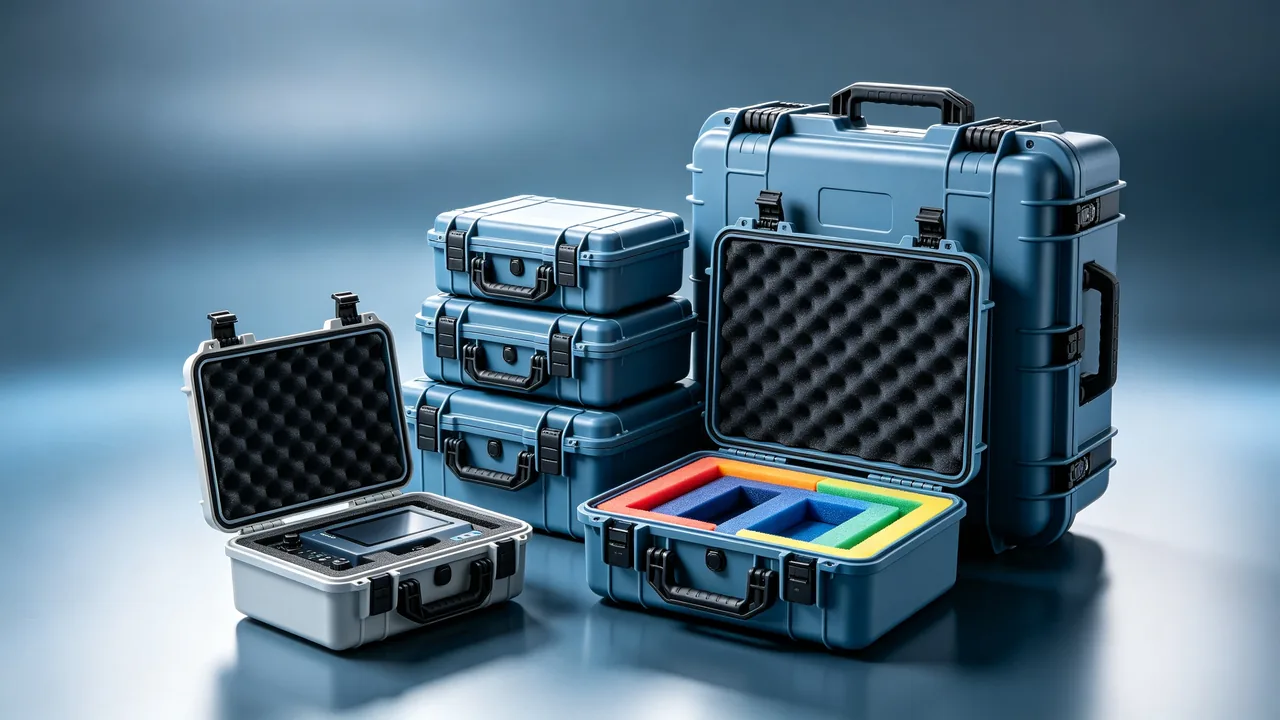
An IP rating for a protective case is a labeling system that quantitatively grades the ability of the case to resist the intrusion of solid foreign objects and moisture. It compresses the protection level of the shell structure, the sealing interface, and the accessory openings into a set of comparable numbers, so that a purchaser can judge the environment a case can handle without dismantling its internal construction. Understanding the system requires grasping the roles of the Case Shell: Structural Materials and Molding Process of Protective Cases and the Waterproof Seal Strip: Structure and Selection for Protective Cases in achieving the grade, and combining them with the verification method described in the Water Immersion Test: Quantitative Sealing Verification for Protective Cases. For cases that must be used in dust, rain, splash, or short-term immersion environments, the IP rating is the key basis that converts abstract environmental adaptability into an acceptable indicator, and it is one of the most frequently cited sealing parameters during selection. Equally important, the rating is a claim that should always be backed by a matching test report, because a number printed on a label without a traceable verification record cannot support procurement decisions, warranty commitments, or dispute resolution when real conditions turn out to be harsher than expected.
Basic Meaning and Structure of an IP Rating
An IP code consists of the letters IP followed by two characteristic digits; the first digit indicates protection against solid particles and the second indicates protection against liquids, and a higher digit means stronger protection. The two digits are independent and cannot be derived from each other, so a high dust grade does not automatically imply an equally high water grade. Once this structure is understood, a purchaser can separate the real operating environment into a solid line and a liquid line and evaluate each one on its own terms. In engineering, the grade is achieved through the cooperation of the closing surfaces of the shell, the sealing components, and the accessory openings, so a discussion of the grade should not look at a single part in isolation but should place the Case Shell: Structural Materials and Molding Process of Protective Cases and the Waterproof Seal Strip: Structure and Selection for Protective Cases inside the same structural logic; without either side, the grade label loses its physical basis.
In addition, an IP rating describes only protection against the intrusion of solids and liquids and does not cover impact, vibration, corrosion, or temperature, so it must be used together with other verification items in a complete selection process. For a case that claims a high grade, the user should require a matching test report confirming that the number was not assigned from experience alone but rests on a re-checkable record. Without this step, a delivered case may fail to match its advertised protection level, which leads to acceptance disputes and after-sales cost; binding the grade to its report in the contract and technical agreement is therefore an effective way to reduce risk and to keep both parties aligned on what the number actually means. In practice, the rating should be read as two separate promises, one about particles and one about liquids, and each promise should have its own verification evidence. A specification sheet that states a single combined number without saying which conditions were tested invites misinterpretation, so the technical agreement should require the test method, the sample condition, and the acceptance criterion to be stated alongside the grade.
Quantified Grading of Dust Protection
The first characteristic digit describes protection against solid foreign objects and dust. A lower digit only blocks larger solids such as a finger or a tool, while a higher digit requires complete dust tightness, meaning that under a specified negative pressure no dust may enter the case. Achieving a high dust grade depends on the continuous conformity of the seal strip, the flatness of the closing surface, and the independent sealing of openings such as cable pass-through holes and relief valves. If only the main sealing surface is addressed while the openings are neglected, dust will still enter the cavity through narrow gaps. Therefore, when assessing dust performance, the compression state of the Waterproof Seal Strip: Structure and Selection for Protective Cases and the geometric tolerance of the Case Shell: Structural Materials and Molding Process of Protective Cases should be judged together rather than drawing a conclusion from a single indicator.
The requirement for dust protection differs across dust environments. Fine sand, cement powder, and metal dust differ markedly in their ability to wear and penetrate the sealing interface, so in dusty scenarios the abrasion resistance and aging resistance of the sealing components matter as much as the digit itself. A higher dust grade usually means the case needs a more precise closing structure and a stronger latch compression force, which raises the demand on mold accuracy and assembly consistency. When comparing suppliers, a purchaser should include these hidden costs in the evaluation instead of looking only at the printed number, because a grade that cannot be held over the service life of the case provides little practical value. Purchasers should also confirm that the dust test was performed with the openings in the same state as in real use, because sealing an opening that is open in service produces an optimistic result. When a supplier claims a high dust grade, asking for the dust concentration, the negative pressure, and the test duration gives a clearer picture than the digit alone and helps compare offers on equal terms.
Quantified Grading of Water Protection
The second characteristic digit describes protection against liquid intrusion, ranging from vertical dripping, inclined dripping, spray, and splash all the way to short-term immersion and continuous immersion, with higher digits corresponding to harsher water environments. It must be emphasized that different water grades are not simply stronger versions of the same thing; they often correspond to different test attitudes and water flow conditions and therefore cannot be converted into one another. For example, a spray grade and an immersion grade exercise different failure mechanisms: the former concerns the impact of flowing water on the sealing surface, while the latter concerns sustained blocking under hydrostatic pressure. Only by understanding this can one avoid wrongly applying the conclusion of the Water Immersion Test: Quantitative Sealing Verification for Protective Cases to a spray scenario, or mistaking a spray result for proof of immersion capability.
When choosing a water grade, one should return to the real working condition: outdoor duty may only need resistance to rain, while waterside work needs resistance to splash or even short-term falling into water. Too low a grade causes water ingress and failure, while too high a grade may bring unnecessary cost and weight, so the reasonable approach is to first define the order of magnitude of water volume, pressure, and duration, then select a grade that just covers the need with some margin. For scenarios with several water sources, the grade should be set by the harshest one, and the operating limits should be stated in the manual so that a user does not treat short-term immersion as permission for long-term soaking and cause failure outside the design condition. The water grade should likewise be matched to the way water actually reaches the case, since rain, splash, jet washing, and immersion place very different demands on the same seal. Documenting the expected water exposure in the technical agreement, and choosing the grade that covers it with margin, prevents both under-protection in the field and unnecessary cost from an oversized specification.
Mapping IP Grades to Test Methods
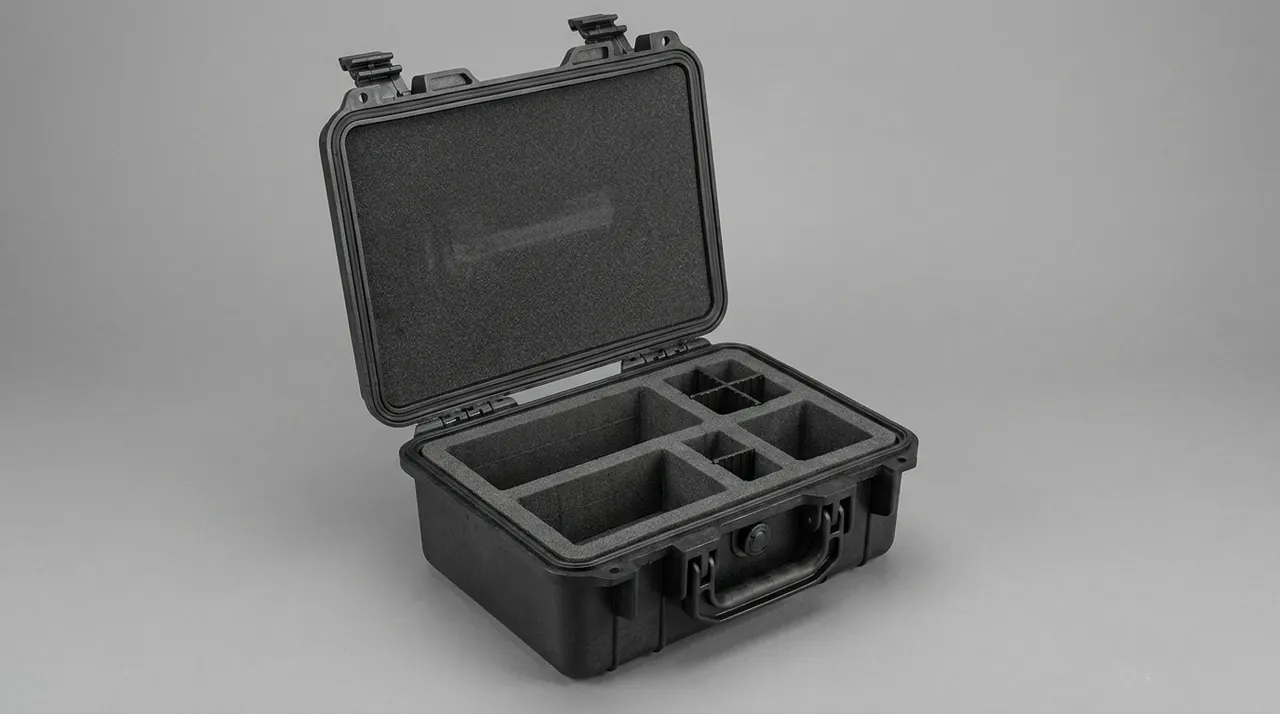
A grade digit can only be confirmed through the corresponding test. Dust grades are usually tested in a dust chamber under a specified negative pressure, while water grades use drip, oscillating spray, water jet, or immersion equipment depending on the digit. The test conditions include attitude, flow rate, pressure, and duration, and a deviation in any of them may change the conclusion, so the laboratory must have the matching apparatus and retain the original records. For immersion grades, the verification method can follow the depth and dwell time logic described in the Water Immersion Test: Quantitative Sealing Verification for Protective Cases; for spray grades, the reproducibility of the nozzle angle and the water flow intensity should be the focus, so that differences in apparatus do not make results incomparable.
In engineering delivery, the purchaser should check whether the test method in the report corresponds one to one with the claimed grade, avoiding the situation where a low-grade test is used to support a high-grade label. The sample count and whether a pretreatment condition was applied should also be recorded clearly, because a case that has undergone drop or vibration pretreatment may seal differently from a brand new sample. Binding the method, the sample, and the conclusion together gives the grade label credibility and provides a clear traceability trail if a quality dispute arises later, allowing the parties to locate the exact condition that produced the recorded result. When a report is reviewed, the attitude of the specimen, the sealing state of the openings, and any pretreatment should be checked against the agreed plan, because a result obtained under different conditions cannot support the same claim. Retaining photos of the setup and the interior after the test further strengthens the record and allows a later audit to confirm that the pass or fail conclusion came from a properly executed procedure rather than an assumption. Reviewers should also verify that the specimen count is sufficient to represent a batch, because a single sample that passes a dust or water test provides limited confidence for large production runs, and the sampling plan should match the risk of the application.
Contribution of Shell and Seal Strip to the Grade
Achieving a protection grade is the combined result of the shell and the seal strip. The shell provides rigid support and a flat mating surface, while the seal strip provides a compressible elastic body; only when their compression ratio falls in a suitable interval is the sealing interface continuous and reliable. A shell with insufficient stiffness deflects locally when compressed, causing uneven gasket compression, while a gasket that is too hard cannot conform to curved surfaces and one that is too soft deforms excessively under pressure; both cases leave a channel. Therefore, when assessing a grade, the deformation of the Case Shell: Structural Materials and Molding Process of Protective Cases and the selection of the Waterproof Seal Strip: Structure and Selection for Protective Cases should be checked on the same sheet to confirm that the two match at the design compression ratio.
At the material level, the resilience, compression set, and temperature range of the seal strip change over time and therefore affect the long-term retention of the grade. The roughness and friction coefficient of the shell surface also change the quality of conformity: a surface that is too smooth reduces adhesion, while one that is too rough may scratch the gasket. For cases used at low or high temperature, it is also necessary to assess whether the seal strip can still maintain contact pressure at both ends of the temperature range, and if needed to run high-low temperature cycling pretreatment before grade verification, so that the result reflects the sealing level after real aging rather than the ideal state immediately after production. Assembly control is equally important: the way the seal strip joint is formed and the order in which the lid is closed can create a local weak point if the joint is misaligned or the gasket is lifted during closure. Work instructions and first-article inspection help keep the sealing state of every unit consistent, which matters when a grade must be held across a large production batch rather than in a single sample.
Sealing Grades for Latches, Interfaces, and Valves
Beyond the main sealing interface, latches, cable interfaces, and pressure equalization valves are the parts most likely to break the grade. The latch provides compression force and determines the uniformity of compression, and a multi-latch layout helps distribute pressure along the entire perimeter; an interface flange relies on a sealing ring and nut torque, and either too little or too much torque weakens the seal; a pressure equalization valve must balance air pressure while guaranteeing no water entry when submerged, and its membrane or valve core is a moving seal whose reliability is usually lower than that of a static seal. Therefore, in grade assessment these parts should be numbered and verified individually, and the whole case should not be assumed to meet its grade merely because the main gasket passed, since a hidden weakness at an accessory can dominate the outcome.
For cases with quick-connect structures, the manual should clearly state how the interface is sealed when it is not connected, so that a user does not treat an open interface as a sealed state. For cases that work in alternating salt spray and spray environments for long periods, corrosion and aging of the moving seals fail earlier than the main seal, so the assessment should be coordinated with the Salt Spray Test: Corrosion Resistance Verification for Protective Cases to form a complete judgment covering both static and moving seals and to ensure the grade conclusion covers the weak links over the whole service life of the case. For cases with many interfaces, the assembly drawing should identify the position and model of every plug, and the units should be checked item by item before shipment. Where an interface is mated and unmated repeatedly in the field, the sealing decay after many cycles should be assessed and a replacement interval defined, so that the grade is maintained in long-term use and does not silently fall below the declared level as the moving parts wear.
Indirect Effect of Lining and Cushioning on the Grade
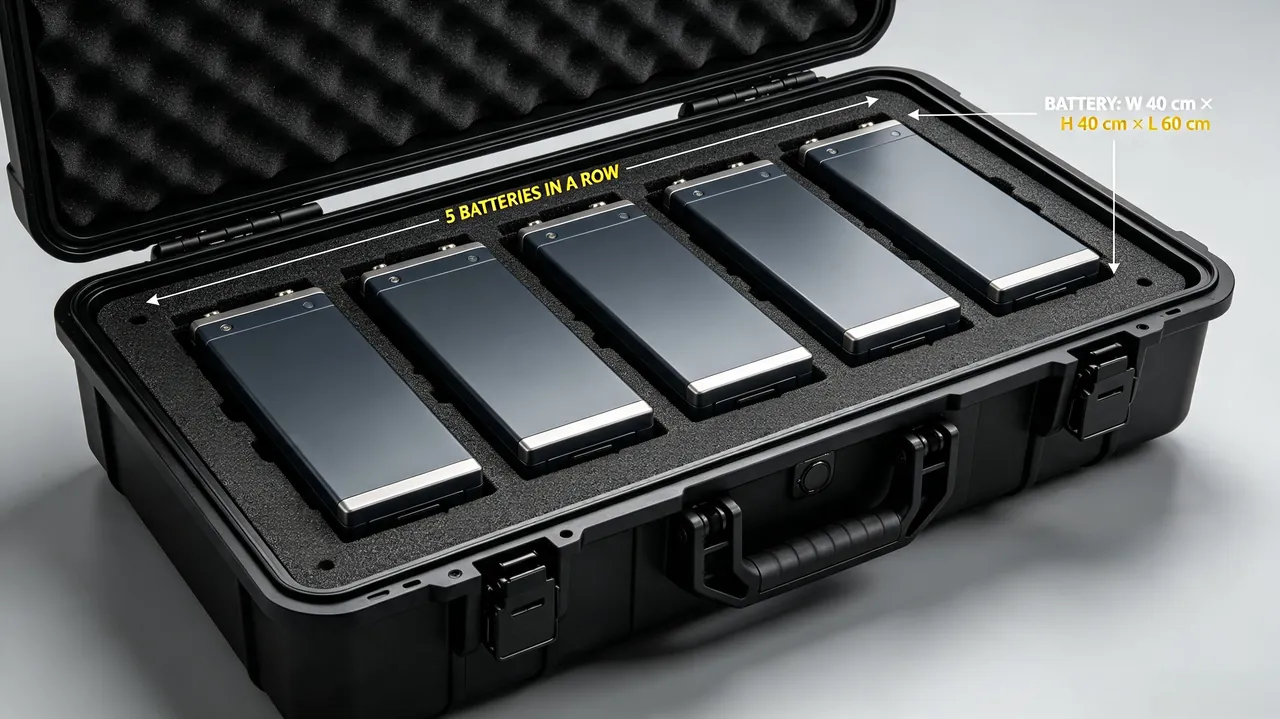
The lining does not directly determine the IP grade, but it affects sealing indirectly by changing the force and deformation of the shell. A lining that is too dense or that absorbs water may swell after taking on moisture and push up the closing surface, shifting the compression ratio away from the design value, while an unreasonable zoned support layout may concentrate force on a weak zone of the shell under compression. Therefore, when assessing a protection grade, it should be confirmed that the layout of the Foam Lining: Cushioning and Custom Layout for Protective Case Interiors does not interfere with the closing surface and the sealing path, and if necessary a sealing re-check should be performed after the lining is installed, so that the assembly state does not distort the grade result.
From the waterproofing point of view, a closed-cell foam lining is better than open-cell sponge at keeping the interior dry, because it does not store water and will not maintain high humidity for long even if a small amount of moisture penetrates. For cases carrying precision equipment, the lining also provides cushioning and positioning, and its energy absorption and resilience affect the retention of sealing after an impact, so the lining state should be recorded as a controlled condition during grade verification to avoid batch-to-batch drift in sealing performance that is difficult to explain under a single declared grade. In series production, the cutting accuracy and assembly consistency of the lining also introduce variation in sealing. If the thickness or density of the lining differs between batches, the compression ratio after lid closure may shift even when the shell and seal strip are identical. The key dimensions of the lining should therefore be included in incoming inspection and kept consistent between the verification sample and the production parts, reducing sealing uncertainty caused by auxiliary material differences. The lining should also be checked for interference with the latches and hinges, since a lining that presses against a latch can push the lid out of alignment and weaken the seal even when every other part is within tolerance.
Division of Work With Drop, Vibration, Immersion, and Salt Spray Tests
A protection grade describes resistance to the intrusion of solids and liquids, while the drop, vibration, immersion, and salt spray tests describe impact, fatigue, hydrostatic pressure, and corrosion respectively; together they form an environmental adaptability evaluation system and cannot replace one another. Passing the Drop Test: Structural Verification of Protective Cases Under Shipping Impact shows structural impact resistance, and passing the Vibration Test: Random Vibration Verification for Protective Cases shows resistance to fatigue loosening, but neither means the case will still hold its declared grade under dust or spray, because the sealing interface may already have moved away from its design state and must be checked separately.
A reasonable approach is to arrange the structural tests before the sealing tests, simulating the real sequence in which a case is first impacted and then meets water or dust, so that the retention of the grade can be verified. For products that must meet UN Certification: Transport Safety Certification for Protective Cases, the test items and sequence must follow the standard, and the review should check whether each item passed independently rather than looking only at the overall conclusion. Aligning the grade claim with the real verification conditions avoids the mismatch of a declared grade that does not match actual protection, and it lets procurement and quality teams reach a consistent judgment on the same body of evidence. In test planning, the structural tests can be performed first with the deformation recorded, and the same batch of samples can then continue into the sealing tests to form a continuous chain of evidence. Where conditions allow, the loaded samples and brand new samples can be grade-verified separately and the results compared, so that the difference quantifies the effect of structural damage on protection and provides a more direct basis for design margin and maintenance intervals. A shared log that records the condition of the samples before and after each test also makes it easier to decide whether a failure came from the structure or from the seal, which speeds up corrective action when a batch does not meet its grade.
Keeping the Grade Under Stacking and Transport Conditions
Stacking and transport apply sustained compression and dynamic vibration to a case, causing the closing surface and seal strip to bear additional compressive stress and misalignment force that change the originally ideal sealing state. When several cases are stacked, the closing surface of the lower case may deform slightly under load, and if the seal strip has insufficient resilience a local under-compression zone forms and creates a leakage channel. Therefore, when assessing grade retention, the load path of the Stacking Corners: Stacking Corners and Limit Structures for Protective Cases and the sealing path should be considered together to confirm that the compression load does not act directly on the sealing interface and that load bearing and sealing do not conflict at the same location.
In the transport phase, vibration may loosen latches and shift the seal strip, and over time these accumulate into a through-gap. High-reliability scenarios therefore often require the seal to be re-tested after vibration and stacking tests to confirm that the grade is still held after loading. For cases stored for long periods in a warehouse, attention should also be paid to whether the residual deformation of the bottom case accumulates over time, and if necessary the tier count should be limited in the storage plan with periodic sampling, so that long-term retention of the grade has engineering support rather than resting only on the factory test data. In packaging and container loading, reasonable cushioning and limit structures can reduce the transfer of transport vibration to the sealing interface and keep the case from bearing dynamic loads beyond its design. For cases shipped by sea over long distances, salt spray and humidity should be considered together with the stacking load, so that grade retention remains predictable under multiple environmental stresses and the risk of repair on arrival is reduced. Storage layout should also leave room for inspection, so that the bottom cases can be examined periodically without dismantling the whole stack, which keeps grade monitoring practical in a busy warehouse and helps catch deformation early before it affects protection.
Effect of Temperature, Humidity, and Aging on the Grade
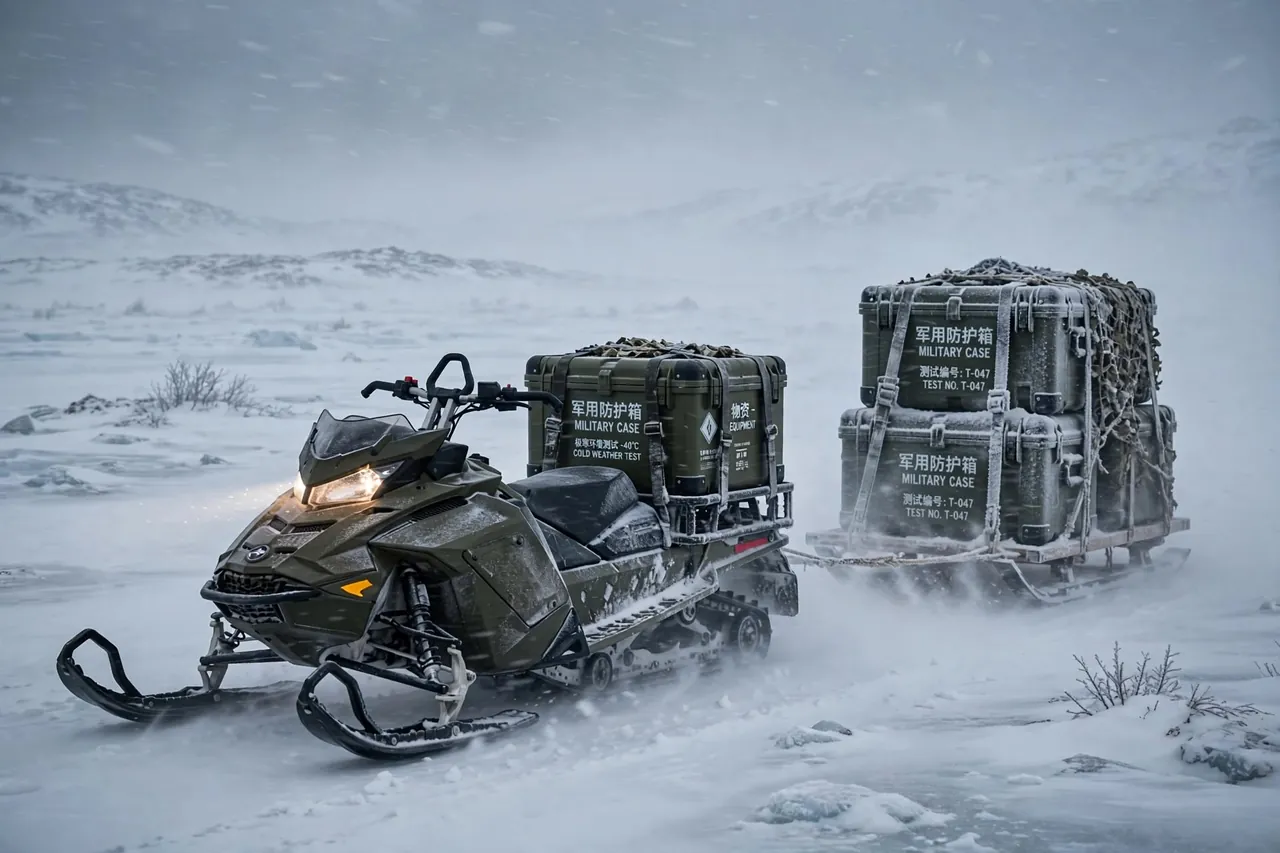
Temperature changes the hardness and resilience of sealing materials, while humidity and salt spray accelerate metal corrosion and gasket aging; combined, they cause a grade that originally passed to decay gradually in service. At low temperature the gasket hardens and its conformity drops, at high temperature it softens and compression set accelerates, and in a humid environment the sealing interface may even grow mold that indirectly breaks continuity. Therefore, in grade assessment it is preferable to perform environmental pretreatment before sealing verification, so that the conclusion reflects the aged level rather than the performance at the moment of leaving the factory, and thus comes closer to the protection actually available in service.
For cases used outdoors for long periods or transported across climate zones, the effect of temperature cycling on shell dimensions should also be assessed. The shell and the seal strip have different coefficients of thermal expansion, so their compression ratio changes periodically under alternating temperature, and if the design margin is insufficient a permanent gap may appear after long cycling. Including aging factors in grade verification lets the label reflect the protection available over the real service period, and also helps the user set maintenance intervals and replacement plans on a more reliable basis instead of relying on experience alone. At the maintenance level, the inspection and replacement interval for sealing components can be set according to how harsh the operating environment is. In high-temperature, high-humidity, or strongly varying conditions the seal strip ages faster, so the inspection interval should be shortened and replacement records kept, turning the long-term retention of the grade from a one-off verification into a manageable process. This avoids the late-life leakage or dust ingress that is otherwise difficult to trace back to a single cause, and gives the user a defensible basis for scheduling service. Where a case is used across seasons, the worst seasonal combination should guide the maintenance plan, because a seal that is adequate in mild weather may fall below its grade during the hottest or coldest months of the year.
Test Report and Grade Marking Writing
A standardized protection grade report should include sample information, test method, test conditions, observation records, judgment method, and conclusion, and should state clearly which two characteristic digits are being claimed. Sample information records the model, batch, sealing component state, and whether pretreatment was applied; test conditions list dust concentration, water flow, pressure, attitude, and duration; the judgment method references the acceptance criteria of the corresponding grade. Report writing can refer to the requirements for test records in the ISTA Test: Transport Test Procedure for Protective Cases to keep internal and external statements consistent, so that different departments can cite the same conclusion.
For grade marking, writing only a number without stating the applicable boundary should be avoided. The manual should also state the test conditions corresponding to the grade, the permitted number of open-close cycles, and the condition under which an interface counts as sealed, so that the user can correctly understand the meaning of the label. For products requiring third-party endorsement, the report should attach original records and photos for review by bodies such as UN Certification: Transport Safety Certification for Protective Cases, so that the grade number has traceable support and a stable acceptance baseline can be maintained over long-term supply. The report should also state the qualification of the testing organization and the calibration status of its equipment, so that the purchaser can judge the scope in which the conclusion applies. For repeated verification of the same model, historical reports should be retained and the acceptance criteria kept consistent, so that batches can be compared side by side. This provides an objective baseline for supplier improvement and allows evidence to be retrieved quickly during acceptance and audits, reducing communication cost as well as the risk of inconsistency between shipments. A short summary table that lists the grade, the test method, and the applied conditions on the first page also helps busy reviewers confirm at a glance that the report matches the specification without reading every detail.
Typical Industry Application Scenarios
Different industries emphasize dust protection and water protection differently. Power inspection and the Power Utility Case: Protective Cases for Power System Equipment are exposed to outdoor dust and rain all year and need a balance between dust and rain protection; water conservancy and the Water Conservancy Case: Protective Cases for Hydrology and Water Conservancy Monitoring are deployed near water with a higher risk of splash and short-term immersion; mining and the Mining Case: Protective Cases for Mining Equipment face extremely high dust concentrations, where the dust grade is often the primary indicator. For these scenarios, the harshest single factor should be the selection baseline rather than a simple average of the two.
In marine and port scenarios, the Marine Engineering Case: Protective Cases for Marine Engineering Equipment must resist salt spray, spray, and deck washing at the same time; in rainy-season operations of geological survey and the Geological Exploration Case: Protective Cases for Geological Exploration Equipment, the margin of the water grade directly affects equipment availability. In addition, a Cold Chain Case: Protective Cases for Cold Chain Transport faces alternating temperature difference and condensation, where the sealing interface is prone to condensation effects, so both high-temperature humidity and low-temperature cycling should be included in the grade assessment. Aligning the grade choice with the real working condition avoids the mismatch of a passed grade that still admits dust or water in the field. When selecting a grade, the frequency of use and the number of open-close cycles should also be taken into account, because a case opened frequently wears its seal strip and loosens its latches faster. A larger initial margin for grade retention may be needed, or the manual should limit the permitted number of cycles and state the maintenance requirement, so that the declared grade remains credible throughout long-term use and does not degrade unnoticed. The same logic applies to cases shared across departments, where the grade should be set by the most demanding user so that a single specification serves every application safely.
Standards Basis and Compliance Notes
The conclusion of a protection grade should be built on traceable standards, commonly including ingress protection related specifications, industry certification documents, and the technical agreement signed by both supply and demand parties. The testing organization should retain complete original records, instrument calibration certificates, and specimen photos for review during UN Certification: Transport Safety Certification for Protective Cases or AAR Certification: Rail Transport Certification for Protective Cases audits. It must be specifically stated that this article only discusses the grading and verification method of the protective case container structure under the theme of dust and water protection grades, and does not involve the nature of any contents; the cross-border transportation and export of related products must comply with local laws, regulations, and export control requirements, with the responsible party conducting a separate compliance assessment, and nothing in this article constitutes any compliance conclusion. A passing grade only means the container itself has the corresponding protection under specific test conditions and does not replace the user's protection plan and operating specification for the internal items. It should be further noted that a protection grade addresses only the capability of the container body under specific test conditions, and any responsibility related to the mode of transport, packaging combination, or operating process must still be allocated among the carrier, the user, and the manufacturer according to contract and regulation. Where products cross borders, requirements such as packaging marking, accompanying documents, and operator training may also apply; these are outside the scope of this article and must be confirmed separately by the responsible party in light of the destination regulations. The methods and criteria discussed here are intended only to help readers understand the technical logic of protection grades and cannot be used directly as the final basis for any compliance judgment or acceptance, so actual projects should follow the current standards, the customer's technical agreement, and the formal documents of the competent authority. Readers should therefore verify the applicable clauses of the current standards and obtain professional advice before relying on any single test result for a procurement or design decision, rather than treating the numbers discussed here as a substitute for regulatory review.
Frequently Asked Questions
Q: What do the two digits in an IP rating represent? A: The first characteristic digit of an IP code indicates protection against solid foreign objects and dust; a higher digit blocks finer particles, and the highest grade requires that no dust enters under a specified negative pressure. The second characteristic digit indicates protection against liquid intrusion, ranging from vertical dripping, spray, and splash all the way to short-term immersion and continuous immersion. The two digits are independent and cannot be inferred from each other, so good dust performance does not imply equally good water performance. During selection, the two requirements should be set separately according to the operating environment and then combined so that both are satisfied, rather than focusing on only one of them or simply taking the larger number of the two. A combined statement such as a single grade without clarifying which digit applies to which medium is a common source of confusion, so the technical agreement should list both requirements explicitly and require evidence for each, ensuring that neither side reads the number as covering the other.
Q: Does a higher dust grade also mean better water protection? A: No. Dust and water are described by two different characteristic digits and are assessed by completely different media and methods: dust protection uses a dust chamber under negative pressure, while water protection uses drip, spray, or immersion equipment. A case may perform excellently in a dusty environment yet take on water because its gasket has insufficient resilience under sustained pressure, or it may perform well under spray yet leak dust because an opening was not independently sealed. The two capabilities must therefore be verified separately, and neither can be inferred from the other. Purchasers should write both criteria into the technical agreement to avoid replacing the overall conclusion with a single-item result. Where a case is used in both dusty and wet conditions, the two requirements should be met at the same time, and the acceptance test should exercise both media so that a weakness in one is not hidden by strength in the other, which keeps the specification honest and comparable across suppliers.
Q: Can spray testing be used to verify immersion capability? A: No. Spray testing uses flowing water to scour the case surface continuously from specific angles and examines sealing performance under water impact and splash, while immersion testing submerges the case in still water at a specified depth and duration and examines sustained blocking under hydrostatic pressure. Their attitudes, pressures, and failure mechanisms differ, so passing a spray test does not prove that the case will not take on water when submerged, and the reverse is also true. If a product risks short-term falling into water or long soaking in standing water, it should undergo immersion verification separately, with the depth and dwell time set according to the method described in the Water Immersion Test: Quantitative Sealing Verification for Protective Cases rather than substituting a convenient spray result. The two tests should be treated as complementary checks, and the choice of which to require should follow the real water exposure rather than the convenience of the available apparatus, so the verification matches the field risk.
Q: Why should a protection grade be reviewed together with drop or vibration tests? A: Because a case in real transport may first experience drop and vibration, causing tiny deformation of the shell, latches, or seal strip, and then meet dust or rain, at which point the sealing interface is no longer the ideal factory state. If only the grade of a brand new case is checked, the conclusion may overestimate the actual protection. Arranging structural tests before sealing tests verifies the retention of the grade after loading and exposes hidden dangers such as loose latches and misaligned gaskets. This is also a common practice for transport certification and high-reliability scenarios, and it keeps the grade claim closer to the real service condition rather than an idealized laboratory snapshot. Recording the deformation and the sealing result of the same samples also builds a connected evidence chain that is easier to defend than two unrelated test reports, and it clearly shows how much margin remains after realistic loading.
Q: Does the lining material affect the protection grade? A: Yes, though indirectly. The lining does not directly determine the IP grade, but it affects sealing by changing the shell force and the closing state. A lining that is too dense or that absorbs water may swell and push up the closing surface, shifting the compression ratio away from the design value, while an unreasonable zoned support layout may concentrate force on a weak zone of the shell under compression. It should therefore be confirmed that the layout of the Foam Lining: Cushioning and Custom Layout for Protective Case Interiors does not interfere with the sealing path, and closed-cell foam should be preferred so that a small amount of moisture does not maintain high humidity for long, while the lining state is recorded as a controlled condition during grade verification. The lining should also avoid retaining moisture that could affect sensitive contents, so a quick-drying structure is preferred alongside the sealed container, and the lining state should be logged separately from the main sealing result.
Q: Can latches and pressure valves drag down the overall protection grade? A: Yes. Latches determine the distribution of the closing compression force, and a multi-latch layout helps spread the pressure along the entire perimeter; a pressure equalization valve balances internal and external air pressure, and its membrane or valve core is a moving seal that must close reliably when submerged. If these parts are not individually sealed and verified during the test, the whole case may still take on water through an accessory even when the main gasket passed. Latches, interfaces, and valves should therefore be numbered and verified individually, and for alternating salt spray and spray conditions the assessment should be coordinated with the Salt Spray Test: Corrosion Resistance Verification for Protective Cases. Each accessory that penetrates the shell is a potential leak path, so treating them as part of the sealing system rather than as add-ons is essential to holding the declared grade throughout the service life of the case.
Q: Does temperature change reduce the protection grade? A: Yes. Temperature changes the hardness and resilience of sealing materials: at low temperature the gasket hardens and its conformity drops, while at high temperature it softens and compression set accelerates, and both weaken the continuity of the sealing interface. Humidity and salt spray also accelerate metal corrosion and gasket aging. Grade assessment should therefore perform environmental pretreatment before sealing verification so that the conclusion reflects the aged level. Because the shell and the seal strip have different coefficients of thermal expansion, their compression ratio changes periodically under alternating temperature, and an insufficient design margin can lead to a permanent gap after long cycling, so margin should be reserved at the selection stage. Sealing materials should be selected for the temperature range actually expected, and the grade should be re-verified after environmental pretreatment whenever the service conditions depart from the standard test range, so the label matches real conditions rather than a controlled laboratory snapshot.
Q: What key contents should a protection grade report include? A: A standardized report should at least include six parts: sample information, test method, test conditions, observation records, judgment method, and conclusion. Sample information records model, batch, sealing component state, and whether pretreatment was applied. The test method states the apparatus used and the corresponding grade. Test conditions list dust concentration, water flow, pressure, attitude, and duration. Observation records document dust or water ingress. The judgment method references the acceptance criteria of the corresponding grade, and the conclusion gives a clear pass or fail. For products requiring third-party endorsement, original records, photos, and instrument calibration certificates should be attached for certification body review, giving the grade number traceable support. Keeping the report format stable across batches also makes trends visible and helps a purchaser detect slow quality drift before it becomes a field failure, which is a key benefit of disciplined record keeping over the life of the product. Retaining the original data also allows a new test to be compared directly with its predecessor, which supports continuous improvement rather than isolated checks.
Q: Can salt spray testing replace dust and water grade verification? A: No. Salt spray testing examines the corrosion resistance of materials and surface treatment in a corrosive medium, focusing on whether metal rusts or coating peels, while a dust and water grade examines the ability of the sealing interface to block intruding dust and moisture, focusing on whether dust or water enters the case. The two mechanisms differ and complement each other: a case may meet its grade yet fail in long-term use because its corners and latches corrode, or it may be corrosion resistant yet admit dust or water because the gasket was assembled poorly. Both verifications must therefore be carried out separately, and both should be included in the evaluation list during selection, with neither being dispensable, so that stable protection is maintained over long service. Including both checks in the qualification plan gives a fuller picture of long-term outdoor and marine suitability and avoids relying on a single test when approving a case for demanding service.