

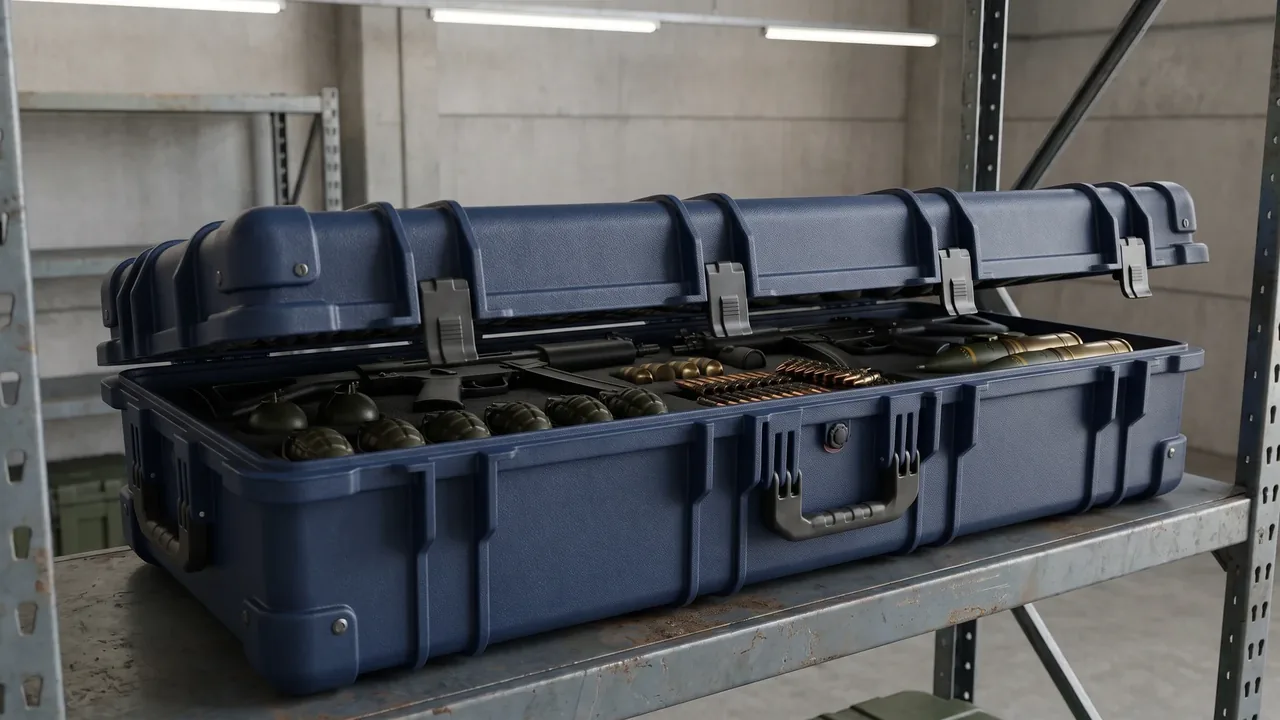
Case stacking corner is the hardware accessory specifically designed to support stacking and alignment on a protective case, and it determines whether multiple cases can be safely stacked in storage and transport, and whether they can stay in place without slipping or toppling on rough roads. No matter how rigid the shell is, without reliable stacking corners the whole pallet of cases can collapse from misalignment or slip during forklift transfer or long-haul trucking, damaging the equipment inside. This article approaches the topic from a container engineering perspective, systematically explaining the materials, geometric structure, load calculation, installation processes, anti-slip design, and maintenance points of case stacking corners. It is meant to help buyers and retrofit staff choose, lock down and keep steady this protective case fitting, while grasping how it connects to the Case Shell: Structural Materials and Molding Process of Protective Cases, the Case Latch: Pressure and Theft Resistance Hardware for Protective Cases, and the Case Seal Strip: The Key Waterproof and Dustproof Accessory for Protective Cases. Readers who need whole-case load reference can also read this alongside the Heavy-Duty Protective Case: Structure and Load Design.
The Role and Function of Case Stacking Corner in Protective Cases
The storage and transport efficiency of a protective case largely depends on whether it can be stably stacked, and the reliability of stacking almost entirely rests on the case stacking corner, this protruding protective case accessory. It is usually arranged at the eight corners of the case, with a boss on the top surface and a matching recess or flat on the bottom, so that upper and lower cases interlock and self-align when stacked. As a fundamental protective case accessory, the stacking corner does not participate in sealing, yet it determines the geometric stability of the whole pallet, so its status in logistics scenarios is often higher than that of appearance parts.
Functionally, the case stacking corner performs three tasks at once: transferring the weight of the upper case to the corners of the lower case, limiting the relative horizontal displacement of upper and lower cases, and absorbing shock and misalignment during stacking. These three tasks are interrelated, but the required materials and geometry are not identical, so before selection the stacking layers, single-case weight, and transport conditions must be clarified first, and then the technical route for the stacking corner decided. Treating the stacking corner as an ordinary protective angle added at will is one of the most common root causes of on-site pallet collapse. In the procurement phase, the stacking corner should be included in technical review, requiring the supplier to provide geometry, material, and rated load data, rather than looking only at appearance and unit price. For cases carrying critical missions, the reliability of stacking corners often deserves more budget than case color or handle style.
From a maintenance perspective, the stacking corner is also the protective case accessory whose condition can be quickly judged on site. After opening, simply observing whether the corner is deformed, cracked, or loose gives a preliminary judgment of whether the whole pallet stacking is healthy. Establishing this low-cost routine inspection habit can intercept the vast majority of collapse accidents before they happen.
Core Functions: Load Bearing and Alignment
Load bearing and alignment may seem like similar requirements, but in practice their demands on the stacking corner are clearly different. Load bearing mainly relies on the compressive strength of the corner material and the bending resistance of the corner cross-section; when the upper case weight presses down, the stacking corner must transmit the force smoothly along the corner to the bottom case, avoiding local bending cracks in the shell panel. Alignment is more complex, because cases in a stack generate horizontal inertial forces during turning, braking, and road bumps, and the stacking corner must provide sufficient boss-and-recess engagement to prevent upper and lower cases from shifting.
In engineering, a rated stacking load is used to describe this boundary, for example specifying the total pressure on the bottom case under several static stacking layers each fully loaded. As a protective case accessory, the load capacity of the stacking corner must reserve an adequate safety factor; simply adding a thicker thin corner does not automatically upgrade the stacking grade. Understanding the boundary between load bearing and alignment is the first step in good stacking design, and it is also the yardstick that distinguishes a qualified case from an excellent one.
Common Stacking Corner Materials: Aluminum, Engineering Plastic, and Steel
The three mainstream materials used for protective case stacking corners are aluminum, engineering plastic, and steel. Aluminum alloy has high strength, light weight, and corrosion resistance, and is the most common stacking corner choice for aviation cases and high-end instrument cases. Engineering plastic (such as nylon or glass-fiber-reinforced plastic) is lighter, insulating, and rust-free, suitable for scenarios requiring lightweight and no special EMI shielding, but its compression and UV resistance are slightly lower. Steel stacking corners have the strongest load capacity and impact resistance, mostly used for heavy or frequently fork-lifted equipment cases, but they are heavy and require rust prevention.
Material selection should return to the use environment: for lightweight and long-term outdoor use, prioritize aluminum; for extreme lightweight and insulation, consider engineering plastic; for extremely heavy loads and frequent mechanical handling, use steel. Whichever is chosen, the stacking corner as a protective case accessory should clearly mark its material and rated load, facilitating stocking and replacement, and avoiding inconsistent strength across batches. In general transport scenarios such as Equipment Cases: General Instrument & Gear Transport Protection, traceability of material matters a great deal. On purchase, insist that every batch comes with material certificates and load-test records, and sample for press-fit verification on receipt to avoid suppliers substituting inferior material.
Furthermore, the color of a stacking corner does not equal performance. Common natural metal, black, or gray engineering plastic colors are mostly determined by surface treatment or fillers, with no direct relation to load capacity. Selection should be based on material grade, wall thickness, and rated load, not misled by appearance. A single case should preferably fix one material and one specification to reduce the uncertainty of mixed use.
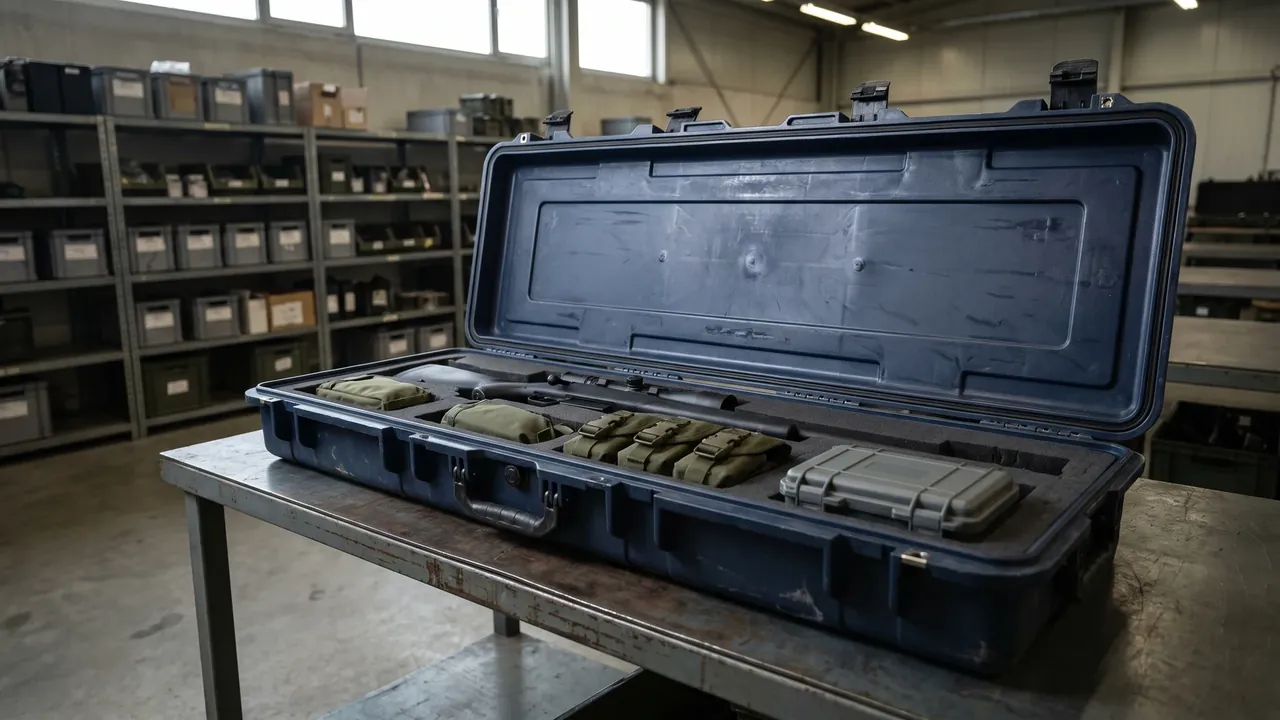
Structure and Geometry: Boss, Guide, and Stop
The geometric form of the stacking corner directly determines stacking behavior and alignment reliability. The boss type forms an upward protruding pyramid or round boss on the top surface, into which the matching recess of the lower case fits for automatic centering, suitable for logistics scenarios requiring fast stacking alignment. The guide bevel cuts a chamfer at the corner so that upper and lower cases slide into the correct position when approaching, reducing manual alignment difficulty. The stop flange further prevents horizontal shift and improves stability on bumpy roads.
As a protective case accessory, geometry selection must coordinate with the stacking method: same-model cases rely on identical boss-and-recess fit, while mixed-model stacking requires a compatible universal corner pitch. When selecting, obtain the three-dimensional corner drawing and verify boss height, guide angle, and stop dimensions. At the same time, reserve shell processing tolerance to avoid boss-and-recess fit being too tight or too loose due to injection or thermoforming fluctuation, which would affect the uniformity of whole-pallet alignment.
Load Calculation and Stacking Layer Design
Load calculation is the most central step in stacking corner engineering: based on the single-case weight and planned stacking layers, it estimates the total pressure on the corner of the bottom case. Generally, in static stacking the bottom stacking corner bears the cumulative weight of all upper layers; if there is dynamic impact in transport, an inertia amplification factor must be added. Design should take the worst-case condition with a safety factor, usually not less than two to three.
Layer design must return to the limits of the transport vehicle and storage: truck compartment height, shelf layer distance, and forklift lift height all determine the maximum stackable layers. As a protective case accessory, the rated load of the stacking corner must cover the actual bottom-layer force, and the shell panel must have adequate ribs or backing plates at the corners to disperse pressure. For lightweight cases such as the Aluminum Alloy Protective Case: Aviation-Grade Material, Weight and EMI Shielding, corner reinforcement cannot be omitted. For acceptance, a simple check can be done: press-fit the sample at the designed full layers and measure corner deformation and shell stress; if deformation exceeds tolerance, adjust the cross-section or ribs.
Installation Processes: Riveting, Screws, and Injection-Molded Integration
Stacking corner installation generally uses three processes. Riveting fixes the corner to the shell corner with rivets, flexible for modification and small batches, but rivet points concentrate stress and may loosen under long-term vibration. Screw connection embeds nuts or backing plates at the corner and locks with screws, detachable and easy to replace, and is the mainstream method for mass-produced protective cases. Injection-molded integration molds the stacking corner as an insert during shell forming, with the strongest bond and best sealing, but high mold cost and difficult redesign.
Regardless of process, as a protective case accessory, the contact surface between the stacking corner and shell is critical: the surface should be flat with no gap, so force transmits uniformly when loaded; the shell around the corner should be locally thickened or backed to avoid stress concentration causing panel cracks. When adding stacking corners, modification shops should prioritize the original specifications and installation method to reduce load risks from process changes. Like the Case Foam Lining: Cushioning and Customization of Case Interiors, the stacking corner is also a basic accessory affecting whole-case reliability and should not be taken lightly.
Synergy with the Case Shell for Load Bearing
The stacking corner is not an isolated part; it is directly related to the rigidity and corner reinforcement of the Case Shell: Structural Materials and Molding Process of Protective Cases. If the shell has thin corner panels from injection or thermoforming fluctuation, even the strongest stacking corner will press force onto the weak shell, causing local cracks. Therefore, improving stacking reliability often starts with the corner ribs and backing layout of the shell, keeping the corner load path within the aforementioned strength band.
In modification practice, the stacking corner and shell are often tuned as a system: first confirm the corner shell thickness and reinforcement structure, then select a matching specification of stacking corner, and finally use the How to Choose a Protective-Case Latch: Types, Compression Points, and Selection Checklist to keep the whole case structurally complete while stacked. The accessory system only works reliably when shell and stacking corner act together; tuning any one part in isolation cannot make up for a weak link elsewhere.
System Relationship with Latch and Seal Strip
The load effect of the stacking corner also depends on the joint protection of the Case Latch: Pressure and Theft Resistance Hardware for Protective Cases and the Case Seal Strip: The Key Waterproof and Dustproof Accessory for Protective Cases. The latch ensures the lid does not accidentally open during stacking and transfer, avoiding overall instability of the upper case from a loose lid; the seal strip ensures external moisture and dust do not enter the cavity, avoiding strength decline of corner connectors from rust due to dampness.
In engineering, an overturning and vibration test after whole-pallet stacking can measure the anti-slip capability of the stacking corner, and adjust the boss height or add anti-slip pads accordingly. As a protective case accessory, the latch layout should also coordinate with stacking force: latch points should keep the lid uniformly seated under stacking pressure, without local deformation and leakage from partial loading. The balance between the two is the key to long-term storage and transport stability of the whole pallet, and directly relates to the performance of the case during long-haul transport and field bivouac.
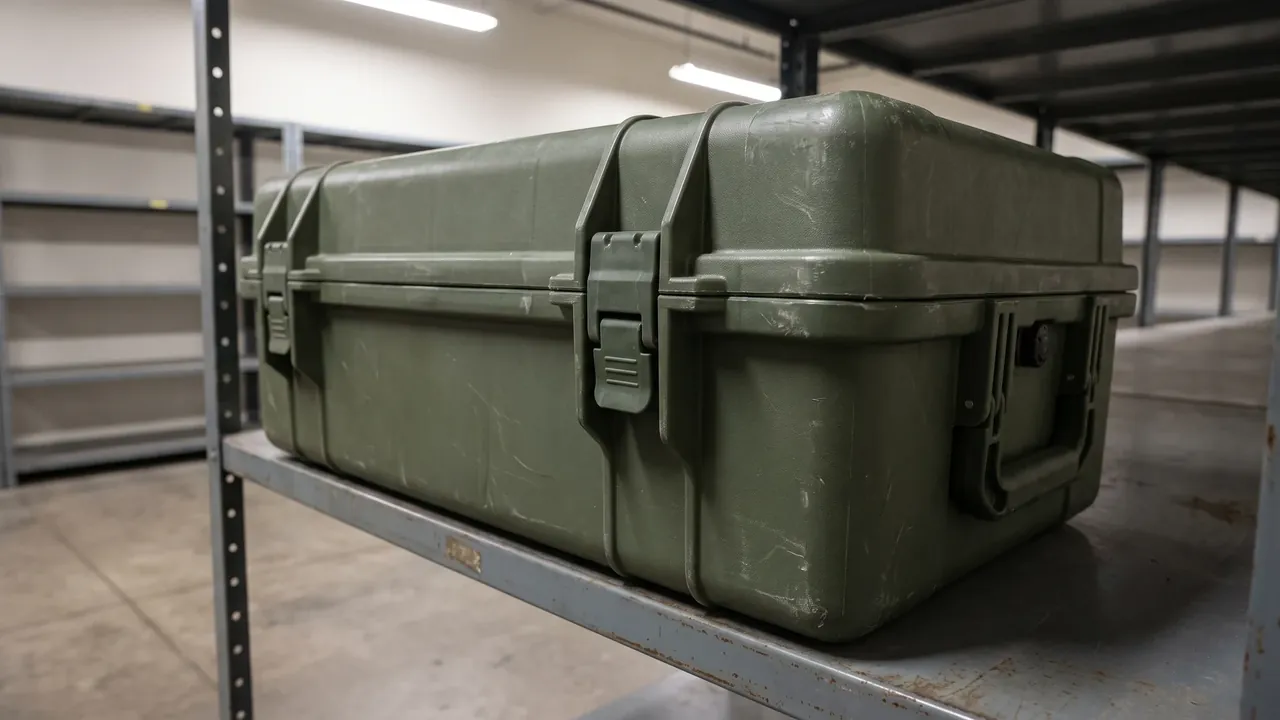
Anti-Slip and Stacking Stability
The stacking corner provides geometric engagement, but on wet, oily, or bumpy surfaces, relying solely on boss-and-recess fit may still allow horizontal slip. Therefore, anti-slip patterns, rubber pads, or stop flanges are often added to the corner contact surface to increase friction coefficient and mechanical stopping. As a protective case accessory, anti-slip design must return to the real transport conditions: moisture inside shipping containers, inertia from truck emergency braking, and lateral force during forklift picking all challenge stacking stability.
For whole pallets requiring strict stability, a balancing design is recommended: place heavy cases at the bottom and light cases on top, so the whole pallet has a low and centered center of gravity, avoiding top-heavy instability. During stacking, also use straps or limiting frames to secure the whole pallet, rather than relying only on the case's own engagement. There is a trade-off between stability and load capacity; one cannot sacrifice the critical anti-slip margin just to stack a few more layers. Recording the stacking pattern, strap tension, and road conditions for each shipment builds a reference that helps operators repeat a proven stable configuration instead of guessing, and it also supports later failure analysis if a pallet ever does shift during transit.
Temperature, Humidity, and Corrosion Protection
Stacking corners are exposed to temperature, humidity, and salt fog over time, and the material and connections gradually degrade. Aluminum alloy has good weather resistance but needs protection from galvanic corrosion; engineering plastic softens under sustained high temperature and becomes brittle at low temperature; steel must rely on galvanizing or coating for rust prevention, and once the coating is damaged it rusts and weakens. Load capacity declines with corrosion, manifesting as surface rust spots, cracks, or loose connections.
As a protective case accessory, the environmental adaptability of the stacking corner should be written into technical requirements at selection: clarify the operating temperature range, whether it contacts seawater or salt fog, and whether it is long-term outdoor. The wider the gap between storage and transport temperatures, the harder the corner must work at both extremes—brittle when cold and soft when hot. A regular look at the corner's condition is a cheap and effective safeguard. Where conditions are harsh—desert, coast or high altitude—checks should be made more often. Seaside environments should especially watch for pitting of aluminum and steel connectors from salt fog; salt crystals may embed in corner gaps and accelerate corrosion. After each use, rinse the corners with fresh water and dry, then apply a thin protectant. At high altitude with large day-night temperature differences, the corner becomes brittle at low temperature and softens at high temperature, so corner integrity under low temperature should be checked during inspection.
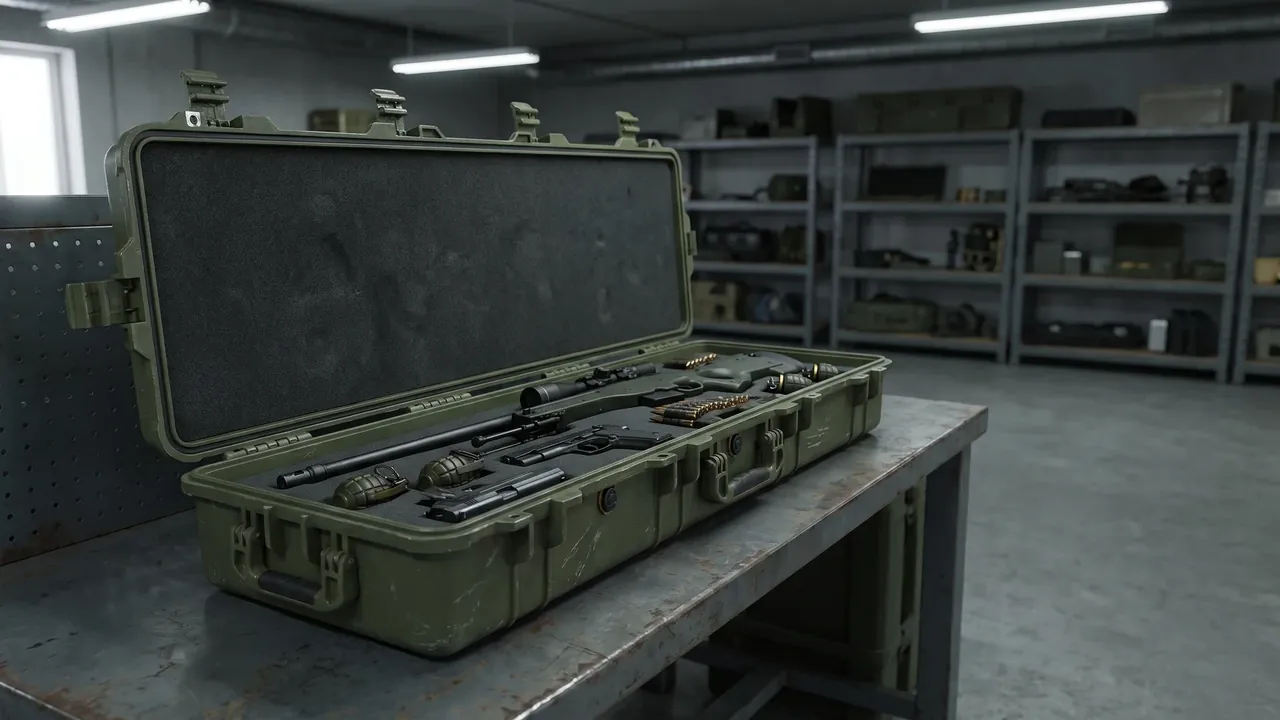
Maintenance, Inspection, and Replacement
The stacking corner has no fixed shelf life; actual life depends on stacking frequency, environmental severity, and material. Signals for replacement include: surface rust or cracks on the corner, loose connection to the shell or fallen rivets, worn boss causing loose engagement, or obvious slip of the whole pallet in a stacking test. Any signal appearing warrants replacement.
In daily maintenance, the stacking corner among protective case accessories must avoid strong impact prying, which damages the shell and corner interface. Use a neutral cleaner with a soft cloth to clean the corner, and verify the fastenings are still tight once it is dry. Keep a replacement ledger that logs, batch by batch, when each corner was loaded and under what conditions, so upkeep moves from reactive to scheduled. The Rescue Case: Modular Configuration of Emergency Response Supplies, a high-frequency transfer accessory, belongs in the ledger too. Because the storage-and-transport setting is usually harder to control than the job site, inspecting the corner once before dispatch and once on return is a habit that pays for itself.
It should be emphasized that stacking corner replacement is not complicated, but must be standardized. When removing the old corner, thoroughly clean residual glue and rust, confirm the shell corner is undamaged before installing the new part; riveting or screw processes should control torque and riveting quality per specification, and damaged injection-molded inserts should be replaced with shell inserts. After replacement, a full-load stacking test is recommended to confirm whole-pallet stability without slip before delivery, avoiding going to work with defects.
Typical Applications of Stacking Corners in Storage and Transport
Stacking corners play different roles in different storage and transport scenarios. In warehousing, they let same-model cases stack efficiently and save space; in long-haul transport, they ensure the whole pallet does not collapse inside trucks and containers; in field bivouac and emergency sites, they support quickly stacking cases into worktables or steps, improving site utilization. For bivouac support, see Field Camp Case: Living and Equipment Storage for Field Bivouac; for command integration, see Command Operations Case: Modular Integration of Field Command Equipment.
In special scenarios such as Airdrop Case Design: Landing Impact Protection for Air-Deliverable Containers, the stacking corner must also withstand the instantaneous overload of landing impact, so corner reinforcement and cushioning structure are even more critical. For large equipment cases such as Communication Shelter Case: Whole-Case Protection for Mobile Comms Equipment, the stacking corner is often integrated with the shelter frame, with higher load and alignment requirements. Understanding scenario differences allows the stacking corner to be upgraded from a generic protective angle to a systematic stacking solution.
Selection Checklist and Common Mistakes
When selecting stacking corners as a protective case accessory, confirm item by item per checklist: clarify single-case weight and planned stacking layers, determine corner shell thickness and reinforcement, select material and rated load, determine geometric boss and guide dimensions, confirm installation process and connection strength, obtain samples for press-fit and stacking tests, and plan replacement cycle. Implementing each item avoids the embarrassment of looking stackable but collapsing in transport.
Common mistakes include: believing a thicker angle always bears more load, forcing stacking with ordinary corners, ignoring corner shell reinforcement, procuring by price instead of load parameters, and mixing different batches causing inconsistent strength. Correcting these mistakes is essentially thinking of the stacking corner within the whole-case system, rather than treating it as a metal block that can be added at will. Only by establishing a four-in-one accessory view of shell, seal, latch, and stacking corner can the protective case be truly reliable.
Frequently Asked Questions
Q: How many stacking layers can a protective case stacking corner generally support? A: There is no single answer for stackable layers; it depends on single-case weight, the rated load of the stacking corner, and the corner reinforcement of the shell. Generally, static storage can estimate theoretical layers by dividing rated load by single-case weight, then multiply by a safety factor of two to three; transport must also add dynamic amplification from braking, turning, and road bumps, so the actually allowed layers are often lower than the theoretical value. To judge safety, check whether the bottom corner is deformed, the shell is cracked, or the whole pallet slips. Any abnormality means reducing layers or reinforcing. Daily, require the supplier to provide rated load and press-fit test records, and sample verify on receipt. Establishing a stacking ledger and recording loading conditions helps proactively adjust layers before problems occur, rather than repairing only after the whole pallet collapses. Only by calculating layers, load, and safety factor on one sheet can stacking be truly reliable.
Q: Why does the whole pallet still slip even after stacking corners are added? A: Slip is often not caused by the stacking corner alone. The corner only provides geometric engagement; if the boss is worn, the shell corner is thin, or the connection is loose, the engagement loosens; on wet, oily, or hard-braking roads, boss-and-recess fit alone may still slip horizontally. In addition, if the whole pallet is poorly balanced with heavy cases on top raising the center of gravity, inertial force amplifies slip risk. The correct approach is to first confirm corner integrity and shell reinforcement, then add anti-slip patterns or rubber pads to the contact surface, and place heavy cases at the bottom and secure the whole pallet with straps. On-site, run overturning and vibration tests to find the truly weak link and reinforce it. Evaluate the stacking corner within the system rather than adding corners in isolation to root out slip. A documented pre-departure check of corner engagement and strap tension turns slip from an unpredictable accident into a controllable routine step.
Q: How should aluminum, engineering plastic, and steel stacking corners be selected? A: The three have different emphases. Aluminum alloy has high strength, light weight, and corrosion resistance, and is the most common choice for aviation and high-end instrument cases, suitable for lightweight and long-term outdoor scenarios. Engineering plastic is lighter, insulating, and rust-free, suitable for scenarios requiring extreme lightweight and no special EMI shielding, but its compression and UV resistance are slightly lower. Steel has the strongest load capacity and impact resistance, mostly used for heavy or frequently fork-lifted equipment cases, but it is heavy and needs rust prevention. Selection should return to the real environment: lightweight outdoor prioritizes aluminum, extreme lightweight considers engineering plastic, and extremely heavy loads use steel. Whichever is chosen, clearly specify material, wall thickness, and rated load to the supplier, and obtain samples for press-fit testing to ensure batch consistency. Do not judge by color or touch alone; rely on measured load. Where several materials are plausible, a small comparative stacking test with the actual case validates the choice by data rather than assumption, and the result should be recorded for future procurement reference.
Q: How should stacking corners be installed to avoid loosening? A: The contact surface between the stacking corner and shell should be flat with no gap, so force transmits uniformly when loaded; any warping or gap concentrates stress and loosens under long-term vibration. Riveting must ensure rivet count and quality; screw connection should embed nuts or backing plates at the corner and control torque; injection-molded integration must confirm the insert bonds well with the shell. The shell around the corner should be locally thickened or backed to disperse load and avoid panel cracks. After installation, check under full-load stacking whether the corner displaces or the shell shows stress whitening. For modification, prioritize the original specification and installation method. After completion, a full-load stacking test is recommended to confirm whole-pallet stability without slip before delivery. Poorly installed corners are the leading cause of in-transit collapse, so spending extra time on accurate fit and a physical load test pays off far more than any later reinforcement, and the test result should be logged against the case serial for traceability.
Q: Can stacking layers be increased by simply thickening the protective angle? A: It is not recommended to force stacking layers by thickening the protective angle. The load capacity of a stacking corner is the combined result of corner material, geometry, and shell corner reinforcement; if the corner is too thick while the shell corner panel is thin, force still presses onto the weak shell and causes cracks. The correct approach is to first confirm the corner shell thickness and reinforcement, then select a matching specification of stacking corner, and add corner backing plates or ribs when necessary. Layer design must coordinate with transport vehicle height, shelf layer distance, and forklift lift height, not just the corner itself. The shell designer should reverse-engineer the corner reinforcement from the rated load, and modification should prioritize the original structure. If the shell corner is severely deformed, replace the shell or add a corner insert rather than simply thickening the angle. System coordination is the key to safe stacking.
Q: What anti-rust maintenance can be used for stacking corners? A: As a protective case accessory, metal corners must avoid long-term exposure to salt fog and moisture after coating damage, which causes pitting and weakens load capacity. Daily maintenance recommends a neutral cleaner with a soft cloth to wipe the corner, removing surface dust and salt fog residue, rinsing with water if necessary and drying. After drying, aluminum can be given a thin corrosion-inhibiting protectant, while steel parts should have their galvanizing or coating checked for completeness, and repaired promptly where damaged. Cleaning frequency depends on the environment; seaside, saline, or dusty scenarios should increase inspection and cleaning frequency. Keep a ledger that records, batch by batch, the loading date and conditions, so upkeep shifts from firefighting to a schedule. Each service visit should also confirm the fastenings stay tight and watch for cracks that signal corrosion. A swift once-over each time the case comes back from the field catches most issues while repairs are still inexpensive, so a corner doomed to fail under load gets replaced on a normal schedule instead, leaving the case mission-ready.
Q: How risky is it to mix stacking-corner batches during modification? A: Even if different batches of stacking corners are nominally the same model, process fluctuations from suppliers may cause differences in material, wall thickness, or rated load. After mixing, the corner load and engagement of different cases in the same pallet become inconsistent; during transport vibration, locally weak corners deform while locally strong ones press force onto adjacent weak shells, unbalancing overall stacking stability. Moreover, materials age at differing rates, which makes the fleet replacement cycle awkward to schedule. When modifying or restocking, stay with one supplier, one specification and one rated load wherever possible, and retain batch numbers for traceability. When replacing, uniformly replace the whole batch to avoid uneven strength from mixing old and new. For critical-task cases, strictly enforce same-batch replacement to ensure consistent load and alignment performance. Blended batches also muddy failure analysis: after a collapse it is hard to decide whether a weak material batch or a design shortcoming was at fault, which postpones the fix that would stop a repeat and leaves future missions exposed to the same risk.
Q: How do stacking corners help rapid field deployment during bivouac? A: In field bivouac and emergency sites, stacking corners support quickly stacking same-model cases into a stable pallet, saving space and facilitating task-module access. The boss and guide bevel let cases slide into the correct position when approaching, reducing manual alignment difficulty, especially suitable for night or time-limited deployment. The stacked pallet can also serve as a base for temporary worktables or steps, improving site utilization. But it must be emphasized that field ground is often uneven, so the base should be leveled before stacking and the whole pallet secured with straps or limiting frames to prevent side slip. For bivouac support and command integration, refer respectively to the field camp case and command operations case solutions. Only by combining the stacking corner with the on-site deployment process can its fast and stable advantages be realized. Documenting the stacking layout for each deployment also lets the next crew replicate a proven configuration instead of relearning alignment under pressure, which is especially valuable when personnel rotate between missions and time is short.